
 Florida
 Hildesheim
Why the Beechcraft Twin Bonanza Still Draws Serious Pilots
The Beechcraft Twin Bonanza was the aircraft that launched Beech into the twin-engine market. First flown in 1949 and produced from 1951 through 1963, it was designed as a no-compromise utility twin that could carry real payload over real distances at respectable speed. The military adopted it as the L-23 Seminole for liaison and VIP transport, a testament to its capability and durability.
Today, the Beechcraft Twin Bonanza occupies a distinctive position in the vintage aircraft market. It is large enough to be genuinely useful, fast enough to be practical, and rare enough to be collectible. The all-metal Beechcraft construction quality is evident in every rivet and skin panel. For pilots who want a classic piston twin with real mission capability, the Twin Bonanza delivers.
It is also an aircraft that demands commitment. The geared Lycoming engines, substantial operating costs, and type-specific maintenance requirements mean the Twin Bonanza is best suited to experienced owners who understand what they are getting into.
Twin Bonanza currently listed on CollectAirs
View our verified 1960 H50 Twin Bonanza listing with full documentation and transparent auction terms.
History and Design of the Beechcraft Twin Bonanza
Walter Beech conceived the Twin Bonanza as a twin-engine aircraft that would carry the Beechcraft name into a new market segment. It was not simply a Bonanza with two engines\u2014it was a larger, heavier, purpose-built design intended for serious utility work, executive transport, and military operations.
Model Evolution
The Twin Bonanza evolved through several model designations, each bringing incremental improvements in power, systems, and capability:
- Model 50 (1951\u20131953) \u2014 Original production with GO-480 engines, 275 hp per side
- D50/E50 (1954\u20131957) \u2014 Refined models with improved systems and increased gross weight
- G50/H50 (1958\u20131960) \u2014 Supercharged GSO-480 engines, 340 hp per side, improved performance
- J50 (1960\u20131963) \u2014 Final variant with IGSO-480 engines and maximum gross weight increases
Military Heritage
The U.S. Army adopted the Twin Bonanza as the L-23 Seminole (later redesignated U-8) for liaison, reconnaissance, and VIP transport missions. Over 300 were delivered to the military. These aircraft served in the Korean War and beyond. Some examples on the civilian market today carry military provenance, which can add historical significance and collector interest. Military-origin aircraft may have unique logbook histories and modification patterns worth careful review.
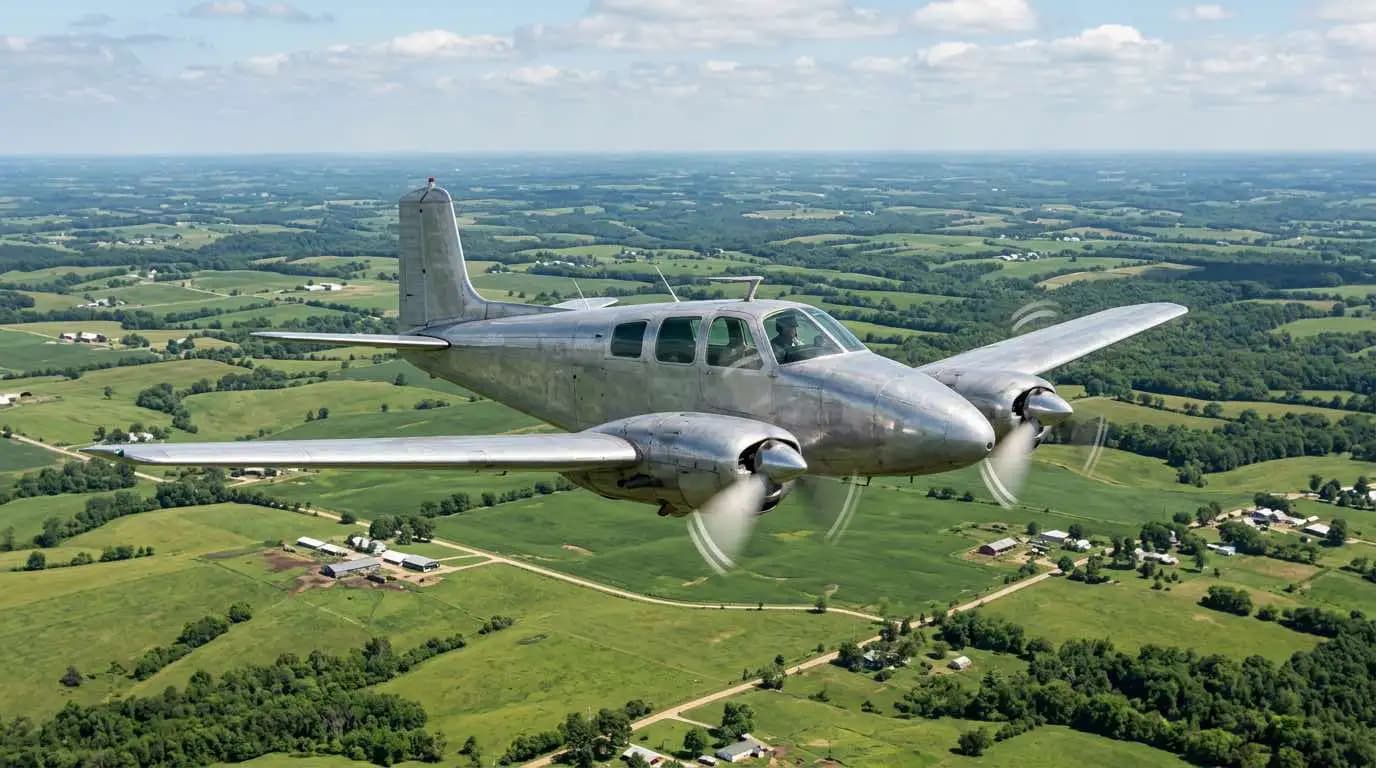
Model Variant Matters
Not all Twin Bonanzas are equal. The engine type, gross weight, fuel capacity, and systems differ meaningfully between early Model 50s and late J50s. Verify the exact model designation, engine configuration, and any STCs or modifications before committing to a purchase. The difference in performance, parts availability, and maintenance complexity between variants is significant.
Beechcraft Twin Bonanza Performance and Capability
The Beechcraft Twin Bonanza was designed as a working twin\u2014payload, range, and all-weather capability were the design priorities. With up to 680 hp combined (340 per side on supercharged models), it moves a heavy airframe at respectable speed while carrying useful loads that many modern piston twins cannot match.
160–180 KTAS Cruise
Economy cruise delivers genuine cross-country speed with fuel efficiency that supports 800+ NM range.
800–1,100 NM Range
Large fuel capacity and efficient cruise deliver practical range for point-to-point operations.
Useful Payload
Designed to carry real payload. With full fuel, most variants still offer 600–900 lb of useful load for passengers and baggage.
Single-engine performance is adequate but demands proper technique and awareness. The Twin Bonanza is a heavy aircraft; Vmc awareness, engine-out procedures, and weight management are critical skills for safe operation. Training with a type-experienced instructor is not optional.
Buyer note: The supercharged models (H50, J50) deliver more power and altitude capability but add complexity and maintenance cost. The naturally aspirated early models are simpler to maintain but offer less high-altitude performance. Match the variant to your mission.
Geared Lycomings: The Engines That Define the Twin Bonanza
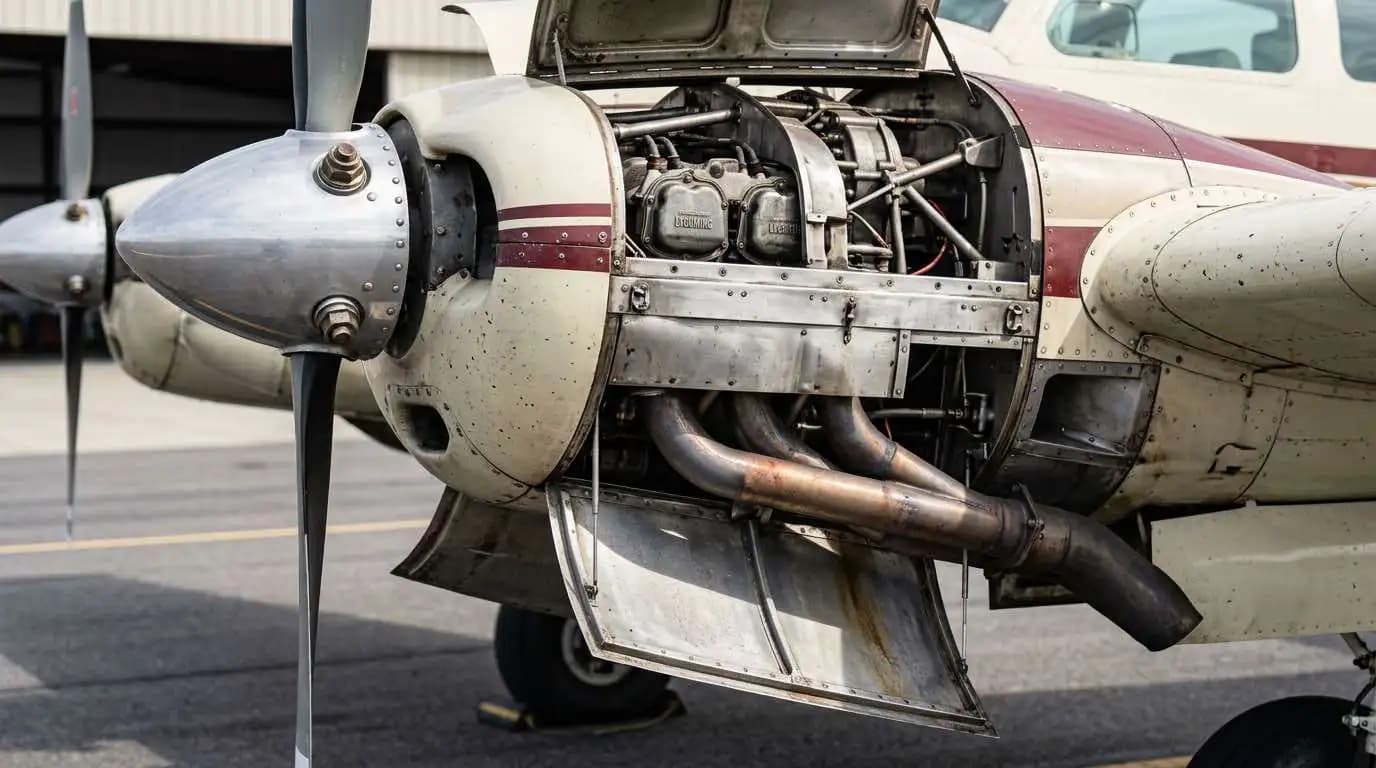
The Lycoming geared and supercharged engines in the Beechcraft Twin Bonanza are the heart of the aircraft\u2014and the component that most influences ownership cost and maintenance complexity. Understanding these engines is essential before committing to any purchase.
Engine Characteristics
- GO-480: Geared, naturally aspirated, 275 hp (early models)
- GSO-480: Geared, supercharged, 340 hp (H50 and similar)
- IGSO-480: Geared, fuel-injected, supercharged, 340 hp (J50)
- TBO: 1,200\u20131,500 hours depending on model
Buyer Considerations
- Gearbox condition is the single most critical engine inspection item
- Supercharger components add overhaul cost and complexity
- Overhaul costs per engine: $40,000\u2013$65,000+ at specialist shops
- Parts availability can be limited; plan ahead for overhaul components
Cockpit and Avionics
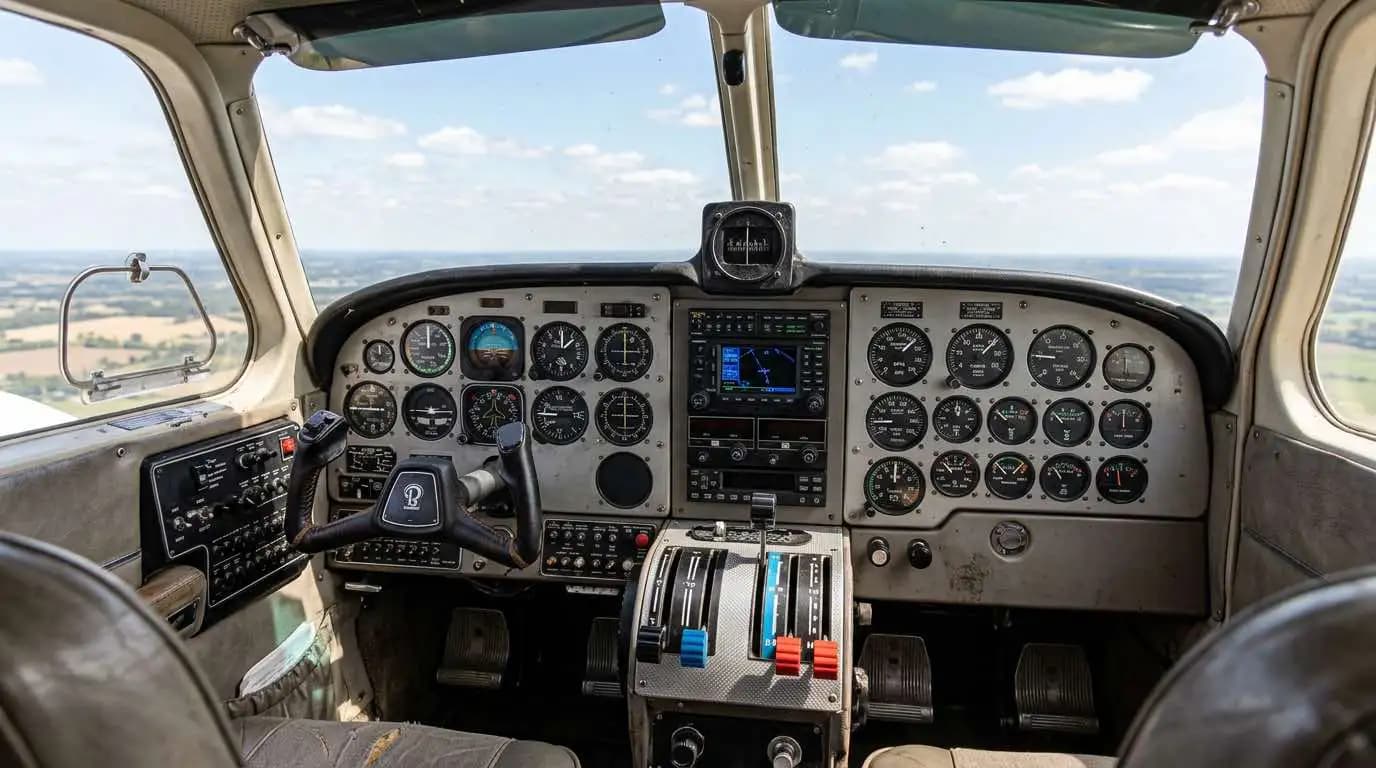
The Beechcraft Twin Bonanza cockpit reflects 1950s-era design\u2014a substantial instrument panel with round gauges, mechanical systems, and a spacious flight deck designed for two-pilot operations. Many examples on the market today have been upgraded with modern avionics.
Panel Layout
The original panel is a classic steam-gauge arrangement with full engine instrumentation for both engines, flight instruments, and systems controls. The panel is large enough to accommodate modern avionics upgrades without significant structural modification.
Avionics Upgrades
Many Twin Bonanzas have been upgraded with modern GPS navigators (Garmin GNS or GTN series), digital autopilots, ADS-B transponders, and engine monitors. The quality and scope of the avionics upgrade is a significant value driver in the used market.
Cabin and Visibility
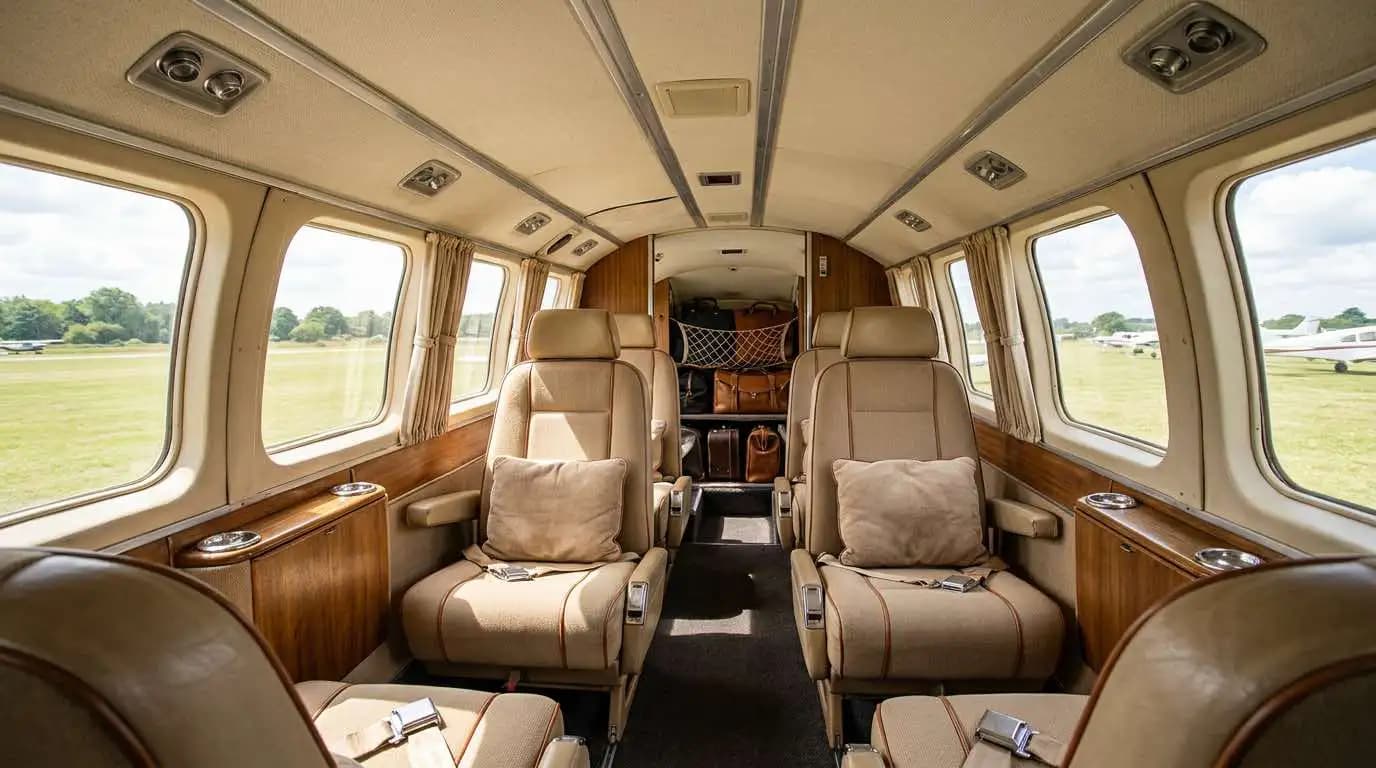
The Twin Bonanza cabin is spacious for a piston twin, with comfortable seating for four to six. Forward visibility from the flight deck is good in cruise and adequate during approach. The large windscreen panels provide a wide field of view.
Maintenance, AD Compliance, and Ownership Reality
Owning a Beechcraft Twin Bonanza requires a realistic understanding of maintenance demands. This is a 60+ year-old, all-metal, twin-engine aircraft with geared engines and a substantial AD history. Annual inspections are thorough and type-specific knowledge is essential.
Corrosion Is the Defining Structural Concern
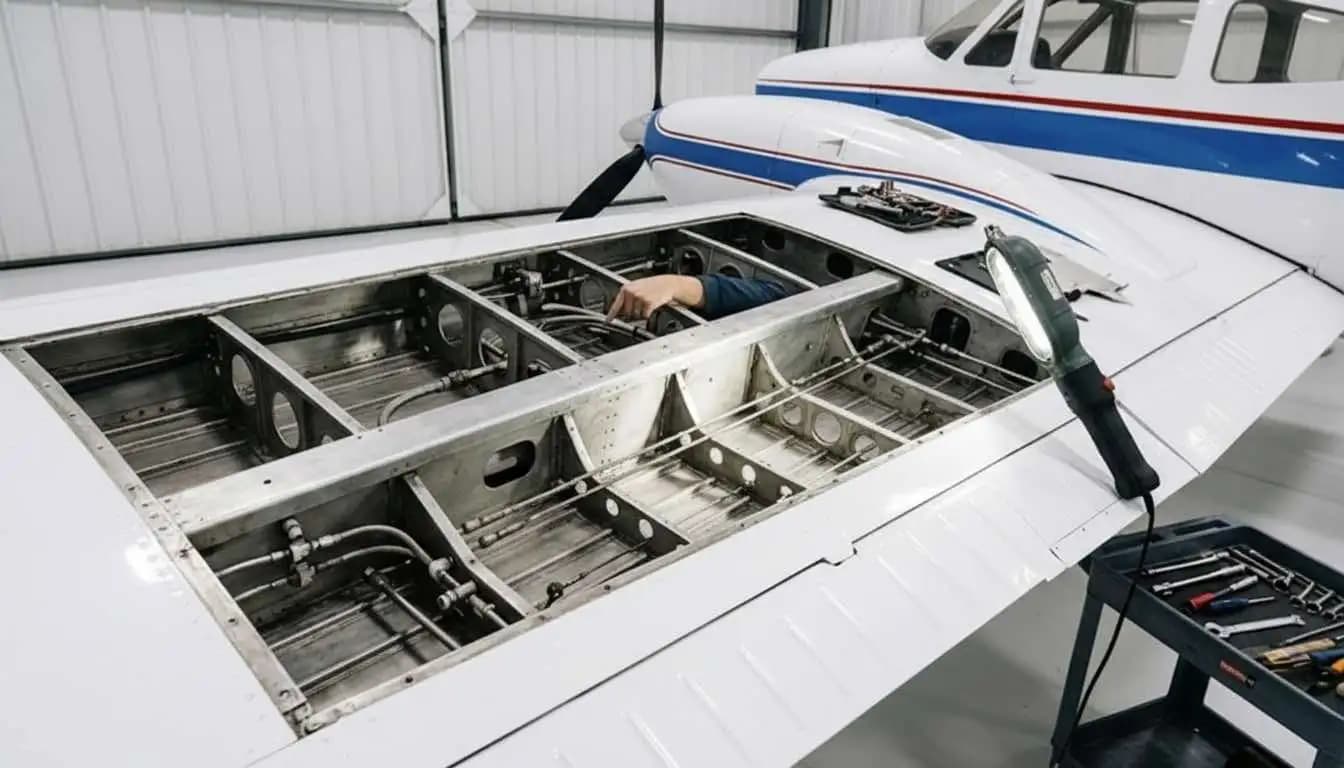
The wing spar carry-through structure is the most critical corrosion inspection area on the Twin Bonanza. Corrosion in this area can be a deal-breaker\u2014repair is complex, expensive, and in some cases not economically viable. Lower fuselage skins, wheel wells, and areas around fuel tanks are also susceptible. A thorough corrosion inspection during pre-purchase is non-negotiable. Request a type-experienced inspector who knows exactly where to look on Beechcraft twins.
AD Compliance
The Beechcraft Twin Bonanza has accumulated a substantial list of Airworthiness Directives over its production life. These cover airframe structure, control systems, landing gear, fuel systems, and the Lycoming geared engines. Review the full AD compliance list for both the airframe and the specific engine variant. Recurring ADs must be current. Any gaps in AD compliance documentation represent a red flag that must be resolved before purchase.
Landing Gear System
The Twin Bonanza uses a retractable tricycle landing gear with hydraulic actuation. Gear system integrity\u2014actuators, hydraulic lines, squat switches, downlocks, and emergency extension mechanisms\u2014must be thoroughly inspected. Gear-related ADs are part of the compliance list. Hydraulic fluid condition, system pressure, and cycle testing are standard pre-purchase items.
Parts and Support
The Twin Bonanza community is active and resourceful, with type clubs, specialist shops, and parts suppliers maintaining the fleet. However, some components\u2014particularly gearbox parts, supercharger elements, and specific structural items\u2014can have long lead times. Establishing relationships with type-experienced shops and parts networks before purchase is advisable.
Buying a Beechcraft Twin Bonanza: Pre-Purchase Checklist
The Twin Bonanza rewards careful due diligence more than most aircraft. Type-specific inspection knowledge is essential\u2014this is not an aircraft that can be properly evaluated during a standard annual inspection.
Documentation & Records
- Confirm complete airframe, engine, and propeller logbooks with no unexplained gaps in total time history.
- Review full AD compliance status for airframe, both engines, and propellers. Verify all recurring ADs are current.
- Check for STCs, field approvals, and 337 forms documenting any modifications or repairs.
- Verify title and lien status. Confirm the aircraft is free of encumbrances.
- For military-provenance examples, review the transition from military to civilian registration and any associated documentation.
Technical Inspection Priorities
- Choose an inspector experienced with Beechcraft twins and geared Lycoming engines—this is non-negotiable.
- Wing spar carry-through corrosion inspection: the most critical structural item on any Twin Bonanza.
- Full engine evaluation: compression, oil analysis history, gearbox condition, supercharger wear (if equipped).
- Landing gear: hydraulic system, actuators, downlocks, emergency extension, squat switches, gear doors.
- Fuel system: tanks, lines, selectors, boost pumps. Fuel system ADs must be current.
- Flight controls: cable tension, pulley condition, trim systems, autopilot integration (if installed).
Deal Process & Risk Control
- Use escrow for funds handling and document exchange. Twin-engine transactions warrant professional protection.
- Make the purchase conditional on inspection findings with clear deal-breaker thresholds (especially corrosion).
- Confirm insurance availability and cost—twin-engine insurance requires multi-engine experience and the Twin Bonanza is a complex type.
- Budget for type-specific transition training: 15–25 hours with a Twin Bonanza-experienced instructor.
- Establish a maintenance shop relationship with geared Lycoming experience before taking delivery.
Market Snapshot and Pricing Drivers
The Beechcraft Twin Bonanza market is specialized with growing collector interest. Current asking prices typically span $60,000 to $200,000, with condition, provenance, and model variant driving the range.
Engine Time and Overhaul Quality
Fresh overhauls on both geared Lycomings can represent $80,000–$130,000 in value. Mid-time engines need careful evaluation. Run-out engines represent both a discount and a major near-term obligation.
Corrosion History
A clean corrosion history with documented inspections adds significant value. Any corrosion findings—especially near the wing spar carry-through—can dramatically reduce value or disqualify an aircraft from consideration.
Model Variant
Later supercharged models (H50, J50) typically command higher prices due to superior performance. Early Model 50s are simpler but offer less capability and may have parts challenges.
Avionics Suite
Modern avionics upgrades (GPS, ADS-B, autopilot, engine monitor) add substantial practical and resale value. A panel-upgraded Twin Bonanza is a more useful and more salable aircraft.
Military Provenance
Ex-military L-23/U-8 examples with documented service history can attract collector premium. Verify the provenance documentation is complete and that the military-to-civilian conversion was properly executed.
Beechcraft Twin Bonanza Key Facts
| Specification | Typical Range / Value | Why It Matters |
|---|---|---|
| Engines | 2× Lycoming GSO-480 or IGSO-480, 295–340 hp each | Geared, supercharged engines deliver strong performance but require specialist maintenance |
| Max Speed | ~203 KTAS (varies by model) | Fast for a piston twin of the era; competitive cruise for cross-country missions |
| Cruise Speed | ~160–180 KTAS at economy settings | Efficient long-range cruise with useful payload capacity |
| Range | ~800–1,100 NM (configuration dependent) | Genuine cross-country capability with standard fuel |
| Seating | 4–6 seats (typical configuration) | Spacious cabin for a piston twin with comfortable passenger room |
| Fuel Capacity | ~140–194 gallons (variant dependent) | Large fuel capacity supports the aircraft’s long-range mission profile |
| Fuel Burn | ~28–36 GPH total (both engines) | Operating cost driver; plan fuel reserves carefully for trip budgeting |
| Gross Weight | ~6,300–7,300 lb (variant dependent) | Heavy aircraft requires adequate runway length and careful weight-and-balance |
| Structure | All-metal monocoque (Beechcraft construction) | Durable but susceptible to corrosion; spar carry-through is a critical inspection area |
| Market Asking Price (Used) | $60,000–$200,000 | Driven by model variant, engine time, corrosion history, avionics, and logbook completeness |
Beechcraft Twin Bonanza on CollectAirs
We currently have a 1960 Beechcraft H50 Twin Bonanza listed with verified documentation, detailed photos, and transparent auction terms. Browse our aircraft auctions with escrow-protected transactions.
Frequently Asked Questions About the Beechcraft Twin Bonanza
How much does a Beechcraft Twin Bonanza cost?
Used Beechcraft Twin Bonanza prices typically range from $60,000 to $200,000 depending on model variant (D50, E50, G50, H50, J50), total airframe time, engine status, avionics, corrosion condition, and logbook completeness. The supercharged H50 model with military provenance or low total time tends to sit at the top of the range. Aircraft needing engine overhauls or significant corrosion remediation trade at the lower end.
What engines does the Beechcraft Twin Bonanza use?
The Beechcraft Twin Bonanza was produced with several Lycoming engine configurations across its model variants. Early models used the GO-480 (275 hp), while later variants like the H50 and J50 used the supercharged GSO-480 and IGSO-480 producing 340 hp per side. These are geared, supercharged engines that require experienced maintenance shops and careful operating discipline.
Is the Beechcraft Twin Bonanza hard to fly?
The Twin Bonanza is a large, heavy twin-engine aircraft that demands respect and competence. It is honest but unforgiving of inattention, especially in single-engine scenarios. The geared, supercharged engines require specific power management techniques. Pilots transitioning into the type should plan for thorough dual instruction with a Twin Bonanza-experienced instructor and expect to develop proficiency over 15–25 hours before feeling comfortable.
What are the main maintenance concerns on a Beechcraft Twin Bonanza?
The primary concerns are corrosion (especially in the wing spar carry-through structure and lower fuselage), geared Lycoming engine health (gear box condition, supercharger wear, prop governor integration), landing gear system integrity, and AD compliance. The Twin Bonanza has a substantial AD history. A pre-purchase inspection by a Beechcraft twin-experienced shop is essential—this is not a standard annual-shop aircraft.
How far can a Beechcraft Twin Bonanza fly?
Depending on the model, fuel configuration, and power setting, the Beechcraft Twin Bonanza has a practical range of approximately 800 to 1,100 nautical miles with standard fuel. The later models with larger fuel capacity and more efficient engine management can achieve the upper end. At economy cruise settings of roughly 160–170 KTAS, the aircraft is a capable cross-country platform with useful payload.
Is the Beechcraft Twin Bonanza a good investment?
The Twin Bonanza occupies a niche as a classic, capable, all-metal twin with increasing collector interest. Well-maintained examples with complete logbooks and clean corrosion histories have held or appreciated in value. However, operating costs are substantial—engine overhauls on geared Lycomings are expensive, parts can be scarce, and insurance for the type requires twin-engine experience. It is best suited to experienced owners who value the aircraft’s history, capability, and flying character.
Sources
Used for: certification reference, approved engine configurations, and specification framework for the Twin Bonanza series.
Used for: type club resources, maintenance guidance, parts networking, and community knowledge base.
Used for: military history reference and provenance context for the L-23/U-8 military variants.
Related Resources
About the Author

Phillip Müller
CEO, CollectAirs
Long-time pilot and CEO of multiple scenic flight and aircraft sales websites. Passionate about making aircraft transactions more transparent and accessible.
Connect on LinkedIn