
 Florida
 Hildesheim
Cessna 150 vs Cessna 152: What Actually Changed?
The Cessna 150 vs Cessna 152 comparison is one of the most common questions in general aviation, particularly among student pilots and first-time buyers. From the outside, the two aircraft are nearly indistinguishable. Both are two-seat, high-wing, fixed-gear trainers built in large numbers and still widely used for primary flight instruction.
The differences that matter are mechanical and systemic: the Cessna 152 replaced the 150 in 1978 with a different engine, a redesigned cowling, a 28-volt electrical system, and modifications to improve compatibility with 100LL avgas\u2014the fuel that was becoming the industry standard. These are not cosmetic changes. They affect maintenance costs, parts sourcing, fuel system concerns, and avionics upgrade paths.
For buyers evaluating either aircraft, the model badge matters less than the individual airframe\u2019s maintenance history, logbook quality, AD compliance, and corrosion condition.
Looking for a Cessna trainer?
Browse our current aircraft auctions with verified documentation and transparent terms.
History and Background
Cessna 150 (1959\u20131977)
- Over 23,000 produced across multiple sub-models
- Continental O-200-A engine (100 hp)
- Originally designed for 80/87 octane fuel
- 14-volt electrical system
- Aerobat variant (A150) available for spin/acro training
Cessna 152 (1978\u20131985)
- Approximately 7,500 produced
- Lycoming O-235-L2C engine (110 hp)
- Designed from factory for 100LL fuel
- 28-volt electrical system
- Aerobat variant (A152) continued for acro training

Cessna 150 vs Cessna 152: Side-by-Side Comparison
| Specification | Cessna 150 | Cessna 152 | Why It Matters |
|---|---|---|---|
| Engine | Continental O-200-A (100 hp) | Lycoming O-235-L2C (110 hp) | The 152’s extra 10 hp improves climb and hot/high performance noticeably |
| Max Cruise Speed | ~106 KTAS | ~107 KTAS | Nearly identical in cruise; the difference is negligible for practical purposes |
| Useful Load | ~490–530 lb | ~490–530 lb | Both are tight with two adults and fuel; weight management is critical in either |
| Fuel Capacity | 26 gal standard / 38 gal long-range | 26 gal standard / 39 gal long-range | Endurance is similar; the 152 burns slightly more fuel per hour |
| Fuel Grade | 80/87 (original); many converted for 100LL | 100LL (designed from factory) | The 152 avoids the 150’s fuel compatibility concerns with modern avgas |
| Electrical System | 14-volt | 28-volt | 28-volt supports more modern avionics and lighting upgrades |
| TBO | 1,800 hrs (Continental O-200) | 2,000 hrs (Lycoming O-235) | Longer TBO on the 152 engine reduces overhaul frequency at the same utilization |
| Used Price Range | $18,000–$40,000+ | $25,000–$55,000+ | The 150 is typically the cheaper entry point; the 152 commands a premium for its engine and systems |
Engine Differences: Continental vs Lycoming
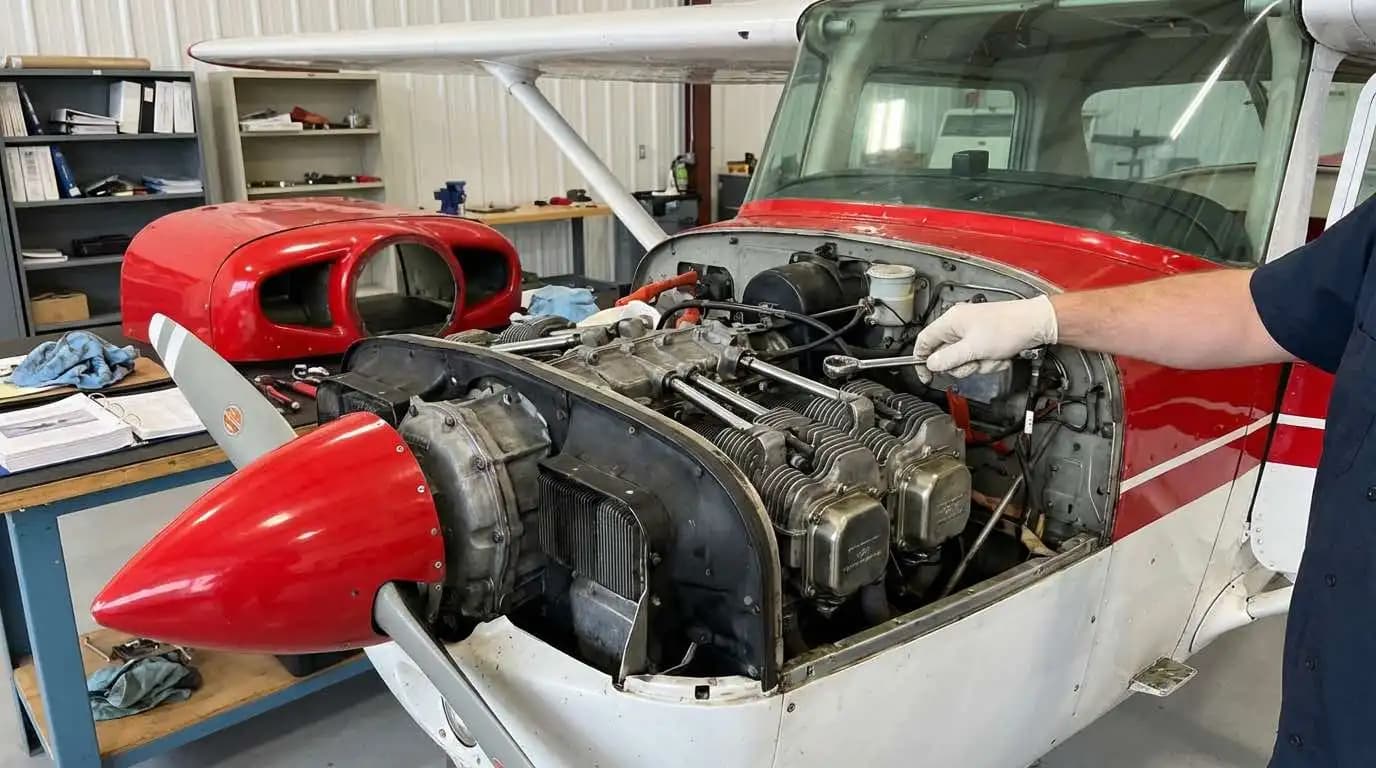
The engine swap is the single biggest change between the two aircraft and has the most impact on maintenance, parts costs, and day-to-day operations.
Continental O-200-A (Cessna 150)
- 100 hp at 2,750 RPM. Adequate for training; noticeable on hot days or at elevation.
- 1,800-hour TBO. Parts are widely available but the engine was designed for 80/87 fuel.
- Many O-200s have been converted or operate on 100LL with autogas STCs where available.
- Simpler carburetor heat system. Generally considered reliable when maintained.
Lycoming O-235-L2C (Cessna 152)
- 110 hp at 2,550 RPM. The extra 10 hp improves climb rate and hot/high margins.
- 2,000-hour TBO. Longer overhaul interval reduces long-term engine reserve costs.
- Designed from the start for 100LL. No fuel compatibility concerns.
- Known for valve guide wear on some examples—oil consumption trends and compression checks are important.
Cockpit and Systems Differences
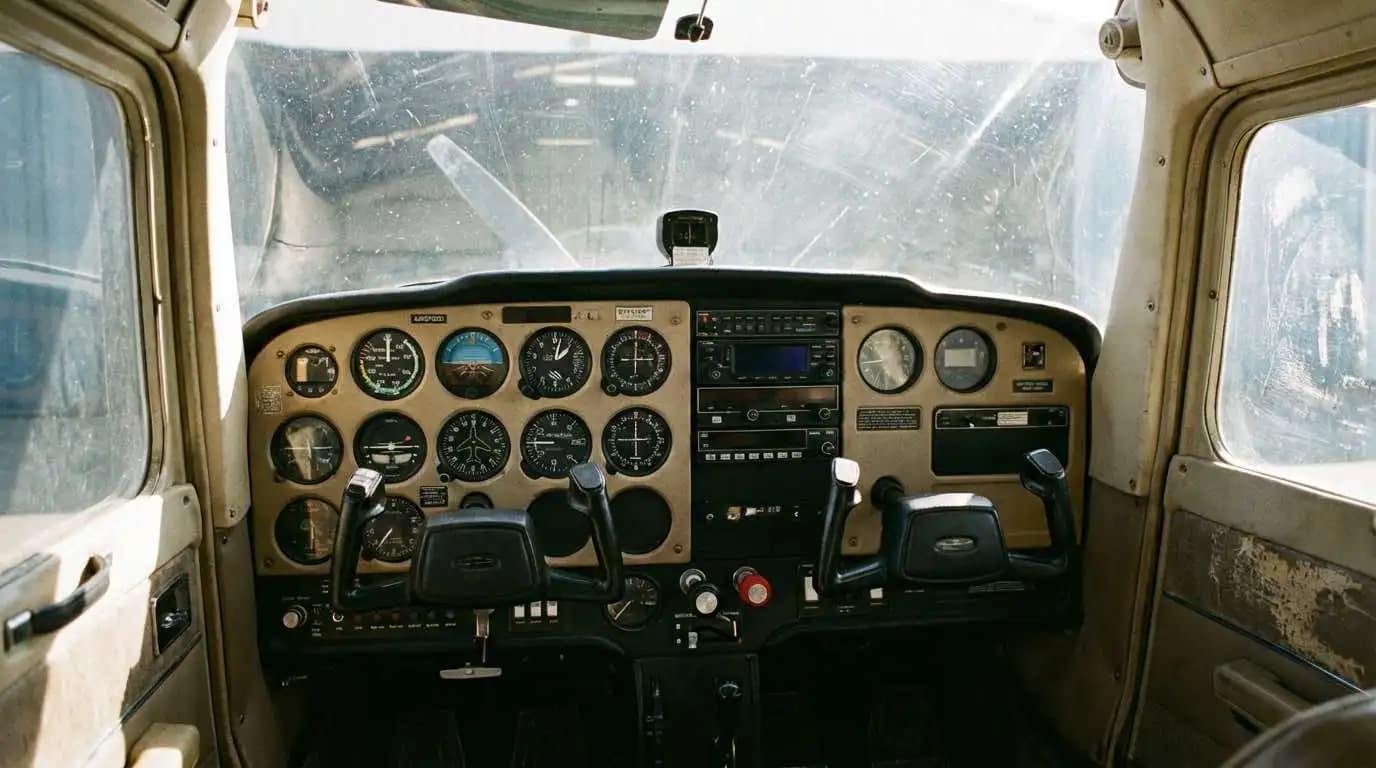
The cockpit layout is similar, but the systems behind the panel differ in ways that affect avionics options and upgrade paths.
Electrical system (14V vs 28V)
The 152’s 28-volt system supports a wider range of modern avionics, LED lighting, and USB charging without the voltage conversion headaches that 14-volt 150s face. If you plan to install a modern GPS or transponder, the 28-volt architecture simplifies the upgrade.
Panel layout and ergonomics
Both share the classic Cessna side-by-side, high-wing cockpit. Visibility, control feel, and general ergonomics are essentially the same. The instrument panel is narrow in both aircraft—plan any avionics upgrade around the limited panel real estate.
Landing gear geometry
The 152 introduced slightly different nose gear geometry and tubular steel main gear legs (replacing the earlier flat-spring design on late 150s). The result is marginally different ground handling characteristics, though most pilots find both predictable.
Fuel system
The 152’s fuel system was redesigned for 100LL from factory. Many 150s have had fuel system components replaced or converted, but buyers should verify the specific aircraft’s fuel system configuration and STC compliance.
Training Suitability: Which Is the Better Trainer?
Both the Cessna 150 and 152 are proven primary trainers\u2014millions of pilots earned their certificates in one or the other. The question is not which airplane teaches better, but which airplane is a better investment for a particular operator or owner.
Flight Characteristics
Nearly identical. Both are forgiving, stable in slow flight, and honest in stalls. The 152 climbs slightly better, which matters at high-density-altitude airports.
Operating Economics
The 150 burns slightly less fuel per hour. The 152’s longer TBO offsets some of that over time. Both are among the cheapest aircraft to operate.
Maintenance Simplicity
Both are straightforward. The 152 avoids fuel compatibility concerns. The 150’s Continental O-200 has a longer track record and simpler valve train.
The Real Decision Factor
For most buyers, the choice between a Cessna 150 and 152 should be driven by the specific airframe's condition, logbooks, and price\u2014not the model designation. A well-maintained, complete-logbook 150 at $25,000 is a better purchase than a neglected, questionable-history 152 at $30,000.
Cessna 152 vs 172: When to Step Up
A common follow-up question to the Cessna 150 vs Cessna 152 comparison is whether it makes more sense to skip both and buy a Cessna 172. The answer depends entirely on mission.
If the mission is pure training on a budget
The 150 or 152 wins. Lower acquisition cost, lower fuel burn, lower insurance, and the airplane teaches the same fundamentals. You do not need four seats and 160 hp to learn to fly.
If the mission includes passengers after training
The 172 makes more sense. Four seats, meaningfully more useful load, and a broader mission envelope. The cost premium is justified if you will actually use the capability.
If the mission is a club or school fleet aircraft
Both the 152 and 172 serve well in this role. The 152 is cheaper per hour; the 172 attracts a wider range of renters. Many schools operate both.

Ownership and Operating Costs
Both the Cessna 150 and 152 are among the most affordable aircraft to own and operate. The differences are real but modest.
Acquisition
Cessna 150: $18,000\u2013$40,000+. Cessna 152: $25,000\u2013$55,000+. The spread within each model is driven by total time, engine status, avionics, and documentation quality more than model year alone.
Fuel & Hourly Costs
Both burn approximately 6\u20137 gallons per hour. At typical avgas prices, that translates to roughly $40\u2013$50/hr in fuel alone. Total variable costs (fuel, oil, maintenance reserves) run approximately $70\u2013$100/hr for either type.
Annual Fixed Costs
Insurance, annual inspection, hangar or tie-down, and database subscriptions typically add $5,000\u2013$12,000 per year depending on location, pilot experience, and storage choice. These costs are essentially identical between the two models.
Buying a Cessna 150 or 152: Pre-Purchase Checklist
These aircraft are affordable to buy\u2014but a bad purchase can cost more to fix than the airplane is worth. Discipline on the front end pays for itself.
Logbooks & AD Compliance
- Complete, continuous logbooks (airframe, engine, prop). Missing logs on a $30,000 airplane can erase half its value.
- Current AD compliance list with clear method-of-compliance entries—especially seat rail ADs, wing spar ADs, and fuel system ADs.
- For 150s: verify the fuel system is properly configured for the fuel grade you will use (100LL, autogas STC, or mogas).
Engine & Airframe
- Engine time since overhaul, compression history, and oil analysis trends (if available).
- For 152s: check for valve guide wear symptoms—high oil consumption is a common O-235 concern.
- Corrosion inspection: belly skins, wing root areas, battery box, and anywhere moisture sits.
- Control system rigging, cable tension, and wear on pulleys and brackets.
Deal Process
- Use escrow for funds and document exchange—even on a $25,000 airplane.
- Conduct a pre-purchase inspection at a shop experienced with 150/152 types.
- Make the offer conditional on inspection findings with written terms for significant discrepancies.

Explore Available Aircraft
Browse our curated aircraft auctions with verified documentation, logbook verification, and escrow-protected transactions.
Browse Available AircraftFrequently Asked Questions: Cessna 150 vs Cessna 152
What is the main difference between a Cessna 150 and a Cessna 152?
The most significant difference is the engine. The Cessna 150 uses a Continental O-200-A (100 hp), while the Cessna 152 uses a Lycoming O-235-L2C (110 hp). The 152 also introduced changes to the cowling, fuel system (switching to 100LL-compatible components), electrical system (28-volt), and landing gear geometry. Externally they look nearly identical, but the operational and maintenance differences are meaningful.
Is the Cessna 150 or 152 better for flight training?
Both are excellent trainers. The 152 offers slightly more power (110 hp vs 100 hp), a 28-volt electrical system, and better compatibility with 100LL fuel. The 150 is typically cheaper to acquire. For training purposes, either airplane teaches the same fundamentals. The deciding factors are usually price, availability, and the specific airframe’s condition and maintenance history.
How much does a Cessna 150 or 152 cost?
Used Cessna 150s typically range from $18,000 to $40,000, with exceptional examples or aerobat variants reaching higher. Cessna 152s generally trade between $25,000 and $55,000. Prices depend on total airframe time, engine status, avionics, corrosion condition, and logbook completeness.
What is the difference between a Cessna 152 and a Cessna 172?
The Cessna 172 is a four-seat aircraft with a larger engine (typically 160–180 hp), significantly more useful load, longer range, and a wider cabin. The 152 is a two-seat trainer with 110 hp. The 172 costs more to acquire and operate but serves a much broader mission range. For primary training only, the 152 is more economical; for training that transitions into personal flying, the 172 offers more utility.
What should I check before buying a used Cessna 150 or 152?
Prioritize logbook completeness, AD compliance (especially seat rail ADs, wing spar ADs, and fuel system ADs), corrosion condition, engine time since overhaul, and compression trends. A pre-purchase inspection by a shop experienced with Cessna 150/152 types is essential.
Can you still get parts for a Cessna 150?
Yes. Both the Cessna 150 and 152 have strong parts support through aftermarket suppliers, salvage yards, and PMA parts manufacturers. Continental O-200 and Lycoming O-235 engine parts remain widely available. The massive installed fleet ensures continued parts supply for the foreseeable future.
Sources
Used for: certification reference for the Cessna 150/152 series and approved configuration framework.
Related Resources
What Is a Cessna Airplane?
Complete guide to the Cessna lineup from trainers to business jets, with pricing and model comparisons.
Read GuideCessna 182 Guide
Performance, ownership costs, AD compliance, and what to check before buying a Skylane.
Read GuidePlanes for Sale Guide
How to find planes for sale, evaluate listings, and close your deal without expensive surprises.
Read GuideAbout the Author

Phillip Müller
CEO, CollectAirs
Long-time pilot and CEO of multiple scenic flight and aircraft sales websites. Passionate about making aircraft transactions more transparent and accessible.
Connect on LinkedIn