
 Florida
 Hildesheim
What Is a Light Sport Aircraft?
A light sport aircraft is a category of small aircraft aimed at simpler ownership and operation: typically two seats, fixed or uncomplicated landing gear configurations, modest performance, and systems that are intentionally less complex than traditional certified touring aircraft.
In the U.S., "light-sport aircraft" historically referred to a specific set of design limits (weight, stall speed, seating, etc.) captured in regulation, limits that shaped what manufacturers built and what pilots could fly under sport pilot rules. Today, the practical takeaway for pilots and buyers is:
Looking for light sport aircraft?
Browse our current aircraft auctions to see what's available.
The U.S. Regulatory Picture in Plain English
If you're shopping, insuring, training, or planning maintenance, you'll repeatedly run into two separate-but-related ideas:
1. The Aircraft's Airworthiness Status
Common buckets you'll see in the market:
S-LSA (Special Light-Sport Aircraft)
Factory-built to consensus standards, with a defined configuration and operating limitations.
E-LSA (Experimental Light-Sport Aircraft)
Often kit-built or transitioned aircraft, with different maintenance/alteration flexibility depending on how it was certificated.
Experimental Amateur-Built (E-AB)
Not automatically "LSA," but some E-AB aircraft can be operated by pilots using sport pilot privileges if they meet the applicable operating criteria.
Why you care: Maintenance rules, who can perform/approve work, what modifications are allowed, and how the aircraft can be used can change meaningfully between these.
2. The Pilot Privileges
FAA updates tied to MOSAIC expanded and clarified what pilots exercising sport pilot privileges may operate, moving key operating/performance limits into the sport pilot privilege structure rather than relying only on the older "LSA" shorthand.
Don't assume "LSA airplane" automatically equals "I can fly it with sport pilot privileges", verify against current privilege limits and endorsements.
Why People Choose a Light Sport Aircraft
Local VFR Flying
Simple systems, lower operating costs, "go fly on a nice day" practicality.
Training & Time-Building
Many LSAs are optimized for instruction: good visibility, modern avionics options, predictable handling.
Point-to-Point Flying
Some airframes are surprisingly capable, but payload, weather capability, and mission discipline are everything.

Where LSAs Can Disappoint
Useful load (especially with full fuel), turbulence comfort, and "mission creep" (trying to make a minimalist airplane do heavy-touring-airplane jobs).
What to Look For When Buying a Used Light Sport Aircraft
LSAs reward careful paperwork review even more than many legacy trainers, because "eligibility" often hinges on configuration control and documentation, not just how shiny the paint looks.
Documents & Identity
- Airworthiness certificate type (S-LSA, E-LSA, E-AB) matches what the seller claims.
- Operating limitations present and current.
- Registration and (where applicable) title/ownership chain clean; no surprises in liens.
Logbooks & Compliance
- Complete airframe/engine/prop logbooks with no unexplained gaps.
- Clear record of AD/SB compliance where applicable (and note: not every LSA is subject to ADs the same way as standard-category aircraft).
- For S-LSA in particular: evidence the aircraft remains in its approved configuration, with manufacturer approvals for changes where required.
Maintenance Reality Check
- Confirm inspection status and who signed it off (and whether the sign-off is appropriate for that certificate category).
- Engine/prop time and calendar life (some components care as much about years as hours).
- Condition of wear items: tires, brakes, controls, rod ends, fuel hoses, coolant hoses (if liquid-cooled), rubber parts.
Damage History
- Ask directly about hard landings, ground loops, hangar rash, corrosion exposure, and prop strikes.
- Look for structural repairs that are "fine" technically but poorly documented (that's where resale value and insurability suffer).
Avionics & Supportability
- Many LSAs use modern glass, which is great, until a display, database process, or proprietary sensor becomes unsupported.
- Verify vendor support, software update paths, and whether the install is documented.
Common Pitfalls Specific to LSAs
Configuration drift
A well-meaning owner adds equipment, changes a prop, tweaks controls, then the airplane is no longer clearly in the configuration it's supposed to be in on paper.
Weight-and-balance optimism
Small changes can meaningfully affect useful load and CG margins.
"It's simple" complacency
Simple airplanes still need disciplined maintenance, especially with composite structures, Rotax-style engine installations, and tightly cowled cooling systems.
Pre-Purchase Inspection: How to Do It Without Wasting Money
A good PPI for a light sport aircraft is less about generic compression numbers and more about known-type issues and paperwork validity.
- 1
Pick the right shop/inspector
Choose someone who routinely sees your model and certificate type.
- 2
Do the paperwork review first
If the logs and compliance story don't make sense, don't pay for a deep mechanical inspection yet.
- 3
Inspect structure and controls carefully
Look for repaired composite work quality, control rigging consistency, and hidden hangar rash.
- 4
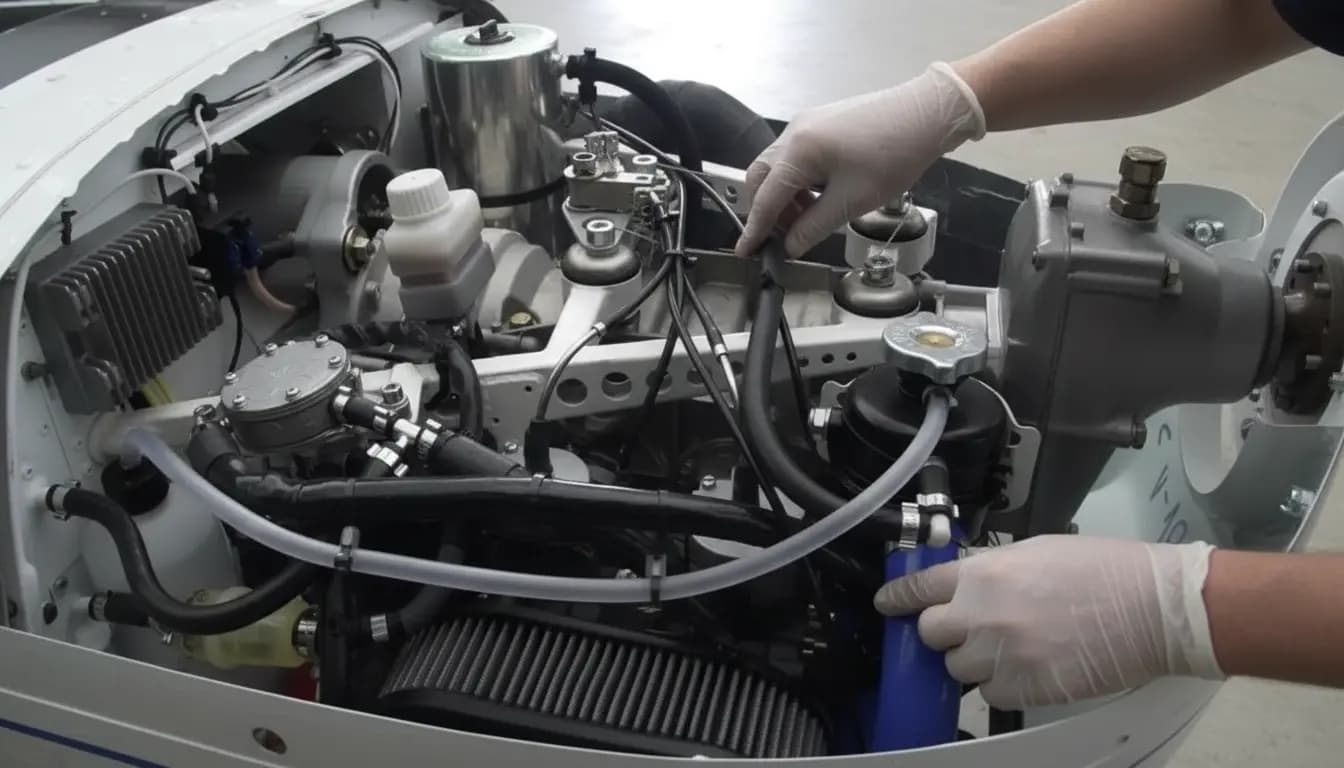
Evaluate the engine installation as a system
Cooling, hoses, clamps, exhaust condition, gearbox/prop interface (where relevant), and evidence of disciplined maintenance.
- 5
Confirm operational checks
Clean start behavior, stable temps, normal charging, predictable braking, and no odd vibration signatures.
If the seller resists a PPI or won't allow an independent inspector, treat it as a pricing signal, or a reason to walk.
Ownership and Operating Considerations
Insurance
Insurers care about:
- Your total time, time in type, and recent experience.
- Claims history and the aircraft's accident/damage history.
- Training pathway (transition training in type is often valued even when not strictly required).
Hangar vs. Tie-Down
Many LSAs are composite and/or have lightweight control surfaces. Outdoor storage can be done, but it raises the bar on:
- UV protection, covers, and control locks
- Water intrusion vigilance
- Corrosion prevention (particularly around fasteners, fittings, and steel parts)
Mission Discipline
The fastest way to become unhappy with an LSA is to buy it for a mission it can't reliably do: full-fuel, two adults, bags, and summer density altitude, every weekend. Be honest about payload and weather expectations.
Explore Light Sport Aircraft
Browse our curated aircraft auctions with verified documentation and transparent auction terms.
Browse Available AircraftFrequently Asked Questions
Are light sport aircraft safe?
They can be, provided they're well-maintained, correctly configured, and flown within their mission envelope. Risk tends to rise with poor documentation, deferred maintenance, or pilots pushing marginal weather and performance margins.
Can I fly a light sport aircraft with a driver's license instead of an FAA medical?
Often yes under sport pilot pathways, but eligibility depends on the current sport pilot privilege rules and your personal circumstances. Confirm the current FAA requirements and any limitations that apply to you.
What's the difference between S-LSA and E-LSA?
In buyer terms: S-LSA typically emphasizes factory-built consensus-standard compliance and tighter configuration control, while E-LSA can offer different maintenance/alteration flexibility depending on how it was certificated. The best choice depends on whether you prioritize factory conformity or owner maintenance latitude.
Do light sport aircraft have to follow Airworthiness Directives (ADs)?
It depends on the aircraft's certification basis and the component in question. Don't assume "no ADs" or "ADs just like a Cessna." Review the aircraft's compliance records with someone who understands that model's regulatory bucket.
Are LSAs good for cross-country flying?
Some are excellent for reasonable-weather, VFR cross-country flying, especially with modern avionics. The limiting factors are usually payload, turbulence comfort, and realistic diversion planning, not raw cruise speed.
What should I budget for maintenance?
It varies widely by model, engine type, parts supply, and how the aircraft was treated. The best predictor is not an average number, it's the specific airplane's logbook quality, inspection findings, and parts/support ecosystem.
How do I know if an LSA is "worth it" versus an older certified trainer?
Compare the total picture: acquisition cost, insurance, expected annual maintenance, avionics reliability, mission fit, and resale. Older certified airplanes can be rugged and well-understood, while LSAs can offer modern ergonomics and efficiency, but may be more sensitive to documentation and supportability.
Related Resources
Sources
Used for: FAA's current overview of sport pilot privileges and MOSAIC-related changes affecting what aircraft may be operated under sport pilot privileges.
Used for: The regulatory definition language historically associated with "light-sport aircraft" (weight/speed/seating and related criteria).
About the Author

Phillip Müller
CEO, CollectAirs
Long-time pilot and CEO of multiple scenic flight and aircraft sales platforms. Passionate about making aircraft transactions more transparent and accessible.
Connect on LinkedIn