




HomeLive Auctions
Chat with us
Zero fees to list & bidZero fees to list, zero fees to bid. 0% buyer fee until the end of 2026.
How it Works
CollectAirs
Live AuctionsSell
List forFREE
WorldwideExposure
Sell with Us
Home
/Listings
/Auction Details
CollectAirs
  • About UsWho we are
  • Why CollectAirsWhy sell and buy with us
  • How it WorksBuying and selling, step by step
  • Contact UsTalk to a person

About CollectAirs

CollectAirs is a global auction platform for exceptional aircraft, rare warbirds, classic taildraggers, business jets and experimental one-offs. Listing is free, and buyers pay no buyer fee until the end of 2026.

  • Live Auctions
  • Coming Soon
  • Completed
  • No Reserve Auctions
  • Browse All
  • Free Aircraft Valuation
  • Sell with Us
  • How it Works
  • How Bidding Works
  • How Selling Works
  • FAQ
  • Contact us
  • WhatsApp
  • Verification Guidelines
  • Documentation Checklist
  • Additional Services
  • Forum
  • Blog
  • Login/Register
  • About Us
  • Why CollectAirs
  • Affiliate Program
  • Careers
  • Terms and Conditions
  • Privacy Policy
  • Cookie Policy
  • Impressum
  • Sitemap

© 2026 CollectAirs. All rights reserved.

Developed withbyCollectAirs team

Zero fees to list & bidZero fees to list, zero fees to bid. 0% buyer fee until the end of 2026.
How it Works
CollectAirs
Live AuctionsSell

F/A-18 Hornet

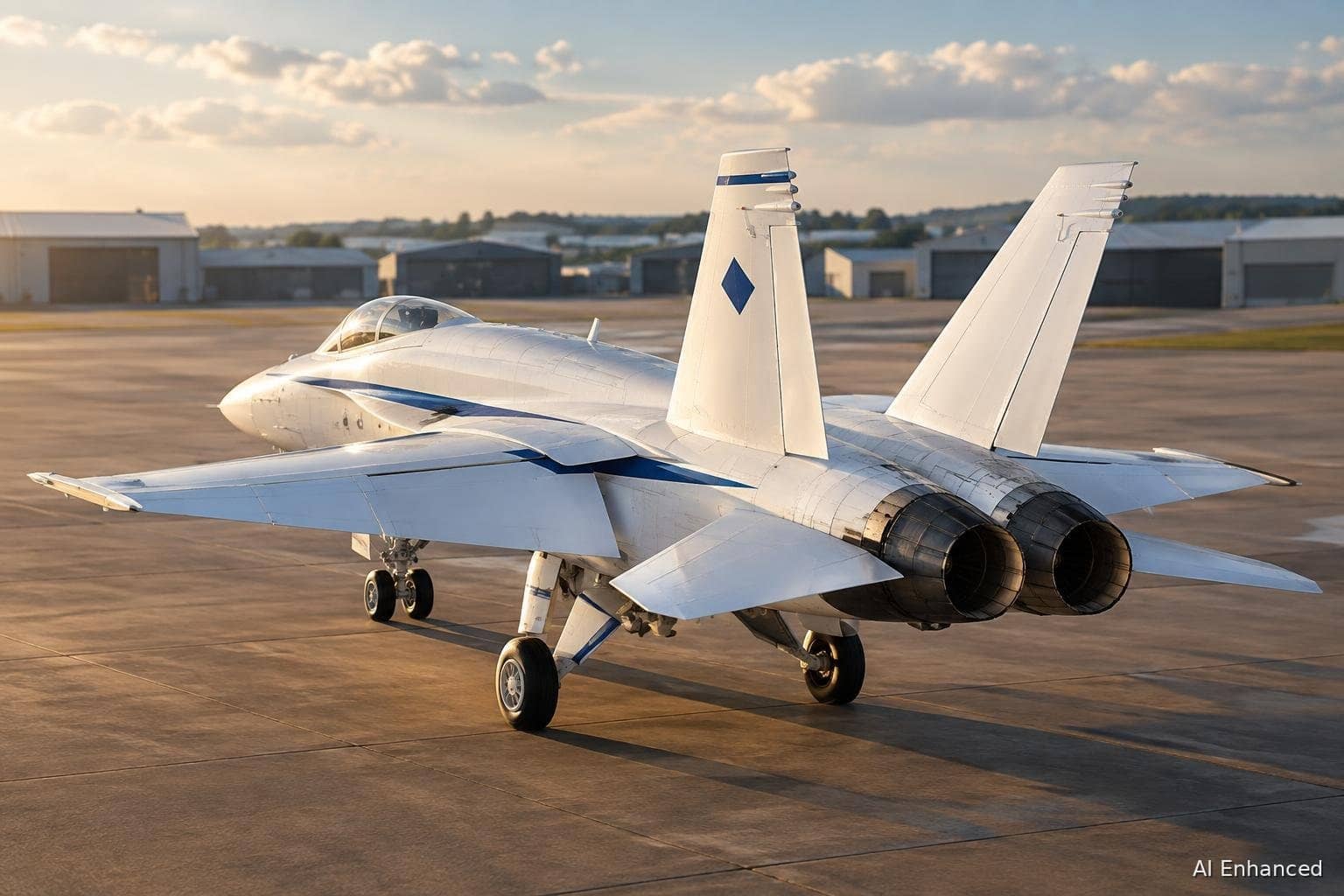
Illustration of a F/A-18A/B/C/D Hornet (Legacy Hornet) aircraft: rear-left quarter.
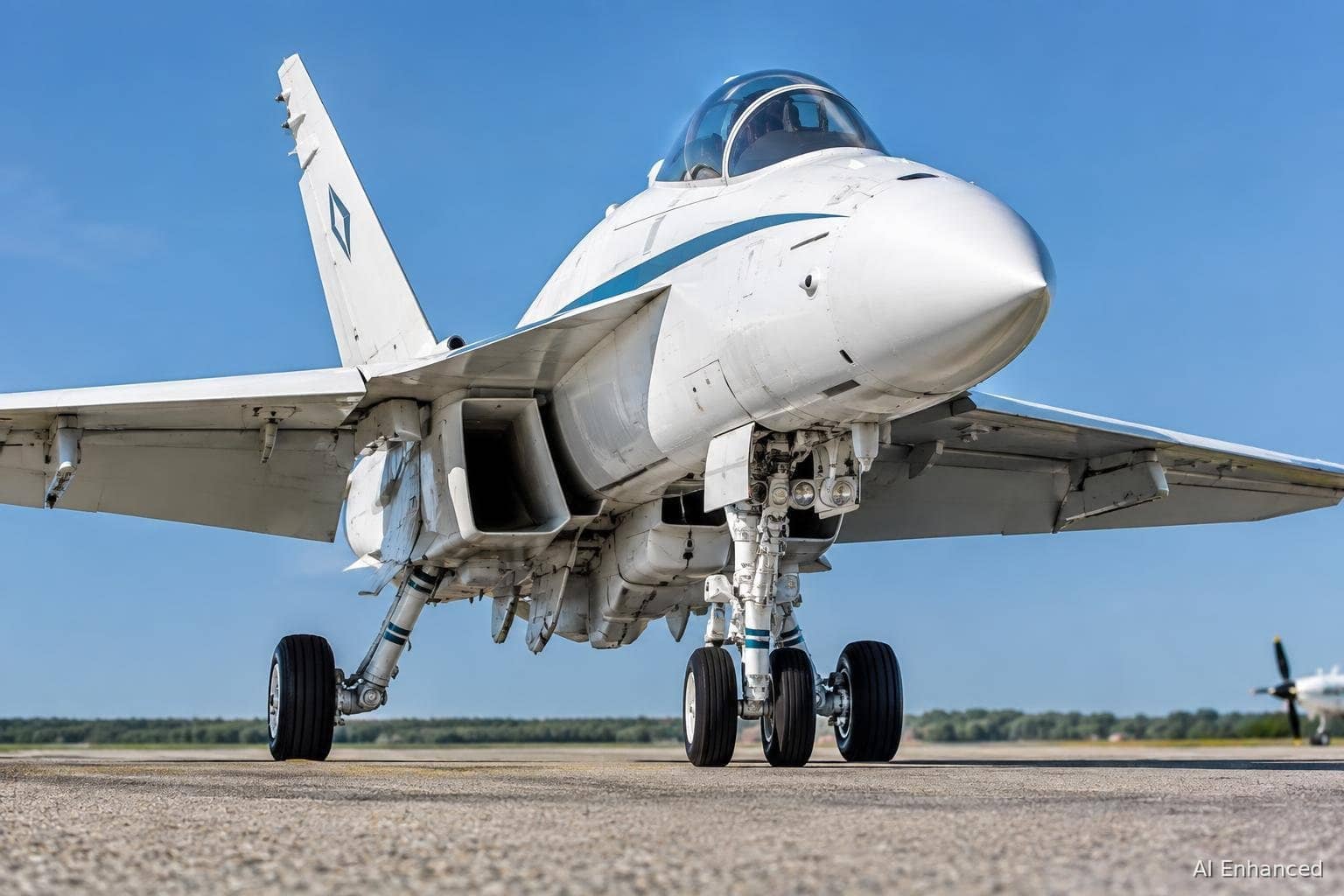
Illustration of a F/A-18A/B/C/D Hornet (Legacy Hornet) aircraft: front hero.
Illustration of a F/A-18A/B/C/D Hornet (Legacy Hornet) aircraft: side profile.
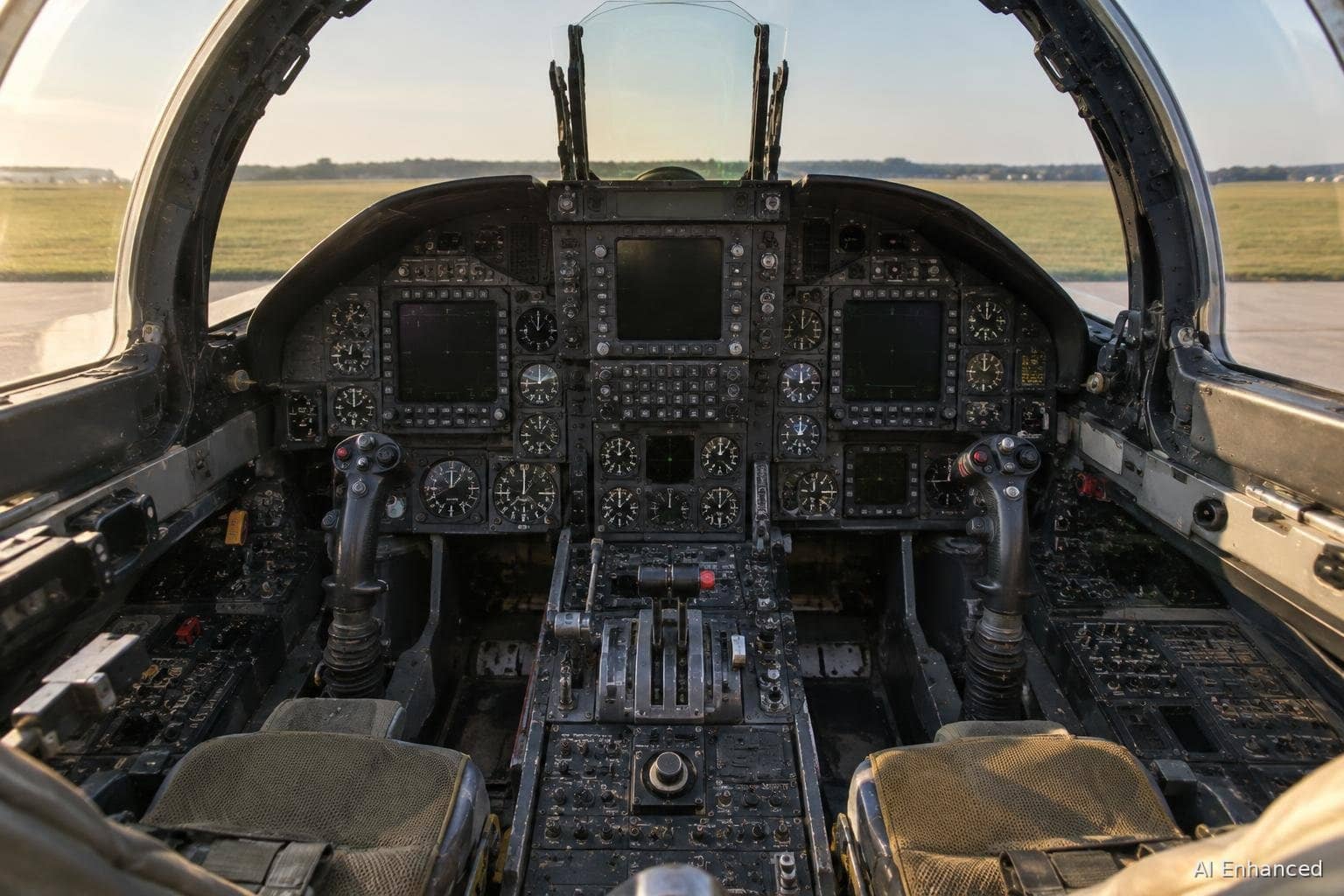
Illustration of a F/A-18A/B/C/D Hornet (Legacy Hornet) aircraft: cockpit.
Illustration of a F/A-18A/B/C/D Hornet (Legacy Hornet) aircraft: underside and landing gear.
Illustration of a F/A-18A/B/C/D Hornet (Legacy Hornet) aircraft: tail survey.
1 / 6
Verified seller

F/A-18 Hornet

ArgentinaLobos

Coming soon, not yet consigned

Sell your McDonnell Douglas

Own a McDonnell Douglas too? List it free, you only pay when it sells.

An independent inspector checks it for you. Quote first, nothing booked until you approve.

Bid History

Bidding hasn't started yet

What Happens If You Win

  1. 1
    The highest bid wins
  2. 2
    The seller pays their fee
    Buyer fee, until end of 2026
    Normally 5%€0
    Seller fee
    5%
  3. 3
    Your chat with the seller opens
  4. 4
    You agree inspection, payment and transfer directly
See all fees ›Terms & Conditions

Any questions?

Fatima from the CollectAirs team

FatimaGermany

Here for this aircraft

Online

Thinking of bidding? I'm here to help

Ask me on WhatsApp (opens in a new tab)
For buyers

Buyer Protection

  • Checked before listing — papers, ownership and maintenance history
  • Inspect before you bid — documents and logbooks are on the listing, arrange your own pre-buy inspection
  • Verified bidders only — a bid only counts once its bidder is identity-checked
  • You set the closing terms — inspection, payment and transfer are agreed with the seller
  • Escrow guidance — our team can guide you on using an escrow service
  • One team — with you from first bid to handover
How bidding worksHow we check every listing

Details

Status
Coming soon, not yet consigned
Brand
McDonnell Douglas
Category
Aircraft
Seller
C****s
Lot
#212
Auction ID
#183

Description

The original F/A-18 Hornet—properly the A/B/C/D “Legacy Hornet,” rather than the later, larger F/A-18E/F Super Hornet—was the 1980s answer to a difficult naval question: how to replace specialist fighters and attack aircraft with one carrier-capable machine. It earned its reputation by being genuinely multirole. A Hornet could be configured for fleet air defence, strike, reconnaissance or forward air control, and it became particularly identified with the ability to move between air-to-air and air-to-ground work without changing the basic aeroplane.

McDonnell Douglas developed the Hornet from the Northrop YF-17 design after the U.S. Navy sought a smaller, less costly complement to the F-14. The programme had to prove it could live on a carrier deck as well as operate from shore bases: arresting gear, robust undercarriage, folding wings and twin engines were not optional extras. First flown in 1978, it entered Marine Corps operational service in 1983 and Navy service in 1984. The later C/D series introduced further mission-system development, while the two-seat D developed into a serious night-attack, tactical air-control and reconnaissance platform rather than merely a conversion trainer.

Quick facts

SpecDetail
Type designationF/A-18A/B/C/D Hornet, commonly called the Legacy Hornet
ConfigurationCarrier-capable, twin-engine multirole strike fighter
Engine and powerTwo General Electric F404-GE-402 afterburning turbofans, 17,700 lb static thrust each
Cruise speedNot commonly published as a single representative figure; maximum speed is Mach 1.7+
SeatingOne seat in A/C; two seats in B/D
Landing gearRetractable tricycle undercarriage with carrier arresting gear
Airframe constructionPredominantly aluminium alloy structure with composite materials in selected components

What made the F/A-18 Hornet stand out?

Its central idea was flexibility without asking the pilot to fly a truck. The Hornet brought together a digital fly-by-wire flight-control system, a mid wing, leading-edge extensions and twin tails in a compact carrier fighter. The result was an aeroplane built to tolerate high angles of attack, deck approaches and the repeated hard work of embarked operations. It was not designed as a long-legged interceptor in the F-14 mould, nor as a pure lightweight day fighter. It was designed to turn up with the right sensors and stores for an evolving tasking—and to get back aboard the ship afterwards.

That emphasis shows in the cockpit and in the variants. The single-seat A and C are the straightforward fighter-attack forms. The B began principally as a trainer, while the D’s second crew station gave the mission crew more capacity for complex night attack, reconnaissance and tactical-control tasks. The Hornet’s combat record reinforced the concept: naval aviation history records aircraft conducting fighter and strike actions on the same sortie during Operation Desert Storm. It is a useful reminder that the slash in F/A was intended as a job description, not a piece of punctuation.

Powerplant, systems and technical highlights

  • Two General Electric F404-GE-402 afterburning turbofans provide redundancy valuable in over-water and carrier operations.
  • Maximum speed is stated as Mach 1.7+; published ceiling is above 50,000 ft.
  • Digital fly-by-wire controls combine with leading-edge extensions and full-span high-lift devices to manage carrier approach and high-alpha handling.
  • The compact wing folds outboard for carrier-deck stowage; the airframe also incorporates an arresting hook and strengthened naval undercarriage.
  • A/C and B/D aircraft differ materially in mission equipment and cockpit arrangement; later Hornets received successive radar, weapons and night-attack upgrades.
  • The basic fighter carries an internal M61-series 20 mm cannon, while external stations supported a broad range of air-to-air and air-to-surface stores in military service.

How it compares

FeatureF/A-18 HornetF-16 Fighting Falcon
Basic layoutTwin-engine, carrier-capable multirole fighterSingle-engine, land-based multirole fighter
Maximum speedMach 1.7+Mach 2 at altitude
Wing span40 ft 5 in32 ft 8 in
SeatingOne or two, by variantOne or two, by variant
Design emphasisCarrier suitability, twin-engine redundancy and strike-fighter flexibilityCompact single-engine performance and land-based multirole operations

Comparison rival: the F-16 Fighting Falcon. Figures vary by Hornet and F-16 model, production block, mission fit and engine installation.

Honest ownership note: Civilian ownership of a Hornet is exceptional rather than routine. A prospective owner must establish the airframe’s lawful demilitarised status, export-control position, operating category, technical records and access to authorised support before treating it as an aeroplane purchase. The hard part is not simply finding components: it is sustaining military-grade engines, hydraulics, oxygen, ejection-seat-related systems where applicable, naval landing-gear hardware and specialised test equipment within an approved maintenance framework. A pre-purchase inspection should be led by a team experienced with the exact Hornet variant and should focus on corrosion, fatigue-critical structure, folding-wing and arresting-gear mechanisms, engine condition, obsolete avionics support and the completeness of documentation. This is firmly a specialist-operation proposition, not a jet that an ordinary maintenance shop will casually adopt between light twins.

Exterior and cabin

Exterior

  • High-mounted swept wing with prominent leading-edge extensions blending into the forward fuselage.
  • Two rectangular engine intakes sit beneath the wing roots, feeding separate engines.
  • Twin outward-canted vertical fins frame the rear fuselage; horizontal stabilators sit low at the tail.
  • Carrier hardware includes a nosewheel launch-bar arrangement, stout main gear, folding outer wings and a tailhook.

Cabin and cockpit

  • A/C models place one pilot beneath a framed bubble canopy.
  • B/D models use a long, tandem two-seat canopy with separate forward and aft crew stations.
  • The cockpit is a purpose-built tactical workspace, dominated by instrument displays, controls and a central control stick rather than cabin comfort.
  • Visibility forward and to the sides is a major part of the canopy-led layout, though the twin fins naturally occupy the aft view.

Who is this aircraft for?

  • A museum, heritage organisation or specialist operator able to manage military-aircraft compliance and preservation.
  • A technically sophisticated jet owner with access to experienced ex-military maintenance personnel and substantial operating infrastructure.
  • An organisation seeking an historically important Cold War and post-Cold War naval strike fighter rather than a simple recreational aeroplane.
  • A buyer who values the Hornet’s carrier-aircraft engineering, twin-engine layout and distinct operational history.
Good fit if…Worth a second thought if…
You can support a regulated, specialist military-jet programme and accept that documentation, engineering and legal review drive the project.You expect civil-aircraft parts availability, uncomplicated insurance, broad maintenance-shop choice or ordinary operating costs.
You want a landmark multirole naval fighter with single- and two-seat variants and strong historical relevance.You need practical transport, frequent casual flying, easy cross-border operation or a jet suited to lightly resourced private ownership.

The Legacy Hornet remains compelling because its design logic is visible everywhere: two engines for the sea, a compact folding wing for the ship, a cockpit built around mission flexibility and an airframe engineered to absorb naval life. For the very small number of buyers equipped to take on that responsibility, it is not merely a fast jet with famous lines; it is a tightly argued piece of carrier aviation history.

Specifications

General Information

Model
F/A-18A/B/C/D Hornet (Legacy Hornet)

Engine & Power Systems

Engine Type
Two General Electric F404-GE-402 afterburning turbofan engines

Exterior(4)

Interior(1)

Mechanical(1)

FAQ

Common questions about bidding on CollectAirs. Learn how auctions work or visit our About page.

How do I place a bid on this aircraft?

Create a free CollectAirs account, complete your profile, and click Place Bid while the auction is live. You can review bid history and confirm your amount before submitting.

What is a reserve price?

A reserve is the minimum price the seller will accept. If bidding does not reach the reserve before the auction ends, the aircraft is not sold.

What is a Pre-Buy Inspection (PBI)?

A Pre-Buy Inspection is an independent expert review of the aircraft before you commit. It helps verify condition and documentation so you can bid with more confidence.

Can I inspect the aircraft before bidding?

Yes. CollectAirs supports buyer diligence through verified documentation and Pre-Buy Inspection options. Contact details and next steps are available on our About page.

Help in 8 Areas After You Win

CollectAirs stays with you through inspection, payment and transfer of title. For everything after, a vetted specialist.

  • Pre-Buy & Annual Inspections
  • Maintenance & MRO Partners
  • Insurance
  • Paperwork, Title & Registration
  • Export, Customs & Shipping
  • Ferry Flights & Delivery
  • Financing & Leasing
  • Type Training & Checkouts

Every provider is an independent, certified company, we make the introduction and stay involved until the aircraft is home. Terms and pricing are agreed directly with the provider you choose.

Talk to Our TeamRead more

Own a similar McDonnell Douglas?

List it for free and reach qualified buyers worldwide.

List Your Aircraft

Download this listing

Full description, specifications and every photograph. Prices and closing times are a snapshot, check this page before you bid.

Download PDF
Verified seller

F/A-18 Hornet

ArgentinaLobos

Coming soon, not yet consigned

Sell your McDonnell Douglas

Own a McDonnell Douglas too? List it free, you only pay when it sells.

An independent inspector checks it for you. Quote first, nothing booked until you approve.

Bid History

Bidding hasn't started yet

What Happens If You Win

  1. 1
    The highest bid wins
  2. 2
    The seller pays their fee
    Buyer fee, until end of 2026
    Normally 5%€0
    Seller fee
    5%
  3. 3
    Your chat with the seller opens
  4. 4
    You agree inspection, payment and transfer directly
See all fees ›Terms & Conditions

Any questions?

Fatima from the CollectAirs team

FatimaGermany

Here for this aircraft

Online

Thinking of bidding? I'm here to help

Ask me on WhatsApp (opens in a new tab)
For buyers

Buyer Protection

  • Checked before listing — papers, ownership and maintenance history
  • Inspect before you bid — documents and logbooks are on the listing, arrange your own pre-buy inspection
  • Verified bidders only — a bid only counts once its bidder is identity-checked
  • You set the closing terms — inspection, payment and transfer are agreed with the seller
  • Escrow guidance — our team can guide you on using an escrow service
  • One team — with you from first bid to handover
How bidding worksHow we check every listing
List forFREE
WorldwideExposure
Sell with Us
Home
/Listings
/Auction Details
CollectAirs
  • About UsWho we are
  • Why CollectAirsWhy sell and buy with us
  • How it WorksBuying and selling, step by step
  • Contact UsTalk to a person

About CollectAirs

CollectAirs is a global auction platform for exceptional aircraft, rare warbirds, classic taildraggers, business jets and experimental one-offs. Listing is free, and buyers pay no buyer fee until the end of 2026.

  • Live Auctions
  • Coming Soon
  • Completed
  • No Reserve Auctions
  • Browse All
  • Free Aircraft Valuation
  • Sell with Us
  • How it Works
  • How Bidding Works
  • How Selling Works
  • FAQ
  • Contact us
  • WhatsApp
  • Verification Guidelines
  • Documentation Checklist
  • Additional Services
  • Forum
  • Blog
  • Login/Register
  • About Us
  • Why CollectAirs
  • Affiliate Program
  • Careers
  • Terms and Conditions
  • Privacy Policy
  • Cookie Policy
  • Impressum
  • Sitemap

© 2026 CollectAirs. All rights reserved.

Developed withbyCollectAirs team

Questions

No questions yet

Be the first to ask the seller a question!