




 Benningen am Neckar
Coming soon, not yet consigned
Own a ERCO (Engineering and Research Corporation) too? List it free, you only pay when it sells.
Free to browse, register and bid.
Reach a person the way that suits you, on WhatsApp, on a call, or with a question we pass straight to the seller.
Online support 24/7
The ERCO 415-C Ercoupe (1946) is a classic post-war American light aircraft designed around simplicity, safety, and ease of flight. Developed by ERCO after World War II, it was introduced as a “no-spin” airplane meant to make flying more accessible to private pilots.
Unlike most aircraft of its era, the Ercoupe features tricycle landing gear and a unique control system that eliminates the need for rudder pedals in normal flight. This innovative design focuses on spin-resistant, coordinated handling, making it one of the safest and most beginner-friendly aircraft of its time. Its twin-tail layout and clean low-drag airframe also give it a distinctive, recognizable profile.
As a two-seat light aircraft, the Ercoupe was built for training, short cross-country flights, and recreational flying. It was not intended for long-range or high-performance use, but instead prioritized predictable handling, low operating costs, and overall flying simplicity—making it very popular during the post-war general aviation boom.
At the heart of the 1946 ERCO 415-C Ercoupe is a small Continental air-cooled, horizontally opposed piston engine, typically the Continental C-75. These engines are known for their reliability, smooth operation, and low maintenance requirements—perfectly aligned with the Ercoupe’s philosophy of accessible flying.
The Ercoupe is not designed for speed or performance margins—it is engineered for predictability. Its limited control authority (particularly the interconnected rudder-aileron system) prevents over-controlling, making it extremely resistant to spins and stalls under normal flight conditions. This makes it one of the most beginner-friendly certified aircraft ever produced.
The ERCO 415-C Ercoupe carries a distinctive and minimalist design philosophy. Its low-wing structure, twin vertical stabilizers, and bubble-style canopy give it a light, open, and highly visible cockpit environment. The aircraft’s compact fuselage and fixed tricycle gear give it a grounded, approachable appearance that reflects its “safe aircraft” identity.
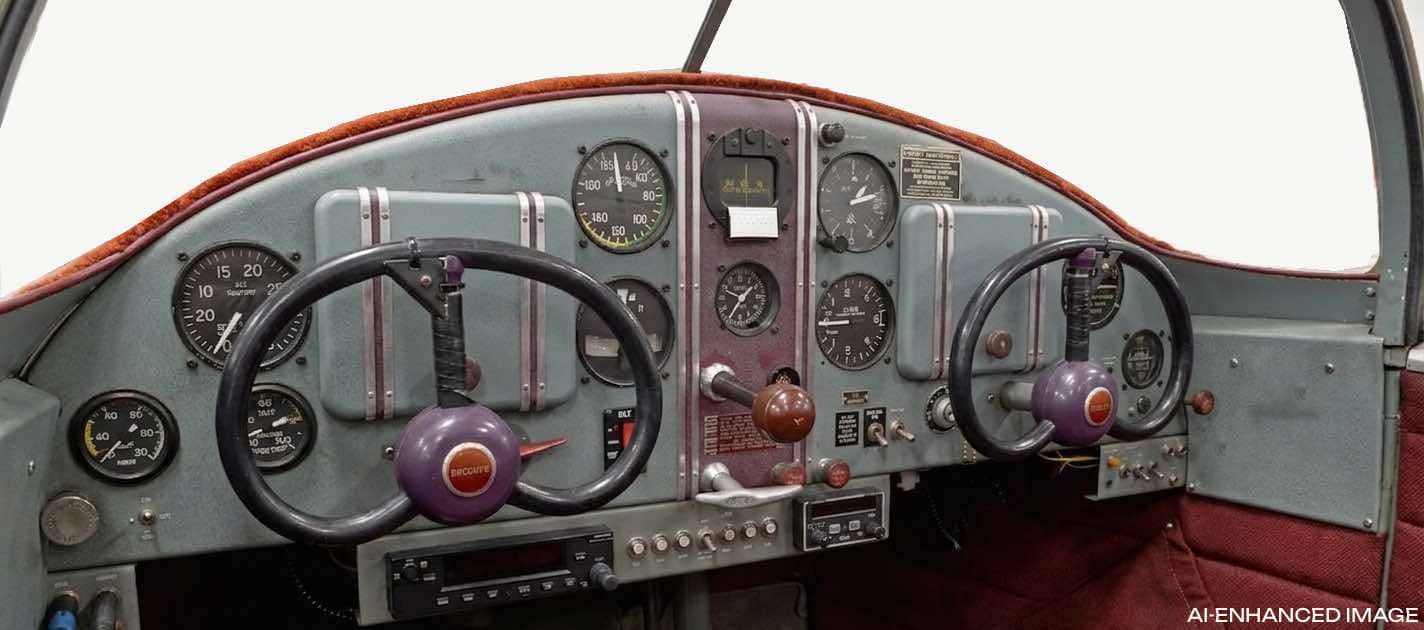
The cockpit is simple and uncluttered, reflecting its 1940s design intent of reducing pilot workload. The absence of rudder pedals in standard configuration is one of its most defining features, with coordinated turns handled primarily through the yoke. This design dramatically lowers training complexity and makes the aircraft feel more intuitive for new pilots transitioning into general aviation.
Visibility is one of the Ercoupe’s strongest characteristics. The large canopy and low instrument panel provide excellent outward views, making it particularly enjoyable for scenic flying and pattern work. The seating is side-by-side for two occupants, with a comfortable but compact cabin suited for short-duration flights rather than extended cross-country travel.
Inside, the Ercoupe feels more like an early aviation “flying car” concept than a modern trainer. Controls are light, predictable, and intentionally limited in complexity. It rewards smooth inputs and stable flight rather than aggressive maneuvering, reinforcing its reputation as one of the most forgiving aircraft ever certified.
The ERCO 415-C Ercoupe is ideal for pilots who value simplicity, safety, and pure flying enjoyment over performance or complexity. It is especially well-suited for student pilots, recreational aviators, tailwheel-transition alternatives, and vintage aircraft enthusiasts.
This aircraft is a strong match for those who value:
Easy and forgiving flight characteristics
Spin-resistant safety-focused design
Low operating and maintenance costs
Excellent visibility and open-cockpit feel
Simple cockpit workload and controls
Short scenic flights and local operations
Classic post-war general aviation heritage
The Ercoupe 415-C is not built for speed, range, or advanced mission profiles—it is built to make flying approachable and enjoyable. Its combination of unique control design, lightweight structure, and historical significance makes it one of the most distinctive and important light aircraft in aviation history.
Full description, specifications and every photograph. Prices and closing times are a snapshot, check this page before you bid.
Common questions about bidding on CollectAirs. Learn how auctions work or visit our About page.
Create a free CollectAirs account, complete your profile, and click Place Bid while the auction is live. You can review bid history and confirm your amount before submitting.
A reserve is the minimum price the seller will accept. If bidding does not reach the reserve before the auction ends, the aircraft is not sold.
A Pre-Buy Inspection is an independent expert review of the aircraft before you commit. It helps verify condition and documentation so you can bid with more confidence.
Yes. CollectAirs supports buyer diligence through verified documentation and Pre-Buy Inspection options. Contact details and next steps are available on our About page.
CollectAirs stays with you through inspection, payment and transfer of title. For everything after, a vetted specialist.
Every provider is an independent, certified company, we make the introduction and stay involved until the aircraft is home. Terms and pricing are agreed directly with the provider you choose.
List it for free and reach qualified buyers worldwide.
Benningen am NeckarComing soon, not yet consigned
Own a ERCO (Engineering and Research Corporation) too? List it free, you only pay when it sells.
Free to browse, register and bid.
Reach a person the way that suits you, on WhatsApp, on a call, or with a question we pass straight to the seller.
Online support 24/7
Seller Q&A
Ask the seller anything
Get answers before you bid
No questions yet
Be the first to ask the seller a question!