
 Nordhorn
 Florida
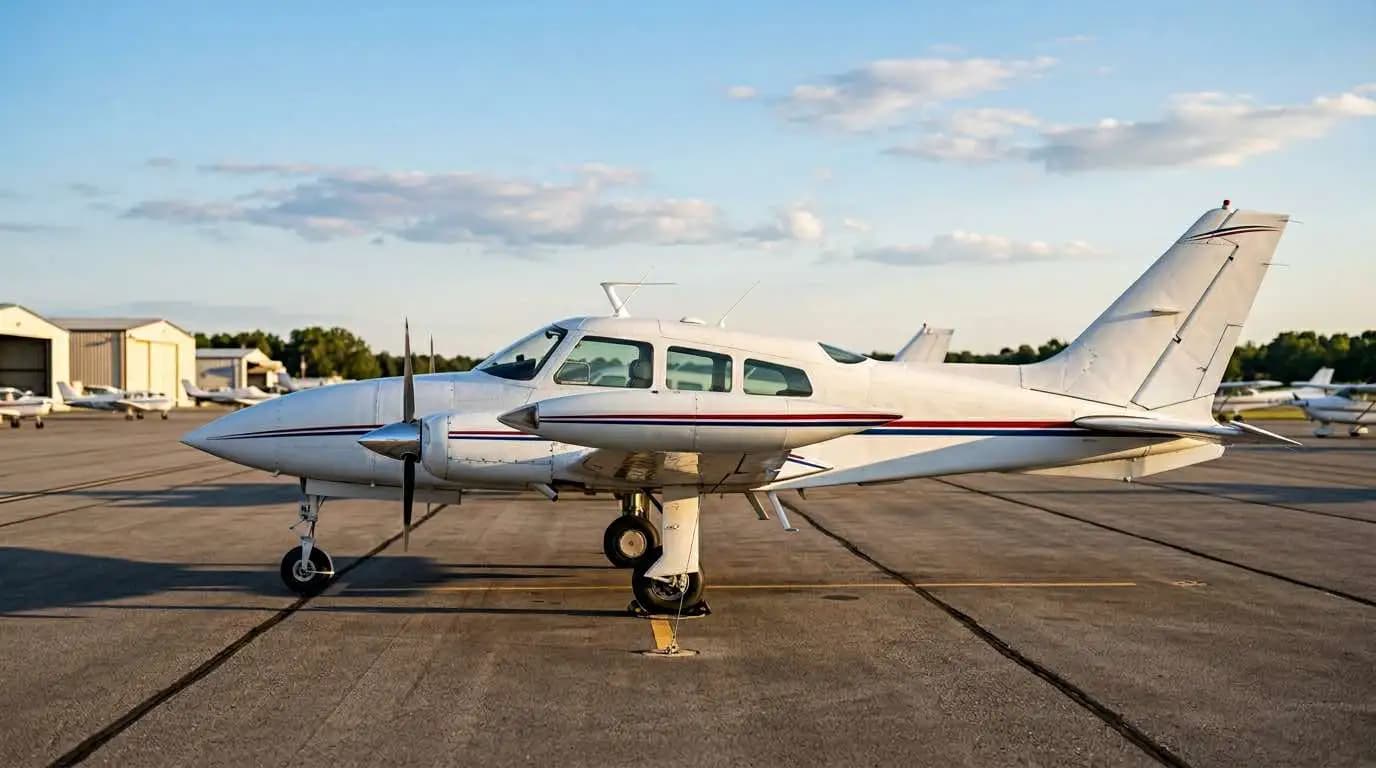
Cessna 310: Aircraft Overview and History
The Cessna 310 entered production in 1954 as one of Cessna's first twin-engine designs. It was immediately recognizable for its distinctive tip-mounted fuel tanks: a design feature that served both as fuel storage and as an aerodynamic endplate reducing induced drag at the wingtips. Over its 26-year production run, the 310 evolved through numerous model designations from the original 310 through the final 310R, with engine upgrades, avionics improvements, and structural refinements at each stage.
With over 6,321 aircraft delivered, the Cessna 310 became one of the best-selling light twins in aviation history. It gained additional visibility through its appearance in the television series “Sky King” and established a reputation as a fast, capable, and relatively affordable twin-engine platform suitable for business travel, personal transportation, and light cargo operations. Today, several thousand examples remain on the FAA registry, making parts availability and maintenance support strong.
Production History: 1954–1980
The longest continuous production run of any Cessna light twin. Over 6,321 aircraft delivered across all variants. Manufacturing at Cessna's Wichita, Kansas facility. The 310 was succeeded by the Cessna 340 (pressurized) and 402 (utility/cargo), both sharing design DNA with the 310 platform.
Design Signature: Tip Tanks
The tip-mounted fuel tanks are the most recognizable feature of the Cessna 310. Beyond fuel storage (50 gallons per side), the tip tanks function as Whitcomb-style endplates, reducing wingtip vortices and improving aerodynamic efficiency. This design contributes to the 310's favorable speed and fuel efficiency for its class.
Market Position Today
The Cessna 310 occupies the affordable end of the twin-engine piston market. It competes with the Beechcraft Baron 58, Piper Aztec, Piper Seneca, and Aero Commander 500 series. The 310 offers the best combination of speed and range in this price bracket, though the Baron 58 commands stronger residual values due to continued demand.
Cessna 310F currently available on CollectAirs
A verified Cessna 310F is listed now, complete documentation, transparent auction terms, and escrow-protected transaction.
Cessna 310 Model Variants: 310A Through 310R
The Cessna 310 evolved significantly across its 26-year production span. Engine power increased from 240 HP to 285 HP, gross weight grew from 4,830 lbs to 5,500 lbs, and systems were modernized at nearly every model change. Understanding which variant you are evaluating is critical to setting the right expectations for performance, maintenance, and value.
Early Models: 310 / 310A–310F (1954–1961)
Continental IO-470-D engines (240 HP each). Straight tail with later swept vertical stabilizer introduced on 310D. Tip tanks only (100 gallons total). Gross weight 4,830–5,100 lbs. These are the most affordable variants ($35,000–$60,000) but carry the highest maintenance exposure due to age and parts scarcity for early-specific components.
Mid-Production: 310G–310N (1962–1968)
IO-470 engines upgraded to 260 HP on some variants. Introduction of the swept vertical tail, larger cabin windows, and improved fuel systems. 310I and 310J introduced additional fuel capacity options. The 310K (1966) brought canted tip tanks for improved aesthetics and aerodynamics. Used pricing: $45,000–$85,000.
Late Models: 310P–310R (1969–1980)
Continental IO-520-M engines (285 HP each) with 1,700-hour TBO. Gross weight increased to 5,500 lbs. Maximum 207 gallons fuel with auxiliary tanks. The 310R (1975–1980) is the final and most desirable variant, best engines, highest gross weight, best performance. Used pricing: $100,000–$175,000 for well-maintained examples.
Turbocharged: T310P–T310R (1969–1980)
Continental TSIO-520-B engines (285 HP each) with turbocharging for altitude performance. Cruise at FL200+ at 210–220 KTAS. Same airframe as normally aspirated variants but with turbo system, intercoolers, and associated plumbing. Premium of $10,000–$30,000 over equivalent normally aspirated models. Higher maintenance complexity and cost.
Cessna 310 Performance: Speed, Range and Fuel Burn
The Cessna 310 was designed as a fast, efficient cross-country twin. Its performance compares favorably with contemporary competitors and remains impressive by modern light-twin standards, particularly the later 310R and T310R variants with Continental IO-520 and TSIO-520 power.
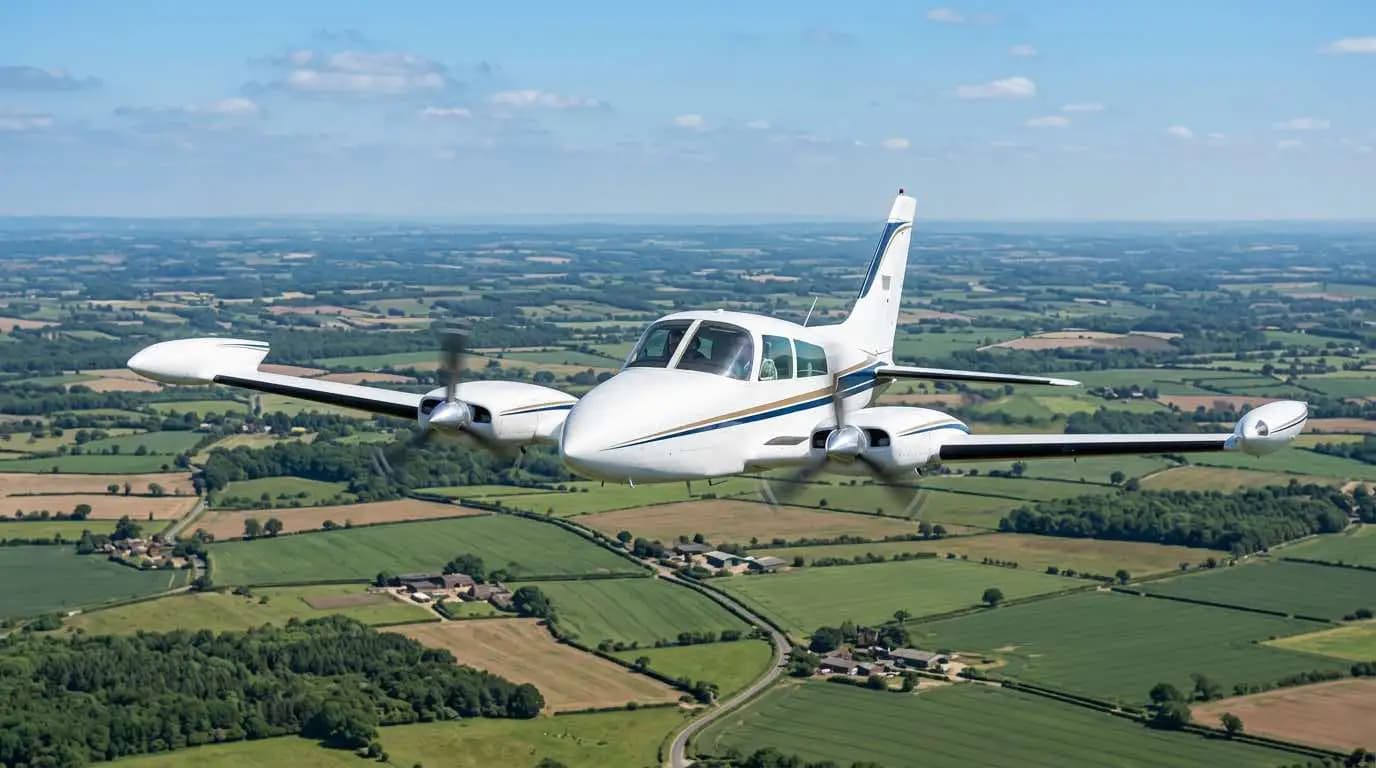
Cruise Speed: 195–205 KTAS (310R at 75%)
The 310R achieves 195–205 KTAS at 75% power at 7,500 ft. At economy cruise (55% power), speed drops to 175–185 KTAS but fuel burn improves significantly. The T310R achieves 210–220 KTAS at FL200, making it among the fastest piston twins ever produced.
Range: Up to 1,100 NM with Maximum Fuel
With all tanks full (207 gallons), the 310R achieves 1,000–1,100 NM at economy cruise with IFR reserves. This covers most continental U.S. city pairs within two fuel stops. Tip-tanks-only range (100 gallons) is 550–650 NM, sufficient for most regional missions.
Fuel Burn: 28–34 GPH Total (310R)
At 65–75% power, the IO-520-equipped 310R burns 28–34 GPH total (both engines). Economy cruise at 55% power reduces burn to 26–30 GPH. At current Avgas prices ($6.00–$7.50/gallon), fuel cost runs $180–$250 per flight hour, the largest variable operating expense.
Single-Engine Performance
Single-engine performance is a critical consideration for any twin. The 310R has a single-engine service ceiling of approximately 7,400 ft (ISA, MTOW), adequate for most terrain but limited in mountainous regions. Vmca (minimum control speed, air) is 80 KIAS. Multi-engine proficiency training and recurrent practice are essential for safe 310 operation.
Cabin Layout and Interior Configuration
The Cessna 310 cabin seats four to six occupants including crew. While not spacious by modern standards, the cabin is functional for cross-country travel and has been configured in various seating arrangements over its production history.
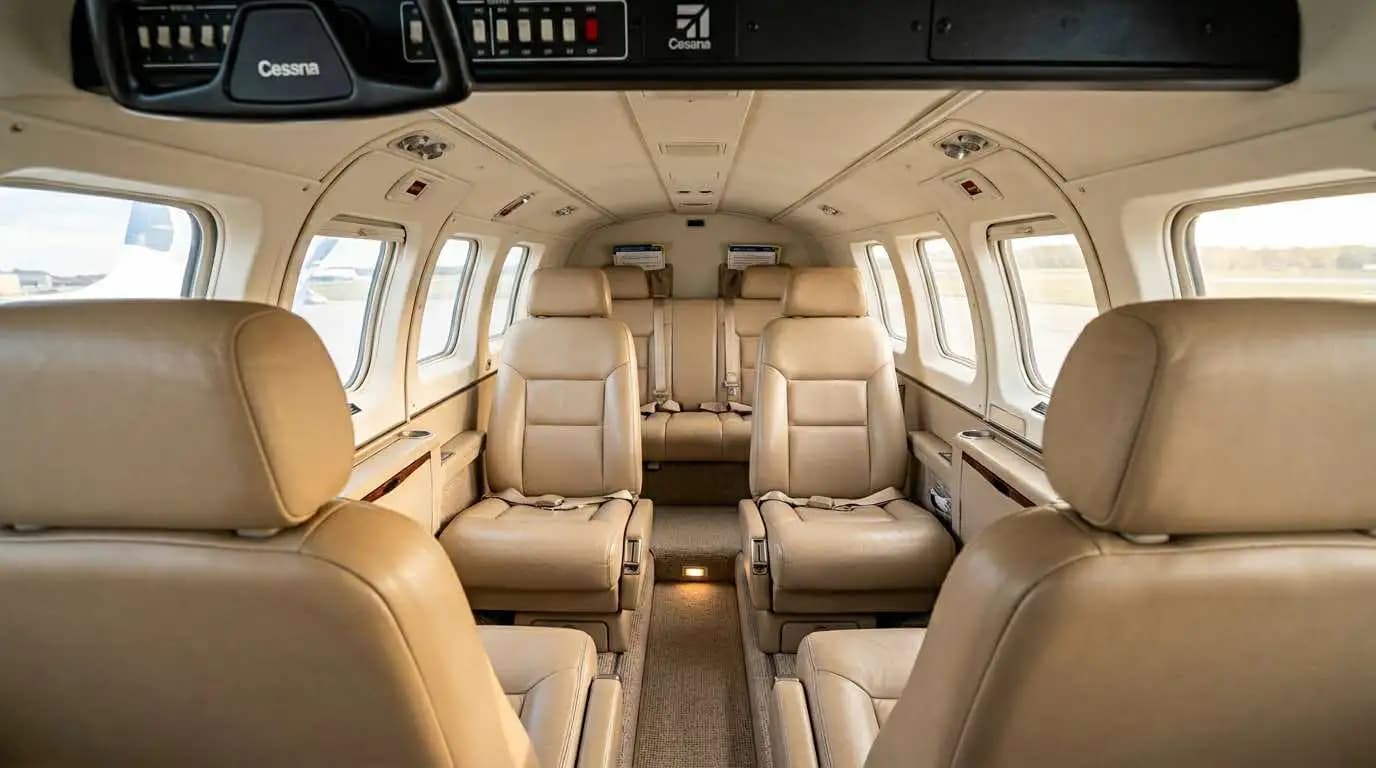
Seating: 4–6 Occupants Including Crew
Standard configuration: two crew seats forward, two individual passenger seats in the mid-cabin, and a bench seat (or two additional individual seats) in the rear. Later 310R models offer improved seating with better padding and adjustment. The rear bench folds to create a cargo area for bulky items.
Cabin Dimensions: 12 ft 2 in × 4 ft 6 in × 3 ft 6 in
Cabin width of 4 ft 6 in (54 inches) is comparable to other light twins of the era. Headroom of 3 ft 6 in requires passengers to crouch when moving through the cabin. Entry is through the forward right cabin door, a single airstair door on later models.
Baggage: Rear Compartment and Nose Locker
The main baggage compartment behind the rear seats holds approximately 15 cu ft. A nose baggage locker adds additional capacity. Combined baggage capacity is adequate for overnight trips for four passengers. Aux fuel tanks occupy the wing locker space, reducing baggage capacity when all auxiliary fuel is installed.
Cessna 310 Ownership Costs and Operating Economics
The Cessna 310 offers affordable acquisition, but twin-engine operating costs are substantially higher than single-engine aircraft. Two engines mean double the fuel burn, double the overhaul reserves, and more complex systems maintenance. Buyers should budget realistically before committing.
Cessna 310R Annual Cost Structure (200 hours)
- Fuel (200 hrs × 30 GPH × $6.50/gal): ~$39,000
- Engine overhaul reserves (2 × IO-520, $42K overhaul ÷ 1,700 TBO × 200 hrs): ~$9,880
- Annual inspection: $3,000–$8,000 (condition dependent)
- Unscheduled maintenance and parts: $5,000–$12,000/yr
- Insurance (hull $120K + liability): $4,000–$8,000/yr
- Hangar: $3,600–$9,600/yr (regional variation)
- Avionics database subscriptions: $1,500–$3,000/yr
- Total annual: ~$66,000–$89,500 at 200 hours
- Total loaded hourly cost: ~$330–$448/hr
Engine Overhaul: The Largest Single Expense
Each Continental IO-520 engine costs $35,000–$50,000 to overhaul. With two engines, a simultaneous overhaul represents $70,000–$100,000: potentially exceeding the aircraft's value on lower-value examples. Buyers should verify remaining engine time carefully and factor overhaul cost into the acquisition price. An aircraft with two run-out engines should be priced $70K–$100K below a comparable aircraft with mid-time engines.
Maintenance Considerations and AD Compliance
The Cessna 310 has a well-established maintenance history with strong parts availability and an extensive network of experienced mechanics. However, age-related issues are increasingly relevant as these aircraft reach 45–70 years of service. Understanding the key maintenance areas is essential for any prospective buyer.
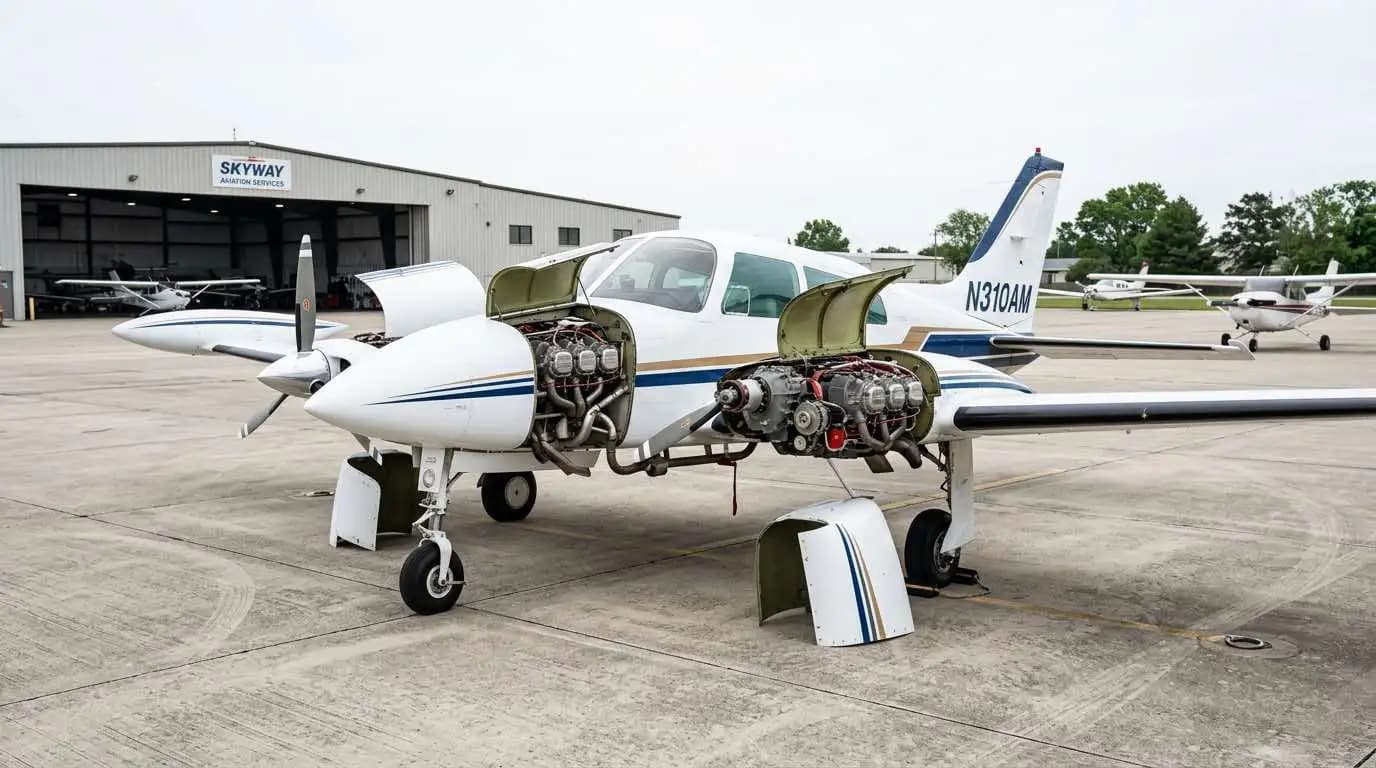
Annual Inspection: $3,000–$8,000
A routine annual inspection on a well-maintained Cessna 310 costs $3,000–$5,000 in labor plus parts. Annuals that uncover deferred maintenance, corrosion, or age-related issues can escalate to $8,000–$15,000+. Pre-buy a 310 that recently completed a clean annual with minimal squawks.
AD Compliance: Recurring and One-Time
The Cessna 310 has accumulated numerous Airworthiness Directives over its service life. Key ADs address wing spar inspection, fuel tank bladder condition, tip tank attachment hardware, landing gear actuator inspection, and Continental engine crankcase inspection. AD compliance status must be verified against the complete AD list for the specific model, serial number, and engine pair.
Corrosion: Age-Related Priority
With airframes 45–70 years old, corrosion is the most significant structural concern. Wing spar corrosion, carry-through spar condition, and skin panel condition require careful inspection. Aircraft based in coastal or humid environments are at elevated risk. A thorough corrosion inspection should be part of any pre-purchase evaluation.
Landing Gear: High-Maintenance System
The Cessna 310 retractable gear system is mechanically complex with hydraulic actuation, up-locks, down-locks, and sequencing valves. Gear-related maintenance is a significant portion of ongoing costs. Inspect gear actuators, bushings, trunnion pins, and hydraulic lines carefully. Gear rigging and door alignment require experienced mechanics.
Tip Tank Condition
The iconic tip tanks are structural components that carry fuel and aerodynamic loads. Inspect for leaks, internal corrosion, bladder condition (on bladder-tank models), and attachment hardware integrity. Tip tank replacement or repair is expensive ($5,000–$15,000 per tank) and requires specialized tooling.
Buying a Cessna 310: Verification and Due Diligence
Buying a Cessna 310 demands careful pre-purchase inspection and documentation review. The age of these aircraft means logbook completeness, AD compliance, and structural condition are paramount. CollectAirs coordinates the following verification steps for light-twin transactions.
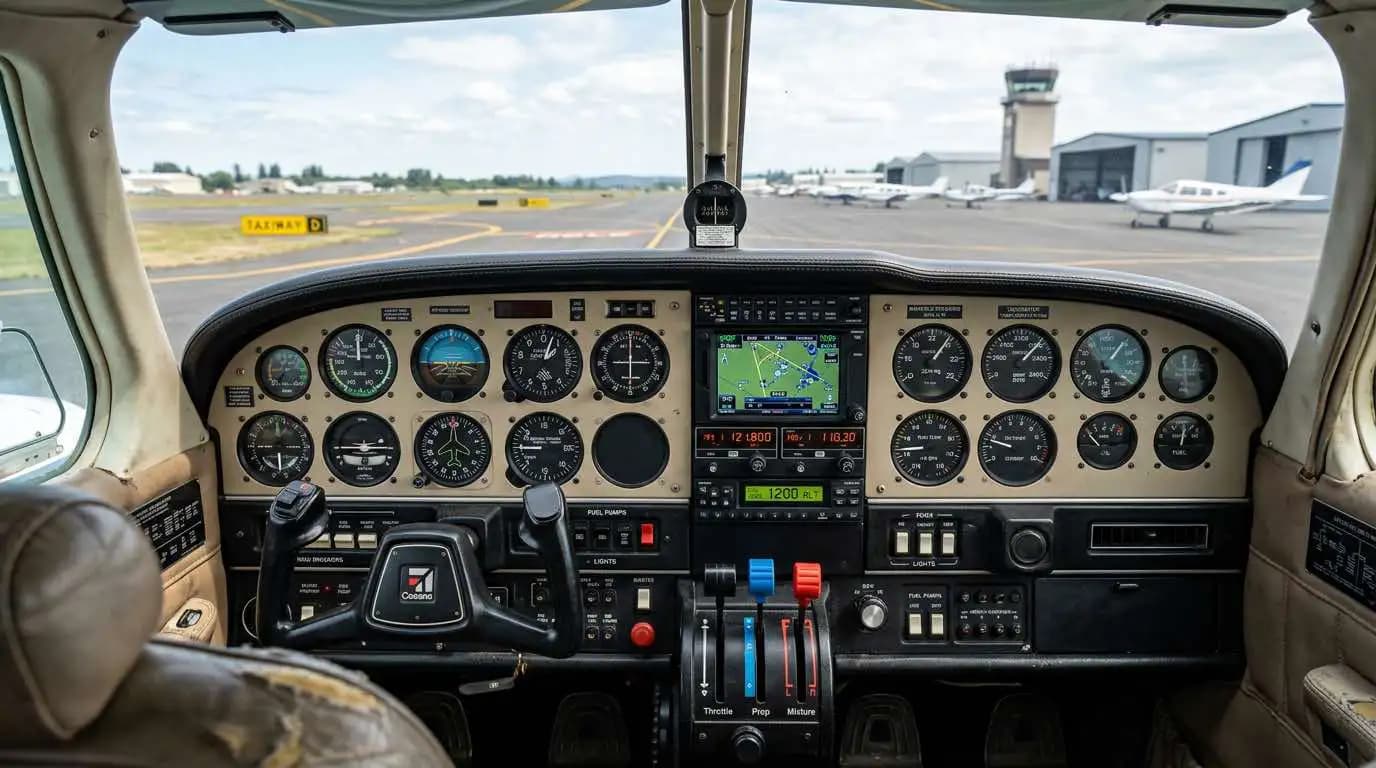
Logbook Verification
Complete logbook continuity from new or earliest available records. For 310s built in the 1950s–1970s, logbook gaps are common, especially if the aircraft changed hands multiple times. Missing logbooks reduce value by 15–30% and may prevent insurance coverage at favorable rates.
AD Compliance Status
Verify compliance with all applicable ADs for the specific airframe serial number, engine serial numbers, and installed propellers. Pay special attention to wing spar ADs, fuel system ADs, and Continental engine crankcase ADs. Non-compliance with mandatory ADs renders the aircraft unairworthy.
Pre-Purchase Inspection
A thorough pre-purchase inspection by a mechanic experienced with Cessna 300/400 series twins costs $2,500–$5,000 and takes 3–5 days. The inspection should include compression check, borescope of both engines, corrosion inspection of wing spars and carry-through, gear system evaluation, and fuel system integrity test.
Engine Time and Overhaul History
Verify time since major overhaul (SMOH) for both engines and review overhaul shop records. Continental IO-520 engines overhauled by reputable shops (Continental Motors, Mattituck, Penn Yan Aero) command confidence. Field overhauls or unknown shop histories reduce value and increase risk.
Avionics Condition and Upgrades
Modern avionics upgrades (Garmin GNS 530/430, GTN 750/650, Aspen PFD, digital engine monitors) add $15,000–$60,000 in value versus original steam gauges. ADS-B Out compliance is mandatory. Verify avionics database currency and autopilot functionality during the pre-purchase evaluation flight.
Cessna 310 Specifications: Complete Data Table
| Specification | Value | Why It Matters |
|---|---|---|
| Engines (310R) | 2x Continental IO-520-M (285 HP each) | Normally aspirated; fuel-injected; TBO 1,700 hours; overhaul cost $35,000–$50,000 per engine |
| Engines (T310R) | 2x Continental TSIO-520-B (285 HP each) | Turbocharged; fuel-injected; TBO 1,700 hours; turbo adds altitude performance and $5K–$8K to overhaul |
| Max Cruise Speed (310R) | 200 KTAS at 75% power, 7,500 ft | T310R achieves 210–220 KTAS at FL200; Vne 238 KIAS; one of the fastest piston twins produced |
| Economy Cruise | 175–185 KTAS at 55% power | Reduces fuel burn to 26–30 GPH total; extends range by 15–20% versus 75% power cruise |
| Range (max fuel, 310R) | 1,000–1,100 NM | With 207 gallons (tip tanks + aux); 550–650 NM with tip tanks only (100 gal); NBAA IFR reserves |
| Fuel Burn (310R) | 28–34 GPH total (both engines) | At 65–75% power; economy cruise 26–30 GPH; Avgas cost $180–$250/hr at current prices |
| Service Ceiling | 19,750 ft (310R) / FL200+ (T310R) | Turbo models maintain power to altitude; useful for weather avoidance and routing flexibility |
| Takeoff Distance (310R) | 1,662 ft (ground roll, SL ISA MTOW) | Over 50 ft obstacle: 1,790 ft; good short-field performance for a light twin |
| Cabin Seats | 4–6 passengers (typical 4+2 crew) | Club seating in later models; bench seating in early variants; 42 in cabin width |
| Cabin Dimensions | 12 ft 2 in × 4 ft 6 in × 3 ft 6 in | Length × width × height; adequate for 4 adults plus 2 crew; rear bench folds for cargo |
| MTOW (310R) | 5,500 lbs (2,495 kg) | Useful load approximately 1,900 lbs; payload with full fuel (207 gal) approximately 660 lbs |
| Empty Weight (310R) | 3,600 lbs (1,633 kg) | Varies with equipment; tip tanks are structural and included in empty weight |
| Fuel Capacity | 100 gal (tips) / 207 gal (max) | Tip tanks are standard; auxiliary bladder tanks in wing lockers add 107 gallons of usable fuel |
| Production | 1954–1980 (~6,321 built) | Models 310 through 310R; one of the longest-running light twin production lines in aviation history |
| Used Price Range | $50,000–$175,000 | 310R with mid-time engines and modern avionics: $100K–$175K; earlier models: $35K–$75K |
Cessna 310F for Sale on CollectAirs
A verified Cessna 310F is available now, complete logbook review, escrow-protected transaction, pre-purchase inspection coordination, and transparent auction terms. No surprises.
Frequently Asked Questions: Cessna 310
How much is a Cessna 310 worth?
A used Cessna 310 is worth $50,000–$175,000 depending on model year, total airframe time, engine time remaining to overhaul, avionics suite, and overall condition. Late-model 310R examples with mid-time Continental IO-520 engines and modern avionics command $100,000–$175,000. Earlier models (310A–310N) in flyable condition start around $35,000–$75,000. T310R variants command premiums of $10,000–$30,000 over normally aspirated equivalents. Logbook completeness and annual inspection status are the most significant value drivers outside of engine time.
Is a Cessna 310 a good airplane?
Yes, the Cessna 310 is a capable and well-regarded light twin for experienced pilots. It offers 195–205 KTAS cruise speed, up to 1,100 NM range with full fuel, and six-seat capacity in a platform with over 60 years of operational history. It is not an entry-level aircraft. It requires a multi-engine instrument rating, recurrent training, and the budget to maintain two Continental engines. For pilots with the experience and financial commitment, the 310 delivers genuine cross-country utility at an accessible acquisition price.
What are the common problems with a Cessna 310?
The most common problems are corrosion (wing spars, fuselage structure, skin panels on high-time or coastal aircraft), tip tank leaks and internal corrosion, retractable landing gear system wear (actuators, trunnions, hydraulic lines), Continental engine crankcase cracks (addressed by AD), and exhaust system deterioration. Avionics on older examples often need upgrade for ADS-B Out compliance. A thorough pre-purchase inspection by a mechanic experienced with Cessna 300-series twins is essential.
Is Cessna 310 still made?
No, the Cessna 310 is no longer in production. Cessna manufactured the 310 from 1954 through 1980, delivering over 6,321 aircraft. Production ended when Cessna shifted its twin-engine lineup toward the pressurized 340 and 414 models. No modern successor has been introduced. The 310 is available exclusively on the used aircraft market.
Can a Cessna 310 fly with one engine?
Yes, the Cessna 310 is certified for single-engine operations, but performance is significantly reduced. The 310R has a single-engine service ceiling of approximately 7,400 ft (ISA, MTOW). Minimum control speed in the air (Vmca) is 80 KIAS. Safe single-engine operation requires correct shutdown procedure, maintaining speed above Vmca, and disciplined pilot technique. Pilots should practice single-engine procedures regularly with a qualified instructor, the 310 is manageable on one engine but demands active proficiency.
How much fuel does a Cessna 310 burn per hour?
Early IO-470-equipped models burn 24–28 GPH total at 65% power. Later 310R models with IO-520 engines burn 28–34 GPH at 65–75% power. Economy cruise (55% power) reduces burn to 22–26 GPH (IO-470) or 26–30 GPH (IO-520). At current Avgas prices ($6.00–$7.50/gallon), fuel cost runs $150–$250 per flight hour.
Sources
Used for: official performance data, weight limits, engine specifications, and model designations for the Cessna 310 series.
Used for: engine power ratings, TBO intervals, overhaul cost benchmarks, and fuel burn figures for the Continental IO-520 and TSIO-520 engine families.
Used for: owner-reported operating cost data, real-world performance figures, and maintenance experience for the Cessna 310 series.
Used for: type-certificated performance limitations, weight data, fuel capacity, and model-specific specifications for all 310 variants.
Related Resources
Cessna 414 Buyer Guide
The pressurized step-up from the 310: full specifications, ownership costs, and what to verify before buying.
Read GuideBeechcraft Twin Bonanza Guide
A classic competitor: twin-engine performance, ownership costs, and buyer considerations.
Read GuideCessna 182 Skylane Guide
The single-engine alternative, lower operating costs with capable cross-country performance.
Read GuidePlanes for Sale Guide
How to find the right aircraft and buy it without expensive surprises: mission planning, inspection, and closing.
Read GuideAbout the Author

Phillip Müller
CEO, CollectAirs
Long-time pilot and CEO of multiple scenic flight and aircraft sales websites. Passionate about making aircraft transactions more transparent and accessible.
Connect on LinkedIn