
 Florida
 Hildesheim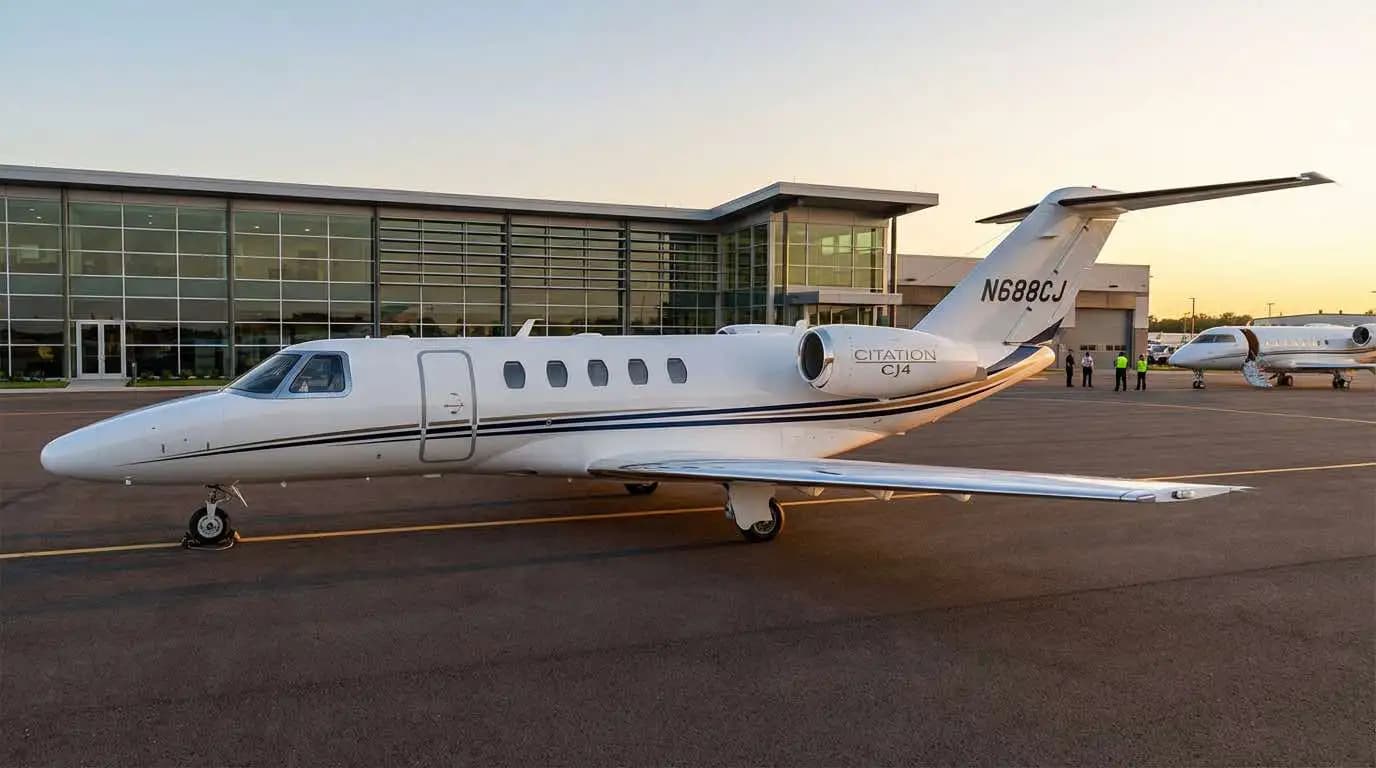
Why the Cessna Citation CJ4 Leads the Light Jet Category
The Cessna Citation CJ4 occupies a distinct position in the light jet market: the most capable single-pilot certified aircraft in the CJ family, delivering performance and cabin space that competes meaningfully with entry midsize jets at a lower acquisition and operating cost. FL450 operations, 451 KTAS max cruise, and a true stand-up-friendly cabin with private lav make the CJ4 a practical choice for owner-flown and managed charter missions.
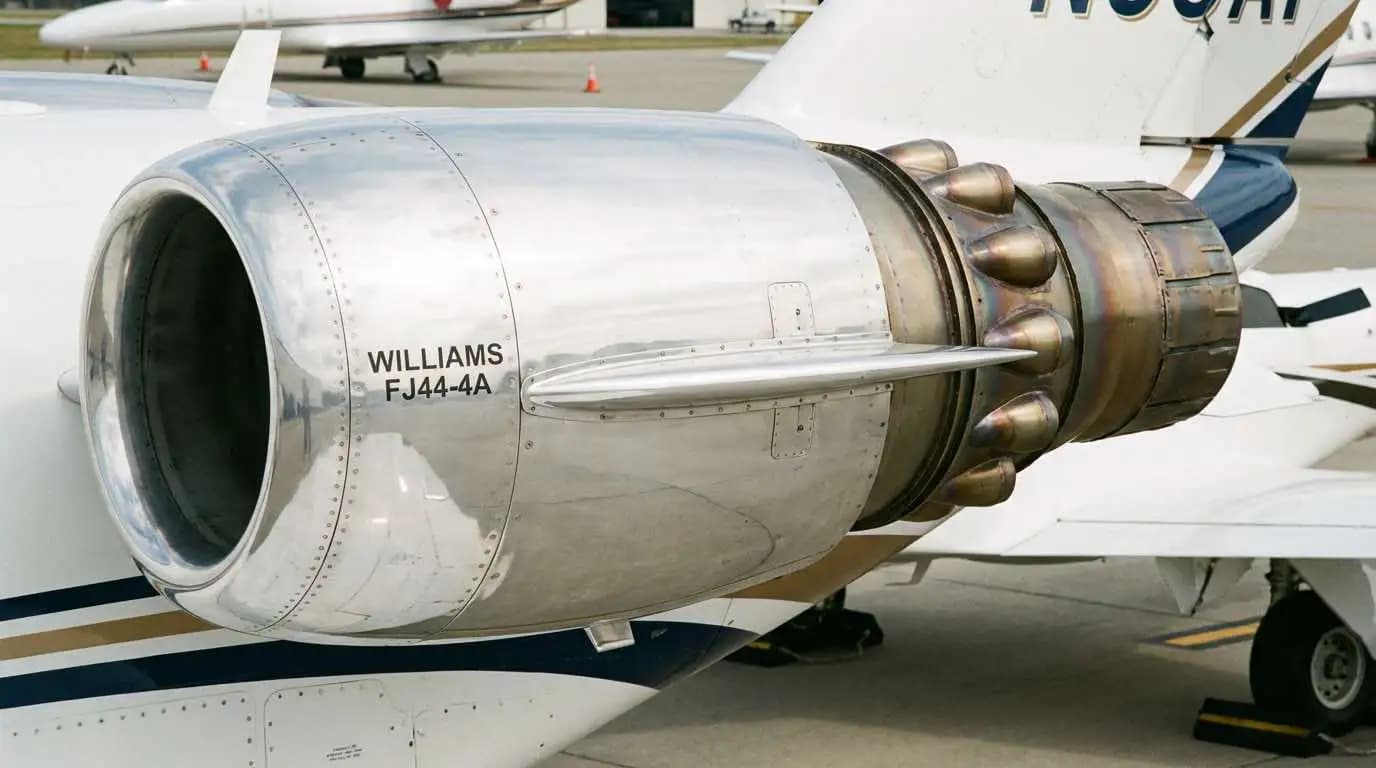
The Williams FJ44-4A engine is purpose-built for the CJ-series airframe: lightweight, fuel-efficient, and supported by a global network of authorized service centers. Unlike turboprop alternatives, the FJ44-4A delivers pure jet performance at all phases of flight with no propeller management complexity.
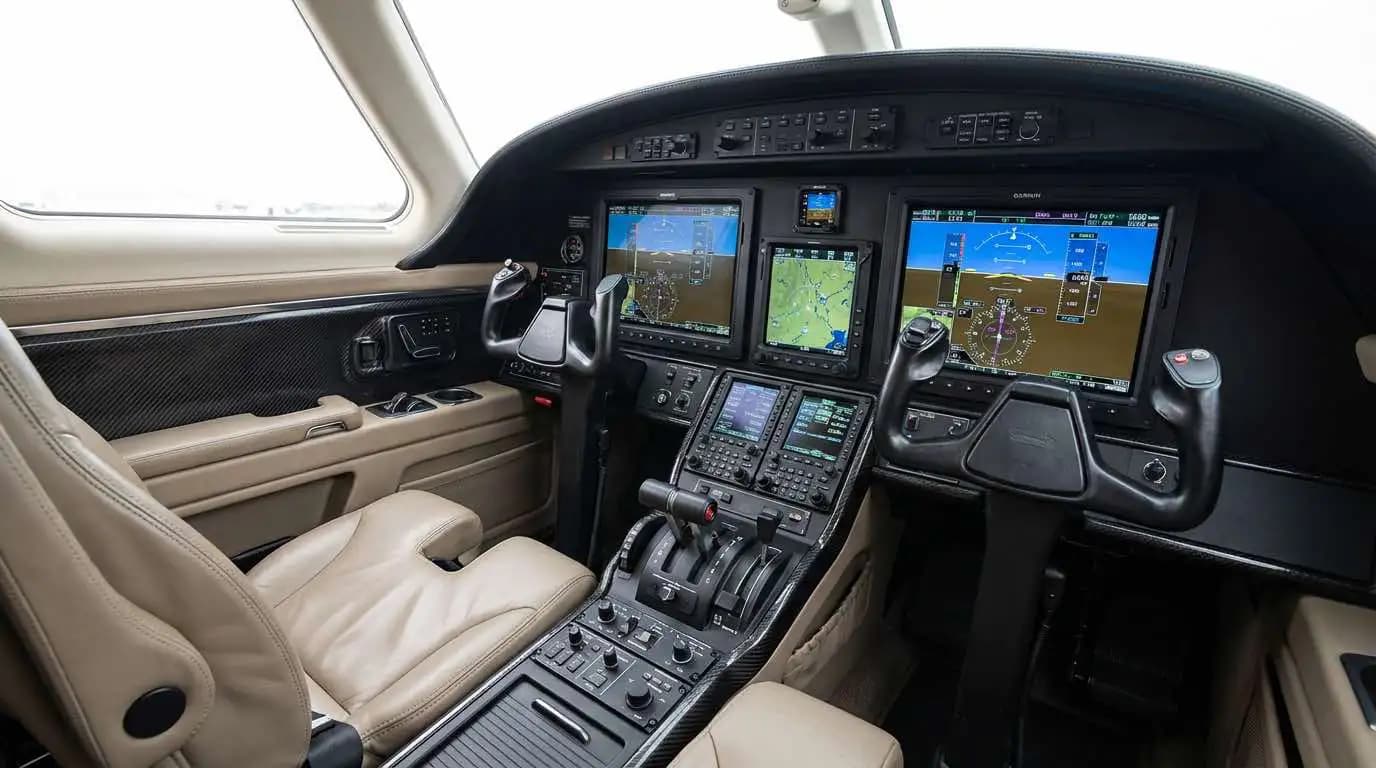
The Garmin G3000 avionics suite on Gen2 and later aircraft provides single-pilot situational awareness comparable to much larger jets: touchscreen primary displays, synthetic vision, three-axis autopilot, and fully integrated flight management reduce workload to manageable levels across all phases of single-crew operations.
Citation CJ4 listings on CollectAirs
Browse verified Cessna Citation CJ4 listings with full documentation and transparent auction terms.
History, Design Evolution, and the CJ Series
The Citation CJ family descends from the original Citation Jet (CJ1) introduced in 1992, which established the Williams FJ44 engine pairing and single-pilot certification philosophy that defines the line. Cessna progressively scaled the airframe through the CJ2, CJ2+, CJ3, and CJ3+ before introducing the Citation CJ4 in 2010 as the definitive expression of the family, larger fuselage, more powerful engines, higher ceiling, and longer range than all predecessors.
CJ4 Evolution Timeline
- 2010: Citation CJ4 Certification: FAA type certification; Williams FJ44-4A engines; Rockwell Collins Pro Line 21 avionics; FL450 ceiling first achieved in CJ series
- 2012–2020: Production Refinement: Ongoing interior updates, engine monitoring integration improvements, and avionics software revisions; early production variant
- 2021: Citation CJ4 Gen2: Garmin G3000 avionics replace Collins Pro Line 21; enhanced autothrottle; improved fuel efficiency; redesigned interior with increased cabin flexibility
- 2024+: Citation CJ4 Gen3: Next-generation cockpit evolution; enhanced connectivity; further interior refinements; active production continues at Textron Aviation
Avionics Generation Matters Significantly
Pre-Gen2 CJ4 aircraft (2010–2020) use Collins Pro Line 21 avionics. Gen2+ aircraft (2021+) use Garmin G3000 with touchscreen interface, synthetic vision, and improved autopilot integration. The avionics difference is substantial in terms of single-pilot workload, training currency requirements, and market value. Retrofit paths exist but are expensive ($400,000–$600,000+); buyers should factor avionics generation into all acquisition comparisons.
Cessna Citation CJ4 Performance: Speed, Range, and Altitude
The Citation CJ4's performance envelope is the defining reason buyers select it over lower CJ-series aircraft. FL450 certification, 451 KTAS max cruise, and 2,165 NM NBAA IFR range collectively place the CJ4 in competition with entry midsize jets at a meaningfully lower price point. The aircraft consistently delivers actual block times very close to manufacturer-published performance due to its efficient high-altitude cruise regime.
451 KTAS Max Cruise
Top-tier light jet speed at FL450; competes with entry midsize alternatives on block time for sectors under 1,500 NM.
FL450 Service Ceiling
Access to flight levels unavailable to most light jets; significant weather avoidance benefit and favorable wind layer access.
~2,165 NM NBAA Range
Covers all continental US routes non-stop and major international routes with one fuel stop; strong for the light jet category.

Williams FJ44-4A Engines: Maintenance, Programs, and Costs
The Citation CJ4 is powered by two Williams FJ44-4A engines producing 3,621 lbf thrust each. The FJ44 family has accumulated an exceptional reliability record across the CJ series; the -4A variant introduces full authority digital engine control (FADEC) and extended on-condition operation capability. Understanding engine program options is the single most important financial decision in CJ4 ownership.
FJ44-4A Specifications
- Thrust: 3,621 lbf per engine; FADEC-controlled; autothrottle capable on Gen2+ aircraft
- TBO / Interval: On-condition operation; no fixed TBO; maintained through ECTM trend monitoring and periodic borescope
- Overhaul cost: $500,000–$900,000+ per engine at major shop visit depending on hot-section condition
- Fuel type: Jet-A / Jet-A1; globally available at executive terminal facilities worldwide
Engine Program Options
- JSSI (Jet Support Services): Per-flight-hour coverage for both engines; protects against unscheduled removals and major shop visits; widely used on CJ4 fleet
- Williams TotalCare: Manufacturer-backed FJ44 engine program; covers scheduled and unscheduled maintenance from Williams service centers
- ECTM monitoring: Engine Condition Trend Monitoring required for on-condition operation; oil analysis and borescope inspections at defined intervals
- Non-enrolled risk: Unscheduled FJ44-4A removal on an unprotected aircraft can exceed $600,000 per engine; program enrollment is strongly recommended for all CJ4 buyers
Avionics, Cockpit, and Single-Pilot Systems Integration
The Citation CJ4's avionics suite is the primary differentiator between early production and Gen2/Gen3 aircraft. The transition from Rockwell Collins Pro Line 21 to Garmin G3000 represents a fundamental improvement in single-pilot workload management, situational awareness, and approach capability. Buyers must clearly understand which generation they are evaluating before pricing comparisons.
Collins Pro Line 21 (2010–2020 aircraft)
Three-display EFIS with FMS, dual ILS, and weather radar. Capable but requires higher workload in demanding IMC environments. Software and hardware support costs increasing as availability declines.
Garmin G3000 (Gen2, 2021+ aircraft)
Dual touchscreen primary displays with synthetic vision technology (SVT), integrated FMS, WAAS/LPV precision approach capability, and ADS-B In/Out. Intuitive interface significantly reduces single-pilot workload vs. Pro Line 21.
Three-Axis Autopilot with Autothrottle
Gen2 aircraft with G3000 include autothrottle integration, a meaningful single-pilot workload reduction during departure, arrival, and approach phases. Pre-Gen2 aircraft require manual throttle management throughout all flight phases.
Enhanced Ground Proximity Warning (EGPWS)
Standard on all CJ4s; terrain awareness and warning system provides forward-looking terrain avoidance and obstacle alerting. Essential safety system for single-pilot operations in terminal environments.
Traffic Collision Avoidance (TCAS II)
Resolution advisory-capable TCAS II is standard equipment. Mandatory for operations in Class A airspace and RVSM environments; ensures separation advisories in high-traffic terminal areas.
Citation CJ4 Cabin Interior: Capacity, Comfort, and Lavatory
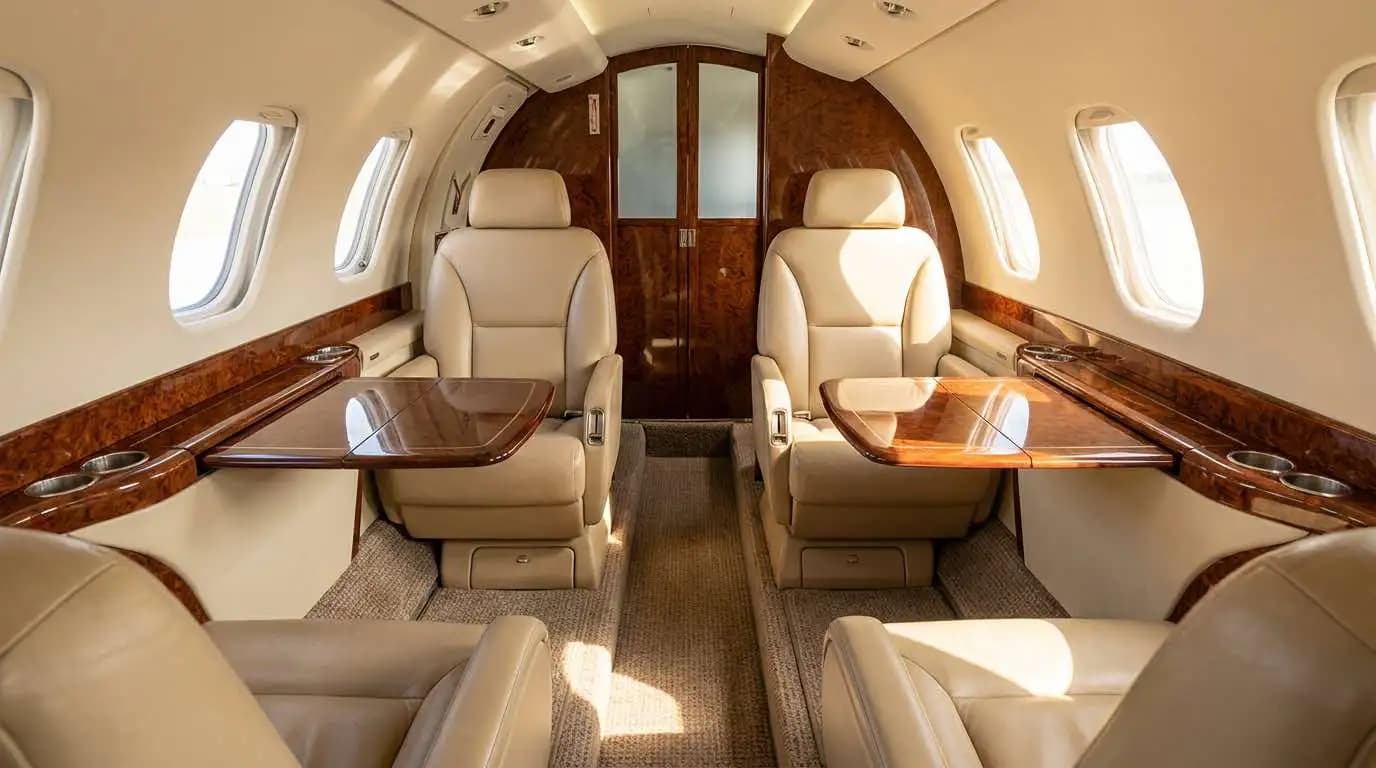
The Citation CJ4 cabin is the largest in the CJ series and the primary argument for selecting the CJ4 over smaller siblings or competing light jets. At approximately 15.7 feet in usable length with 4.8 feet of width and 4.8 feet of stand-up height, the CJ4 provides near-stand-up comfort that transforms cross-country missions.
Passenger Capacity: 7–9 Seats
Standard configuration seats 7 passengers in club and forward-facing arrangements. Nine-seat configurations are possible with reduced galley and storage. Typical owner-flown configuration is 7–8 seats with full galley and storage.
Private Belted Lavatory (Standard)
Aft private lavatory with full FAA-certified belted seat for taxi, takeoff, and landing. A defining CJ4 feature not available in most competing light jets; critical for longer missions and passenger comfort.
Baggage Capacity
Internal cabin baggage storage plus external nose baggage compartment. Total usable baggage capacity of approximately 77 cubic feet accommodates full passenger loads with rolling bags and overnight luggage.
Climate and Pressurization Comfort
Pressurization maintains 8,000-ft cabin altitude at FL450 cruise. Independent zone climate control maintains passenger comfort across all seasons. Pressurization system seal maintenance is a recurring cost item, verify current condition at inspection.
Connectivity and Entertainment
Modern CJ4s accommodate Ka-band or Ku-band satellite internet installation as aftermarket STC options. USB charging and 110V outlets are standard on Gen2+ aircraft. Connectivity capability affects charter appeal and resale value.
Citation CJ4 Ownership Costs and True Operating Expense
Cessna Citation CJ4 ownership costs reflect its position at the premium end of the light jet category. Annual operating expenses (excluding financing and depreciation) for typical owner-flown use of 200–400 hours annually range from $350,000 to $600,000, with engine program enrollment representing the largest single variable cost component.
Acquisition Cost
$5,500,000–$9,500,000 for used aircraft; $10,000,000+ new Gen2/Gen3. Engine program status, avionics generation, interior condition, and total airframe hours are the primary value drivers within each year bracket.
Engine Programs (JSSI / Williams TotalCare)
$200–$350 per flight hour for JSSI or equivalent coverage on both FJ44-4A engines. At 300 annual hours, engine program reserves total $60,000–$105,000 annually. Non-enrolled aircraft carry full unscheduled removal exposure exceeding $1M+ for both engines.
Annual Inspection
$25,000–$60,000 annually at a Textron-authorized service center. Jet avionics complexity, pressurization system testing, and FADEC diagnostic requirements necessitate facilities with specific CJ4 type experience.
Avionics and Systems Support
$5,000–$12,000 annually for Garmin G3000 or Collins Pro Line 21 database subscriptions, avionics maintenance contracts, and periodic systems repairs. ADS-B compliance and WAAS currency are minimum operational requirements.
Crew Training
$12,000–$20,000 annually per pilot for initial type rating and recurrent simulator training at FlightSafety International or CAE. Annual recurrent training is required to maintain CJ4 type rating currency.
Fuel Cost
~180–200 GPH Jet-A at cruise power; 300 annual hours equals approximately 54,000–60,000 gallons. At $5.50–$7.00/gallon at executive FBOs = $297,000–$420,000 annually in fuel for moderate utilization.
Buying a Cessna Citation CJ4: Pre-Purchase Checklist
Due diligence on a Cessna Citation CJ4 purchase requires structured evaluation of engine program status, avionics generation, airframe inspection compliance, and maintenance documentation completeness. At CJ4 acquisition price points, no element of this process should be abbreviated or deferred.
Documentation and Records Priority
- Complete airframe, engine (both), and avionics logbooks from first flight with no maintenance history gaps or unresolved discrepancy entries
- Engine program enrollment certificates (JSSI, Williams TotalCare, or equivalent), verify current enrollment status directly with program provider before signing any purchase agreement
- Both engine time since new (TSN) and time since last major shop visit with complete shop work order documentation and Williams service records
- Full AD compliance documentation for CJ4 airframe, both FJ44-4A engines, and all installed avionics, Citation type accumulates significant AD list over service life
- Avionics equipment list, modification records, and ADS-B Out/WAAS certification confirming current airspace compliance
- Pressurization system maintenance record including most recent differential pressure test results and door seal replacement history
- FAA Aircraft Registry title search confirming no liens, prior damage history records, or outstanding export restrictions
Technical Inspection Priorities
- Both FJ44-4A engine borescope inspections of combustion liner, high-pressure turbine blades, and low-pressure turbine section by Williams-authorized technician
- FADEC diagnostic download and ECTM data review against historical baseline for both engines, look for developing trends or anomalies requiring further investigation
- Pressurization system differential pressure test to rated differential; door seal and window reveal inspection for leakage and wear
- Avionics function check: G3000 or Pro Line 21 operational verification including autopilot coupled approaches, TCAS II resolution advisories, EGPWS terrain alerting, and ADS-B function
- Airframe structural inspection: wing attachment fittings, fuselage pressure hull inspection, control surface hinge points, and landing gear actuator condition
- Fuel system integrity: tank inspection, fuel control units, boost pump function, crossfeed system, and fuel quantity indication system accuracy
- Flight controls: cable tension, surface travel verification, trim system operation, and spoiler/speed brake function across full range
Transaction and Risk Management
- Engage a qualified aviation escrow service for all funds and document custody throughout the transaction, essential at CJ4 acquisition price points
- Contract pre-purchase inspection with a Textron-authorized Citation service center; independent IA with proven CJ4 type experience is an acceptable alternative
- Confirm engine program transferability with JSSI or Williams before closing, program transfer fees, re-enrollment requirements, and coverage gap management vary by provider
- Verify CJ4 type rating status and insurer pilot qualification requirements before closing, minimum training and experience requirements for insurance coverage affect immediate operability

Citation CJ4 Market Trends and Pricing Drivers (2026)
The Citation CJ4 used market has remained strong through recent market cycles, supported by sustained demand for capable single-pilot jets, ongoing Gen2/Gen3 production, and a constrained supply of well-maintained used examples. Primary value drivers in 2026:
Engine Program Enrollment
JSSI or Williams TotalCare-enrolled CJ4s trade at substantial premiums, often $300,000–$600,000 above identical non-enrolled aircraft. Buyers correctly price two unprotected FJ44-4A engines as a multi-million-dollar tail risk.
Avionics Generation (Pro Line 21 vs. G3000)
Gen2 G3000 aircraft command a significant premium over Pro Line 21 predecessors. The performance, workload, and supportability differences are material. Buyers with G3000 preference typically avoid Pro Line 21 aircraft at any price differential.
Engine Time Since Last Shop Visit
Aircraft with recently completed engine shop visits or low-time engines command the strongest premiums. High-time engines approaching major periodic inspection suppress pricing significantly relative to actual rectification cost.
Interior Condition and Connectivity
Well-presented interiors with current connectivity (Ka-band satellite, USB charging, modern entertainment) command premium positioning. Dated interiors reduce appeal for charter and managed aircraft buyers disproportionately.
Total Airframe Hours
Lower total time is preferred but not determinative. Documentation quality and systems currency matter more than airframe hours alone. A thoroughly maintained 5,000-hour example outvalues a 2,000-hour aircraft with deferred maintenance.
Gen3 Production Influence
CJ4 Gen3 production deliveries (2024+) exert downward pressure on Gen2 values as the newest-generation aircraft enters the used market over time. Buyers of Gen2 aircraft benefit from this dynamic; Gen3 buyers pay the production price premium.
Cessna Citation CJ4 Key Facts
| Specification | Typical Range / Value | Why It Matters |
|---|---|---|
| Engines | 2× Williams FJ44-4A, 3,621 lbf each | Purpose-built light jet engines with strong reliability record and full JSSI/MSP engine program coverage available; global service network |
| Max Cruise Speed | 451 KTAS (Mach 0.737) at FL450 | Top-tier speed for the light jet category; competitive against larger midsize jets on shorter sectors |
| Normal Cruise Speed | 429 KTAS at FL430 | Efficient cruise at typical flight levels; high cruise altitude reduces fuel burn and enroute weather exposure |
| Service Ceiling | FL450 (45,000 feet) | FL450 certification provides significant weather avoidance capability and access to favorable wind layers unavailable to lower-certified aircraft |
| NBAA IFR Range | ~2,165 NM (4 passengers) | Covers most continental US non-stop and major transatlantic legs with one or two fuel stops; strongly competitive for the light jet category |
| Passenger Capacity | Typically 7–9 passengers + 1 pilot (single-pilot certified) | Large light jet cabin with belted lav; genuine business transport capability without requiring two crew under Part 91 |
| Takeoff Distance (SL, ISA) | ~3,410 feet over 50-ft obstacle | Moderate field performance opens most executive and regional airports; density altitude management critical at high-elevation airports |
| Engine TBO / Program | On-condition (FJ44-4A); JSSI, MSP, or equivalent coverage | FJ44-4A engines operate on-condition with trend monitoring; program enrollment is essential to manage unscheduled removal risk |
| Avionics Suite | Garmin G3000 (Gen2/Gen3); Collins Pro Line 21 (early models) | Avionics generation is a major value differentiator; G3000 with touchscreen interface and SVT is significantly more capable than Pro Line 21 |
| Used Market Asking Price | $5,500,000–$9,500,000 | Driven by year of manufacture, engine program status, avionics generation, total airframe hours, and maintenance documentation quality |
Citation CJ4 on CollectAirs
Browse our verified Cessna Citation CJ4 listings with full documentation and transparent auction terms. CollectAirs connects qualified buyers with thoroughly vetted light business jets, with escrow protection, pre-purchase inspection coordination, engine program verification, and title confirmation on every transaction.
Frequently Asked Questions About the Cessna Citation CJ4
How much does a Cessna Citation CJ4 cost?
Used CJ4 prices range from $5.5M to $9.5M depending on year, engine program, avionics, and condition. Early 2010–2014 models trade around $5.5M–$7M. Newer 2016–2021 aircraft with current programs command $7.5M–$9.5M. New Gen2 production aircraft list above $10M. Engine program enrollment and avionics generation are the primary value levers.
Does the Citation CJ4 have a toilet?
Yes. The CJ4 is equipped with a private belted lavatory at the aft of the cabin as standard. It includes a belted seat certified for taxi, takeoff, and landing, with enclosed privacy, a key differentiator from smaller CJ-series aircraft with more limited arrangements.
Is the CJ4 single pilot certified?
Yes. The CJ4 is FAA-certified for single-pilot operations under Part 91 with an appropriate type rating. Part 135 charter requires two-pilot crew. The G3000 avionics suite with three-axis autopilot and synthetic vision is designed specifically to support single-pilot workload management.
Can a Cessna Citation fly across the Atlantic?
The CJ4 cannot complete a non-stop transatlantic crossing; its NBAA IFR range is ~2,165 NM. Routes such as New York to London (~3,450 NM) require two fuel stops (e.g., Newfoundland and Iceland). Larger Citation models with extended range are needed for non-stop transatlantic operations.
Can a single pilot fly a Cessna Citation CJ4?
Yes, with an appropriate CJ4 type rating obtained through an FAA-approved training facility (FlightSafety, CAE). The type rating covers normal, abnormal, and emergency procedures with annual recurrent training required. No SIC is mandated for Part 91 operations.
What is the range of the Cessna Citation CJ4?
NBAA IFR range is approximately 2,165 NM with 4 passengers at FL430–FL450 cruise. This covers most continental US routes non-stop and regional international missions with one fuel stop. Maximum range with reduced payload extends further.
Sources
Used for: CJ4 certification reference, approved engine configurations, type certificate performance data, and single-pilot certification basis.
Used for: current production CJ4 performance specifications, Gen2/Gen3 avionics integration standards, and factory pricing reference.
Used for: FJ44-4A engine specifications, TotalCare program details, maintenance standards, and on-condition operation requirements.
Used for: G3000 system specifications, autothrottle integration, SVT capability, and single-pilot workload management design standards.
Used for: FJ44-4A engine program coverage structures, per-hour enrollment rates, and unscheduled removal protection standards.
Related Resources
Cessna Citation Longitude Guide
Performance, operating costs, avionics, and what to verify before buying the Citation Longitude super-midsize jet.
Read GuidePiper Meridian Guide
PT6A turboprop performance, G1000 NXi avionics, ownership costs, and what to verify before buying the Piper M500.
Read GuidePlanes for Sale Guide
How to find aircraft for sale, evaluate listings, and close your deal without expensive surprises.
Read GuideUsed Planes Buyer Guide
How to buy used aircraft wisely: verify records, scope inspections, and budget for real ownership costs.
Read GuideAbout the Author

Phillip Müller
CEO, CollectAirs
Long-time pilot and CEO of multiple scenic flight and aircraft sales websites. Passionate about making aircraft transactions more transparent and accessible.
Connect on LinkedIn