

 Florida
 Hildesheim
Why the Piper Meridian Leads the Owner-Flown Turboprop Segment
The Piper Meridian occupies a distinct market position: the most acquisition-accessible pressurized turboprop available to owner-pilots. While the Pilatus PC-12 and Daher TBM series command higher prices and larger airframes, the Meridian delivers the defining turboprop advantages: PT6A reliability, Jet-A fuel, pressurized cabin, and glass cockpit: at a price point that makes turboprop ownership achievable for a wider qualified buyer population.
The PA-46 airframe is one of the most refined single-engine platforms in production. Continuous development since the Malibu's 1983 introduction has resolved early pressurization concerns, refined systems integration, and built a mature service network. Buyers acquire not just an aircraft, they acquire decades of engineering refinement with a global support infrastructure.
Single-pilot operation under IFR to FL300 with six seats and 900+ NM range is a practical mission profile that few aircraft at any price point match. For the qualified owner-pilot operating moderate annual hours, the Piper Meridian M500 represents one of the most capable platforms per dollar in the pressurized turboprop category.
Piper Meridian listings on CollectAirs
Browse verified Piper Meridian listings with full documentation and transparent auction terms.
History, Design Evolution, and the PA-46 Platform
The PA-46 family began with the Piper Malibu in 1983: the first FAA-certified pressurized piston single in production. The piston-powered Malibu Mirage followed in 1988, offering improved Continental piston power. Piper then made a decisive move in 2000: the Malibu Meridian introduced the PT6A-42A turboprop to the PA-46 airframe, transforming the platform's reliability and performance ceiling fundamentally.
PA-46 Evolution Timeline
- 1983: Piper Malibu: first FAA-certified pressurized piston single; Continental TSIO-520 power; established the PA-46 airframe
- 1988: Piper Malibu Mirage: upgraded Lycoming TIO-540 piston engine; improved pressurization reliability; becomes the PA-46 piston standard
- 2000: Piper Malibu Meridian: PT6A-42A turboprop replaces piston; FL300 ceiling; Jet-A fuel; certified single-pilot IFR; redefines the PA-46 mission
- 2015: Piper M500 Rebrand: modernized designation; G1000 NXi avionics; enhanced interior; continued production to present
Early Model Pressurization History
Early Malibu models (1983–1988) had documented pressurization seal issues that resulted in AD actions and structural reinforcement requirements. These were substantially resolved in the Mirage and Meridian lines. Prospective buyers of any early PA-46 variant must confirm full AD compliance and current pressurization system certification before acquisition.
Piper Meridian Performance: Speed, Altitude, and Range
The Piper Meridian delivers genuine high-altitude performance through its PT6A-42A engine. The aircraft reaches FL300 on a standard climb, cruising at 213 KTAS with a practical range of 900–1,000 nautical miles: enabling single-pilot transport across most regional and continental routes at reasonable block times.
213 KTAS Cruise
Efficient cruise at FL250 balances speed with fuel economy; outperforms piston PA-46 variants at altitude.
FL300 Service Ceiling
Operations above most enroute weather on continental routes; pressurized cabin maintains 8,000-ft equivalent at FL300.
~40–46 GPH Fuel Burn
Jet-A consumption at cruise power; globally available fuel simplifies international operations vs. avgas.

PT6A-42A Engine: Maintenance, Programs, and Reliability
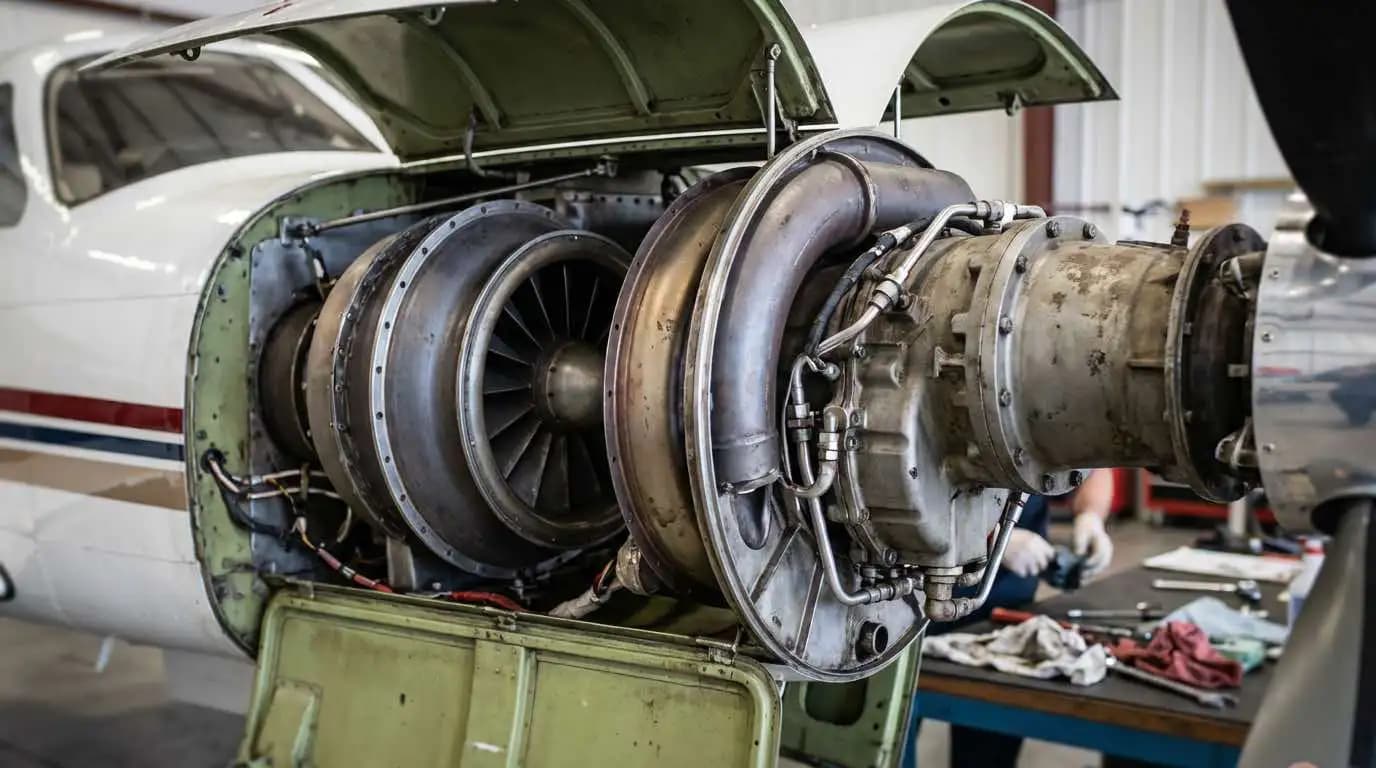
The Piper Meridian is powered by the Pratt & Whitney Canada PT6A-42A, a flat-rated 500 shp variant of the PT6A family. This engine brings the PT6 reliability record to the PA-46 airframe: extremely low in-flight shutdown rates, well-documented maintenance requirements, and a global service network. Understanding engine program options and TBO planning is essential before acquisition.
Engine Specifications
- PT6A-42A: 500 shp flat-rated, reverse-flow free turbine design
- TBO: 3,000 hours; on-condition programs extend intervals through trend monitoring
- Overhaul cost: $300,000–$450,000 at TBO depending on shop and hot-section condition
- Propeller: Hartzell 5-blade composite; TBO of 2,400 hours or 6 years calendar, whichever occurs first
Engine Programs
- MSP Gold (P&WC): Manufacturer-backed PT6A-42A coverage; preferred program for buyers seeking overhaul cost certainty
- JSSI: Per-hour engine coverage protecting unscheduled removals; widely used on Meridian fleet
- ECTM monitoring: Engine Condition Trend Monitoring critical for on-condition operation; oil analysis mandatory each 50-hour interval
- Non-enrolled risk: Unscheduled PT6A-42A removal can cost $150,000–$300,000; program enrollment is strongly recommended
Avionics, Systems, and Glass Cockpit Integration
Modern Piper M500 (Meridian) aircraft are factory-equipped with the Garmin G1000 NXi integrated avionics suite: dual large-format glass displays, synthetic vision technology, WAAS GPS/LPV approach capability, ADS-B Out, and GFC700 digital autopilot. Earlier Malibu Meridian models used the original G1000 or older analog avionics; avionics generation is a significant value and capability differentiator.
G1000 NXi (2015+ M500 aircraft)
Next-generation integrated avionics with synthetic vision, WAAS/LPV capability, wireless flight bag integration, and GFC700 autopilot. Significant step-up in situational awareness and single-pilot workload management.
G1000 Classic (2000–2014 Meridian aircraft)
First-generation glass cockpit with standard GPS and autopilot. Capable but lacks synthetic vision and next-gen interface updates. Retrofit to NXi is possible but expensive ($80,000–$120,000+).
GFC700 Digital Autopilot
Three-axis digital autopilot with envelope protection, flight director modes, and coupled approach capability. Critical for single-pilot IFR operations in high-workload environments and IMC approaches.
Pressurization Controller and Systems
Automatic pressurization management with manual backup; maintains 8,000-ft cabin altitude at FL300. Annual pressurization system differential pressure test is mandatory maintenance and a key pre-purchase inspection item.
Engine Ice Protection System
Inertial separator and electric inlet heat protect PT6A-42A from ice ingestion. Annual functional test required. A known maintenance item on early Meridians; verify current serviceability and AD compliance before purchase.

Piper Meridian vs. Piper Mirage: Key Differences
The Piper Meridian vs. Mirage comparison is one of the most common buyer questions in the PA-46 market. Both aircraft share the same pressurized PA-46 airframe. The fundamental difference is propulsion, and that single decision changes the operational profile, costs, and mission significantly.
| Factor | Piper Meridian (M500) | Piper Mirage (M350) |
|---|---|---|
| Engine Type | PT6A-42A turboprop, 500 shp | Lycoming TIO-540-AE2A piston, 350 hp |
| Fuel Type | Jet-A (globally available) | 100LL avgas (limited internationally) |
| Service Ceiling | FL300 | FL250 |
| Cruise Speed | ~213 KTAS | ~213 KTAS |
| Fuel Burn (cruise) | ~40–46 GPH Jet-A | ~25–28 GPH avgas |
| Engine TBO | 3,000 hours (PT6A) | 2,000 hours (TIO-540) |
| Engine Overhaul Cost | $300,000–$450,000 | $50,000–$80,000 |
| Acquisition Cost (used) | $600,000–$1,800,000 | $350,000–$800,000 |
| Production Status | Active (M500) | Transitioning to M350 line |
The Turboprop Premium Is Real
Meridian buyers pay more to acquire and more per engine overhaul than Mirage buyers. In exchange, they receive Jet-A fuel compatibility, 50 additional flight levels of altitude, PT6A reliability, and a platform with stronger resale support from an active production line. For operators flying 100+ hours annually in IFR environments, the Meridian cost premium is justifiable. For low-utilization recreational Flying, the Mirage's lower entry and operating costs may present a more rational economic case.
Piper Meridian Ownership Costs and True Operating Expense
Piper Meridian ownership costs are substantially higher than piston alternatives but lower than larger turboprop platforms. Realistic budgeting requires accounting for engine program enrollment, pressurization system maintenance, avionics currency, and turbine-qualified inspection costs. Annual operating expense (excluding fuel and financing) typically ranges from $25,000 to $55,000 depending on utilization and aircraft condition.
Acquisition Cost
$600,000–$1,800,000 for used aircraft; $2,400,000+ new. Engine program status and avionics generation are the primary value levers within each year bracket.
Engine Program (MSP / JSSI)
$80–$130 per engine flight hour enrolled in MSP Gold or equivalent. Non-enrolled aircraft carry full unscheduled removal exposure, a single hot-section event can cost $150,000–$300,000 without program protection.
Annual Inspection
$12,000–$28,000 annually at Piper-authorized service centers. Turbine expertise, pressurization system tests, and ice protection system verification add complexity vs. piston annuals.
Propeller Overhaul
Hartzell 5-blade composite at 2,400 hours or 6-year calendar: approximately $18,000–$28,000 including balancing, blade inspection, and hub overhaul.
Avionics and Systems Support
$2,000–$5,000 annually for Garmin G1000 database subscriptions, avionics maintenance, and periodic systems updates. Older G1000 aircraft may face hardware end-of-life costs.
Fuel Cost
~42 GPH Jet-A at cruise; 150 annual hours = approximately 6,300 gallons. At $5.50–$7.50/gallon = $34,650–$47,250 in annual fuel cost for moderate utilization.

Buying a Piper Meridian: Comprehensive Pre-Purchase Checklist
Due diligence on a Piper Meridian purchase requires evaluation beyond standard piston aircraft inspection. Turbine engine condition, pressurization system integrity, PA-46 AD compliance, engine program transferability, and avionics generation all require structured verification before funds are committed.
Documentation and Records Priority
- Complete airframe, engine, and propeller logbooks from first flight with no maintenance history gaps or unexplained entries
- Engine program enrollment certificates (MSP Gold, JSSI or equivalent), verify current enrollment status directly with program provider before closing
- Engine time since new (TSN) and time since last hot-section inspection with full shop documentation and Pratt & Whitney Canada records
- Full AD compliance documentation for PA-46 airframe, PT6A-42A engine, and Hartzell propeller, PA-46 has accumulated a substantial AD list over its 40-year type history
- Pressurization system certification record including most recent differential pressure test results and door seal replacement history
- Avionics equipment list and maintenance logs including G1000 software version, ADS-B Out certification record, and any STC modification documentation
- Clear title search via FAA Aircraft Registry confirming no liens, encumbrances, or unresolved export/import hold
Technical Inspection Priorities
- Engine borescope inspection of hot section (combustion liner, turbine blades, power turbine section) by PT6A-qualified technician at a Piper-authorized service center
- Engine performance run with torque, ITT, NG, and oil pressure verification against published limits; ECTM data review against historical baseline
- Pressurization system differential pressure test to rated differential; inspect door seals, window reveals, and fuselage pressure boundary integrity
- Propeller blade inspection including leading edge erosion, chord measurement, hub condition, and blade retention torque verification
- Engine ice protection system functional test: inertial separator operation and electric inlet heat function in both automatic and manual modes
- Landing gear actuator seals, gear door rigging, and nose gear steering system, known wear areas requiring periodic attention in the PA-46 fleet
- G1000 avionics function check including autopilot coupled approaches, SVT operation, and ADS-B function verification
Transaction and Risk Management
- Use a structured aviation escrow service for funds and document transfer, essential at Meridian price points to protect both parties through closing
- Make purchase conditional on satisfactory pre-purchase inspection by a Piper service center or independently retained turbine-qualified IA
- Confirm engine program transferability directly with P&WC or JSSI before closing, program transfer fees and re-enrollment requirements vary
- Verify pilot qualification requirements: turboprop/complex/high-performance endorsements and insurer-required training at minimum; type rating may apply

Piper Meridian Market Trends and Pricing Drivers (2026)
The Piper Meridian used market reflects consistent demand from owner-pilots seeking the lowest entry point into pressurized turboprop ownership. Values have been supported by ongoing M500 production demand and constrained supply of well-maintained used examples. Primary pricing drivers in 2026:
Engine Program Enrollment
MSP Gold or JSSI-enrolled Meridians trade at a meaningful premium, often $80,000–$150,000 above non-enrolled equivalents. Buyers price in the risk of unprotected PT6A-42A ownership.
Engine Time Since Overhaul
Aircraft at or near TBO with no program protection see significant price discounts reflecting the buyer's anticipated overhaul cost. Fresh-engine and mid-time aircraft command premium pricing proportionate to remaining hours.
Avionics Generation
G1000 NXi aircraft (M500, 2015+) trade at a significant premium over original G1000 Meridians from the 2000–2014 period. Retrofit upgrades add value when documented and certified.
Pressurization System Condition
Documented pressurization serviceability, current differential pressure test, new door seals, serviceable controller, commands premium pricing. Aircraft with deferred pressurization maintenance trade at discounts that underestimate actual rectification costs.
Total Airframe Time
Lower total time is generally preferred but less determinative than condition and record quality. A 4,000-hour Meridian with perfect documentation and current systems outvalues a 1,500-hour example with gaps and deferred items.
New Production Influence
Current M500 production backlog of 9–18 months creates urgency in the used market. Buyers unwilling to wait for new builds pay used-market premiums; this supply dynamic supports values across the Meridian fleet.
Piper Meridian Key Facts
| Specification | Typical Range / Value | Why It Matters |
|---|---|---|
| Engine | Pratt & Whitney PT6A-42A, 500 shp | Proven turboprop powerplant with exceptional reliability record; one of the most trusted single-engine turboprop installations in general aviation |
| Cruise Speed | ~213 KTAS at FL250 | Competitive single-engine turboprop cruise speed enables efficient regional transport while maintaining turbine reliability advantages |
| Service Ceiling | FL300 (30,000 feet) | FL300 capability places the Meridian above most enroute weather, enabling consistent smooth-air cross-country operations |
| Practical Range | ~900–1,000 NM at cruise power | Genuine cross-country range enables single-leg operations across most continental routes without fuel stops |
| Engine TBO | 3,000 hours (PT6A-42A) | Long TBO interval reduces hourly reserve burden; on-condition monitoring available through authorized PT6 service centers |
| Fuel Type | Jet-A / Jet-A1 | Globally available turbine fuel simplifies international operations vs. avgas-dependent piston competitors |
| Seating | Pilot + 5 passengers (6 total) | Practical owner-flown capacity for family, business, or charter missions with pressurized comfort to altitude |
| Useful Load | ~1,100–1,250 lbs (configuration dependent) | Adequate for full passenger complement with fuel for medium-range legs; fuel and payload trade-off management required for long-range missions |
| Takeoff Distance (sea level, ISA) | ~2,400–3,000 feet over 50-ft obstacle | Short-field performance opens access to many general aviation airports; density altitude awareness critical at high-elevation airports |
| Used Market Asking Price | $600,000–$1,800,000 | Driven by year, engine program enrollment, avionics generation, total time, and completeness of maintenance records |
Piper Meridian on CollectAirs
Browse our verified Piper Meridian and M500 listings with full documentation and transparent auction terms. CollectAirs connects serious owner-pilots with thoroughly vetted pressurized turboprop aircraft, with escrow protection, pre-purchase inspection coordination, and title verification on every transaction.
Frequently Asked Questions About the Piper Meridian
How much does a Piper Meridian cost?
Used Piper Meridian prices range from $600,000 to $1,600,000 depending on year, airframe hours, engine time, avionics generation, and maintenance history. Early Malibu Meridian models trade around $600,000–$900,000. Modern M500 aircraft with G1000 NXi command $1,200,000–$1,800,000. New Piper M500 production aircraft list above $2,400,000.
What are common Piper Meridian problems?
Common issues include pressurization seal deterioration, fuel system management complexity, engine ice protection system maintenance, and landing gear seal wear. Early models had known pressurization reliability issues. Pre-purchase inspection by a Piper-authorized service center is essential before any acquisition.
Can a Piper Meridian land on grass?
The Meridian can operate from firm, level grass runways of adequate length. Soft or wet surfaces should be avoided due to nose gear and propeller debris risk. Consult the PA-46 Aircraft Flight Manual for surface condition limits. Approximately 2,500–3,000 feet of usable length is required at sea level under standard conditions.
What is the difference between the Piper Meridian and Mirage?
Both share the PA-46 airframe. The Mirage (M350) is piston-powered; the Meridian (M500) is turboprop-powered with a PT6A-42A. The Meridian offers higher service ceiling (FL300), turbine reliability, Jet-A fuel compatibility, and lower long-term maintenance unpredictability compared to the piston Mirage.
What are the advantages of the Piper Meridian?
PT6A turboprop reliability, pressurized cabin to FL300, single-pilot IFR operability, G1000 NXi glass cockpit, Jet-A fuel availability, and competitive six-seat useful load. Superior engine reliability and high-altitude performance enabling consistent flight above weather distinguish the Meridian from piston alternatives.
Why is the Piper Mirage being discontinued?
Piper focused its PA-46 line on the M350 and M500 Meridian. Market demand increasingly favors turboprop platforms for reliability and Jet-A accessibility. Managing two variants with different powerplant ecosystems led Piper to concentrate resources on the turboprop M500 as the future of the PA-46 line.
Sources
Used for: PA-46 certification reference, approved engine configurations, performance framework, and type certificate data for Malibu, Mirage, and Meridian variants.
Used for: PT6A-42A engine specifications, TBO data, MSP Gold program details, maintenance standards, and on-condition monitoring information.
Used for: current M500 production specifications, performance data, avionics integration standards, and pricing reference for the active production line.
Used for: G1000 NXi system specifications, training requirements, GFC700 autopilot standards, and avionics integration data.
Used for: PA-46 AD compliance reference including pressurization system ADs, engine ADs, and structural inspection requirements across all PA-46 variants.
Related Resources
Turboprop Plane Guide
Complete guide to turboprop aircraft: PT6 engine mechanics, types, costs, turboprop vs jet comparison, and buyer checklist.
Read GuideBeechcraft King Air Guide
PT6-powered twin turboprop performance, pressurized cabin, engine programs, and what to verify before buying the King Air series.
Read GuidePlanes for Sale Guide
How to find aircraft for sale, evaluate listings, and close your deal without expensive surprises.
Read GuideUsed Planes Buyer Guide
How to buy used planes wisely: verify records, scope inspections, and budget for real ownership costs.
Read GuideAbout the Author

Phillip Müller
CEO, CollectAirs
Long-time pilot and CEO of multiple scenic flight and aircraft sales websites. Passionate about making aircraft transactions more transparent and accessible.
Connect on LinkedIn