
 Florida
 Hildesheim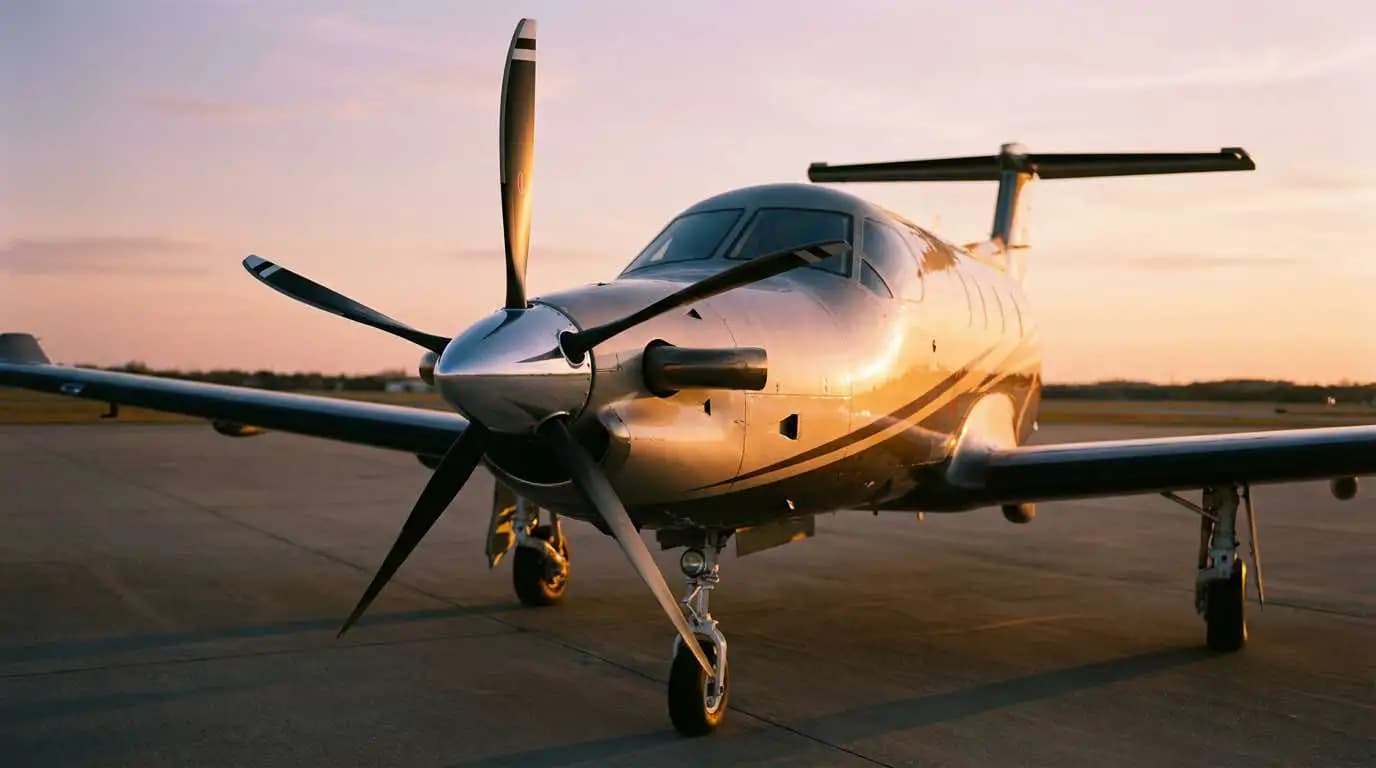
What Is a Turboprop Plane?
A turboprop plane is an aircraft powered by a gas turbine engine that drives a propeller through a reduction gearbox, rather than generating thrust solely through jet exhaust. The turbine burns Jet-A fuel, spins a shaft at high RPM, and routes that power through a gearbox to turn a large-diameter propeller at an efficient, slower speed.
This architecture sits between piston and pure jet engines in the aviation spectrum. Compared to reciprocating engines, turboprops deliver more power per unit weight, greater reliability through simpler mechanics, and the ability to burn widely available Jet-A fuel globally. Compared to turbofan jets, turboprops are more efficient at lower speeds and altitudes, and they cost significantly less to operate per hour.
The result is a category that dominates utility aviation, regional airline feeders, charter, medevac, cargo, and owner-flown business transport: wherever the combination of reliability, short-field capability, and operating economics matters more than outright speed.
Turboprop listings on CollectAirs
Browse verified turboprop aircraft listings with full documentation and transparent auction terms.
History, Design Evolution, and Engineering Principles
Turboprop technology emerged from World War II jet engine research, with the first practical turboprop aircraft entering service in the early 1950s. The Rolls-Royce Dart, which powered the Vickers Viscount, became the first commercially successful turboprop engine. Pratt & Whitney Canada introduced the PT6A engine in the early 1960s, and it became, and remains, the most widely used turboprop engine family in history.
How the PT6A Engine Works
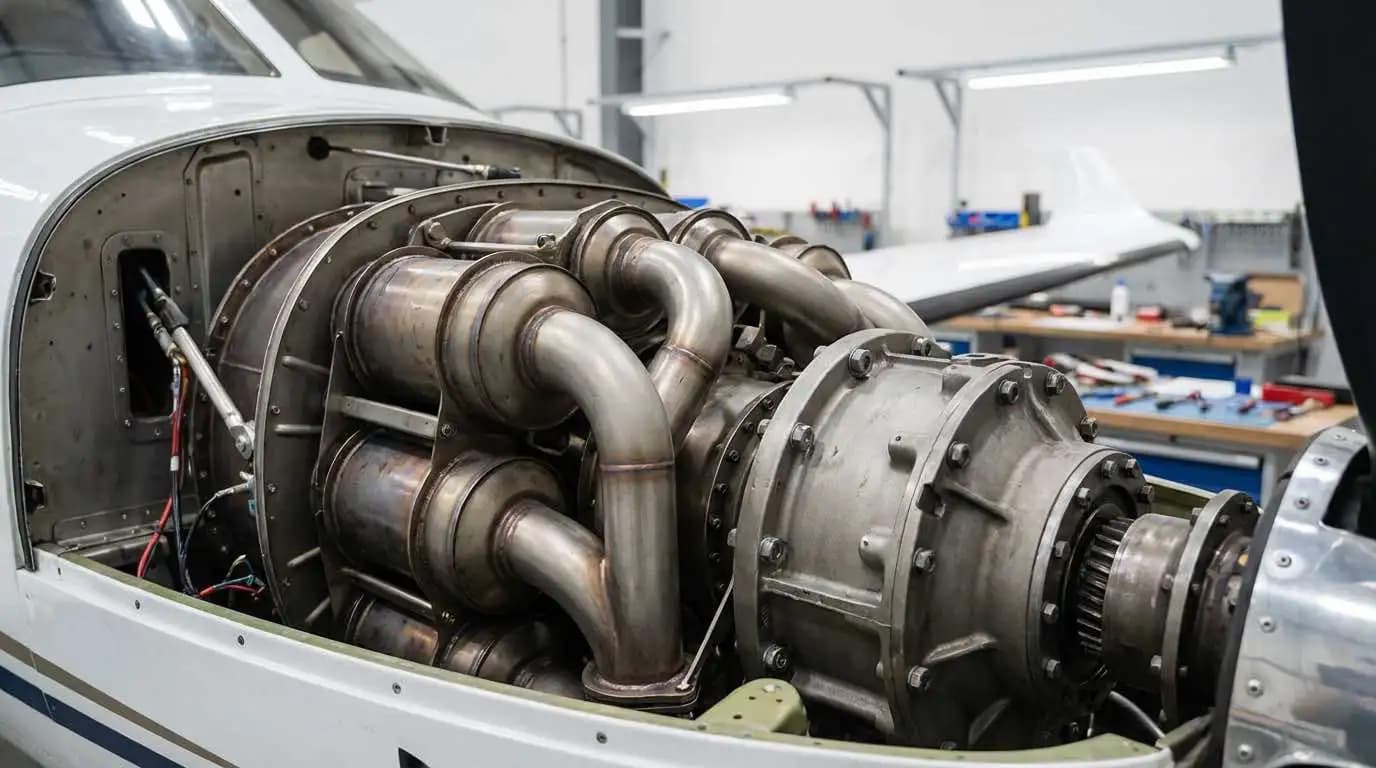
The PT6A uses a reverse-flow design that places the air intake at the rear and the exhaust at the front, counterintuitive but mechanically elegant. Key stages:
- Air intake and compression: Multi-stage axial and centrifugal compressors pressurize incoming air to high density
- Combustion section: Jet-A fuel atomizes and burns continuously at high temperature and pressure, releasing energy
- Power turbine section: Hot exhaust gas spins a free turbine (independent of the gas generator), which drives the reduction gearbox and propeller shaft
- Reduction gearbox: Converts high-RPM turbine output to low-RPM propeller speed, maintaining efficient propeller tip velocity
Free Turbine vs. Fixed Shaft
Most modern turboprops use a free turbine design (PT6A, TPE331 variants) where the power turbine is mechanically independent from the gas generator. This enables the engine to develop full torque at zero forward speed, important for short-field takeoffs. Fixed-shaft engines couple the power and gas generator turbines, requiring careful throttle management to avoid compressor stall.
Turboprop Plane Performance: Speed, Range, and Altitude
Performance varies significantly across the turboprop category. A Cessna Caravan 208 cruises at around 180 KTAS and climbs to FL250. A Daher TBM 940 or Pilatus PC-12 NGX reaches 330 KTAS and FL310. Understanding the performance envelope of a specific aircraft type is essential before acquisition, the category is broad, not monolithic.
180–330 KTAS Cruise
Single-engine utility turboprops cruise around 180 KTAS. High-performance singles and twins reach 300+ KTAS at altitude.
800–1,800 NM Range
Single-engine turboprops typically cover 800–1,200 NM. Twin-engine platforms extend range up to 1,800+ NM non-stop.
40–120 GPH Fuel Burn
Fuel burn varies by type. Caravan burns ~40 GPH; King Air 350 burns ~90–120 GPH. Jet-A pricing and availability matter.
Turboprop Engine Maintenance, Programs, and Operational Costs
Turboprop engine maintenance is more predictable than piston engines but substantially more expensive. Understanding engine programs, TBO intervals, and on-condition maintenance is critical before purchasing any turboprop aircraft. Unplanned engine events can cost hundreds of thousands of dollars without program protection.
PT6A Engine: Key Facts
- TBO: 3,000–3,600 hours; on-condition programs available for extended intervals
- Overhaul cost: $300,000–$600,000+ per engine depending on variant and shop
- Fuel type: Jet-A / Jet-A1; globally available
- In-flight shutdown rate: Among the lowest of any aircraft engine family in service
Engine Program Options
- JSSI (Jet Support Services): Per-hour engine coverage protecting against unscheduled removals and overhaul costs
- MSP Gold (P&WC): Manufacturer-backed PT6 engine program covering scheduled maintenance and unscheduled removals
- ECTM monitoring: Engine Condition Trend Monitoring tracks performance parameters to extend intervals and predict issues early
- On-condition operation: Many PT6 operators extend past published TBO through documented trend monitoring and inspection intervals
Popular Turboprop Planes: Types and Market Segments
The turboprop market spans several distinct segments. Understanding which segment aligns with your operational mission determines which aircraft deserves consideration.
Single-Engine Utility: Cessna Caravan 208
The Cessna Caravan is the most widely operated single-engine turboprop in history. Used for cargo, charter, parachute operations, and humanitarian missions worldwide. PT6A-114A engine, 9–14 seats, unpressurized. Typical used price: $700,000–$2M.
Single-Engine High-Performance: Pilatus PC-12
The PC-12 combines pressurized cabin comfort, exceptional range (1,800+ NM), and single-pilot IFR capability with PT6A-67P power. Operates from grass strips and paved runways equally. Most demanded single-engine turboprop in the business market. Typical used price: $2M–$5M+.
Single-Engine Speed: Daher TBM Series
The TBM 700/850/930/940 series represents the fastest single-engine turboprops in serial production, reaching 330 KTAS in the TBM 940. Pressurized, glass cockpit, owner-flown. Popular in the US and European owner-operator markets. New production: $4M–$6M+.
Twin-Engine Corporate: Beechcraft King Air
The King Air series (C90, B200, 350, 360) defines the twin-engine turboprop category for corporate and charter operations. Pressurized, multi-engine IFR certified, with PT6A powerplants. King Air B200 used prices: $1.5M–$3.5M. King Air 350: $3M–$6M.
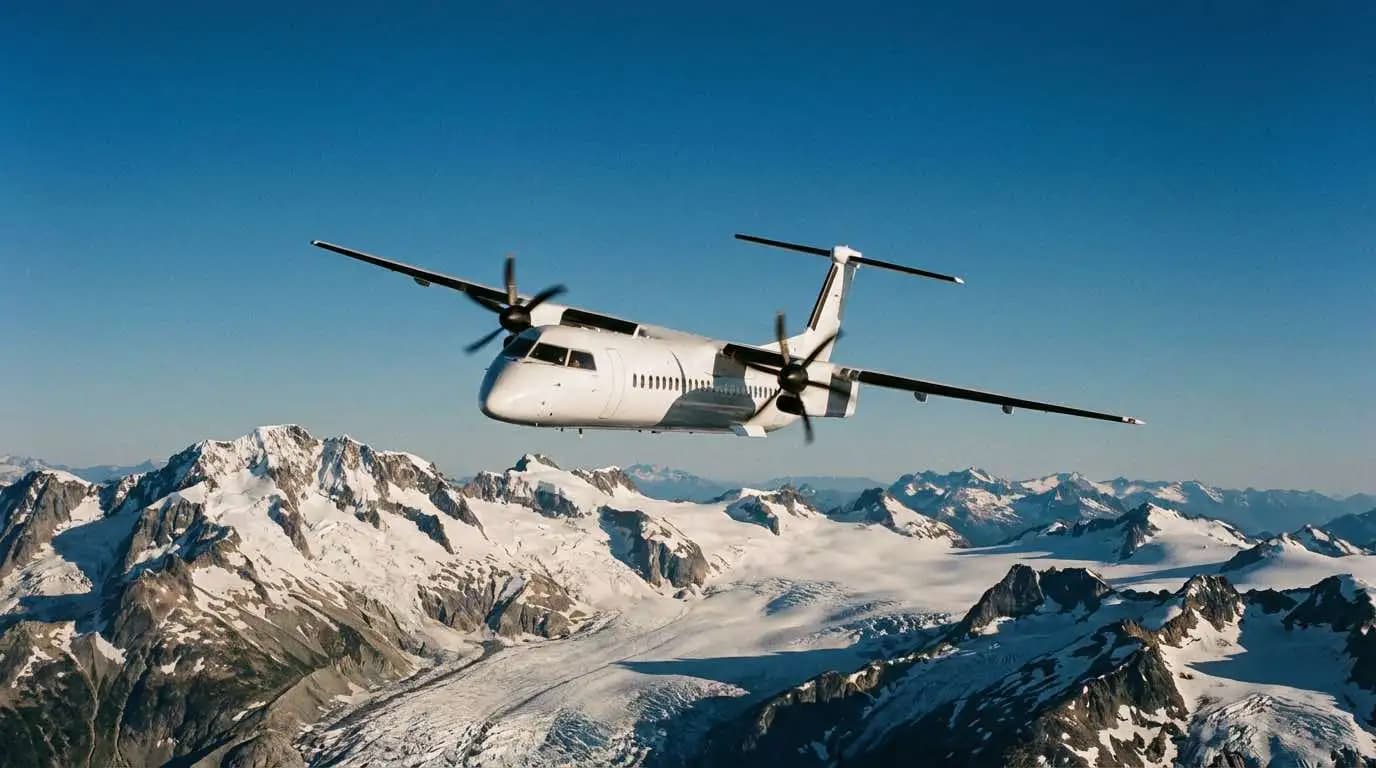
Regional Airline: ATR 42/72
ATR turboprops serve as regional airline workhorses across Europe, Asia, and Africa. Twin PW100-series engines, 42–72 passenger capacity, and outstanding fuel efficiency on short sectors. Not typically in the private market but defines the airline turboprop segment.
Specialist: Piaggio P.180 Avanti
The Avanti uses a distinctive pusher-propeller configuration with fuselage-mounted engines to achieve jet-like speeds (400 KTAS) with turboprop economics. Pressurized, six-seat, technically complex. A niche but compelling platform for mission-specific buyers.
Turboprop vs. Jet: What Is the Difference?
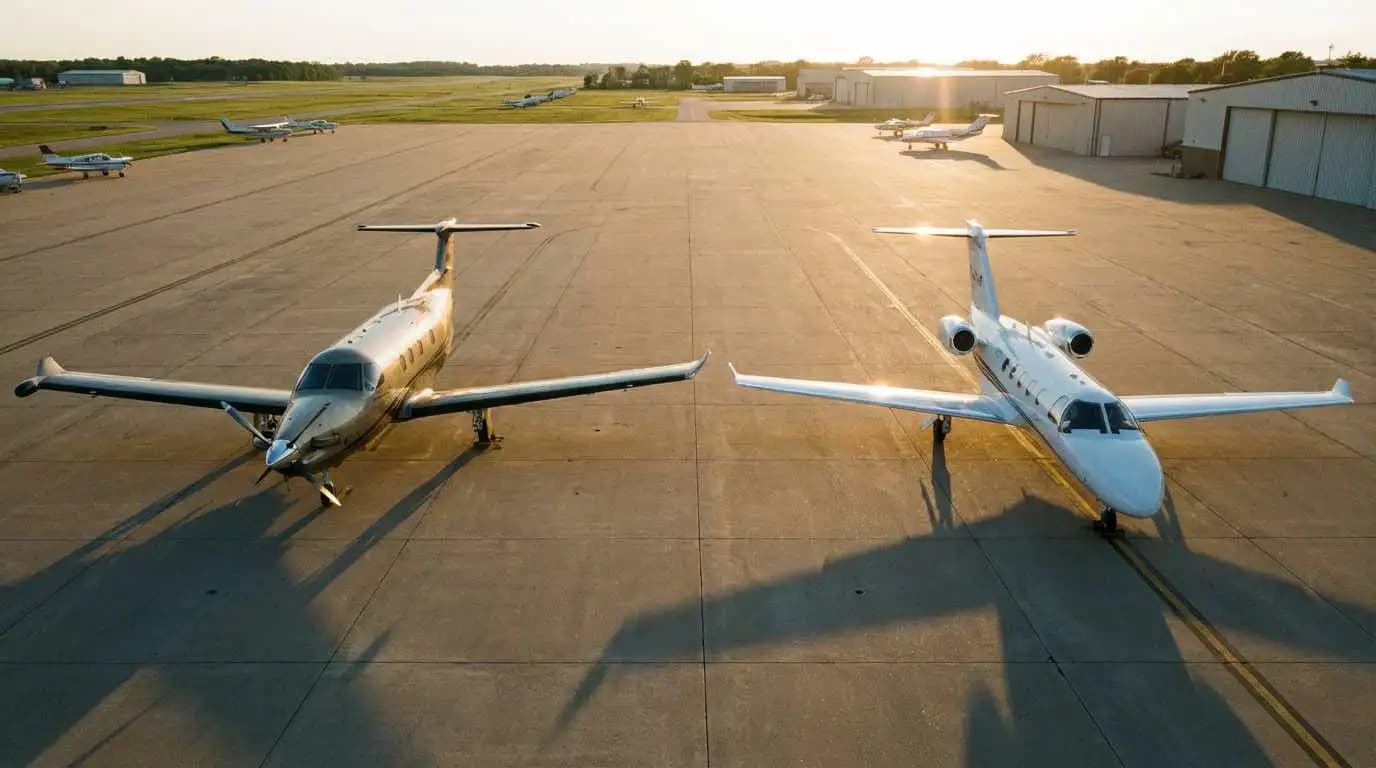
The turboprop vs. jet question is not purely technical. It is a mission and economics decision. Both propulsion types use gas turbine engines. The fundamental difference is how the engine delivers thrust: turboprops route most energy through a propeller; turbofan jets route it through a bypass fan and exhaust nozzle.
| Factor | Turboprop | Turbofan Jet |
|---|---|---|
| Cruise Speed | 180–330 KTAS | 380–500+ KTAS |
| Service Ceiling | FL250–FL310 | FL410–FL510 |
| Fuel Efficiency (short sector) | Superior below FL250 | Less efficient at low altitude |
| Runway Requirement | Short-field capable (1,200–2,500 ft) | Longer runways required (3,000+ ft) |
| Acquisition Cost | $700K–$6M | $2M–$70M+ |
| Operating Cost per Hour | $500–$2,000/hr | $1,500–$5,000+/hr |
| Maintenance Complexity | Moderate; turbine-qualified required | High; specialized type-rated technicians |
| Ideal Mission | Short sectors, remote strips, utility | Long-range, high-speed business transport |
The Short-Field Advantage
Turboprops can operate from runways as short as 1,200–2,500 feet depending on weight and temperature. This unlocks airports inaccessible to jets: remote communities, mountain airstrips, private agricultural runways, and dramatically expands the operational footprint. For operators serving remote destinations, this capability alone often justifies turboprop over jet selection.
Turboprop Ownership Costs and True Operating Expense
Turboprop ownership costs exceed piston aircraft by a substantial margin. Prospective buyers must budget for engine program enrollment, turbine maintenance expertise, pressurization system service, and avionics currency. Realistic budgeting before acquisition prevents costly surprises.
Acquisition Cost
$700,000–$6,000,000+ depending on type, year, and configuration. Engine program enrollment enrollment status, airframe hours, and avionics generation are primary value drivers.
Engine Program Enrollment
JSSI, MSP Gold, or equivalent: $75–$200 per engine flight hour depending on coverage level. Non-enrolled aircraft carry full unscheduled engine removal risk ($300,000–$600,000+ per event).
Annual Inspection
$10,000–$40,000 annually depending on aircraft type and condition presentation. Turbine-qualified shops with type experience are essential, not all facilities are equipped for turboprop work.
Avionics and Systems Support
$2,000–$8,000 annually for database subscriptions, software updates, and periodic avionics repairs. Older avionics (non-WAAS, non-ADS-B) may require costly upgrades for airspace compliance.
Hangar and Fixed Costs
$5,000–$20,000 annually depending on airport and region. Turbine aircraft benefit significantly from hangar protection due to precision engine tolerances and pressurization seals.
Fuel Cost
Jet-A at $5.50–$8.00/gallon depending on location. A Cessna Caravan at 40 GPH and 150 hours annual flying = approximately $33,000–$48,000 in fuel alone. King Air 350 at 100 GPH adds proportionally.
Buying a Turboprop Plane: Pre-Purchase Checklist
Due diligence on a turboprop aircraft purchase requires evaluation beyond piston aircraft standards. Engine program status, type-specific AD compliance, pressurization system integrity, and avionics generation all demand structured verification before funds transfer.
Documentation and Records Priority
- Complete airframe, engine, and propeller logbooks from original delivery with no gaps in maintenance history
- Engine program enrollment certificates (JSSI, MSP, or equivalent) with current enrollment status verified directly with the program provider
- Engine time since new (TSN) and time since overhaul (TSO) for each engine, with overhaul records and shop documentation
- Full AD compliance documentation for airframe, engines, and propellers, turboprops accumulate significant AD lists over service life
- Pressurization system maintenance history including differential pressure records and seal replacement intervals
- Avionics maintenance logs including equipment list compliance, ADS-B certification, and any modifications to original avionics suite
- Clear title free of liens confirmed via FAA Aircraft Registry and aviation title service
Technical Inspection Priorities
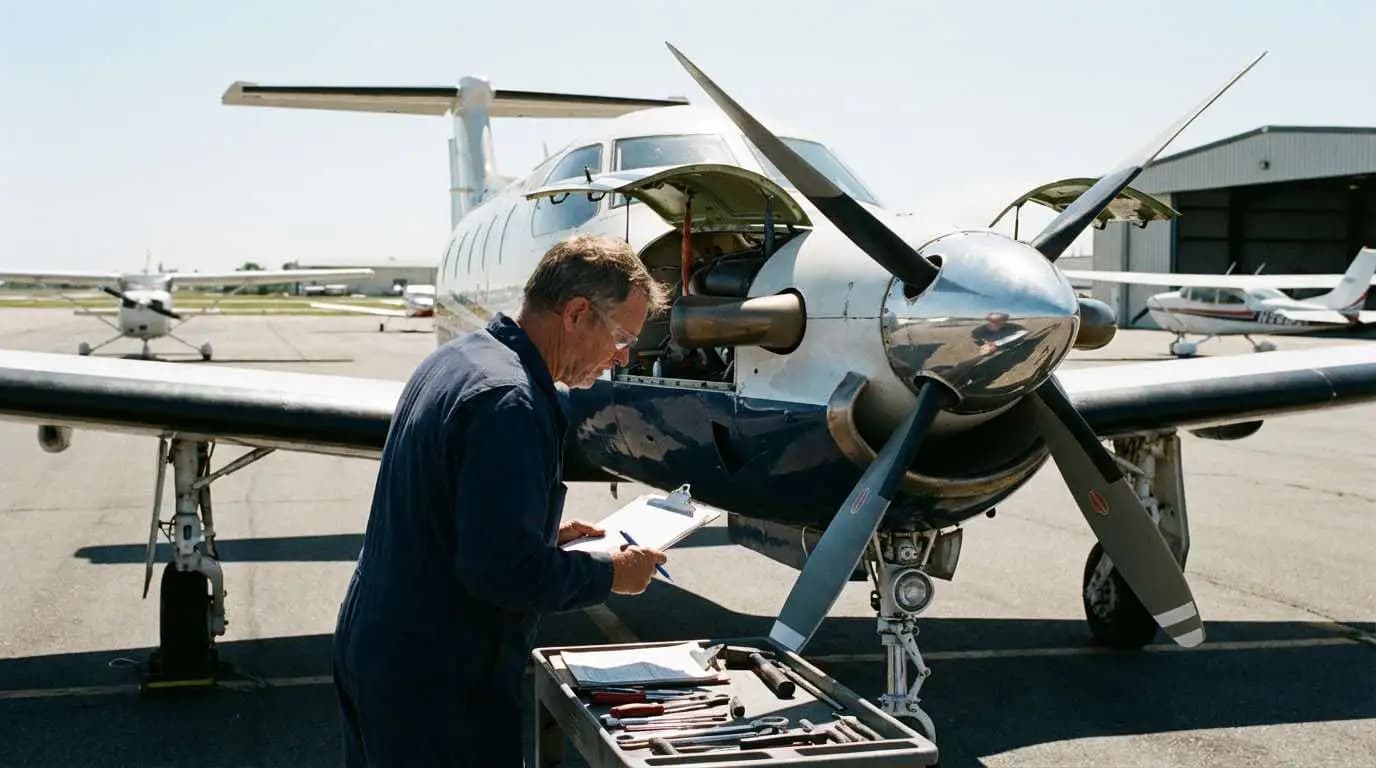
- Engine borescope inspection of hot section (combustion chamber, turbine blades, compressor stages) by turbine-qualified technician
- Engine performance run and trend data review, compare recent ECTM data against historical baseline to identify developing issues
- Propeller inspection including blade erosion, hub condition, blade tracking, and blade retention system integrity
- Pressurization system differential pressure test; inspect door seals, window seals, and pressurization controller function
- Avionics function check: autopilot, WAAS GPS, ADS-B Out, weather radar, and TCAS/TAS as equipped
- Airframe structural inspection by type-rated A&P mechanic; inspect for corrosion, fatigue cracks, and repair history
- Fuel system inspection including fuel control units, boost pumps, fuel selector valves, and crossfeed system function
Transaction and Risk Management
- Use a structured escrow service for all funds and document transfer, essential at turboprop acquisition price points
- Make purchase conditional on satisfactory pre-purchase inspection by a qualified turbine-certified shop with type experience
- Verify type rating or high-performance endorsement requirements, most turboprops require specific pilot qualifications to insure and operate legally
- Confirm engine program transferability directly with the program provider before closing, not all programs transfer automatically
Turboprop Market Trends and Pricing Drivers (2026)
The turboprop market has remained resilient through recent economic cycles. Demand for capable owner-flown and charter platforms, combined with constrained new production supply, has supported used-market values. Key pricing factors for used turboprop aircraft in 2026:
Engine Program Enrollment
Aircraft enrolled in JSSI, MSP Gold, or equivalent programs trade at 15–30% premium over non-enrolled airframes. Buyers pay for certainty; unprotected engine risk quantifies directly into price.
Engine Time Since Overhaul
Engine hours drive the largest single value differential in turboprop transactions. Aircraft with recent factory overhauls or low-time engines command significant premiums. Mid-time or high-time engines suppress asking prices proportionally.
Avionics Generation
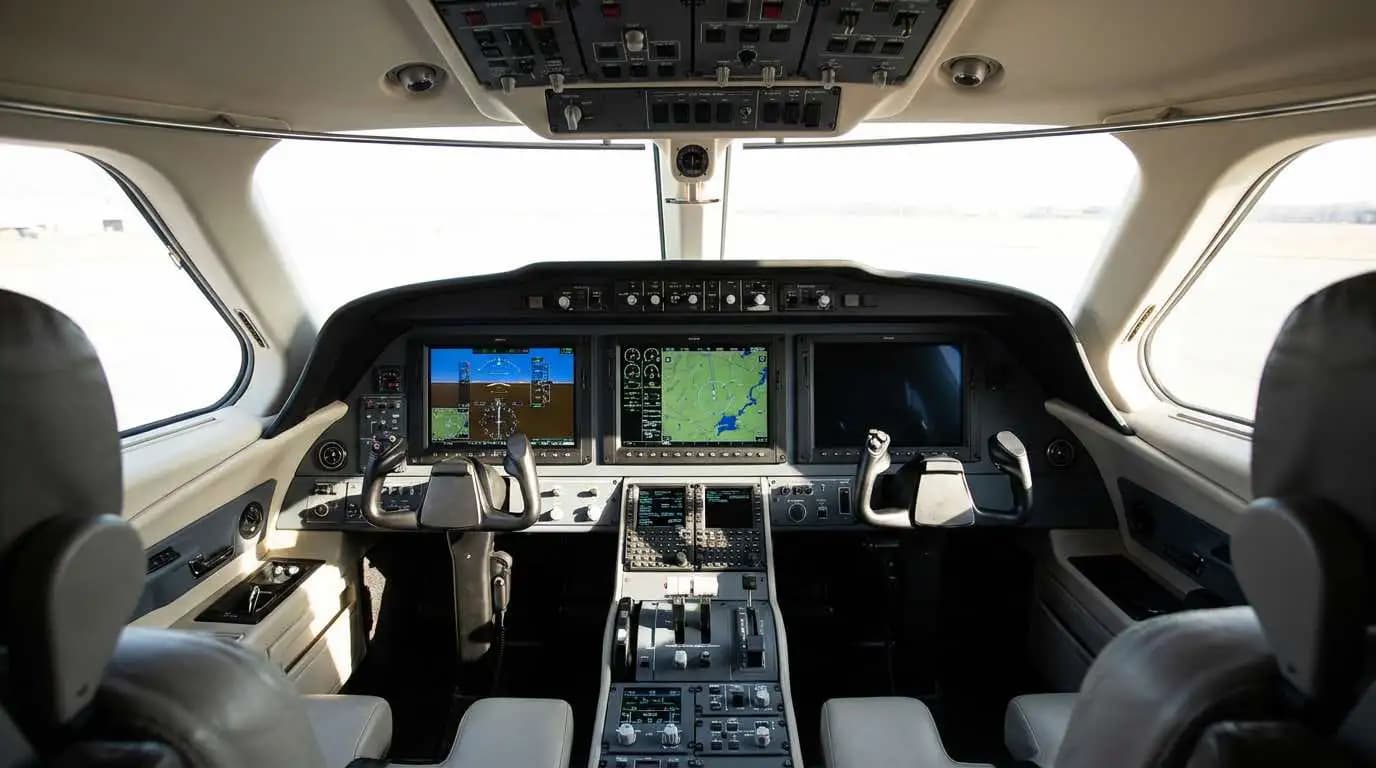
Garmin G1000/G3000 NXi aircraft with WAAS, ADS-B Out, and synthetic vision command premiums over legacy steam gauge or older glass configurations. Avionics upgrades are required for compliance and add value when documented.
Maintenance Shop Quality
Aircraft maintained continuously by authorized service centers (Beechcraft Premier Dealers, Pilatus Service Centers) command higher values. Logbook evidence of type-qualified maintenance is verifiable and buyers pay for it.
Total Airframe Hours
Low-time airframes are preferred but not determinative. A 10,000-hour King Air with exemplary maintenance often outvalues a 4,000-hour example with spotty records. Documentation quality matters more than time alone.
New Production Competition
Production backlogs for new TBM 940s and PC-12 NGX aircraft (12–24 months wait) support used pricing by limiting alternatives. Buyers unable to wait pay used market premiums; sellers benefit from this supply constraint.
Turboprop Plane Key Facts
| Specification | Typical Range / Value | Why It Matters |
|---|---|---|
| Propulsion Type | Gas turbine driving a variable-pitch propeller via gearbox | Combines turbine reliability with propeller efficiency at low-to-mid altitudes; superior to pistons, competitive with jets below FL250 |
| Typical Cruise Speed | 240–330 KTAS (varies by aircraft type) | Faster than piston aircraft, slower than jets, but fuel burn advantage often justifies the speed trade-off on short sectors |
| Service Ceiling | 25,000–35,000 ft (FL250–FL350) | High enough to fly above weather on most routes; pressurized cabins required above FL250 |
| Typical Range | 800–1,800 NM (single-engine to twin) | Regional to medium-range capability; PC-12 and TBM series can fly transatlantic in stages |
| Engine TBO (PT6A) | 3,000–3,600 hours (on-condition programs available) | Long TBO lowers hourly reserve burden; on-condition monitoring can extend intervals significantly |
| Engine Overhaul Cost | $300,000–$600,000+ per engine (PT6A-based) | Engine program enrollment (JSSI, MSP, ECTM) is essential to manage overhaul exposure for buyers and operators |
| Typical Acquisition Cost | $700,000–$6,000,000+ depending on type and year | Wide range reflects the diverse turboprop category; Cessna Caravan to Daher TBM 940 represent very different missions |
| Fuel Type | Jet-A / Jet-A1 (turbine fuel) | Widely available globally; turbine fuel is less volatile than avgas, simplifying fueling logistics internationally |
| Cabin Pressurization | Varies: most twins and high-end singles are pressurized | Pressurization enables high-altitude operations with passenger comfort; critical for business and charter use |
| Annual Inspection Cost | $10,000–$40,000 depending on aircraft type and condition | Significantly higher than piston aircraft; budget must account for turbine-qualified maintenance providers |
Turboprop Planes on CollectAirs
Browse our verified turboprop aircraft listings with full documentation and transparent auction terms. CollectAirs connects serious buyers with thoroughly vetted turboprop aircraft, King Air, PC-12, Caravan, TBM, and more, with escrow protection and pre-purchase inspection coordination.
Frequently Asked Questions About Turboprop Planes
What makes a plane a turboprop?
A turboprop uses a gas turbine engine to drive a propeller through a reduction gearbox. The turbine burns fuel to spin a shaft, which turns the propeller. This delivers jet-engine reliability and power density while maintaining propeller efficiency at lower speeds and altitudes, ideal for short runways and regional operations.
What is safer, a turboprop or a jet?
Both have excellent safety records when properly maintained by trained crews. The PT6 turboprop engine has one of the lowest in-flight shutdown rates in aviation history. Accident rates are more closely tied to operator proficiency, maintenance standards, and weather judgment than to propulsion type.
What planes are turboprops?
Common examples include the Beechcraft King Air series, Pilatus PC-12, Cessna Caravan, Daher TBM 940, Piper Cheyenne, Socata TBM, and ATR 42/72 for regional airlines. Single-engine turboprops dominate utility and charter markets; twin-engine platforms dominate corporate and medevac operations.
Do any airlines still use turboprops?
Yes. Regional airlines across Europe, Asia, Africa, and North America operate ATR 42 and ATR 72 turboprops on short-haul routes where jet economics are unfavorable. Turboprops offer lower acquisition cost, reduced fuel burn at low altitude, and short-runway capability, commercially viable for thin regional routes.
Are turboprops the future?
Turboprops remain relevant and growing. Advances in propeller design, hybrid-electric integration, and SAF compatibility are renewing interest. The fuel efficiency advantage over jets below FL250 is increasingly compelling as energy costs rise. New-generation engines are positioning turboprops as a long-term category.
How much does a turboprop plane cost?
Entry-level used single-engine turboprops start around $700,000–$1.5M. Mid-range King Air B200 models trade between $1.5M–$4M. High-end platforms like the PC-12 range from $2M–$5M+. New production turboprops list above $4M–$6M. Pricing is driven by engine program status, airframe hours, avionics generation, and maintenance quality.
Sources
Used for: turboprop certification reference, approved engine configurations, and type certification performance data for King Air, PC-12, Cessna Caravan, and related platforms.
Used for: PT6A engine specifications, TBO data, MSP Gold program details, and on-condition monitoring standards.
Used for: avionics system specifications, training requirements, and integration standards for turboprop cockpit platforms.
Used for: turbine engine program structures, hourly coverage rates, and enrollment standards for turboprop operators.
Used for: turboprop market delivery statistics, production trends, and industry activity data for 2024–2026.
Related Resources
Beechcraft King Air Guide
Deep-dive into the King Air series: PT6-powered performance, pressurized cabin, engine programs, and what to verify before buying.
Read GuidePlanes for Sale Guide
How to find aircraft for sale, evaluate listings, and close your deal without expensive surprises.
Read GuideUsed Planes Buyer Guide
How to buy used planes wisely: verify records, scope inspections, and budget for real ownership costs.
Read GuideCessna Citation Longitude Guide
Performance, operating costs, avionics, and what to verify before buying the Citation Longitude super-midsize jet.
Read GuideAbout the Author

Phillip Müller
CEO, CollectAirs
Long-time pilot and CEO of multiple scenic flight and aircraft sales websites. Passionate about making aircraft transactions more transparent and accessible.
Connect on LinkedIn