
 Florida
 Hildesheim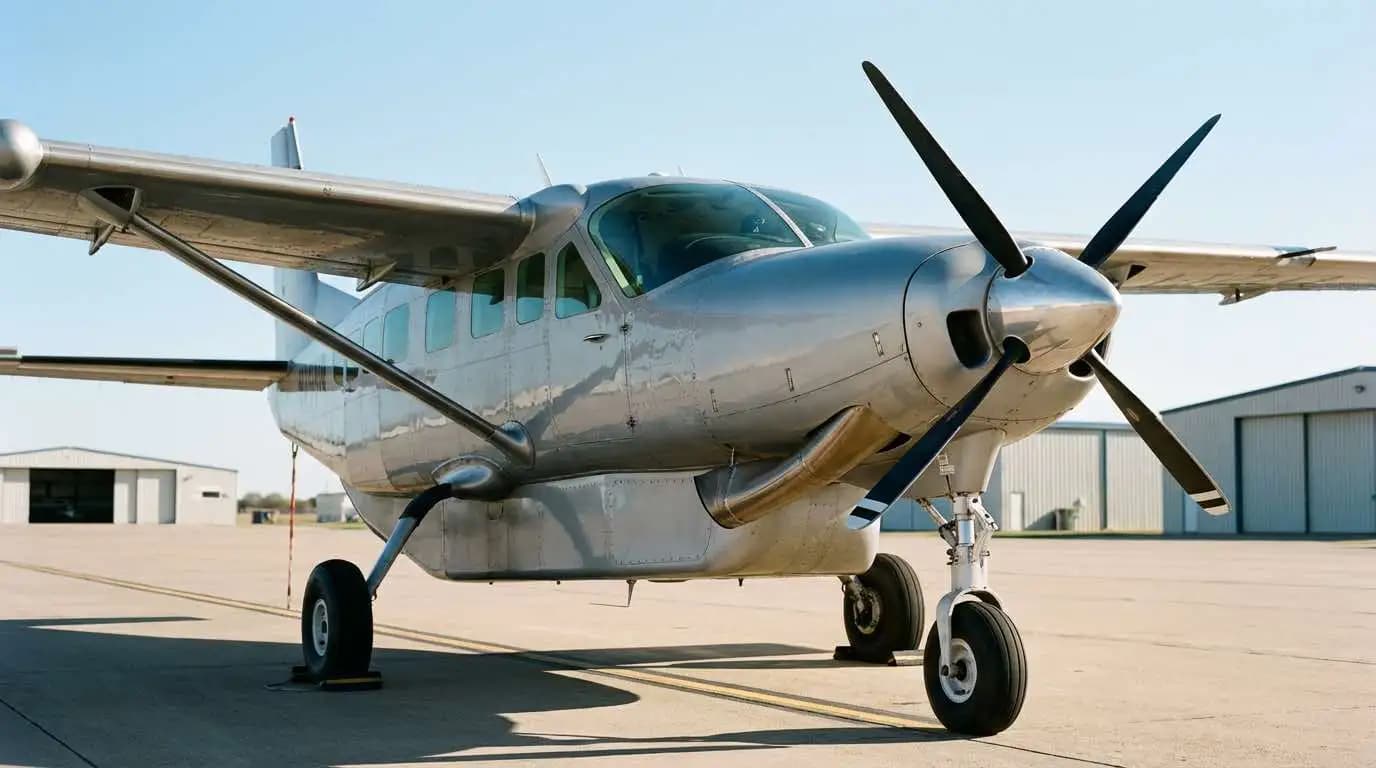
Why the Cessna Grand Caravan EX Dominates Utility Turboprop Operations
The Cessna Grand Caravan EX has held the utility turboprop market position for decades for straightforward reasons: proven PT6 reliability, high useful load, simple single-engine operation, ability to operate from unimproved surfaces, and a global parts and service network unmatched by any competing type. Over 2,700 Caravan-family aircraft have been delivered since 1985, making it one of the most widely distributed turboprop platforms in commercial aviation.
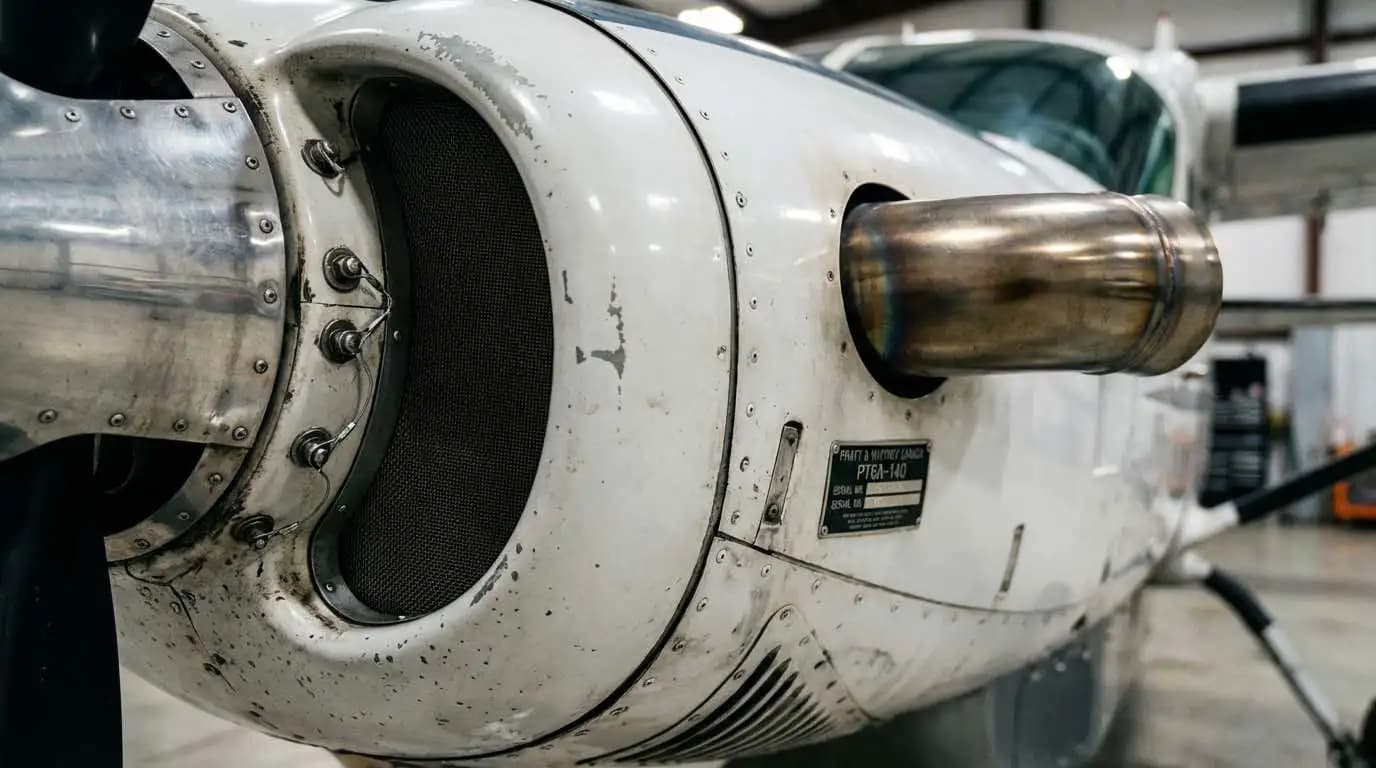
The EX designation introduced in 2013 adds the PT6A-140 engine and Garmin G1000 NXi glass cockpit: two upgrades that fundamentally improve the aircraft's commercial competitiveness. The G1000 NXi reduces single-pilot workload, adds synthetic vision and WAAS/LPV precision approach capability, and commands a meaningful market premium over analog-equipped predecessors.
For operators requiring access to remote areas, water-based operations, or high-utilization cargo and commuter service, there is no single-engine turboprop alternative with a comparable combination of payload, field performance, support infrastructure, and proven operational economics.
Grand Caravan EX listings on CollectAirs
Browse verified Cessna Caravan listings with full documentation and transparent auction terms.
Grand Caravan vs. Grand Caravan EX: Key Differences
Buyers evaluating the Grand Caravan EX vs. earlier 208B models must understand the specific changes the EX designation introduced and how they affect operational capability, maintenance cost, and market value.
| Feature | 208B Grand Caravan (pre-EX) | Grand Caravan EX (2013+) |
|---|---|---|
| Engine | PT6A-114A (675 SHP) | PT6A-140 (675 SHP, updated hot-section) |
| Avionics | Analog steam-gauge panel | Garmin G1000 NXi (touchscreen, SVT, WAAS) |
| Engine TBO | 3,000 hours (PT6A-114A) | 3,600 hours (PT6A-140) |
| ADS-B Out | Retrofit required for compliance | Integrated in G1000 NXi as standard |
| WAAS/LPV Approaches | Not available without avionics upgrade | Standard capability via G1000 NXi |
| Used Asking Price (recent years) | $800,000–$1,400,000 | $1,400,000–$2,600,000 |
The 600-Hour TBO Difference Matters Significantly
The PT6A-140's 3,600-hour TBO vs. the PT6A-114A's 3,000-hour TBO represents a meaningful lifecycle cost difference. At $350,000–$500,000 per engine overhaul, the additional 600 hours of TBO life on the EX engine reduces amortized overhaul cost per flight hour by approximately $60–$90/hr. Over the lifetime of high-utilization commercial operations, this compounds into a material total cost of ownership advantage for EX over pre-EX aircraft.
Cessna Grand Caravan EX Performance: Speed, Range, and Field Capability
The Grand Caravan EX performance profile is optimized for utility operations rather than speed or altitude. Its 175 KTAS cruise and 25,000-foot ceiling are modest by turbine aircraft standards, but its short-field capability, STOL operations from 850-foot strips, and unpaved runway compatibility open operational environments inaccessible to faster or more capable aircraft.
175 KTAS Cruise
Practical regional transport speed; optimized for utility missions at low-to-medium altitudes in uncontrolled airspace and remote area operations.
Unimproved Strip Capable
Operates from grass, gravel, and dirt strips as short as 850 feet; floatplane and amphibian variants extend capability to water operations.
~1,070 NM Range
Covers most regional commuter and charter routes; extended range tanks provide approximately 1,600 NM for island-hopping and remote area operations.

PT6A-140 Engine: TBO, Maintenance Costs, and Program Options
The Pratt & Whitney Canada PT6A-140 powering the Grand Caravan EX is the most operationally proven engine variant in the Caravan family. With a 3,600-hour TBO and mandatory hot-section inspection at 1,800 hours, engine maintenance planning is straightforward, but engine reserve funding must begin on day one of ownership.
PT6A-140 Key Data
- Rated power: 675 SHP; flat-rated; free turbine design; single-lever power management
- TBO: 3,600 hours; hot-section inspection at 1,800 hours; oil analysis and trend monitoring throughout
- Overhaul cost: $350,000–$500,000 at TBO; hot-section at 1,800 hours typically $80,000–$150,000
- Fuel: Jet-A / Jet-A1; globally available; ~58–65 GPH at cruise power
- Service network: P&WC authorized service centers globally; AOG support available in most major regions
Engine Program Options
- P&WC ESP Gold: Manufacturer-backed engine support program covering scheduled and unscheduled maintenance; per-flight-hour enrollment; transferable at sale
- JSSI: Independent per-hour engine program; covers PT6A-140 including hot-section and TBO overhaul; widely used by commercial Caravan operators
- Engine reserve (self-insured): $100–$140/hr reserve required to fund hot-section and TBO overhaul; viable for operators with strong cash management but carries full unscheduled risk
- Recommendation: P&WC ESP Gold or JSSI enrollment strongly recommended; unscheduled PT6A-140 removal without coverage can exceed $200,000+ in immediate repair and AOG costs
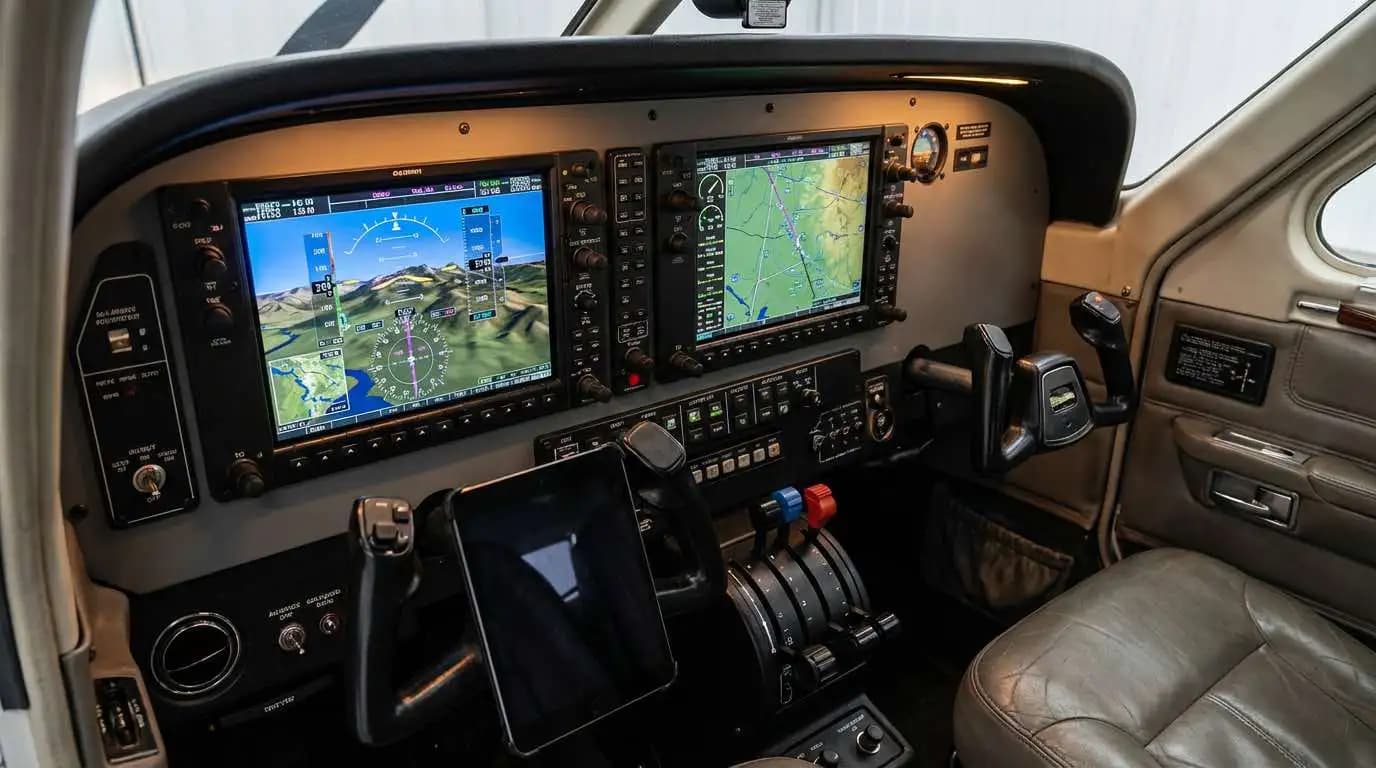
Garmin G1000 NXi Avionics and Single-Pilot Operations
The Garmin G1000 NXi installed on the Grand Caravan EX is a substantial operational improvement over the analog panel found in pre-EX 208B aircraft. For single-pilot commercial operations in IMC, remote area environments, and high-utilization schedules, the G1000 NXi directly reduces workload and improves approach capability.
Dual Garmin GDU 1040 Displays
10-inch primary flight display (PFD) and multi-function display (MFD) providing integrated flight, navigation, and systems information on a single glass panel. Reduces head-down time versus traditional analog instrument scanning.
Synthetic Vision Technology (SVT)
Terrain and obstacle depiction on the PFD provides situational awareness in IMC, night VMC, and remote area operations where terrain awareness is critical. Standard configuration on G1000 NXi-equipped Grand Caravan EX.
WAAS/LPV Precision Approaches
GPS-based precision approach capability to LPV minima as low as 200 feet AGL; enables instrument approaches to uncontrolled and remote airfields not served by ILS. Critical for commercial commuter and medevac operations.
ADS-B In/Out
FAA ADS-B Out compliance integrated as standard; ADS-B In provides traffic and weather data on the MFD. Eliminates the retrofit cost required on all pre-EX analog-panel aircraft for airspace compliance.
GFC 700 Autopilot
Two-axis autopilot with flight director; altitude preselect; approach coupling. Reduces single-pilot workload on long utility missions and during instrument approaches in marginal conditions.
Cabin, Payload, and Configuration Flexibility
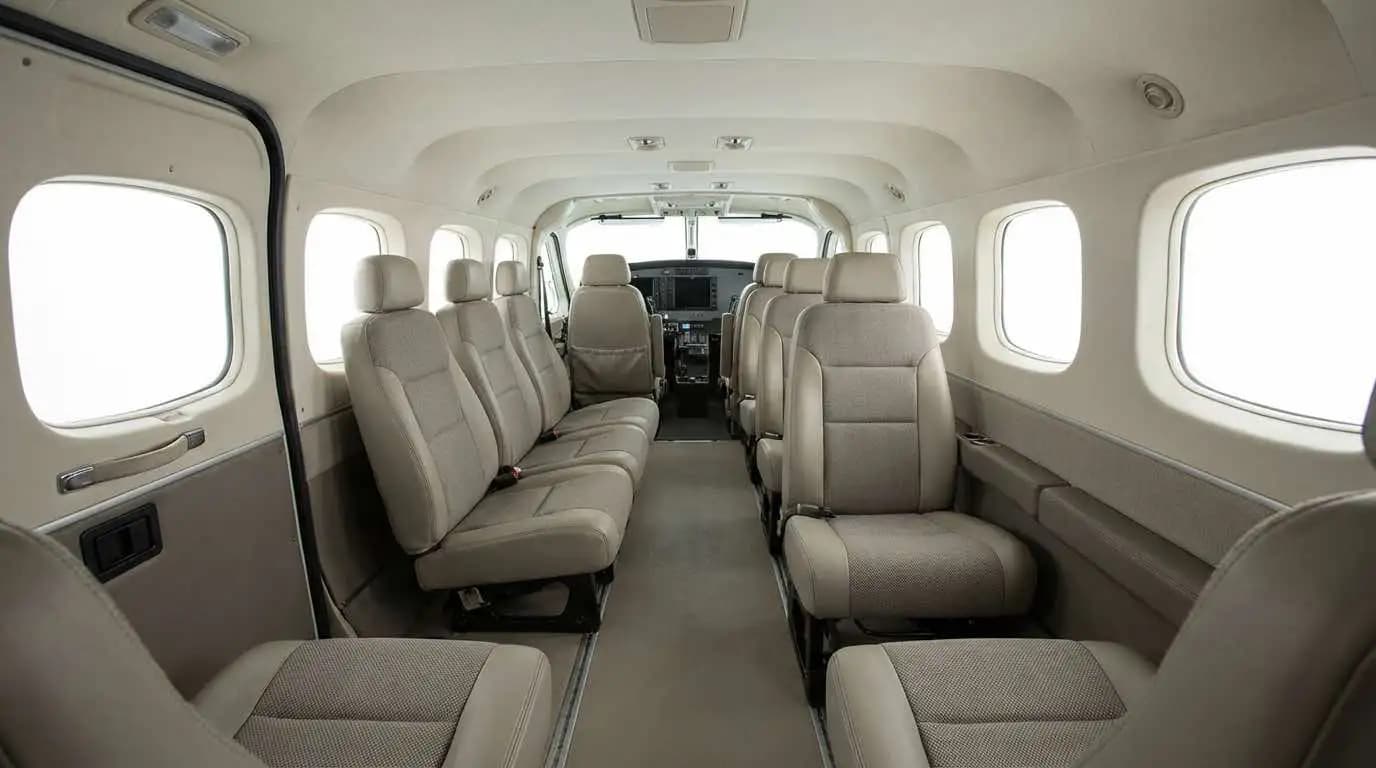
The Grand Caravan EX cabin is configured on a flat floor with a large double cargo door, enabling rapid reconfiguration between full passenger, mixed passenger-cargo, and pure cargo operations. This flexibility is the defining commercial advantage of the Caravan family for operators running multiple mission types on the same airframe.
Passenger Configuration: Up to 14 Seats
Full passenger configuration accommodates 14 passengers in airline-style forward-facing seats. No factory lavatory is fitted. Cabin length accommodates full-size rolling bags overhead or in the cargo pod. Part 135 operations require SIC when carrying more than nine passengers.
Cargo Configuration
Rapid conversion to full cargo operation via seat removal. Large double cargo door (52" × 50") enables loading of oversized cargo and medical equipment. Belly cargo pod (optional, ~490 lb capacity) adds external cargo volume without occupying the cabin.
Medevac and Aerial Operations
Approved for medevac stretcher configurations, skydiving operations, and aerial photography/survey missions. The Caravan is one of the most versatile multi-role single-engine platforms in production, a key factor in its sustained commercial demand.
Payload vs. Range Trade-Off
Maximum useful load of ~3,580 lbs must be allocated between fuel and payload. Full fuel (335 imp gal) leaves approximately 1,600–1,800 lbs for passengers and cargo. At full 14-passenger payload (standard weights), fuel load is reduced and range shrinks accordingly. Operators must calculate payload-range trade-off for every mission.
Cessna Grand Caravan EX Amphibian: Water Operations and Costs
The Caravan EX Amphibian variant (208B Amphibian) extends the aircraft's operational envelope to water takeoff and landing capability, opening access to remote lake, river, and coastal destinations unreachable by land aircraft. It is produced by Cessna and sold as a distinct model with dedicated type certificate provisions for water operations.
Amphibious Float System
Wipaire amphibious floats replace the standard fixed undercarriage. Retractable wheels enable operations from both paved runways and open water. The transition from wheel to float and back is managed through a cockpit selector, pilots must verify gear position before every water and land approach.
Performance Impact of Floats
Floatplane and amphibian configurations reduce cruise speed by approximately 10–15 KTAS and reduce useful load compared to the wheeled version due to float weight. Operators must re-calculate payload-range performance for every mission on float-equipped aircraft.
Acquisition Premium
Cessna Grand Caravan EX Amphibian new list pricing is approximately $3,500,000–$4,200,000. Used Caravan amphibians trade at a premium to standard wheeled models due to limited supply and high demand from Alaska, Canadian bush, and Pacific island operators.
Additional Maintenance Considerations
Float maintenance requires specialized corrosion protection, water rudder system inspection, and retract mechanism servicing that adds cost and inspection manhours above standard Caravan maintenance. Documented float maintenance history is a priority item in any amphibian pre-purchase inspection.
Cessna Grand Caravan EX Ownership Costs and Operating Economics
Grand Caravan EX ownership costs are among the lowest in the turbine aircraft category relative to payload capacity. Annual operating costs for typical commercial utilization of 600–1,000 hours range from $350,000 to $700,000, with engine reserves representing the largest variable cost component. High-utilization commercial operators often achieve better economics by placing aircraft on charter or scheduled service programs.
Acquisition Cost
$1,400,000–$2,600,000 used EX; $2,700,000–$3,200,000 new EX. Engine time to TBO and G1000 NXi avionics condition are the dominant value drivers. Pre-EX 208B aircraft available from $800,000 for operators accepting analog avionics.
Engine Reserves (PT6A-140)
$100–$140/hr for engine reserve accumulation to fund hot-section at 1,800 hours (~$80,000–$150,000) and TBO overhaul at 3,600 hours (~$350,000–$500,000). P&WC ESP Gold or JSSI enrollment provides budgetary certainty and protects against AOG events.
Annual Inspection (Cessna Service Center)
$15,000–$35,000 annually at a Cessna-authorized service center. Caravan annual inspections are significantly less expensive than jet-type inspections due to simpler systems and widely available qualified maintenance providers.
Propeller Overhaul
Hartzell propeller overhaul at 2,400-hour or 72-month calendar interval; approximately $8,000–$15,000 per overhaul. Propeller time and corrosion condition should be verified at pre-purchase inspection.
Pilot Training
$8,000–$15,000 for initial Caravan type rating at FlightSafety International. Recurrent simulator training approximately $4,000–$8,000 annually. Single-pilot operation reduces crew cost significantly versus two-pilot aircraft for owner-operators.
Fuel Cost
~58–65 GPH Jet-A at cruise power. At 800 annual hours and $5.50/gal average FBO price = approximately $255,000–$286,000 in annual fuel. Caravan fuel burn is the lowest in its payload class, a key commercial advantage versus competing multi-engine turboprops.
Buying a Cessna Grand Caravan EX: Pre-Purchase Checklist
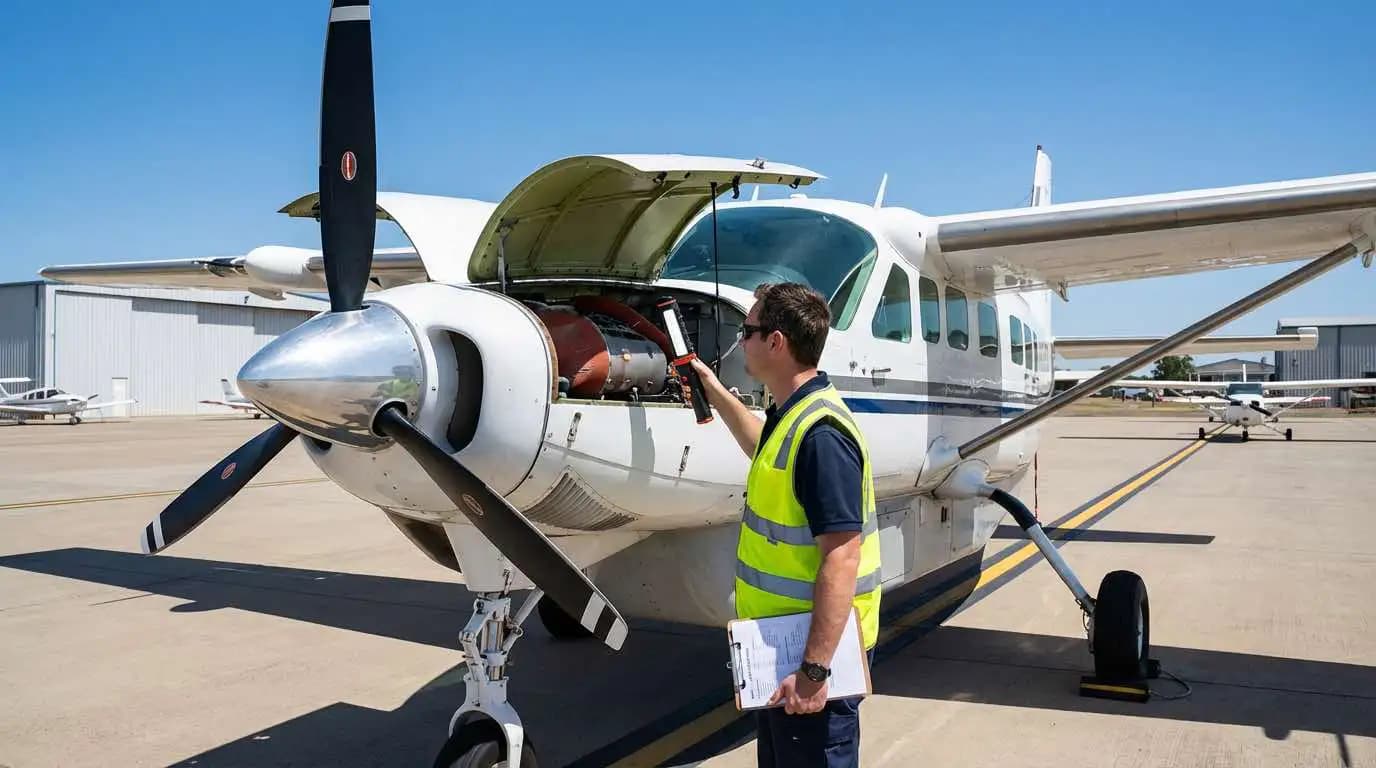
Used Cessna Grand Caravan EX purchases require structured evaluation of engine time remaining, AD compliance, logbook completeness, and avionics currency. The Caravan operates in demanding environments, remote strips, saltwater proximity, high-cycle operations: that accelerate wear across multiple airframe and systems components.
Documentation Priorities
- Complete airframe and engine logbooks from new with no entry gaps, high-utilization Caravan operations involve frequent log entries; any gaps require explanation
- Engine time since new (TSN) and time since last hot-section inspection and TBO overhaul. This is the primary value driver and must be independently confirmed against the operator's records
- Engine program enrollment certificates (P&WC ESP Gold or JSSI), verify current enrollment status directly with the program provider before signing any letter of intent
- Full AD compliance record for all Cessna 208B ADs, PT6A-140 engine ADs, propeller ADs, and all installed avionics, Caravan has accumulated a significant AD list across its 40-year operational history
- Avionics equipment list and STC certificates for all modifications, particularly important for aircraft transitioning between operators or exiting commercial Part 135 operations
- FAA Aircraft Registry title search: verify no liens, export restrictions, or prior hull damage disclosure
- For amphibian variants: complete float maintenance records, water rudder system service history, and float corrosion inspection records
Technical Inspection Priorities
- PT6A-140 engine borescope inspection of compressor, combustion section, and turbine blades by P&WC authorized technician; oil filter and chip detector review
- Engine trend monitoring data review, ECTM data should be obtained from P&WC and reviewed against historical baseline for any developing trends
- Propeller inspection: Hartzell blade condition, hub condition, pitch change mechanism, and de-ice boots if installed; verify current time against 2,400-hour/72-month calendar limit
- Airframe corrosion inspection, particularly critical on any aircraft with water operations history (amphibian, seaplane base, coastal operations); inspect wing struts, door frames, and floor structure
- Landing gear system: actuator condition, sequencing valve function, uplock/downlock mechanism inspection; rigging verification
- Flight control system: cable tension, pulley condition, surface travel verification across full deflection range, trim system function
- G1000 NXi avionics operational check: PFD/MFD function, autopilot coupled approach, ADS-B In/Out verification, database currency confirmation
Grand Caravan EX Market Trends and Pricing Drivers (2026)
The Cessna Grand Caravan EX used market is active and liquid, the large installed fleet, broad operator base, and continued new production create a well-established price framework. Five factors dominate pricing in 2026:
Engine Time Remaining to TBO
The single most important pricing variable. Aircraft with engines at or near TBO may require an immediate $350,000–$500,000 overhaul commitment. Each 100 hours remaining to TBO adds approximately $10,000–$15,000 to aircraft value. Always calculate adjusted value net of engine overhaul cost at purchase.
EX vs. Pre-EX Avionics
G1000 NXi-equipped EX aircraft command $400,000–$700,000 above comparable pre-EX 208B models with analog panels. Retrofitting pre-EX aircraft with G1000 NXi is possible but costs $250,000–$400,000 in parts and certification, buyers should evaluate retrofit value versus buying a native EX.
Operational History and Environment
Aircraft with documented water operations, saltwater coastal exposure, remote strip operations, or high daily cycles require additional airframe inspection to quantify corrosion and wear accumulation. Heavy-commercial Caravans may have logged 20,000+ airframe hours, high hours are acceptable with strong documentation.
Engine Program Enrollment Status
P&WC ESP Gold or JSSI-enrolled aircraft trade at premiums of $50,000–$150,000 over non-enrolled examples in equivalent condition. Program transferability directly to the buyer's name must be confirmed before closing.
Configuration and Installed Equipment
Cargo pod, cargo door, medevac certification, skydive certification, aerial photography STCs, and air conditioning installations all affect value. Buyers should define their intended mission and verify installed STCs before evaluating price relative to market.
Cessna Grand Caravan EX Key Facts
| Specification | Typical Value | Why It Matters |
|---|---|---|
| Engine | Pratt & Whitney Canada PT6A-140, 675 SHP | Most reliable turboprop engine family in production; global service network; 3,600-hour TBO; hot-section at 1,800 hours |
| Max Cruise Speed | 175 KTAS at 10,000 feet | Practical regional transport speed; slower than jets but appropriate for missions to unimproved strips inaccessible to faster aircraft |
| Service Ceiling | 25,000 feet | Pressurized cabin not standard; most missions flown below 15,000 feet; altitude capability useful for terrain clearance and weather avoidance |
| Maximum Range | ~1,070 NM standard; ~1,600 NM with extended tanks | Covers most commuter and charter regional routes; extended range option essential for island-to-island and remote area operations |
| Maximum Useful Load | ~3,580 lbs | High useful load relative to airframe weight; primary commercial selling point; payload vs. range trade-off must be calculated per mission |
| Passenger Capacity | Up to 14 passengers (9 before requiring SIC under Part 135) | 14-seat transport capability in single-engine turboprop; most competitive payload in its class; flexible reconfiguration between pax/cargo roles |
| Fuel Consumption | ~58–65 GPH Jet-A at cruise power | Moderate fuel burn relative to payload capacity; significantly more fuel-efficient per revenue-ton-mile than piston alternatives |
| Engine TBO | 3,600 hours (PT6A-140); hot-section at 1,800 hours | Fixed-interval TBO requires time-based engine reserve funding; engine time remaining to TBO is the primary value driver in used transactions |
| Avionics | Garmin G1000 NXi (Grand Caravan EX); analog panel (pre-EX) | G1000 NXi provides synthetic vision, WAAS/LPV approaches, and ADS-B In/Out; significantly reduces single-pilot workload vs. analog predecessors |
| Used Market Price | $1,400,000–$2,600,000 (EX); $800,000–$1,400,000 (pre-EX 208B) | Engine time remaining to TBO is the dominant price variable; G1000 NXi avionics command meaningful premium over analog-panel aircraft |
Cessna Grand Caravan EX on CollectAirs
Browse verified Cessna Grand Caravan EX and Caravan-family listings with full documentation and transparent auction terms. CollectAirs handles escrow protection, pre-purchase inspection coordination, engine program verification, and title confirmation on every transaction.
Frequently Asked Questions: Cessna Grand Caravan EX
How much is a Cessna Grand Caravan EX?
New Grand Caravan EX aircraft list at $2.7M–$3.2M. Used EX examples trade from $1.4M to $2.6M depending on year, engine time remaining to TBO, and avionics. Pre-EX 208B Grand Caravans can be acquired from $800K–$1.4M. Engine time to TBO is the primary value driver in all used Caravan transactions.
Does a Cessna Caravan have a toilet?
No. The Grand Caravan EX has no factory lavatory. It is a utility transport, not a business jet. Some operators fit a portable chemical toilet in the aft cabin for longer missions, but this is operator-specific. Buyers requiring a lavatory should consider a pressurized turboprop alternative such as the Pilatus PC-12.
What is the difference between a Grand Caravan and a Grand Caravan EX?
The Grand Caravan EX (2013+) uses the PT6A-140 engine and Garmin G1000 NXi glass cockpit. Earlier 208B Grand Caravans used the PT6A-114A and analog avionics. The EX designation specifically indicates the G1000 NXi avionics and updated powerplant combination introduced at the 2013 production transition.
How far can a Cessna Caravan fly?
Standard range is approximately 1,070 NM; with extended range tanks, approximately 1,600 NM. Operational range with full passenger load and fuel reserves is typically 600–900 NM. The Caravan is designed for regional utility missions, not intercontinental range.
Does a Cessna Caravan require two pilots?
Single-pilot certified under Part 91 with a Caravan type rating. Part 135 operations with more than nine seats occupied require a Second-in-Command. Most commercial operators use two-pilot crews regardless of regulatory minimums. FlightSafety International is the primary type rating training provider.
What is the payload capacity of the Grand Caravan EX?
Maximum useful load is approximately 3,580 lbs. With standard fuel, remaining payload is approximately 1,600–1,800 lbs, supporting 14 passengers at standard weights or equivalent cargo. An optional belly cargo pod adds further external volume. Payload and range must be balanced per mission.
Sources
Used for: 208B type certificate performance data, approved engine configurations, gross weight limits, and certification basis for single-pilot operations.
Used for: current production Grand Caravan EX performance data, G1000 NXi avionics specifications, pricing reference, and amphibian variant details.
Used for: PT6A-140 rated power specifications, TBO intervals, hot-section inspection requirements, and ESP Gold program structure.
Used for: G1000 NXi system specifications, SVT capability, WAAS/LPV approach certification, and ADS-B In/Out integration standards.
Used for: PT6A-140 engine program per-hour rates, coverage scope for hot-section and TBO events, and AOG protection parameters.
Related Resources
Turboprop Plane Buyer Guide
How turboprop engines work, top turboprop aircraft categories, performance specs, and ownership cost comparison.
Read GuidePiper Meridian Guide
PT6A turboprop performance, pressurized cabin, G1000 NXi avionics, and ownership costs for the Piper M500.
Read GuideUsed Planes Buyer Guide
How to buy used aircraft wisely: verify records, scope inspections, and budget for real ownership costs.
Read GuidePlanes for Sale Guide
How to find aircraft for sale, evaluate listings, and close your deal without expensive surprises.
Read GuideAbout the Author

Phillip Müller
CEO, CollectAirs
Long-time pilot and CEO of multiple scenic flight and aircraft sales websites. Passionate about making aircraft transactions more transparent and accessible.
Connect on LinkedIn