
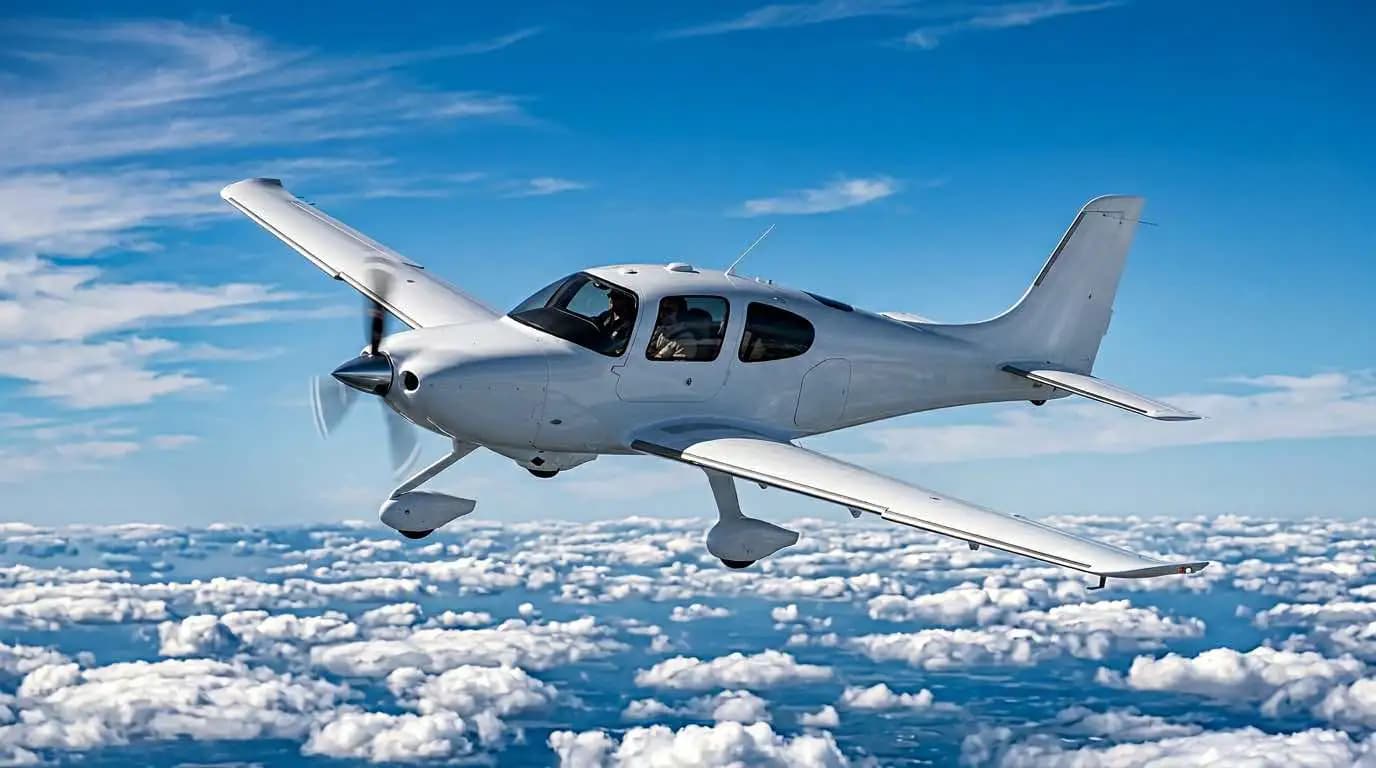
Why the Cirrus SR22 Leads the High-Performance Piston Category
The Cirrus SR22 occupies a unique position in general aviation: a high-performance composite single that combines genuine IFR capability, modern Garmin avionics, and a whole-aircraft ballistic parachute in one airframe. No other production aircraft in the certified piston category offers this combination at any price point. Since 2001, the SR22 has consistently outsold every competing high-performance piston aircraft and redefined the category.
The Continental IO-550-N engine provides reliable 310 hp normally-aspirated power with a well-established 2,000-hour TBO and extensive service network. The SR22T turbocharged variant adds the Continental TSIO-550-K to reach 25,000 ft, meaningfully extending range and enabling weather avoidance at altitudes unavailable to the normally-aspirated aircraft.
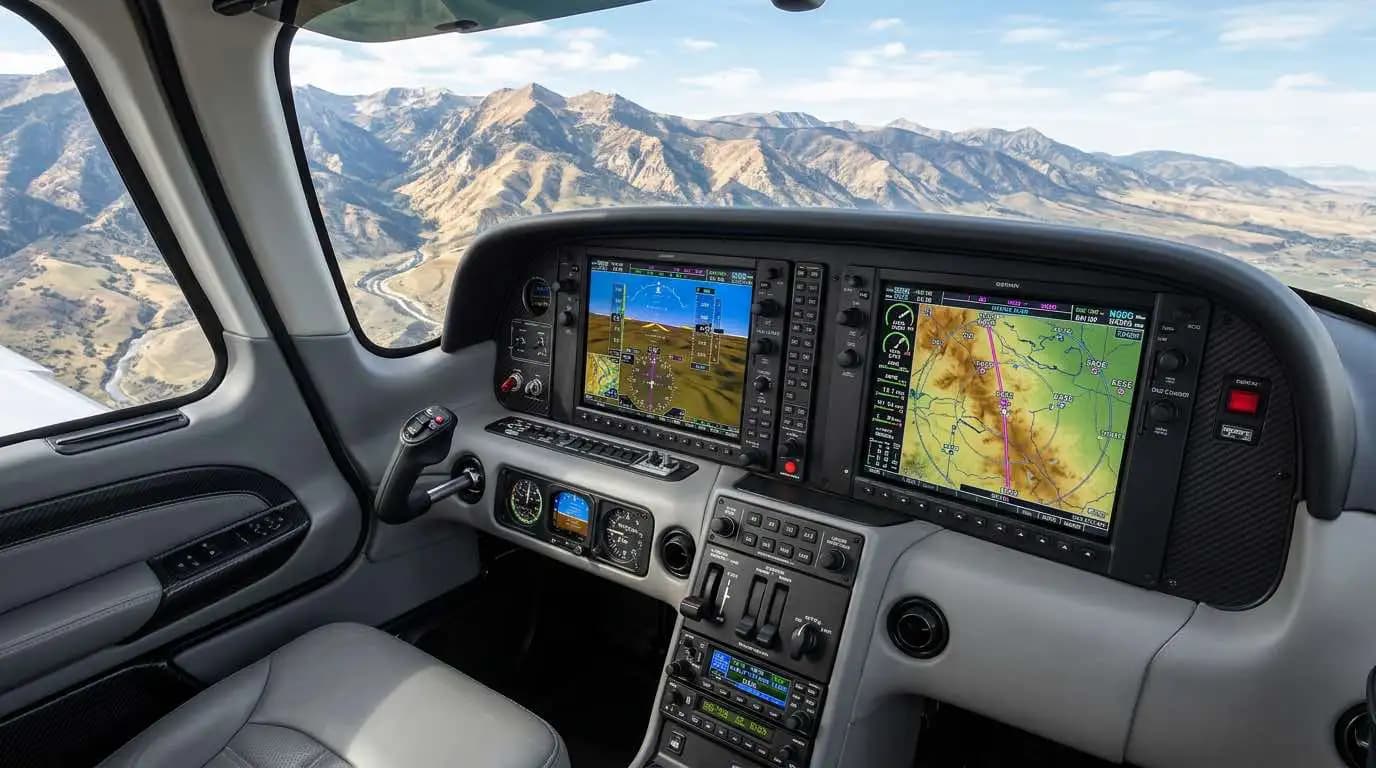
The Garmin Perspective+ avionics suite on current G6/G7 aircraft provides a dual touchscreen interface, synthetic vision, GFC 700 autopilot with electronic stability protection, and integrated flight management. This level of avionics sophistication was previously reserved for much larger and more expensive aircraft categories.
Cirrus SR22 listings on CollectAirs
Browse verified Cirrus SR22 listings with full documentation and transparent auction terms.
History, Design Evolution, and the CAPS Parachute System
Cirrus Aircraft was founded in 1984 by Dale and Alan Klapmeier following a mid-air collision that Dale survived. The experience shaped the company's founding philosophy: build the safest possible aircraft. The SR22 received FAA certification in 2001 as the successor to the SR20, adding more power, greater range, and expanded useful load to the composite airframe that had defined the SR-series from the start.
SR22 Generation Timeline
- 2001–2003: G1: FAA certification; Continental IO-550-N; Avidyne Entegra glass cockpit; initial CAPS certification; 4-seat composite single
- 2004–2005: G2: Aerodynamic refinements; increased useful load; CAPS system improvements; FIKI option introduced on SR22T
- 2006–2009: G3: Redesigned cabin, increased headroom and shoulder room; improved pressurization management; updated fuel system; GTS trim introduced
- 2010–2012: G4 / G5: Perspective avionics (Garmin G1000-based); GFC 700 autopilot; electronic stability protection (ESP); improved autopilot coupling
- 2013–2021: G5 / G6: Garmin Perspective+ with touchscreen interface; synthetic vision standard; improved CAPS deployment envelope; SR22T GTS FIKI as standard on top trim
- 2022+: G7: Dual Garmin touchscreen primary displays; new cabin design with improved ergonomics; enhanced autopilot; highest resale values in used market
CAPS: What Buyers Must Verify
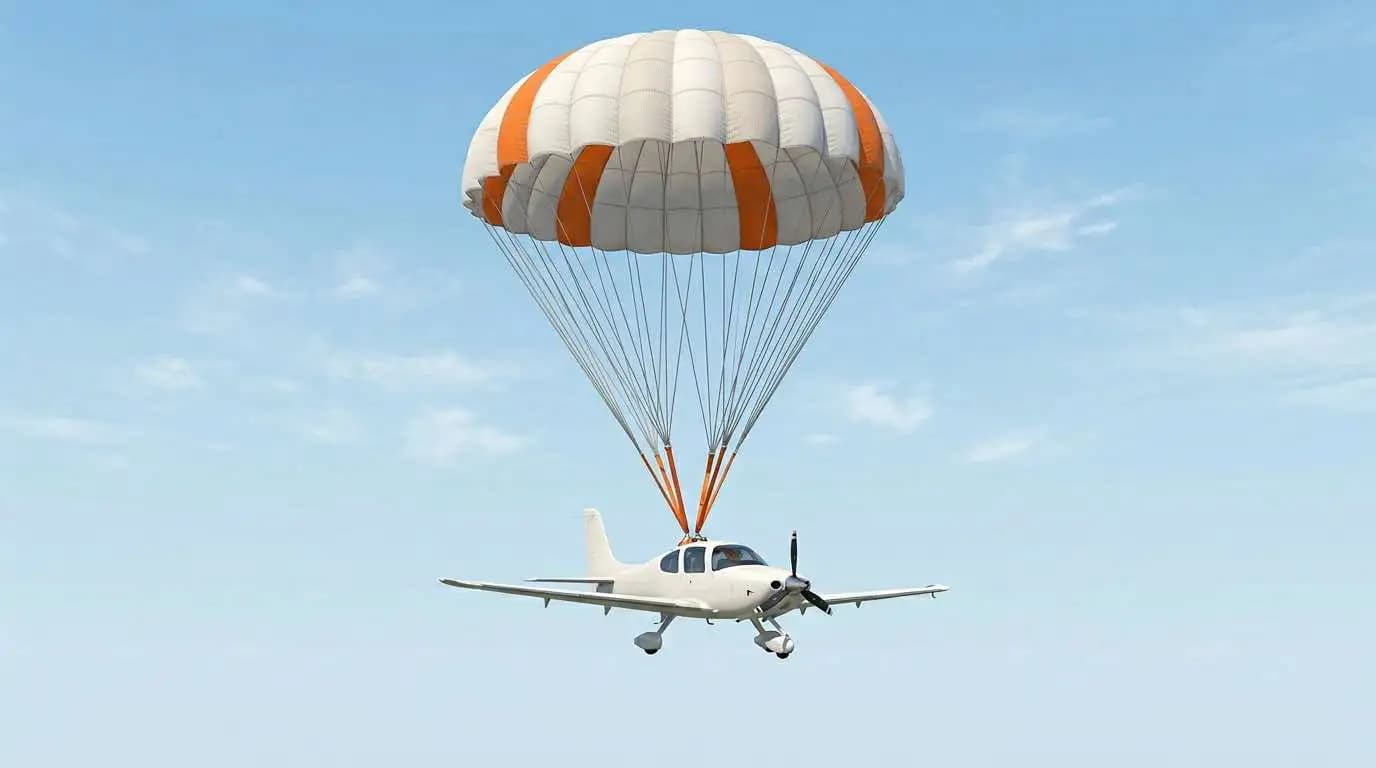
The CAPS (Cirrus Airframe Parachute System) deploys a ballistic rocket-extracted parachute that lowers the entire aircraft to the ground. It is activated by pulling a red T-handle in the cabin ceiling and is certified for use at altitudes above approximately 400–600 ft AGL depending on airspeed.
- 10-year mandatory repack is an FAA Airworthiness Directive requirement, verify the repack date and remaining service life before any purchase agreement
- CAPS repack cost: $15,000–$22,000 per repack at Cirrus-authorized service centers; due date is a major negotiating point in used SR22 transactions
- CAPS has been deployed over 120 times in real-world emergencies; credited with saving over 250 lives as of 2025
- Deployed CAPS aircraft require extensive structural inspection and parachute system replacement, a deployed CAPS event is a significant maintenance finding requiring disclosure
Cirrus SR22 Performance: Speed, Range, and Altitude
The Cirrus SR22's performance envelope is defined by its efficient composite airframe, Continental IO-550 power, and aerodynamically clean design. At max cruise the SR22 achieves approximately 183 KTAS, faster than any competing normally-aspirated single. The SR22T turbocharged variant extends the performance envelope significantly by accessing higher altitudes where true airspeed and fuel efficiency both improve.
183 KTAS Max Cruise
Best-in-class normally-aspirated piston cruise speed; SR22T reaches 210–220 KTAS at FL250 with turbocharged performance.
17,500 / 25,000 ft
SR22 service ceiling 17,500 ft; SR22T raises this to 25,000 ft enabling weather avoidance unavailable to the normally-aspirated variant.
~1,000 NM IFR Range
SR22 covers most regional sectors non-stop; SR22T GTS extends to 1,200–1,400 NM at efficient cruise with favorable winds.
Avionics, Cockpit, and Safety Systems Integration
The Cirrus SR22 avionics suite has evolved from the early Avidyne Entegra glass cockpit through multiple Garmin Perspective generations to the current Perspective+ dual-touchscreen system in G6/G7 aircraft. The avionics generation significantly affects workload, automation capability, and market value. Buyers should clearly understand which generation they are evaluating before pricing.
Avidyne Entegra (G1–G3, 2001–2009)
Dual primary flight displays with MFD; WAAS GPS navigation; basic autopilot. Avidyne hardware and software support is increasingly limited, a consideration for buyers of early SR22 aircraft evaluating long-term supportability.
Garmin Perspective (G4/G5, 2010–2016)
G1000-based dual displays with GFC 700 autopilot, integrated FMS, WAAS/LPV approach capability. Significant improvement in automation and workload over Avidyne. ESP (Electronic Stability Protection) introduced as standard safety feature.
Garmin Perspective+ (G6/G7, 2017+)
Dual touchscreen primary displays with synthetic vision technology standard, improved GFC 700 autopilot, fully integrated FMS and terrain awareness. Current-generation standard and the strongest used market value position for SR22 buyers.
GFC 700 Autopilot with ESP
Three-axis digital autopilot with electronic stability protection provides envelope protection against inadvertent unusual attitudes. ESP will gently correct bank angle and pitch deviations before pilot input is required, a meaningful active safety feature for single-pilot IFR operations.
TCAS / Traffic Awareness and ADS-B
Traffic advisory systems and ADS-B Out are standard on current SR22 production. Earlier aircraft may require ADS-B Out compliance modification; verify current airspace compliance status at pre-purchase inspection. ADS-B In capability enhances traffic and weather awareness.
Cirrus SR22 Interior: Cabin, GTS Trim, and Passenger Comfort
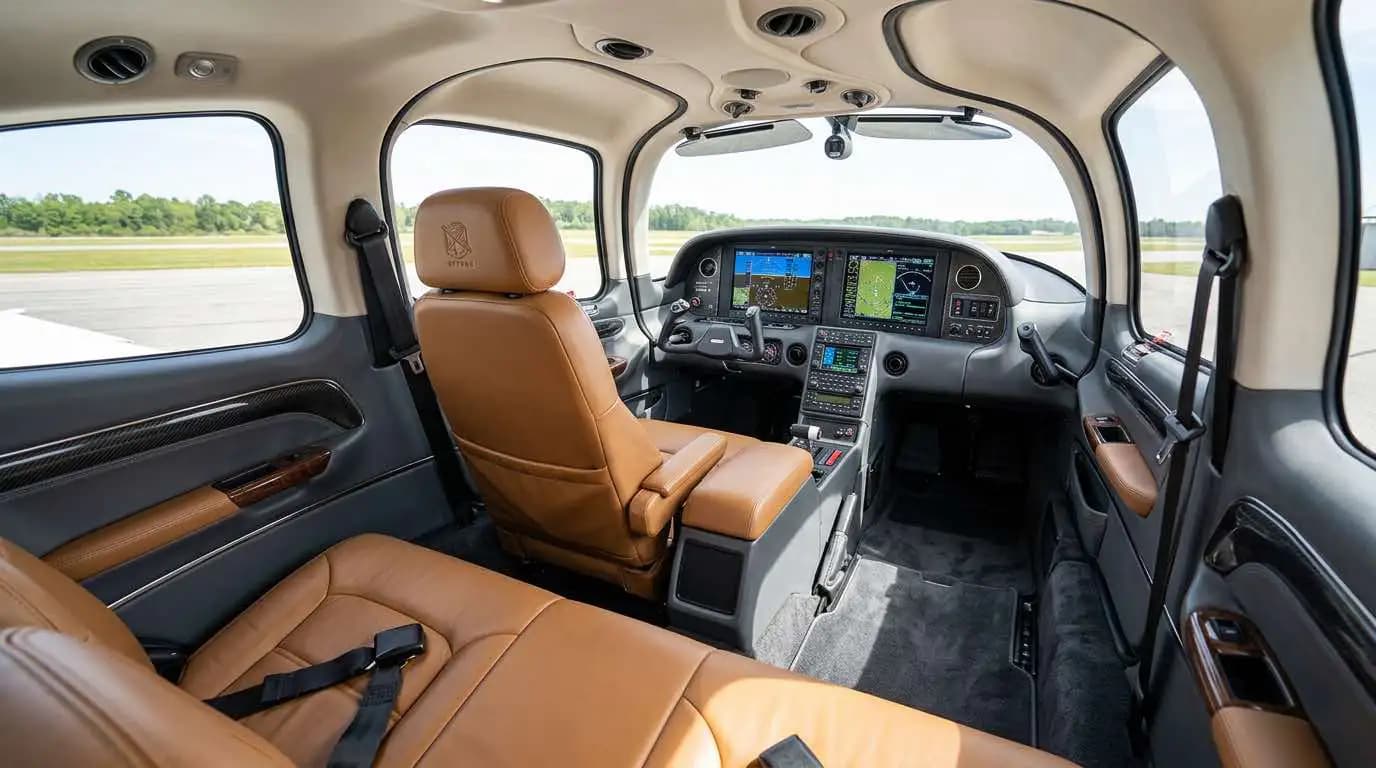
The Cirrus SR22 cabin is a four-seat composite interior with a modern automotive-influenced design that differentiates the aircraft from traditional piston cabins. The GTS trim level adds premium leather seating, enhanced sound insulation, and upgraded avionics options. Cabin ergonomics have improved progressively across generations with the G3 redesign providing notably more headroom and shoulder room than G1/G2 aircraft.
Four-Seat Composite Cabin
Pilot plus three passengers in two-plus-two seating. Useful load typically 1,100–1,200 lbs. Full fuel with four adults requires careful weight and balance planning, verify useful load against actual mission requirements before purchase.
GTS Trim: Standard vs. Premium
The GTS (Grand Touring Sport) trim adds premium leather seating, enhanced audio panel, FIKI (flight into known icing) on the SR22T, and higher-spec interior finishes. GTS examples command meaningful premiums in the used market and are more appealing for managed charter operations.
Climate Control and Pressurization
The SR22 is unpressurized, cabin altitude equals actual flight altitude. Supplemental oxygen is required above 12,500 ft for extended operations. The SR22T's 25,000 ft ceiling necessitates supplemental oxygen planning on high-altitude operations. Effective climate control is managed through the air conditioning option available on GTS trims.
Baggage and Useful Load
Aft baggage compartment with 130 lb capacity accessible through a single door. Additional storage behind rear seats. With full fuel (~92 gallons usable), available payload for passengers and bags is typically 600–700 lbs, enough for two to three passengers with luggage.
Connectivity and Entertainment
Current G7 aircraft include USB-A and USB-C charging ports, Bluetooth audio streaming, and modern audio panel options. Older generations vary significantly in connectivity. Aftermarket satellite phone and internet options are available via STC for operators requiring inflight connectivity.
Cirrus SR22 Ownership Costs and True Operating Expense
Cirrus SR22 ownership costs are meaningful but manageable relative to its performance category. Annual operating expenses for typical owner use of 100–200 hours run approximately $35,000–$75,000 excluding financing, depreciation, and hangar. Engine management and CAPS repack timing are the two largest variable cost items that require pre-purchase financial planning.
Acquisition Cost
$180,000–$750,000 for used aircraft depending on generation and condition; new SR22T GTS G7 lists above $1,100,000. Engine time since overhaul, CAPS repack status, avionics generation, and overall documentation quality are the primary value determinants.
Annual Inspection
$3,000–$8,000 at a Cirrus-authorized service center (CSIP/CSC). Annual inspections on composite aircraft require specific tooling and training, use a Cirrus-authorized center rather than a generic IA for meaningful inspection value.
Engine (Continental IO-550-N)
2,000-hour TBO with overhaul cost of $30,000–$50,000 at most shops. Engine reserve of $15–$25 per flight hour is prudent. Consider Continental's CPMR (Comprehensive Parts Maintenance Reserve) or equivalent engine program to smooth overhaul cost exposure.
CAPS Repack
$15,000–$22,000 every 10 years. This is an FAA Airworthiness Directive, non-compliance grounds the aircraft. Budget the repack as a fixed cost spread over 10 years: approximately $1,500–$2,200 per year. CAPS due date is a major negotiating point in used SR22 acquisitions.
Fuel Cost
15–18 GPH of 100LL at typical cruise; SR22T burns 18–22 GPH on Jet-A or 100LL. At $6.00–$8.00/gallon and 150 annual hours: approximately $13,500–$21,600 annually for the SR22. SR22T fuel costs run somewhat higher given turbocharged power settings.
Insurance
$4,000–$9,000 annually depending on pilot qualifications, hull value, and liability limits. New SR22 pilots face higher initial premiums, minimum hours and CSIP completion are often required by underwriters. Premiums decrease as pilot time and SR22-specific experience increase.
Buying a Cirrus SR22: Pre-Purchase Checklist
Due diligence on a Cirrus SR22 purchase requires structured evaluation of CAPS repack status, engine condition, avionics generation, airframe inspection compliance, and composite structure integrity. SR22 pre-purchase inspection requires a Cirrus Service Center or qualified Cirrus-trained IA: generic annual inspection shops lack the composite expertise and specific tooling required.
Documentation and Records Priority
- Complete airframe and engine logbooks from first flight with no maintenance history gaps or unresolved discrepancy entries, gaps in SR22 maintenance records are a significant red flag at any price point
- CAPS repack certification documentation: confirm current 10-year repack status, repack completion date, and next due date, non-current CAPS grounds the aircraft and requires immediate repack before legal flight
- Engine logbook: total time since new (TSN) and time since most recent overhaul (TSMO) with complete shop work order documentation; major vs. field overhaul distinction matters for value
- Full AD compliance documentation for SR22 airframe, Continental IO-550 engine, and installed avionics, Cirrus type has accumulated a significant AD list over 20+ years of production
- ADS-B Out compliance confirmation: verify current airspace compliance; earlier aircraft may require modification STC documentation
- Avionics equipment list and STC documentation for any non-standard installations, aftermarket avionics, audio panels, or ELT systems require current STC records
- FAA Aircraft Registry title search confirming no liens, prior salvage or damage history, or outstanding export restrictions
Technical Inspection Priorities
- Continental IO-550 engine inspection: oil analysis, borescope of all cylinders, compression test with results documented, cylinder compression below 60/80 indicates wear requiring attention before purchase
- CAPS system physical inspection by Cirrus-authorized technician: verify pyrotechnic rocket cartridge, harness condition, and ballistic module integrity in addition to repack certification review
- Composite airframe structural inspection: skin delamination check, impact damage survey, fuel tank sump and drain condition, and wing attachment fitting inspection requiring specific SR22 tooling
- Avionics function check: full autopilot coupled approach simulation, synthetic vision accuracy, WAAS/LPV approach certification, ADS-B In/Out function, and traffic advisory system operation
- Landing gear inspection: SR22 fixed gear simplifies this but wheel pant condition, brake system wear, and nose gear shimmy damper condition are meaningful maintenance items
- Flight control inspection: side-stick mechanism rigging, aileron/elevator/rudder travel and cable tension, trim system operation, and yaw damper function on equipped aircraft
- Fuel system: tank integrity, gascolator condition, fuel selector valve operation, and fuel quantity system accuracy, tank delamination on early SR22 aircraft is a documented issue
Transaction and Risk Management
- Engage a qualified aviation escrow service for all funds and document custody, essential at SR22 price points regardless of buyer and seller familiarity
- Contract pre-purchase inspection exclusively with a Cirrus Service Center (CSC) or Cirrus Authorized Service Center (CASC), generic IA shops lack SR22-specific composite expertise and diagnostic capability
- Verify pilot insurance eligibility before closing: underwriters impose minimum SR22 time and CSIP completion requirements, confirm coverage is achievable before signing
- Confirm CAPS repack transferability and schedule any immediately-due repack into purchase price negotiations, a CAPS repack due at or near closing is a hard negotiating item worth $15,000–$22,000
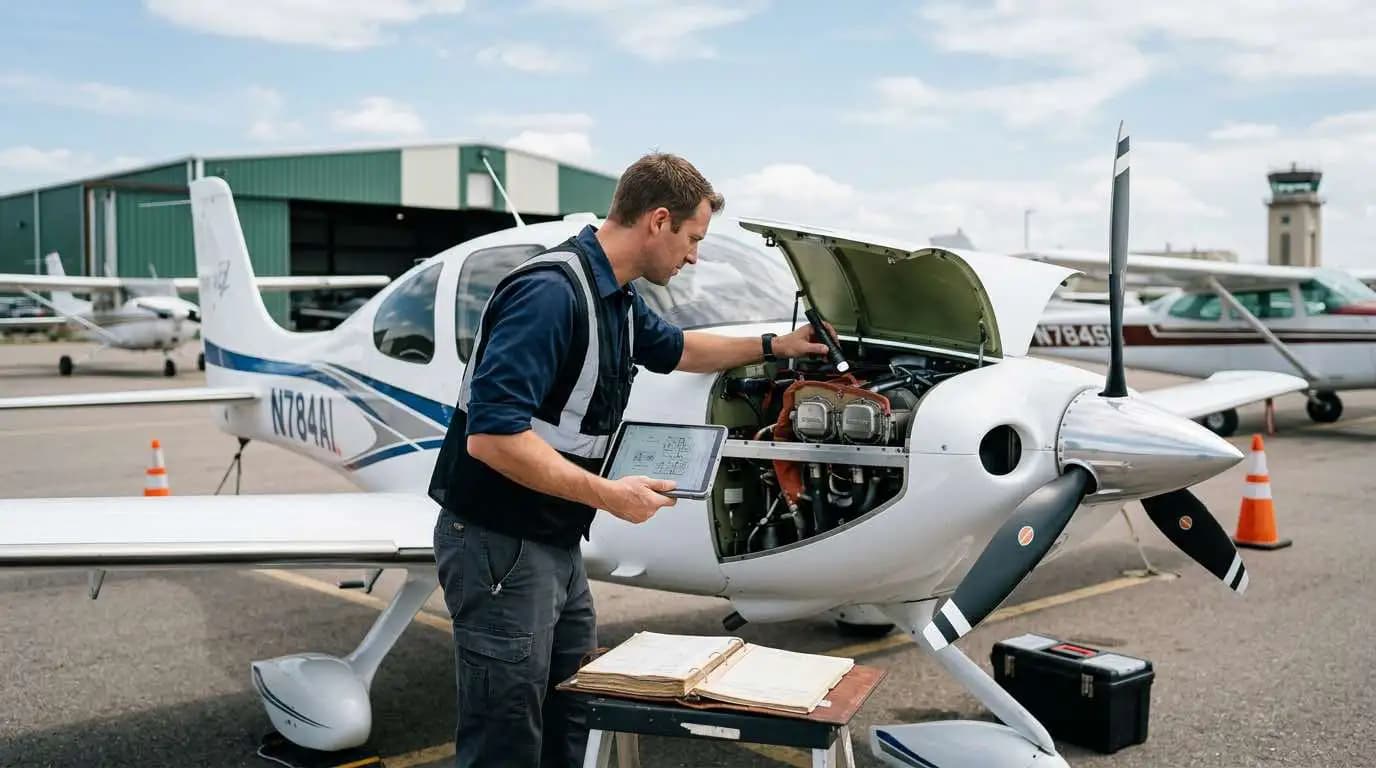
Cirrus SR22 Market Trends and Pricing Drivers (2026)
The Cirrus SR22 used market remains one of the most liquid in general aviation, high production volume, wide buyer familiarity, and strong community infrastructure support consistent transaction velocity. Primary value drivers in 2026:
Generation (G1 through G7)
Generation is the strongest single price driver. G7 aircraft trade at significant premiums over G5/G6; early G1/G2 aircraft represent the lowest acquisition cost but carry older avionics (Avidyne Entegra) and the most accumulated airframe time. G3+ with Garmin Perspective represents the middle-market sweet spot for many buyers.
CAPS Repack Status
CAPS due date within 1–2 years suppresses pricing significantly, the immediate $15,000–$22,000 repack cost is fully reflected in buyer offers. Aircraft with recently completed repacks trade at meaningful premiums. Always verify CAPS status independently before any price discussion.
Engine Time Since Overhaul
Low-time engines (under 500 hours since major overhaul) command premiums; high-time engines approaching TBO suppress pricing by the full overhaul cost ($30,000–$50,000). Mid-time engines are the most common and require pro-rated valuation by qualified engine shop.
SR22T vs. SR22 Premium
The turbocharged SR22T consistently commands 15–25% premium over comparable SR22 examples due to altitude access, speed, range, and typically higher-spec trim levels (GTS with FIKI). The premium narrows for early G1/G2 turbocharged aircraft where Avidyne avionics limit appeal.
GTS Trim Level
GTS trim adds meaningful premiums over base SR22, typically $20,000–$60,000 depending on generation. FIKI (flight into known icing) on the SR22T GTS adds further appeal for buyers requiring all-weather capability and charter certification.
Interior Condition and Avionics Currency
Well-presented interiors with current Garmin Perspective+ avionics, ADS-B compliance, and Bluetooth audio command strong positioning. Dated interiors and legacy Avidyne avionics reduce appeal, particularly for charter and managed aircraft buyers who value modern interfaces.
Cirrus SR22 Key Facts
| Specification | Typical Range / Value | Why It Matters |
|---|---|---|
| Engine (SR22) | Continental IO-550-N, 310 hp | Proven normally-aspirated piston engine; 2,000-hour TBO; overhaul cost $30,000–$50,000 depending on shop and condition; widespread service network |
| Engine (SR22T) | Continental TSIO-550-K, 315 hp turbocharged | Maintains rated power to higher altitudes; sea-level performance to ~18,000 ft; overhaul typically $40,000–$65,000; FIKI capability standard on GTS trim |
| Max Cruise Speed (SR22) | ~183 KTAS at 8,000 ft | Top-tier normally-aspirated piston cruise speed; faster than most comparable single-engine aircraft; efficient at mid-altitude cruise levels |
| Max Cruise Speed (SR22T) | ~210–220 KTAS at FL250 | Turbocharged variant accesses faster airspeed at higher altitudes; weather avoidance and faster block times over SR22 on longer sectors |
| Service Ceiling | 17,500 ft (SR22) / 25,000 ft (SR22T) | SR22T altitude access significantly improves weather avoidance and provides access to favorable winds unavailable to the normally-aspirated variant |
| IFR Range | ~950–1,050 NM (SR22) / ~1,200–1,400 NM (SR22T GTS) | Covers most regional missions non-stop; SR22T GTS range is competitive with light twins; varies significantly with power setting and payload |
| Passenger Capacity | 4 seats (pilot + 3 passengers) | Four-place composite single; useful load typically 1,100–1,200 lbs; full fuel with four adults limits payload, weight and balance planning essential on every flight |
| CAPS Parachute | Standard on all SR22; 10-year repack required | Cirrus Airframe Parachute System is a certified whole-aircraft ballistic recovery parachute; 10-year repack is mandatory and costs $15,000–$22,000; repack status is a major inspection point |
| Avionics Suite | Garmin Perspective+ (G6/G7); Garmin Perspective (G5); earlier Garmin G1000 | Avionics generation is a significant value differentiator; Perspective+ with GFC 700 autopilot and ESP (Electronic Stability Protection) is the current standard |
| Used Market Asking Price | $180,000–$750,000 (used); $1,100,000+ (new G7) | Driven by generation (G1–G7), trim level (standard vs. GTS), engine time, CAPS repack status, and avionics generation; SR22T commands 15–25% premium over SR22 |
Cirrus SR22 on CollectAirs
Browse verified Cirrus SR22 listings with full documentation and transparent auction terms. CollectAirs connects qualified buyers with thoroughly vetted aircraft, with escrow protection, pre-purchase inspection coordination, CAPS status verification, and title confirmation on every transaction.
Frequently Asked Questions About the Cirrus SR22
How much does a Cirrus SR22 cost?
Used SR22 prices range from ~$180,000 for early G1/G2 models to $600,000–$750,000 for current G6/G7 aircraft. New SR22T GTS G7 lists above $1,100,000. Engine overhaul status, CAPS repack status, avionics generation, and overall documentation quality are the primary value drivers. SR22T commands a 15–25% premium over the normally-aspirated SR22 within comparable years.
What is the fatality rate of the Cirrus SR22?
Early SR22 accident data showed higher-than-average fatal accident rates attributed to pilot-error events (loss of control, VFR-into-IMC) among transitioning pilots. CAPS has been credited with saving over 250 lives. More recent data shows improved trends as Cirrus CSIP training has matured. The key risk factors are overconfidence in avionics capability and inadequate IFR proficiency rather than aircraft design limitations.
Is a Cirrus SR22 hard to fly?
The SR22 is aerodynamically manageable but requires proper type-specific transition training. Side-stick controls, high cruise speeds, and limited aerobatic margins differentiate it from traditional yoke aircraft. Cirrus recommends completing a CSIP transition course. The primary risks are associated with inadequate instrument proficiency and overconfidence, not control complexity.
How much does fuel cost for a Cirrus SR22?
The SR22 burns approximately 15–18 GPH of 100LL at typical cruise. At $6.00–$8.00/gallon, fuel costs run $90–$145 per hour. The SR22T burns 18–22 GPH on Jet-A at higher cruise power. At 150–200 annual hours, annual fuel costs run $13,500–$29,000 depending on variant, power settings, and local fuel prices.
What is the range of the Cirrus SR22?
IFR range is approximately 950–1,050 NM for the SR22 and 1,200–1,400 NM for the SR22T GTS at efficient cruise. Range varies considerably with power setting, altitude, and payload. Max cruise (75%) reduces range; long-range cruise (55–65%) extends it. The SR22 covers most continental US sectors non-stop.
What is the difference between the Cirrus SR22 and SR22T?
The SR22T adds a turbocharged Continental TSIO-550-K (315 hp), raising the service ceiling to 25,000 ft vs. 17,500 ft, cruise speed to 210–220 KTAS vs. 183 KTAS, and range to 1,200–1,400 NM. The SR22T GTS typically includes FIKI (flight into known icing). Expect a 15–25% price premium over a comparable SR22. Engine overhaul for the TSIO-550 is more expensive than the normally-aspirated IO-550.
Sources
Used for: SR22 certification reference, approved engine configurations, CAPS certification basis, and type certificate performance data.
Used for: current production SR22/SR22T performance specifications, G7 avionics integration standards, CAPS system documentation, and factory pricing reference.
Used for: IO-550-N and TSIO-550-K engine specifications, TBO standards, overhaul requirements, and CPMR program details.
Used for: Perspective+ system specifications, GFC 700 autopilot integration, ESP capability, and WAAS/LPV approach certification standards.
Used for: SR22 accident and incident data, CAPS deployment records, and fatality rate context for general aviation safety comparison.
Related Resources
Cirrus SR20 Guide
Composite construction, CAPS parachute system, G1000 avionics, engine maintenance, and what to verify before buying the SR20.
Read GuideCessna Citation CJ4 Guide
Single-pilot jet performance, Williams FJ44-4A engines, G3000 avionics, Gen2/Gen3 differences, and what to verify before buying.
Read GuidePiper Meridian Guide
PT6A turboprop performance, G1000 NXi avionics, pressurized cabin, ownership costs, and what to verify before buying the Piper M500.
Read GuidePlanes for Sale Guide
How to find aircraft for sale, evaluate listings, and close your deal without expensive surprises.
Read GuideAbout the Author

Phillip Müller
CEO, CollectAirs
Long-time pilot and CEO of multiple scenic flight and aircraft sales websites. Passionate about making aircraft transactions more transparent and accessible.
Connect on LinkedIn