
 Nordhorn
 Florida
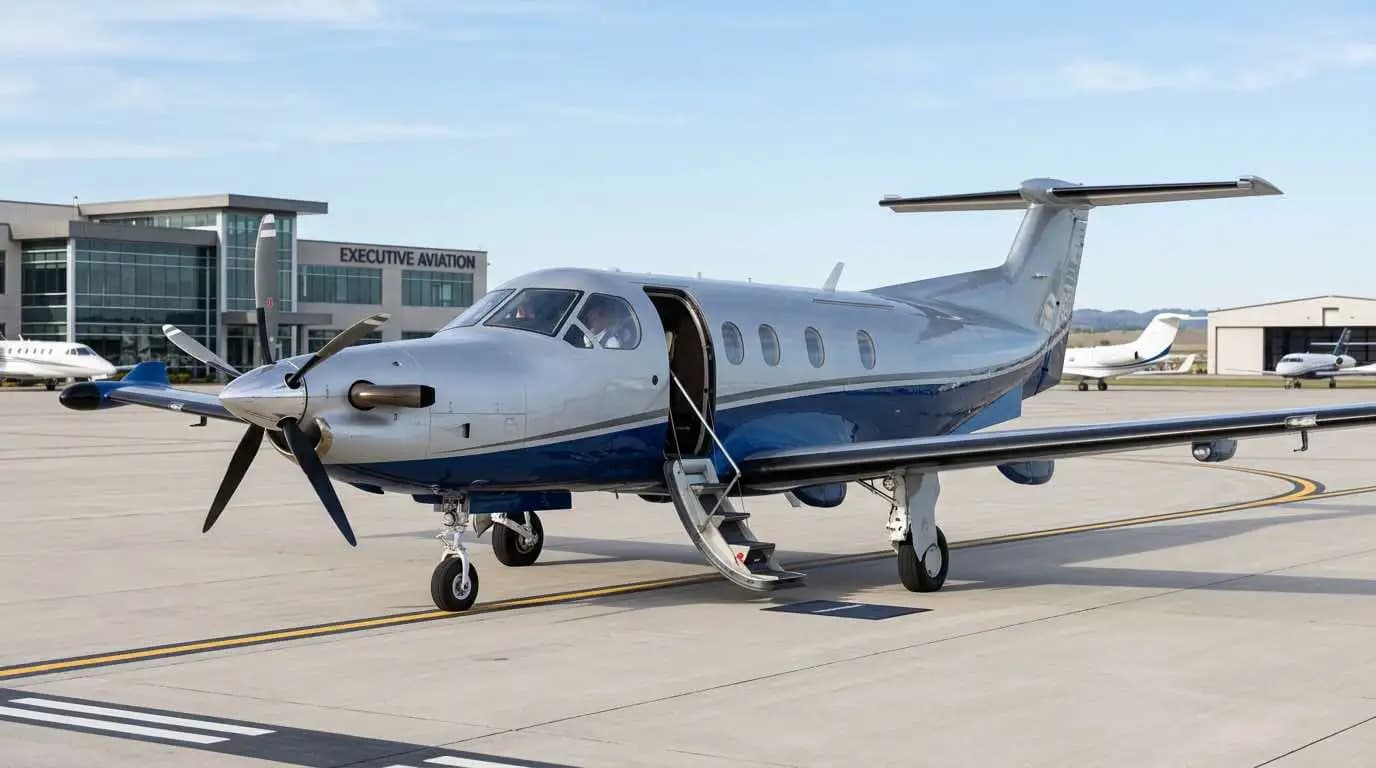
Why the Pilatus PC-12 Leads the Single-Engine Turboprop Category
The Pilatus PC-12 occupies a unique position in business aviation: the only certified single-engine pressurized turboprop that combines executive transport performance with genuine short-field and unpaved-strip utility: all from a single airframe, single engine, and single crew. No competing production aircraft delivers this combination at any price. The PC-12's 1,800+ NM range, 290 KTAS cruise, and FL300 ceiling place it in direct competition with light twins on block time while carrying a significantly lower operating cost per hour.
The Pratt & Whitney Canada PT6 engine family: PT6A-67P on the NG and PT6E-67XP with FADEC on the NGX, is the most reliable turboprop powerplant in service. The PT6's reverse-flow free-turbine design enables outstanding hot-and-high performance, accommodates degraded-fuel-quality operations, and is supported by the most comprehensive turboprop service network in the world.
The large rear cargo door is the PC-12's most operationally significant feature, a 53 × 51-inch opening that allows rapid, unassisted loading of medical stretchers, cargo pallets, large equipment, and bulk freight without modification. No competing executive turboprop offers this capability, and it is the primary reason the PC-12 dominates medevac, humanitarian, utility, and government fleet procurement worldwide.
Pilatus PC-12 listings on CollectAirs
Browse verified Pilatus PC-12 listings with full documentation and transparent auction terms.
History, Design Evolution, and the PC-12 Generations
Pilatus Aircraft developed the PC-12 through the late 1980s and early 1990s as a replacement for the PC-6 Porter in utility and special-mission roles. The aircraft received Swiss BAZL and FAA certification in 1994, combining pressurization, PT6 reliability, and the large cargo door in a single airframe for the first time. Over three decades, Pilatus progressively refined the design through multiple major upgrades without ever replacing the fundamental airframe concept that made the original PC-12 exceptional.
PC-12 Generation Timeline
- 1994: PC-12/45: Initial production; PT6A-67B (1,200 shp); basic Bendix/King or Primus 1000 avionics; pressurized cabin to 6.0 psi differential; large cargo door standard
- 1997–2004: PC-12/45 continued: Progressive avionics updates; interior refinements; production volume growth establishing global service network and fleet customer base
- 2005–2007: PC-12/47: Updated PT6A-67P engine (1,200 shp); improved hot-and-high performance; updated pressurization; enhanced interior ergonomics; Collins Pro Line 21 avionics option
- 2008–2020: PC-12 NG (47E): Major upgrade: Honeywell Primus Apex avionics suite with three-axis autopilot; synthetic vision; improved autopilot coupling; WAAS/LPV approach capability; restyled interior; current primary used market generation
- 2021+: PC-12 NGX: Current production: PT6E-67XP with FADEC and electronic propeller control (industry first); updated Honeywell Primus Apex; redesigned cabin with improved acoustic insulation; Autoflight system; PC-12 PRO equipment package option
NG vs. NGX: What Buyers Must Understand
The primary practical difference between the NG and NGX is not performance: both cruise at 290 KTAS with FL300 ceiling, but engine management complexity. The NG's PT6A-67P requires manual torque, ITT, and propeller RPM management throughout all phases. The NGX's PT6E-67XP with FADEC automates all engine and propeller parameters: reducing pilot workload substantially and eliminating the risk of exceeding torque or temperature limits in high-workload phases. For single-pilot operations, the NGX's FADEC represents a meaningful safety and workload advantage over the NG. Price premium for new NGX vs. recent NG is approximately $1,000,000–$1,500,000.
Pilatus PC-12 Performance: Speed, Range, and Short-Field Capability
The Pilatus PC-12's performance envelope is defined by the combination of turboprop efficiency, high cruise altitude access, and exceptional short-field and unpaved-runway capability. The PC-12 routinely operates from strips that jets and pressurized piston twins cannot access, while delivering competitive block times against light twins on sectors where FL300 cruise advantage applies.
290 KTAS Max Cruise
Fastest certified single-engine turboprop in production; competitive block times against light twins on most regional sectors under 1,500 NM.
FL300 Service Ceiling
Full pressurized operations to 30,000 ft; weather avoidance above most convective activity; RVSM airspace access for transatlantic and high-altitude routing.
~1,800 NM IFR Range
Covers continental Europe and most US routes non-stop; enables one-stop intercontinental routing; strong range for a single-engine turboprop at this operating cost.
PT6 Engine: Maintenance, FADEC, and Program Enrollment
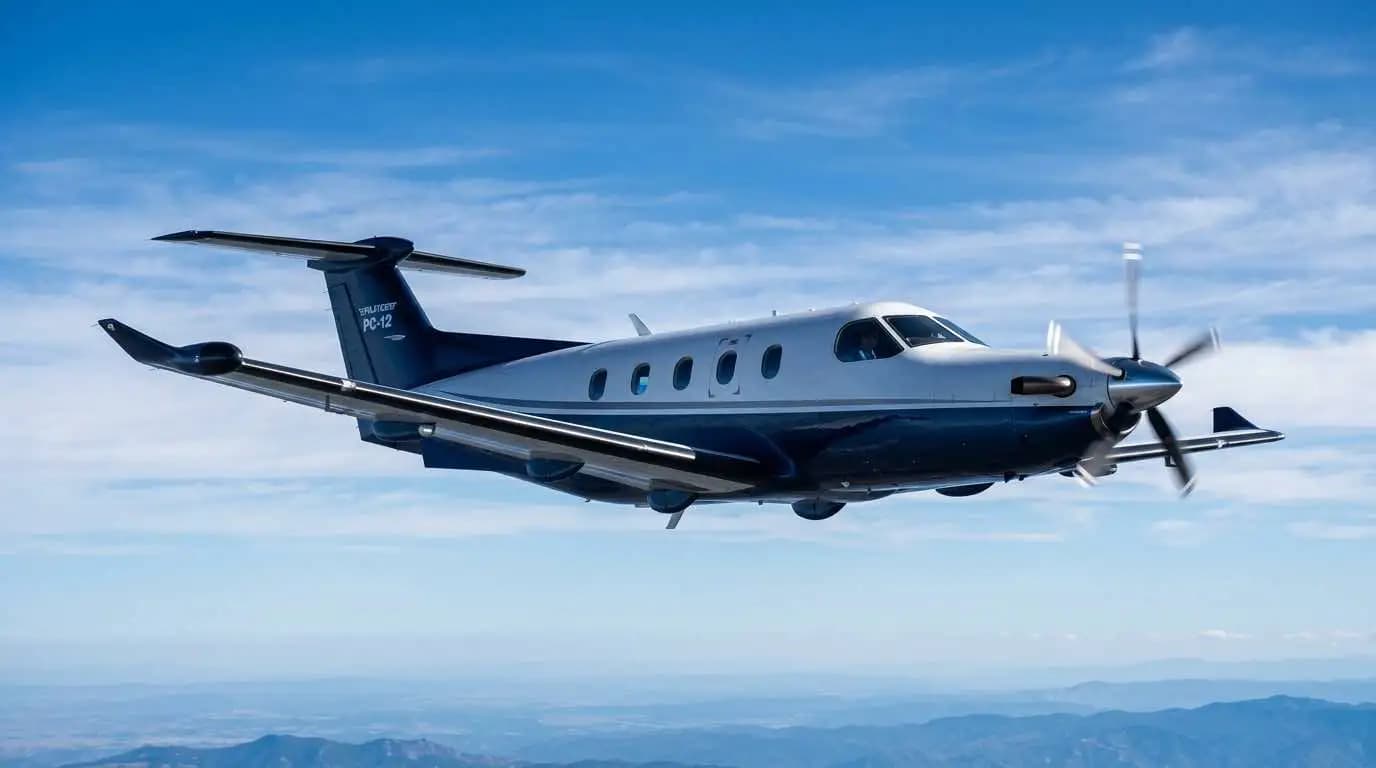
The Pilatus PC-12 is powered by the Pratt & Whitney Canada PT6 family, the most produced and most reliable turboprop engine in history. The PT6's reverse-flow combustion design, free-turbine architecture, and proven metallurgy deliver exceptional mean time between unscheduled removals. Understanding the difference between PT6A-67P (NG) and PT6E-67XP (NGX) management requirements is essential for any prospective PC-12 operator.
PT6A-67P (PC-12 NG)
- Output: 1,200 shp; manual torque, ITT, and propeller RPM management required throughout all phases
- TBO: On-condition operation; 3,600-hour hot-section inspection interval typical; no fixed removal TBO
- Overhaul cost: $500,000–$900,000+ per major shop visit depending on hot-section condition and service bulletin compliance
- Fuel: Jet-A / Jet-A1; adaptable to emergency avgas and wide-cut fuels in operational necessity scenarios
PT6E-67XP (PC-12 NGX) with FADEC
- Output: 1,100 shp; FADEC and electronic propeller control fully automate engine and propeller management, first in class
- Pilot benefit: Eliminates manual torque-limiting and ITT management; automatic power adjustment during all phases; single-lever power management
- Overhaul cost: $600,000–$950,000+ per major shop visit; PT6E program enrollment (ESP from P&WC) provides per-hour cost coverage
- Program: ESP (Engine Service Plan) from Pratt & Whitney Canada; per-flight-hour enrollment covers scheduled and unscheduled removals
Engine Program Enrollment: Critical for All Buyers
PT6A-67P or PT6E-67XP engines operating without an engine program (P&WC ESP, JSSI, or equivalent) carry full unscheduled removal exposure. A single PT6 unscheduled removal on an unprotected aircraft can exceed $600,000. Engine program-enrolled PC-12s consistently trade at $300,000–$600,000 premiums over non-enrolled examples. Verifying current enrollment status directly with the program provider, not only from seller documentation, is mandatory before any purchase agreement is signed.
Avionics, Cockpit, and Single-Pilot Systems
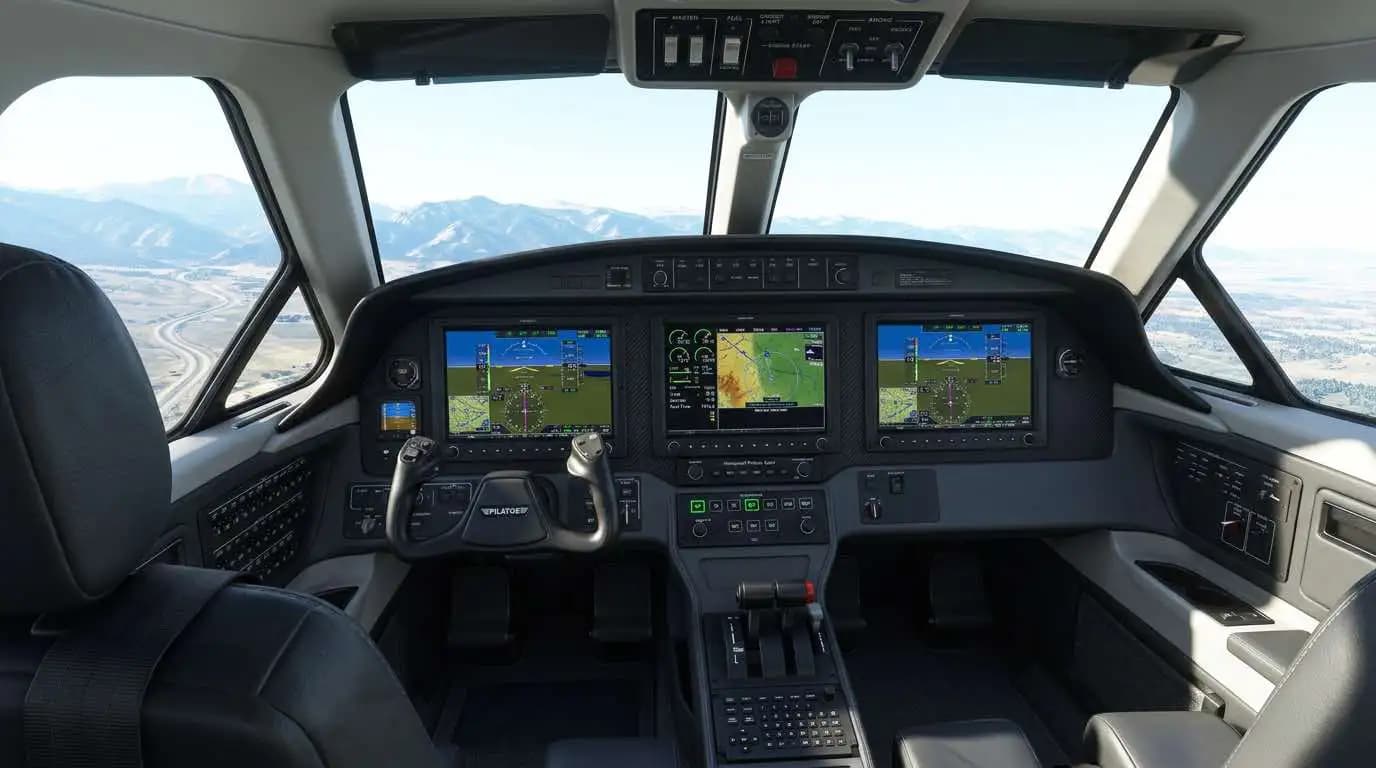
The Pilatus PC-12's avionics evolution spans from early Bendix/King and Primus 1000 equipment in pre-NG aircraft to the current Honeywell Primus Apex in the NG and NGX. Avionics generation is a significant value differentiator and affects daily operational capability, approach authorization, and resale positioning. Buyers must understand which avionics generation they are evaluating before making price comparisons across PC-12 generations.
Primus 1000 / King / Collins (pre-NG, pre-2008)
Earlier-generation avionics with basic autopilot, FMS, and weather radar. Functional for IFR operations but lacking synthetic vision, WAAS/LPV capability, and modern FMS integration. Pre-NG aircraft with legacy avionics trade at the lowest price points in the PC-12 market.
Honeywell Primus Apex (PC-12 NG, 2008–2020)
Fully integrated glass cockpit with dual primary flight displays, synthetic vision, three-axis digital autopilot with WAAS/LPV approach coupling, and dual FMS. Represents a major capability step over pre-NG avionics. Current primary used market standard, well-supported and widely familiar to PC-12 training providers.
Honeywell Primus Apex Updated (PC-12 NGX, 2021+)
Enhanced Primus Apex suite for the NGX with improved autopilot integration to the PT6E-67XP FADEC, updated display hardware, and the Pilatus Autoflight system providing coupled approach capability from liftoff to rollout. Current production standard with best avionics supportability outlook.
Pilatus Autoflight (NGX)
Optional advanced automation system for the NGX adding enhanced flight director coupling, optimized descent profile management, and improved approach automation. Designed specifically for single-pilot operations in demanding weather environments and challenging terrain.
ADS-B and Airspace Compliance
PC-12 NG and NGX aircraft are equipped with ADS-B Out compliance as standard; earlier aircraft may require STC modification for current airspace compliance. Verify ADS-B Out certification and RVSM compliance documentation at pre-purchase inspection.
Pilatus PC-12 Cabin Interior: Configurations and Large Cargo Door
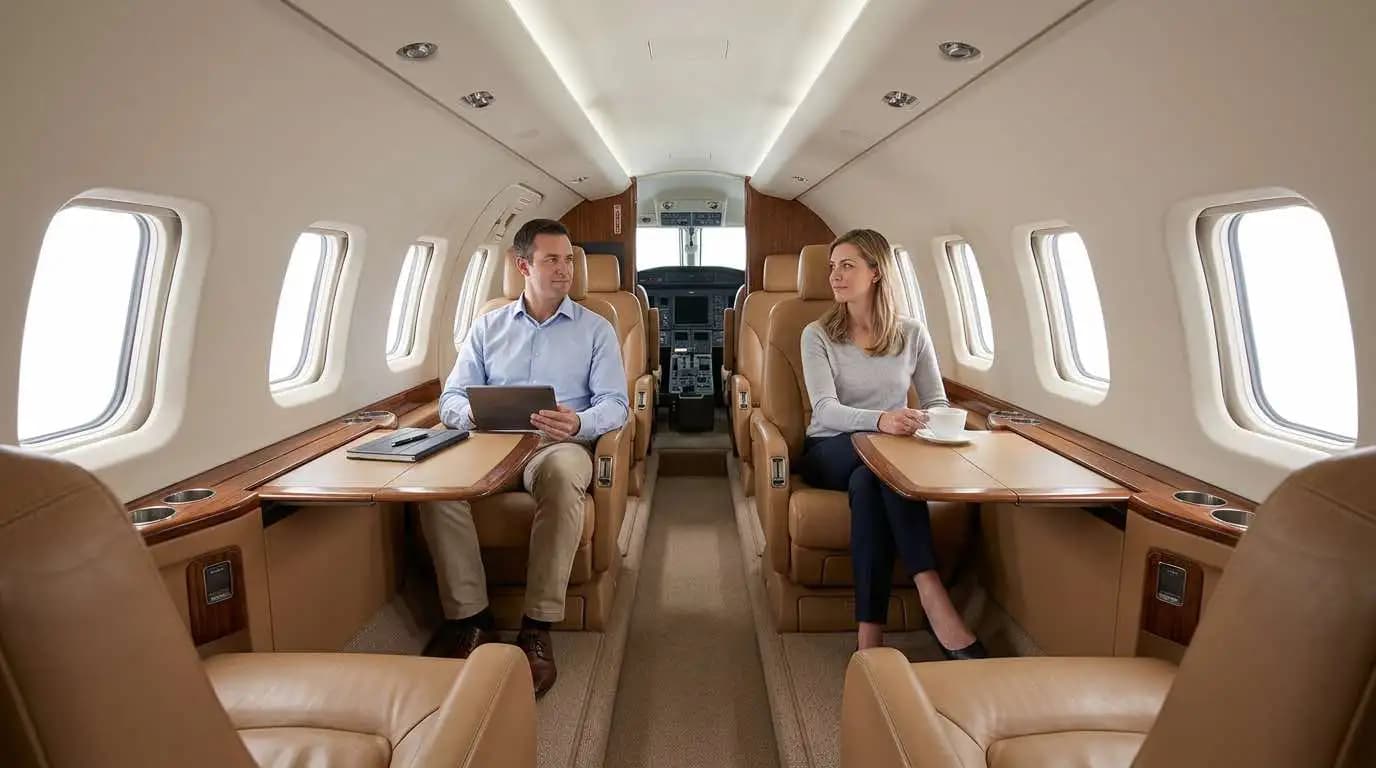
The Pilatus PC-12 cabin is the most flexible of any certified single-engine turboprop in production. At approximately 16.4 feet in usable length with a 59-inch interior width and 4.8-foot stand-up height, the PC-12 cabin accommodates executive passenger transport, cargo operations, medical transport, and combined combi missions from the same airframe. The large rear cargo door is the feature that makes this operational flexibility possible.
Executive Configuration (up to 9 seats)
Club and forward-facing seating in aircraft configured for executive passenger transport. Flat floor, stand-up height, and enclosed lavatory position the PC-12 against entry-level turboprops and light jets for owner-flown passenger operations. Interior quality on NG and NGX aircraft is competitive with much more expensive aircraft.
Large Rear Cargo Door (53 × 51 inches)
Defining PC-12 feature not available on competing executive turboprops. Enables loading of medical stretchers without disassembly, cargo pallets, large equipment, and bulk freight. The cargo door opens upward and is reinforced for operational use with full payload capacity, not a maintenance access panel.
Combi Configuration
Simultaneous passenger and cargo operations in a single cabin. Forward passenger seating with an aft cargo barrier dividing a mixed load. Common in regional air service, charter, and government fleet operations requiring flexibility between mission types.
Medevac Configuration
Stretcher loading through the large cargo door without patient repositioning; medical equipment mounting points; supplemental oxygen system installation. The PC-12 is the most widely deployed fixed-wing medevac aircraft globally, with over 500 aircraft in air ambulance service.
Pressurization and Cabin Altitude
6.0 psi differential pressurization maintains 8,000 ft cabin altitude at FL300. Effective climate control via environmental system. Pressurization seal maintenance is a recurring cost item, verify seal condition and most recent pressurization test at pre-purchase inspection.
Pilatus PC-12 Ownership Costs and True Operating Expense
Pilatus PC-12 ownership costs are competitive for the performance delivered, particularly relative to twin-engine turboprops that the PC-12 often matches or exceeds on block time. Annual operating expenses for typical owner-flown use of 200–400 hours annually range from $200,000 to $450,000 depending heavily on engine program enrollment, utilization rate, and maintenance reserves.
Acquisition Cost
$1,800,000–$4,800,000 for used aircraft depending on generation and condition; new NGX from ~$4,400,000–$5,500,000+. PT6 engine program status, avionics generation, cabin configuration, and total airframe hours are the primary value determinants.
Engine Programs (P&WC ESP / JSSI)
$180–$280 per flight hour for PT6A-67P or PT6E-67XP coverage through P&WC ESP or JSSI. At 300 annual hours, engine reserves total $54,000–$84,000. Non-enrolled aircraft carry full unscheduled removal exposure exceeding $600,000+ per event, program enrollment is essential for all PC-12 buyers.
Annual Inspection
$20,000–$50,000 at a Pilatus-authorized service center. PC-12 inspection complexity varies significantly with aircraft configuration (executive, combi, medevac) and installed equipment. Use exclusively Pilatus Authorized Service Centers for all maintenance to preserve warranty and maintain resale value.
Propeller Overhaul
Hartzell HC-E5N-3D five-blade propeller; 2,400-hour or 6-year overhaul interval. Overhaul cost approximately $15,000–$25,000. Budget propeller overhaul as a fixed reserve cost from acquisition. Near-due propellers suppress pricing and should be negotiated into acquisition price.
Avionics and Systems Support
$8,000–$18,000 annually for Honeywell Primus Apex database subscriptions, avionics maintenance contracts, and periodic systems repairs. Pre-NG aircraft with legacy Primus 1000 avionics face increasing supportability costs as parts availability tightens.
Fuel Cost
~65–75 GPH Jet-A at cruise power. At 300 annual hours and $4.50–$6.00/gallon executive FBO pricing: $87,750–$135,000 annually in fuel. The PC-12 delivers materially better fuel economy per seat-mile than any twin turboprop in its performance class.
Buying a Pilatus PC-12: Pre-Purchase Checklist
Due diligence on a Pilatus PC-12 purchase requires structured evaluation of PT6 engine program status, avionics generation, pressurization system integrity, airframe inspection compliance, and maintenance documentation completeness. At PC-12 acquisition price points, no element of this process should be abbreviated or deferred.
Documentation and Records Priority
- Complete airframe and PT6 engine logbooks from first flight with no maintenance history gaps or unresolved discrepancy entries, gaps in PC-12 maintenance records are a material red flag
- PT6 engine program enrollment certificates (P&WC ESP, JSSI, or equivalent), verify current enrollment status directly with the program provider before signing any purchase agreement
- Engine TSN (time since new) and TSOH (time since last overhaul) with complete shop work order documentation; clarify major vs. top overhaul scope in all prior shop events
- Full AD compliance documentation for PC-12 airframe, PT6A-67P or PT6E-67XP engine, and installed avionics, PC-12 type has accumulated significant AD list across 30+ years of production
- ADS-B Out compliance and RVSM certification confirming current airspace compliance for all intended operating areas
- Pressurization system documentation: most recent differential pressure test results, door and window seal replacement records, and pressurization controller maintenance history
- FAA Aircraft Registry (or EASA/BAZL equivalent) title search confirming no liens, prior damage history, or outstanding import/export restrictions
Technical Inspection Priorities
- PT6 engine borescope inspection by a P&WC-authorized technician: hot-section condition, compressor blades, combustion liner, first-stage turbine nozzle, and power turbine section
- FADEC diagnostic download (NGX): verify no fault codes, no exceedance events, and consistent trend data from FADEC ECU across recent flight history
- Pressurization system differential pressure test: verify rated differential is maintained; door seal and window reveal inspection for leakage, deformation, and wear patterns
- Cargo door structural inspection: hinge condition, seal integrity, door frame wear, locking mechanism operation, and structural attachment fitting inspection
- Avionics function check: Primus Apex primary and standby display operation, autopilot coupled approach simulation, synthetic vision accuracy, ADS-B In/Out, and TCAS function
- Propeller inspection: blade tracking, erosion, corrosion on leading edges, hub condition, and compliance with applicable Hartzell service letters
- Landing gear and wheel well: actuator seal condition, brake wear, tire condition, nose gear shimmy damper, and gear door alignment
Transaction and Risk Management
- Engage a qualified aviation escrow service for all funds and document custody, essential at PC-12 acquisition price points regardless of buyer/seller relationship
- Contract pre-purchase inspection exclusively with a Pilatus Authorized Service Center (PASC), independent IAs without specific PC-12 type experience lack the airframe-specific diagnostic capability required
- Confirm PT6 engine program transferability with P&WC or JSSI before closing, transfer fees, coverage gap management, and re-enrollment requirements vary by provider and contract terms
- Verify PC-12 type rating availability and insurance pilot qualification requirements before signing, minimum PC-12 experience requirements vary significantly by insurer and affect immediate operability

Pilatus PC-12 Market Trends and Pricing Drivers (2026)
The Pilatus PC-12 used market remains one of the strongest in the turboprop category, driven by high production volume, broad operator familiarity, and consistent demand from charter, government, and medevac buyers who specify the PC-12 by name. Primary value drivers in 2026:
Generation (Pre-NG, NG, NGX)
Generation is the primary price driver. NGX aircraft command the highest values; NG (2008–2020) is the core used market sweet spot; pre-NG aircraft represent the lowest acquisition cost but require more careful avionics and maintenance evaluation. NGX premium over equivalent NG is approximately $1,000,000–$1,500,000.
PT6 Engine Program Enrollment
ESP or JSSI-enrolled PC-12s trade at substantial premiums, often $300,000–$600,000 over non-enrolled examples at equivalent airframe hours. Buyers correctly price an unprotected PT6 as a significant tail risk that suppresses acquisition value to compensate.
Engine Time Since Last Shop Visit
Aircraft with recently completed hot-section or major shop visits command the strongest premiums. High-time engines approaching hot-section inspection suppress pricing to account for the upcoming $400,000–$600,000+ event. Verify engine shop visit history carefully relative to current TSOH.
Avionics Generation (Primus Apex vs. Legacy)
NG aircraft with Honeywell Primus Apex trade at consistent premiums over pre-NG examples with legacy avionics. Retrofit paths exist but are expensive ($200,000–$400,000+). Buyers with modern avionics requirements typically avoid legacy-avionics aircraft at any discount.
Cabin Configuration and Condition
Well-configured executive interiors with current connectivity command premiums over cargo or combi-configured aircraft being sold into the passenger market. Interior refurbishments typically return 50–70% of cost in improved asking price, a meaningful consideration for sellers preparing aircraft for sale.
NGX FADEC Adoption Curve
NGX aircraft with PT6E-67XP FADEC represent a meaningful operational improvement over NG manual power management. As NGX deliveries accumulate, FADEC-equipped examples will represent an increasing share of the used market. Early NGX buyers benefit from the FADEC workload advantage; later NGX buyers benefit from emerging used market competition with NG aircraft.
Pilatus PC-12 Key Facts
| Specification | Typical Range / Value | Why It Matters |
|---|---|---|
| Engine (PC-12 NG) | Pratt & Whitney Canada PT6A-67P, 1,200 shp | Proven PT6A turboprop with exceptional reliability record; manual power and propeller management; on-condition operation; extensive global service network |
| Engine (PC-12 NGX) | Pratt & Whitney Canada PT6E-67XP, 1,100 shp, FADEC | First single-engine turboprop with FADEC and electronic propeller control; significantly reduces pilot workload; automatic engine and propeller management throughout all flight phases |
| Max Cruise Speed | 290 KTAS at FL250–FL300 | Fastest single-engine turboprop in its class; competitive block times vs. light twins on sectors under 1,500 NM; high-altitude access reduces weather exposure |
| Service Ceiling | FL300 (30,000 feet) | FL300 access enables weather avoidance above most convective activity; access to favorable wind layers unavailable to lower-certified turboprops; RVSM-capable airspace |
| NBAA IFR Range | ~1,803–1,845 NM depending on configuration | Covers continental Europe and most US routes non-stop; genuinely competitive intercontinental range with one fuel stop; strong utility for owner-flown and charter operations |
| Passenger Capacity | Up to 9 executive / 11 commuter high-density | Flexible cabin reconfiguration between executive, combi, cargo, and medevac; large cargo door enables loading of stretchers, large cargo, and medical equipment without disassembly |
| Cargo Door | Large rear-port cargo door, 53 × 51 inches | Defining PC-12 feature not available on competing executive turboprops; enables rapid role change between passenger, cargo, and medical transport without structural modification |
| Avionics Suite | Honeywell Primus Apex (NG and NGX); earlier models Primus 1000 | Avionics generation is a significant value differentiator; Primus Apex with three-axis autopilot and synthetic vision is substantially more capable than early Primus 1000 equipment |
| Takeoff Distance (SL, ISA) | ~2,500 ft over 50-ft obstacle | Excellent short-field performance opens remote and short unpaved strips unavailable to jets; a defining operational advantage for utility and expedition operators |
| Used Market Asking Price | $1,800,000–$4,800,000 (used); ~$4,400,000–$5,500,000+ (new NGX) | Driven by generation (pre-NG, NG, NGX), engine time and program status, avionics fit, cabin configuration, and total airframe hours |
Pilatus PC-12 on CollectAirs
Browse verified Pilatus PC-12 listings with full documentation and transparent auction terms. CollectAirs connects qualified buyers with thoroughly vetted turboprop aircraft, with escrow protection, pre-purchase inspection coordination, PT6 engine program verification, and title confirmation on every transaction.
Frequently Asked Questions About the Pilatus PC-12
How much does a Pilatus PC-12 cost?
Used PC-12 prices range from ~$1,800,000 for earlier models to $4,000,000–$4,800,000 for recent NG examples. New NGX lists at ~$4,400,000–$5,500,000 depending on configuration. PT6 engine program status, avionics generation, and overall documentation quality are the primary value drivers.
What is the difference between the PC-12 NG and PC-12 NGX?
The NGX (2021+) introduces the PT6E-67XP engine with FADEC and electronic propeller control, the first in its class, plus an updated Honeywell Primus Apex avionics suite and redesigned cabin. The NG uses the PT6A-67P (1,200 shp) without FADEC. The NGX's FADEC significantly reduces single-pilot workload. Both cruise at 290 KTAS with FL300 ceiling.
How fast is the Pilatus PC-12?
The PC-12 cruises at up to 290 KTAS at FL250–FL300, making it the fastest certified single-engine turboprop in its class. At long-range cruise (250–270 KTAS), range extends to over 1,800 NM. Block time performance on most regional missions is competitive with entry-level twin turboprops.
How far can a Pilatus PC-12 fly?
NBAA IFR range is approximately 1,803–1,845 NM depending on configuration and reserves. This covers most continental Europe and US routes non-stop. With reduced payload at long-range cruise, range can extend further. The PC-12 enables one-stop intercontinental routing on many pairings.
What is the Pilatus PC-12 Pro?
The PC-12 PRO is a premium equipment package on the NGX adding enhanced avionics, the Pilatus Autoflight system, improved interior options, and Pilatus Connect cabin management. It does not change airframe or engine specifications but represents the highest-specification new production configuration available.
Is the Pilatus PC-12 single-pilot certified?
Yes. The PC-12 is FAA-certified for single-pilot Part 91 operations with an appropriate type rating. The NGX's FADEC dramatically reduces workload vs. manual PT6A management on the NG. The Honeywell Primus Apex autopilot with coupled approaches is designed specifically for single-pilot operations throughout all phases of flight.
Sources
Used for: PC-12 certification reference, approved engine configurations, type certificate performance data, and single-pilot certification basis.
Used for: current production PC-12 NGX performance specifications, PT6E-67XP FADEC integration standards, Autoflight system documentation, and factory pricing reference.
Used for: PT6A-67P and PT6E-67XP engine specifications, ESP program details, maintenance standards, FADEC system documentation, and on-condition operation requirements.
Used for: Primus Apex system specifications, autopilot integration standards, synthetic vision capability, and WAAS/LPV approach certification basis.
Used for: PT6 engine program coverage structures, per-hour enrollment rates, and unscheduled removal protection standards for PC-12 fleet operators.
Related Resources
Turboprop Planes Guide
How PT6 engines work, popular turboprop aircraft types, performance specs, ownership costs, and turboprop vs. jet comparison.
Read GuideCessna Grand Caravan EX Guide
PT6A-140 engine, G1000 NXi avionics, 14-passenger utility transport, ownership costs, and what to verify before buying.
Read GuidePiper Meridian Guide
PT6A turboprop performance, pressurized cabin, G1000 NXi avionics, ownership costs, and what to verify before buying.
Read GuidePlanes for Sale Guide
How to find aircraft for sale, evaluate listings, and close your deal without expensive surprises.
Read GuideAbout the Author

Phillip Müller
CEO, CollectAirs
Long-time pilot and CEO of multiple scenic flight and aircraft sales websites. Passionate about making aircraft transactions more transparent and accessible.
Connect on LinkedIn