
 Nordhorn
 Florida
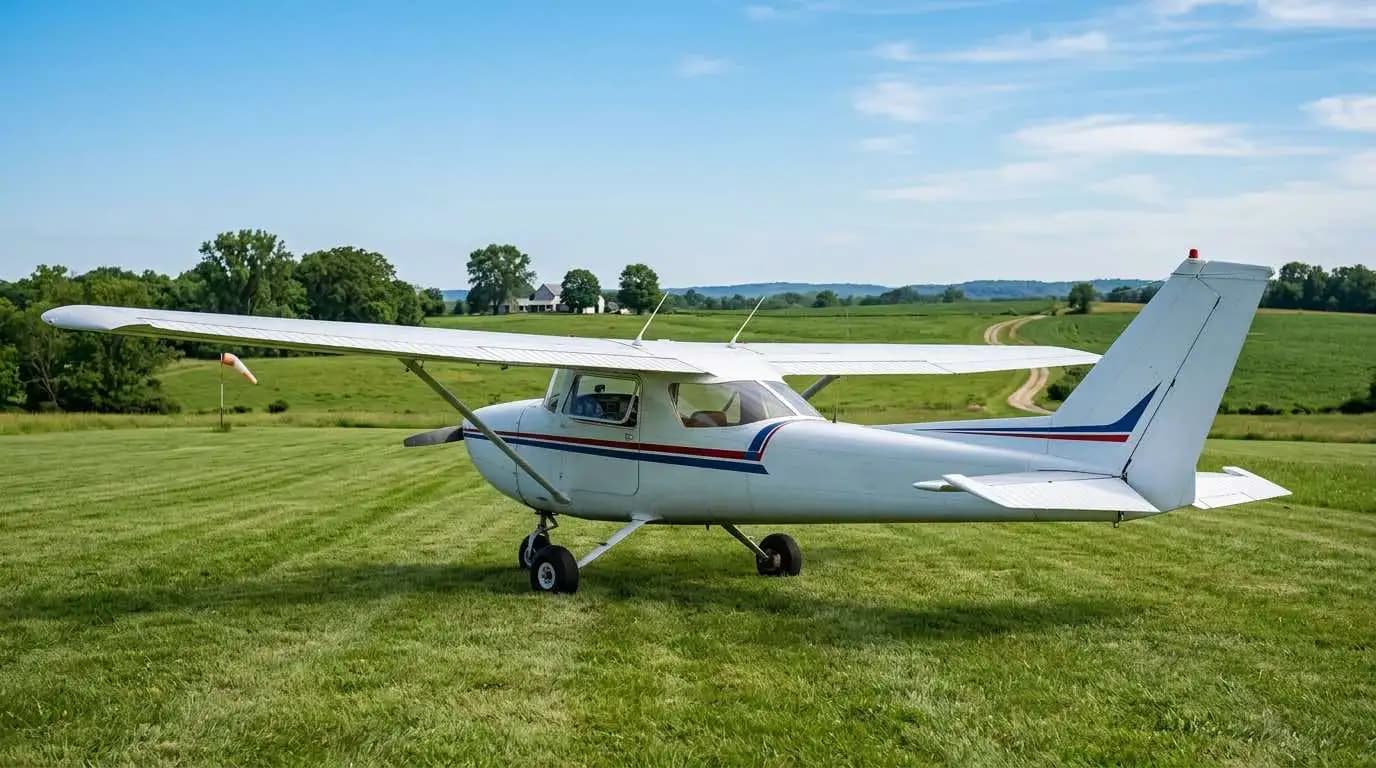
Cessna 150: Overview and Production History
The Cessna 150 entered production in 1959 as a replacement for the earlier Cessna 140 series. It was Cessna's answer to the need for an affordable, simple two-seat trainer and personal aircraft that could serve the rapidly expanding postwar general aviation market. The design: high-wing, fixed tricycle gear, side-by-side seating, Continental O-200-A engine, was deliberately conservative, prioritizing reliability, simplicity, and low operating cost over performance.
Production continued through 18 model variants from the 150A (1964) through the 150M (1977), with a total of approximately 23,839 aircraft built. Cessna replaced the 150 with the Cessna 152 in 1977, which offered a Lycoming O-235 engine compatible with 100LL avgas and minor airframe refinements. Both types were discontinued in 1986 during the general aviation liability crisis. The large fleet size and decades of service history make the 150 one of the most thoroughly documented and best-supported used aircraft available at any price point.
~23,839 Built
One of the largest certified aircraft fleets in existence. Large production run ensures parts availability, maintenance documentation, and A&P familiarity decades after production ended.
$15,000–$50,000
Most affordable entry into certified aircraft ownership. Low acquisition cost combined with low operating costs make the 150 accessible to a wider range of first-time buyers than any other certified type.
100 hp, ~100 KTAS
Continental O-200-A delivers reliable 100 hp with straightforward maintenance. Performance is modest by design, the 150 is optimized for safety and economy, not speed.
Browse Cessna 150 listings on CollectAirs
Verified listings with full documentation and transparent auction terms.
Cessna 150 Performance: Speed, Range, and Practical Limits
The Cessna 150 is not a performance aircraft. Its 100 hp Continental O-200-A, fixed tricycle gear, and high-wing metal design are optimized for simplicity and safety, not speed or range. Understanding the performance envelope clearly is essential before acquisition: buyers who underestimate the 150's constraints frequently find it unsuitable for their intended mission within months of purchase.
Cruise Speed: ~100–107 KTAS
At 75% power cruise (approximately 2,550 RPM) at 8,000 ft, the Cessna 150 achieves approximately 100–107 KTAS true airspeed. This is substantially slower than step-up aircraft, the Cessna 172 cruises at ~120 KTAS and the Cessna 182 at ~140 KTAS. For local flying within 150 NM of home base, cruise speed is rarely a constraint. For cross-country missions of 3+ hours, the speed penalty becomes a practical consideration.
Range: ~280–380 NM (practical)
With 22.5 gallons of usable fuel and ~6.0–6.5 GPH cruise burn, the Cessna 150 has approximately 3.2–3.5 hours of endurance. At 100–107 KTAS, this produces roughly 330–380 NM of total range. Deducting the FAA-required 30-minute VFR reserve reduces practical IFR-planned range to approximately 280–340 NM. One fuel stop is typically required for flights exceeding these distances.
Useful Load: ~520–600 lbs: The Critical Constraint
The 150's 1,600 lb gross weight and typical empty weight of ~1,000–1,060 lbs leave approximately 540–600 lbs of useful load. Full fuel weighs approximately 135 lbs. This leaves roughly 385–465 lbs for crew and baggage, equivalent to two average adults (170 lbs each) with ~45–125 lbs of baggage. Two heavier-than-average adults at full fuel will exceed gross weight. Weight and balance computation is not optional in the Cessna 150; it is mandatory on every flight.
High-Density-Altitude Operations
The Cessna 150's 100 hp engine loses meaningful performance at high-density-altitude airports. Pilots operating in mountainous western states or during summer heat must calculate density altitude carefully. At elevation airports (5,000+ ft field elevation), takeoff distance increases significantly and climb performance degrades. The 150 is not appropriate for operations from high-altitude airports at or near gross weight without careful performance planning.
Cessna 150 Variants: Standard, Aerobat, and Commuter
The Cessna 150 was produced in multiple variants across its 18-year production run. The most significant variant distinction for buyers is between the standard 150, the Aerobat (A150), and the Commuter, each offering a different operational profile.
Standard Cessna 150 (150A–150M, 1964–1977)
The standard 150 is a normal category aircraft with no aerobatic certification. The progressive improvements from the original 150 (1959) through the 150M (1977) included the swept tail (from 1963), rear window enlargements, an improved landing light, and updated avionics provisions. Most Cessna 150s available in the used market are standard variants. All use the Continental O-200-A (100 hp) or O-200 in early examples.
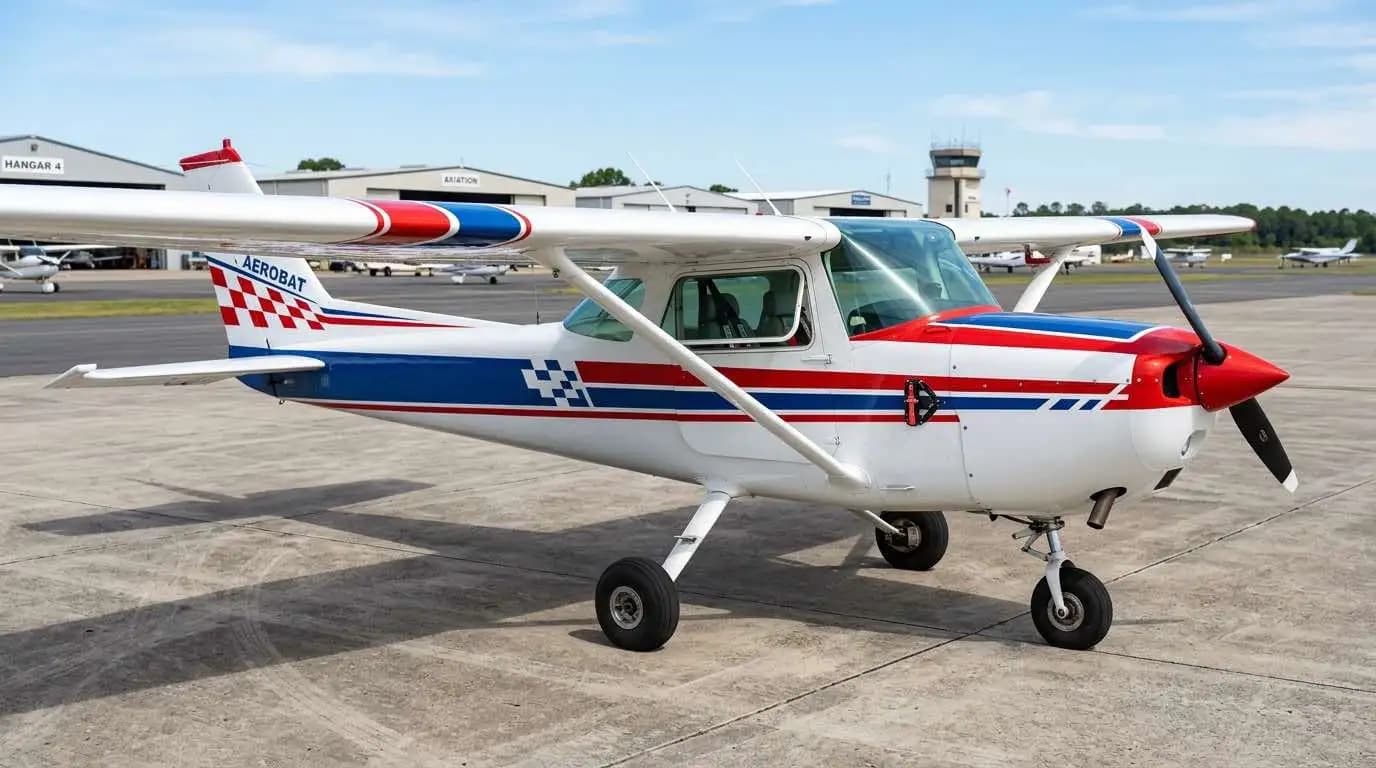
Cessna 150 Aerobat (A150K, A150L, A150M, 1970–1977)
The Aerobat variant is certificated in the utility category and approved for specific aerobatic maneuvers including loops, rolls, aileron rolls, Cuban eights, chandelles, and lazy eights, plus intentional spins. It features reinforced structure, quick-release doors for emergency egress, four-point harnesses, and inverted fuel and oil systems. The Aerobat commands a modest premium ($3,000–$8,000 typically) over an equivalent standard 150 due to scarcity and aerobatic certification value.
Cessna 150 Commuter (1971–1977)
The Commuter was a utility-focused variant with a cargo pod option and increased baggage provisions. It was intended for aerial work and utility operations. The Commuter variant is relatively uncommon in the used market and is not meaningfully different from the standard 150 in daily operation for most buyers.
Early 150 (1959–1963, Pre-Swept-Tail)
The original 1959–1963 production Cessna 150s had a straight vertical stabilizer before the swept-tail redesign was introduced. These early variants are historically interesting but less sought-after due to older airframe hours, older interior equipment, and pre-modern avionics provisions. Early examples are generally priced at the bottom of the 150 market.
Continental O-200-A: Engine Maintenance and Overhaul
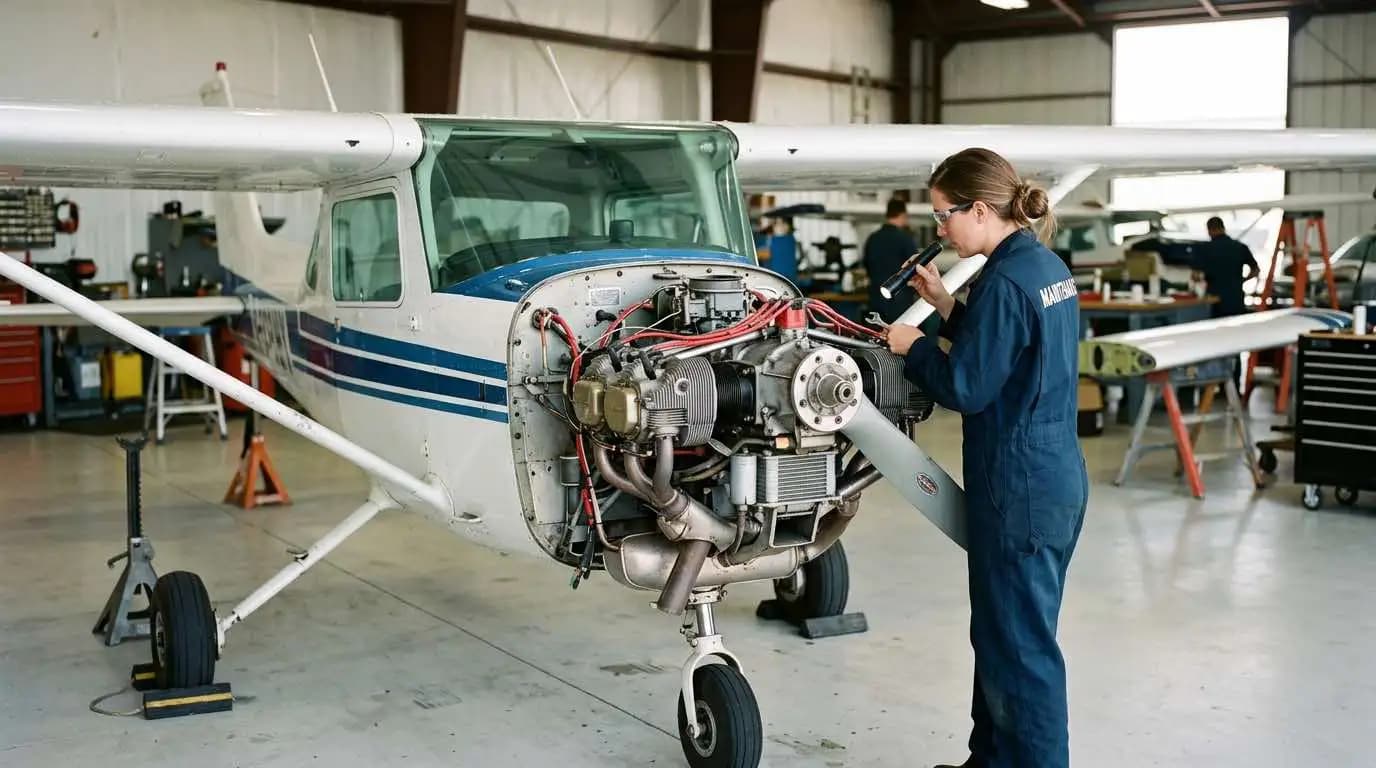
The Continental O-200-A is the defining mechanical characteristic of the Cessna 150. It is a four-cylinder, horizontally opposed, carbureted aircraft engine producing 100 hp at 2,750 RPM. The O-200-A is one of the most widely supported small aircraft engines in existence: virtually any certified A&P shop has direct experience with it, and parts availability is strong despite production of the engine having transitioned to successor designs. Engine time since overhaul (TSOH) is the single most important financial variable in any Cessna 150 acquisition.
Engine Technical Specifications
- Type: Continental O-200-A; 4-cylinder horizontally opposed; carbureted
- Power: 100 hp at 2,750 RPM; TBO 1,800 hours
- Fuel: 100LL avgas; requires 100-octane minimum (100LL compatible)
- Carburetor heat: Required during approach and at low power to prevent carburetor ice, a critical checklist item
- Oil capacity: 6 quarts; 25-hour oil change intervals typical
- Dry weight: ~170 lbs
Engine Cost and Overhaul Planning
- TBO: 1,800 hours; Continental recommends overhaul at TBO regardless of condition
- Major overhaul cost: $12,000–$22,000 at a Continental-certified shop; major overhaul preferred over field overhaul for value retention
- Hourly reserve: $7–$12/hour overhaul reserve; at 100 annual hours: $700–$1,200/year
- Top overhaul: Cylinder-only top overhaul: $2,000–$5,000; less expensive near mid-TBO for compression issues
- Oil analysis: Regular oil analysis ($20–$40/sample) is the best low-cost early warning for engine issues; establish baseline from first oil change post-purchase
Carburetor Ice: The O-200-A's Primary Operational Risk
The Continental O-200-A is a carbureted engine susceptible to carburetor ice in humid conditions, particularly during descent and at reduced power settings. Carburetor ice can cause rapid engine roughness or complete power loss without warning. Proper use of carburetor heat as defined in the Cessna 150 POH is mandatory. Buyers transitioning from fuel-injected engines (Cessna 172SP, Cirrus SR22) must re-familiarize with carbureted engine procedures before flying the 150.
Avionics and Equipment: What to Expect
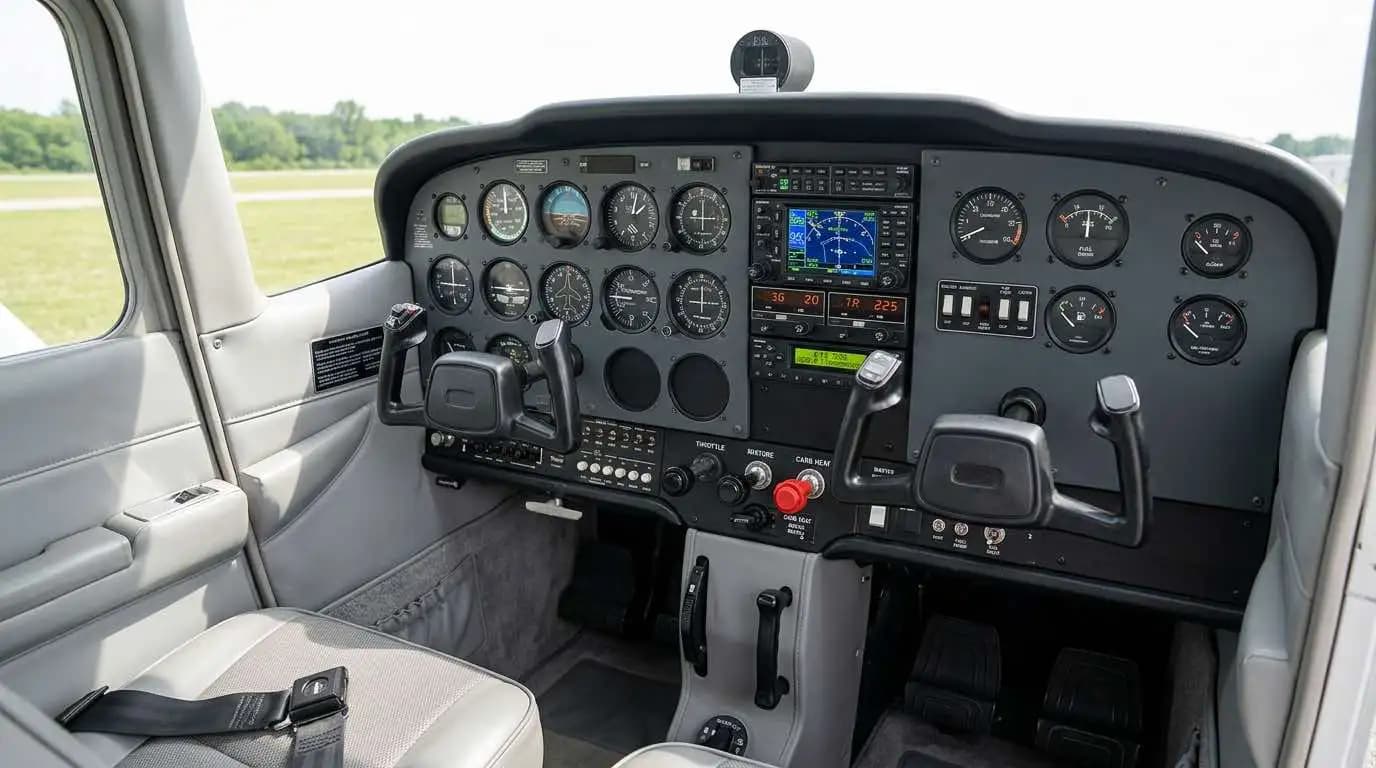
Factory Cessna 150 avionics from the 1960s and 1970s are uniformly analog and largely obsolete by modern operational standards. The practical avionics situation on a used 150 today depends almost entirely on what previous owners have invested. ADS-B Out compliance (required since January 2020) is a non-negotiable verification item on any acquisition.
Factory-Original Avionics (1960s–1970s)
Original Cessna 150 avionics typically included a single-nav/comm radio (Narco or King), a non-directional beacon (NDB) receiver, and basic VFR instrumentation: altimeter, airspeed indicator, vertical speed indicator, directional gyro, attitude indicator, and turn coordinator. No GPS, no moving map, no glass display. Aircraft retaining factory-original avionics are VFR day/night capable but require upgrade investment before routine cross-country IFR operations.
Common Retrofit Avionics Upgrades
Most used Cessna 150s have had some avionics upgrades by prior owners. Common installations include Garmin GNS 430/530 GPS, Garmin GTR 225 com, Garmin GTX 335/345 ADS-B transponder, and Garmin G5 electronic attitude indicator. A well-equipped 150 with GPS, WAAS approach capability, and ADS-B Out is significantly more capable for cross-country operations than a factory-original example.
ADS-B Out Compliance (Mandatory Since 2020)
ADS-B Out has been required since January 1, 2020, for operations in Class B/C airspace and above 10,000 ft MSL. Any Cessna 150 not equipped with ADS-B Out is restricted in the airspace it can access. Verify ADS-B Out compliance and obtain proof of avionics installation and STC documentation at pre-purchase inspection. A Garmin GTX 335 or equivalent ADS-B Out transponder installation is $1,500–$3,500 installed if not present.
VOR/ILS for IFR Operations
Standard Cessna 150s are not certificated for IFR without specific avionics modifications. Buyers intending to fly IFR must verify that the aircraft has a current IFR certification (pitot-static system test, transponder check, VOR check) and appropriate IFR-capable avionics. Many 150s have been modified for IFR operations by prior owners, verify the avionics log and panel documentation carefully.
Cessna 150 Ownership Costs: Annual Budget
The Cessna 150 has the lowest total ownership cost of any certified aircraft in the used market. For pilots flying 50–100 hours per year on a personal basis, the all-in annual cost of ownership, insurance, annual inspection, engine reserve, fuel, and hangar, typically runs $6,000–$12,000 per year, making it comparable to the cost of flying as a regular renter at many flight schools.
Acquisition Cost: $15,000–$50,000
Base condition examples with older avionics trade at $15,000–$25,000. Well-maintained examples with modern ADS-B Out, GPS, and low engine time trade at $30,000–$50,000. Aerobat variants add $3,000–$8,000 to comparable standard 150 pricing. The large fleet size provides strong used-market liquidity and consistent comparable sales data.
Annual Inspection: $900–$2,500
Cessna 150 annual inspection costs are among the lowest of any certified aircraft. The simple airframe, well-known Continental O-200-A engine, and decades of mechanic familiarity minimize shop time. Budget $1,500–$2,000 as a realistic baseline for a standard annual; add a buffer for any squawks discovered during the inspection.
Engine Reserve: $7–$12/hr
Continental O-200-A overhaul: $12,000–$22,000 at a certified shop. At 1,800-hour TBO and $17,000 average overhaul cost: approximately $9.44/hr reserve. At 100 annual hours: $944/year in engine reserve. Pro-rate remaining engine hours into acquisition price: an engine at 1,500 TSOH has approximately $8,000–$12,000 of overhaul cost within the near term.
Fuel Cost: ~$4,200–$5,600/year at 100 hours
Cessna 150 burns approximately 6.0–7.0 GPH at cruise. At 100 annual hours and $7.00/gallon 100LL: approximately $4,200–$4,900 annually. The 150's low fuel burn is its single strongest operating cost advantage, less than half the hourly fuel cost of a Cessna 182 or Cirrus SR22.
Insurance: $800–$2,000/year
Cessna 150 insurance is among the lowest-premium GA aircraft policies available. Liability and hull coverage for a $30,000 hull value typically runs $800–$1,400/year for qualified pilots. Student pilot or low-time pilot endorsement may require specific policy terms; consult an aviation insurance broker before acquisition.
Hangar or Tiedown: $150–$600/month
Hangar availability varies significantly by airport. Budget $150–$300/month for outdoor tiedown at most general aviation airports; $300–$600/month for a T-hangar. Aircraft stored outdoors require more frequent inspections of fabric, seals, and aluminum surfaces for weather-related deterioration.
Cessna 150 Pre-Purchase Checklist
Despite its low acquisition price, a Cessna 150 purchase warrants the same due diligence as any certified aircraft acquisition. The most common buyer mistakes on 150 purchases are skipping the pre-purchase inspection entirely due to the low price, and failing to verify engine TSOH and AD compliance. Both are costly errors regardless of the aircraft's purchase price.
Documentation and Records
- Complete airframe logbook from first flight, missing logbooks are a significant value reduction; absent logbooks without adequate explanation should prompt withdrawal from the transaction
- Engine logbook with TSN (time since new) and TSOH (time since last overhaul), confirm major vs. field overhaul scope; Continental factory overhaul is preferred for value and reliability
- AD compliance records, the Cessna 150 type has accumulated a number of Airworthiness Directives over its operational history; verify a current AD compliance list signed by an IA at the most recent annual
- Annual inspection sign-off in airframe logbook, confirm the date of the most recent annual and who performed it; verify the signing IA's certificate status
- ADS-B Out compliance documentation and transponder test records, required since January 2020 for Class B/C airspace operations
- FAA Aircraft Registry title search: confirm clean title, no outstanding liens, and no NTSB accident entries in the aircraft history
Technical Inspection Priorities
- Continental O-200-A engine: compression test (all four cylinders, 72/80 minimum), oil analysis, and visual inspection of cylinders via borescope, establish current engine health baseline before purchase
- Carburetor condition and carburetor heat system functionality, carburetor ice is the primary O-200-A operational risk; verify heat box, door, and cable operation
- Airframe corrosion inspection at known problem areas: wing attach bolts, horizontal stabilizer attach fittings, rudder and elevator hinge points, and control cable routing through the fuselage
- Control surface condition: verify correct free play limits, hinge pin condition, and absence of skin cracks or dents at attach points; control cable tension per type certificate data
- Landing gear: inspect main gear spring steel legs for cracks at bow areas; nosegear fork and shimmy damper condition
- Fuel system: tank cap seal condition, tank vent condition, gascolator screen condition; verify no water contamination in tanks via proper drain sampling
- For Aerobat variants: verify aerobatic certification remains in effect; inspect quick-release door hinges, four-point harness condition, and inverted fuel/oil system serviceability
Transaction Safety
- Use an aviation escrow service for all funds even on low-priced acquisitions, escrow protects both buyer and seller during the inspection and title confirmation period
- Engage an A&P or IA for a pre-purchase inspection regardless of aircraft price, a $300 inspection investment on a $20,000 aircraft is proportionally justified and commonly returns findings that adjust the offer price
- Request a demonstration flight before purchase to verify engine operation, control feel, avionics function, and overall aircraft airworthiness from a pilot's perspective
- Obtain insurance quotes before closing, confirm pilot qualification requirements and minimum flight hour requirements for the specific policy that covers your planned operation

Cessna 150 Specifications Table
| Specification | Value | Why It Matters |
|---|---|---|
| Seats | 2 (pilot + 1 passenger) | Two-seat configuration limits use to training and personal flying with a single companion; payload challenge at gross weight with two adults |
| Engine | Continental O-200-A, 100 hp | One of the most widely supported 100 hp aircraft engines; 1,800-hour TBO; parts available globally; overhaul cost $12,000–$22,000 |
| Cruise Speed | ~100–107 KTAS | Fixed gear and 100 hp define the performance envelope; the 150 is a local and regional aircraft, not a cross-country transport |
| Range | ~330–420 NM (full fuel, reserves) | 22.5 usable gallons at ~6.5 GPH; practical range with VFR reserves is ~280–340 NM; sufficient for regional day VFR operations |
| Useful Load | ~520–600 lbs (varies by config) | At full fuel (~135 lbs), available payload is ~385–465 lbs; two average adults at full fuel approach or exceed gross weight limits, weight and balance is mandatory every flight |
| Gross Weight | 1,600 lbs | Low gross weight is a defining operational constraint; every load calculation must be completed before flight; no margin for oversights |
| Service Ceiling | ~14,000 ft | Sufficient for VFR operations in most terrain; not suitable for high-density-altitude operations without careful performance planning |
| Takeoff Ground Roll | ~735 ft at sea level, standard day | Short takeoff capability makes the 150 appropriate for grass strips and short fields; density altitude degrades performance meaningfully |
| Fuel Burn | ~6.0–7.0 GPH at cruise | Among the most economical certified aircraft to operate per hour; 100LL fuel consumption makes hourly variable costs very low by piston standards |
| Engine TBO | 1,800 hours (Continental O-200-A) | Well-established TBO; factory overhaul by Continental or certified shop: $12,000–$22,000; pro-rate remaining hours into any offer pricing |
| Annual Inspection Cost | $900–$2,500 typical | Lowest annual inspection cost bracket of any certified aircraft; simple airframe and common parts reduce shop time and parts expense |
| Typical Used Price | $15,000–$50,000 | Most affordable certified aircraft in the US market; accessible price point for first-time buyers with limited initial capital |
| Production Years | 1959–1977 (~23,839 built) | Large fleet size ensures parts availability despite production ending decades ago; highly documented type with thorough POH and service manual coverage |
Cessna 150 Listings on CollectAirs
CollectAirs connects qualified buyers with thoroughly verified Cessna 150 and two-seat trainer listings, with escrow protection, pre-purchase inspection coordination, engine condition verification, logbook review, and title confirmation on every transaction.
Frequently Asked Questions: Cessna 150
How much does a Cessna 150 cost?
A Cessna 150 in airworthy condition with current annual inspection and clean logbooks typically sells for $15,000–$50,000 depending on year, total airframe time, engine TSOH, and avionics. Base 1960s examples trade at the low end; later 150L/150M examples with low engine time and GPS installations trade higher. The Aerobat variant commands a modest premium.
Is the Cessna 150 a good plane?
Excellent for its intended purpose: primary training, first aircraft ownership, and low-cost local flying. The Continental O-200-A is simple and supported at every A&P shop. Annual inspection costs are the lowest of any certified aircraft. For pilots who understand the two-seat, 100 KTAS, 350 NM constraints, the 150 is an exceptional value proposition.
How far can a Cessna 150 fly on a full tank?
22.5 usable gallons at ~6.5 GPH cruise gives approximately 3.2–3.5 hours of endurance, or roughly 330–380 nautical miles. With 30-minute VFR reserves, practical range is approximately 280–340 NM. Extended range ferry tanks allow trans-ocean routes, multiple 150s have crossed the Atlantic via the northern route.
What are the disadvantages of owning a Cessna 150?
Two seats only, restricted useful load (two average adults at full fuel approach gross weight), ~100 KTAS cruise, and ~350 NM practical range. The 150 is not a cross-country transport aircraft. Night VFR and IFR require additional equipment beyond factory standard. For pilots who accept these constraints, there are very few practical disadvantages given the low operating cost.
Why did Cessna stop making the Cessna 150?
The 150 was replaced by the Cessna 152 in 1977. Both the 150 and 152 were discontinued in 1986 when Cessna halted all piston production during the general aviation liability crisis. When GARA (1994) restored liability protection, Cessna resumed the 172 and 182 but did not restart the 150 or 152.
Can a Cessna 150 fly at night?
Yes, under night VFR with proper equipment: functioning position lights, anti-collision light, and landing light if operated for hire (FAR 91.209). Most 150s carry these from factory. Night IFR requires additional avionics and an instrument rating. Many 150 examples have IFR-capable avionics installed by prior owners.
Sources
Used for: Cessna 150 type certificate data, engine approvals, weight limits, and performance certification reference.
Used for: official performance data, weight and balance procedures, limitations, emergency procedures, and normal operating parameters.
Used for: O-200-A engine specifications, TBO standards, overhaul documentation, and service bulletin reference.
Used for: current AD list applicable to the Cessna 150 type certificate, Continental O-200-A engine, and installed propeller.
Used for: context on Cessna 150/152 production discontinuation in 1986 and the liability crisis that ended production of the type.
Related Resources
Cessna 150 vs Cessna 152
A practical comparison of the two most closely related two-seat Cessna trainers: performance, cockpit, engine differences, and which to buy.
Read GuideCessna 172 Skyhawk Guide
The step-up from the 150: four seats, 180 hp, ~120 KTAS cruise, and the world's most widely flown aircraft.
Read GuideCessna 182 Skylane Guide
Performance, useful load, avionics, AD compliance, and ownership costs for the Cessna 182 Skylane.
Read GuideCheapest Private Plane to Buy
Budget aircraft at every price level, piston singles under $100k, entry-level aircraft, and real ownership cost breakdowns.
Read GuideAbout the Author

Phillip Müller
CEO, CollectAirs
Long-time pilot and CEO of multiple scenic flight and aircraft sales websites. Passionate about making aircraft transactions more transparent and accessible.
Connect on LinkedIn