
 Nordhorn
 Florida
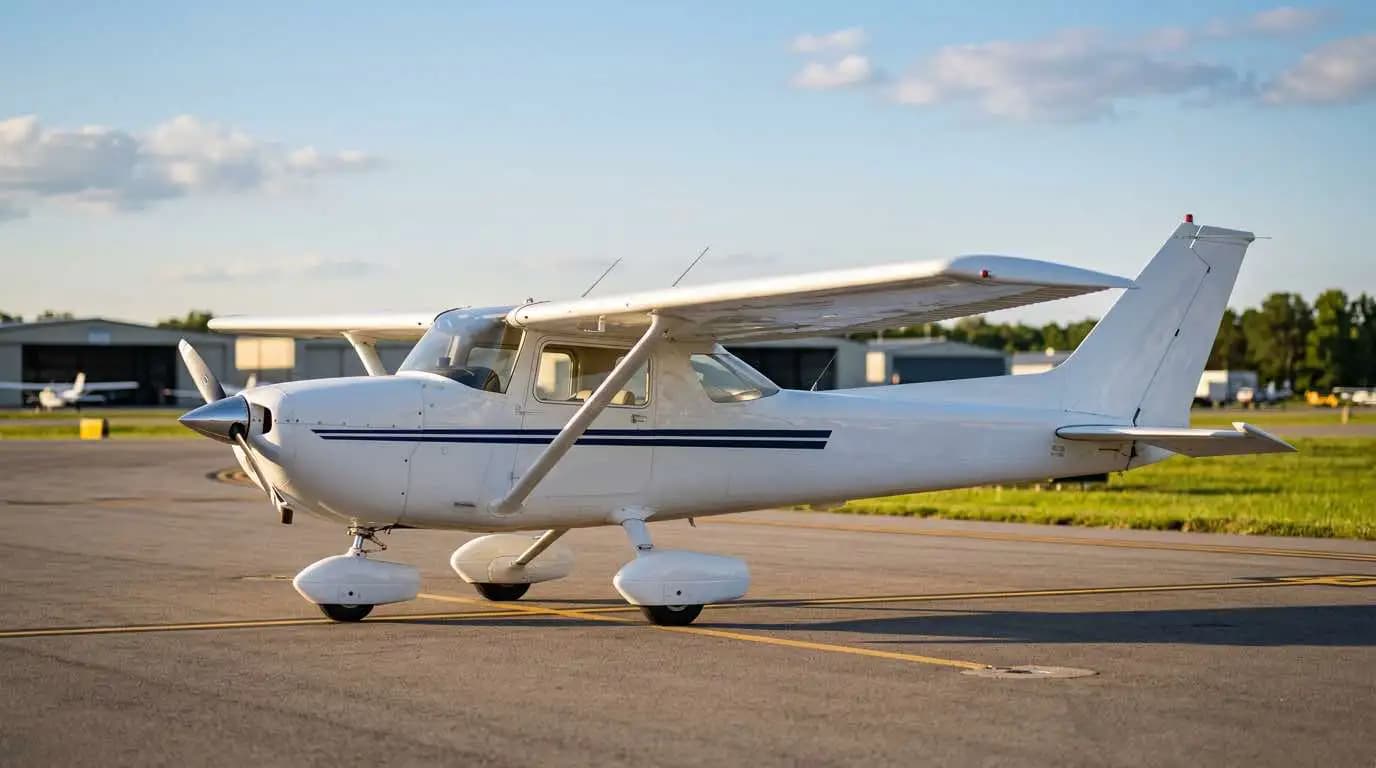
Cessna 152: Aircraft Overview and History
The Cessna 152 entered production in 1977 as the successor to the Cessna 150, which had been in continuous production since 1959. The key upgrade was the switch from the Continental O-200 engine to the Lycoming O-235-L2C: a change that improved reliability, reduced maintenance costs, and provided slightly better performance. The airframe also received a redesigned cowling, improved electrical system (28-volt vs. 14-volt), and aerodynamic refinements to the wing and tail surfaces.
Over its eight-year production run, the Cessna 152 became the standard training aircraft at flight schools worldwide. Its combination of docile handling, low operating costs, fixed tricycle gear, and high-wing visibility made it ideal for primary flight training. Today, thousands of Cessna 152s remain on the FAA registry, and the type continues to serve as both a trainer and an affordable personal aircraft for pilots seeking the lowest possible cost of ownership.
Production: 1977–1985 (7,584 Built)
Manufactured at Cessna's Wichita, Kansas facility. All 152s share the same basic airframe, with minor year-to-year improvements. The Aerobat variant (A152) was produced in smaller numbers with a reinforced airframe rated for +6G / -3G aerobatic maneuvers.
Design Philosophy: Simplicity and Reliability
Fixed tricycle landing gear, fixed-pitch propeller, gravity-fed fuel system, and a single carbureted engine. No retractable components, no complex systems, no turbocharging. This simplicity is the 152's greatest strength, fewer moving parts means fewer failure modes and lower maintenance costs.
Market Position Today
The Cessna 152 is the most affordable certificated aircraft to buy and operate. It competes with the Cessna 150, Piper Tomahawk PA-38, and Beechcraft Skipper 77 in the used trainer market. The 152 commands stronger pricing than all three competitors due to superior parts availability, engine reliability, and brand recognition.
Looking for a Cessna 152 for sale?
Browse verified aircraft listings on CollectAirs with transparent auction terms and documentation review.
Cessna 152 Performance: Speed, Range and Fuel Burn
The Cessna 152 was not designed for speed or long range, it was designed for efficient, predictable performance at the lowest possible operating cost. Its Lycoming O-235 engine delivers consistent power with fuel burn that is unmatched by any other certificated aircraft.
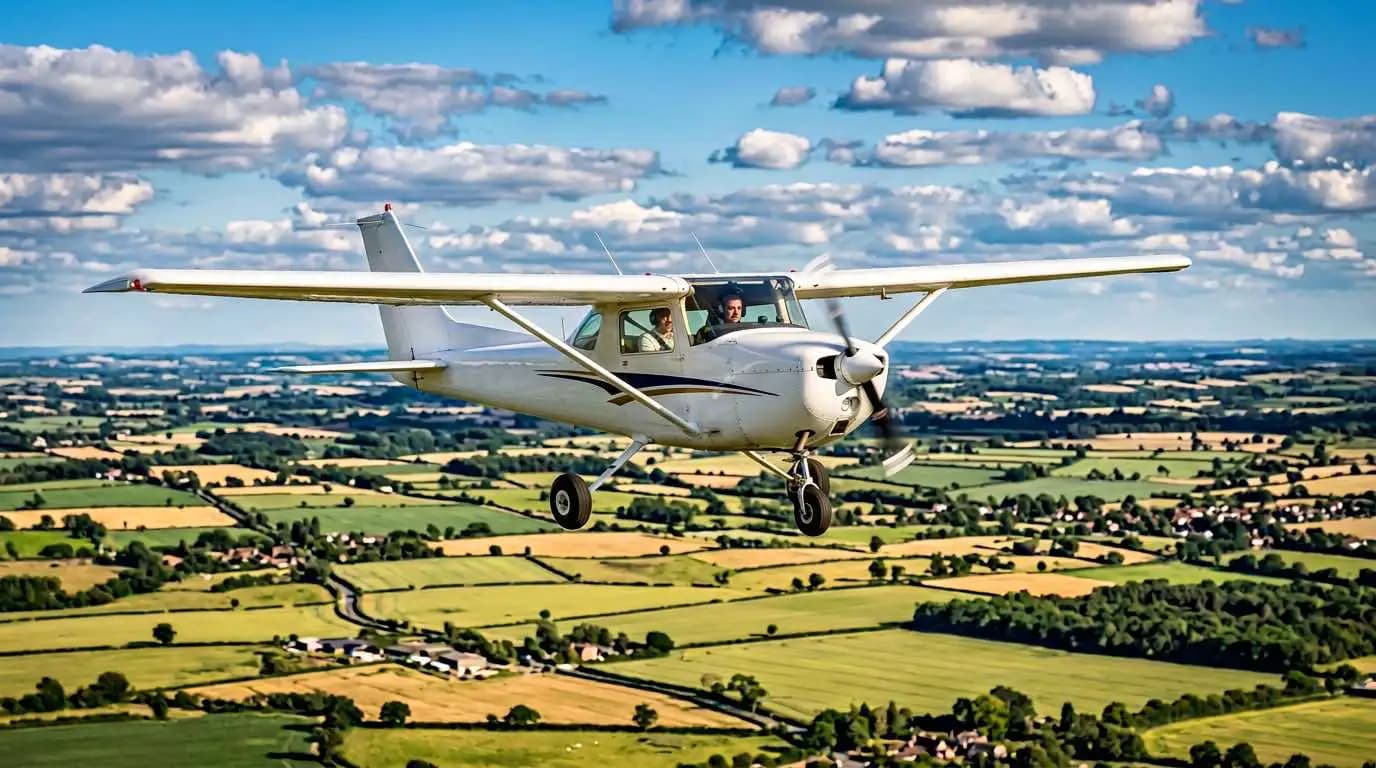
Cruise Speed: 107 KTAS at 75% Power
At 8,000 ft with standard temperature. Economy cruise at 65% power: 100 KTAS. The 152 is not fast, but it is remarkably efficient, covering over 17 NM per gallon of fuel burned at economy cruise. For training and short cross-country flights, this efficiency more than compensates for the modest speed.
Range: 350–415 NM Depending on Fuel Configuration
Standard 26-gallon tanks provide 350 NM range with 45-minute IFR reserve at 75% power. Optional long-range 39-gallon tanks extend range to approximately 415 NM. For a training aircraft, these ranges cover the vast majority of cross-country training missions and weekend personal flying.
Fuel Burn: 6.1 GPH at 75% Power
The Cessna 152 burns just 6.1 GPH at full cruise power, the lowest fuel burn of any certificated production aircraft. At economy cruise (65% power), burn drops to 5.4 GPH. At current Avgas prices ($6.00–$7.50/gallon), fuel cost is only $35–$46 per flight hour.
Climb Rate and Ceiling: 715 fpm / 14,700 ft
Rate of climb at sea level is 715 fpm at MTOW, adequate for departures from most airports but noticeably slower than the Cessna 172 (730 fpm with more power). Service ceiling of 14,700 ft is sufficient for VFR operations but limits high-altitude routing options in mountainous terrain.
Cockpit Layout and Interior Configuration
The Cessna 152 cockpit is designed for training efficiency, dual controls, clear instrument layout, and straightforward systems management. While compact, the cockpit is functional for its intended two-person mission.
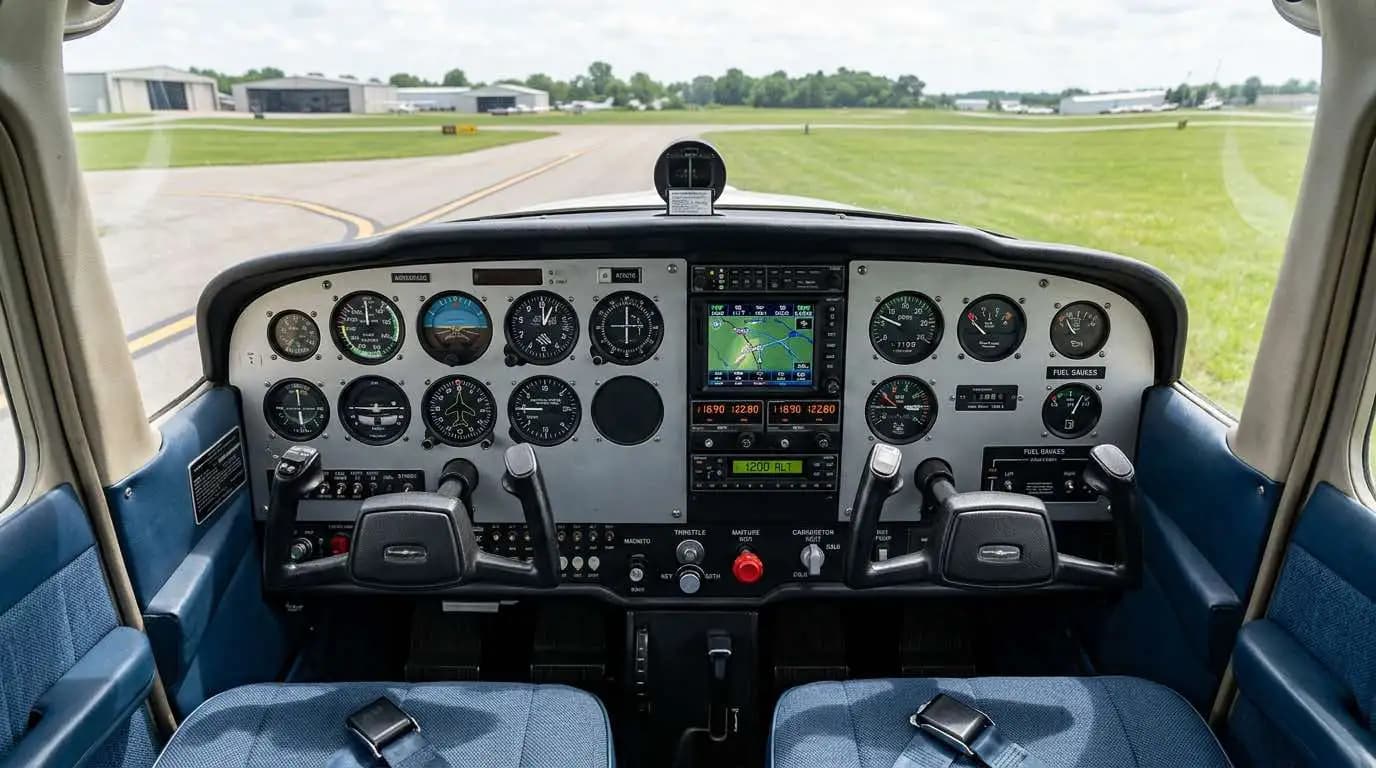
Two Side-by-Side Seats with Dual Controls
Standard trainer configuration: dual control yokes, dual rudder pedals, and dual toe brakes. The instructor (right seat) has full control authority. Seat adjustment is fore-and-aft on rails. Cabin width of 39 inches accommodates two average-sized adults, larger pilots may find the cabin restrictive on longer flights.
Standard Six-Pack Instruments
The original 152 panel features the standard T-arrangement of flight instruments: airspeed indicator, attitude indicator, altimeter, turn coordinator, heading indicator, and VSI. Engine instruments include tachometer, oil pressure, oil temperature, and fuel gauges. Many used 152s have been upgraded with modern GPS navigators and digital engine monitors.
Avionics Upgrades: Impact on Value
A Cessna 152 with modern avionics (Garmin GNS 430/530, GTN 650, Aspen PFD, ADS-B compliant transponder) commands $10,000–$25,000 more than a steam-gauge-only example. For IFR training capability, GPS with an IFR-approved approach-capable navigator is essential. ADS-B Out compliance is mandatory for all aircraft.
Baggage: Limited but Adequate
The rear baggage shelf behind the seats holds approximately 120 lbs (limited by CG) and 24 cu ft. Adequate for two overnight bags. The 152 was not designed for cargo. It is a two-person, short-range, light-baggage aircraft by design.
Cessna 152 vs. 172: Which One Should You Buy?
The Cessna 152 vs 172 comparison is the most common question in the entry-level aircraft market. Both are high-wing, fixed-gear Cessna designs with proven track records, but they serve fundamentally different missions.
Cessna 152
- 2 seats: pilot + 1 passenger only
- 110 HP Lycoming O-235 engine
- 107 KTAS cruise / 6.1 GPH fuel burn
- MTOW: 1,670 lbs / Useful load: 552 lbs
- Range: 350–415 NM
- Used price: $20,000–$55,000
- Operating cost: ~$100–$175/hr
- Best for: Solo flying, training, lowest cost
Cessna 172
- 4 seats: carry family or passengers
- 160 HP Lycoming O-320 engine
- 124 KTAS cruise / 8.5 GPH fuel burn
- MTOW: 2,450 lbs / Useful load: 878 lbs
- Range: 575–640 NM
- Used price: $50,000–$150,000
- Operating cost: ~$150–$250/hr
- Best for: Family flying, travel, versatility
The Right Choice Depends on Your Mission
If you fly solo or with one passenger and want the absolute lowest cost of ownership, the Cessna 152 is the right aircraft. If you need to carry more than one passenger, fly longer distances, or want a more versatile platform, the Cessna 172 is worth the additional acquisition and operating cost. Many pilots start with a 152, build hours affordably, then upgrade to a 172 when their mission requirements grow.
Cessna 152 Ownership Costs and Operating Economics
The Cessna 152 offers the lowest total cost of ownership of any certificated aircraft in production history. Its combination of low fuel burn, affordable parts, simple systems, and reasonable insurance rates makes it accessible to first-time aircraft owners on modest budgets.
Cessna 152 Annual Cost Structure (150 hours)
- Fuel (150 hrs × 6.1 GPH × $6.50/gal): ~$5,948
- Engine overhaul reserve ($22K overhaul ÷ 2,400 TBO × 150 hrs): ~$1,375
- Annual inspection: $1,500–$3,500 (condition dependent)
- Unscheduled maintenance and parts: $1,500–$4,000/yr
- Insurance (hull $35K + liability, 200-hr pilot): $1,800–$3,500/yr
- Hangar or tie-down: $1,200–$4,800/yr (regional variation)
- Avionics database subscriptions: $500–$1,500/yr
- Total annual: ~$13,823–$24,623 at 150 hours
- Total loaded hourly cost: ~$92–$164/hr
Insurance: Pilot Experience Matters
Insurance costs for the Cessna 152 are heavily influenced by pilot total time. A 200-hour private pilot may pay $2,500–$3,500/year, while a 1,000-hour pilot may pay $1,200–$1,800/year for the same coverage. Low-time pilots should budget for higher insurance premiums in the first 2–3 years of ownership. Several insurers specialize in low-time pilot coverage for simple aircraft like the 152.
Maintenance Considerations and AD Compliance
The Cessna 152 benefits from an extremely mature maintenance support network. Parts are readily available, thousands of A&P mechanics are familiar with the type, and the simple systems design keeps routine maintenance straightforward. However, airframe age (40–48 years) introduces corrosion and fatigue considerations that must be addressed.
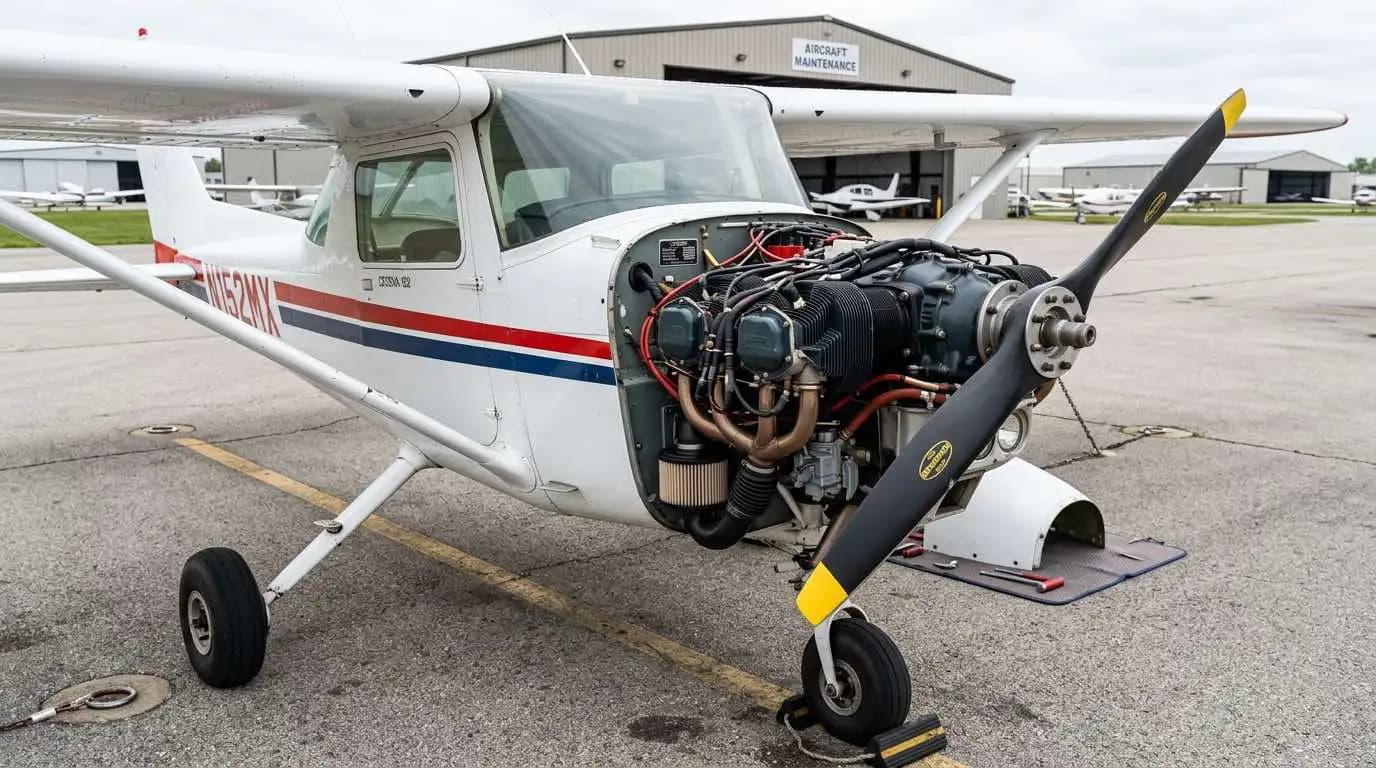
Annual Inspection: $1,500–$3,500
A routine annual on a well-maintained 152 costs $1,500–$2,500 in labor plus parts. Annuals that uncover deferred maintenance or corrosion can reach $3,500–$6,000. The 152's simple systems make inspections faster than more complex aircraft, typically 2–3 days for a clean annual.
AD Compliance: Key Directives
Important ADs address the Lycoming O-235 engine (crankshaft inspection, carburetor airbox), seat rail locking mechanism (critical safety AD), fuel tank condition, and wing strut attach fittings. The seat rail AD is one of the most important, improperly locked seat rails have caused fatal accidents when seats slide aft during takeoff.
Corrosion: Primary Structural Concern
At 40–48 years old, corrosion is the most significant structural issue. Wing spar condition, carry-through tube, belly skin panels, and control surface attach points require careful inspection. Aircraft stored outside or in humid coastal environments are at elevated risk. A thorough corrosion inspection is mandatory during any pre-purchase evaluation.
Lycoming O-235: Engine Reliability
The O-235 has a 2,400-hour TBO, the longest of any common training aircraft engine. Overhaul cost of $18,000–$28,000 is among the lowest in aviation. The engine is carbureted (carburetor ice awareness is essential) and uses a fixed-pitch propeller, minimizing powerplant complexity and maintenance costs.
Buying a Cessna 152: Verification and Due Diligence
Even at the $20,000–$55,000 price range, a thorough pre-purchase inspection is essential. A hidden corrosion issue, run-out engine, or incomplete logbook set can turn a bargain into an expensive project. CollectAirs coordinates the following verification steps.
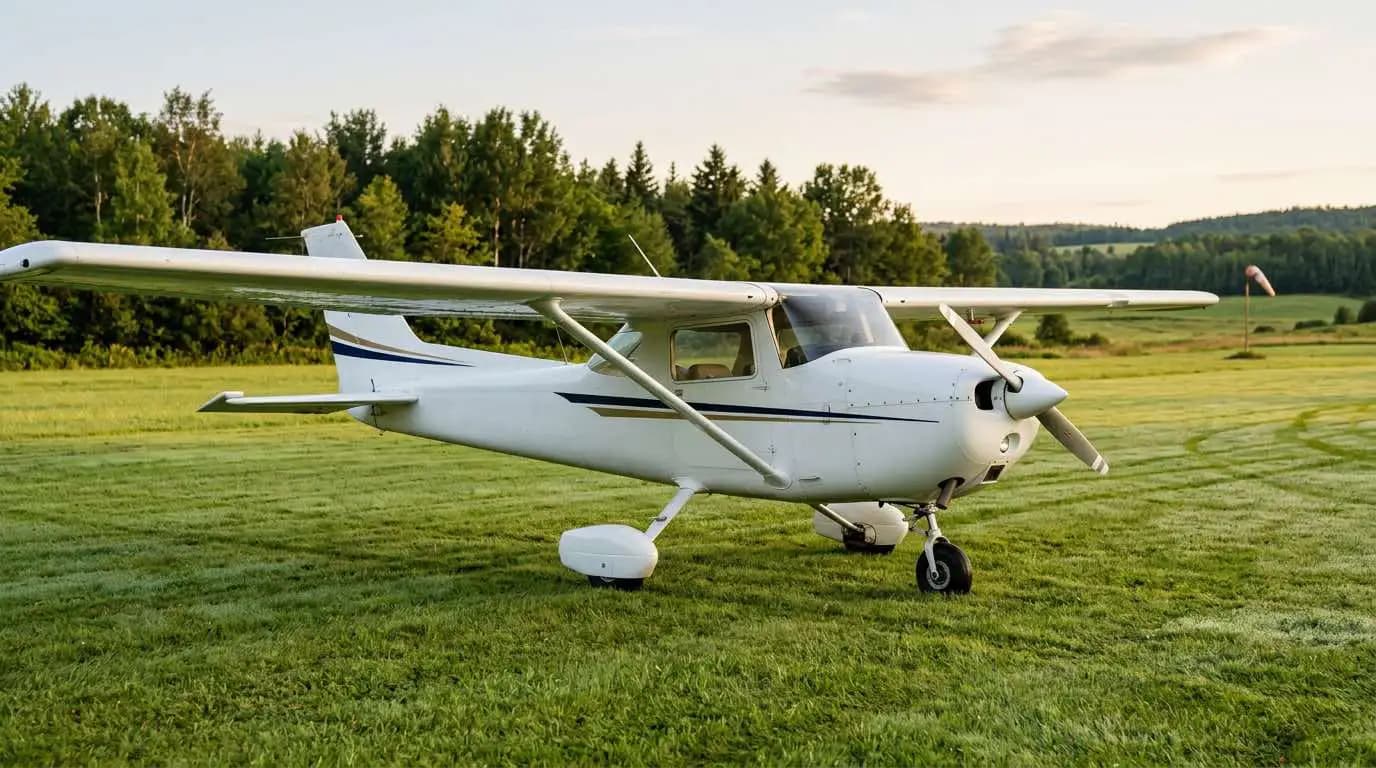
Logbook Verification
Complete logbook continuity from earliest available records. For 152s with 40+ years of history, logbook gaps are common, especially for high-time training aircraft that changed hands frequently. Missing logbooks reduce value by 15–25% and may prevent insurance at favorable rates.
AD Compliance Status
Verify compliance with all applicable ADs, particularly the seat rail locking AD, Lycoming crankshaft AD, fuel tank ADs, and wing strut fitting ADs. Request an AD compliance list from the seller and verify against FAA records. Non-compliance renders the aircraft unairworthy.
Pre-Purchase Inspection
A thorough pre-purchase inspection by an A&P mechanic experienced with Cessna 150/152 series costs $1,500–$3,000 and takes 2–3 days. Must include compression check, corrosion inspection (wing spars, carry-through, belly), control cable condition, fuel tank integrity, and a thorough review of all engine accessories.
Engine Time and Overhaul History
Verify time since major overhaul (SMOH) and review overhaul shop records. A Lycoming O-235 with 1,200 hours SMOH has 1,200 hours remaining to TBO, worth more than one with 2,200 hours SMOH. Engines overhauled by reputable shops (Lycoming factory, Mattituck) command confidence. Verify oil analysis history if available.
Total Airframe Time Assessment
Average 152 airframe time ranges from 5,000 to 15,000+ hours. Former flight school aircraft often exceed 10,000 hours. Higher total time increases the likelihood of fatigue-related issues and corrosion. Aircraft under 8,000 total time in private (non-training) service typically present the best balance of value and condition.
Cessna 152 Specifications: Complete Data Table
| Specification | Value | Why It Matters |
|---|---|---|
| Engine | Lycoming O-235-L2C (110 HP) | Normally aspirated; carbureted; TBO 2,400 hours; overhaul cost $18,000–$28,000 |
| Max Cruise Speed | 107 KTAS at 75% power | At 8,000 ft; economy cruise at 65% power: 100 KTAS; Vne 149 KIAS |
| Range (standard tanks) | 350 NM (26 gal usable) | At 75% power with 45-min reserve; long-range tanks (39 gal): 415 NM |
| Fuel Burn | 6.1 GPH at 75% power | Economy cruise (65%): 5.4 GPH; at current Avgas prices: $35–$46/hr fuel cost |
| Service Ceiling | 14,700 ft | Rate of climb at sea level: 715 fpm; adequate for VFR operations in most terrain |
| Takeoff Distance | 1,340 ft (ground roll, SL ISA) | Over 50 ft obstacle: 1,514 ft; excellent short-field performance for training operations |
| Landing Distance | 1,200 ft (ground roll) | Over 50 ft obstacle: 1,075 ft; fixed tricycle gear with steerable nosewheel |
| Seats | 2 (side-by-side) | Dual controls standard; instructor and student configuration; 39 in cabin width |
| Cabin Dimensions | 39 in wide × 40 in high | Adequate for two adults; overhead wing provides sun protection and rain shelter on the ground |
| MTOW | 1,670 lbs (757 kg) | Useful load approximately 552 lbs; payload with full fuel (26 gal): 396 lbs (two adults + minimal baggage) |
| Empty Weight | 1,118 lbs (507 kg) | Varies with installed avionics and equipment; IFR-equipped aircraft weigh 20–40 lbs more |
| Fuel Capacity | 26 gal standard / 39 gal long-range | Wing tanks; usable fuel: 24.5 gal standard, 37.5 gal long-range |
| Wingspan | 33 ft 4 in (10.16 m) | High-wing design provides inherent stability and excellent ground visibility for training |
| Production | 1977–1985 (7,584 built) | Successor to the Cessna 150; improved engine, electrical system, and aerodynamics |
| Used Price Range | $20,000–$55,000 | Late-model with good engine: $35K–$55K; earlier models: $20K–$35K; Aerobat (A152): +$3K–$8K premium |
Looking for a Cessna 152 for Sale?
CollectAirs connects buyers with verified aircraft listings, complete documentation review, escrow protection, pre-purchase inspection coordination, and transparent auction terms on every transaction.
Frequently Asked Questions: Cessna 152
How much does a Cessna 152 cost?
Used pricing: $20,000–$55,000 depending on model year, engine time, avionics, and condition. Late-model 152s (1983–1985) with mid-time engines and GPS avionics command $35,000–$55,000. Earlier models start around $20,000–$35,000. The Aerobat (A152) variant adds a $3,000–$8,000 premium.
Is a Cessna 152 harder to fly than a 172?
No, the 152 is generally considered slightly easier due to lighter weight and more responsive controls. However, it is more affected by turbulence and crosswinds. The 172 offers more cabin space, more power (160 HP vs. 110 HP), and more forgiving weight and balance. Both are excellent trainers with proven safety records.
How far can a Cessna 152 fly on a full tank?
Standard tanks (26 gal usable): approximately 350 NM at 75% power with 45-minute reserve. Long-range tanks (39 gal): approximately 415 NM. Economy cruise at 65% power improves range by 10–15%. Actual range depends on winds, altitude, and power setting.
Can a Cessna 152 cross the Atlantic?
No. The shortest transatlantic crossing is approximately 1,900 NM. The Cessna 152 maximum range is 415 NM with long-range tanks. The 152 was designed exclusively as a short-range trainer and personal aircraft for flights under 400 NM.
Is the Cessna 152 easy to fly?
Yes, the Cessna 152 is one of the easiest aircraft to fly. It was designed as a primary flight trainer with predictable stall behavior, forgiving handling, excellent high-wing visibility, fixed gear, and simple systems. Over 7,500 were built and the type has trained hundreds of thousands of pilots worldwide.
What is the safest small plane to own?
The Cessna 152, Cessna 172, and Cirrus SR20/SR22 are consistently among the safest. The 152 benefits from simple design (no retractable gear), a reliable Lycoming O-235 engine, and four decades of service data. Safety ultimately depends more on pilot training and decision-making than aircraft type.
Sources
Used for: official performance data, weight limits, engine specifications, and production data for the Cessna 152.
Used for: engine power ratings, TBO intervals, overhaul cost benchmarks, and fuel burn figures for the Lycoming O-235-L2C.
Used for: owner-reported operating costs, real-world performance figures, and maintenance experience for the Cessna 152.
Used for: type-certificated performance limitations, weight data, fuel capacity, and model-specific specifications.
Related Resources
Cessna 150 Buyer Guide
The predecessor to the 152: Continental O-200 power, lower price, and what to know before buying.
Read GuideCessna 150 vs. 152 Comparison
A detailed comparison of the 150 and 152: engine differences, performance, and which to buy.
Read GuideCessna 172 Skyhawk Guide
The four-seat step-up, more payload, more range, and the world's most popular single-engine aircraft.
Read GuideCheapest Private Planes to Buy
The most affordable entry points into aircraft ownership at every budget level.
Read GuideAbout the Author

Phillip Müller
CEO, CollectAirs
Long-time pilot and CEO of multiple scenic flight and aircraft sales websites. Passionate about making aircraft transactions more transparent and accessible.
Connect on LinkedIn