

 Bad Vöslau
 Kirn
Kirn

 Florida

An aircraft corrosion inspection should begin before a buyer travels, places a deposit or starts negotiating price. Corrosion can range from manageable surface oxidation to material loss requiring approved structural repair or part replacement. A clean paint finish and orderly cabin do not establish internal condition. The sound approach is to review history first, define an independent pre-purchase inspection scope, and treat inaccessible areas as a risk to be investigated rather than assumed acceptable.
Why Aircraft Corrosion Inspection Belongs Early in the Buying Process
Corrosion is not simply a cosmetic concern. It can affect airworthiness, maintenance planning, resale confidence and the eventual cost of ownership. On metal aircraft, corrosion may reduce material thickness, weaken a fitting or fastener area, compromise drainage paths, or create a repair question that cannot be answered from exterior appearance alone. On older aircraft, its significance is often inseparable from the quality and documentation of earlier repairs.
Buyers should distinguish three broad conditions. Surface oxidation may be limited to a finish or shallow surface and may be treatable within approved maintenance data. Active corrosion describes a process that is continuing, often because moisture, contaminants or an unsuitable material interface remain present. Structural damage involves material loss, cracking, deformation or deterioration beyond permitted limits and may require approved repair data, replacement parts or engineering input.
These categories cannot be reliably assigned from a listing photograph. An aircraft can have fresh paint, a recently detailed engine compartment and clean interiors while corrosion remains behind panels, beneath flooring, around battery areas or within a wing root. Conversely, visible light oxidation does not automatically mean the aircraft has a serious structural issue. The buyer's task is to establish extent, cause, prior treatment and whether the work performed was properly documented.
Request records early and ask an independent, type-experienced inspector to help define the inspection before committing to travel or a price. This allows the inspection to focus on known weak points for that model, its mission and its storage history. It also gives the seller a clear opportunity to agree to access, panel removal, reassembly responsibility and the handling of significant findings.
How Aircraft Corrosion Develops
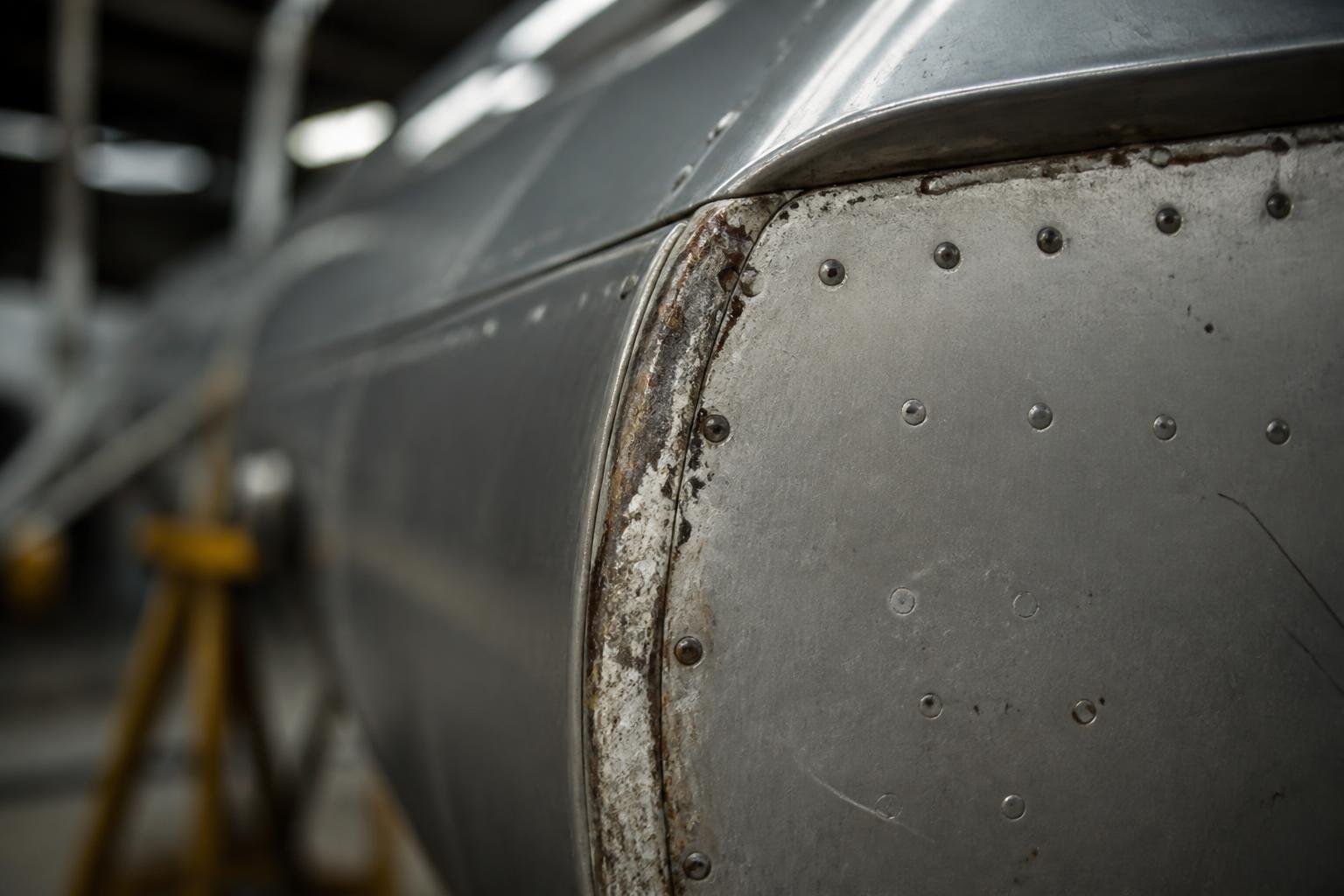
Corrosion develops when a susceptible material is exposed to an environment that supports a chemical or electrochemical reaction. Moisture and oxygen are central factors, but salts, dirt, exhaust deposits, battery electrolyte, agricultural chemicals and trapped contaminants can accelerate deterioration. Water held in seams, insulation, sealant failures or poorly drained cavities can be more consequential than occasional rain on an exterior surface.
Galvanic corrosion is a particular concern where dissimilar metals are in electrical contact in the presence of an electrolyte. Fasteners, fittings, repair patches and attachment hardware deserve attention because the material combination, protective finish and sealing quality all matter. Paint chips, damaged primer, leaking windows or seals, and blocked drain holes can create local starting points that expand unnoticed.
Aircraft that sit unused can be vulnerable even when they appear protected. Condensation may form inside unheated hangars, cabins, wings and tailcones as temperatures cycle. Infrequent operation can mean moisture remains trapped longer, while routine use and maintenance may otherwise reveal leaks or drainage problems. Outdoor storage adds ultraviolet exposure, wind-driven moisture and contamination, but hangar storage alone is not a complete corrosion-control program.
Operating environment is equally relevant. Coastal and tropical use can expose aircraft to salt-laden air and persistent humidity. Winter operations may introduce de-icing chemicals and contaminated slush around landing gear and lower fuselage areas. Agricultural, utility and float operations can impose additional chemical or water exposure. Material matters too: aluminium alloys, steel, magnesium components and mixed-material assemblies have different vulnerabilities and approved treatment methods. A buyer should ask not merely whether corrosion exists, but why conditions allowed it to develop.
The Corrosion History Buyers Should Request
Request complete, legible airframe, engine, propeller and component logbooks, together with available maintenance work orders and inspection reports. The airframe records are normally the primary starting point for structural corrosion history, but engine accessories, propeller records and component files can reveal related environmental exposure or maintenance patterns. Missing records do not prove corrosion; they do increase uncertainty when a seller cannot establish what was inspected, repaired or replaced.
Look for prior corrosion findings, repeated discrepancies, treatment entries, repaint work and references to repairs in the same area. A single properly documented repair may be understandable and acceptable. Recurrent cleaning or treatment at one location may suggest a continuing moisture path, poor drainage, incompatible repair detail or an unresolved source of contamination. Ask for associated inspection photographs when they exist, particularly for work later concealed by paint, interiors or panels.
Structural work should be supported by appropriate repair documentation and approved data applicable to the aircraft and jurisdiction. The buyer's inspector should determine whether records identify the affected structure, repair method, materials and follow-up requirements. Vague entries such as “repaired as necessary” are not equivalent to a clearly traceable structural repair record.
Storage and geographic history can be highly informative. Ask where the aircraft was based, whether it lived indoors or outdoors, and whether it operated from coastal, tropical, agricultural or winter-weather locations. Float operation, salt-water exposure, crop-spraying activity, water ingress, flooding, storm damage and long-term inactivity should all be specifically discussed. A straightforward answer supported by records is more useful than a general statement that the aircraft was “hangared.”
Start With the Records Before Examining the Airframe

Begin with record continuity and legibility. Establish the periods covered, identify gaps, and compare serial numbers, times and maintenance events across airframe, engine, propeller and major components. The goal is not to perform a title or airworthiness determination from logbooks alone; it is to identify questions that should shape the physical inspection.
Search for corrosion-prevention treatments, cleaning procedures, refinishing, cavity protection and recurring inspection intervals. Review references to applicable service bulletins, airworthiness directives and manufacturer inspection programmes, especially where these address structural inspections, drainage, protective finishes or known corrosion locations. A record of compliance is useful only when the entry identifies what was done and when follow-up is due.
Repair-station invoices, photographs, parts traceability and detailed work orders can provide context absent from a short logbook entry. They may show whether an affected component was replaced, repaired, stripped and refinished, or merely cleaned. Undocumented repainting or unexpectedly fresh sealant should prompt questions, not assumptions of poor condition. Repainting can be legitimate preservation work, but it can also make older evidence difficult to evaluate.
- Ask the seller when and why the aircraft was last repainted or stripped.
- Ask the maintainer which areas have shown repeat corrosion or water intrusion.
- Ask prior operators about storage, mission profile and periods of inactivity.
- Ask whether any panels, flooring, interiors or fairings were removed during recent work.
- Ask for records supporting significant structural, battery-area or landing-gear repairs.
Answers should be compared with primary records and the aircraft itself. A concise, well-supported history is generally more valuable than a lengthy maintenance summary that cannot be traced to logbooks or invoices.
Exterior Areas That Deserve a Close Visual Check

A careful exterior inspection can reveal useful clues, although it cannot prove internal condition. Inspect paint blisters, staining, cracking, lifted sealant and local colour differences. Pay particular attention to rivet lines, lap joints, fasteners, skin overlaps and areas where moisture can enter or remain trapped. Corrosion products may appear as powdering, staining, paint disruption or raised finish, but appearance varies by material and coating system.
Wing roots, fairings, antenna bases and access-panel edges deserve close review because they combine seams, fasteners and potential water paths. Examine lower fuselage surfaces, wheel wells, brake areas and landing gear for contamination, chemical residue, damaged finishes and inadequate drainage. Door frames, window surrounds and baggage compartments may reveal seal leakage or repeated abrasion. Control-surface hinges, balance areas and drain holes should be checked for freedom from obstruction and evidence of deterioration.
Fresh paint is not a defect by itself, nor is it proof of a proper restoration. Note abrupt paint boundaries, unusually thick finish, overspray, new sealant over older materials or hardware that appears inconsistent with surrounding structure. Aggressive cleaning can remove residues temporarily without resolving underlying corrosion. An inspector should assess suspicious areas within the permitted scope rather than relying on surface appearance.
Hidden Corrosion Zones Inside the Airframe

The most important corrosion may be hidden. Wing spars, carry-through structures and spar caps are high-consequence areas on many metal aircraft, but access and inspection methods vary substantially by design. Fuselage frames, longerons, internal stringers and attachment points can be vulnerable where condensation, leaks or accumulated debris occur. The correct access points and acceptable conditions should be determined from the maintenance manual and type-specific experience.
Cabin floors, seat tracks and bilge areas deserve attention because wet footwear, leaking windows, spilled fluids and neglected drainage can introduce moisture. Battery boxes, battery vent paths and adjacent structure require particular care: electrolyte contamination can cause severe localized damage. Inspect tailcones, empennage attachments and control-cable passages where practical, as these may collect moisture or contaminants without being visible during a routine walk-around.
Fuel bays, sumps, vents and leak-prone compartments can present a different corrosion environment. Fuel leaks, water contamination and deteriorated sealants should be evaluated according to the aircraft's approved maintenance data. Insulation and soundproofing may trap moisture against structure, especially when installed or replaced without adequate drainage considerations.
Borescopes can be valuable where access is limited, but they are not a substitute for appropriate panel removal when the inspection requires direct examination. Their usefulness depends on lighting, cleanliness, access angle and the inspector's ability to identify the exact structure being viewed. Findings should be photographed or mapped so the buyer can understand location, extent and recommended next action.
High-Risk Areas by Aircraft Type and Mission
Risk is model- and mission-specific. Metal single-engine aircraft often warrant focused attention at wing roots, cabin floors, lower fuselage structure, baggage areas and any location exposed to leaks or trapped moisture. Retractable-gear aircraft add gear bays, trunnions, actuator and hydraulic areas, where grime, hydraulic-fluid residue and poor wash-down can obscure developing problems.
Seaplanes and amphibians merit careful review of float attachments, bilges, water-exposed fittings and corrosion-control history, particularly where salt water was involved. Agricultural and utility aircraft may need scrutiny around chemical residues, wash-down areas and lower structure. Pressurised aircraft require attention to pressure bulkheads, lap joints, drainage and moisture-control practices, with inspection criteria appropriate to the specific type.
Vintage aircraft need an especially individualized assessment. Steel-tube structures may be concealed beneath fabric or interior coverings, while prior restorations can vary greatly in scope and documentation. Composite aircraft are not immune to corrosion concerns: metal fittings, fasteners, control-system hardware and interfaces with composite structure can be affected by moisture or incompatible materials. The pre-purchase scope should follow the actual design, not a generic assumption about aircraft age or construction.
What a Proper Pre-Purchase Corrosion Inspection Should Include
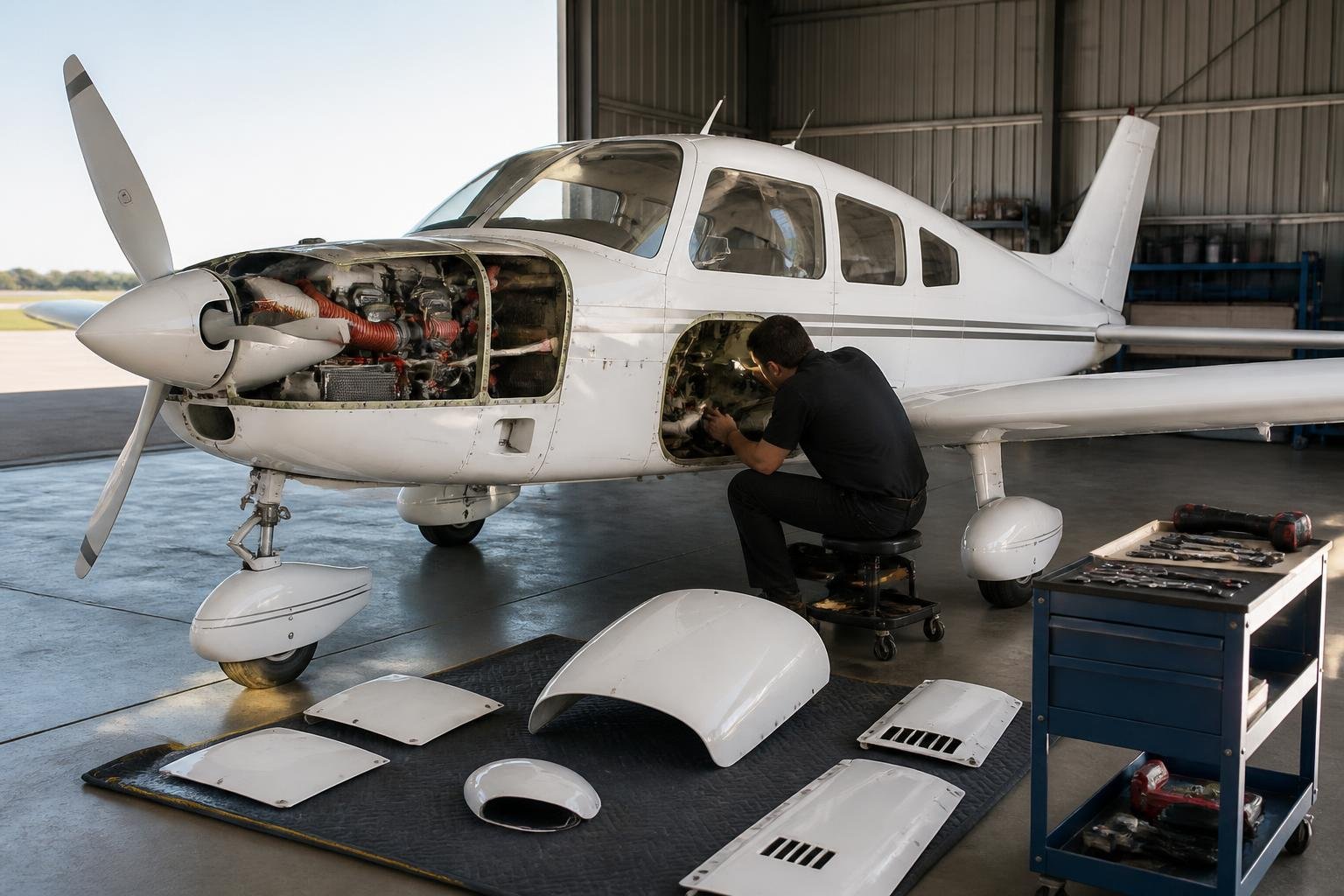
A proper pre-purchase corrosion inspection starts with an inspector who understands the aircraft type and has access to suitable facilities, manuals and equipment. A general visual review may be appropriate for an initial screen, but it is not enough when history, environment or visible clues justify deeper examination. The scope should identify the areas to be accessed, the applicable maintenance-manual criteria and the limitations that remain.
Selected panels, fairings, interiors or flooring may need removal where justified by the aircraft design and risk profile. The buyer and seller should agree in advance who authorises labour, who pays for removal and reassembly, what happens if defects are found, and whether the inspector may expand the scope after consulting the buyer. These details prevent avoidable disputes during a time-sensitive transaction.
Targeted borescope work can supplement direct inspection, especially for cavities or internal structure with restricted access. The inspector should assess prior repairs, protective treatments, drain paths and evidence of recurring moisture. Findings should include photographs where feasible, a clear description of severity and location, relevant repair references or recommended next steps, and an explanation of uncertainty where access was not possible.
| Inspection element | Buyer benefit |
|---|---|
| Type-specific access plan | Targets known corrosion-prone structure rather than relying on a generic walk-around. |
| Records-to-airframe comparison | Tests whether maintenance history is consistent with visible condition and repairs. |
| Documented findings | Supports repair estimates, negotiation and future resale records. |
| Written exclusions | Makes remaining risk visible before a purchase commitment. |
A pre-purchase inspection is buyer due diligence, not a substitute for every regulatory inspection, appraisal or future maintenance requirement. It should be tailored to the transaction and documented accordingly.
How to Interpret Corrosion Findings and Repair Options
Interpretation depends on material, location, extent and approved limits. Cosmetic surface corrosion may be addressed through cleaning, treatment, refinishing and application of an approved preventive compound. Material loss, corrosion around highly loaded attachments, deterioration in inaccessible structure or repeated corrosion after prior treatment requires more careful evaluation. The correct question is not “Can it be cleaned?” but “Does the condition remain within applicable limits, and has the source been controlled?”
Approved repair data may call for blending, treatment, protective coatings, part replacement or a structural repair. Some work may require specialist engineering input or a repair facility with type experience. A fresh repaint cannot establish structural condition because it may conceal prior work, and paint quality does not show remaining thickness or internal corrosion.
Buyers should consider downtime, parts availability, future inspection burden and resale documentation. A well-executed, fully documented repair can be preferable to an untreated defect with uncertain extent. Before committing to a significant finding, obtain an independent review of repair scope and likely operational implications. Avoid treating a preliminary observation or seller estimate as a final rectification plan.
Price, Negotiation and Walk-Away Decisions
Inspection cost and rectification cost are separate decisions. The cost of opening access panels or using a borescope may be modest compared with the consequences of discovering material loss after closing. Once corrosion is found, the buyer must account for diagnosis, labour, parts, refinishing, downtime, records review and the possibility that additional deterioration will be discovered as work progresses.
Unknown extent is often the central commercial risk. A repair estimate based on a visible area may change when adjacent structure is opened. Repair quality, approved data, documentation and the reason corrosion developed all influence residual uncertainty. A price adjustment may be reasonable for a defined, documented repair; it is less effective when access is restricted and the likely scope is unclear.
Purchase contracts and escrow arrangements can include inspection contingencies, agreed access and a process for material findings. Buyers should seek appropriate legal and transaction advice for their jurisdiction rather than relying on informal assurances. Specialist evaluation or withdrawal may be sensible when corrosion affects critical structure, records are inadequate, prior work cannot be substantiated, the source appears unresolved, or repair scope cannot be bounded before purchase.
Using Listing Information Without Replacing Due Diligence
Listing disclosures are useful starting points for targeted questions. A seller may describe storage, repainting, recent maintenance or known corrosion treatment, and photographs can help identify areas to inspect. Neither replaces primary logbook evidence, direct examination or an independent pre-purchase inspection. Maintenance summaries should be read alongside the records from which they were prepared.
For an auction or marketplace purchase, review the available documentation before bidding and clarify what inspection access is permitted. A stated condition, recent annual inspection or recent maintenance event does not eliminate the need for buyer due diligence. Those events may have had a different scope and may not have included every corrosion-prone area relevant to the buyer's intended use.
Communicate findings clearly. If the inspection identifies a concern, record the location, observed condition, access limitation and recommended next step. Buyer conditions should be precise: they may address additional inspection, documentation, repair responsibility, price adjustment or withdrawal rights. Clear communication protects both parties better than assumptions based on cosmetics or broad condition statements.
A Buyer’s Final Corrosion Inspection Checklist
Before making a final purchase decision, confirm that the corrosion risk has been examined as a structured part of due diligence rather than an informal walk-around. The checklist below is intended to support a discussion with the selected inspector and maintenance professionals.
- Complete airframe, engine, propeller and relevant component records were requested and reviewed.
- Operating, storage, environmental and inactivity history is understood as far as records permit.
- High-risk zones were matched to the aircraft's design, age, mission and known exposure.
- Access panels, interiors, fairings and hidden areas were included where justified.
- A qualified, independent inspector with type experience was selected.
- Findings were documented with photographs, locations and relevant repair references where available.
- Likely rectification cost, downtime, parts availability and resale implications were considered.
- The purchase decision reflects acceptable risk, not merely an attractive asking price or finish.
A buyer does not need an aircraft with no history to make a sound purchase. The stronger position is an aircraft with understandable history, accessible structure, credible maintenance records and findings that can be evaluated against approved data. Where uncertainty remains material, reduce it through further inspection or leave it priced and contractually addressed rather than carrying it unknowingly into ownership.

Comments
No comments yet
Be the first to share your thoughts!