
 Bad Vöslau
 Kirn
Kirn
 Florida

A Boeing-Stearman PT-17 is not an aircraft that can be budgeted responsibly with one simple “cost per hour” number. Fuel is significant, but fixed costs, specialist maintenance, radial-engine reserves, fabric and structure care, hangarage and unexpected vintage-aircraft work can have an even larger effect on annual ownership cost.
The useful approach is to separate:
- Fixed annual costs — hangar, insurance, administration and recurring inspection expense.
- Variable flying costs — fuel, oil and flight-hour-related consumables.
- Long-term reserves — engine, propeller, fabric, rigging and larger scheduled projects.
- Contingency — unexpected inspection findings and vintage-aircraft repairs.
This guide includes illustrative 2026 U.S.-dollar budgets for 25, 50 and 75 annual flight hours. These are planning examples, not market quotes. Insurance, hangar and maintenance pricing vary dramatically by aircraft, pilot, region and maintenance provider. Replace the assumptions with real quotes before making a purchase decision.
Stearman PT-17 Cost at a Glance
| Cost category | 2026 planning reference | How to use it |
|---|---|---|
| 100LL fuel | $7.42/US gal U.S. nationwide average on October 6, 2026 | Replace with your home-base and likely touring fuel price. |
| Historical cruise fuel burn | Approx. 12–15 US gal/hr for typical moderate/high cruise-power planning on a related R-670 installation | Use only as a budget reference; verify the installed engine and actual aircraft data. |
| Fuel cost | Approx. $89–$111/hr at $7.42/gal | Fuel only; does not include oil or maintenance. |
| Hangar | $6,000–$18,000/year planning allowance | Illustrative placeholder, not a market average. Obtain an actual quote. |
| Insurance | $3,000–$7,000/year planning allowance | Illustrative only. Pilot experience, hull value and use can change this substantially. |
| Annual/routine maintenance | $3,000–$8,000/year planning allowance | Excludes major fabric, engine or structural projects. |
| Long-term maintenance reserve | $75–$150/flight hour planning allowance | For engine, propeller, fabric, rigging and future major work. |
| Unplanned-maintenance contingency | $5,000–$10,000/year | Ring-fenced vintage-aircraft contingency. |
The hangar, insurance, maintenance and reserve figures above are deliberately broad budgeting assumptions rather than claims about average PT-17 ownership cost. The fuel-price reference is based on current U.S. FBO reporting; buyers outside the U.S. should substitute local Avgas pricing.
How Much Fuel Does a Stearman Burn?
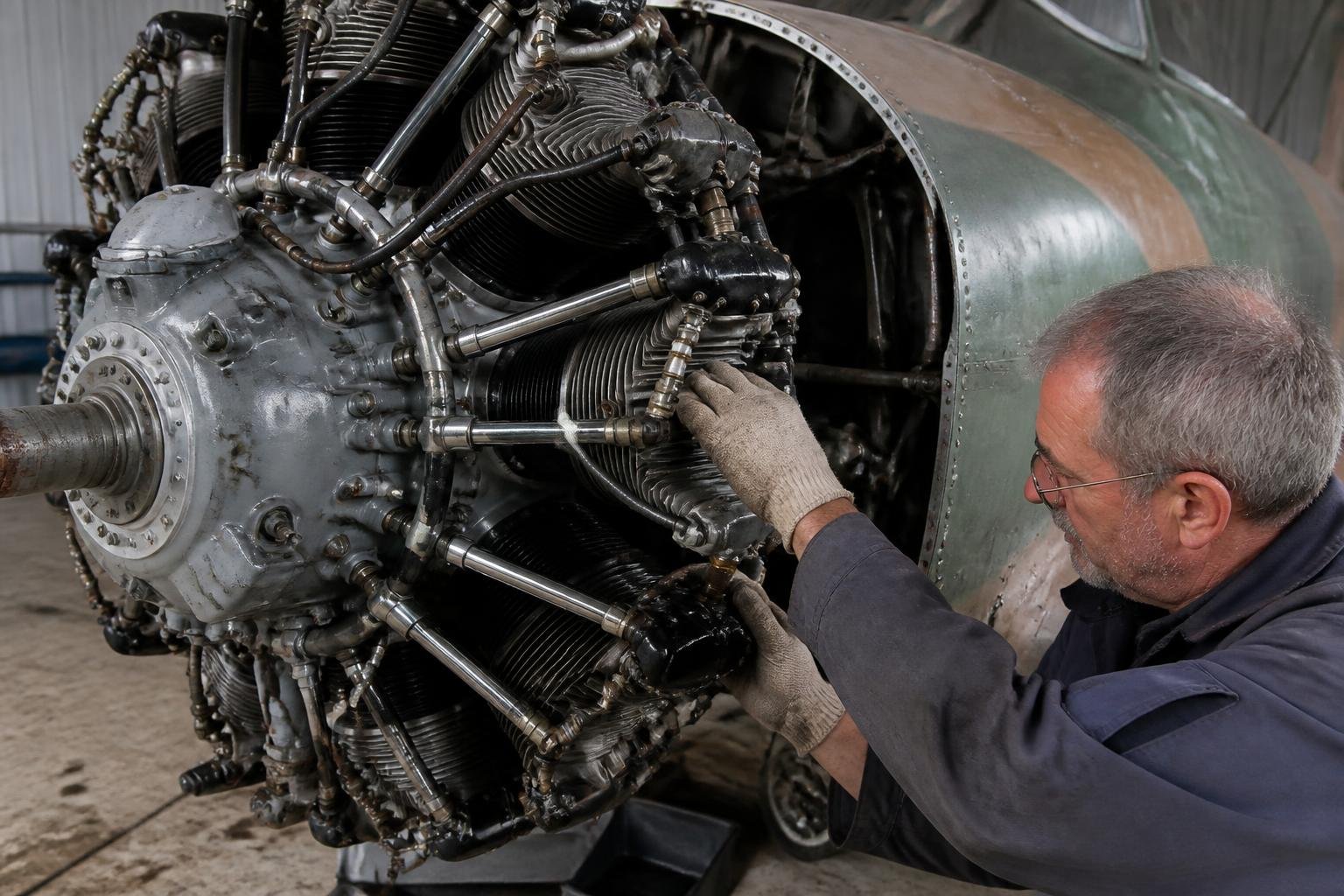
Fuel consumption depends on the installed engine, power setting, mixture, aircraft configuration and how block time is measured.
A historical Pilot's Handbook for the Model N2S-4 equipped with a Continental R-670-4 provides a useful reference curve:
| Power setting | Approx. historical fuel consumption |
|---|---|
| 50% | 11.3 US gal/hr |
| 60% | 12.0 US gal/hr |
| 70% | 13.4 US gal/hr |
| 80% | 15.3 US gal/hr |
| 90% | 18.0 US gal/hr |
| 100% | Approx. 21.3 US gal/hr |
Those figures explain why using 18–24 GPH as a routine cruise-budget assumption would be unnecessarily aggressive. Around 12–15 GPH is a more useful historical planning band for moderate cruise power on this related R-670 installation.
However, this is not dispatch data for every PT-17. Surviving aircraft may use different W-670/R-670 variants, propellers and modifications. Use the applicable operating information and actual fuel history for the individual aircraft.
AirNav reported a U.S. nationwide average of $7.42 per gallon for 100LL on October 6, 2026. At that price:
| Fuel burn | Approx. fuel cost/hour |
|---|---|
| 12 GPH | $89/hr |
| 13.5 GPH | $100/hr |
| 15 GPH | $111/hr |
That is fuel only. Radial-engine oil consumption, oil changes, servicing materials and maintenance reserves must be added separately.
The PT-17 Ownership Cost Formula
A useful planning formula is:
Annual ownership cost = fixed annual costs + fuel + oil/consumables + hourly maintenance reserves + contingency
Or, more specifically:
Annual cost = fixed costs + (fuel burn × fuel price × annual hours) + (oil/consumables per hour × annual hours) + (reserve per hour × annual hours) + contingency
Then:
Effective cost per flight hour = annual ownership cost ÷ annual flight hours
This last figure can be surprisingly high for a lightly flown vintage aircraft because hangar, insurance and recurring maintenance exist even when the aircraft flies only a few hours.
2026 Illustrative PT-17 Annual Budget Scenarios
The following examples use:
- 100LL at $7.42/gal.
- Fuel burn of 12–15 GPH.
- Oil and routine consumables at $8–$15 per flight hour.
- Hangar budget of $6,000–$18,000/year.
- Insurance budget of $3,000–$7,000/year.
- Annual/routine maintenance budget of $3,000–$8,000/year.
- Administration and recurring small fixed costs of approximately $500–$1,000/year.
- Long-term reserve of $75–$150/hour.
- Annual contingency of $5,000–$10,000.
Only the fuel price is presented as a current national market reference. The other ranges are deliberately conservative planning assumptions that must be replaced with owner-specific quotes.
| Annual use | Illustrative annual budget | Effective cost per flight hour |
|---|---|---|
| 25 hours/year | Approx. $22,000–$51,000 | Approx. $870–$2,040/hr |
| 50 hours/year | Approx. $26,000–$58,000 | Approx. $520–$1,160/hr |
| 75 hours/year | Approx. $30,000–$65,000 | Approx. $405–$865/hr |
These figures exclude aircraft financing, acquisition taxes, major restoration projects and depreciation or appreciation.
The wide range is intentional. A PT-17 with inexpensive hangarage, an experienced pilot, stable maintenance history and little unexpected work can sit toward the lower end. A high-value aircraft requiring specialist travel, expensive hangarage or significant inspection findings can move quickly toward or beyond the upper end.
Worked Example: 50 Hours per Year
Consider a mid-range planning example rather than the lowest or highest assumptions:
| Expense | Illustrative assumption | Annual cost |
|---|---|---|
| Hangar | $10,000/year | $10,000 |
| Insurance | $5,000/year | $5,000 |
| Annual/routine maintenance | $5,000/year | $5,000 |
| Administration/recurring fixed costs | $750/year | $750 |
| Fuel | 13.5 GPH × $7.42 × 50 hr | Approx. $5,010 |
| Oil and consumables | $12/hr × 50 hr | $600 |
| Long-term reserve | $100/hr × 50 hr | $5,000 |
| Unplanned maintenance contingency | Annual allowance | $7,500 |
| Total | Approx. $38,860/year |
At 50 flight hours, that example produces an effective ownership cost of approximately $777 per flight hour.
Again, this is not a quote or a claim that every PT-17 costs $777/hour. It illustrates how fixed costs and reserves dominate the calculation once realistic vintage-aircraft ownership expenses are included.
Fuel, Oil and Block-Time Planning
Budget fuel from block time, not only airborne time. Taxi, radial-engine warm-up and run-up all consume fuel before take-off.
A simple budget worksheet should record after every flight:
- Fuel purchased.
- Block time.
- Airborne time.
- Oil added.
- Any maintenance observation.
After a season of ownership, replace generic fuel and oil assumptions with the aircraft's own data.
A meaningful change in oil consumption should be investigated rather than simply incorporated into the budget. Radial-engine oil use is part of ownership, but trend changes can carry diagnostic value.
Radial-Engine Maintenance and Reserve Planning
A radial engine reserve should not be based solely on tachometer hours.
Consider:
- Exact engine variant.
- Time since major overhaul.
- Calendar time since overhaul.
- Recent flight frequency.
- Storage and preservation history.
- Cylinder condition.
- Magnetos and ignition.
- Carburettor and fuel system.
- Oil-pressure and oil-consumption history.
- Exhaust condition.
- Parts availability and specialist labour.
A $75–$150/hour long-term reserve in the sample budgets is not an engine-overhaul quote. It is a planning bucket intended to contribute toward engine, propeller, fabric and other major future work.
Before purchase, ask a shop familiar with the exact installed engine what it would budget for foreseeable work during the next 3–5 years.
Fabric, Wood, Steel Tube and Rigging Costs
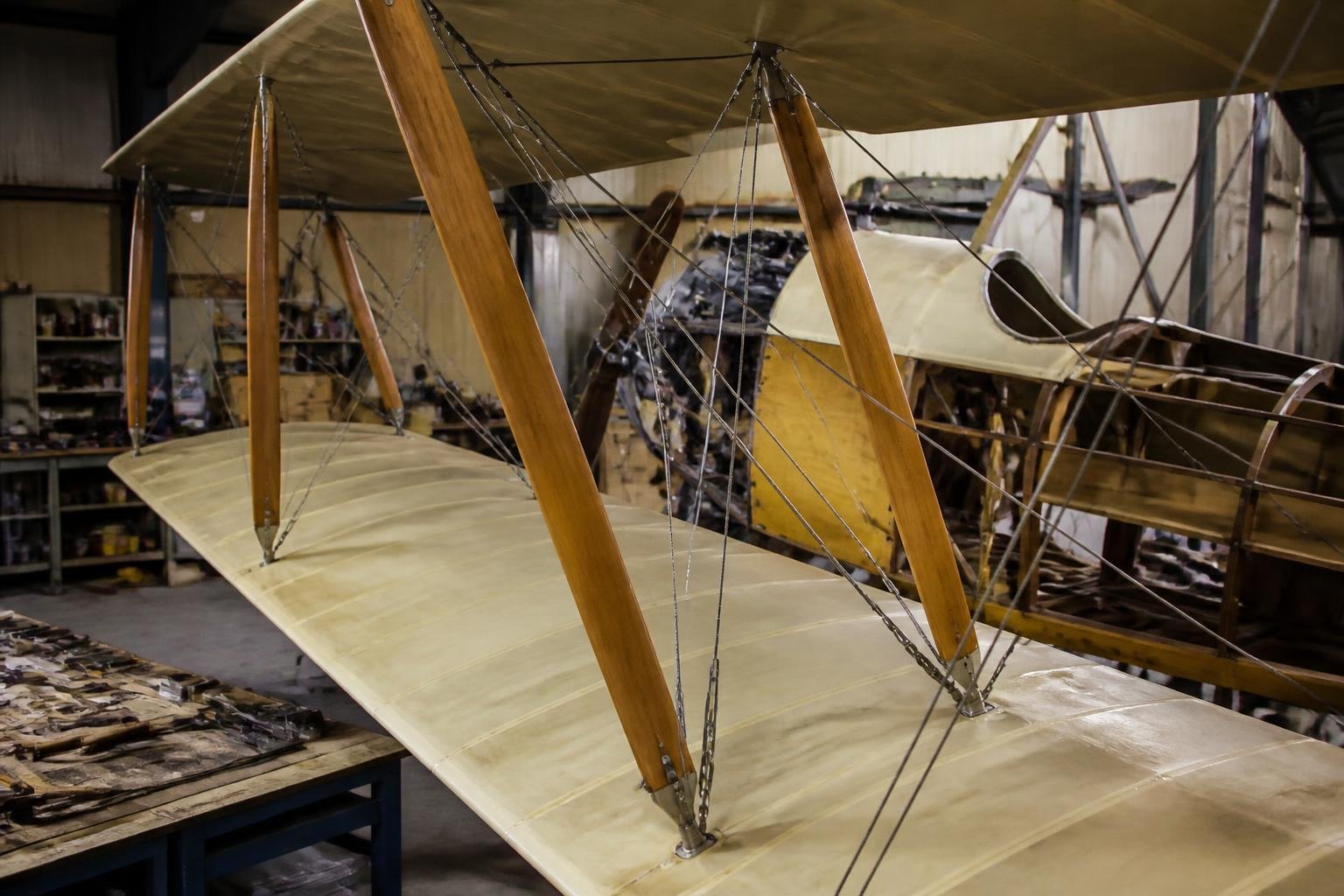
The largest PT-17 expenses do not always happen gradually.
A fabric repair may be modest. A complete recover can become a major capital project. Similarly, a limited corrosion finding may be manageable until opening the structure reveals wider steel-tube or wood work.
This is why major restoration expenses should be tracked separately from ordinary operating cost.
| Normal operating/maintenance budget | Capital/restoration budget |
|---|---|
| Annual inspection | Complete recover |
| Minor fabric repairs | Major wing structural work |
| Routine rigging inspection | Extensive steel-tube repair |
| Tires and brakes | Major engine overhaul/project |
| Oil, plugs and routine servicing | Major propeller replacement |
A year containing a major restoration should not be used to calculate a supposedly normal hourly operating cost. At the same time, buyers should not ignore those future projects simply because they may not occur this year.
Insurance: Budget It Before You Buy
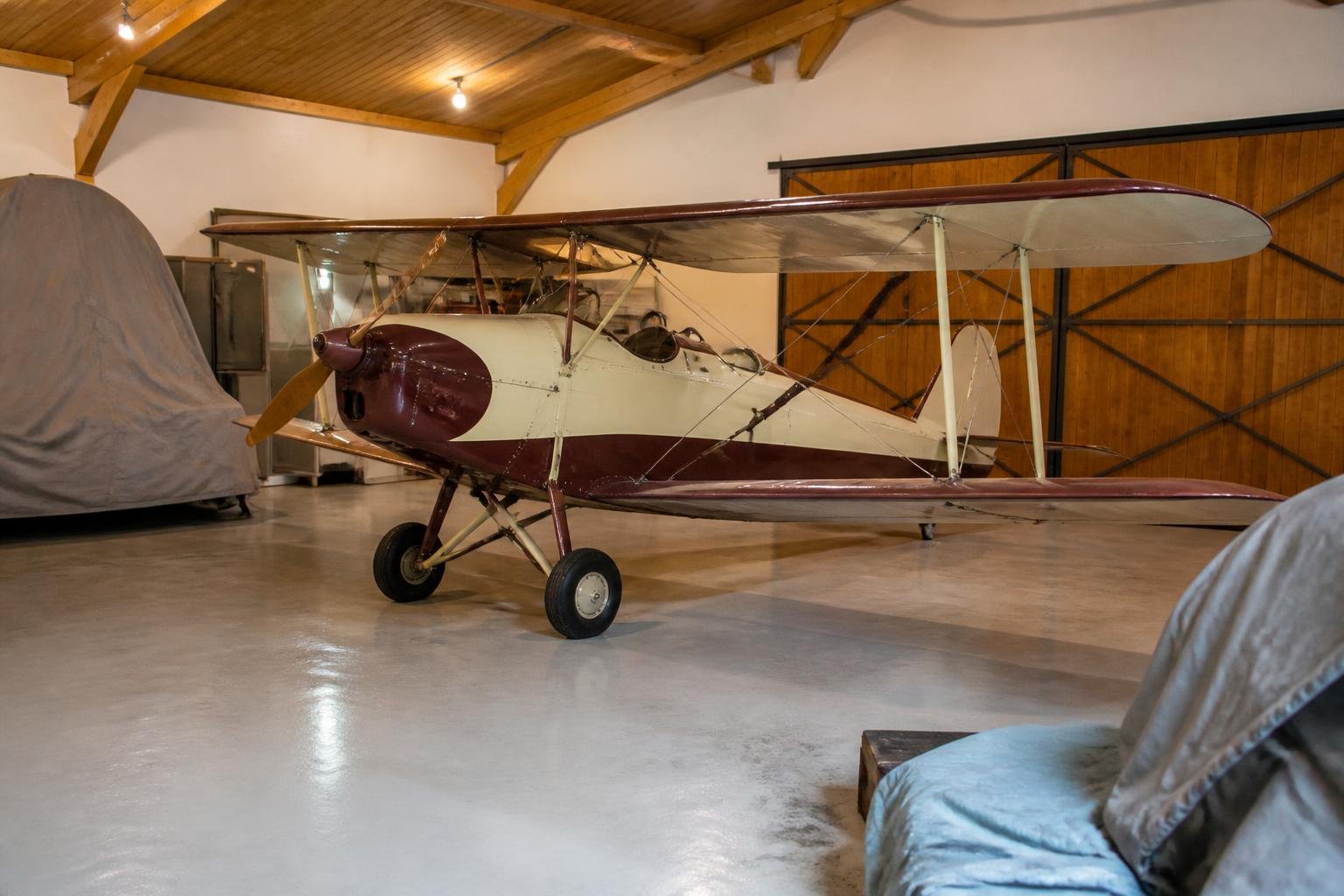
PT-17 insurance is highly dependent on the pilot and aircraft.
Important underwriting factors can include:
- Hull value.
- Total flight time.
- Tailwheel experience.
- Biplane experience.
- Stearman time.
- Recent flight activity.
- Transition training.
- Private versus commercial/passenger use.
- Storage arrangements.
- Named pilots.
The $3,000–$7,000 range used in the sample budget is therefore only a placeholder for early affordability planning. Obtain an actual broker quote before making a purchase commitment.
Hangar and Storage Cost
Hangarage is not merely parking expense for a fabric-and-wood vintage aircraft. It is part of preservation.
The sample budget uses $6,000–$18,000 per year, equivalent to roughly $500–$1,500/month, to illustrate how location can change ownership cost. This is not presented as a national hangar-price average.
When comparing hangars, consider:
- Door width and height.
- Aircraft wingspan and towing route.
- Humidity and drainage.
- Roof condition.
- Security.
- Electrical power for preheating or maintenance.
- Access for specialist mechanics.
A cheaper but damp or poorly accessible hangar can create costs elsewhere.
First-Year Ownership Budget
The first year deserves a separate allowance because this is when new owners often establish the aircraft's true maintenance baseline.
In addition to the normal annual budget, plan for:
- Pre-buy inspection.
- Travel to inspect the aircraft.
- Transition training.
- Insurance setup.
- Ferry flight or transport.
- Initial hangar setup.
- Immediate inspection findings.
- Replacement of ageing consumables.
- Documentation or registration work.
If a pre-buy identifies $10,000 of near-term rectification, include that as a named first-year item rather than hiding it inside a vague maintenance reserve.
Real-World Example: The Current CollectAirs PT-17
The 1941 Boeing-Stearman PT-17 Kaydet currently listed on CollectAirs provides a useful example of how an ownership budget should be built around the actual aircraft.
The listing currently states:
- Continental W-670-6A radial engine.
- Approximately 150 hours since major overhaul.
- Approximately 45 hours since its 2015 restoration.
- 46 US gallons of fuel capacity.
- 4,766 hours total airframe time.
- Fresh annual inspection.
- Scanned logbooks, annual-inspection report and restoration records available for review.
- Hangar space and full service available at Hildesheim after the sale.
A buyer should use those details to request real ownership quotes:
- What is the annual hangar cost at Hildesheim?
- What would insurance cost for the buyer's pilot profile and the aircraft's insured value?
- What does the maintaining shop expect during the next 12–24 months?
- What is the actual recent fuel and oil consumption of this W-670-6A installation?
- Which engine, propeller, fabric or structural items are likely to become significant during the next five years?
This produces a far better budget than applying a generic “Stearman cost per hour” from another aircraft.
PT-17 Buyer Budget Worksheet
| Budget item | Your figure |
|---|---|
| Expected annual flight hours | _______ hr |
| Home-base 100LL price | $_______ / gal |
| Actual/planned fuel burn | _______ GPH |
| Annual fuel cost | $_______ |
| Oil and consumables | $_______ |
| Hangar | $_______ / year |
| Insurance quote | $_______ / year |
| Annual/routine maintenance | $_______ |
| Engine/prop/fabric reserve | $_______ / hr |
| Annual contingency | $_______ |
| Known first-year work | $_______ |
| Total annual ownership budget | $_______ |
| Effective cost per flight hour | $_______ / hr |
Final Takeaway
A realistic Stearman PT-17 operating cost is not fuel burn multiplied by flight hours.
At October 2026 U.S. fuel prices, fuel alone may be roughly $90–$110 per flight hour using a historical 12–15 GPH planning range. But once hangarage, insurance, annual maintenance, long-term reserves and contingency are included, total effective ownership cost can be several times the fuel figure—especially at low annual utilization.
The three things that most improve budgeting accuracy are:
- Use the actual aircraft's recent fuel, oil and maintenance records.
- Get real hangar, insurance and maintenance quotes before purchase.
- Separate ordinary annual expenses from major restoration and capital projects.
Considering a Stearman now? Review the 1941 Boeing-Stearman PT-17 Kaydet currently available on CollectAirs, examine its engine, restoration and maintenance records, then replace the planning assumptions in this guide with quotes for that aircraft before deciding what ownership will really cost.
Sources & Further Reading
- Model N2S-4 Pilot's Handbook — R-670-4 Fuel Consumption Reference
- AirNav — Current U.S. Aviation Fuel Price Report
- CollectAirs — Boeing-Stearman PT-17 Buyer's Guide
- CollectAirs — Aircraft Pre-Buy Inspection Checklist
- CollectAirs — Aircraft Logbook Guide
- CollectAirs — 1941 Boeing-Stearman PT-17 Kaydet
Cost note: fuel-price data in this guide is dated October 2026. Hangar, insurance, routine-maintenance and reserve figures are illustrative planning assumptions rather than published market averages. Refresh all cost inputs with local quotes before making an aircraft purchase or ownership decision.

Comments
No comments yet
Be the first to share your thoughts!