

 Bad Vöslau
 Kirn
Kirn


 Florida
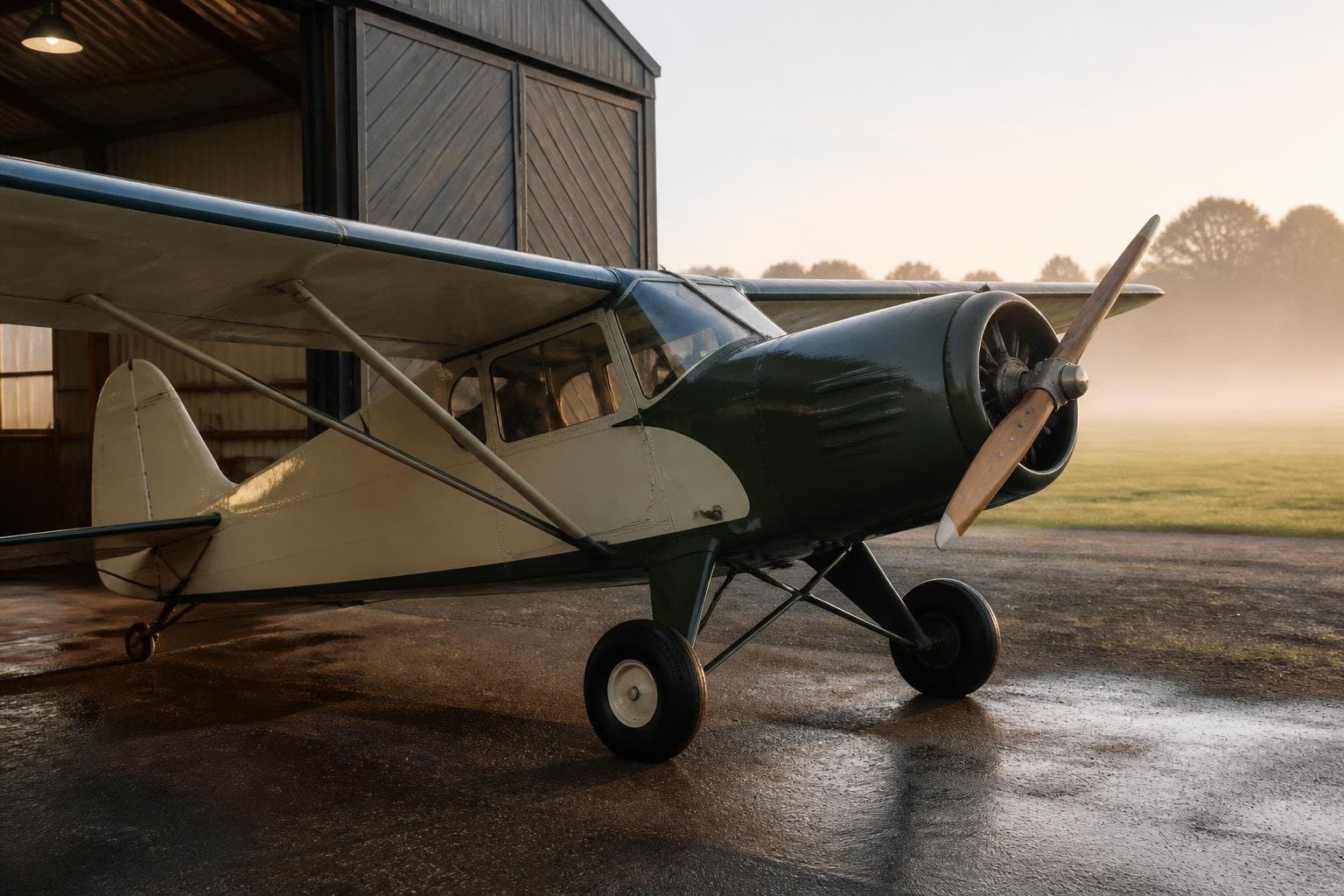
An N-registered vintage aircraft can be an appealing route to ownership in Europe, especially where a type’s history, parts supply and specialist knowledge are rooted in the United States. It is not, however, a simple matter of buying an aircraft with a US registration mark and flying it locally. The buyer must align FAA registration eligibility, title, maintenance, insurance, customs status and the rules of the country where the aircraft will be based. A disciplined review before commitment is far less expensive than untangling an ownership, technical-record or tax problem after closing.
Why an N-Registered Vintage Aircraft Can Appeal to European Buyers

Buyers of vintage American aircraft in Europe often retain United States registration because the aircraft’s type support ecosystem remains US-centred. That can include type clubs, marque specialists, parts suppliers, technical publications and experienced mechanics familiar with historic materials and systems. For certain aircraft, particularly older Piper, Cessna, Beechcraft, Aeronca, Luscombe, Stinson, Bellanca, Stearman and American Champion types, US registration may also preserve continuity with an established maintenance history and established operating documentation.
Vintage aircraft commonly encountered in Europe include fabric-covered taildraggers, pre-war and post-war touring aircraft, classic utility types and former military trainers. Their attraction lies in character, historical significance and straightforward flying qualities, but their ownership needs can be more demanding than those of a newer touring aircraft. A well-supported type is not necessarily an easy aircraft to maintain when it is based far from the specialist who knows its wing structure, fuel system or engine installation.
N-registration can be practical, but it creates an administrative bridge between the FAA framework and European operating reality. The aircraft remains subject to its US registration and airworthiness basis, while its operator must also comply with local rules governing airfield access, flight operations, customs, insurance and other matters. No general article can resolve the consequences for a particular aircraft, ownership structure or home country. Buyers should obtain aircraft-specific technical advice and legal and tax advice in the relevant jurisdiction before signing.
- Consider the depth of US type support, not merely the availability of a few parts.
- Confirm that knowledgeable maintenance support is realistically available near the intended base.
- Balance heritage appeal against the cost and complexity of cross-border administration.
Start With the Ownership Structure and FAA Registration Eligibility
FAA registration eligibility should be resolved before a purchase agreement, deposit or auction bid becomes binding. The FAA has specific requirements concerning who may register a civil aircraft in the United States. Eligibility can depend on citizenship, lawful permanent-resident status, the structure and control of a business entity, or a properly arranged trust. A European buyer should not assume that beneficial ownership alone permits direct FAA registration.
Where a trust is considered, distinguish carefully between legal title and beneficial ownership. The trustee may hold legal title and carries responsibilities under the trust arrangement; the beneficiary’s rights, practical control and reporting obligations need to be documented appropriately. Trustee selection, ongoing fees, reporting, correspondence handling and the consequences of a change in ownership or residence all deserve attention. A trust is not a standardised administrative shortcut, and its suitability depends on the buyer’s circumstances.
The purchase file should create a clear evidence trail. This normally includes an executed bill of sale, registration application material, identification of the aircraft by manufacturer, model and serial number, and documents establishing the authority of every signatory. If a company, trustee or estate is involved, obtain the supporting authority documents early. The closing agent, title specialist and legal adviser should agree the sequence in which funds, title documents and registration papers will be released.
Registration analysis is separate from tax residence, customs residence and local corporate-law questions. Obtain specialist advice in the buyer’s residence country and in the aircraft’s planned base country. A structure that appears valid for FAA purposes may still have local reporting, tax or ownership implications.
Confirm the Aircraft’s FAA Title, Registration and Record Chain

A registry search is a starting point, not a complete title opinion. Review the FAA registry information for recorded ownership, security interests and releases, then have a suitable title professional assess whether recorded liens, financing arrangements or prior interests have been properly discharged. Escrow can be valuable where money, documents and releases must be coordinated across countries.
Match the manufacturer, model and serial number throughout the file: registration certificate, bill of sale, airworthiness certificate, aircraft logbooks, engine and propeller records, insurance history and any customs papers. Differences in historic model descriptions can occur, but an unexplained serial-number discrepancy is a transaction-stopping issue until resolved. Confirm that the registration certificate corresponds to the airframe being purchased and review the timing of registration renewal requirements.
Trace the bill-of-sale sequence as far as practical. Gaps in historical ownership are not automatically fatal in an old aircraft, but they deserve explanation, particularly when they coincide with long storage periods, overseas movements, rebuilds or changes in registration. Historic aircraft may also carry identity questions involving replacement data plates, reconstructed airframes or major-component provenance. A restoration can be legitimate, but its records must support the aircraft’s identity and regulatory basis.
| Document area | What to compare | Why it matters |
|---|---|---|
| Title and registration | Owner names, serial number, recorded interests | Confirms authority to sell and highlights liens |
| Airworthiness records | Serial number, certificate category, inspection entries | Supports the aircraft’s operating basis |
| Technical logbooks | Airframe, engine and propeller identities | Reveals continuity, repairs and component history |
| Customs and tax file | Aircraft identity, location and import evidence | Helps establish status for future movements or sale |
Check Airworthiness Status, Certificates and Operating Limitations

Before evaluating cosmetic condition or equipment, establish the aircraft’s FAA airworthiness category and supporting certificate. A vintage aircraft may hold a standard airworthiness certificate, but some historic or modified examples operate under limited, experimental or special airworthiness provisions. Each category has different implications for maintenance, modifications, permitted operation and documentation. Do not infer the category from the aircraft’s age, appearance or former military background.
Inspect the original airworthiness certificate and verify that it is associated with the correct airframe. Review any operating limitations alongside it. These may restrict use, geographical operation, passenger carriage, commercial activity, test flying or other matters. A buyer planning European touring, airshow participation or frequent international flights should understand these limitations before purchase rather than discovering them while arranging insurance or permissions.
For many US-registered aircraft, the annual inspection requirement is central to continued operation. The logbooks should show appropriate inspection sign-off, and the buyer should identify who can lawfully perform the required work and annual inspection for that aircraft in Europe. Review applicable Airworthiness Directives, recurring inspection requirements and any documented alternative method of compliance. Incomplete AD status is not a minor paperwork defect: it can prevent a confident determination of compliance.
An FAA annual inspection is not a buyer’s independent pre-buy inspection. The annual determines whether the aircraft meets the applicable condition for safe operation at that inspection; a pre-buy is a commercial and technical investigation tailored to the buyer’s risks, intended mission and budget. A pre-buy may examine corrosion, hidden repairs, parts availability, record quality and upcoming expenses in greater depth.
- Request copies of certificates, operating limitations and the latest inspection entries before travel.
- Reconcile AD compliance records with the actual engine, propeller and airframe configuration.
- Pause if logbooks are contradictory, pages are missing, or major repairs lack clear supporting records.
Understand Maintenance Rules for an N-Registered Aircraft Based in Europe
An N-registered aircraft remains within the FAA maintenance and inspection framework even when it is permanently based in Europe. The practical question is not simply whether a local workshop is competent; it is whether the required maintenance and inspection can be performed, approved and recorded by appropriately authorised persons using acceptable data and recordkeeping practices for that aircraft.
For an annual inspection, buyers should identify an FAA-certificated mechanic with inspection authorisation who is available for the type and location, or establish a practical plan for bringing in suitable support. An FAA-certificated mechanic may perform maintenance within the scope of their privileges, but inspection-authorisation requirements and individual qualifications should be checked for the intended work. Availability matters: a technically ideal specialist located across the Atlantic may create costly downtime if an annual, defect investigation or pre-buy finding requires prompt attention.
An EASA-approved maintenance organisation may have excellent facilities and type knowledge, but EASA approval alone does not automatically provide FAA maintenance or inspection authority. Conversely, an FAA-qualified individual must still be able to work legally and practically at the European base. Discuss proposed maintenance arrangements with the relevant personnel before purchase, including release wording, logbook entries, component records and the use of approved or acceptable technical data.
Vintage repairs demand particular care. Fabric work, wood repairs, welding, corrosion treatment and replacement of obsolete components may require specialised methods and approved data. A repair that looks tidy can still be difficult to support if its basis is undocumented. Plan for annual inspections, specialist visits, shipping delays and the possibility of unplanned grounding while parts or technical decisions are resolved.
Evaluate the Vintage Airframe, Engine and Propeller Beyond the Logbooks

Logbooks are indispensable, but they cannot reveal every physical issue. A type-experienced pre-buy inspector should examine the airframe for corrosion, fabric deterioration, ageing alloy, wood condition, moisture traps and signs of previous damage or repair. On a fabric-covered aircraft, establish what system was used, when it was applied and whether its condition can be assessed adequately. On wood structures, look beyond surface finish for evidence of water ingress, glue-joint concerns, fungal deterioration or poorly documented repairs.
Review all modifications and major repairs against the applicable approved data. Vintage aircraft frequently carry period alterations, field repairs or later upgrades that may be sensible but poorly documented. The objective is not to reject every non-original feature; it is to determine whether the aircraft conforms to an identifiable, supportable configuration and whether the work is recorded in a way future inspectors and insurers can accept.
Engine time since overhaul is only one part of the picture. Ask when the overhaul occurred, how the engine was preserved, how regularly it has run and whether it experienced long inactive periods. Calendar exposure can matter materially on an older engine, especially where corrosion risk, inactive fuel systems or uncertain preservation procedures are present. The same disciplined review applies to propellers, magnetos, hoses, flexible fuel lines, seals and fuel-system components.
Ask the inspector to define a sensible scope that may include compression testing, borescope examination, oil-filter or screen review where appropriate, fuel-system assessment and structural access. Not every inspection technique suits every engine or airframe, and findings need expert interpretation. Type-club knowledge can help identify recurrent weak points, but it should complement rather than replace an independent specialist’s judgment.
- Check that component serial numbers align with logbooks where records identify them.
- Obtain realistic lead-time information for obsolete or specialised parts.
- Budget for rectification discovered after access panels, cowling or interior trim are removed.
Plan European Operating Compliance and Cross-Border Flying

FAA registration does not exempt an aircraft from the local operating rules of its base country. European states apply their own requirements around airfield access, local procedures, insurance evidence, noise restrictions, environmental rules and aircraft equipment. Requirements differ substantially across EU states, the United Kingdom, Switzerland and other European jurisdictions. Check the rules of the country where the aircraft will be hangared, not merely the country where the purchase closes.
For practical touring, assess radio licensing, transponder capability, navigation equipment, flight-plan procedures and any restrictions relevant to controlled airspace. A historically authentic panel may be part of an aircraft’s attraction, yet it may limit access to particular airspace or airports. Noise-sensitive aerodromes, environmental limitations and runway-surface restrictions can similarly affect a vintage aircraft’s usable network.
Pilot qualifications need equal attention. Licence validation or recognition, medical certification, recency, tailwheel experience, type or class requirements and insurer-imposed training standards can all affect who may fly the aircraft. The applicable answer depends on the pilot, the aircraft’s category and the jurisdictions involved. Seek advice from the relevant aviation authorities and qualified local professionals rather than relying on a rule learned from another country.
Cross-border flights require operational discipline. Carry the documents required for the aircraft, crew and journey; understand customs procedures at departure and arrival; and comply with flight-plan and border requirements where applicable. Keep insurance documentation readily available. A well-organised aircraft file reduces friction during ramp checks, border movements and future resale.
Calculate VAT, Customs and Import Exposure Before Closing
Registration nationality and customs status are separate issues. An N-registered aircraft may be physically located in Europe, but that does not by itself establish that VAT has been paid, that the aircraft is in free circulation, or that a particular buyer can move it across a customs border without liability. Start with the aircraft’s exact location at closing and obtain a clear account of its customs history.
Request documentary evidence supporting any claim of VAT-paid status. Depending on the circumstances, relevant records may include import declarations, tax receipts, customs entries, previous sale documents and proof of the aircraft’s movements. Do not substitute assumptions based on hangar location, registration marks or a seller’s informal statement. The evidence should be reviewed against the planned transaction and future use.
Temporary admission, onward supply, business use, private use and transfer between customs territories can produce different outcomes. Movements between the EU and the United Kingdom require particular care because customs treatment can change when the aircraft crosses that boundary. Switzerland and other non-EU European states introduce further jurisdictional questions. Potential exposure can include VAT, customs duty, broker charges, storage costs and professional fees.
Retain the customs and tax file after closing. It may be needed for later sale, border movements, insurance queries or a ramp check. A specialist aviation tax and customs adviser should review the intended ownership structure, aircraft location and operating pattern before funds are released. This is especially important where the buyer plans a prompt relocation after purchase.
Arrange Insurance, Hangarage and Practical Support for Vintage Operations
Insurance should be discussed early, because an underwriter’s view of the aircraft, pilot experience and intended use can alter the feasibility of a purchase. Seek hull and liability cover appropriate to the aircraft’s age, construction, operating environment and declared use. Insurers may require type conversion training, dual instruction, minimum time on type, tailwheel experience or specified pilot recency.
Understand whether the policy uses an agreed value or a market-value basis, what is required to support that value and how salvage, transport and repair decisions would be handled. The objective is not simply to obtain a premium quotation, but to understand exclusions, geographical limits, pilot warranties and conditions affecting a claim.
Hangarage is preservation infrastructure for a vintage aircraft. A dry, secure hangar can reduce exposure to ultraviolet light, moisture, temperature cycling and corrosion. Confirm door dimensions, towing arrangements, fire precautions, electrical availability and access for visiting engineers. For seasonal or low-utilisation periods, establish preservation procedures for the engine, fuel system, battery and cabin.
Practical support should include a plan for recovery, ferry flights, specialist engineering and shipping parts to a remote base. Consider holding appropriate consumables and carefully selected spares where supply is uncertain. The right inventory depends on type support, but contingency planning is usually cheaper than an extended grounding caused by a small unavailable component.
Build a Pre-Purchase Due-Diligence Plan Before You Bid or Buy
Build the due-diligence plan before making a non-refundable commitment. The core should be an independent pre-buy inspection by a professional with credible experience of the particular marque, construction method and engine installation. The inspector should work for the buyer, have access to the aircraft and records, and be asked to provide findings in a form that distinguishes observed condition, documented history, unsupported assumptions and recommended further investigation.
Before a deposit or auction participation, complete a document review covering title, registration, liens, airworthiness certificate, operating limitations, airframe, engine and propeller logs, inspection history, AD status, repair and modification records, customs evidence and insurance feasibility. Ask the seller direct questions about storage, recent operation, defects, inactive periods, damage history, preservation, annual inspections and components approaching overhaul or replacement.
Where possible, use escrow, a title review and clearly drafted conditions precedent. These might address satisfactory title, document verification, independent inspection, insurance acceptance, tax advice and the release of essential records. The exact approach depends on the sale format and jurisdiction, but the principle is consistent: material unknowns should be resolved before irrevocable payment.
Budget for immediate rectification, transport, hangarage, insurance, registration administration and the next annual inspection. A vintage aircraft can be a rewarding ownership proposition when purchased with realistic reserves. Pause the transaction and seek specialist advice if serial numbers do not reconcile, title is unclear, records conflict, customs status is unsupported, or maintenance capability has not been secured.
Is an N-Registered Vintage Aircraft the Right Ownership Route?
The N-registration route can suit a buyer who values access to US type support, has a sound FAA-eligible ownership structure and can maintain a reliable network of FAA-qualified maintenance, legal, tax and insurance support in Europe. It is often most workable for an owner prepared to manage records carefully, plan inspections well ahead and accept that historic aircraft ownership includes periods of maintenance and investigation.
Local registration may be simpler where the aircraft will remain in one country, local maintenance support is stronger, or the buyer’s ownership and tax circumstances align more naturally with the national system. There is no universal best answer. The right route depends on the individual aircraft’s certification basis, condition, operating plans and the buyer’s ability to sustain compliance over time.
Heritage value should be balanced with operational practicality. Before committing, review the complete records, define the pre-buy scope, confirm the maintenance pathway and obtain advice on ownership and customs treatment. A properly structured purchase gives the buyer a far better chance of enjoying the aircraft’s history without inheriting avoidable administrative or technical risk.

Comments
No comments yet
Be the first to share your thoughts!