

 Bad Vöslau
 Kirn
Kirn
 Florida

Aircraft damage history deserves careful investigation, but it is not an automatic reason to reject an aircraft. A well-documented repair completed to approved data, followed by years of satisfactory operation and independently inspected before purchase, can be an acceptable ownership proposition. The concern is not simply that damage occurred; it is whether the event, repair scope, materials, inspections and later maintenance leave unanswered structural, mechanical, regulatory or resale questions.
Why Aircraft Damage History Matters to a Buyer

Damage history is different from current condition. An aircraft may look clean, fly normally and have a fresh annual inspection while still carrying an incomplete record of a significant event. Conversely, a clearly recorded event may have been repaired correctly and have no evident continuing effect. Buyers should assess both the historical event and the aircraft as it exists today.
The practical issue is unresolved risk. A minor hangar dent repaired under appropriate data does not carry the same implications as a gear-collapse repair affecting attach structure, a propeller strike with unclear engine follow-up, or water exposure with uncertain electrical remediation. The location of the damage, loads transmitted through the aircraft, repair method, subsequent hours and documentation all matter.
Damage history can influence safety assessment, marketability, insurance availability, premium terms and future resale. It may also affect how broad the eventual buyer pool will be. These commercial considerations should not be confused with airworthiness: a value concern is not automatically a technical defect, and an inspection sign-off does not establish a particular resale value.
Records review, physical inspection and specialist review are separate safeguards. Logbooks can establish a timeline and repair basis; a knowledgeable inspector can assess visible and accessible workmanship; and a type-experienced maintenance organisation may identify model-specific structural concerns. No single damage entry should trigger an automatic rejection, but no buyer should accept a vague explanation in place of evidence.
Start by Defining the Reported Damage Event
Begin by describing exactly what happened rather than relying on labels such as “damage history” or “accident repaired.” An accident, incident, maintenance-related damage event and cosmetic ground-handling occurrence may have very different reporting consequences and technical implications. Terminology can also vary by jurisdiction, so the underlying facts are more useful than a broad label.
Establish the date, location, aircraft total time, engine and propeller times, circumstances, reported damage and repair facility. Ground handling can involve a tow-bar failure, hangar contact, wind damage or a vehicle strike. Weather events may include hail, lightning, windstorm or water intrusion. Each creates a different inspection path. A hangar door strike may be localised; floodwater can create a long-term contamination and corrosion concern across multiple systems.
Hard landings, runway excursions and gear collapses require special discipline because loads can travel beyond visibly damaged components. Ask what the aircraft contacted, whether the gear folded or separated, whether the propeller struck the surface, and what structure was inspected after the first repair. A sudden engine stoppage or propeller contact can similarly require attention to the engine, propeller, mount, firewall and accessories.
- Record the event narrative and the source of that narrative.
- Identify the aircraft, engine and propeller times at the event.
- Separate direct impact damage from possible consequential damage.
- Note later discrepancies in the same area, including corrosion, cracks, alignment issues or repeat repairs.
The Records That Build an Aircraft Damage History
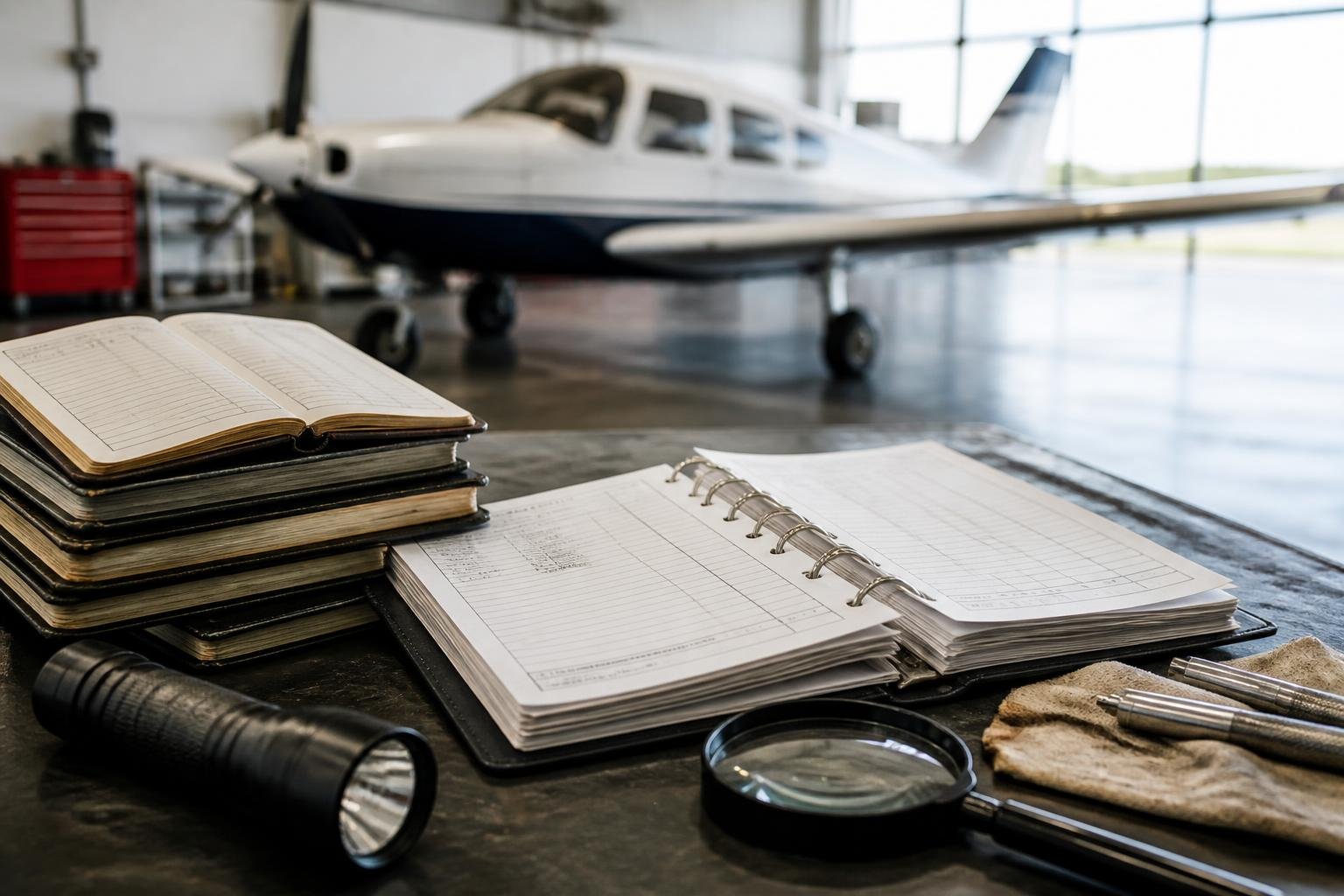
Complete airframe, engine and propeller logbooks are the foundation of a damage-history review. They should show the event period, inspection findings, repair references, replacement components, return-to-service entries and follow-on maintenance. For aircraft operating under United States rules, FAA registration and airworthiness records may provide useful context; other national authorities and registries can hold different information. Registry material is helpful, but it does not replace the aircraft’s technical records.
Ask for supporting material whenever it exists: insurance surveys, repair estimates, photographs, work orders, invoices, inspection reports and correspondence with manufacturers or repair facilities. These documents can clarify what was found before panels were closed and can help establish parts provenance. Major repair or major alteration documentation, where required, should correspond with the logbook narrative and the work actually visible on the aircraft.
Weight-and-balance records also deserve review after structural repair, replacement of significant equipment, or changes to interior and avionics. An amended calculation does not prove repair quality, but its absence may point to an incomplete paperwork trail where the work should have affected empty weight, moment or equipment list.
| Record | What it can establish | Questions to ask |
|---|---|---|
| Airframe logbooks | Damage entry, repair sequence and inspections | Is the repair description specific and continuous? |
| Engine and propeller logs | Event-related inspections or component replacement | Did a propeller event receive appropriate follow-up? |
| Work orders and invoices | Scope, parts and labour performed | Do they match the logbook entries? |
| Photographs and surveys | Pre-repair extent and hidden-area access | What was exposed before the repair? |
| Repair approvals | Technical basis and return to service | Is the approved data identifiable and applicable? |
Gaps, contradictions and missing logbook periods are not proof of a defect, but they change the risk assessment. Do not fill gaps with optimistic assumptions. Identify what cannot be verified, then decide whether inspection access, specialist opinion and price can reasonably address that uncertainty.
Structural Repairs That Deserve the Closest Review

Repairs involving primary structure merit the closest review because these areas carry flight, landing and manoeuvre loads. Depending on type, primary structure can include wing spars, carry-through structures, wing attachment fittings, wing-box areas, fuselage frames, bulkheads, pressure vessel structure and empennage attachment points. A repair may be entirely acceptable when properly engineered and executed, but it must be understood in the context of the aircraft’s approved limitations and design.
Landing gear events deserve attention beyond the visible gear leg. Inspectors should consider trunnions, attachment fittings, surrounding bulkheads, gear boxes, floor structure and load paths into the wing root or fuselage. On retractable types, correct rigging, actuator condition, uplock and downlock operation, and signs of recurring alignment issues may all be relevant.
Control surfaces and their attachments require equal care. Hinge brackets, mounts, bellcranks, pushrods, cable runs and stops need continuity and freedom of movement. A repaired skin near a control attachment can be less significant than damage that affected hinge-line geometry or underlying structure. The physical inspection should include adjacent areas, not only the visible repair.
Composite aircraft introduce distinct concerns. Delamination, crushing, moisture ingress and internal fibre damage may not be obvious beneath a sound-looking surface. The repair should be traceable to suitable approved or manufacturer-supported data, with appropriate material and process documentation where available. In both metal and composite structures, corrosion can develop beneath repaired skins, sealant, filler or inaccessible overlap areas.
Ask the inspector to identify the repair basis and whether the visible work appears consistent with it. A buyer is not expected to engineer the repair personally; the sensible objective is to confirm that the technical authority, repair scope, access and evidence are proportionate to the event.
Propeller Strikes, Gear Collapses and Hard Landings

These events can appear modest at first glance while transmitting loads widely through the aircraft. A propeller strike may involve only a visible blade tip, or it may impose loads requiring a more extensive engine and propeller evaluation. The correct scope depends on the engine, propeller, event details and applicable manufacturer instructions. Buyers should not assume that a repaired or repainted propeller alone resolves the question.
Review engine and propeller records for evidence of the inspections, disassembly, component replacement or other actions called for by the relevant manufacturers and maintenance data. Particular attention may be appropriate for the crankshaft, propeller flange, accessory drive, engine mounts and related accessories. The firewall, nose gear structure and forward fuselage should be assessed if the event involved a nose-over, gear failure or forward impact.
After a main-gear collapse or hard landing, the inspection should follow likely load paths into gear attach structure, bulkheads, wing roots and fuselage. Alignment checks can help identify persistent geometry issues, but they are only one part of the review. Recurrent tire wear, shimmy reports, gear-door damage, repeated bushing replacement or recurring rigging adjustments may indicate a need for deeper investigation.
- Request the original event description rather than relying only on a later summary.
- Compare engine, propeller and airframe entries by date and time.
- Confirm that follow-on inspections occurred after repairs and return to service.
- Ask whether later annuals found cracks, corrosion, loose fittings or repeat discrepancies nearby.
A complete response is not necessarily a complete teardown in every case. It is a documented, type-appropriate inspection and repair path that can be evaluated by a qualified professional.
Fire, Flood, Corrosion and Lightning Damage
Environmental damage deserves a conservative approach because its effects may extend beyond the immediately visible area. Fire and smoke can affect wiring insulation, connectors, hoses, seals, composite structure, paint systems and heat-treated components. A replacement panel or cleaned cabin does not by itself establish that heat and smoke effects were evaluated throughout the affected zone.
Flooding and water intrusion create separate concerns: contamination, trapped moisture, corrosion, deteriorated insulation, biological growth and damage to avionics or instruments. Saltwater exposure deserves particular scrutiny because it can accelerate corrosion and affect electrical connectors, cable terminations and hidden structure long after the event. Determine the type of water, duration of exposure, level reached, disassembly performed and preservation measures taken.
Lightning events should be documented with their current path, inspection points and repairs. Static wicks, bonding paths, antennas, radomes and avionics may all warrant attention depending on aircraft construction and strike location. Composite aircraft may have lightning-protection layers or mesh that require a documented repair method. A functional avionics check can be useful, but it does not substitute for assessing the physical strike path and repair evidence.
Long-term monitoring may be appropriate after environmental damage, particularly where access remains limited. The buyer should understand any recommended recurring inspections and include their cost and operational disruption in the ownership plan.
How Repair Quality Changes the Risk Assessment

Repair quality is often more important than the mere presence of a damage entry. Good documentation identifies the approved data used, the affected structure, materials or replacement parts, inspection steps and authorised return to service. Manufacturer maintenance manuals, structural repair manuals and applicable regulatory standards provide the framework; the exact acceptable method depends on aircraft type, certification basis and jurisdiction.
Consider who performed and approved the work. A capable repair station or maintenance organisation with relevant type experience can provide meaningful confidence, but a respected name alone is not proof of conformity. Review the actual records, technician or inspector credentials where relevant, and repair-station capability for the work performed. Traceable replacement components and clear parts documentation reduce uncertainty, especially for structural components and propeller or engine parts.
Paint, filler, upholstery and interior refurbishment can obscure old damage or corrosion. This does not make cosmetic work suspect by itself. It means a pre-buy should use informed access decisions: remove selected inspection panels, look behind interior trim where reasonable, inspect fastener patterns and surface contour, and compare visible work with the repair documentation.
Repair age and subsequent flight hours matter. A repair that has accumulated substantial operation without recurring discrepancies may offer useful evidence, but it does not eliminate the need for an independent evaluation. Conversely, a recent repair may have limited service history and deserve closer review. Repeated defects in the same area are particularly important, because they can indicate a recurring cause, poor repair durability or an unrelated underlying issue.
Red Flags in Logbooks and Listing Documentation
Documentation should let an informed reader understand what happened, what was inspected, what was repaired and who returned the aircraft to service. Vague entries such as “repair as necessary” may be adequate only for routine minor work; they are weak support for a meaningful damage event. A buyer should seek clarification before accepting broad language around structural, propeller, engine or gear-related repairs.
Other red flags include missing event dates or aircraft times, no explanation for replacement of a major component, logbook gaps around a known incident, conflicting serial numbers, inconsistent inspection entries and undocumented modifications after accident repair. None of these observations proves that the aircraft is unsafe. Each is a reason to expand the records request and tailor the pre-buy inspection.
- Repeated repairs in the same structural area without a clear cause.
- New paint or interior work that coincides with an unexplained logbook gap.
- Component changes that do not appear in the relevant engine, propeller or airframe record.
- Repair paperwork that names a different aircraft, serial number or configuration.
- Seller disclosures that are not supported by source documents.
Seller disclosures are useful starting points, not independent verification. Preserve copies of statements, listing materials and records reviewed, then ask the inspector to reconcile them with the aircraft. If a material question cannot be answered, treat the uncertainty as part of the purchase decision rather than allowing it to disappear during negotiation.
What a Pre-Buy Inspection Should Cover After Damage
A damage-history pre-buy inspection should be led by a maintenance professional familiar with the aircraft type and, ideally, the specific damaged system or structure. Start with documentation review before the physical inspection. This allows the inspector to identify repair locations, compare expected components with the aircraft and request targeted access rather than conducting a generic walk-around.
The physical scope should include repaired areas and adjacent structure likely to have received loads or environmental exposure. Appropriate methods may include borescope inspection, corrosion assessment, alignment checks and, where warranted and feasible, suitable non-destructive testing. The method should be chosen by the inspector for the material, location and suspected condition; no single test can validate every repair.
Engine, propeller and avionics work should match the event. A propeller incident may warrant focused powerplant record review and inspection. A lightning event may require electrical, bonding and avionics evaluation. A water event may require broader connector, wiring, corrosion and contamination assessment. A flight test can provide useful operational information only when it is legal, appropriately authorised, insured and conducted by suitably qualified personnel; it is not a substitute for maintenance inspection.
Ask for written findings that distinguish observed defects, documentation gaps, recommended further investigation and estimated corrective work where an estimate is possible. Set decision thresholds before committing: which findings are acceptable, which require a price adjustment, and which cause the buyer to walk away. A pre-buy inspection is not the same as an annual inspection, an appraisal or a guarantee of future condition. Its scope must be agreed in writing.
Value, Insurance and Future Resale After Repairs
Damage history is one factor in marketability, not a formula. Severity, repair quality, documentation completeness, aircraft model, rarity, condition, equipment and the size of the likely buyer pool all influence future resale. Some buyers will accept a transparently repaired aircraft with a credible inspection result; others will exclude any history. The effect can therefore be more pronounced for aircraft with broad supply and many comparable examples than for a scarce type, but every case is fact-specific.
Avoid unsupported percentage deductions. A single number cannot reliably account for uncertainty in repair quality, later maintenance, location, mission suitability and market timing. Instead, compare the aircraft’s repair evidence and present condition against genuinely comparable aircraft, while recognising that asking prices, completed transactions and appraisals represent different evidence categories.
Insurance should be discussed before a binding commitment. Insurers may consider pilot experience, aircraft type, intended use, location, hull value, loss history and damage history. Eligibility, exclusions, deductible terms and premiums vary by insurer and jurisdiction. Provide accurate records to the broker or insurer and obtain clarity on the proposed terms rather than assuming ordinary coverage will be available.
Disclosure obligations differ by jurisdiction and transaction structure. Regardless of minimum legal requirements, maintaining a clear repair package is commercially sensible. Retain event records, approval data, invoices, photographs, inspection findings and subsequent annual or recurring-inspection entries. A future buyer will ask the same questions you are asking now.
When a Repaired Aircraft Can Be a Sensible Purchase
A repaired aircraft can be a sensible purchase when the event is fully described, the repair scope is transparent, the work is supported by appropriate approved data and credible records, and an independent specialist finds the aircraft consistent with that evidence. The buyer should also understand any remaining limitations: reduced marketability, monitoring requirements, insurance conditions or future inspection costs.
The purchase price should reflect uncertainty and likely future resale considerations, but price alone cannot cure unknown structural damage or poor documentation. The aircraft must fit the intended mission and ownership budget after allowing for inspections, corrective work, insurance and contingency. A well-documented repair may be entirely reasonable for an owner who plans to keep the aircraft and values its equipment, configuration or availability; it may be less suitable for a buyer needing maximum liquidity at resale.
Walk-away criteria commonly include unknown primary-structure damage, inaccessible suspect areas without a credible inspection route, missing records around a significant event, unresolved repeat discrepancies, or evidence that repairs and modifications cannot be reconciled with approved documentation. In an auction setting, damage disclosures and available documentation should be reviewed early, with inspection and bidding conditions understood before making a commitment.
A Practical Damage-History Review Checklist
Use a written process. It keeps the review factual, makes specialist questions more efficient and creates a file that remains useful through ownership and eventual resale.
- Request complete airframe, engine and propeller records, including available supporting repair documents.
- Create a dated timeline of every reported event, repair, inspection and component replacement.
- Match replacement parts, serial numbers where applicable and work orders to maintenance entries.
- Identify whether primary structure, landing gear, powerplant, propeller, avionics or environmental exposure was involved.
- Confirm the repair basis, inspection sign-offs and return-to-service documentation.
- Commission an independent, type-appropriate pre-buy inspection with targeted access to repaired areas.
- Discuss insurance implications before committing to the purchase.
- Retain findings, photographs and records for negotiation, maintenance planning and future ownership files.
The right outcome is not always a purchase or a rejection. It is a decision made with a clear understanding of what is documented, what has been independently observed, what remains uncertain and what those facts mean for safe, lawful and economically realistic ownership.

Comments
No comments yet
Be the first to share your thoughts!