

 Bad Vöslau
 Kirn
Kirn

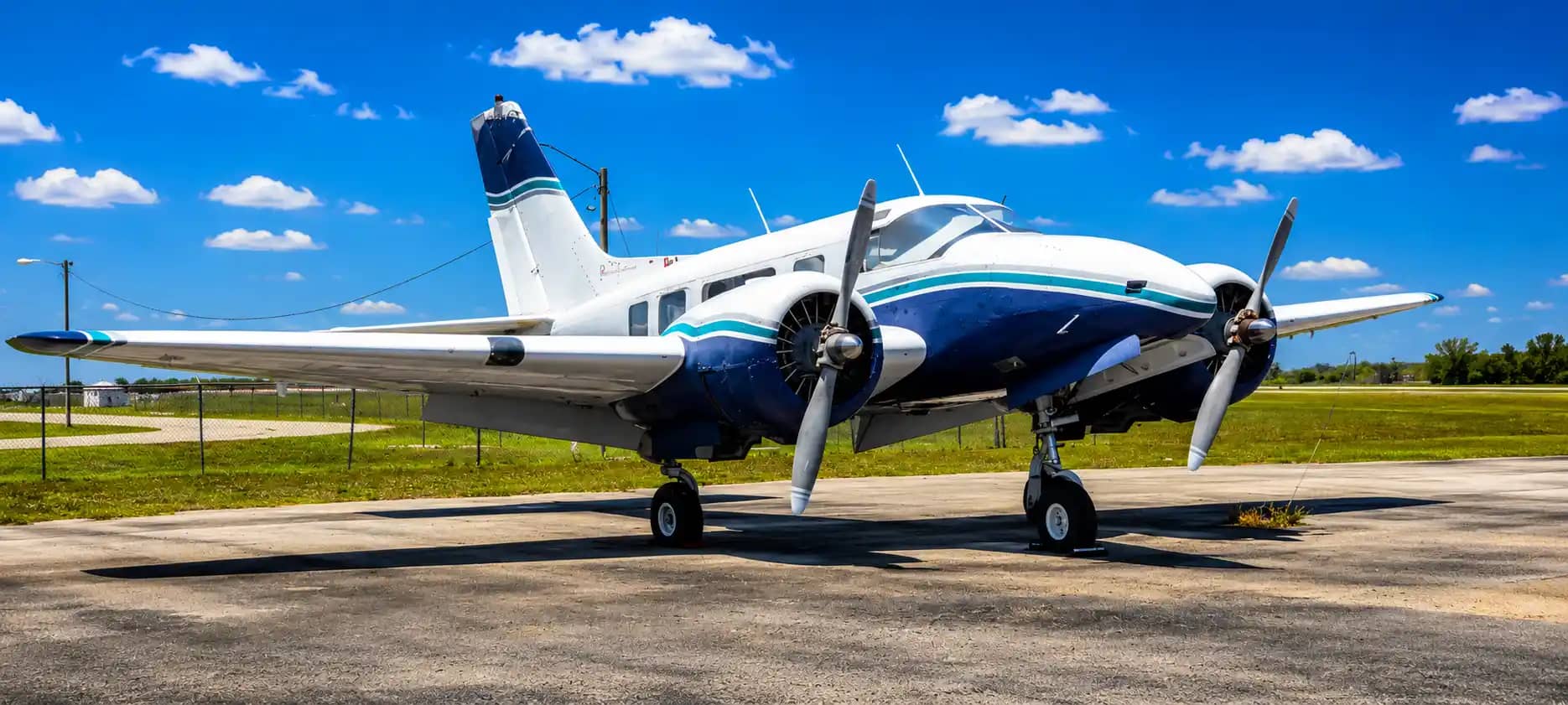
 Florida

What Aircraft Damage History Means in a Purchase Decision
Aircraft damage history is not, by itself, a verdict on an aircraft’s condition or value. It is a record of something that happened to the airframe, engine, propeller, systems or interior at an earlier point in its life. For a buyer, the meaningful question is not simply, “Has it been damaged?” It is: what occurred, what components were affected, how was the aircraft returned to service, and can the work be verified?
That distinction matters because aircraft are repairable assets designed around approved maintenance data, inspection requirements and traceable parts. A well-documented repair to a limited area may have little practical effect on utility. Conversely, an apparently minor event can carry a substantial financial or technical consequence when it involves a propeller strike, hidden corrosion, compromised structural geometry, fire exposure, incomplete records or an uncertain repair path.
For an aircraft buyer, aircraft damage history should be evaluated alongside total time, maintenance status, equipment, ownership pattern, storage environment, upcoming calendar-driven work and the intended mission. It should not be used as a shortcut that replaces a careful records review and an independent pre-buy inspection.
Damage event versus reportable damage
A damage event is any occurrence that harms, or may have harmed, an aircraft. It can range from a dented wingtip caused by hangar contact to a runway excursion, hard landing, lightning strike, hailstorm or substantial accident. A reportable occurrence is a separate concept. Reporting obligations can arise under aviation regulations, insurance conditions or operational procedures, and they vary by jurisdiction and circumstance.
Buyers should avoid assuming that the absence of a public accident record means the aircraft has never sustained damage. Some events do not meet the relevant reporting threshold, some occurred outside the jurisdiction being searched, and some may be documented principally in maintenance records and insurance files. Equally, the presence of an incident record does not establish that the aircraft is unsuitable or poorly repaired. It establishes that more informed investigation is warranted.
The useful due-diligence approach is to identify every known event and classify it by affected area, likely loads or exposure, repair method, documentation quality and remaining uncertainty. A cosmetic repair after low-speed ground contact is evaluated differently from a structural repair after a high-energy impact. The same applies to an event that triggered engine inspection requirements compared with one that was confined to replaceable fairings.
Repair history, incident history and logbook continuity
Repair history is the technical account of what was inspected, removed, repaired, replaced and approved for return to service. Incident history is the narrative of what happened. Both matter, but neither is complete without the other. A concise logbook entry may show that a component was replaced, while an insurance report, work order or prior owner statement may clarify why. A detailed event description without corresponding maintenance entries is also incomplete.
Logbook continuity is therefore central to buyer confidence. Complete records do not guarantee an aircraft has never had damage, but they allow a reviewer to follow its maintenance story with far greater confidence. Ideally, the file includes airframe, engine and propeller logs; invoices and work orders; photographs where available; component traceability; weight-and-balance revisions; and the approved or acceptable technical data used for significant repairs.
Records gaps are not proof of hidden damage. Older aircraft, particularly those with many owners or international histories, may have incomplete paperwork for reasons unrelated to an accident. However, a gap changes the risk profile. A buyer should treat it as an issue to be explained, reflected in the scope of inspection and considered when assessing resale marketability. If a claimed repair cannot be reconciled with the records, the question is not only whether the work was satisfactory; it is whether a future buyer, lender or insurer will be comfortable with the same uncertainty.
Why severity, repair quality and documentation matter more than a simple damage label
The term “damage history” is too broad to support a reliable valuation conclusion. The market generally responds to the interaction of severity, repair quality and evidence. Severity concerns the energy involved, the structures or systems affected, and the potential for secondary damage. Repair quality concerns whether the work followed applicable maintenance data, was conducted by appropriately qualified personnel and restored the aircraft to the required standard. Documentation allows a buyer, mechanic, appraiser and future purchaser to verify those conclusions.
A repaired fiberglass fairing, for example, may be largely a presentation and disclosure issue. A repair involving a primary load path, pressure vessel, composite spar, rotor system, engine teardown or extensive corrosion removal requires a much more specialized review. Material also matters. Metal structures may reveal prior repair through rivet patterns, skin replacement or internal reinforcement. Composite structures can require an assessment of repair extent, moisture condition, bonding method and non-destructive inspection evidence. On fabric-covered aircraft, the quality and age of the covering system can be as important as the original event.
“Repaired” should not be interpreted as “irrelevant,” but neither should it be interpreted as “unsafe.” The correct conclusion depends on evidence. An independent mechanic familiar with the type can determine whether the available documentation supports the repair, whether physical inspection aligns with the records, and whether additional inspection is sensible before closing.
Model-specific market sensitivity and buyer perception
Aircraft damage history affects different markets in different ways. A common training aircraft with plentiful parts, a broad maintenance network and a utilitarian mission may be judged primarily on current condition, records and price. A low-production retractable, a high-performance composite aircraft, a turbine, a vintage type or a collector aircraft may attract much greater scrutiny because specialized repairs, originality, provenance and future liquidity carry more weight.
Buyer perception also follows mission. An owner buying a practical touring aircraft may accept a well-supported historic repair if the price, inspection and records align. A buyer seeking a pristine example for corporate travel, concours presentation or collection may place a higher premium on an undamaged and highly original airframe. Neither position is irrational; they reflect different ownership objectives.
This is why comparable sales evidence must be type-aware. A generic “damage deduction” borrowed from another model, age group or market segment is rarely useful. The relevant comparison is with similarly equipped, similarly maintained examples of the same type, adjusted for the exact event, quality of the records and the likely pool of future buyers.
The Core Principle: Damage Does Not Have One Fixed Discount
There is no universal percentage deduction for aircraft damage history. Attempts to apply one can create false precision and lead buyers or sellers to focus on a number before the underlying facts are understood. A minor, completely documented repair may influence value only modestly. A poorly documented event involving structural, engine or corrosion concerns may materially limit marketability even if the aircraft currently presents well.
Value is ultimately established by a transaction between informed parties. An appraisal can provide a reasoned opinion, but it is not a substitute for a pre-buy inspection, and it cannot remove the effect that an individual buyer’s risk tolerance may have on the final price. The aim of due diligence is to turn a vague damage label into a defined risk assessment.
Start with an undamaged baseline
A sensible analysis begins with a baseline: what would a comparable example without known damage history reasonably command in the same market? The comparison should account for year, variant, engine and propeller times, avionics, cosmetic condition, maintenance status, equipment, modifications, location and documentation quality. A newer avionics suite or recent engine work does not erase damage history, but it still affects the value of the individual aircraft and should not be ignored.
Once a credible baseline is established, assess the event’s actual implications. Was the affected structure repaired or replaced? Was there an engine inspection or teardown requirement? Did the repair create a non-standard configuration that future maintenance providers may need to understand? Is the aircraft now more difficult to insure? Are the supporting records sufficient for a future buyer to reach the same conclusion? The value impact comes from these answers, not from the word “damage” alone.
| Valuation question | Why it matters |
|---|---|
| What was damaged? | Primary structure, propulsion components and fire-affected systems generally require deeper review than replaceable cosmetic parts. |
| What technical data supported the repair? | Approved or otherwise applicable data helps establish that the work followed an appropriate repair basis. |
| Who performed and released the work? | Maintenance provider experience, certification and records affect confidence in the repair history. |
| Is the repair visible or easily inspectable? | Visible workmanship can be assessed directly; concealed areas may require additional inspection methods. |
| Can the event be explained consistently? | Matching logbooks, invoices, inspection findings and owner disclosures reduce unresolved risk. |
Age, rarity, mission and total time change the analysis
The same repair may be received differently depending on the aircraft. On an older working aircraft, a properly documented wing skin repair may be accepted as part of a long service life. On a rare, historically significant aircraft, replacement of original material can influence collector appeal even if the repair is technically excellent. On a modern composite airframe, buyers may focus on the repair scheme, inspection results and the experience of the repair facility. On a retractable aircraft, a gear-up event raises distinct questions about the engine, propeller, firewall, belly structure, gear system and related systems.
Total time matters, but it is not a standalone proxy for condition. High-time aircraft can have excellent maintenance histories, while low-time aircraft can have corrosion or damage concerns related to storage, weather exposure or a single significant event. A buyer should consider how the event interacts with total time and subsequent service. Many trouble-free hours after a documented repair can be reassuring, but they do not eliminate the need to inspect the repair and supporting records.
Mission also matters. A private owner flying local recreational trips may assess risk differently from an operator that needs predictable dispatch reliability, financing options and broad insurance acceptance. For commercial, training or specialized operations, a damage history can affect not only resale but operating economics, scheduling and insurer requirements.
Marketability, appraisal evidence and transaction price are separate questions
Marketability is the size and confidence of the future buyer pool. A known major repair can reduce the number of interested purchasers even when the aircraft is fully repaired and legally maintained. That does not automatically make the aircraft a poor purchase. It means the buyer should plan for a potentially longer selling period, more detailed disclosure and a purchaser who is comfortable with the history.
Appraisal evidence is the information used to support an opinion of value. A credible appraisal considers the aircraft’s actual condition and documentation rather than treating all prior damage alike. The appraiser may identify limitations where records are incomplete or specialized inspection is needed. Buyers should understand that an appraisal is not an airworthiness determination, a maintenance release or a guarantee of future sale price.
The final transaction price is what a specific buyer agrees to pay after considering alternatives, condition, timing, financing, insurance and the available evidence. Two aircraft with seemingly similar histories can sell differently because one has unusually complete records and respected repair provenance while the other has unresolved gaps. For that reason, a seller is usually better served by organizing transparent documentation than by trying to minimize or obscure a known event.
Disclosure is a practical and legal issue
Disclosure expectations differ among jurisdictions and transaction structures, so parties should obtain appropriate legal and professional advice for the sale location and aircraft registration. In practical terms, clear disclosure protects both sides. A seller in a private transaction should describe known damage accurately, avoid unsupported claims and make relevant records available for review. A brokered sale should present the known history consistently in listing material and due-diligence files. An auction listing should give bidders enough information to understand the event, the repair documentation and the limits of the available evidence.
Disclosure should be factual rather than argumentative. “The aircraft experienced a landing-gear event in a prior year; supplied records include the repair invoice, logbook entries and subsequent inspection documentation” is more useful than an unsupported statement that the event has “no effect.” Buyers should independently verify seller-provided information and make their offer or bid conditional only where the applicable transaction process permits it.
For sellers, prompt and orderly disclosure can preserve buyer confidence. For buyers, discovering a material history late in the process may be a reason to pause, expand the inspection scope or reconsider the transaction. The issue is not merely the damage itself; it is whether the aircraft’s story is coherent and supportable.
Damage Events Buyers Commonly Encounter

Not every damage event has the same technical implications. The categories below help buyers frame the right questions, but they do not replace a type-specific inspection. The aircraft’s design, materials, certification basis, maintenance manual and repair records determine what must be examined in any individual case.
Hard landings and landing-gear events
Hard landings can range from an event requiring little more than an inspection to one that imposes loads on the landing gear, attachment points, firewall, fuselage, wing structure, propeller or engine. A landing-gear collapse, gear-up landing or runway impact may involve more extensive secondary damage than the exterior appearance initially suggests.
Buyers should review the event description, landing gear inspections, repairs to attachment structure, alignment checks where applicable, gear-system functional testing and any related propeller or engine work. On retractable types, inspect the gear doors, actuators, hydraulic or electrical components, uplocks, downlocks, rigging and warning systems as appropriate to the type. On fixed-gear aircraft, attention may focus on gear legs, mounts, fuselage structure, wheel assemblies and surrounding skins or fairings.
A key question is whether the repair addressed the full load path rather than only the visibly damaged component. Subsequent annual inspections and years of service can add useful context, but they should be reviewed with the original repair package rather than treated as a substitute for it.
Propeller strikes and sudden engine stoppage concerns
A propeller strike is often one of the most consequential entries in aircraft damage history because an impact can transmit loads through the propeller and crankshaft into the engine. The appropriate response depends on the engine and propeller manufacturer guidance, the nature of the event and applicable maintenance data. It should never be assumed that replacing a visibly damaged propeller alone resolves every concern.
Records should identify the event, the propeller work completed, the engine inspection performed, findings, replacement parts and return-to-service documentation. For constant-speed propeller installations, the governor and related components may also require review. If the event involved a sudden stoppage, buyers should understand precisely how the engine was evaluated and what the records establish.
When documentation is incomplete, the potential cost and downtime of further inspection can influence negotiation and buyer confidence. A qualified engine specialist familiar with the installed engine family should help define the appropriate scope. This is especially important where a seller’s description uses broad terms such as “prop strike inspection completed” without identifying the technical basis and work performed.
Ground handling, hangar and towing damage
Ground damage is common and often localized, but it can vary widely in importance. A tow-bar incident may damage a nose gear, steering linkage, firewall or engine mount. A hangar door strike may affect a wingtip, vertical stabilizer, rudder, elevator or composite control surface. Damage from another aircraft, service vehicle or equipment can be cosmetic, structural or both.
The buyer should inspect the affected area for repair quality, symmetry, evidence of surrounding damage and consistency with the records. Control surface repairs deserve attention to balance, travel, rigging and corrosion protection. Any repair that changes weight or balance should be reflected in the aircraft’s records. Cosmetic paint work is not inherently problematic, but it can conceal prior repairs; this is one reason a knowledgeable inspector should review the airframe in person.
Runway excursions and off-airport landings
Runway excursions and off-airport landings create broad inspection questions because the aircraft may encounter uneven loads, mud, water, stones, vegetation or obstacles. Even when the airframe remains upright and the visible damage is limited, inspection may be needed for landing gear, brakes, tires, wheel assemblies, propeller, antennas, belly skins, control surfaces and contamination-related corrosion.
Review the recovery process as well as the impact itself. Improper lifting, towing or transport after an event can create additional damage. Records of inspection, cleaning, disassembly, repair and post-repair functional checks can be valuable, particularly if the aircraft entered soft ground or standing water. A buyer should ask whether the event occurred near salt water or involved prolonged moisture exposure, as those details can change the corrosion assessment.
Bird strikes, hail and storm damage
Bird strikes can be confined to a windshield, leading edge or cowl, but the event may also affect propellers, engines, antennas, radomes or flight-control surfaces. A transparent-panel replacement should be documented and inspected for fit, sealing and any associated structural work. Leading-edge repairs should be examined for proper contour, corrosion protection and evidence that adjacent structure was assessed.
Hail damage may be mostly cosmetic, yet it can be extensive and expensive to correct. The significance depends on the material and location: dents in metal skins, cracked composite surfaces, damaged control surfaces, broken lights and compromised transparencies each require different evaluation. Storm exposure can also involve water intrusion, wind damage, lightning effects or debris impact. Ask for photographs, insurance documentation and the full repair record rather than relying only on a repaint or a statement that the aircraft was “repaired after hail.”
Fire, smoke, water and corrosion exposure
Fire and smoke deserve particularly cautious evaluation. Heat can affect structural properties, wiring, hoses, seals, composite materials, interior components and avionics. Smoke residue can migrate beyond the visibly affected compartment. The relevant question is not only whether flames touched the aircraft, but also how close the heat source was, how long exposure lasted, what areas were inspected and what was replaced.
Water exposure can be equally complex. Freshwater, floodwater and saltwater create very different corrosion risks. Water inside a cabin, avionics bay, wing, fuselage or engine compartment may cause delayed electrical, mechanical and corrosion issues. A prompt, documented teardown and remediation process is more reassuring than a vague assertion that an aircraft was dried out. Saltwater exposure often warrants especially careful specialist review because corrosion can persist in inaccessible areas.
Corrosion discovered after an event should be assessed for location, extent, removal method, protective treatment and recurrence. Corrosion is not always related to an accident, but a history of water, storm or storage exposure should lead buyers to inspect likely moisture traps and obtain type-specific advice.
Midair, structural overload and major accident repairs
Midair contact, significant structural overload, loss-of-control accidents and other major events demand the highest level of scrutiny. These events can affect multiple structures and systems, including wings, spars, fuselage frames, empennage, flight controls, engine mounts, landing gear and avionics. Repairs may be technically sound, but the buyer should expect a deeper records review, a detailed physical inspection and, where appropriate, specialist involvement.
For a major repair, look for a complete chronology: event information, damage assessment, repair scheme, parts traceability, inspection records, weight-and-balance updates, functional checks and subsequent maintenance history. The repair facility’s familiarity with the type can be relevant, especially for complex composite, pressurized, turbine, warbird, vintage or limited-production aircraft. Independent review should focus on whether the repair is properly supported, not merely whether it is visually neat.
Major accident history can have durable consequences for resale marketability and insurance options. A buyer should enter such a purchase with clear expectations about future disclosure, potential insurer questions and the narrower audience that may exist at resale. The right aircraft may still represent good value, but only when the price, records, inspection outcome and ownership plan all support that decision.
A practical pre-buy process for damage-history aircraft
A strong pre-buy process is proportionate to the history. Start with a document review before committing significant travel or inspection expense. Reconcile logbooks with invoices, major repair entries, component records, photographs and seller disclosures. Build a timeline that identifies what happened, what was repaired, who did the work and what inspections followed.
- Ask for all available airframe, engine and propeller logbooks, including older volumes and loose supporting records.
- Request repair orders, invoices, photographs, insurance correspondence where available and any approved repair data relevant to the event.
- Use an independent mechanic or inspection organization with experience in the specific make, model and construction method.
- Match the physical aircraft to the documented repair areas, including adjacent structure that may have experienced secondary loads.
- Review weight-and-balance records, equipment lists and component serial-number traceability where relevant.
- Discuss insurability with an aviation insurance professional before final commitment, especially after major damage, fire, water exposure or extensive structural repair.
- Plan for future resale by retaining a clean, organized copy of the repair and inspection file after purchase.
The most useful outcome is not a simplistic pass-or-fail label. It is a documented understanding of the aircraft’s condition, the uncertainties that remain, the likely ownership costs and the effect on future marketability. An aircraft with damage history can be a rational purchase when the repair is technically credible, the records are transparent, the inspection supports the evidence and the price reflects the narrower buyer pool that may exist later. Where major questions remain unanswered, the prudent decision may be to expand due diligence or walk away.

Comments
No comments yet
Be the first to share your thoughts!