

 Bad Vöslau
 Kirn
Kirn


 Florida

Aircraft TBO, SMOH meaning and STOH are essential concepts for any buyer assessing an aircraft engine. TBO is the manufacturer’s recommended overhaul interval, SMOH records time since a qualifying major overhaul, and STOH records time since top-end work. None is a stand-alone condition report. A sound purchase decision combines these figures with calendar age, maintenance records, utilisation, inspection findings and the exact scope of prior work.
Why Engine-Hour Terms Matter to Aircraft Buyers

Engine time is one of the largest due-diligence inputs in an aircraft purchase because an engine overhaul, replacement or major corrective work can be a substantial future capital expense. The three terms most often seen in listings are TBO, or Time Between Overhaul; SMOH, or Since Major Overhaul; and STOH, or Since Top Overhaul. They describe different reference points and answer different questions.
TBO is a published planning interval for a particular engine model and operating context. SMOH indicates the hours accumulated after a major overhaul. STOH indicates the hours accumulated after top-end work, which normally concerns cylinders and related components rather than the entire engine. Buyers should also distinguish these figures from total time since new, time since factory remanufacture and accessory times.
A logbook figure is not the same as overall engine condition. An engine with modest SMOH may have spent years inactive, may lack a clear overhaul invoice, or may have had a limited scope of work. Conversely, an engine approaching its published TBO may show regular operation, orderly records and favourable maintenance evidence. Neither example establishes airworthiness without appropriate review.
The buyer’s practical focus should be on documented remaining time against the applicable guidance, the engine’s recent usage pattern, the quality and continuity of records, and precisely what an overhaul or repair included. These questions help place the advertised engine hours in their proper financial and technical context.
Aircraft TBO Meaning: The Manufacturer’s Recommended Overhaul Interval
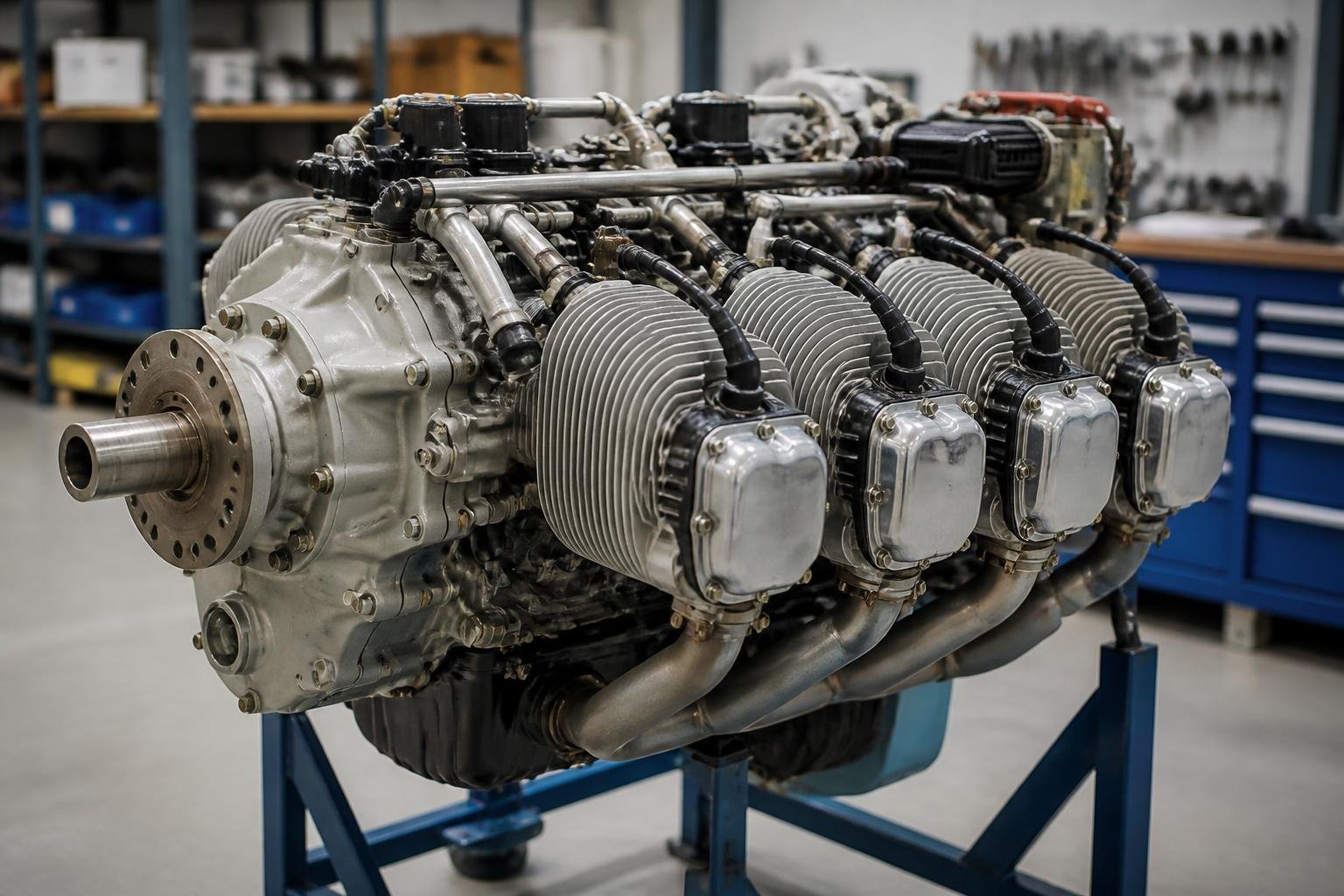
Time Between Overhaul is the interval published by an engine manufacturer as guidance for overhaul planning. It is commonly expressed in flight hours, but may also include calendar recommendations or conditions that affect the interval. The applicable value is not safely assumed from a similar aircraft: it depends on the exact engine model, configuration, approval status, manuals and relevant service information.
For many piston engines, the familiar hourly TBO figure provides a useful reserve-planning benchmark. It does not guarantee that every engine will require overhaul at that exact hour, nor does it prove that an engine below that figure is healthy. Operating environment, corrosion exposure, oil-change practice, temperature management and flight frequency all influence the condition found during maintenance.
Published documentation may contain different guidance for normal use, commercial operations, infrequently operated engines, or engines enrolled in an approved maintenance programme. Calendar recommendations matter because seals, hoses, corrosion risk and internal preservation are not governed by tachometer time alone. Buyers should ask which revision of the manufacturer’s guidance applies and whether any supplements, service bulletins or authority requirements change the planning picture.
TBO also varies substantially by engine category. Piston-engine guidance is often discussed in hours and calendar age. Turbine and turboprop engines may have scheduled hot-section inspections, life-limited parts, cycle limits and programme-specific requirements in addition to overhaul intervals. Rotorcraft powerplants must be considered alongside the aircraft’s component life limits and the applicable maintenance programme. The correct question is not simply “What is the TBO?” but “Which limits, inspections and records govern this installed engine?”
Term | Practical buyer meaning |
TBO | Published overhaul-planning interval for the applicable engine and operating context. |
SMOH | Hours accumulated since a recorded major overhaul. |
STOH | Hours accumulated since top-end maintenance, usually involving cylinders and associated parts. |
SMOH Meaning and What It Does Not Reveal

SMOH means Since Major Overhaul. It is generally the time accumulated from the return to service after a qualifying major overhaul of that engine. In a listing, it can be a useful starting point for estimating the engine’s position within its overhaul cycle. It is not, however, a shorthand for engine quality, remaining life or current condition.
A buyer should identify the overhaul facility, date, engine serial number, invoice and maintenance release associated with the stated SMOH. The logbook entry should support the hour figure and describe the work performed. An invoice can help explain whether cylinders, crankshaft, camshaft, accessories and other components were repaired, replaced, overhauled or retained within allowable limits. It can also reveal whether work was carried out by an appropriately rated facility or under other permitted maintenance arrangements.
Major-overhaul scope can vary within the technical and regulatory requirements applicable to the engine. Parts may be new, serviceable, reconditioned or repaired as permitted. Accessories may have separate overhaul histories. Test-cell documentation, break-in instructions and warranty terms, if any, are useful evidence but are not substitutes for an independent evaluation of the installed engine.
SMOH should not be confused with “zero-time.” A factory-new engine has its own new-time history. A factory-remanufactured or factory-overhauled engine may be documented under the manufacturer’s terminology and records. A field-overhauled engine remains an engine with its documented prior history, even where its time since major overhaul is correctly recorded as zero at return to service. Ask the seller to use the precise description shown in the records.
Low SMOH alone cannot establish quality. A low-time engine may have been inactive for a long period, improperly preserved, exposed to moisture, or operated only briefly after maintenance. Review the date of overhaul, post-overhaul utilisation, oil and filter history, any cylinder work and the findings of a pre-buy inspection.
STOH Meaning: Time Since Top Overhaul
STOH means Since Top Overhaul. A top overhaul usually describes work concentrated on the engine’s upper end, commonly including cylinders, pistons, rings, valves, valve guides and related valve-train items. The exact content must be confirmed from work orders and logbook entries because “top overhaul” can be used broadly in informal conversation.
Bottom-end components are typically outside a top-overhaul scope. Depending on engine design and the specific work performed, this may include the crankshaft, connecting rods, bearings, camshaft, crankcase and other internal components. Therefore, a low STOH figure does not reset SMOH, erase the engine’s total time, or mean the engine has received a major overhaul.
Cylinder work can occur well before TBO for many reasons. A cylinder may require attention after a compression concern, valve issue, corrosion finding, oil-consumption trend, damage or an inspection result. Some engines receive individual cylinder replacement rather than a complete top overhaul. These distinctions matter because they affect the technical story and the financial interpretation of the listing.
Request the work order, cylinder serial or part information where recorded, compression data before and after the work, and the maintenance release. Post-maintenance operating history is also valuable. A few hours after cylinder installation may be less informative than a documented period of appropriate break-in and normal follow-up. Engine-monitor data can add context when available, but should be interpreted by someone familiar with the engine and aircraft type.
STOH is supplementary information. It may explain recent cylinder-related maintenance and help a buyer ask better questions, but it is not a substitute for SMOH, total engine time, a review of the lower-end history, or a proper pre-buy inspection.
Other Engine-Time Figures Buyers Need to Read
Aircraft listings often contain several time figures, each attached to a different component or maintenance event. Treat every figure as a label that needs a documented starting point. Total time since new, sometimes called total time in service, describes the engine’s complete recorded operating history. It remains relevant even after an overhaul because it can help frame component history and record continuity.
Time since factory remanufacture or factory overhaul should be recorded separately from SMOH if the documentation uses those terms. Buyers should also note time since new or overhauled cylinders, magnetos, turbochargers, fuel-system components and, for turbine engines, time since hot-section inspection. These events may reduce a specific maintenance exposure without changing the engine’s overall time status.
Propeller time since overhaul deserves separate attention. A propeller has its own maintenance requirements, calendar considerations and records. It should not be assumed that an engine overhaul included a propeller overhaul, even if both occurred near the same date.
Calendar time since overhaul can be as meaningful as operating hours, particularly for engines that have flown little. Long periods of inactivity require questions about storage environment, preservation procedures, periodic turning or run procedures where appropriate, and subsequent inspection findings. Tach time and Hobbs time may differ because they measure time differently. The critical issue is whether the figures used for maintenance tracking agree with the logbooks, work orders and aircraft records.
Confirm total engine time, SMOH and STOH independently.
Separate engine, propeller and accessory maintenance histories.
Compare calendar dates with recorded hours and utilisation.
Investigate unexplained differences between tach, Hobbs and logbook entries.
TBO Is Not an Automatic Grounding Limit
TBO is often misunderstood as an automatic grounding limit. In many contexts, it is a manufacturer-recommended overhaul interval rather than a universal mandatory retirement point. That distinction does not mean a buyer should dismiss it. It means the legal and maintenance consequences depend on the aircraft, engine, jurisdiction, operating rules and approved maintenance programme.
Mandatory life limits, airworthiness directives and approved maintenance requirements are different from a general overhaul recommendation. An applicable airworthiness directive may require a specific action regardless of hours remaining to TBO. Certain components may have mandatory replacement or inspection limits. Commercial operations and some organised maintenance programmes can impose requirements that differ from those applied to a privately operated aircraft.
Where permitted by the applicable authority and maintenance framework, on-condition operation may be possible. This normally requires more than a casual judgment that the engine “runs well.” It may involve regular inspection, maintenance-record review, performance monitoring and the judgment of appropriately qualified maintenance personnel. The applicable rules should be confirmed for the aircraft’s state of registration and intended operation.
Buyers should ask the aircraft’s maintenance organisation or a type-qualified independent mechanic to explain the relevant requirements before completing a transaction. No engine should be assumed airworthy, legally operable or suitable for continued service from its hour total alone. Condition, records, required inspections and regulatory compliance must all be considered.
How Remaining TBO Affects Price and Purchase Negotiations
Remaining TBO is commonly calculated by comparing documented hours since major overhaul, or another relevant maintenance starting point, with the applicable published overhaul guidance. The calculation is useful for planning, but it is only the beginning of a valuation analysis. It assumes the stated hours are supported, the correct interval has been used and no calendar or condition factors materially change the buyer’s likely expenditure.
An engine near TBO presents a foreseeable capital-cost factor. A buyer may need to budget for overhaul, replacement, removal and installation, accessory work, downtime and potential findings outside the original estimate. This does not automatically make the aircraft unsuitable. A buyer whose mission is limited, who has a realistic reserve and who values the airframe, equipment or configuration may reasonably consider it. The purchase terms should reflect the known exposure without pretending that an exact overhaul outcome can be predicted.
Do not equate an advertised asking price, an auction bid or a seller expectation with supported market value. A bid is simply a bid at that point in the process. Engine condition is one component of value alongside airframe condition, damage and corrosion history, avionics, interior, paint, propeller status, location, records and demand for the specific type.
Simplistic price-per-hour calculations can be misleading. Two engines with identical SMOH may differ materially in model desirability, overhaul provenance, calendar age, installed accessories, cylinder history and supporting data. A documented recent overhaul from a recognised facility may justify closer attention, but it still requires verification. Conversely, a low-priced aircraft near TBO may be appropriately priced for a buyer who has planned for its engine reserve rather than evidence of an unusually favourable bargain.
Engine Usage Patterns That Can Matter More Than the Hour Total
Usage history often explains more than a single time figure. Regular operation can help keep an engine’s oil circulating and bring it to operating temperature, but it is not a guarantee against wear or improper operation. Prolonged storage can increase concern about internal corrosion, seals, fuel-system condition and the adequacy of preservation, particularly in humid or coastal environments.
Frequent short flights may not provide sufficient time for oil temperature to stabilise and moisture to dissipate. Infrequent use can create a different set of risks. High-power work, repetitive training, agricultural operations and commercial duty cycles may place distinct demands on an engine despite relatively modest accumulated hours. The buyer should seek a factual operating narrative rather than assume that all flight hours are equivalent.
Engine-monitor downloads, when available, can show trends in cylinder-head temperature, exhaust-gas temperature and other recorded parameters. They are valuable context, not an independent maintenance release. Oil-analysis reports may show trends over time; a single report is less persuasive than a consistent series. Oil-filter or screen inspections, compression testing and borescope findings should likewise be read in their maintenance context rather than treated as isolated pass-or-fail numbers.
Ask how recently the aircraft has flown, how often it has flown during the preceding years, where it was stored and whether any preservation was documented. Compare the answers with dated logbook entries, invoices and inspection records. A coherent operational history is usually more useful than a reassuring phrase in an advertisement.
Logbooks and Documents to Request Before Making an Offer
Request complete airframe, engine and propeller logbooks before making an offer or bidding where the process allows. A complete set lets the buyer trace the engine’s installation, overhaul history, inspection entries, repairs and recurring issues. Review continuity of dates and hours, and investigate gaps rather than accepting estimates as substitutes for missing records.
For a major or top overhaul, ask for the invoice, work scope, return-to-service documentation and any test or break-in information. These documents can clarify the facility, date, parts used, accessories addressed and work performed. If the engine was exchanged, confirm that the installed engine serial number matches the records and that the relevant time basis is clearly stated.
Current maintenance status should include annual or other required inspection records, recurring inspection compliance and known discrepancies. Where available, request engine-monitor downloads, oil-analysis reports, borescope images and compression-test records. These are supporting evidence, not guarantees, but they can help an independent inspector identify useful questions.
Parts traceability and work-scope detail may be especially significant after substantial maintenance. Ask whether replacement cylinders, magnetos, propeller work or turbocharger service have their own documentation. Missing records can affect value, maintenance planning and an aircraft’s future marketability. The appropriate response is not necessarily to reject the aircraft, but to understand the risk, seek specialist advice and ensure the proposed transaction terms reflect what cannot be verified.
Using a Pre-Buy Inspection to Verify Engine Claims
A pre-buy inspection is the buyer’s opportunity to test listing claims against records and the aircraft’s present condition. Select an independent mechanic or maintenance organisation with experience in the aircraft and engine type. A type specialist may recognise recurring issues, maintenance practices and documentation patterns that a general review could miss.
Begin with record review before the physical inspection. The inspector should be able to compare engine model and serial number, recorded times, overhaul entries and current installation details. This sequence helps focus the inspection on discrepancies, gaps and high-value questions rather than relying on a brief engine run.
A pre-buy scope may include a borescope examination, compression or leak-down testing, oil-filter inspection, fluid checks and engine-run observations as appropriate. Each finding needs context. Compression numbers alone do not establish cylinder health; borescope evidence, leakage path, engine temperature and maintenance history can all matter. An engine run may reveal useful operational observations, but it cannot prove internal condition or future reliability.
Ask for written findings that state the scope, limitations, observed discrepancies and projected maintenance items. A pre-buy inspection is not the same as an annual inspection, an appraisal or a seller disclosure. It does not eliminate buyer due diligence, and its conclusions are limited by the agreed scope and the aircraft’s accessible condition at the time. Use it to make an informed transaction decision, not to obtain an unsupported assurance.
Questions to Ask When an Aircraft Listing Shows TBO, SMOH or STOH
When a listing states TBO, SMOH or STOH, ask questions that turn a headline number into verifiable information. Start with the exact engine model and the manufacturer guidance that the seller or broker is using. Confirm whether the stated limit is an hourly recommendation, includes calendar guidance or is affected by the intended operating category.
What are the exact engine model and installed engine serial number?
What is the documented total time, SMOH and STOH, and what records support each figure?
When was the last major or top overhaul completed, by whom and to what documented scope?
Were cylinders, magnetos, turbocharger components or other accessories replaced or overhauled separately?
What discrepancies remain open, and what recent maintenance has been recommended?
How has the aircraft been stored and used, particularly during the last several years?
Are complete engine, airframe and propeller records available for review before bidding or submitting an offer?
Seek answers supported by documentation, not memory. If a seller does not have a requested record, note the absence plainly and ask an independent maintenance professional how that uncertainty should affect inspection scope and budget. This disciplined approach is more valuable than treating a low-hour figure as conclusive.
Making a Sound Engine-Hour Decision
A sound engine-hour decision is balanced rather than mechanical. Start with hours, but include calendar age, record continuity, overhaul provenance, use pattern, inspection findings and the engine’s applicable maintenance requirements. Consider the propeller separately, as its overhaul status and calendar exposure can create its own near-term cost.
Build a realistic reserve for expected engine and propeller work. A lower-priced aircraft with an engine near TBO can suit a buyer who understands the likely financial exposure, has access to qualified maintenance support and intends to fly a mission compatible with that plan. It may not suit a buyer who needs predictable immediate utilisation without a substantial maintenance contingency.
Equally, documented overhaul quality deserves careful consideration. A clear work scope, traceable records, sensible post-overhaul operation and favourable independent inspection findings provide more useful confidence than SMOH alone. They do not remove the need to assess calendar time, accessories, installation condition and the complete aircraft.
Before transaction completion, obtain type-qualified maintenance advice and compare the listing records with independent pre-buy findings. The aim is not to find an engine with the most attractive number, but to understand the engine you are buying, the risks you are accepting and the maintenance reserve your ownership plan requires.

Comments
No comments yet
Be the first to share your thoughts!