

 Bad Vöslau
 Kirn
Kirn


 Florida

The Cessna 414 vs 421 decision is primarily a choice between capability, complexity and the annual budget needed to support both. A well-chosen 414 can be a capable owner-flown pressurized twin for regional business or family travel. A 421 generally brings more cabin space, stronger performance and greater system complexity, but demands a more deliberate maintenance, training and reserve plan. The right answer is rarely determined by the nameplate alone: exact variant, maintenance history, modifications, payload requirements and the buyer’s intended utilization matter more than a broad model reputation.
Cessna 414 vs Cessna 421 at a Glance

Both aircraft families occupy the serious end of piston-twin ownership. They offer pressurized cabins, substantial cross-country capability and systems that require disciplined operation. The 414 is commonly viewed as the more moderate route into this category, particularly for owner-pilots who need comfortable regional transport without routinely filling a larger cabin. The 421 is the larger and generally faster alternative, aimed at missions where carrying more people, more baggage or covering longer sectors efficiently has genuine value.
| Decision area | Cessna 414 family | Cessna 421 family |
|---|---|---|
| Typical ownership proposition | Moderate pressurized-cabin twin | Larger, higher-capability pressurized twin |
| Mission emphasis | Owner-flown regional travel | Frequent business transport and larger loads |
| Systems commitment | Complex, but generally less demanding than a 421 | More systems-intensive, especially with geared engines |
| Buyer priority | Condition, payload and manageable reserves | Capacity, block speed and specialist maintenance support |
A useful comparison begins with a mission sheet: annual hours, normal stage length, passenger count, baggage, runway environment, altitude needs and dispatch expectations. Then compare specific aircraft against that sheet. A late, well-documented 414A may suit a buyer better than an early or poorly supported 421, while a properly maintained 421 can be the rational choice where its cabin and speed are used consistently.
The Family History and Variant Differences That Matter
The 414 Chancellor line evolved materially during its production life. Buyers should not treat the original 414 and the 414A Chancellor as interchangeable. The 414A introduced important changes that can affect performance expectations, fuel arrangements, weight planning, equipment choices and market comparison. Exact approved modifications can further change how a particular aircraft compares with its original configuration.
The 421 Golden Eagle family also progressed through several versions, including early aircraft, the 421B, 421C and later developments. The family is often discussed as one aircraft, but it is better understood as a series of related pressurized twins with meaningful differences in engines, fuel systems, weights, cabin arrangements and equipment. Later aircraft may offer desirable refinements, but condition and documentation still outweigh a simple preference for a later letter suffix.
Engine configuration is especially important in this comparison. Many 421 variants use Continental geared-engine installations, which are central to the aircraft’s performance and ownership profile. The 414 family uses different Continental turbocharged engine arrangements. Those differences affect maintenance planning, operating technique, specialist-shop access and the records a buyer should request.
- Confirm the exact model designation and serial number.
- Request the current equipment list and approved modification records.
- Identify engine model, time since overhaul, calendar history and overhaul provider.
- Verify gross-weight changes, fuel-system modifications and supplemental type certificates.
- Compare the aircraft’s approved documentation rather than relying on advertisement shorthand.
For either family, an aircraft’s present configuration is the relevant configuration. A serial-number-specific review prevents buyers from assuming that a feature, payload figure or performance claim from another variant applies to the aircraft under consideration.
Cabin Size, Seating and Passenger Experience
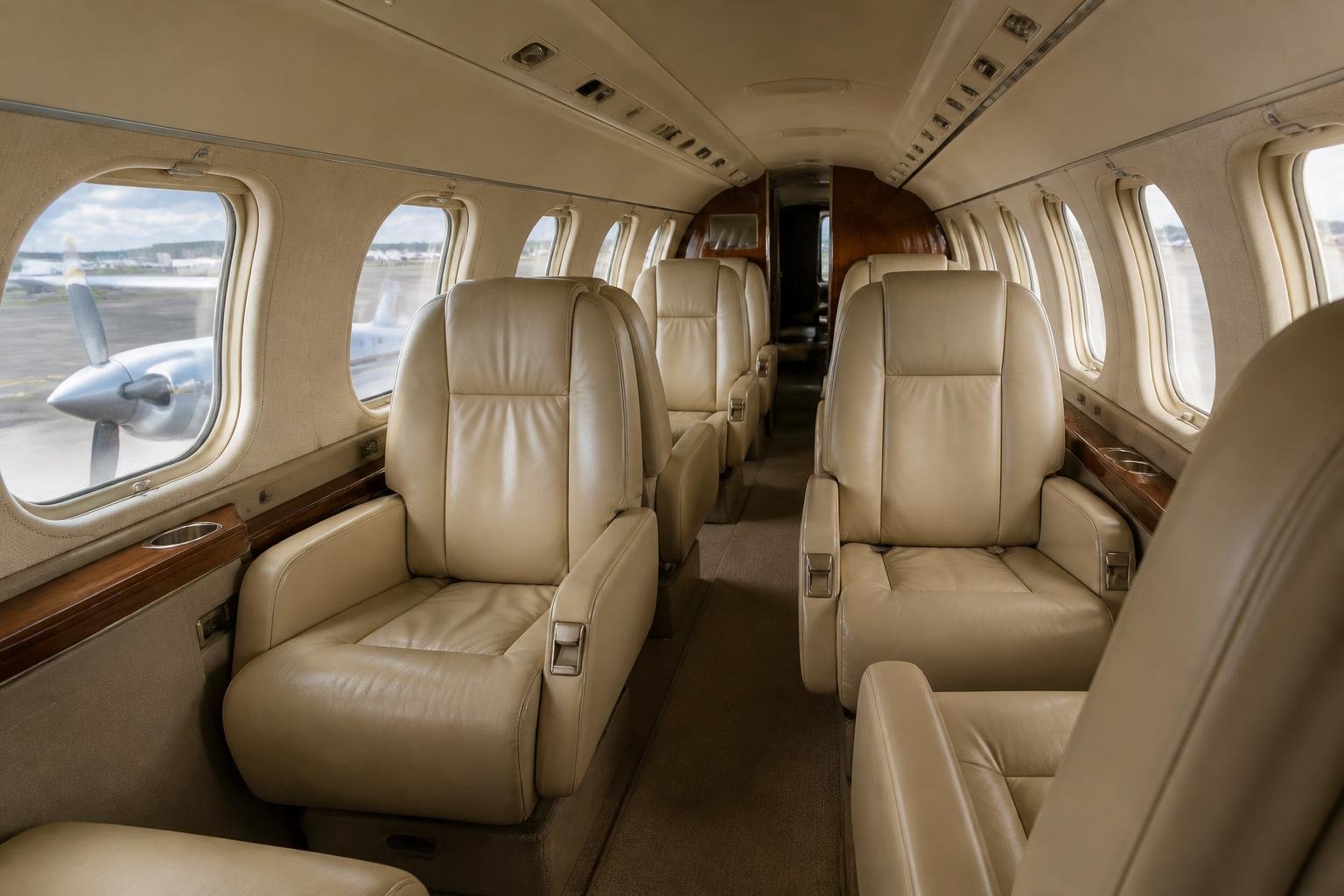
Cabin requirements should be judged by how the aircraft will actually be used, not by the maximum number of seats installed. A couple travelling with modest baggage has a different requirement from an operator carrying four adult passengers, cases, equipment and fuel for a longer sector. Access, seat layout, baggage loading and the practical ability to use all occupied seats within weight-and-balance limits are often more important than the brochure seating count.
The 421 family generally offers the stronger proposition for buyers who place a high value on cabin volume and a more substantial passenger experience. Depending on variant and interior, it can better accommodate larger passenger loads and broader business-travel expectations. Club seating and lavatory arrangements can be attractive features, but both are highly dependent on the individual interior and equipment installation.
A 414 remains practical for owner-flown business and family travel, particularly when typical loads are moderate. It offers the meaningful comfort benefit of a pressurized cabin at altitude without necessarily requiring the capacity of the larger aircraft. Pressurization can reduce the fatigue associated with higher cruise levels, but it also introduces components and maintenance obligations that deserve close inspection.
Interior refurbishment is valuable when executed well, yet it should not be allowed to obscure weight-and-balance consequences. Heavy seating, soundproofing, cabinetry, entertainment equipment and baggage can reduce useful flexibility. Obtain the current weight-and-balance report, review its amendment history and model representative loading cases before treating a cabin layout as operationally practical.
Performance, Altitude and Trip Planning

Published cruise figures are a starting point, not a dispatch plan. Cruise speed in both the Cessna 414 and Cessna 421 families varies by variant, altitude, power setting, temperature, aircraft condition, installed modifications and the operator’s engine-management practices. A buyer comparing listings should request real operating data where available, then independently build conservative block-time estimates.
Pressurization permits operation at altitudes where weather avoidance, smoother air and favorable winds may improve a trip. The practical benefit is not simply a higher indicated cruise figure. It is the ability to use altitude more comfortably, subject to route, weather, oxygen provisions, aircraft limitations and pilot proficiency. High-altitude operation also makes sound systems knowledge and abnormal-procedure training essential.
Range is a payload-and-reserve question. Start with usable fuel as documented for the exact aircraft, then deduct a conservative reserve appropriate to the operation. Add realistic taxi, climb, diversion and holding margins before deciding what payload remains. A claimed long range has limited value if it requires reduced passengers, minimal baggage or reserve assumptions the buyer would not normally accept.
| Trip-planning factor | Why it matters |
|---|---|
| Power setting | Changes fuel flow, speed, engine temperatures and endurance. |
| Altitude and winds | Can materially alter groundspeed and fuel required. |
| Density altitude | Affects takeoff, climb and runway margins. |
| Payload | May limit fuel or require a different loading plan. |
| Aircraft condition | Engine health, rigging and airframe cleanliness influence real results. |
For regional sectors, compare door-to-door block time rather than cruise speed alone. The 421 may save meaningful time on repeated business missions, while a 414 may deliver a satisfactory trip with lower ownership exposure. Runway performance and climb margins deserve specific attention for short fields, high-elevation airports and hot-weather departures.
Engines, Propellers and System Complexity
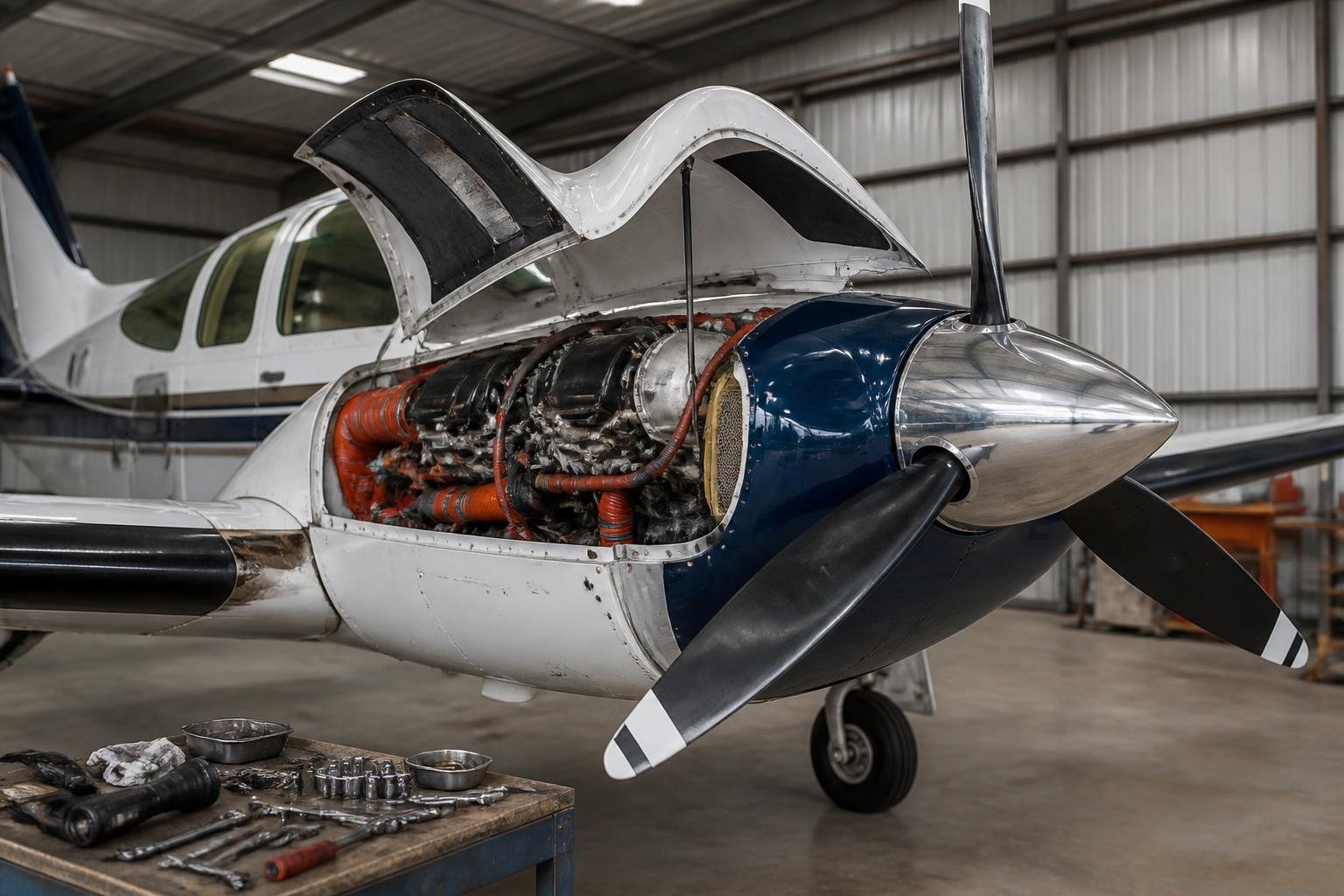
Continental turbocharged engine families are central to both aircraft lines, but the installation details and ownership consequences differ. The 421’s geared-engine configuration is a defining consideration. It can support the performance expected of the model, while requiring maintenance personnel who understand the engine, gearbox-related requirements, operating practices and applicable documentation. Parts availability, overhaul planning and specialist support should be investigated before an offer is made, not after delivery.
The 414’s engine configuration is generally regarded as a less complex ownership proposition than the geared 421 arrangement, but it is still a turbocharged, pressurized twin with no room for casual maintenance planning. Buyers should avoid reducing this comparison to a simple statement that one engine is “cheap” and the other “expensive.” The relevant question is whether the exact aircraft has been maintained correctly, operated consistently and supported by a realistic reserve plan.
Propeller condition requires the same level of attention. Review overhaul dates, time since overhaul, calendar limitations, propeller logbooks, recurring discrepancies and the condition of hubs, blades and governors. A propeller reserve should be separate from the engine reserve, particularly when the aircraft is nearing a calendar-driven event.
- Review engine logbooks and overhaul invoices for scope and traceability.
- Ask for engine-monitor data, trend information and recent oil-analysis records if available.
- Inspect turbocharging, induction, exhaust, cooling baffles and engine instrumentation.
- Confirm fuel-system operation and identify any deferred fuel-related discrepancies.
- Use a maintenance provider experienced with the selected model and engine installation.
Maintenance expertise is not an optional extra. A type-experienced shop can distinguish normal aging from a potentially expensive issue, and can identify work that may be required soon even if the aircraft has recently passed an inspection.
Operating Costs: Build a Mission-Based Budget
Operating cost comparisons should begin with the intended mission and annual utilization. Fuel burn is visible and important, but it is not enough to decide between a 414 and 421. Two aircraft with similar purchase prices can create very different first-year and long-term ownership exposure because of engine status, propeller timing, avionics condition, pressurization maintenance, insurance requirements and deferred work.
Fixed costs commonly include hangarage, insurance, recurrent training, subscriptions, inspections and administrative expenses. Variable costs include fuel, oil, engine reserves, propeller reserves, maintenance labor and unscheduled repairs. The 421 usually justifies a larger allowance for system complexity and specialized maintenance support. That does not mean every 421 will cost more in every year; an aircraft with recently documented major work may have a different near-term profile from one with multiple upcoming events. It does mean that reserves should be planned conservatively.
Build three separate budgets. The acquisition budget covers purchase, tax where applicable, closing, ferrying and inspection. The catch-up budget covers discrepancies and calendar-driven work discovered during diligence. The operating budget covers the annual cost of using and maintaining the aircraft. Combining these categories can make an aircraft appear affordable when it is only affordable if no unexpected work is needed.
Location and utilization matter. Coastal storage, infrequent flying, remote maintenance access, high insurance requirements and limited local type experience can alter costs materially. The most reliable foundation is documented maintenance history: invoices, component status, inspection findings and a shop’s forward-looking assessment. Generic online estimates can help frame questions, but they should not replace an aircraft-specific budget.
Maintenance Records and Pre-Buy Inspection Priorities

Records are part of the aircraft. Continuous, legible logbooks and organized major-maintenance documentation allow a buyer and inspection shop to understand what has been done, what remains uncertain and which calendar or time-based events are approaching. Gaps do not automatically disqualify an aircraft, but they should be explained, priced and assessed by an experienced professional.
Pressurization deserves dedicated attention. A pre-buy should consider evidence of cabin differential performance, leak checks where appropriate, door and window seals, outflow controls and related system condition. Aging pressurized aircraft also warrant a careful corrosion evaluation in areas identified by the inspection shop as relevant to the airframe and its operating history.
- Establish logbook continuity, prior damage history and repair documentation.
- Inspect landing gear, hydraulics, brakes, electrical systems and de-ice equipment.
- Review engine trends, oil analysis, borescope findings and overhaul paperwork.
- Test avionics, ADS-B equipment, autopilot functions and associated annunciation.
- Identify deferred discrepancies, repetitive squawks and upcoming inspections.
- Review environmental, pressurization and cabin-system operation.
An appraisal, a records review and a pre-buy inspection serve different purposes. An appraisal may inform value; a records review assesses documentation; a pre-buy is a physical and functional evaluation scoped for a prospective buyer. None should be assumed to replace the others. The pre-buy should be independent, agreed in writing and performed by a shop with meaningful experience of the specific 414 or 421 variant.
Avionics, Training and Owner-Operator Workload
A modern panel can improve situational awareness and support contemporary IFR flying, but avionics upgrades are not substitutes for sound maintenance records or healthy engines. Assess the installed equipment as a system: navigation capability, displays, radios, transponder and ADS-B status, autopilot integration, electrical capacity and ongoing support. A reliable legacy installation may be operationally appropriate, while a partial upgrade can create integration and maintenance complications.
For single-pilot IFR use, autopilot quality and redundancy merit serious attention. These aircraft have substantial workloads during departures, arrivals, weather deviations and abnormal procedures. Weather radar, ice-protection equipment, oxygen backup arrangements and annunciation should be evaluated according to the buyer’s intended operation, not selected merely because they appear desirable on a specification sheet.
Initial and recurrent training is a core ownership expense. Insurers may require specific experience, approved transition training, recurrent instruction or mentoring before offering acceptable terms. Pilots moving from lighter piston twins or lower-complexity aircraft should allow time for systems knowledge, high-altitude procedures, engine management, pressurization operation and emergency drills. A 421’s greater complexity can increase the benefit of structured type-specific training and a disciplined standard operating procedure.
Choosing by Mission: When the 414 Makes More Sense
The 414 often makes sense for an owner-pilot who needs a pressurized twin for regional transport but does not routinely require the 421’s larger cabin or higher capability. It can be a logical choice for business travel with moderate passenger and baggage loads, family trips where comfort matters, and missions where a sensible balance of speed, cabin utility and ownership reserves is preferred.
This is not a low-complexity aircraft in the broader sense. It remains a turbocharged, pressurized twin requiring serious recurrent training, thorough maintenance and realistic financial reserves. It is, however, generally the more moderate path within this particular comparison. A disciplined owner-operator with access to model support, an experienced inspection shop and a well-defined mission may find that it delivers the desired step up without paying for unused capability.
The 414 is especially compelling when annual hours are moderate, sectors are regional and typical loads do not regularly press against available payload. If the extra cabin room and block speed of a 421 will seldom be used, the added commitment may not be justified. Conversely, a lower entry price should never outweigh airframe condition. A well-documented aircraft with credible maintenance history is usually the better candidate than a superficially cheaper example with uncertain future work.
Choosing by Mission: When the 421 Is the Better Fit
The 421 is the better fit when its additional capability has a clear operating purpose. Frequent longer sectors, larger passenger loads, meaningful baggage requirements and higher cabin expectations can make the larger platform rational. For business transport, a faster block time and more accommodating cabin may carry measurable value when the aircraft is flown often enough to use those strengths.
Payload capability must still be verified using the exact aircraft’s approved weight-and-balance information, usable fuel and intended reserve policy. A 421 cannot be evaluated honestly from a generic seating description. Model a realistic day: occupants, bags, fuel, alternate planning and the runway and weather conditions likely to be encountered.
Ownership requires tolerance for specialized maintenance, training and system reserves. The strongest 421 ownership situation usually includes an established type-experienced maintenance network, sound documentation and a buyer prepared to manage a sophisticated piston aircraft proactively. It is not a sensible purchase merely because its acquisition price appears attractive relative to a turbine aircraft or because its cabin is appealing on the ramp.
Buyers whose annual utilization is low, whose trips are short, or whose normal loads are light should be careful not to acquire complexity that the mission cannot support. In those circumstances, the 414 or a different aircraft category may produce a more sustainable ownership experience.
How to Compare Individual Cessna 414 and 421 Listings
Start each listing comparison with variant, serial number, engine configuration and modification status. Then build a component-status sheet showing airframe time, engine time, propeller time, overhaul dates, inspection status and supporting records. Time since overhaul alone is incomplete: calendar age, overhaul quality, utilization since overhaul and the documentation behind the number all matter.
Recent inspections should be read alongside deferred discrepancies and expected calendar-driven work. Interior, paint and avionics influence usability and presentation, but neither a polished cabin nor a modern display should be treated as a substitute for maintenance. Ask what work was completed, who performed it, whether invoices are available and what the next maintenance provider expects to see.
Ownership history, storage environment and aircraft location can affect diligence. A distant aircraft may require travel, a local independent inspection arrangement and a plan for records access before committing substantial funds. Seller documentation should be reviewed methodically and any unresolved point should be captured as an inspection item or a purchase-condition issue.
Comparable-market research also needs discipline. Asking prices reflect seller expectations; auction bids reflect bids at a particular point in time; completed transactions may include terms not visible publicly; and appraisals have their own scope and assumptions. None alone establishes market value. Relevant Cessna listings can be useful starting points for documentation-led evaluation, provided the buyer compares like with like.
A Practical Decision Framework Before Making an Offer
Before making an offer, define the mission in operational terms: expected annual hours, normal stage length, passengers, baggage, runway conditions, altitude requirements and dispatch flexibility. Then model total ownership exposure over several years rather than focusing only on purchase price. Include a first-year maintenance reserve that reflects the aircraft’s records and inspection findings.
- Obtain insurance indications before reducing the shortlist to one aircraft.
- Review logbooks, invoices, component status and modification records independently.
- Commission a model-specific pre-buy inspection with a clear scope.
- Budget for transition training, recurrent training and early maintenance findings.
- Confirm access to a suitable maintenance provider before closing.
- Compare representative loading and trip-planning cases for each candidate.
The most suitable aircraft is usually not the highest-specification example or the lowest-priced one. It is the airframe with documented condition, supportable maintenance requirements and a capability level that matches the mission without routinely imposing unused complexity. For many buyers, that conclusion will favor the Cessna 414. For others with regular demand for speed, cabin capacity and longer business sectors, a well-supported Cessna 421 can be the more appropriate tool.

Comments
No comments yet
Be the first to share your thoughts!