
 Bad Vöslau
 Kirn
Kirn

 Florida

A Fouga Magister can be an exceptionally rewarding historic aircraft to own, but it is not a straightforward route into private jet flying. The appeal is clear: a compact, elegant two-seat trainer with twin turbojets and one of aviation’s most recognisable tail configurations. The commitment is less romantic. A prospective owner needs an aircraft with a usable civilian operating basis, complete records, specialist technical support, a realistic operating reserve and a disciplined plan for pilot proficiency. For most buyers, the quality of the individual aircraft and its support ecosystem matter more than the attraction of the type itself.
The Fouga Magister Ownership Decision in Brief
The Fouga CM.170 Magister is a distinctive post-war jet trainer that offers a rare combination of historic significance, true twin-engine jet operation and a two-seat cockpit suited to carefully planned familiarisation flights. Its slender fuselage and V-tail make it immediately identifiable, while its military-training origins give it a purposeful, direct flying character that differs substantially from a modern business jet or touring aeroplane.
Ownership should be approached as a specialist historic-jet project, not as entry-level jet ownership. The aircraft’s age, original military configuration, turbojet engines and limited support base introduce requirements that are manageable only with preparation. A buyer must establish how the specific aircraft is registered, what maintenance and operating rules apply, who can support its systems and engines, and whether the intended home base can accommodate it.
Strong fit: an experienced turbine or jet pilot with access to qualified maintainers, appropriate insurance options and a meaningful contingency budget.
Possible fit: a collector using professional management or a well-structured shared-ownership arrangement with clear operating responsibilities.
Poor fit: a buyer seeking inexpensive jet hours, routine point-to-point transport or a low-maintenance weekend aircraft.
The first decision is therefore not simply whether a Fouga Magister for sale is attractive. It is whether the purchaser wants collectible acquisition, practical flight operation, or a combination of both. A static or display-focused aircraft can be a legitimate collecting proposition, but its requirements, value drivers and risks differ sharply from those of an aircraft intended for regular flight.
What the Fouga CM.170 Magister Is
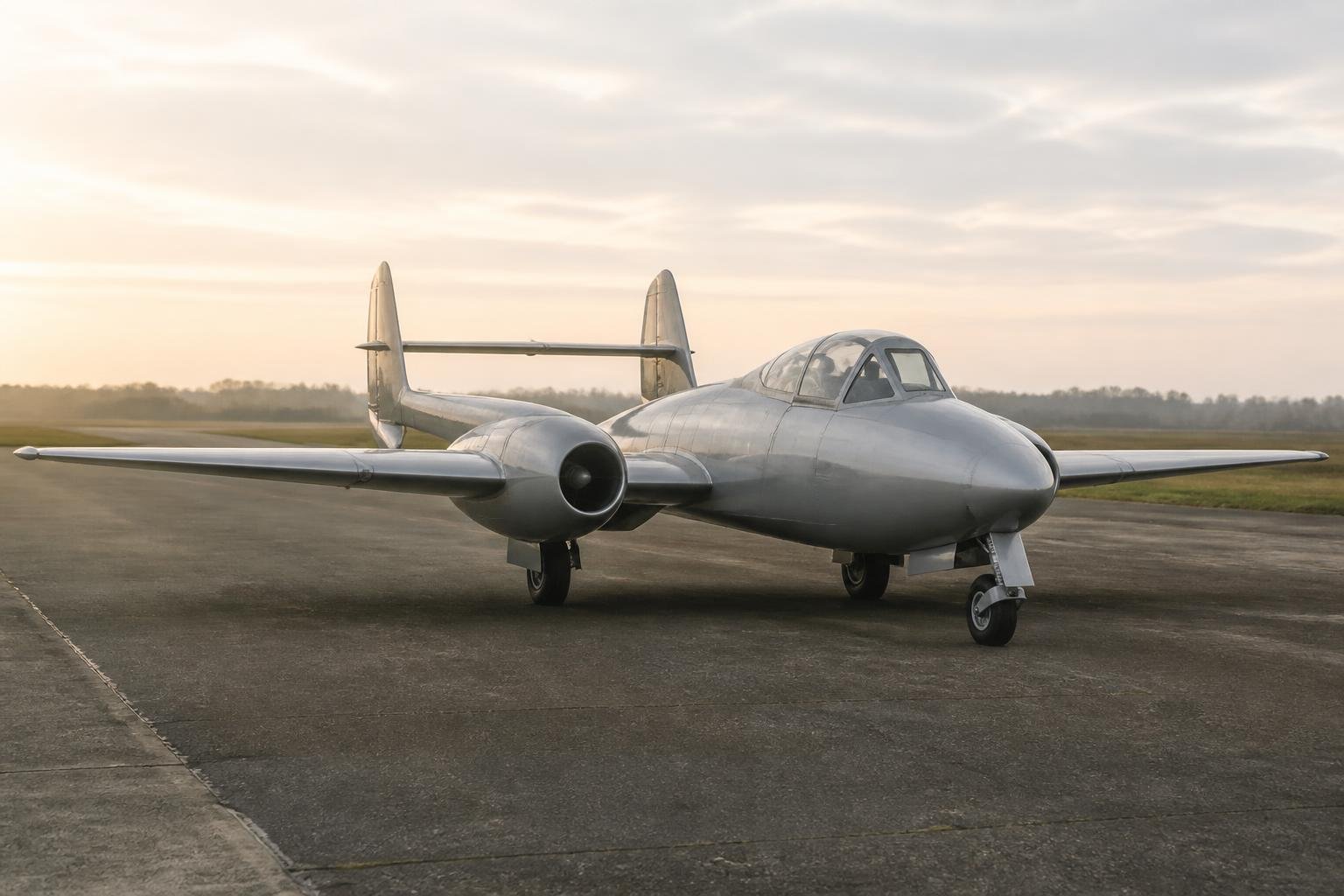
The Fouga CM.170 Magister was designed in France as a two-seat military jet trainer. It became associated with the transition from piston-powered training aircraft to the jet age and served with a range of air forces over a long production and operational period. Its most visible design feature is the butterfly, or V-tail, paired with a narrow fuselage and side-mounted engine intakes. Standard Magister variants use two small Turbomeca Marboré turbojets.
The type was developed as a trainer rather than a private transport aircraft. That distinction shapes nearly every ownership consideration: cockpit space, baggage capacity, systems design, runway planning, approach technique and dispatch expectations. It is a historic trainer with a practical civilian operating role only where the individual aircraft’s condition, approvals and owner support structure permit it.
Production-era variations, military customers, refurbishment programmes and later civilian conversions mean that no two surviving examples should be assumed to share the same configuration. Differences may include instruments, radios, navigation equipment, seats, armament-related removals, fuel-system details, brakes, electrical equipment and modifications made after military service. Some airframes have had sustained civilian care; others may have experienced lengthy storage, incomplete restoration or several changes of jurisdiction.
For that reason, model reputation is only a starting point. A buyer should give more weight to the aircraft’s serial identity, service and ownership history, maintenance documentation, civilian conversion record and present approval basis. The question is not merely “Is the Fouga Magister a good aircraft?” It is “Can this particular Magister be documented, maintained, insured and operated for my intended mission?”
Can a Civilian Own and Fly a Fouga Magister?
Civilian ownership may be possible, but the legal path depends on the country of registration, the aircraft’s documentation and its intended use. There is no universal civilian-operating template for former military jets. Before committing to a purchase, obtain advice from the relevant aviation authority, an aviation-law specialist familiar with the jurisdiction and a maintenance organisation that understands historic turbine aircraft.
An aircraft offered as a collectible may have a very different status from an aircraft approved for flight. Depending on the jurisdiction and individual history, a Fouga may be held in an airworthy civil category, a restricted or permit-based arrangement, an experimental category, or as a static display aircraft. Each route can affect who may maintain it, what inspections are required, what operating limitations apply and where it may be flown.
Confirm the current registration and the legal basis for its certificate, permit or operating authority.
Identify any conditions related to former military equipment, demilitarisation, ejection seats, radios, transponders and navigation equipment.
Review export, import, customs and title-transfer documentation before moving an aircraft across borders.
Ask insurers and the proposed airport early about underwriting, ramp access, fire cover, parking and noise restrictions.
Establish whether local rules affect formation activity, air displays, aerobatics or flights outside the state of registration.
Demilitarisation deserves particular care. Equipment may have been removed, disabled or retained under controlled conditions during prior ownership. The physical presence of a component does not establish that it is legal, serviceable or approved for civilian use. Similarly, a historic military paint scheme or provenance claim does not establish eligibility for a particular civil category. Documentation and the authority’s position control.
Who Is Suited to Fouga Magister Ownership?

The best-equipped owner is usually an experienced turbine or jet pilot who approaches the Magister with humility and a formal proficiency plan. Previous time in complex piston aircraft is valuable but does not, by itself, prepare someone for turbojet spool characteristics, energy management, high-workload arrivals, asymmetric considerations or the support disciplines of an ageing military-designed aircraft.
Suitable owners also have practical infrastructure. That means secure hangarage, an airport capable of accepting the aircraft, access to suitable fuel and ground equipment, and a maintenance provider with relevant experience. The availability of an instructor or mentor with meaningful type knowledge can be as important as the condition of the aircraft being considered.
Collector-operators should expect limited dispatch flexibility. Historic jets do not offer the same substitution options, parts availability or service-network depth as current-production aircraft. A sensible owner plans trips around weather, alternates, fuel availability, runway suitability and the likelihood that a technical issue may keep the aircraft away from home longer than expected.
Shared ownership can spread fixed costs and create a broader operating support network, but it must be structured carefully. Agreements should address qualification standards, recurrent training, scheduling, reserves, authority for maintenance decisions, insurance requirements and responsibility for defects discovered away from base. Professional management may reduce administrative burden, though it does not remove the owner’s need to understand the aircraft’s legal and financial position.
A Fouga is not a practical substitute for a modern travel aircraft. It may be very satisfying for local flights, heritage events and selected touring, but ownership is best suited to people who value stewardship and disciplined operation more than convenience.
Fouga Magister Performance and Mission Planning
The Magister was designed to train military pilots, not to carry luggage efficiently or provide airline-like dispatch reliability. Its performance should therefore be evaluated against the mission rather than against the expectations attached to a modern light jet. Consult the applicable flight manual, approved supplements and the records for the individual aircraft for reliable figures on speeds, fuel capacity, altitude limits, endurance and loading. Published values can differ with variant, modification state, measurement method and approval basis.
The two-seat cockpit is central to the aircraft’s appeal, but it limits practical payload. Baggage capacity is modest, and loading must be assessed against the specific aircraft’s approved weight-and-balance data. A two-person flight with headsets, survival equipment, charts, personal items and fuel can require more planning than buyers accustomed to four- or six-seat touring aeroplanes expect.
| Planning area | Why it matters for a historic jet | Buyer question |
|---|---|---|
| Fuel and reserves | Turbojet consumption and diversion requirements can quickly constrain endurance. | What usable fuel, reserve policy and real-world alternates suit the intended route? |
| Runway and braking | Surface condition, available distance and brake condition affect operational margin. | Does the home base and intended destination network suit the approved data? |
| Weather capability | Practical all-weather use depends on installed avionics and individual approvals. | What is approved, current and realistically supportable in the cockpit? |
| Payload | Seats do not equal useful carrying capacity. | Can the aircraft carry the people, fuel and equipment needed for the mission? |
Crosswind limits, pavement strength, taxi clearances and braking margins should be treated as operational planning questions, not assumptions based on the aircraft’s military past. Likewise, an aircraft equipped with modernised avionics is not automatically approved or suitable for every weather operation. Confirm the installed equipment, certification status, database support where applicable, inspection requirements and the pilot’s own competence.
Realistic civilian missions include local familiarisation flights, heritage-aircraft events, authorised formation activity, airshow participation where properly approved, and carefully selected touring. Missions become less realistic when they demand generous baggage, short-notice dispatch, marginal-weather utility or routine access to small, lightly supported airfields.
Powerplants, Systems and Parts Support
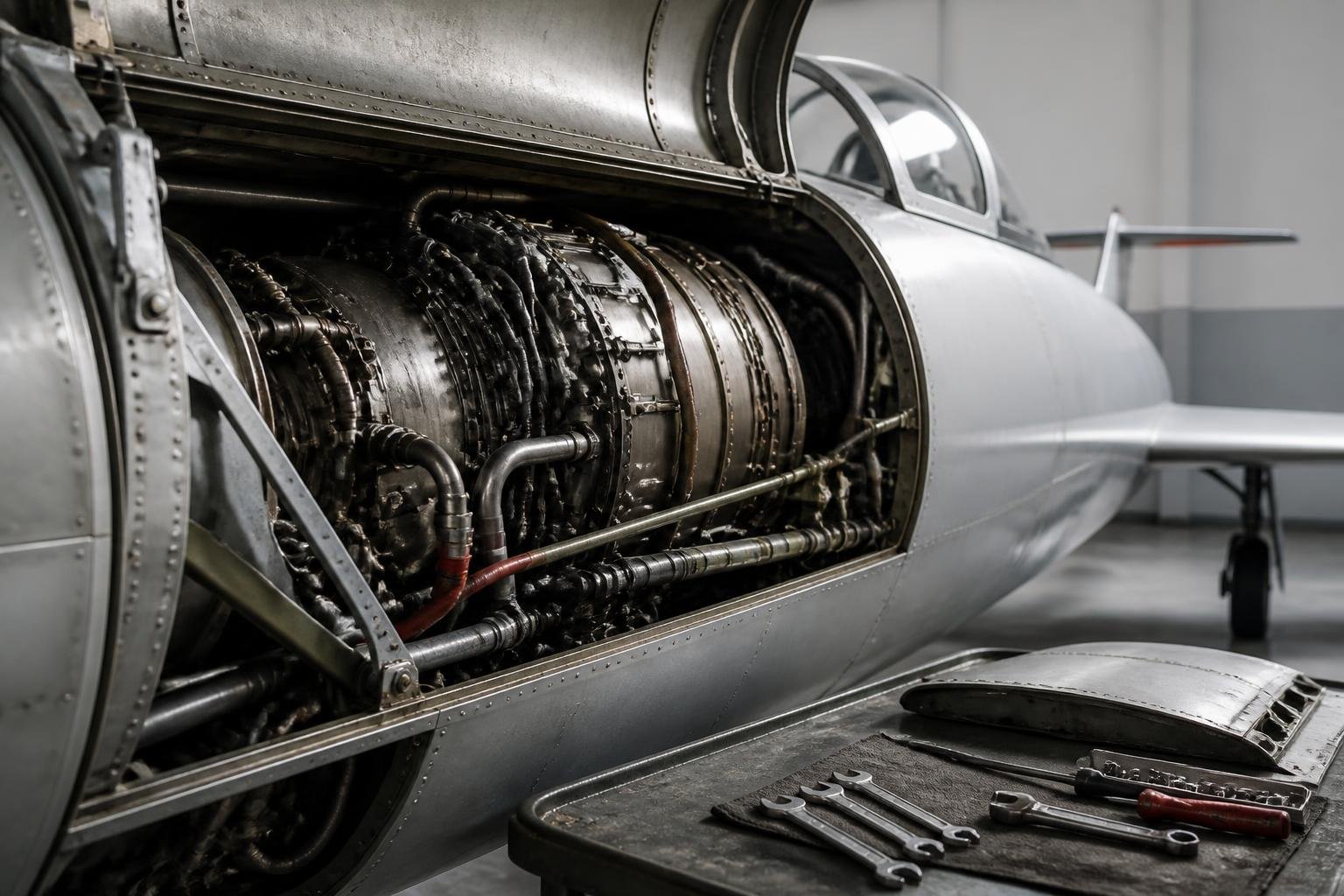
Standard Magister configurations are associated with twin Turbomeca Marboré turbojets. The engines are historically significant and compact, but their condition cannot be judged from appearance or a simple total-time figure. Buyers need to understand the relevant overhaul and inspection framework, recorded cycles where available, time since overhaul or major work, storage history, preservation actions, borescope findings and the credentials of the organisation that last maintained them.
Engine support is not just an overhaul question. It includes access to knowledgeable technicians, approved or acceptable parts pathways, suitable test and handling procedures, oil and fuel practices, and the ability to resolve discrepancies without improvised decisions. A low-utilisation engine may still require careful evaluation if its records are incomplete or if it spent years in uncertain environmental conditions.
Fuel system: inspect tanks, lines, drains, pumps, seals, contamination-control practices and evidence of water or corrosion.
Hydraulics: review leaks, hose age, actuator condition, system servicing history and functional checks.
Electrical system: verify wiring condition, charging arrangements, circuit protection and compatibility of added equipment.
Landing gear and brakes: examine retraction history, actuators, uplocks, wheels, tyres, brake components and available overhaul support.
Structure: investigate corrosion-prone areas, prior repairs, storage environment and compliance with applicable inspections.
Ejection-seat status requires specialist attention. Some civilian aircraft have had ejection systems removed, rendered inactive or retained under a managed support arrangement. No buyer should assume that a fitted seat is live, usable or maintainable. Explosive or pyrotechnic components, seat servicing, cockpit signage and emergency procedures may be subject to strict technical and regulatory controls. Establish the exact status before a purchase decision and include it in the inspection scope.
Parts support is often a question of preparation rather than a binary yes-or-no answer. Consumables may be obtainable while rotable components, specialised seals, brakes, instruments or structural parts can require long searches, repair schemes or owner-network knowledge. A valuable acquisition may include spare parts, tooling, manuals and component records, but each item should be inventoried and its condition confirmed. Choose the maintenance provider before choosing the aircraft whenever possible.
Training, Currency and Operational Discipline
A pilot’s licence alone does not resolve the transition into a Fouga. The applicable authority and insurer may impose specific experience, training or checkout expectations, and these can vary by jurisdiction. The owner should build a training programme around type-specific familiarisation, supervised initial operation, recurrent practice and candid assessment of personal proficiency. Seek instruction from a properly qualified person with relevant aircraft and regulatory experience.
Transition training should address turbojet response, energy management, approach profiles, configuration changes, go-around planning, asymmetric scenarios and emergency procedures. In a historic aircraft, the correct response to a malfunction must be based on the approved manual and the individual aircraft’s configuration, not on a generic internet checklist or another jet type’s practices.
Ground operations also deserve structured training. Towing, marshalling, engine-start areas, intake and exhaust hazards, fire precautions, brake temperatures and hot-section awareness all require reliable procedures. A two-seat cockpit offers useful crew resource management opportunities, but a passenger should not be treated as an untrained second pilot. Establish who handles radios, checklists, lookout and abnormal-event support before flight.
Keep written operating procedures tailored to the individual aircraft and approved documentation.
Set conservative personal weather, runway, crosswind and currency limits.
Practise abnormal procedures under appropriate instruction rather than relying on infrequent solo exposure.
Conduct formation, display or aerobatic activity only when the aircraft, pilot, approvals and event rules support it.
Review every significant technical issue for lessons that should change operating practice.
Operational discipline is part of preserving value. A well-managed aircraft accumulates not just flight time, but credible records of considered operation, defect rectification and consistent maintenance decisions.
What a Fouga Magister Costs to Own

The acquisition price of a Fouga Magister for sale is only one line in the ownership decision. It should never be treated as a complete measure of value or as a forecast of total cost. An asking price, auction bid or previous sale can reflect condition, documentation, included spares, legal status, location and buyer appetite at a particular moment. None independently establishes market value or future operating expense.
Before first flight, a buyer may need to fund records review, independent pre-purchase inspection, specialist travel, transport or ferry arrangements, import and registration work, insurance, training, hangar preparation and ground-support equipment. A technically incomplete aircraft may also require substantial time and capital before it becomes a legally usable flying aircraft, if that outcome is feasible at all.
Recurring costs include fuel, oil, scheduled inspection work, labour, storage, insurance, recurrent training and equipment servicing. Fuel planning must be based on approved performance data and the individual operation, rather than an assumed hourly figure. Engine reserves and unscheduled-maintenance reserves deserve separate treatment: vintage turbojet ownership can produce high-cost events that do not arrive on a convenient annual schedule.
| Budget category | Planning approach |
|---|---|
| Fixed annual costs | Obtain current quotations for hangarage, insurance, management, regulatory administration and recurrent training. |
| Flight-hour costs | Model fuel, oil, landing fees and routine consumables using conservative mission assumptions. |
| Maintenance reserve | Include scheduled inspections, specialist labour, component support and a margin for defects found during access. |
| Engine reserve | Base this on the applicable maintenance framework, records and realistic support options for the installed engines. |
| Contingency fund | Hold a separate reserve for scarce parts, corrosion findings, transport and deferred discrepancies. |
Utilisation changes the cost picture. Flying too little can create preservation and currency issues; flying more often increases fuel use, cycles and routine maintenance exposure. Build several annual scenarios—low utilisation, planned event use and touring use—then ask a specialist maintainer and insurer to challenge the assumptions. The right budget is one that can support careful maintenance even when the aircraft has an unexpected year.
How to Evaluate a Fouga Magister for Sale
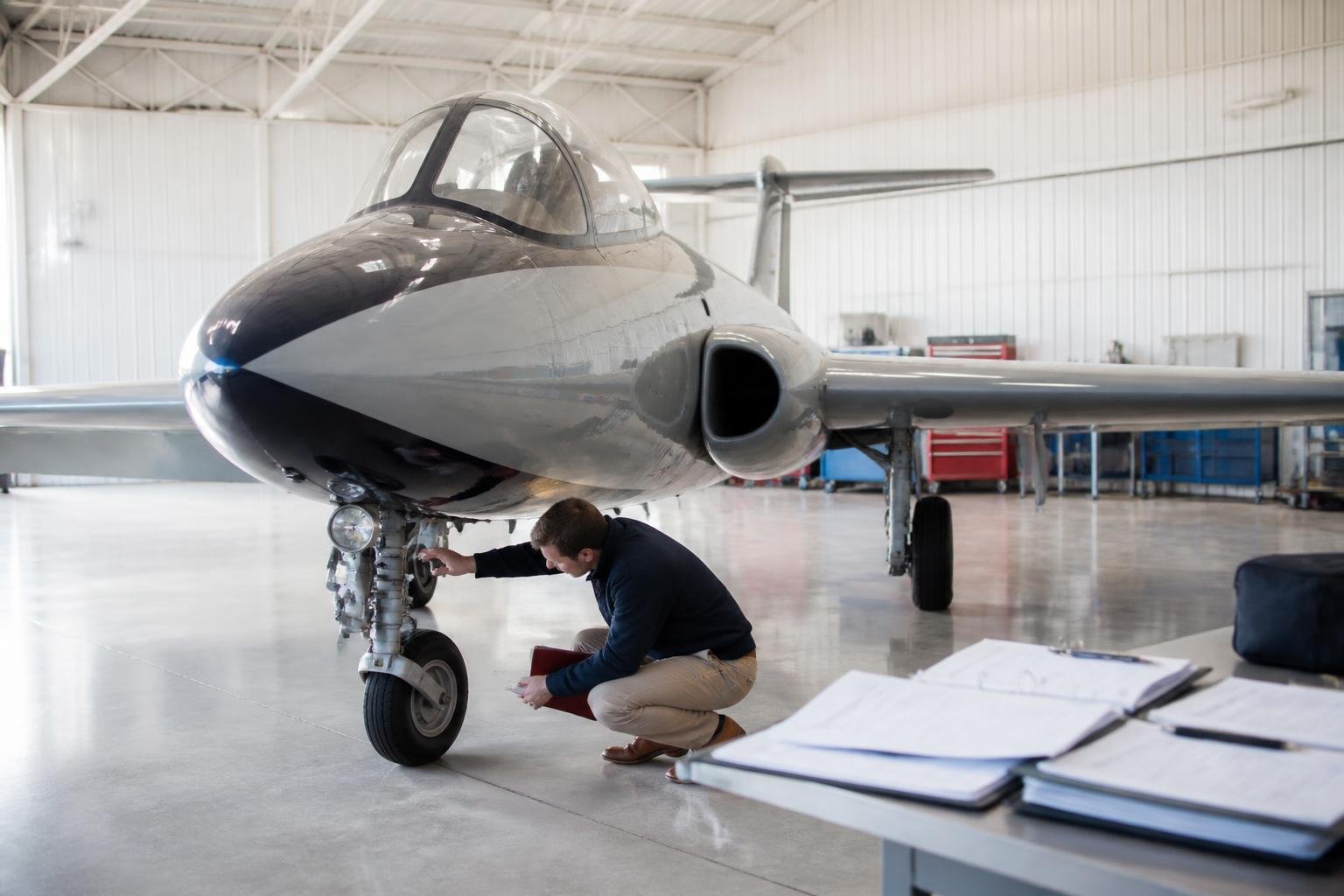
A serious evaluation begins with identity and evidence. Confirm the manufacturer’s data plate details, airframe identity, civilian registration history, chain of ownership and the airworthiness or operating basis that would transfer to the buyer. If the aircraft is abroad, investigate whether its present status can be accepted, converted or reconstructed in the intended registration state before committing funds.
Request complete airframe, engine, component and modification records early. Gaps are not automatically disqualifying, but they must be understood. A missing period can affect maintenance planning, component life assessment, insurance appetite, import eligibility and resale confidence. Seller statements should be clearly separated from findings independently verified by records or inspection.
Reconcile logbooks with engine and component serial numbers, installed equipment and stated times.
Review accident, incident, corrosion, storage, transport and restoration history.
Inspect structural areas susceptible to moisture, hidden corrosion, fatigue concerns or poorly documented repair.
Perform appropriate borescope and functional checks, subject to access and specialist advice.
Assess hydraulics, fuel, gear, brakes, electrical systems, avionics and cockpit controls against the documentation.
Determine the precise ejection-system status and any third-party support obligations.
The pre-buy inspection should be independent and led by a specialist with credible Fouga or closely relevant historic-jet experience. An annual inspection, a recent maintenance release or an appraisal is not a substitute for the buyer’s own pre-buy scope. The scope should be agreed in writing and include records reconciliation, physical inspection, known discrepancies, preservation condition, parts inventory and a report separating observations from recommendations.
Be cautious about cosmetic presentation. Fresh paint, a clean cockpit or an impressive provenance story can coexist with incomplete records, uncertain engine condition or unresolved approval questions. Conversely, an aircraft with honest cosmetic wear and excellent documentation may be a more manageable ownership proposition. A disciplined buyer values evidence over appearance.
Documentation, Storage and Preservation Priorities
Documentation is a core asset in historic-jet ownership. Retain original and current logbooks, maintenance releases, export and import records, modification approvals, weight-and-balance data, operating limitations, manuals and parts documentation. A configuration-control file should show what is installed today, what has been removed or altered, and which approvals support civilian operation.
Storage quality can materially influence both airworthiness work and long-term value. Climate-controlled hangarage, appropriate protective covers and regular preservation inspections help reduce exposure to moisture, ultraviolet degradation, contamination and corrosion. The precise programme should follow approved technical data and the advice of qualified maintainers; preservation is not simply placing an aircraft indoors and waiting.
After extended inactivity, return-to-service work should be planned rather than rushed. Systems, seals, fuel, lubricants, batteries, tyres, brakes, engines and avionics may all need attention. Stored engines require documented preservation history and specialist assessment. A prospective buyer should ask how the aircraft was stored, who inspected it during that period and what work is planned before any operational claim is accepted.
Transfer every available spare, tool and technical-manual item as part of the transaction where appropriate. Inventory these assets by part number or clear description, record their condition and identify any shelf-life, traceability or storage concerns. Long-term stewardship also means succession planning: understand which organisations and individuals can support the aircraft today, then avoid a plan that depends on one unavailable person or an undocumented collection of parts.
Fouga Magister Alternatives and the Sensible Next Step
A Fouga should be compared with alternatives based on operating complexity, support network, regulatory pathway, training availability and intended use—not just visual appeal or purchase price. Other civilian-capable vintage trainers and light jets may offer different balances of cockpit space, engine support, operating costs, runway needs and documentation depth. The right choice depends on whether the priority is heritage participation, local enjoyment, formation flying, touring or collecting.
Buyers attracted mainly to historic-aircraft ownership may find a lower-complexity piston trainer or a less demanding turbine type better aligned with their time, budget and support base. That is not a compromise if it allows more consistent flying and responsible maintenance. Conversely, a buyer specifically committed to the Magister’s design and history may accept the added complexity as part of meaningful stewardship.
Before making an offer, fly a representative aircraft if practical and lawful, ideally with a qualified instructor or experienced operator. Then build an initial shortlist containing four elements: the individual aircraft, a maintenance organisation, an insurer and a training resource. If any one of those cannot be identified early, the project needs more research.
When reviewing current Fouga Magister marketplace listings, use a records-first discipline. Start with identity, status, logs, engine and component evidence, support arrangements and inspection access. Then decide whether the evidence supports one of three outcomes: proceed to a defined pre-buy inspection, defer while critical facts are resolved, or choose an alternative with a more suitable ownership profile. For the right owner, a well-documented Fouga can be an exceptional classic jet. For every owner, the sensible next step is diligence before enthusiasm.

Comments
No comments yet
Be the first to share your thoughts!