

Introduction to the Turboprop Titans
For decades, the turboprop marketplace has been dominated by a few legendary airframes that have proven their mettle across corporate transportation, cargo hauling, utility work, and special missions. Among these, the Beechcraft King Air 350 (now continuing its legacy under the Textron Aviation banner as the King Air 360) and the Swiss-engineered Pilatus PC-12 stand as two of the most successful and respected aircraft ever built.
While both aircraft utilize the ultra-reliable Pratt & Whitney Canada PT6 turbine engine family and target similar corporate and owner-pilot demographics, they approach the mission of regional flight from fundamentally different design philosophies. The King Air 350 is a twin-engine heavyweight representing classic multi-engine redundancy, stability, and sheer payload capacity. The Pilatus PC-12, on the other hand, is the ultimate single-engine utility vehicle, offering unmatched efficiency, cabin volume, and short-field flexibility. Choosing between them requires a deep dive into performance metrics, operating costs, cabin configurations, and operational peace of mind.
Design Philosophy: Twin-Engine Redundancy vs. Single-Engine Efficiency
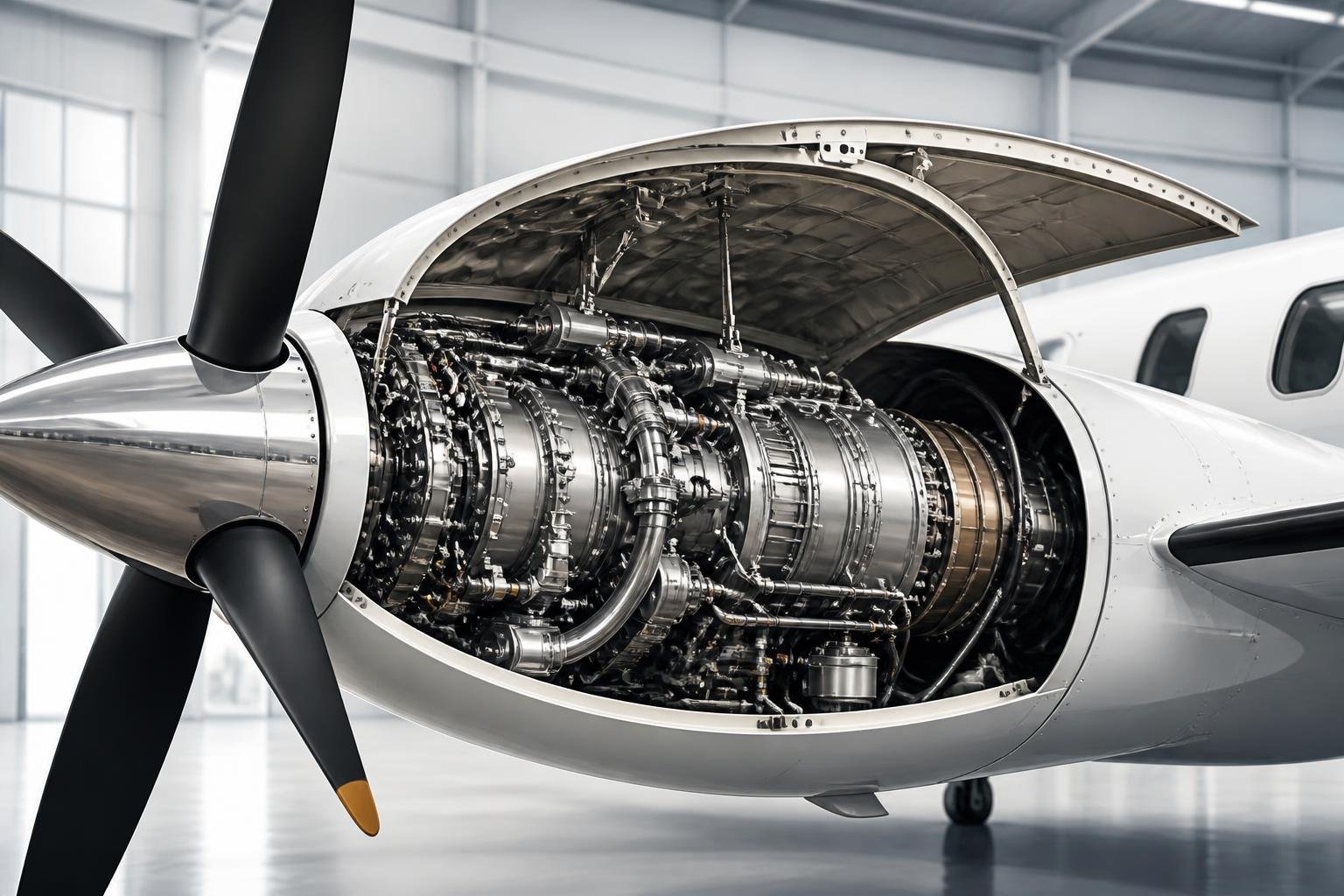
The most obvious division between these two aircraft is the engine count. The Beechcraft King Air 350 is powered by two Pratt & Whitney PT6A-60A engines, producing 1,050 shaft horsepower (shp) each. This dual-engine configuration has long been the gold standard for operators who frequently fly over open water, mountainous terrain, or hostile environments at night. The peace of mind that comes with multi-engine redundancy is a significant selling point, particularly for corporate flight departments with strict twin-engine mandates.
Conversely, the Pilatus PC-12 relies on a single, highly powerful Pratt & Whitney PT6A-67B, -67P, or -67E engine (depending on the model variant, such as the legacy PC-12/47, the PC-12 NG, or the modern PC-12 NGX). Developing up to 1,200 shp, this single powerplant is incredibly efficient. By omitting a second engine, Pilatus significantly reduced the aircraft's weight, aerodynamic drag, fuel consumption, and long-term maintenance overhead. Modern turbine reliability is so exceptionally high that the single-engine configuration has won over thousands of corporate buyers, charter operators, and owner-pilots worldwide, shifting old paradigms about single-engine safety.
Performance and Range: Putting the Numbers to the Test
When comparing performance, both aircraft deliver excellent regional capability, but their flight envelopes differ slightly in speed, range, and field performance.
| Performance Metric | Beechcraft King Air 350 | Pilatus PC-12 (NGX) |
|---|---|---|
| Engines | 2x Pratt & Whitney PT6A-60A | 1x Pratt & Whitney PT6A-67E |
| Max Cruise Speed | Approx. 312 ktas (578 km/h) | Approx. 290 ktas (537 km/h) |
| Maximum Range | Approx. 1,800 nm (four passengers) | Approx. 1,800 nm (four passengers) |
| Takeoff Distance (MTOW) | Approx. 3,300 feet (1,006 m) | Approx. 2,485 feet (757 m) |
| Maximum Takeoff Weight | 15,000 lbs (6,804 kg) | 10,450 lbs (4,740 kg) |
The King Air 350 holds a slight advantage in cruise speed, typically flying 15 to 25 knots faster than the PC-12. This speed advantage is most noticeable on longer stages, though on typical 300 to 500 nautical mile trips, the time difference is often negligible. The King Air’s higher maximum takeoff weight also translates into a massive payload capacity, allowing operators to carry full fuel and a high passenger load simultaneously.
However, the Pilatus PC-12 shines in runway performance and versatility. Thanks to its generous wing area, powerful trailing-link landing gear, and single-propeller configuration, the PC-12 can comfortably operate out of short, unpaved, or grass runways that would be highly challenging or outright inaccessible for a fully loaded King Air 350. This gives the PC-12 superior "go-anywhere" utility, making it a favorite for remote operations, air ambulance work, and leisure travel to rugged destinations.
Cabin Comfort and Versatility
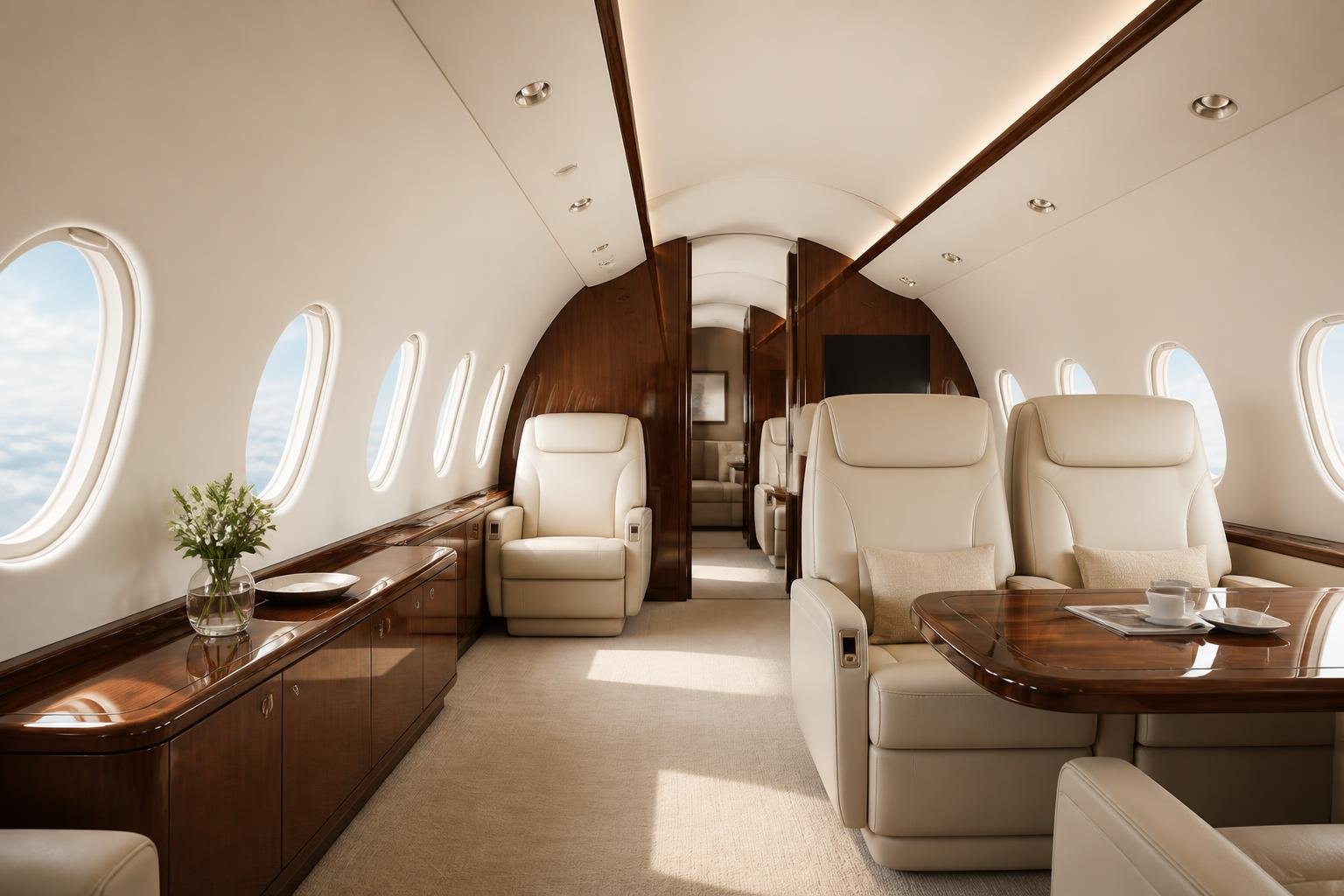
The passenger experience in both aircraft is excellent, but the layout and design serve different priorities.
The King Air 350 features a longer, narrower cabin. It is traditionally configured in a double-club arrangement, seating up to eight passengers in the main cabin, plus an belted lavatory seat. The cabin environment is incredibly quiet, particularly in newer models equipped with active noise-reduction systems. It feels like a traditional business jet inside, offering an exceptional mobile office environment for corporate teams.
The Pilatus PC-12 features a slightly wider and taller cabin with a flat floor, which makes moving around the cabin much easier. While it typically accommodates six to eight passengers in an executive layout, its defining feature is the standard 53x52-inch cargo door located at the rear of the fuselage. This massive door allows for the easy loading of bulky luggage, motorbikes, surfboards, or medical stretchers. The PC-12’s quick-change interior allows operators to convert the cabin from an executive configuration to a cargo-hauling setup in a matter of minutes, offering a level of versatility that the King Air 350 simply cannot match without specialized aftermarket modifications.
Operating Economics and Acquisition Costs
From an financial standpoint, the single-engine design of the Pilatus PC-12 gives it an undeniable advantage in direct operating costs. Running one engine instead of two means half the fuel burn (typically around 60 to 70 gallons per hour for the PC-12 compared to 100 to 120 gallons per hour for the King Air 350). Additionally, scheduled engine maintenance, overhauls (TBO), and hot-section inspections are halved on the Pilatus, resulting in significantly lower hourly operational budgets.
However, acquisition costs on the pre-owned market tell an interesting story. Due to the high demand and exceptional value retention of the Pilatus PC-12, used market values remain remarkably high. A used King Air 350 can sometimes be acquired at a highly competitive purchase price relative to its size and twin-engine capability, though the buyer must be prepared for the higher ongoing maintenance and fuel costs associated with operating a larger, twin-engine aircraft.
Choosing the Right Aircraft for Your Mission
Ultimately, the decision between the King Air 350 and the Pilatus PC-12 comes down to your specific operational profile, safety directives, and runway requirements:
- Choose the Beechcraft King Air 350 if: You require the peace of mind of twin-engine redundancy for frequent over-water or night operations, regularly transport larger corporate teams (8+ passengers), require a higher maximum payload, or operate under strict corporate travel policies that mandate two engines and two pilots.
- Choose the Pilatus PC-12 if: You prioritize single-pilot operation, lower direct operating costs, maximum fuel efficiency, and the flexibility of a massive cargo door. The PC-12 is also the clear winner if your missions frequently involve short, unimproved, or grass airstrips where rugged landing gear and exceptional short-field performance are non-negotiable.
Both of these aircraft represent the pinnacle of turboprop engineering. Whether you lean toward the twin-engine authority of the King Air 350 or the Swiss-army-knife versatility of the Pilatus PC-12, you are choosing an aircraft that will reliably perform for decades to come.

Comments
Join the conversation
Share your thoughts about this article
No comments yet
Be the first to share your thoughts!