
 Bad Vöslau
 Kirn
Kirn
 Florida
Technical review: October 2026. Aircraft specifications, engine options, maintenance requirements and training approvals can change. Verify the current approved documentation for the exact aircraft and jurisdiction before acquisition.
Choosing multi-engine training aircraft is a fleet-planning decision, not simply a comparison of cruise speed, purchase price or fuel burn. A training twin must support the school’s approved syllabus, teach asymmetric-flight skills effectively, remain dispatchable through intensive use and produce a sustainable cost per completed course.
The most useful buying process begins with the school’s mission and annual utilisation, then compares aircraft against training suitability, local maintenance support, fuel infrastructure, lifecycle cost, avionics compatibility, single-engine performance and fleet resilience.
Multi-Engine Training Aircraft: Quick Comparison
Training twins fall into several practical groups. The categories below are more useful than treating every modern twin as technically similar.
| Aircraft approach | Typical examples | Potential strengths | Main questions |
|---|---|---|---|
| Legacy avgas trainer | Piper Seminole, Beechcraft Duchess | Established training procedures, broad instructor familiarity and potentially lower acquisition cost | Ageing systems, engine reserves, corrosion, avionics and parts availability |
| Modern composite Jet-A twin | Diamond DA42 diesel variants | Integrated avionics, Jet-A operation, academy standardisation and cross-country capability | Diamond/Austro or Continental support, composite repair capability and variant-specific engine economics |
| Modern aluminium Rotax twin | Tecnam P2006T / P2006T NG | Efficient multi-engine training, lightweight airframe and Rotax support ecosystem | Mogas/Avgas access, local Tecnam/Rotax maintenance and exact variant configuration |
| Larger conventional twin | Piper Seneca and similar aircraft | Broader operational capability and more complex aircraft experience | Higher fuel, maintenance and acquisition exposure relative to basic training needs |
The Diamond DA42 and Tecnam P2006T illustrate why engine terminology matters. Current DA42 variants use Jet-A-fuelled Austro diesel engines, while the P2006T family uses Rotax spark-ignition engines operating on approved Mogas and Avgas grades. The P2006T should therefore not be classified as a diesel-powered twin.
1. Define the School’s Training Mission First
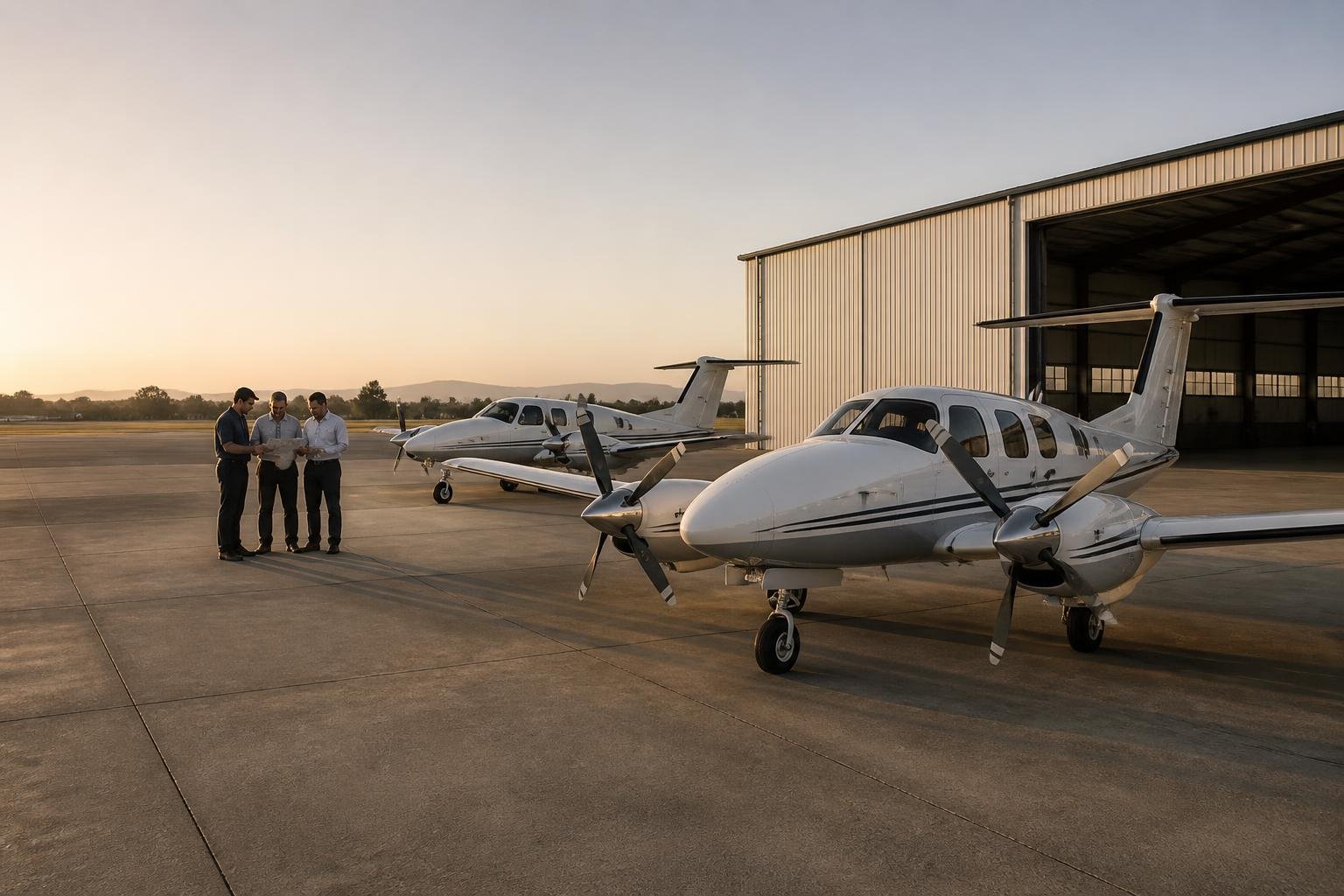
Begin with expected demand rather than available aircraft listings.
Estimate annual volume for:
- Initial multi-engine ratings.
- Commercial multi-engine training.
- Instrument training.
- Instructor training.
- Recurrent proficiency work.
- Cross-country and airline-pathway training.
A school that mainly delivers short multi-engine rating courses has a different requirement from an academy using the twin throughout a CPL/IR progression.
Set a realistic annual utilisation target and define the required dispatch rate. Then consider what happens when the aircraft is unavailable. A single twin may be inexpensive to acquire but can become a major scheduling risk if one maintenance event stops every multi-engine course.
2. Evaluate Training Suitability Before Performance
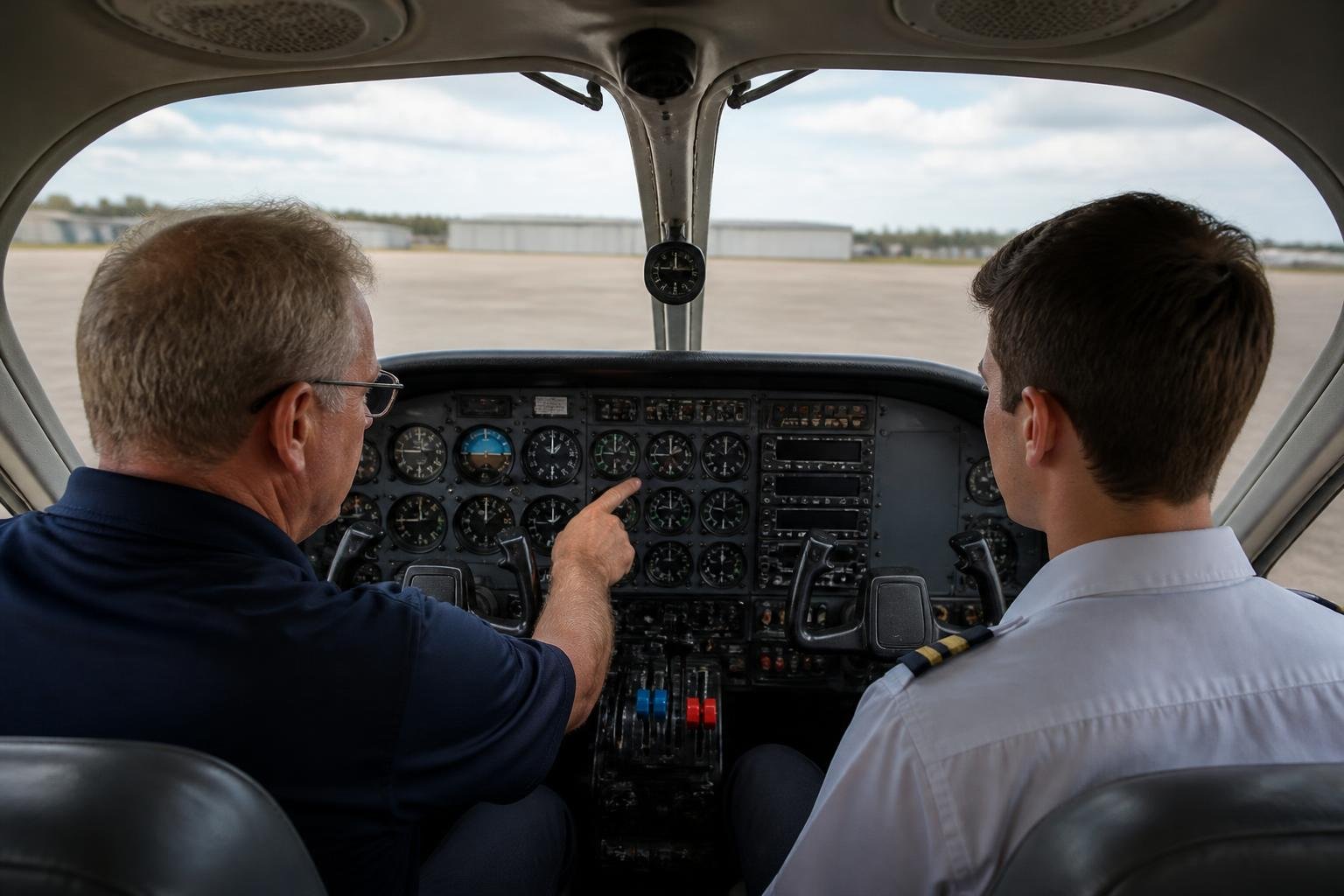
A useful training twin should allow instructors to teach asymmetric thrust, directional control, aircraft configuration and abnormal procedures consistently within the approved AFM or POH.
The goal is not to select the aircraft with the most dramatic engine-out characteristics. It is to choose a platform that allows the syllabus to be taught clearly and repeatably while maintaining appropriate safety margins.
During demonstration flights, instructors should evaluate:
- Directional control and asymmetric-flight workload.
- Instructor visibility of student actions.
- Seat and rudder-pedal adjustment.
- Access to brakes and primary controls.
- Checklist workflow.
- Landing behaviour.
- Taxi visibility.
- Student workload during configuration changes.
Also consider progression from the school’s single-engine fleet. Similar avionics, checklist philosophy and cockpit logic can reduce transition time. Complexity that does not support a syllabus objective simply creates additional maintenance and training exposure.
3. Compare Airframe and Powerplant Strategies Correctly
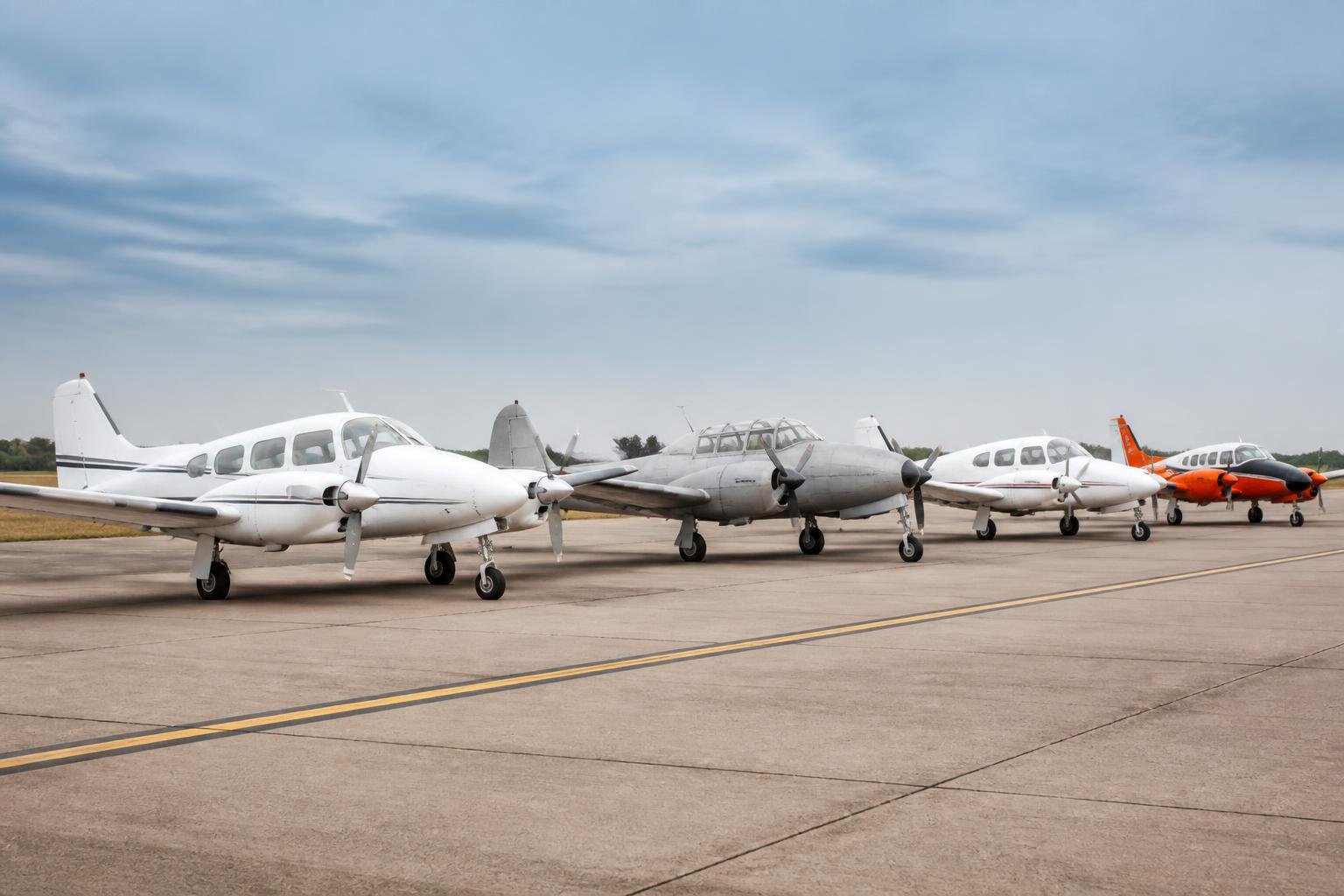
Different training twins solve the same instructional requirement with very different technical approaches.
Legacy Avgas Twins
Aircraft such as the Piper Seminole and Beechcraft Duchess remain familiar training platforms. They can offer conventional systems, established instructional procedures and a lower entry price than newer twins.
The acquisition price, however, should be considered alongside age-related maintenance. Wiring, corrosion, engines, propellers, landing gear, interiors and older avionics can materially affect dispatch reliability.
Diamond DA42
The current Diamond DA42-VI represents a different approach: an all-carbon composite airframe, Garmin glass cockpit and twin Austro AE300 Jet-A piston engines.
Current Diamond specifications list two 168 hp AE300 engines and Jet-A/Jet A-1 among the approved fuel grades. Earlier DA42 TDI aircraft can use Continental/Thielert diesel installations and therefore should not be costed as though they were current DA42-VI aircraft.
Tecnam P2006T
The Tecnam P2006T is a high-wing, primarily aluminium training twin powered by Rotax spark-ignition engines.
The standard P2006T uses two Rotax 912 S3 engines, while the current P2006T NG uses two fuel-injected Rotax 912 iSc3 engines rated at 100 hp each. Tecnam specifies Mogas and Avgas for the current NG.
This can be attractive to schools already operating Rotax-powered singles because maintenance knowledge and parts infrastructure may overlap. It should not, however, be treated as a Jet-A or diesel aircraft.
4. Build a Comparable Performance Matrix
Use the approved documentation for each candidate rather than combining brochure figures measured under different conditions.
Record:
- Maximum take-off mass.
- Actual empty weight.
- Useful load.
- Usable fuel.
- Cruise performance.
- Take-off and landing performance.
- Rate of climb.
- Single-engine performance.
- Service ceiling.
- Approved operating limitations.
Then apply the school’s own operating assumptions.
| Training profile | What to test |
|---|---|
| Local MEP lesson | Instructor + student + realistic fuel + manoeuvring reserve |
| Instrument lesson | Approach fuel, delays, diversion and avionics requirements |
| Cross-country training | Block fuel, payload, destination support and useful cruise speed |
| Summer training | Take-off and single-engine performance at expected density altitude |
| High-utilisation schedule | Fuel endurance against lesson length and turnaround time |
An aircraft with higher cruise speed may save time during cross-country training but offer little advantage during a local engine-out lesson. Performance should therefore be valued according to the syllabus rather than in isolation.
5. Assess Engines, Propellers and Fuel Infrastructure
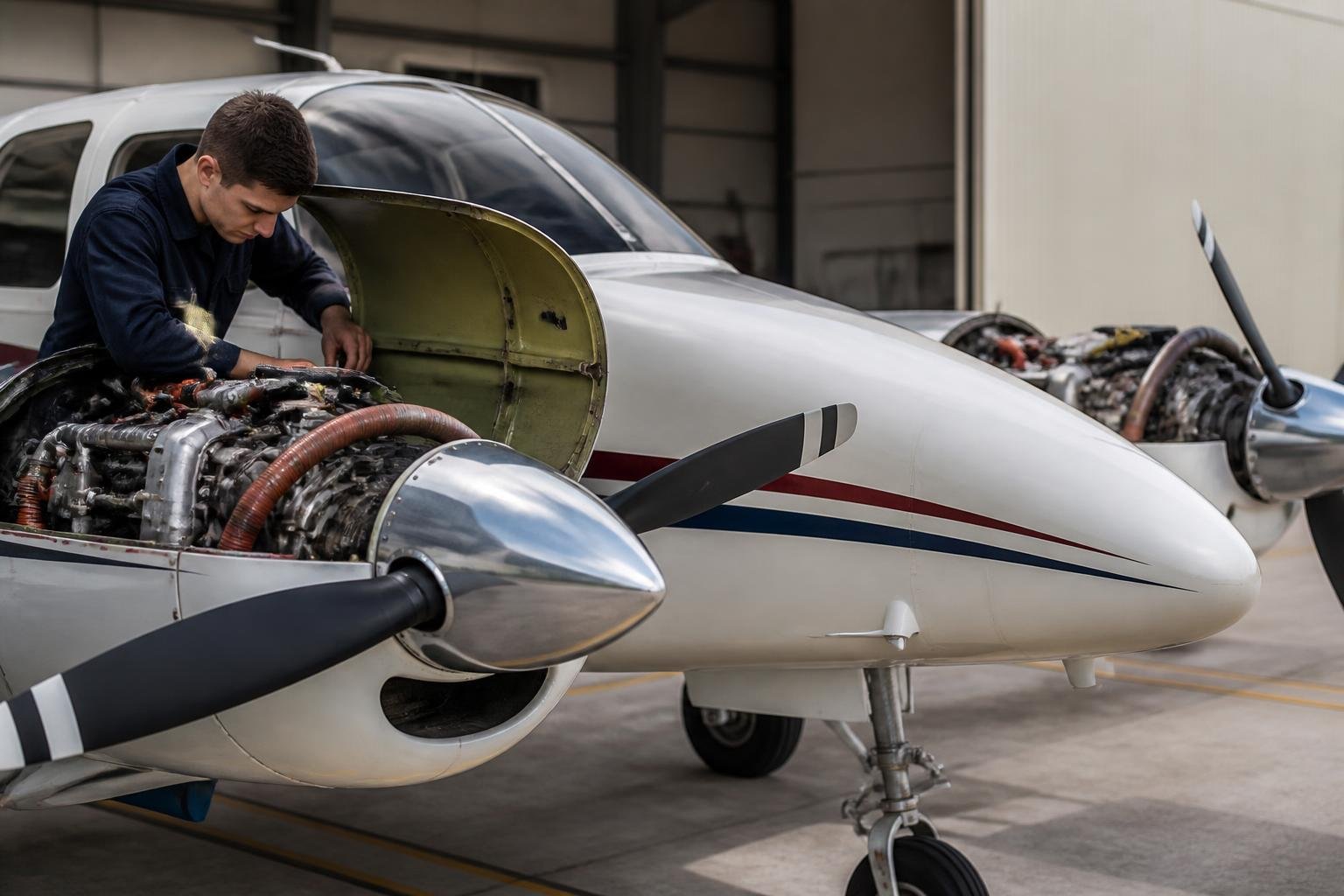
Powerplants create a large proportion of the financial and dispatch risk in a training twin.
For every candidate, establish:
- Exact engine model and serial number.
- Current engine hours.
- Calendar age.
- TBO, TBR or other applicable lifecycle model.
- Overhaul or replacement history.
- Propeller time and calendar status.
- Current Airworthiness Directive status.
- Relevant manufacturer service information.
- Local technical support.
Fuel should be modelled by mission rather than headline cruise consumption. Training lessons can include repeated climbs, approaches, manoeuvring and ground operation that bear little resemblance to economy cruise.
For DA42 diesel variants, examine Jet-A availability and the support network for the exact Austro or Continental engine installed.
For the P2006T family, evaluate approved Mogas and Avgas supply together with local Rotax expertise.
A cheaper fuel type has limited value if the aircraft regularly has to position to another airport for maintenance.
6. Calculate Cost Per Completed Training Course
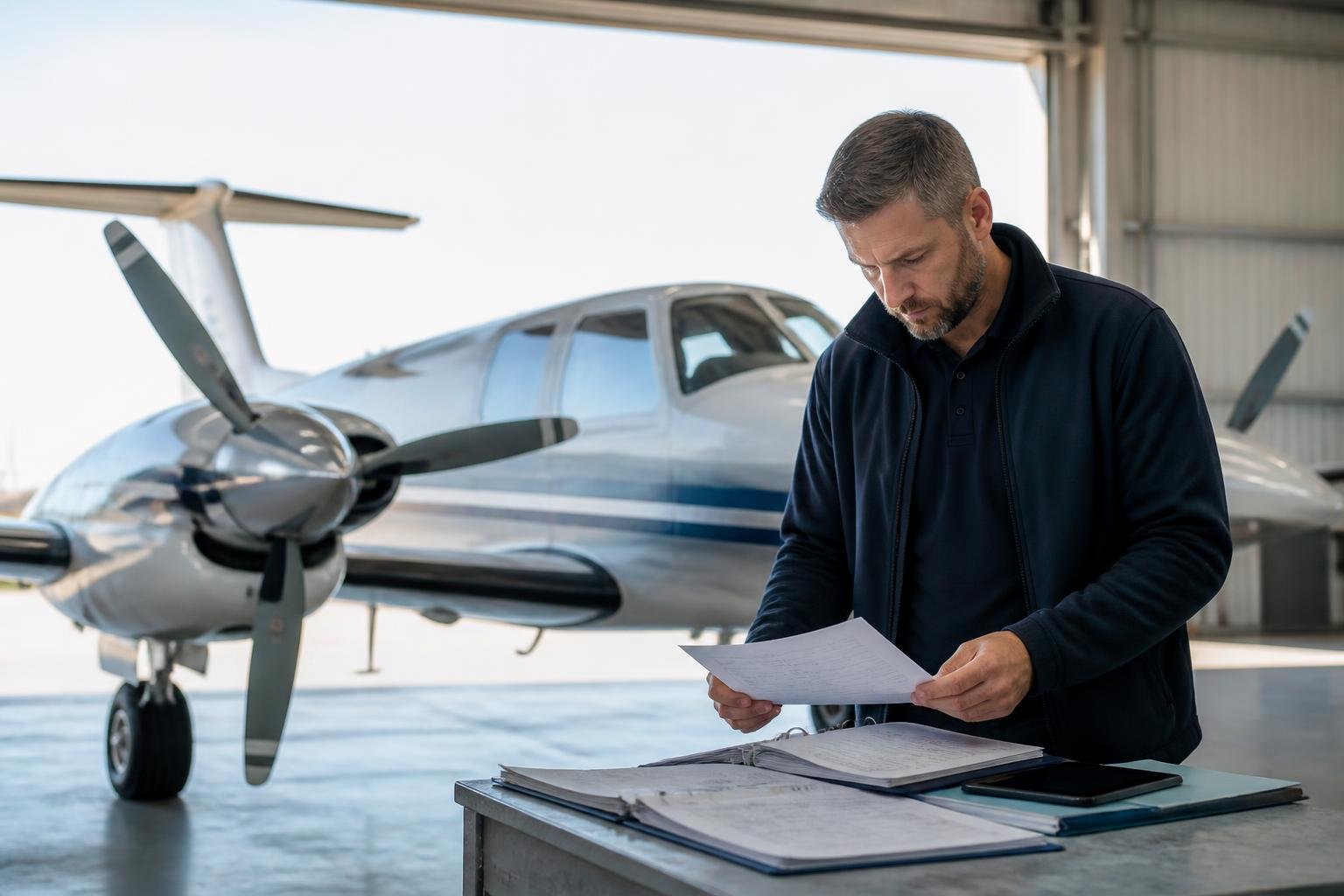
Hourly fuel burn is only one line in the business case.
A useful fully allocated model should include:
- Acquisition price.
- Finance or depreciation.
- Insurance.
- Hangarage.
- Fuel and oil.
- Routine maintenance.
- Engine and propeller reserves.
- Landing-gear reserve.
- Avionics subscriptions and repair exposure.
- Scheduled inspections.
- Unscheduled maintenance.
- Administration.
- Lost revenue during downtime.
| Cost measure | Why it matters |
|---|---|
| Cost per airborne hour | Useful for direct operating-cost comparisons |
| Cost per block hour | Captures taxi and ground-running exposure |
| Cost per completed lesson | Includes real utilisation and cancellation effects |
| Cost per completed course | Connects aircraft economics to the school’s actual product |
| Downtime cost | Quantifies lost revenue and student disruption |
A nominally inexpensive aircraft can become the more expensive trainer if maintenance delays repeatedly cancel courses.
7. Make Dispatch Reliability a Buying Criterion
Before buying, speak directly with maintenance organisations that support the exact aircraft and engine combination.
Ask:
- How many of the type they maintain.
- Which work can be completed locally.
- Whether specialist tooling or diagnostic equipment is available.
- Typical parts lead times.
- Whether composite or structural repair capability is available where required.
- How long common scheduled inspections normally ground the aircraft.
- What work must be outsourced.
A provider that maintains general light aircraft may not necessarily be efficient on a DA42 diesel installation, Rotax-powered P2006T or ageing retractable-gear twin.
After acquisition, track:
- Dispatch percentage.
- Technical cancellations.
- Repeat defects.
- Maintenance turnaround.
- Parts delays.
- Maintenance hours per flight hour.
These metrics often reveal more about the fleet decision than theoretical fuel-cost comparisons.
8. Consider Avionics and Fleet Standardisation
Analogue, hybrid and glass cockpits can all support effective multi-engine instruction. The correct choice depends on the training product.
An airline-oriented academy may value integrated avionics, autopilot procedures and common cockpit logic between single-engine trainers, simulators and the multi-engine aircraft.
A school focused on basic multi-engine ratings may not need the same degree of systems complexity.
Compare:
- PFD and MFD generation.
- GNSS equipment.
- Autopilot capability.
- Navigation approvals.
- Database requirements.
- ADS-B and transponder configuration.
- Simulator compatibility.
Simulator similarity is valuable only when procedures and avionics logic are sufficiently close to the aircraft. Differences should be deliberately taught rather than allowed to create negative transfer.
9. Plan Asymmetric-Flight Training Around Risk Management
Multi-engine training should follow the aircraft’s approved procedures and the organisation’s operating and training manuals.
The school should standardise:
- Failure recognition.
- Directional control.
- Identification and verification.
- Simulated engine-failure techniques.
- Minimum training altitude.
- Weather and density-altitude limits.
- VMC demonstration policy where applicable.
- Instructor intervention criteria.
Complex or high-risk scenarios can often be introduced more effectively in an approved simulator or training device before being practised in flight.
The aircraft is only one element of safety. Instructor standardisation, maintenance reporting, fatigue management and conservative operating policies usually matter more than any individual aircraft feature.
10. Use a Training-Focused Pre-Buy Inspection

A used training twin should be evaluated by specialists familiar with both the aircraft type and high-cycle training use.
| Inspection area | What to review |
|---|---|
| Airframe | Damage, corrosion or composite condition, repairs and recurring structural inspections |
| Engines | Hours, calendar status, trends, overhaul/replacement history and applicable limits |
| Propellers | Time, calendar status, blade condition and governor history |
| Landing gear | Cycles, actuators, attachments, brakes, tyres and training-related wear |
| Controls | Play, rigging, pedals, linkages and evidence of repeated intensive use |
| Avionics | Functionality, software, databases, autopilot and deferred defects |
| Records | Continuity, AD compliance, repairs, modifications and component status |
| Weight and balance | Current data reflecting installed equipment |
Pay attention to cycles as well as flight hours. Training aircraft can accumulate frequent landings, door cycles, braking events and configuration changes that produce a different wear profile from privately operated touring aircraft.
Real-World Example: Diamond DA42 TDI
Schools evaluating multi-engine trainers can also review the Diamond DA42 TDI listed on CollectAirs.
This particular aircraft is a 2007 DA42 TDI with Garmin G1000 and twin Continental CD-135 Jet-A diesel engines. The listing reports 2,791 hours of total airframe time and provides separate remaining-time information for the left and right engines.
That makes it a useful example of the questions a flight-school buyer should ask about an older diesel twin:
- How much documented engine life remains?
- What gearbox and propeller status applies?
- What scheduled maintenance is approaching?
- Can the school support Continental CD-series engines locally?
- Does the aircraft’s actual avionics fit the training syllabus?
- What utilisation history produced the current airframe and component times?
The current DA42-VI specification should not be applied directly to this aircraft. It belongs to an earlier DA42 generation with a different engine installation and operating economics.
11. Plan Fleet Scale and Scheduling Resilience
One aircraft can establish a multi-engine programme, but it also creates a single point of failure.
Model:
- Student throughput.
- Instructor availability.
- Scheduled maintenance.
- Weather cancellations.
- Peak-season demand.
- Replacement-aircraft access.
A second matching aircraft can improve resilience while simplifying instructor standardisation, spare-parts inventory and scheduling. A mixed fleet can still make sense where the aircraft serve genuinely different missions, but its complexity should be reflected in the cost model.
12. Evaluate the Aircraft as a Business Asset
Dealer inventory, private sales and aircraft auctions can all be reasonable acquisition channels. The quality of the aircraft, documentation and transaction structure matters more than the channel itself.
Before committing funds, review:
- Ownership and title.
- Maintenance records.
- Pre-buy access.
- Deposit conditions.
- Included equipment.
- Registration and import requirements.
- Tax implications.
- Delivery costs.
- Insurance requirements.
The advertised purchase price should be converted into an induction cost: purchase price plus inspection, immediate maintenance, delivery, tax, registration, instructor onboarding and any equipment required before the first revenue flight.
Weighted Multi-Engine Training Aircraft Scorecard
Use the same criteria for every shortlisted aircraft so that one attractive feature does not dominate the decision.
| Criterion | Suggested weight | What to evaluate |
|---|---|---|
| Training mission fit | 20% | How well the aircraft supports the planned MEP, CPL, IR and recurrent syllabus |
| Dispatch reliability | 15% | Expected availability, maintenance history and likely downtime |
| Maintenance and parts support | 15% | Local expertise, parts lead time, tooling and manufacturer support |
| Fully allocated cost | 15% | Fuel, maintenance, reserves, insurance, depreciation and downtime |
| Performance and operational margins | 10% | Runway, payload, density altitude and single-engine capability |
| Fleet and simulator compatibility | 10% | Avionics, SOPs, instructor standardisation and device alignment |
| Fuel infrastructure | 5% | Availability, price and reliability of the required fuel network |
| Instructor and student ergonomics | 5% | Visibility, access, workload and cabin suitability |
| Resale and fleet flexibility | 5% | Future marketability and ability to redeploy the aircraft |
Score each candidate from 1 to 5, multiply the score by the chosen weight and document the evidence behind the score. Schools can change the weighting to reflect their own operation; a high-utilisation MEP school may put more weight on cost and dispatch, while an airline academy may place greater emphasis on avionics and syllabus integration.
Choosing the Right Multi-Engine Training Aircraft
The most suitable training twin is the aircraft that repeatedly completes the school’s approved mission at a sustainable cost and acceptable operational risk.
A legacy avgas twin can still be an effective choice when acquisition cost is controlled and local maintenance support is excellent. A DA42 can be attractive for academies seeking Jet-A operation, integrated avionics and a more advanced training environment. A P2006T can be compelling where efficient Rotax operation, multi-engine training and local Tecnam support align with the school’s business model.
None of those characteristics creates a universal winner.
The purchase decision should normally be made in this order:
- Training mission and regulatory suitability.
- Aircraft condition and documentation.
- Maintenance and parts support.
- Dispatch reliability.
- Fully allocated cost.
- Operational performance.
- Fleet and simulator compatibility.
- Acquisition price.
That order helps prevent a low purchase price, attractive cockpit or favourable fuel figure from masking a poor fleet fit.
Multi-Engine Training Aircraft FAQ
Is the Tecnam P2006T diesel-powered?
No. The P2006T family uses Rotax spark-ignition engines. The standard P2006T uses Rotax 912 S3 engines, while the current P2006T NG uses fuel-injected Rotax 912 iSc3 engines. Tecnam specifies Mogas and Avgas for the current NG.
Is the Diamond DA42 diesel-powered?
Current DA42-VI aircraft use twin Austro AE300 compression-ignition engines designed to operate on approved Jet-A-type fuels. Earlier DA42 diesel variants can use Continental or Thielert-derived engines, so the exact variant should always be identified.
What makes a good multi-engine training aircraft?
Important factors include predictable handling, suitable asymmetric-flight training characteristics, good instructor access, reliable dispatch, appropriate single-engine performance, manageable lifecycle costs and strong local maintenance support.
Should a flight school buy a new or used twin?
Either can work. A newer aircraft may reduce age-related maintenance exposure and improve fleet standardisation, while a well-maintained used twin can reduce capital cost. Compare total induction and lifecycle cost rather than purchase price alone.
Does a flight school need a glass-cockpit twin?
Not necessarily. A glass cockpit can support airline-oriented and instrument training pathways, but the avionics should serve the syllabus. A well-designed analogue or hybrid programme can also provide effective multi-engine instruction.
What is the most useful cost metric?
Cost per completed course is often more informative than fuel burn or even cost per flight hour because it incorporates dispatch reliability, cancelled lessons, repeats and downtime.
Is one multi-engine aircraft enough for a flight school?
It can be enough to start a programme, but one aircraft creates a single point of failure. Schools should model the effect of scheduled and unscheduled maintenance on existing bookings before deciding fleet size.
Sources & Further Reading
- Diamond Aircraft Industries — current DA42 technical specifications and flight-school information.
- Tecnam — P2006T and P2006T NG current manufacturer specifications.
- Applicable EASA or FAA Type Certificate Data Sheets for the aircraft and engines under consideration.
- Aircraft-specific AFM/POH and maintenance documentation.
- Current Airworthiness Directive databases for the applicable registration jurisdiction.
- CollectAirs — Diamond DA42 TDI aircraft listing.
Aircraft specifications, engine configurations, fuel approvals, maintenance requirements and training suitability vary by model, variant, serial number and jurisdiction. Always verify the current approved documentation for the individual aircraft.
Building or expanding a multi-engine training fleet? Review the Diamond DA42 TDI on CollectAirs or compare other available aircraft against the fleet-planning scorecard above.
Comments
No comments yet
Be the first to share your thoughts!