

 Bad Vöslau
 Kirn
Kirn


 Florida
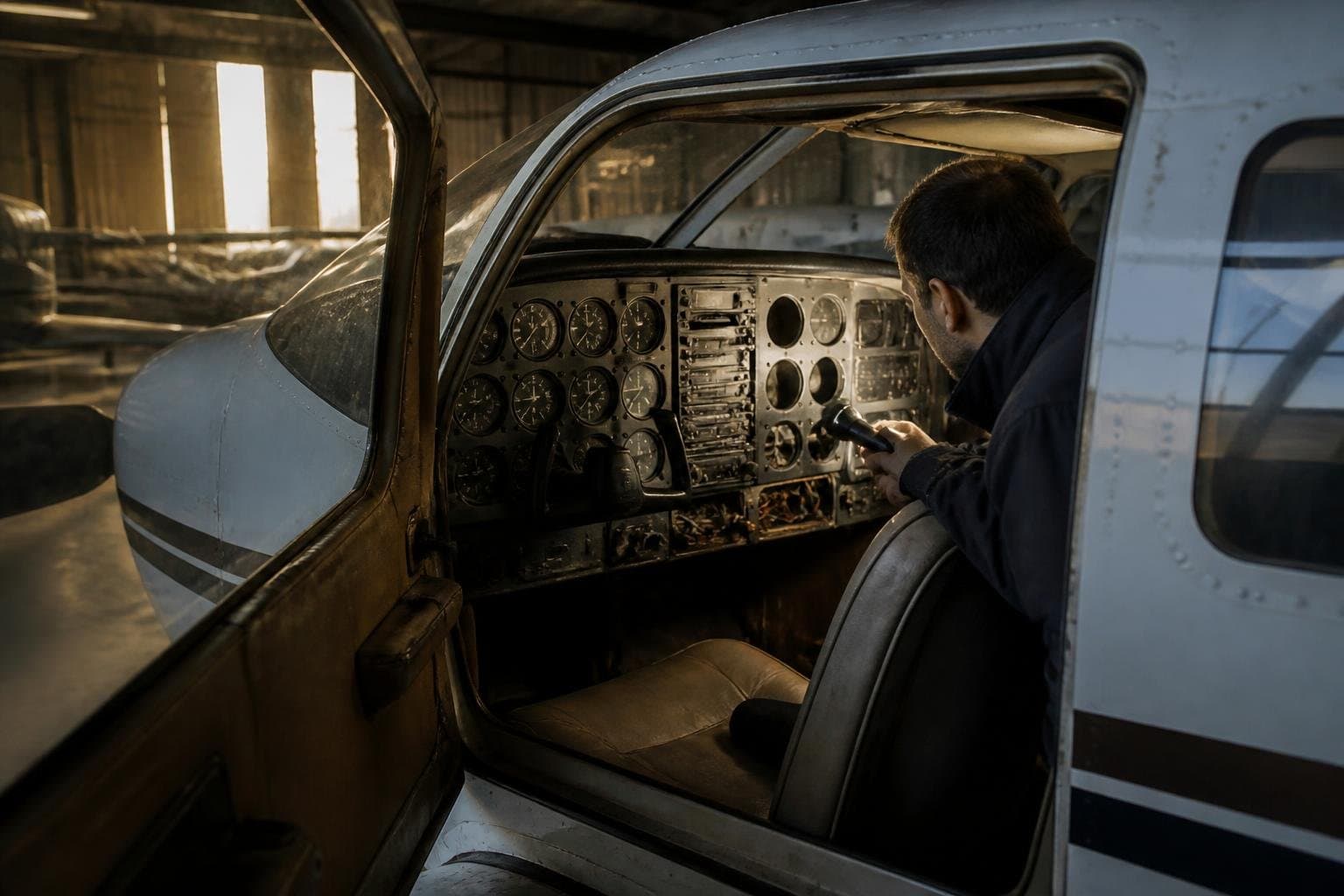
Obsolete aircraft avionics can materially change the real cost, utility and resale prospects of a used aircraft. A panel may power up and still contain equipment with no repair path, no current navigation-data option, weak integration or uncertain approval records. Before making an offer, buyers should treat the avionics suite as a separate due-diligence workstream alongside the airframe, engine, propeller and logbooks.
Why Obsolete Aircraft Avionics Matter in a Used-Aircraft Purchase
Avionics obsolescence is not simply a matter of age. It is the point at which an installed system becomes difficult or uneconomic to maintain, update, repair, integrate or use for the owner’s intended mission. A twenty-year-old radio with established factory support and available repairs may remain entirely serviceable. A newer unit with a discontinued display, unavailable database service or no approved replacement parts may be the greater ownership risk.
Buyers should distinguish three conditions. Old equipment is equipment from an earlier generation that may still be supportable. Unsupported equipment is equipment for which the manufacturer, repair network or data provider no longer offers meaningful support. Unserviceable equipment is equipment that does not currently perform its intended function. These categories overlap, but they are not interchangeable. An unsupported GPS may work today; that does not establish a reliable repair path for next year.
The hidden cost extends well beyond the purchase price. An intermittent fault can consume diagnostic labour before a defective part is identified. A failed unit can require a scarce exchange component, a specialist bench repair, or redesign of part of the panel. What begins as replacement of one navigation unit may expose aged wiring, inadequate circuit protection, poor cooling, obsolete antennas or an autopilot interface that no longer works with the selected replacement.
Dispatch reliability and mission capability matter as much as the repair invoice. An aircraft intended for day VFR local flying can tolerate a different equipment baseline from an aircraft bought for regular IFR cross-country travel, training or commercial operations. If a radio fails intermittently, a display is unreadable in sunlight, or a navigation source cannot support the procedures the buyer expects to fly, the aircraft’s practical utility falls. Future purchasers will make the same assessment, affecting resale appeal.
For that reason, panel condition deserves attention early in the buying process. Do not leave it until after agreeing a price based on photographs and a broad equipment list. The installed models, support status, approvals, interfaces and condition should shape both the offer and the pre-buy inspection scope.
What Makes Aircraft Avionics Obsolete?

Manufacturer support is usually the first dividing line. A manufacturer may discontinue production while continuing repairs, exchanges, software support and technical documentation for many years. Conversely, a product may reach a point where factory repair, parts supply and engineering assistance are no longer available. Independent repair stations sometimes extend the usable life of legacy equipment, but their capability, component stock and turnaround time should be confirmed rather than assumed.
Parts availability is only one element. Repair benches may close, display assemblies may be unobtainable, and replacement processors or memory components may no longer be available from qualified sources. Navigation databases can also become a decisive limitation. A unit that is physically functional but cannot receive current approved data may no longer meet the owner’s intended IFR role. Interface modules and proprietary data cards can create similar problems.
Hardware ages in different ways. Older displays can dim, develop lines or become difficult to read. Radios may suffer frequency instability, weak transmit performance or intermittent controls. Cooling fans, connectors and solder joints can deteriorate. Legacy GPS receivers may take longer to acquire a signal or lack the capability expected of modern position sources. None of these symptoms proves that a unit has failed, but each justifies closer investigation.
Software and integration limits can turn a functional component into a poor system choice. A navigator may not communicate correctly with an autopilot, transponder, multi-function display or indicator. An older transponder may not accept an appropriate approved position input. A panel built around proprietary interfaces can make selective upgrades more difficult than its outward appearance suggests.
Regulatory and airspace requirements also evolve. Communication, navigation and surveillance requirements vary by jurisdiction, airspace, operation and aircraft category. An aircraft may be suitable for some local operations while lacking equipment, approvals or documented configuration for others. Supportability therefore matters more than basic functionality: the relevant question is not merely “does it switch on?” but “can it be maintained and legally used for the intended mission with a defensible documentation trail?”
The Main Cost Categories Buyers Often Miss
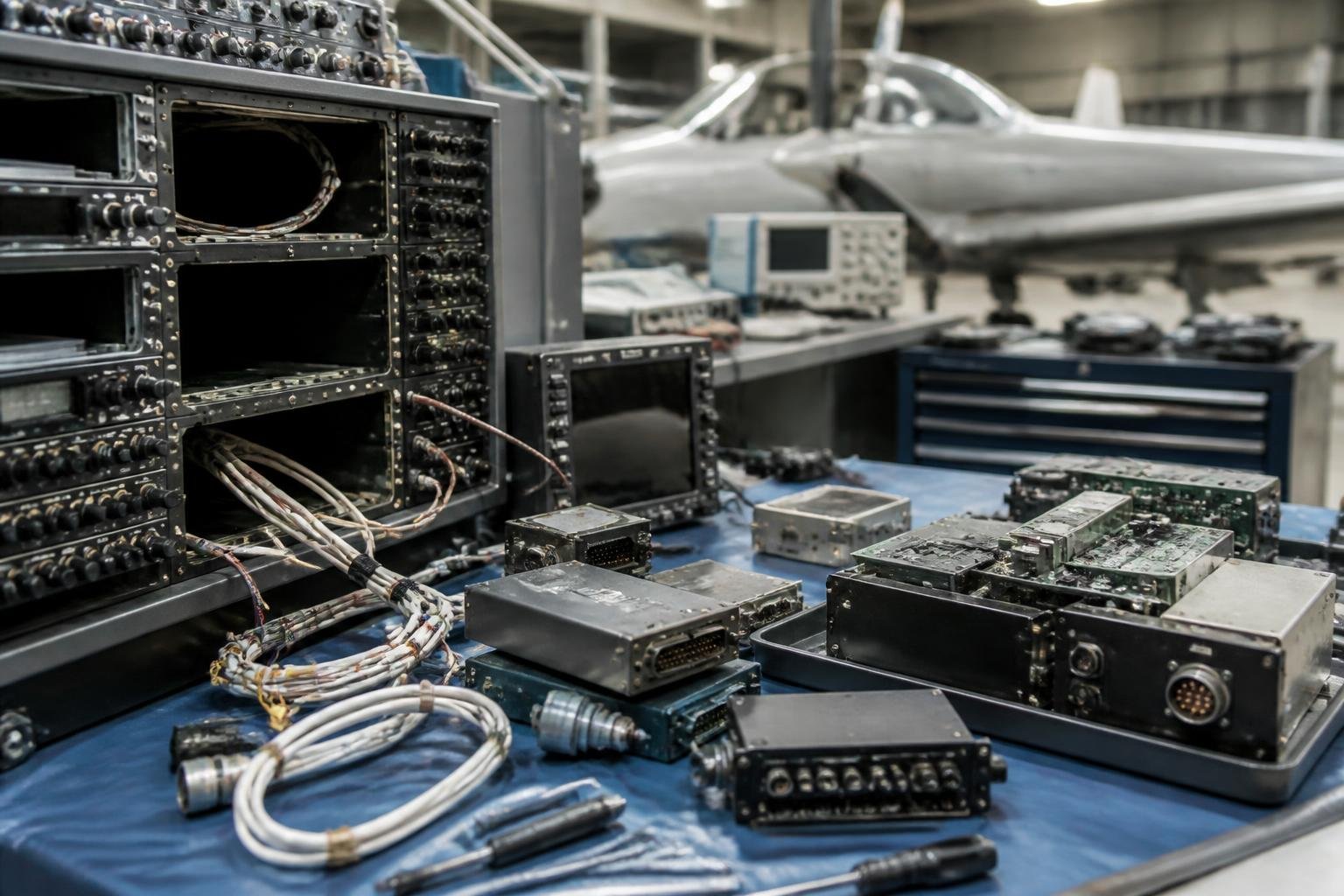
The visible price of a new radio, navigator or display is only one part of an avionics project. Labour can be substantial, especially when faults are intermittent. A technician may need to reproduce a failure on the ground, inspect connectors and power supplies, test antennas and coaxial cables, and isolate interactions between several units. This work is skilled and necessary, but its duration is not always predictable before the panel is opened.
- Diagnostic labour for intermittent, temperature-related or vibration-related faults.
- Exchange-unit costs, specialist repair premiums and shipping delays for scarce legacy equipment.
- Harness replacement, antenna work, cooling improvements, grounding corrections and circuit-breaker changes.
- Panel cutting, fabrication, repainting and relocation of instruments or annunciators.
- Approved data, supplemental type certificate considerations, installation records and flight-manual documentation.
- Downtime, repositioning or ferry planning, and lost use of the aircraft while work is completed.
Scope creep is common because the condition behind the panel may not be visible during a viewing. Existing wiring may be neatly routed and acceptable, or it may contain undocumented splices, unlabeled conductors and obsolete connectors. A new unit can reveal voltage drop, antenna deficiencies or incompatibility with a retained autopilot. A responsible installer will identify known requirements in an estimate, but cannot honestly promise that every hidden condition has been priced before access panels are removed.
Buyers should also account for scheduling. A reputable avionics shop may have limited installation capacity, and some work requires coordination with an inspection, interior work, panel fabrication or a separate maintenance facility. If the aircraft must be moved before the work, verify what equipment and approvals are required for the proposed flight rather than treating ferry planning as an administrative detail.
Operational and Regulatory Risks of Unsupported Equipment
Unsupported avionics can affect communication, navigation and surveillance capability in distinct ways. A radio may still be adequate for routine voice communication but have no practical repair option if it fails. A GPS may provide a position display but not serve as an approved navigation source for the procedures a buyer intends to fly. A transponder installation may operate while lacking the correct documented relationship between its position source, altitude reporting and applicable ADS-B requirements.
GPS position-source compatibility deserves particular attention. The transponder, GPS, antenna installation and approval basis may all be relevant. Replacing one element does not automatically preserve the legality or function of the whole system. Similarly, a navigator feeding an autopilot or course indicator must be assessed as an installed combination, not as a collection of attractive component names.
For IFR buyers, database availability and update pathways are operational questions, not minor conveniences. Verify what data the unit uses, whether updates remain available, how they are loaded, and whether the installed configuration supports the intended navigation functions. A functioning moving map is not necessarily suitable for IFR navigation, and an older IFR navigator may have operational limitations that do not appear in a sales description.
Equipment mandates differ among countries and can change according to airspace, aircraft registration, operation and route. Importing an aircraft adds another layer: approvals accepted in one jurisdiction may require review or additional work elsewhere. The aircraft’s flight manual supplements, equipment list, maintenance records and applicable approval documentation are central evidence. Do not assume legal operation from a seller’s statement, a familiar-looking panel or the fact that an aircraft previously flew in a particular region.
Red Flags in the Cockpit and Logbooks

A viewing can reveal useful warning signs, although it cannot replace a technical inspection. Blank, dim, flickering or slow-starting displays merit investigation. So do radios with scratchy audio, intermittent transmit indication, loose controls, irregular backlighting or unexplained circuit-breaker trips. A unit that works only after warming up, cycling power or tapping a bezel may have an issue whose cost cannot be judged from the cockpit alone.
Legacy GPS and moving-map units deserve model-specific review. Ask for the exact manufacturer and model, not a generic description such as “GPS equipped.” Confirm the installed equipment list against the panel, and establish whether the claimed capabilities are actually present, approved and usable. A GPS may be installed as a supplemental device, for example, rather than as the primary source a buyer assumes it to be.
- Missing installation records, equipment lists, wiring diagrams or flight-manual supplements.
- Logbook entries that describe an installation too broadly to establish what was fitted or approved.
- Repeated avionics discrepancies with no documented permanent resolution.
- Nonstandard wiring, unlabeled modifications, unsupported switches or incomplete circuit protection.
- Recent removals and reinstalls without a clear explanation of the work performed.
- Seller claims that cannot be matched to manuals, approvals, maintenance entries or functional testing.
Logbooks should be read for patterns, not merely for the latest annual inspection entry. Repeated reports of radio noise, display faults, autopilot disconnects or transponder issues can be more informative than a statement that the equipment was “working on the last flight.” Treat seller information as useful starting evidence, then seek independent verification through records, a shop familiar with the equipment and a properly scoped pre-buy inspection.
How to Assess an Avionics Suite Before Making an Offer
Start with the mission. Define whether the aircraft is intended for daytime VFR recreation, occasional cross-country travel, serious IFR use, training, business transport or preservation. This prevents the assessment from becoming a contest between panel aesthetics and brand names. The suitable avionics standard is the one that supports the planned operation with acceptable redundancy, supportability and operating workload.
Create a complete inventory by manufacturer and model. Include communication radios, navigation receivers, GPS units, transponder, ADS-B equipment, audio panel, autopilot, indicators, engine monitors, displays and portable equipment that may be represented as part of the sale. Record serial numbers where appropriate and distinguish installed, approved equipment from loose accessories or seller-retained items.
Then check support status with the manufacturer where possible and seek practical input from a repair station or installer. Ask whether repair, exchange, databases, software and technical support remain available. Ask whether a proposed replacement will retain existing interfaces or require a larger redesign. A shop that regularly works on the aircraft type may identify panel, wiring or autopilot issues that are not obvious in a generic quotation.
A meaningful review includes a supervised power-up and functional check. Observe start-up behaviour, display clarity, radio transmit and receive performance, audio-panel selection, transponder operation and navigation-source switching. If the intended mission depends on it, evaluate equipment in flight with an appropriately qualified person. Ground checks do not always reveal vibration-related faults, antenna problems, autopilot behaviour or real-world readability.
| Assessment area | Useful buyer question |
|---|---|
| Support status | Can this unit still be repaired, exchanged and updated? |
| Integration | Which systems depend on this GPS, indicator or autopilot interface? |
| Approval records | Do the logbooks and supplements support the installed configuration? |
| Mission fit | Does the suite support the operations planned after purchase? |
| Upgrade scope | What additional work becomes necessary if this unit is replaced? |
Finally, include avionics explicitly in the independent pre-buy scope. A general mechanical inspection may not provide the depth of avionics evaluation required for a complex panel. Request a written upgrade estimate that states assumptions, included labour, likely interfaces, exclusions and the conditions that could change the price.
Estimating Upgrade Cost Without Treating a Quote as a Fixed Price
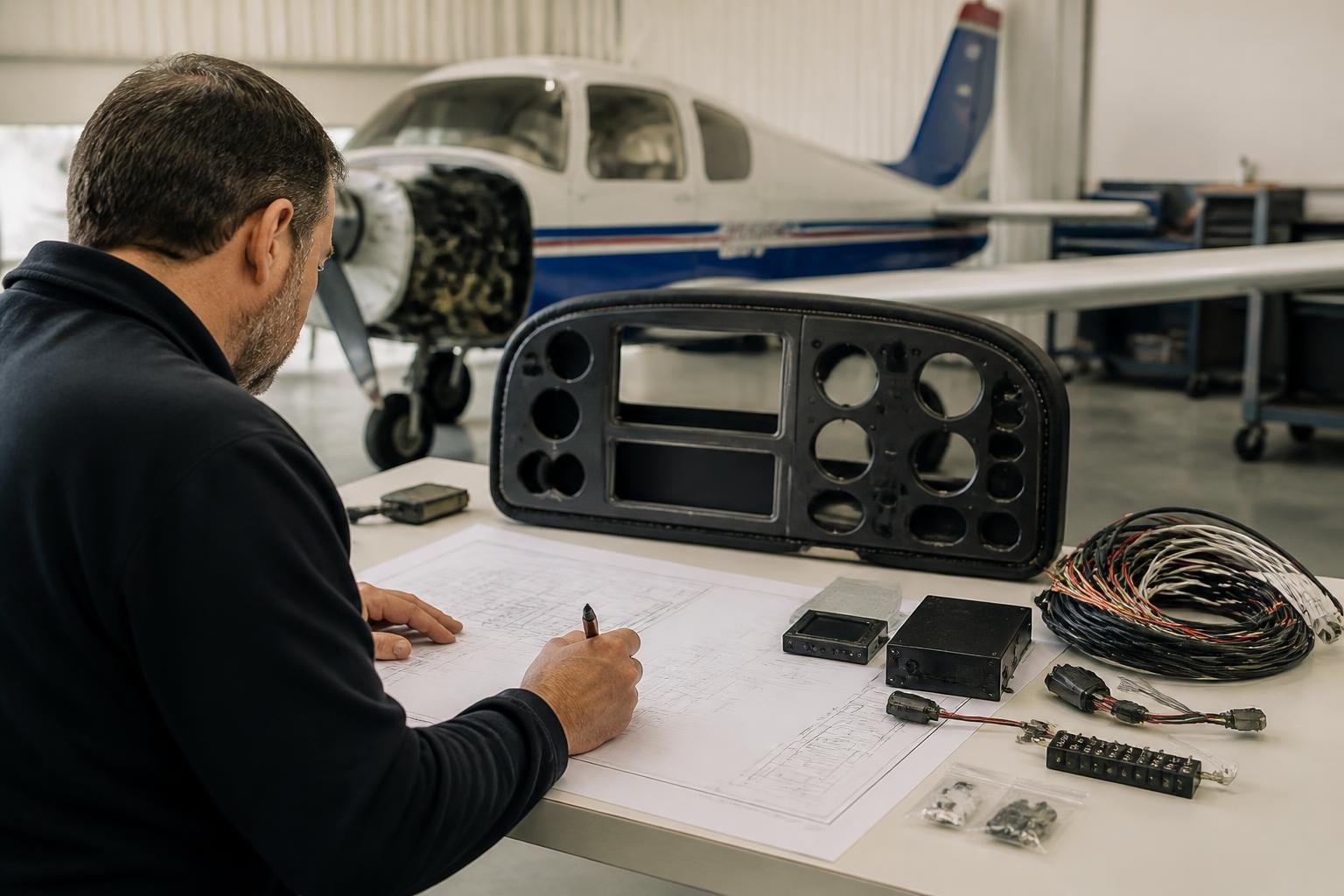
There are two broad approaches to modernization. Like-for-like replacement aims to restore a specific function with the least disruption. A mission-led redesign asks what the aircraft should do over the next ownership period, then selects an integrated suite accordingly. The first can be sensible when the remaining equipment is well supported. The second may produce a cleaner long-term result when several legacy units are near the end of practical support.
Total installed cost includes equipment, labour, wiring, antennas, panel work, configuration, testing, documentation and certification or approval work where applicable. Component price comparisons can be misleading because a lower-priced device may demand more adaptation, while a higher-priced integrated solution may reduce duplicated displays, old indicators or future maintenance exposure.
Autopilot compatibility is often decisive. Retaining a legacy autopilot may constrain navigator and display choices, require interface hardware, or leave a critical unsupported component in the system. The same applies to existing indicators, annunciators and engine instruments. Electrical-system capacity, alternator condition, cooling and circuit protection should also be reviewed before adding loads to an older aircraft.
Separate required work from discretionary improvements. A failed or unsupported communications unit may need near-term action; cosmetic panel refinishing or a premium display may be optional. Build a contingency for wiring condition, hidden defects and work revealed after disassembly. A quote is a professional estimate based on known facts, not a guarantee that an older panel contains no surprises.
When comparing aircraft, treat an anticipated upgrade as future capital expenditure rather than assuming it is absorbed by the listing price. The relevant comparison is the purchase price plus likely installed avionics cost, downtime and remaining system risk. That produces a more useful decision than comparing component prices or treating an old panel as a simple discount.
How Obsolete Equipment Affects Aircraft Value and Marketability
Obsolete equipment changes buyer risk perception. A buyer who needs reliable IFR capability, frequent cross-country access or training utility may view a legacy panel as a deferred project rather than a ready-to-use system. That can create negotiation leverage because the buyer must reserve time, capital and technical attention after closing.
However, a single old unit does not define the entire aircraft. Airframe condition, engine status, maintenance quality, useful load, corrosion history, interior, paint, equipment documentation and local demand all remain relevant. A well-kept aircraft with one aging radio may be a straightforward purchase; an aircraft with multiple unsupported, poorly documented systems may require a substantially different valuation approach.
Modern, compatible upgrades can improve marketability when they are documented clearly and match the aircraft’s mission. The value is not merely the retail price of the installed equipment. Buyers also value evidence of professional installation, coherent system design, known approval status and a panel that does not immediately demand capital expenditure.
Asking prices, auction bids and market value should not be treated as the same thing. An asking price reflects a seller’s position, and a current bid reflects bidding at a particular moment. Neither independently proves a final market value. For sellers, transparent descriptions are usually more productive than broad claims. Identify installed equipment by model, state known discrepancies accurately, and make manuals, supplements and installation records available for review.
Upgrade, Repair or Retain: Choosing the Sensible Path
Continued repair can be rational when the equipment is still supported through a credible repair channel, performs an appropriate role, and is not a single point of failure for the intended mission. This can be particularly sensible for a VFR aircraft with a limited annual utilisation pattern, or where a well-supported legacy unit integrates cleanly with the rest of the panel.
Partial modernization is not always economical. Replacing one display or navigator can leave the owner with old indicators, adapters, autopilot interfaces and wiring that remain costly liabilities. Before selecting a single replacement, ask what it preserves, what it strands and what it commits the aircraft to during the next upgrade cycle.
Incremental planning works best when based on operational priority. Address required communication, surveillance and navigation needs first; then reliability issues; then workload, convenience and cosmetic improvements. Consider backup instruments and electrical redundancy in proportion to the aircraft’s mission. A sophisticated primary display does not eliminate the need for sensible failure planning.
Historic and collectible aircraft may justify retaining period-correct equipment, especially when preservation is central to the aircraft’s purpose. That choice should be deliberate and should not be confused with claiming modern operational capability. Select replacements with a credible support outlook, a capable installer and realistic access to post-installation troubleshooting.
Special Considerations by Aircraft Type and Ownership Mission
Certified piston singles often have relatively established retrofit pathways, but that does not make every installation simple. Panel space, electrical capacity, existing autopilot design and approval documentation still influence scope. A common airframe can be easier to support, yet individual workmanship and equipment history remain decisive.
Legacy twins may introduce more complex radio, autopilot, annunciation and redundancy arrangements. An upgrade can affect both sides of the panel, multiple navigation sources and systems needed for the aircraft’s intended IFR role. Turboprops and business aircraft can be more complex again, particularly where integrated flight decks, sensors and maintenance-programme requirements are involved. Specialist technical review is prudent before treating a display replacement as a routine project.
Experimental and amateur-built aircraft require careful jurisdiction-specific assessment. Their equipment choices, operating limitations, maintenance privileges and approval pathways can differ significantly from those of type-certificated aircraft. Do not apply assumptions from a certified aircraft installation without confirming the rules applicable to the aircraft and its registration.
Vintage and collectible aircraft may prioritize historical integrity over contemporary capability. An owner may retain original radios and instruments for display or local use while adding discreet supplemental equipment where permitted and appropriate. International buyers should also consider import, registration, local approval and data requirements early, because an acceptable installation in the aircraft’s current country may not transfer unchanged.
Buyer and Seller Checklists for Unsupported Avionics
Buyer checklist
- Inventory every installed avionics component by manufacturer and model.
- Match the inventory to logbooks, equipment lists, manuals and flight-manual supplements.
- Confirm manufacturer support, repair options, database availability and known interface constraints.
- Conduct a power-up and functional evaluation; arrange an in-flight evaluation where mission-critical.
- Include avionics expertise in the independent pre-buy inspection.
- Obtain a written upgrade estimate and retain a contingency for hidden wiring or integration work.
- Decide whether to proceed, renegotiate, budget the project or walk away based on total ownership exposure.
Seller checklist
- Provide an accurate model-specific equipment list rather than generic claims about panel capability.
- Disclose known discrepancies, intermittent behaviour and equipment that is no longer supported.
- Organize logbooks, installation paperwork, manuals, supplements and any available wiring information.
- Distinguish installed, approved equipment from portable devices, removed units and planned upgrades.
- Allow serious buyers to review the records and arrange an appropriate technical inspection.
For auction and listing review, read capability claims carefully. “GPS,” “ADS-B” or “IFR equipped” can describe very different installations. Establish what is actually installed, what documentation supports it and whether it meets the buyer’s intended use. Clear presentation protects both parties from assumptions becoming a dispute after the sale.
Making a Sound Used-Aircraft Decision When the Panel Is Aging
An aging panel does not automatically make a used aircraft a poor choice. It means the buyer should balance avionics condition against the airframe, engine, maintenance history, mission and purchase economics. An aircraft with excellent structural condition and complete records may justify a planned modernization. Another with unclear wiring, unsupported critical equipment and missing documentation may carry more risk than its purchase price suggests.
Documentation and independent technical review are the practical foundations of this decision. Reserve realistic capital for deferred avionics work, and decide whether essential upgrades should be completed before purchase, negotiated into the transaction, or scheduled after closing. The answer depends on mission urgency, installation availability, the aircraft’s present operational status and the buyer’s tolerance for downtime.
When comparing listings, use the same structured inventory and supportability questions for each aircraft. That makes it easier to distinguish a panel that is simply older from one that is unsupported, poorly integrated or unsuitable for the mission. A disciplined review of equipment records, functional condition and credible upgrade scope turns obsolete aircraft avionics from a hidden cost into a manageable purchase decision.

Comments
No comments yet
Be the first to share your thoughts!