
 Bad Vöslau
 Kirn
Kirn
 Florida
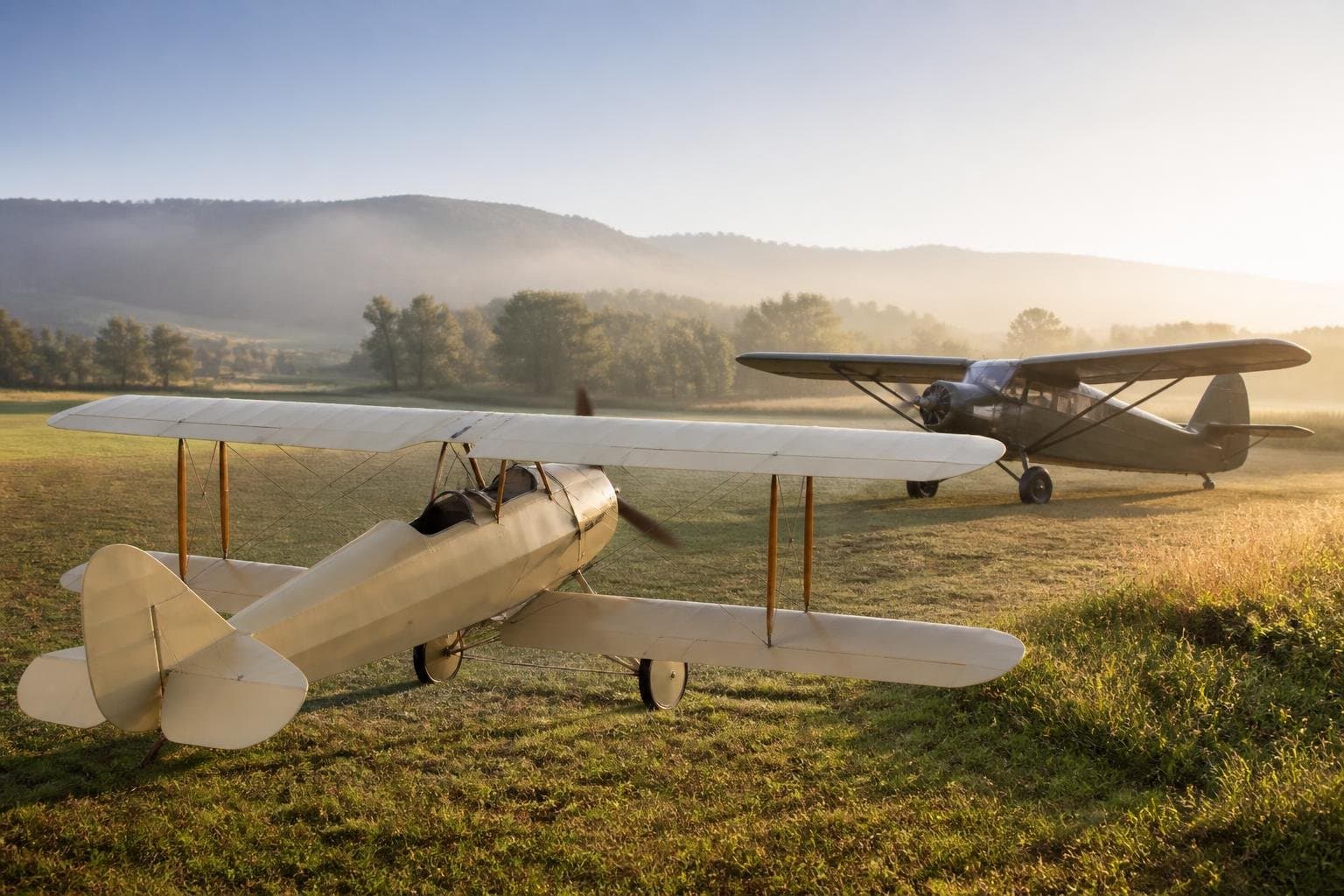
The J3 Cub vs Super Cub decision is fundamentally a choice between a light, slow-flying classic and a substantially more capable utility taildragger. A Piper J-3 Cub suits pilots drawn to uncomplicated local flying, heritage and low-speed handling. A PA-18 Super Cub better suits missions involving payload, short or rough strips and greater flexibility. In either case, an individual aircraft’s condition, records, approved configuration and the buyer’s tailwheel training matter more than the model name on the fabric.
J-3 Cub vs Super Cub: The Short Answer
The Piper J-3 Cub and PA-18 Super Cub share an unmistakable family resemblance: tandem seating, high wings, fabric-covered steel-tube structures and conventional landing gear. Yet they were designed around notably different expectations.
A J-3 is primarily a recreational aeroplane. Its modest power, light weight and deliberately simple equipment make it well suited to local flights, calm-air sightseeing, grass-strip flying and the pleasure of operating a significant classic. The experience is unhurried. It rewards smooth control inputs and disciplined energy management rather than demanding speed or carrying capacity.
The PA-18 takes the basic Cub formula toward practical utility. More power, a stronger and more adaptable airframe, higher allowable weights in many configurations, improved baggage arrangements and broader modification potential make it a more capable platform. It is often associated with backcountry operations, but that reputation should not obscure the need for conservative judgement, proper loading and aircraft-specific training.
- Choose the J-3 when heritage, light local flying and simplicity are the priorities.
- Choose the PA-18 when carrying capability, short-field performance and mission flexibility are central requirements.
- Choose neither solely by reputation: buy the aircraft with the better documented condition and configuration for the work you actually intend to do.
A well-restored, honestly documented J-3 may be a more sensible purchase than a poorly recorded PA-18 with an appealing paint scheme and oversized tyres. Equally, a PA-18 configured for a buyer’s real payload and runway environment may prevent the compromises that a J-3 would require.
How the J-3 Cub Led to the PA-18 Super Cub
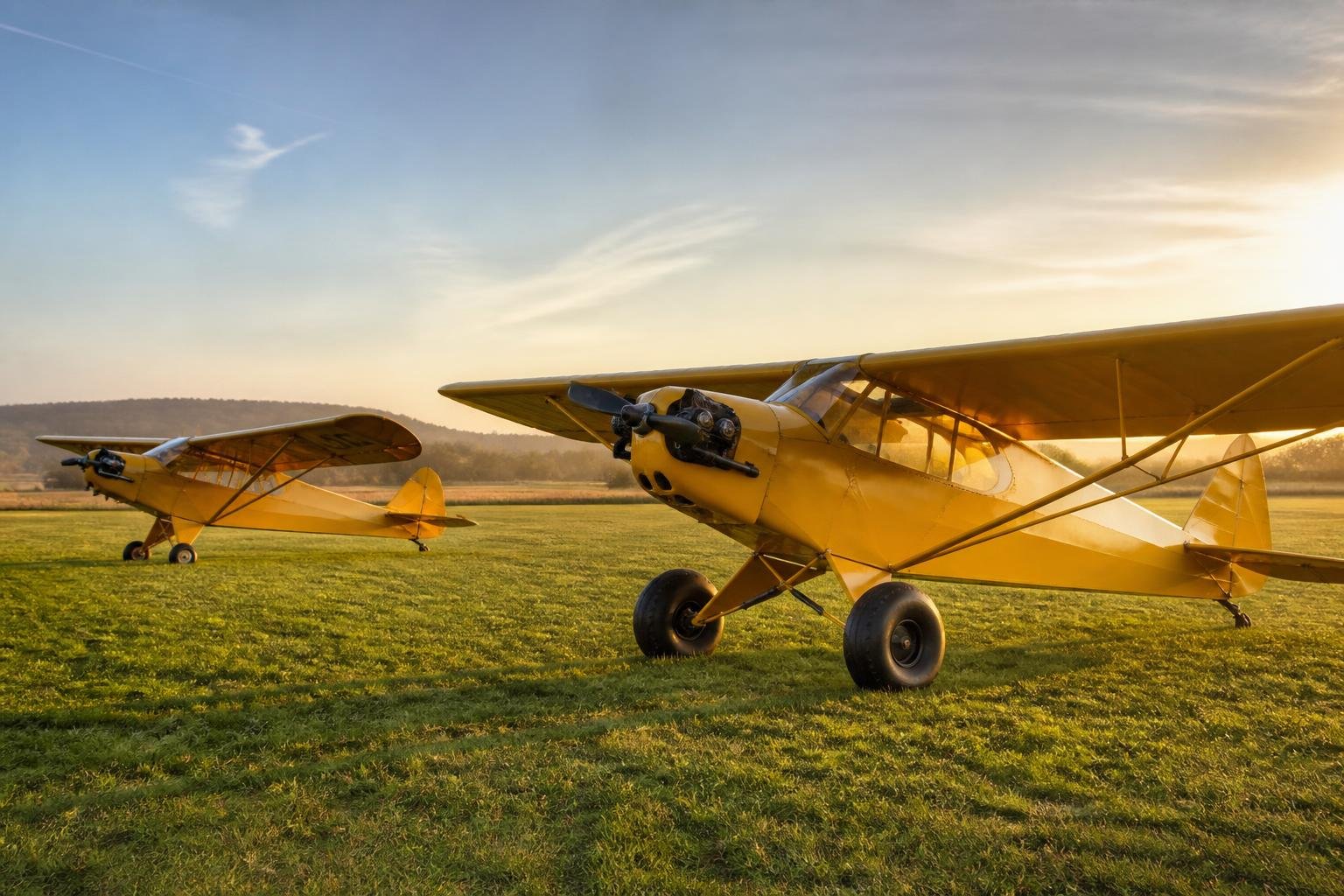
The J-3 Cub emerged from the pre-war light-aircraft tradition associated with the Piper Cub line. It became a familiar civilian aeroplane after the Second World War, when its simple layout, approachable performance and distinctive appearance made it central to recreational aviation in North America and beyond. Numerous examples have since been restored, rebuilt and adapted, so age alone reveals little about a particular aeroplane’s present condition.
The PA-18 Super Cub was developed later as a more capable Piper tandem two-seater. It preserved the basic high-wing, tailwheel configuration but evolved it structurally and operationally. The Super Cub family could accommodate substantially more powerful engines than typical J-3 installations and became associated with utility, bush and special-purpose work as well as private ownership.
Between these models sit related Cub-family aircraft, including the PA-11 and PA-12. They are not interchangeable labels. A PA-11 may resemble a J-3 in broad concept while incorporating meaningful differences, and a PA-12 is a distinct, larger development with its own certification basis and operating characteristics. A prospective buyer should therefore avoid treating “Cub” as a complete specification.
Identify the exact model, serial number, type certificate basis and current approved configuration before comparing performance or value. Decades of ownership can bring engine conversions, landing-gear changes, extended baggage areas, electrical-system work, float fittings and other alterations. The logbooks, weight-and-balance data and approval paperwork—not exterior appearance—establish what the aircraft is.
Airframe Design and Cabin: What Physically Changed
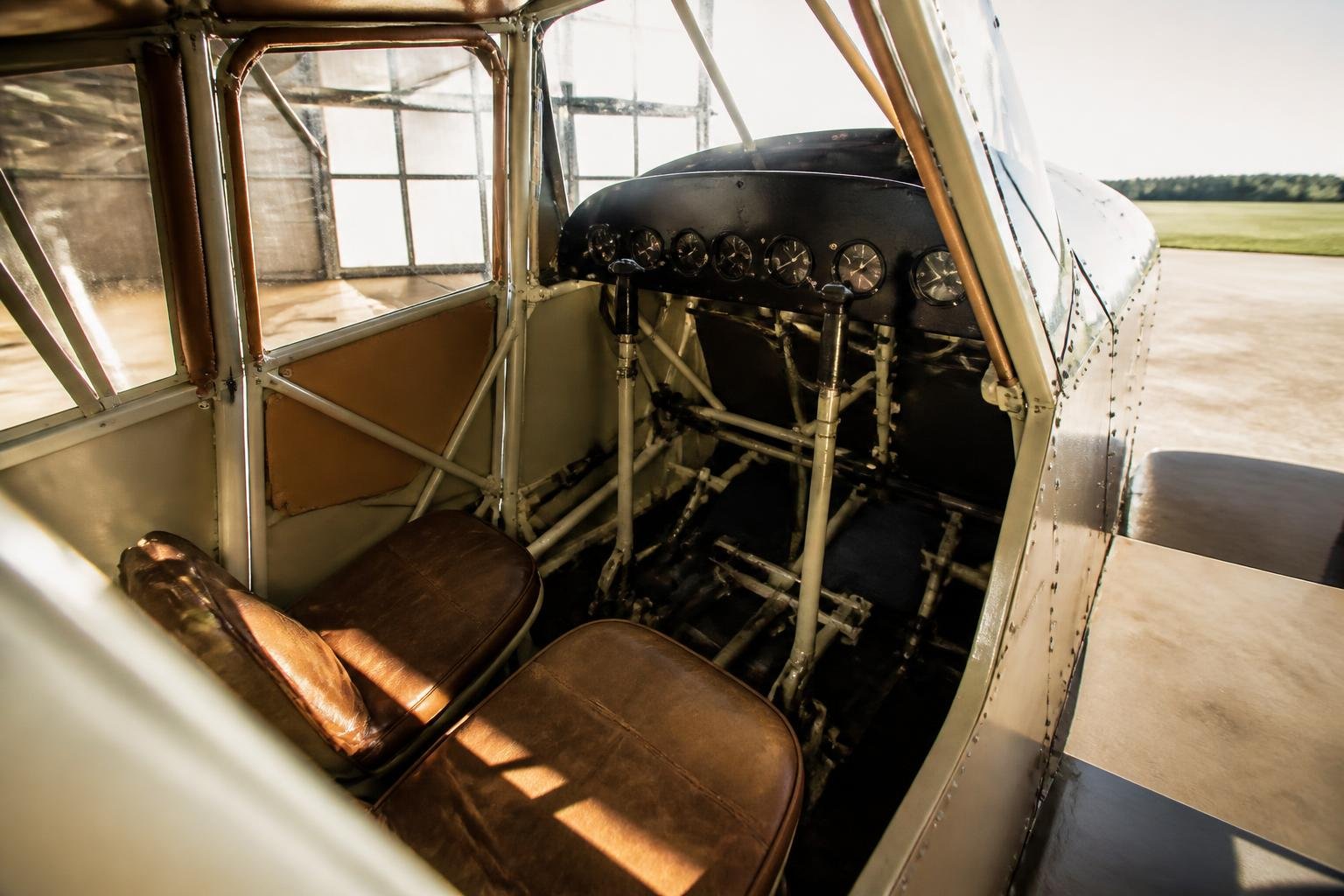
Both aircraft use the enduring Cub-family formula of a welded steel-tube fuselage with fabric covering. This construction can be durable and repairable when maintained correctly, but it also makes workmanship, corrosion protection and fabric condition central to any purchase decision.
The PA-18 incorporates refinements intended for its higher-capability role. Its structure, wing arrangements and landing gear evolved beyond the lighter J-3 pattern, while many Super Cubs have subsequently received approved upgrades tailored to specific uses. In practical terms, the PA-18 generally presents as a more robust working aeroplane, but the precise equipment and approved weight limits must be checked on the individual aircraft.
Both types use tandem seating, usually with the pilot occupying the rear seat in normal solo operation. This has practical implications. The rear position often provides the intended control and balance arrangement, while forward visibility during ground operations can be restricted by the nose and wing geometry. Pilots use S-turns or other appropriate taxi techniques to maintain a useful view ahead, subject to local conditions and safe operating practice.
Cabin comfort is modest in either aeroplane by modern touring-aircraft standards. Entry, shoulder room, heating, ventilation, headset installation and baggage access can vary materially between individual aircraft. A J-3’s accommodation is part of its period character; a PA-18 may have more practical baggage provisions, particularly where an approved extended-baggage installation is fitted. That does not mean the baggage area may simply be filled to capacity: load limits and centre-of-gravity calculations still govern.
Doors, glazing and seating layouts also deserve a close look. Some restorations improve usability with carefully chosen equipment, while others preserve a historically faithful arrangement. Solo-seat location, rear-seat controls, door configuration and window condition affect both daily enjoyment and training suitability. Do not assume an alteration is approved because it appears professionally finished.
Power, Weight and Performance Differences
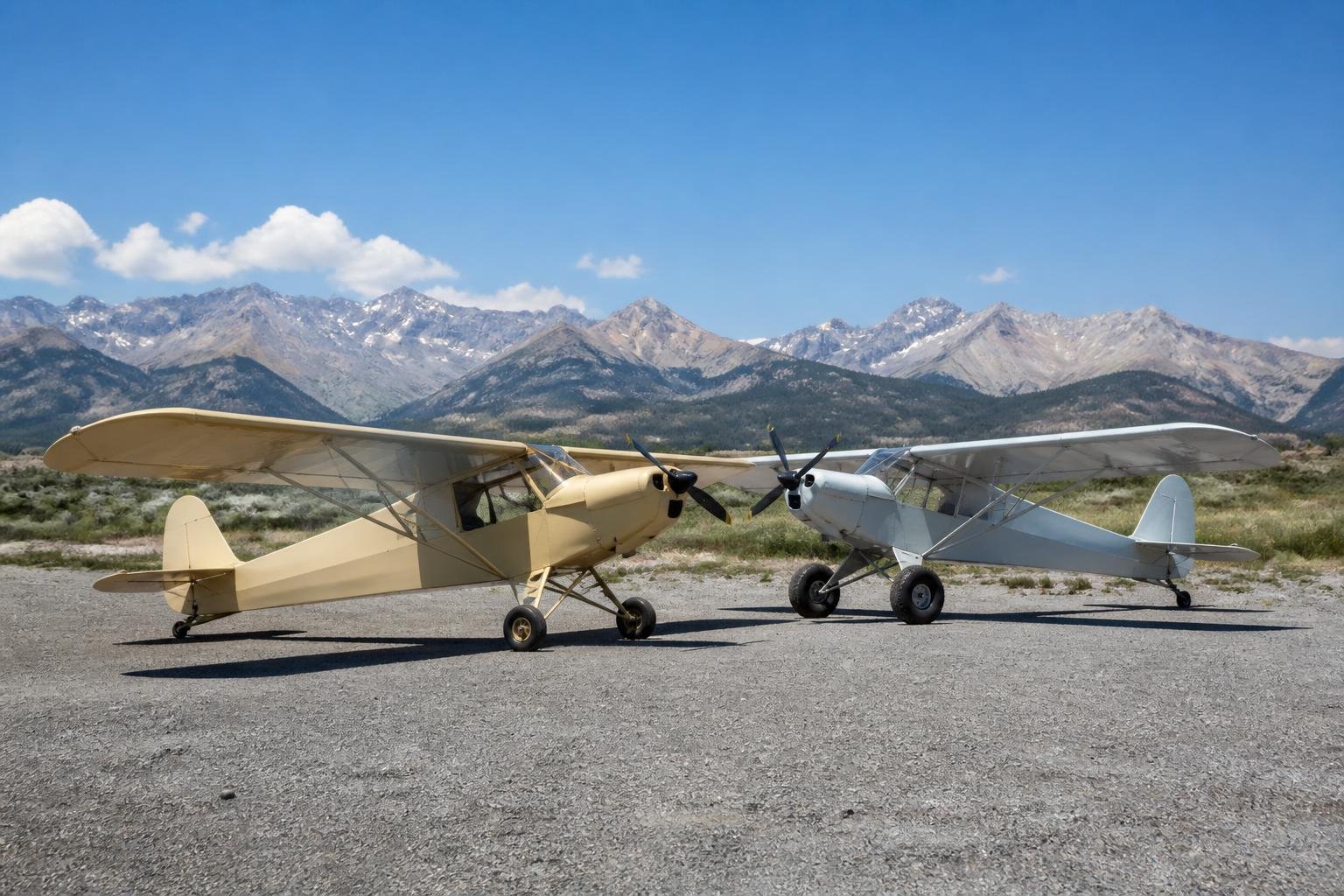
Typical J-3 Cubs use Continental engines of relatively modest horsepower, commonly from the low-power range associated with the type’s original light-aircraft role. The exact engine installation matters: a J-3 may have an original-style engine or a different approved installation, and its performance data must correspond to its actual certification and equipment.
PA-18 aircraft are commonly encountered with more powerful engine variants, including installations that give the Super Cub considerably greater take-off, climb and load-carrying potential than a typical J-3. That extra power changes more than the headline performance. It affects acceleration, propeller effects, fuel consumption, thermal management and the attention required during take-off and go-around.
| Comparison area | J-3 Cub tendency | PA-18 Super Cub tendency |
|---|---|---|
| Primary character | Light recreational classic | Higher-capability utility taildragger |
| Power installation | Generally modest, configuration-dependent | Broader range, often substantially higher |
| Payload flexibility | Limited by light-aircraft design and loading | Usually greater, subject to approved gross weight |
| Field use | Best matched to conservative local operations | Can support more demanding missions when properly configured |
| Modification effect | Can materially alter originality and usability | Often major to mission and value |
Published cruise speed, climb, take-off distance, landing distance, useful load and range figures should only be used for the exact approved configuration. A performance number from a stock, lightly equipped aircraft may have limited relevance to one carrying floats, skis, large tyres, an extended baggage compartment, additional avionics or a different propeller.
Weight is especially consequential. A modified PA-18 may be capable of useful work, yet accessories can consume payload and increase drag. Floats and skis introduce their own operating considerations. Oversized tyres may be sensible for a specific surface environment but are not a substitute for sound field assessment. Comparing a stock J-3 with a heavily modified PA-18 as if they were merely two versions of the same aeroplane produces misleading conclusions.
Handling Characteristics and Tailwheel Training Needs
The J-3’s low inertia and low operating speeds create a direct, revealing flying experience. It is often described as gentle in the air, but gentle does not mean casual. Light aeroplanes can be affected by gusts, turbulence and abrupt control use, and the pilot must manage the aeroplane accurately throughout the landing roll.
A PA-18 retains the essential tailwheel demands while adding the implications of more available power. Torque, slipstream effects and rapid acceleration may be more pronounced, particularly in higher-powered examples. Proper directional control begins before the tail rises and continues until the aircraft is fully under control after landing. Loading, wind, surface condition and tyre choice all influence how the aeroplane behaves.
Three-point and wheel landings are techniques rather than fixed preferences. Each can be appropriate in particular conditions, but the right technique depends on the aircraft’s approved configuration, weight, runway surface, wind and pilot proficiency. A transition instructor familiar with the specific Cub variant can explain the practical differences without turning a technique into a universal rule.
There is no single meaningful crosswind limit that transfers from one J-3 or PA-18 to every other. Aircraft condition, tyres, brakes, loading, runway width and surface, wind character and pilot skill all matter. Treat any published or anecdotal figure cautiously, and establish personal limits that are conservative and supported by training.
For pilots operating under US rules, a tailwheel endorsement is generally relevant before acting as pilot in command of a tailwheel aeroplane, subject to the applicable regulatory details. Elsewhere, licensing and differences-training requirements vary. Insurance providers may also require specified dual instruction, recent tailwheel experience or a supervised checkout. Confirm these requirements before purchase, not after delivery.
Choosing by Mission: Recreational Flying, Training or Utility Work
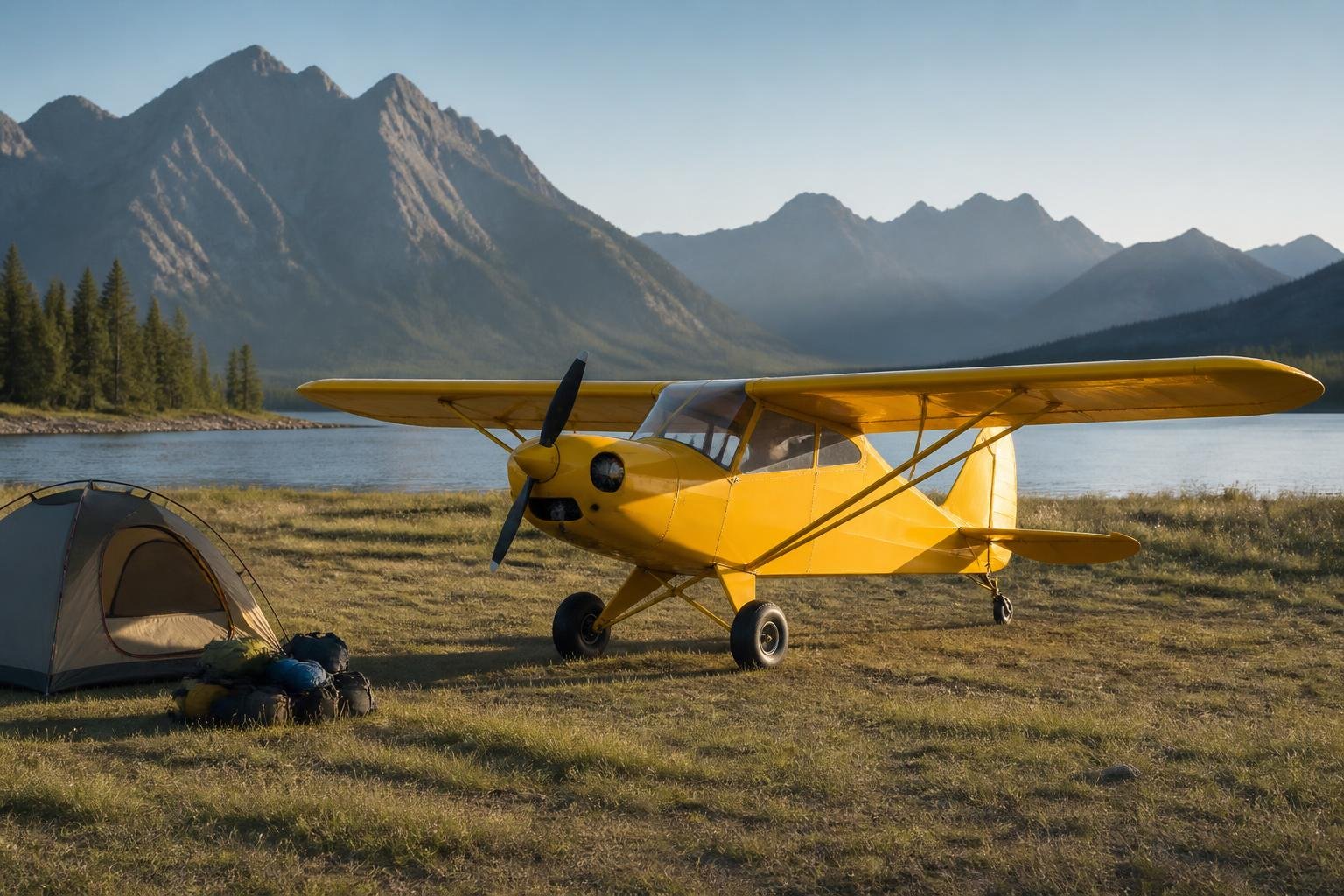
The J-3 Cub is compelling for evening flights, local sightseeing, relaxed grass-strip visits, heritage ownership and basic tailwheel experience. It makes sense for an owner who values the aeroplane itself as much as the destination. A J-3 can carry a passenger within its limitations, but a buyer should plan honestly around occupant weight, fuel, baggage and density altitude rather than relying on a romantic image of two people departing a short field on a hot day.
The PA-18 better accommodates missions involving remote strips, camping equipment, fishing access, light utility work and two-person travel. Its capabilities, however, are not a licence to exceed margins. Backcountry flying adds terrain, obstacle, surface, weather and communications considerations that remain present even with a powerful engine and large tyres.
Grass strips may be entirely suitable for either type when maintained and assessed appropriately. Paved runways are not inherently unsuitable, but tyre wear, braking technique and operational priorities can differ. Rough or unimproved fields require more than a backcountry-oriented aircraft: the pilot needs reliable site intelligence, an understanding of the surface, suitable weather and an escape plan.
Build a mission worksheet before shopping
- How many people will normally be aboard, and at what realistic weights?
- What baggage, survival equipment or camping gear will be carried?
- How far will typical flights be, including reserve-fuel requirements?
- What are the shortest, softest or roughest runways likely to be used?
- What terrain, obstacle and density-altitude conditions apply?
- Will the aeroplane operate through winter, on floats or from seasonal strips?
If the answers consistently point to light local flights, the J-3 may be the more satisfying and economical fit. If payload and field flexibility recur in the worksheet, a suitably configured PA-18 deserves priority.
Ownership Costs, Maintenance and Parts Support
Purchase price is only the opening figure. For either aircraft, acquisition cost reflects originality, restoration quality, engine condition, installed equipment, provenance, records and the market’s assessment of the individual example. A lower-priced aeroplane with poor records or aging fabric can become the more expensive choice once corrective work begins.
Fabric condition requires knowledgeable evaluation. Buyers should establish the age and type of covering system, the quality of the documented work and the condition of finish coatings. Fabric can conceal corrosion or defects in underlying structure, so inspection should not stop with a taut surface and glossy paint. Steel-tube fuselage condition, drainage, prior repairs and corrosion protection deserve attention. Wood components, where present in a particular design or installation, also need specialist assessment.
Engine time alone is incomplete. Calendar age, operating history, preservation during inactivity, overhaul documentation, cylinder condition, accessory records and oil-analysis history can all matter. An engine that has flown regularly with orderly records may present a different risk profile from one with low hours after long storage.
Approved modifications must be traceable. Review supplemental type certificates, field approvals where applicable, maintenance entries and current weight-and-balance information. A modification may improve mission utility but can also affect insurance acceptance, maintenance complexity and resale audience.
Parts support for Cub-family aircraft can be strong, but availability is not the same as immediate availability or low cost. Buyers should identify a maintenance facility or mechanic with fabric-aircraft and tailwheel experience, not merely general piston-engine experience. Hangar storage is usually a prudent budget priority because it protects fabric, finishes and structure from prolonged weather exposure. Plan for insurance, fuel, annual or equivalent recurring inspections, unscheduled repairs and the first-year catch-up work separately from the purchase price.
What to Inspect Before Buying a J-3 or PA-18
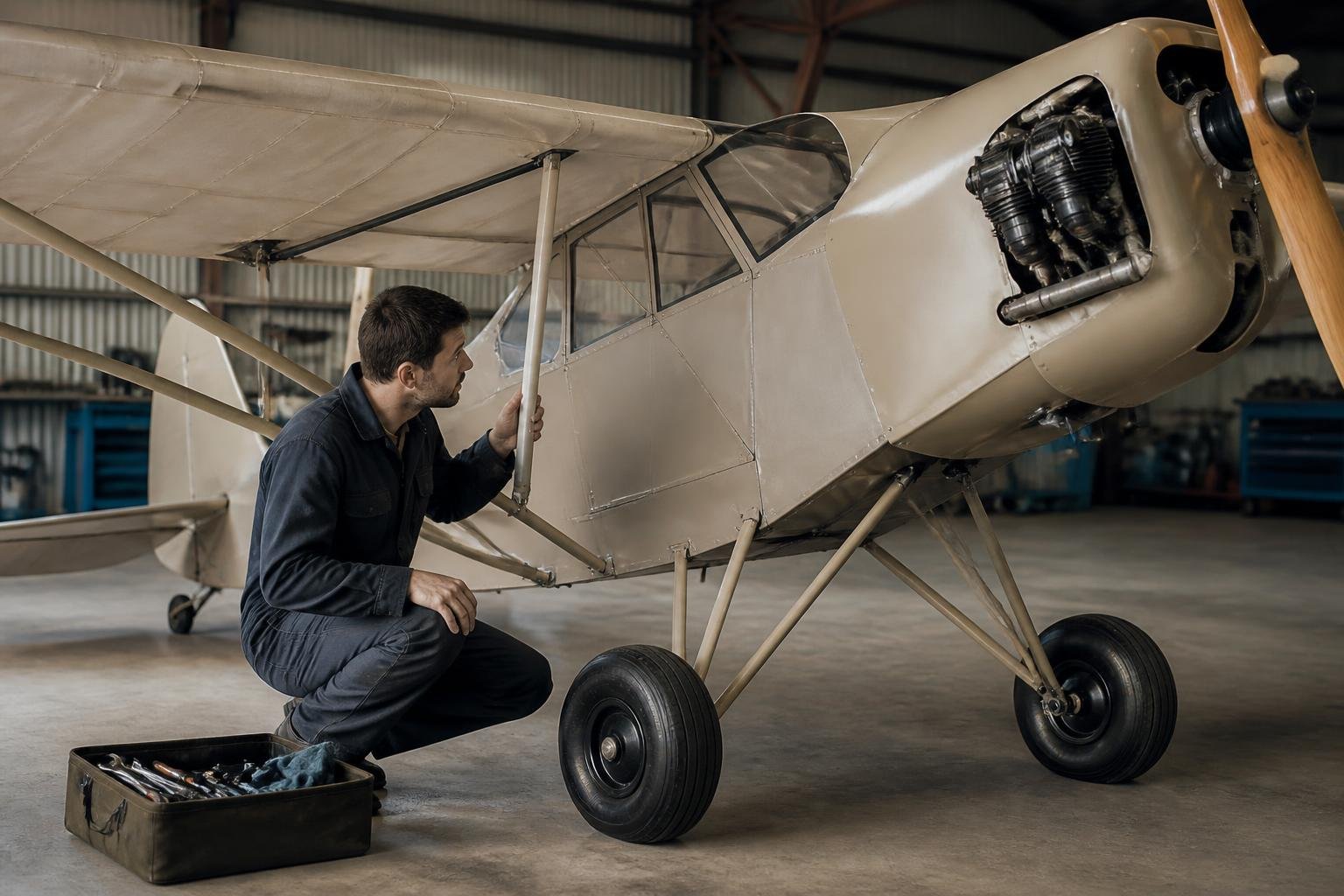
Use an independent pre-buy inspection performed by a mechanic familiar with Cub-family aircraft. The scope should be agreed in writing and should reflect the exact model, engine, modifications and intended use. A pre-buy inspection is a buyer’s due-diligence exercise; it is not automatically an annual inspection, an airworthiness determination or a guarantee of future reliability.
- Review airframe and engine logbooks for continuity, legibility and unexplained gaps.
- Compare serial numbers, data plates, registration and equipment records.
- Examine weight-and-balance records against the installed configuration.
- Confirm fabric age, covering system, attachment details and restoration documentation.
- Inspect fuselage tubing, landing gear, tail surfaces, lift struts and attachment areas.
- Assess wing spars, corrosion-sensitive areas and any applicable inspection requirements.
- Review compression results, oil-analysis trends where available, accessories and propeller records.
- Verify damage repairs and modifications against approved data and maintenance records.
Wing and lift-strut inspection deserves particular care. The appropriate process depends on the exact aircraft and applicable instructions or requirements, so the inspecting mechanic should identify what is relevant rather than rely on a generic checklist. Similarly, visible fabric, paint and fittings may not reveal the quality of work beneath them.
Ask for a coherent account of damage history and major repairs. A properly repaired aircraft is not necessarily unsuitable, but undocumented or poorly explained repairs create risk. Records review should occur before costly travel where possible, followed by an in-person inspection and a practical evaluation of the aircraft’s systems and handling by appropriately qualified people.
Originality, Restorations and Modifications
Originality and usability can pull in different directions. A J-3 preserved or restored close to its historic configuration may appeal strongly to collectors and pilots seeking an authentic period experience. Its materials, workmanship and documentation still require scrutiny; “restored” is a description, not a condition guarantee.
PA-18 ownership often involves more deliberate configuration choices. Utility modifications can include changes affecting powerplant installation, baggage capability, electrical equipment, brakes, landing gear or operational equipment. Such changes can be sensible when matched to a real mission, but they may add weight, maintenance obligations and limits that a buyer should understand before valuing the aircraft.
Avionics and electrical improvements can make an aircraft easier to operate within its intended environment, while cargo and landing-gear changes can support certain field operations. None should be assumed from an exterior photograph. Paint, tyres and accessory fittings can create an impression of capability that is not supported by approved gross weight, loading data, paperwork or pilot experience.
For US-registered aircraft, supplemental type certificate documentation and FAA Form 337 records may be relevant to major alterations. Other jurisdictions have their own approval and record systems. The buyer should verify that all modifications conform to the aircraft’s applicable regulatory framework and that the insurer accepts the resulting configuration.
Resale value depends on the audience. A carefully authentic J-3 may appeal to one buyer group; a mission-focused PA-18 with thoroughly documented upgrades may appeal to another. The strongest position is not maximum originality or maximum modification. It is a coherent aircraft with high-quality work, complete records and a configuration that matches its likely use.
Market Evaluation and Comparing Individual Aircraft
Asking prices, auction bids and appraisals measure different things. An asking price reflects a seller’s position. A bid reflects market participation at a particular time and may not be the final transaction result. An appraisal is an opinion prepared for a stated purpose and scope. None should be treated automatically as the definitive value of every J-3 or PA-18.
Compare individual aircraft on a condition-adjusted basis. Airframe time, engine time and restoration age provide context, but they cannot be interpreted in isolation. A recent restoration with complete photographic and maintenance documentation may command attention for good reason. Conversely, an older restoration may remain sound if its storage, use and continuing maintenance are well evidenced.
Documentation quality is a material part of value and risk. Complete records help a buyer verify identity, maintenance history, alterations, damage repairs and weight-and-balance status. Incomplete records do not automatically end a purchase, but they should change the inspection scope, risk assessment and price discipline.
International buyers should account for transport, disassembly and reassembly where needed, import requirements, taxes, registration eligibility and local maintenance support. These costs and processes are jurisdiction-specific. Establish them before bidding or committing to a purchase, particularly for an aircraft that will cross borders.
Questions to ask before travel or bidding
- Are the airframe, engine and propeller logbooks available and continuous?
- When was the fabric applied, by whom and under which documented system?
- What engine, propeller and major modifications are installed, and what approvals support them?
- What is the current empty weight, useful-load calculation and centre-of-gravity data?
- Has the aircraft had damage, corrosion repair, rebuild work or long-term inactivity?
- May an independent mechanic inspect the aircraft and records before commitment?
Review current Piper aircraft listings as individual opportunities, not as model-wide price benchmarks. The aircraft that fits best is the one whose configuration, records, condition and mission align with your requirements at a supportable total ownership cost.
Which Cub Fits Your Mission?
Choose a J-3 Cub if you want a lighter, slower and historically focused ownership experience. It is particularly attractive when the goal is local recreational flying, the enjoyment of traditional stick-and-rudder skills and stewardship of a classic aeroplane. Its limitations are part of the ownership proposition, not defects to be ignored.
Choose a PA-18 Super Cub if your mission repeatedly needs more payload, power and operational flexibility. It can be a practical answer for carefully planned work from grass, remote or challenging strips, but its extra capability comes with greater configuration complexity and a stronger need for disciplined training and loading control.
In the J3 Cub vs Super Cub comparison, headline performance should not outweigh operating discipline. The better choice is often the aircraft that leaves comfortable margins for people, fuel, runway and weather—not the one with the most dramatic specification.
Use a simple next-step process: define the mission, shortlist aircraft that genuinely meet it, obtain records before travelling, compare each aircraft’s approved configuration and arrange an independent pre-buy inspection. When two used aircraft differ substantially in documentation and condition, those factors should outweigh a nominal preference for one Cub model over the other.
Comments
No comments yet
Be the first to share your thoughts!