
 Bad Vöslau
 Kirn
Kirn
 Florida
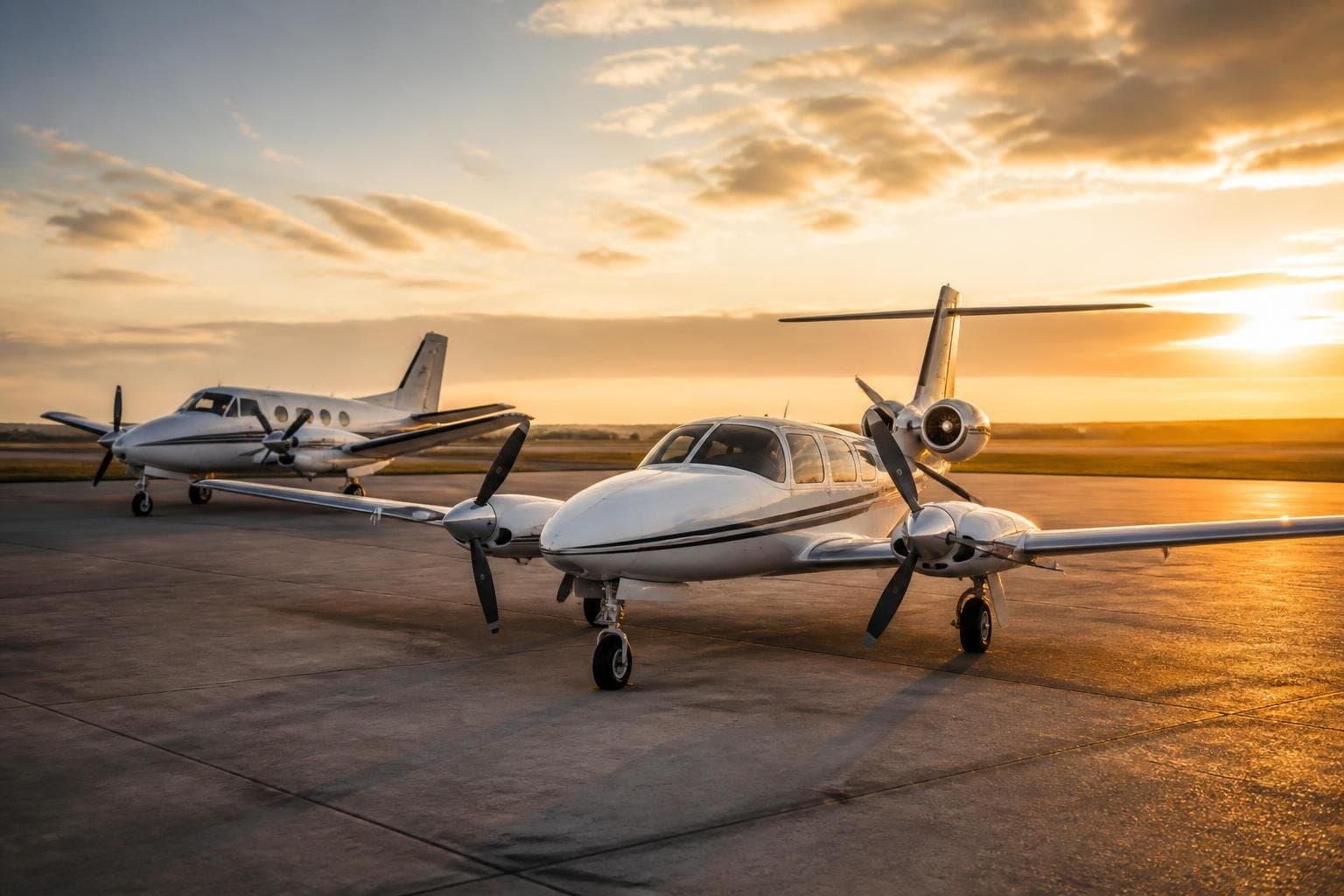
In the push pull aircraft vs twin decision, the defining difference is not the number of engines but where their thrust acts. A centreline-thrust push-pull design can reduce the directional-control challenge after an engine failure, while a conventional wing-engine twin offers a far broader choice of cabins, performance levels and established support. Neither layout is automatically better. The right purchase depends on the mission, the individual aircraft’s records and condition, available training and maintenance support, and the financial reserve held beyond the purchase price.
Push-Pull vs Conventional Twin: The Buyer’s Decision

A push-pull aircraft places its engines on the fuselage centreline: one pulls from ahead of the cabin and one pushes from behind it. A conventional twin mounts one engine on each wing. This apparently straightforward difference changes engine-out handling, engine access, airflow around the airframe, cabin architecture and, in some cases, the buyer pool when it is time to sell.
The main attraction of a centreline-thrust aircraft is the absence of the strong yawing tendency created when one wing-mounted engine stops producing power. In a conventional twin, a complete failure of one engine creates asymmetric thrust and requires timely rudder input, correct identification of the failed engine, configuration management and precise airspeed control. A push-pull layout removes that left-right thrust asymmetry, but it does not remove the performance consequences of losing half the installed power.
Buyers commonly consider these aircraft for owner-flown touring, family travel, business trips, utility work and multi-engine training. The practical decision should begin with a realistic mission statement: typical occupants, baggage, stage length, runway environment, weather capability, home-base support and annual flying hours. An aircraft that is attractive because of its layout may still be unsuitable if its useful load, equipment, maintenance history or local specialist support does not fit that mission.
Condition matters more than configuration alone. A well-documented, carefully maintained conventional twin can be a more rational purchase than a cheaper push-pull aircraft with incomplete records or overdue major work. The reverse is equally true. Compare individual examples on airframe condition, engine and propeller status, avionics, corrosion exposure, modifications, logbook continuity and foreseeable maintenance rather than treating either layout as a shortcut to a buying decision.
How Push-Pull and Conventional Twin Layouts Differ
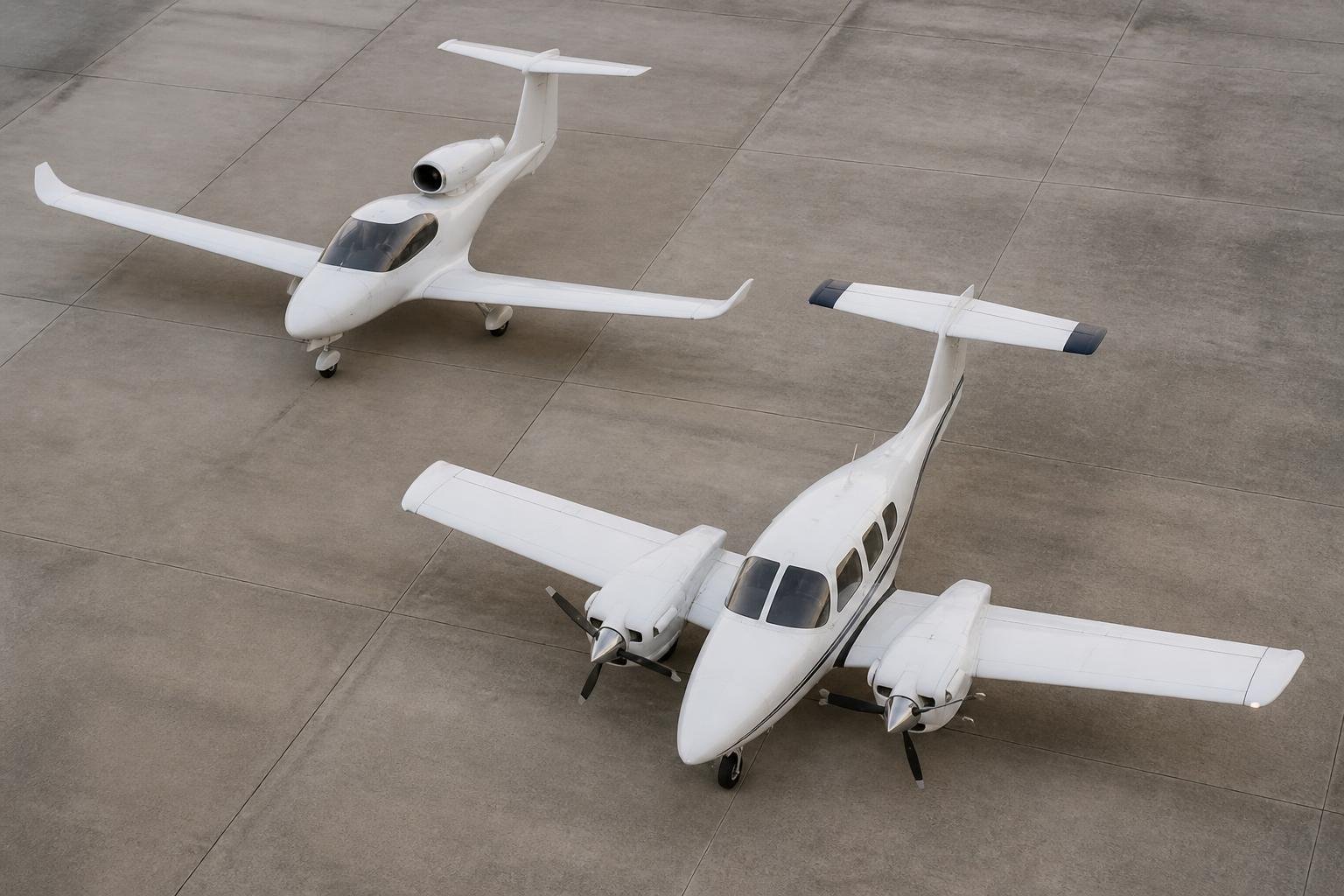
In a push-pull configuration, both propellers act along the aircraft’s longitudinal centreline. The forward engine is normally installed in the nose and the rear engine sits behind the cabin, driving a pusher propeller. The Cessna Skymaster family is the best-known light-piston example, although centreline-thrust concepts have appeared in other aircraft categories and eras.
A conventional piston twin has an engine nacelle on each wing. This is the familiar arrangement seen across many Beechcraft, Piper and other light twins. The architecture can accommodate a wide range of engine outputs, cabin sizes and landing-gear arrangements. It also places the engines farther from the cabin centreline, which creates the fundamental asymmetric-thrust issue in one-engine-inoperative flight.
| Buying consideration | Push-pull layout | Conventional twin layout |
|---|---|---|
| Engine placement | Forward and aft on the fuselage centreline | One engine mounted on each wing |
| Complete engine-failure yaw | No left-right thrust asymmetry | Significant yaw toward the failed engine is possible |
| Engine access | Rear installation may involve more restricted access | Wing nacelles are often more accessible from the ground |
| Model selection | Relatively limited in the light-aircraft market | Broad range of sizes and mission profiles |
| Cabin and baggage design | Specific to the type and rear-engine installation | Wide variation by airframe class and manufacturer |
Propeller location affects more than handling. The rear propeller works in airflow influenced by the fuselage and wing, while the rear powerplant may have cooling and exhaust-routing arrangements that require close attention. In a wing-engine twin, nacelle design, propeller clearance and cooling arrangement differ substantially from model to model. Ground access is also different: conventional nacelles can be reached from ladders or stands beside the wing, whereas a rear engine installation may require particular panels, stands and type familiarity.
Two aircraft with the same number of engines are not necessarily comparable in payload, range, cabin room, climb capability or annual ownership exposure. Installed avionics, de-ice equipment, air conditioning, interior specification and maintenance status can change the useful load and the practical mission considerably. Buyers should therefore use the approved flight manual and current weight-and-balance data for the exact aircraft under consideration.
Engine-Out Handling: The Central Advantage of Push-Pull Aircraft
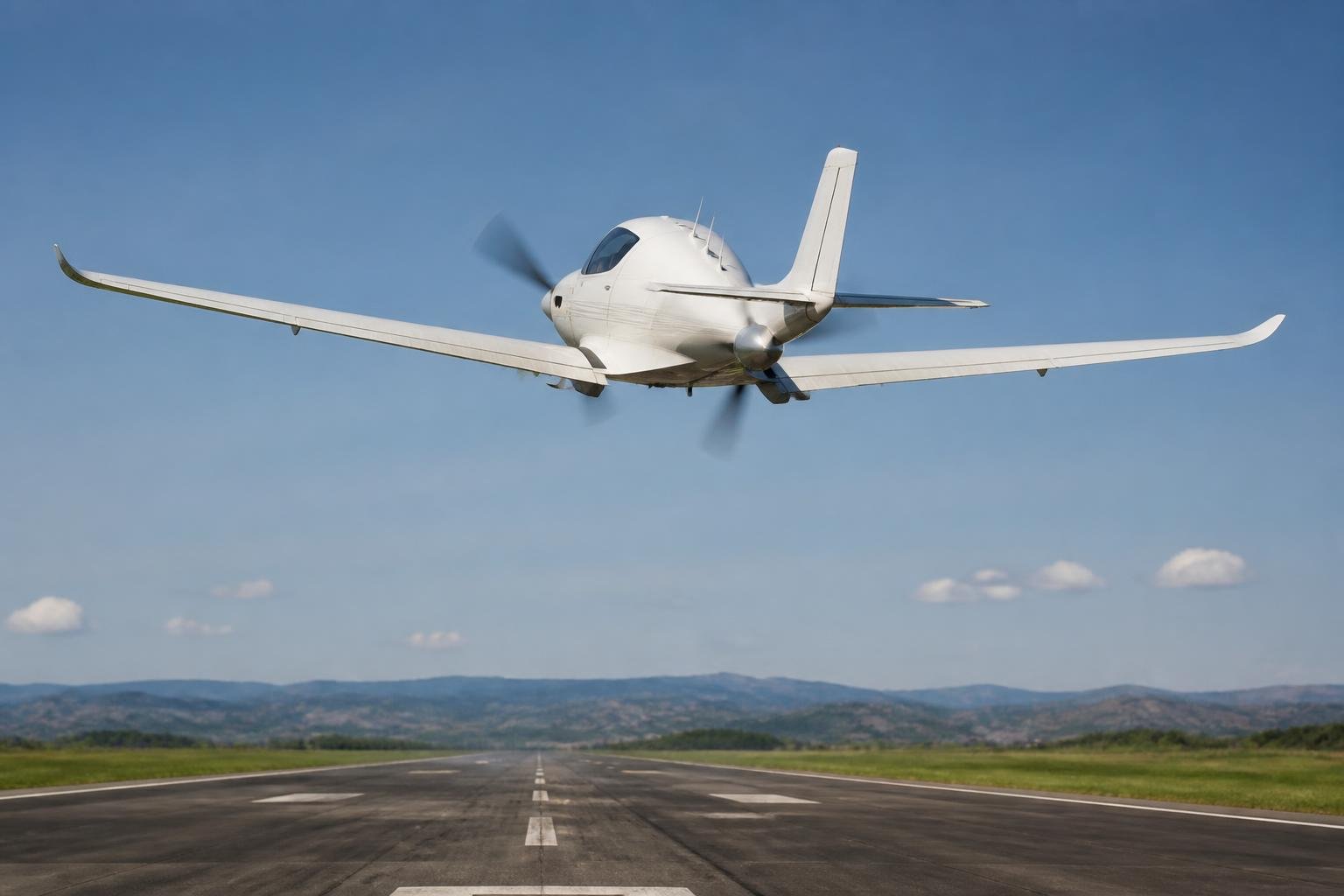
The central operational advantage of a push-pull aircraft is that a complete failure of either engine does not generate conventional asymmetric thrust. Since both thrust lines remain close to the centreline, the aircraft does not require the same large rudder correction that a wing-engine twin may demand when one engine stops producing power. There is also no conventional critical-engine effect caused by left-right propeller thrust imbalance.
This can reduce directional-control workload at a demanding time, particularly during climb, go-around or an early departure emergency. It can also make the aircraft’s engine-out response feel more intuitive to pilots transitioning from single-engine aircraft. However, reduced yaw is not a substitute for disciplined procedure. The pilot must still maintain the correct airspeed, identify the failure or malfunction accurately, secure or manage the affected engine in accordance with the approved checklist, select an appropriate landing option and avoid allowing airspeed to decay.
Centreline thrust must not be interpreted as a guarantee of sustained single-engine climb. Actual performance depends on density altitude, aircraft weight, configuration, engine condition, propeller condition, runway environment and the exact model’s approved data. A lightly loaded aircraft at a favourable density altitude may produce a very different result from a heavily loaded aircraft departing a hot, high airport. Published single-engine rate-of-climb and service-ceiling figures are planning references, not assurances of a particular operational outcome.
A buyer should also avoid assuming that centreline thrust makes multi-engine training simple or unnecessary. A push-pull aircraft remains a complex multi-engine aircraft with systems, procedures and limitations that demand type-appropriate instruction. Flight manual data, operating limitations and the instructor’s method for simulating engine failures should govern training. Recurrent practice should cover engine-out decision-making, approach planning, go-arounds, fuel management, electrical abnormalities and realistic scenario-based work, not only handling drills.
Performance, Payload and Mission Capability
Performance comparisons should begin with the exact aircraft model and its approved documentation, then move to the individual aircraft’s current weight-and-balance report. Cruise speed, range and useful load can vary meaningfully across a model family and can be altered by optional equipment, modifications and interior changes. Advertised figures without a stated configuration are useful only as broad orientation.
For touring, cabin access and seating configuration matter as much as headline speed. Consider how passengers enter the aircraft, how easily baggage can be loaded, whether the seating arrangement works for children or adults, and where soft bags, coats and flight equipment will go. A nominal number of seats does not establish that all seats can be occupied with usable fuel and realistic baggage.
Airport performance deserves equal attention. Review normal and short-field take-off and landing data, runway surface suitability, obstacle environment and expected density-altitude conditions. A twin that fits a sea-level paved runway may be a poor match for a short, elevated strip in summer. Buyers operating from grass, gravel or other unpaved surfaces should seek aircraft-specific guidance rather than assuming that propeller clearance or landing gear geometry is adequate.
Single-engine service ceiling and climb data are particularly relevant for route planning, but they should be read in context. They do not eliminate the need to plan conservative terrain, weather and diversion margins after a power loss. For some owners, the aircraft’s primary role is efficient cross-country touring. For others, short utility sectors, carrying bulky equipment or structured training are more important. Those missions can point toward very different aircraft even when the purchase budget is similar.
- Confirm the current useful load from the individual aircraft’s records.
- Calculate realistic fuel, occupants and baggage rather than using empty-seat assumptions.
- Identify the longest routine route and the shortest routine runway.
- Assess density-altitude and terrain exposure for typical departures.
- Account for the weight effect of de-ice, air conditioning, upgraded avionics and interior work.
What Conventional Twins Can Offer Instead
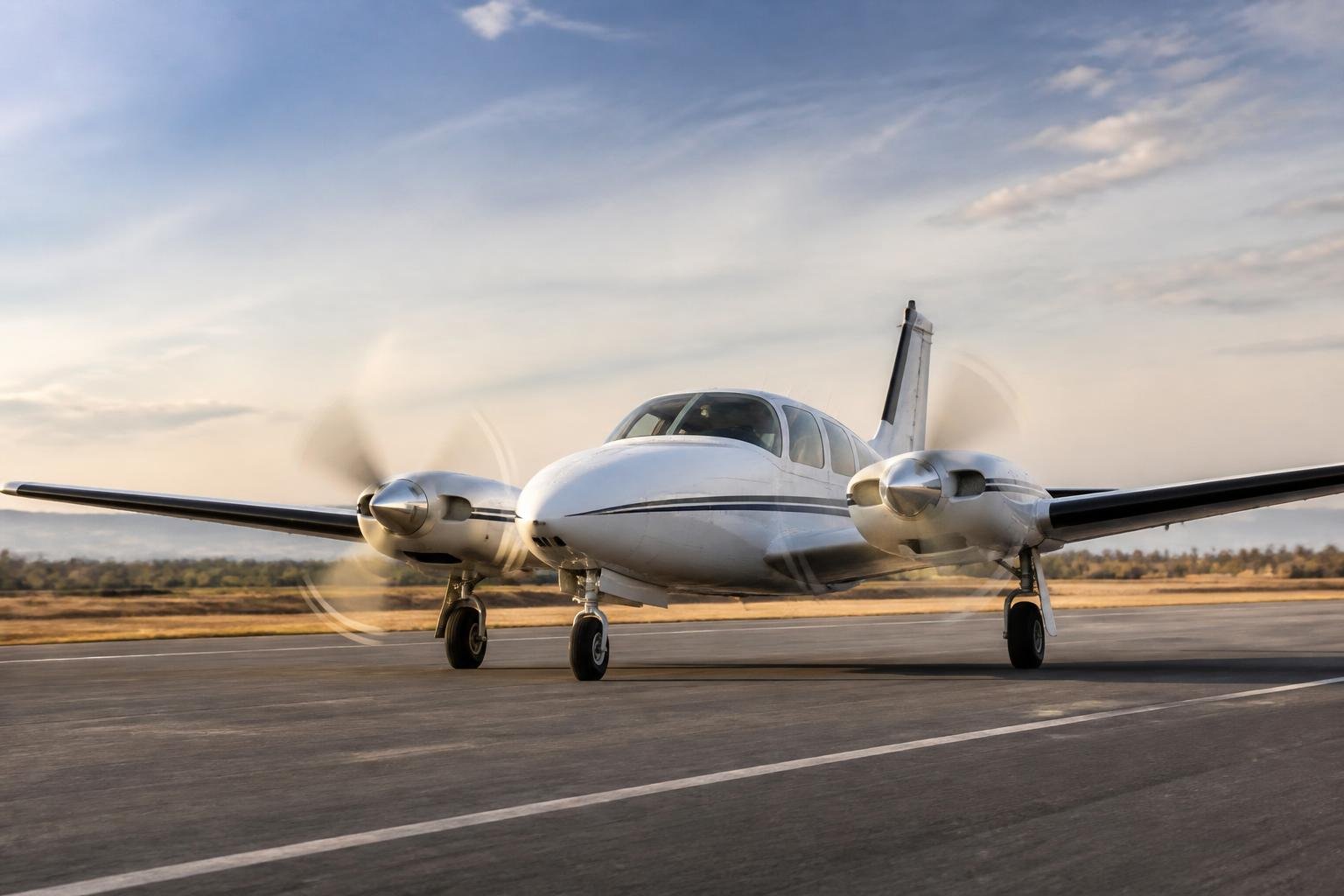
Conventional twins offer buyers a much broader universe of aircraft. The category spans compact training and touring aircraft, faster retractable piston twins, turbocharged models, cabin-class types, pressurised aircraft and utility-oriented designs. That variety can be decisive for buyers who need a larger cabin, more baggage volume, greater power, a particular equipment suite or a specified operating profile.
In larger and more capable piston-twin classes, a conventional layout may provide performance and accommodation beyond that available in many centreline-thrust designs. This does not make every wing-engine twin the better aircraft; it simply gives the buyer more options to match payload, range, altitude capability and cabin expectations. Availability of experienced instructors, mechanics and parts sources can also be stronger for widely operated conventional models in some regions.
The price for that flexibility is the need to understand and manage conventional engine-out aerodynamics. A pilot must know the meaning of minimum control speed, usually identified as Vmc in the approved documentation, and understand that it is not a target speed for safe continued flight. Vmc demonstrations are performed under defined conditions, while real-world aircraft control, climb and stall margins are affected by weight, configuration, bank angle, power and environmental conditions.
Good transition training teaches the practical distinction between directional control and performance. Maintaining control does not mean the aircraft will climb, and an unsuccessful climb attempt can be more hazardous than a prompt, well-managed landing decision. This applies to any twin, although the control challenge is especially prominent in a conventional layout.
Buyers should avoid broad conclusions based on architecture. A well-equipped push-pull aircraft with suitable payload, strong records and local specialist support may fit a family touring mission better than a conventional twin. Conversely, a buyer who needs a larger cabin, higher-altitude capability or a more widely supported type may find a conventional twin to be the practical answer.
Operating Costs: Two Engines Still Mean Twin-Engine Ownership
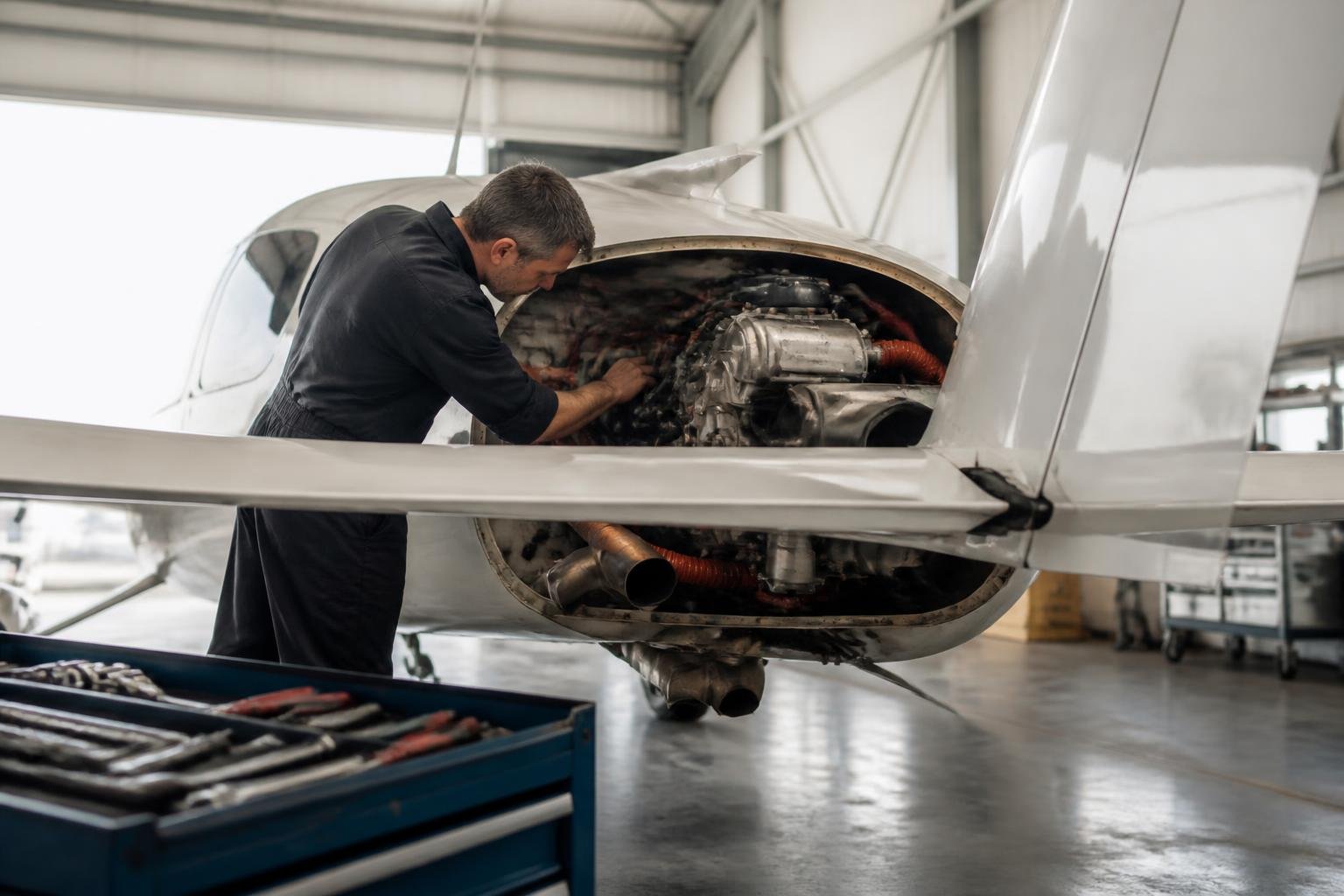
A push-pull aircraft is not a single-engine aircraft with an extra layer of reassurance. It has two engines, two propeller systems and the associated maintenance and reserve-planning responsibilities. Fuel burn is only one part of the annual budget. Owners should account for oil, cylinders, ignition components, exhaust work, filters, hoses, engine accessories, propeller governor attention, propeller overhaul requirements and the potential timing of engine overhaul or replacement.
Insurance, hangar space, recurrent training and multi-engine currency should also be budgeted realistically. Premiums are influenced by pilot qualifications, time in type, total experience, claims history, intended use and insurer appetite. A buyer should obtain indicative insurance terms before becoming committed to an aircraft, particularly when transitioning into a complex or uncommon type.
Scheduled inspections are predictable only to a point. Age-related repairs and catch-up work following deferred maintenance can dominate the first years of ownership. Corrosion treatment, landing-gear work, fuel-system repairs, aging wiring, avionics reliability and interior refurbishment can all materially affect the total exposure. A low acquisition price may reflect known upcoming work rather than a bargain.
Configuration-specific labour matters. On a push-pull design, access to the rear engine, its cooling system, baffles, exhaust routing and propeller installation may require more time or specific equipment than a wing-mounted engine. On a conventional twin, nacelle, gear and exhaust work bring their own labour patterns. Neither arrangement should be assigned a universal cost advantage without reviewing the model, shop rates, parts availability and condition of the aircraft in question.
Before making an offer, build a conservative annual budget that separates routine expenses from reserves for major components and an allowance for unplanned rectification. Maintenance records are essential to that exercise. Look for recurring discrepancies, long gaps, repeated deferrals and evidence that mandatory or recommended work has been addressed appropriately.
Maintenance, Parts Support and Specialist Knowledge
Support should be evaluated at component level. The airframe, engines, propellers, avionics and installed modifications may each have different support prospects. A model can have an active owner community while still presenting challenges for a specific legacy avionics system, scarce interior component or type-specific structural part.
For push-pull aircraft, the rear engine installation deserves particular attention. Cooling airflow, baffle condition, exhaust routing, cowling integrity, access panels and signs of heat-related deterioration should be evaluated by a technician who knows the type. Corrosion inspection is important on any older aircraft, with particular attention to areas where moisture may accumulate or where inspection access is limited.
Conventional twins also require focused model knowledge. Engine nacelles, landing-gear bays, fuel plumbing, exhaust systems, wing attachment areas and corrosion-prone structures should be examined according to the relevant maintenance data. The useful question is not which layout is simpler in theory, but whether a competent shop can support the exact aircraft within a practical distance of its intended base.
Type clubs, service information, supplemental type certificates and established parts networks can be valuable resources, but they do not replace independent technical evaluation. An inactive aircraft or one with incomplete records can conceal a large reactivation and documentation burden. Ask for a review of recurring inspection findings, the status of major component overhauls and a clear account of deferred discrepancies before relying on an optimistic ownership budget.
Pre-Buy Inspection Priorities for Push-Pull and Conventional Twins
An independent pre-buy inspection should be performed by a person or facility with demonstrated experience on the specific type and its engines, propellers and systems. Independence matters: the inspector’s role is to inform the buyer, not to validate the seller’s presentation. Agree the scope, access requirements, payment responsibility and reporting format before work begins.
Begin with records. Review logbook continuity, damage history, major repairs, modification approvals, recurring discrepancies and current weight-and-balance data. Missing logs do not automatically make an aircraft unacceptable, but they can affect confidence, future saleability and the ability to confirm component history. Ensure that the record review is tied to the actual serial-numbered aircraft and its installed components.
- Assess engine health through records, operating history and an agreed technical evaluation, which may include borescope inspection.
- Review oil analysis history where it is available and useful, while recognising that it is only one diagnostic input.
- Check propeller condition, governor records and overhaul documentation.
- Inspect landing gear, brakes, tyres, fuel system, electrical system and signs of leaks or corrosion.
- Function-check avionics, autopilot and installed equipment to an agreed practical extent.
- Examine type-specific areas such as rear-engine cooling and exhaust systems on push-pull aircraft.
Any flight-test observations should be conducted only by appropriately qualified pilots, under agreed due-diligence arrangements and within applicable operating limitations. A short flight cannot prove airworthiness or remove the need for detailed inspection. Equally, a pre-buy inspection is not the same thing as an annual inspection, an airworthiness determination or an appraisal. Each has a different purpose and scope. The purchase agreement should make clear what findings permit renegotiation, rectification or withdrawal.
Training, Insurance and Practical Ownership
Initial transition training should be tailored to the type rather than limited to a generic multi-engine checkout. The pilot needs familiarity with fuel, electrical, landing-gear, propeller and engine-management systems, as well as normal, abnormal and emergency procedures. For push-pull aircraft, training should explain the practical human-factors benefit of reduced asymmetric-thrust workload without encouraging complacency about degraded performance.
For conventional twins, training should address engine failure recognition, configuration discipline, minimum-control-speed awareness and the difference between control and climb capability. For both layouts, realistic practice should include engine-out decision-making after take-off, missed approaches, rejected take-offs where appropriate, system failures and diversion planning. A pilot’s judgment about when not to continue is as important as technical handling skill.
Insurance requirements often shape the transition plan. Underwriters may request a specified amount of dual instruction, a mentor pilot period, recurrent training or minimum experience thresholds. These requirements should be explored early, because they affect both acquisition timing and first-year cost.
Practical ownership includes passenger comfort and operating routine. Evaluate cabin noise, heat management, ventilation, boarding, baggage access and the process of loading the aircraft within its centre-of-gravity limits. Also consider whether qualified instructors, maintenance providers and suitable hangar or tiedown facilities are accessible from the intended home airport. A technically appealing aircraft is less enjoyable to own if every inspection, training event or minor repair requires difficult logistics.
Market Evaluation and Resale Considerations
Market evaluation starts with the individual aircraft rather than a generic model price. Purchase price should be assessed against airframe condition, engine and propeller times, avionics capability, documentation quality, damage history and anticipated maintenance. A low headline price may be reasonable when expensive work is approaching; a higher price may be justified by complete records, recent component work and a coherent equipment package. Neither conclusion should be made without due diligence.
Advertised asking prices, completed transactions and an individual aircraft’s value are different things. An asking price expresses a seller’s position, while an auction bid is a bid at a point in time, not automatically a final sale price or appraisal. Buyers should compare like-for-like examples carefully and allow for regional demand, import requirements, taxes, currency exposure and transport or repositioning costs where relevant.
Resale liquidity can be affected by buyer pool size and perceptions of configuration complexity. Push-pull aircraft may appeal strongly to buyers seeking centreline-thrust characteristics, but the market can be narrower than for common conventional types. Conventional twins may have a larger audience, yet particular models can still be difficult to sell if engine times are high, records are weak or significant work is overdue.
Corrosion, damage history, missing logs and obsolete avionics can reduce bidding confidence across both layouts. Documentation quality is a major asset: it supports a buyer’s technical review today and reduces uncertainty when the aircraft is offered for sale later. The disciplined approach is to compare total ownership exposure, including likely capital expenditure and exit liquidity, rather than selecting an aircraft solely on acquisition cost.
Which Twin Layout Fits Your Mission?
A push-pull aircraft is worth serious consideration for buyers who value centreline-thrust handling, prefer the cabin arrangement of a particular type and can access type-qualified instruction and maintenance support. Its engine-out characteristics can reduce directional-control workload, but the buyer must still evaluate single-engine performance, systems knowledge, rear-engine condition and the quality of the aircraft’s records.
A conventional twin may suit buyers who need the wider choice of airframes, larger cabins, higher-performance mission capability or local familiarity among instructors and maintenance providers. It demands respect for asymmetric-thrust aerodynamics and a committed training approach, but it offers access to a broad range of established aircraft designs.
Use a decision framework built around non-negotiables: payload with usable fuel, routine runway and weather conditions, expected trip length, training commitment, local support network, insurance terms and a reserve for maintenance. Then shortlist aircraft by documented condition, not by layout alone. Independent pre-buy due diligence should test the assumptions behind the listing and the ownership budget.
Only after defining mission and inspection criteria should a buyer compare relevant aircraft auctions or sale opportunities. The strongest purchase is usually the aircraft whose condition, supportability and operating profile are understood clearly enough to make a conservative ownership decision.
Comments
No comments yet
Be the first to share your thoughts!