
 Bad Vöslau
 Kirn
Kirn
 Florida
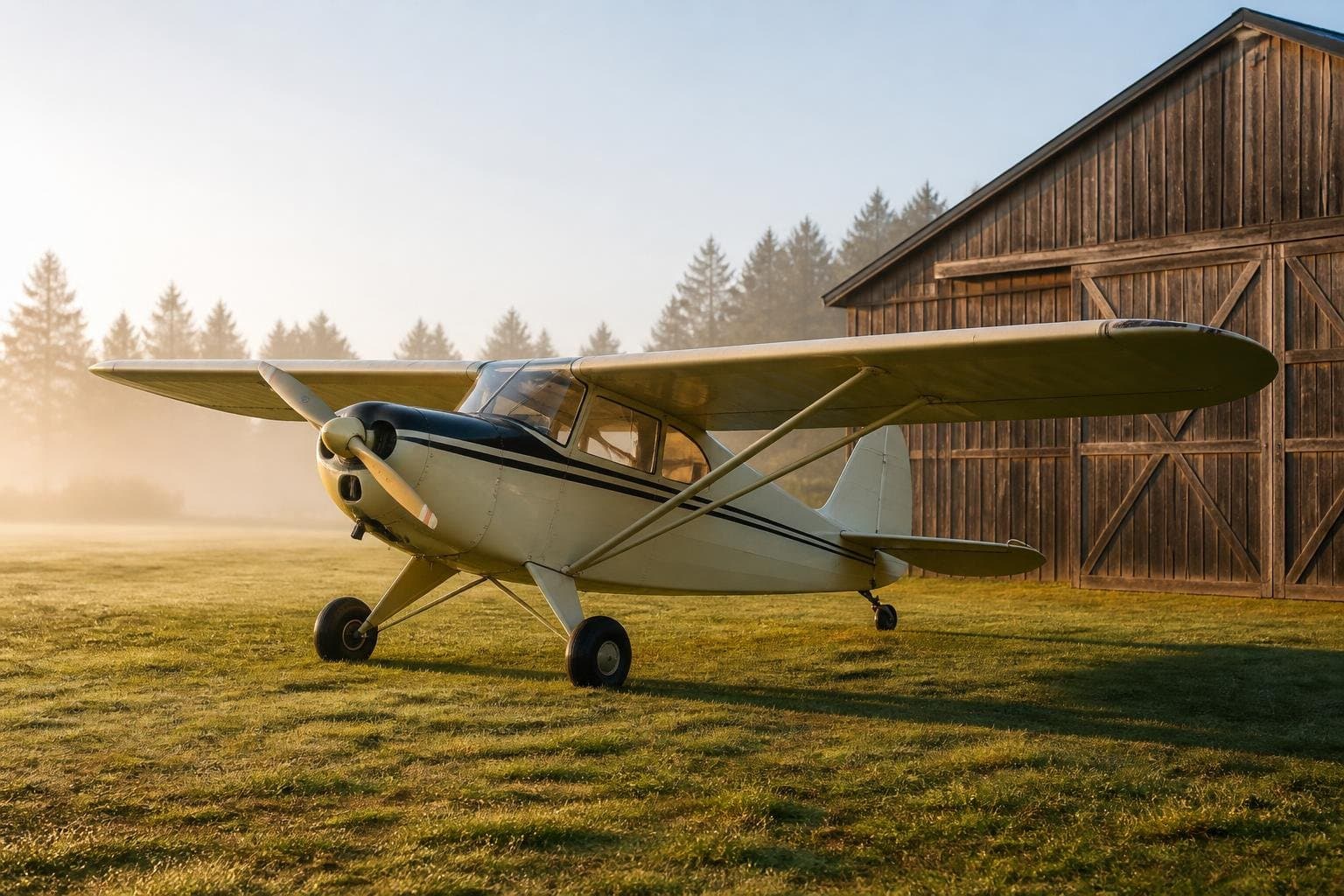
A Stinson 108 can be a rewarding entry into classic four-seat tailwheel ownership, but a good purchase depends far more on condition, documentation and maintenance support than paint quality or a low advertised price. Buyers considering a Stinson 108 for sale should verify the exact variant and engine, investigate fabric and hidden corrosion thoroughly, and budget for specialist parts searches and age-related rectification. The best examples combine complete records, sound fabric and structure, a well-understood Franklin engine, and an owner who has maintained the aircraft methodically.
Stinson 108 at a Glance: Mission, Character and Buyer Fit
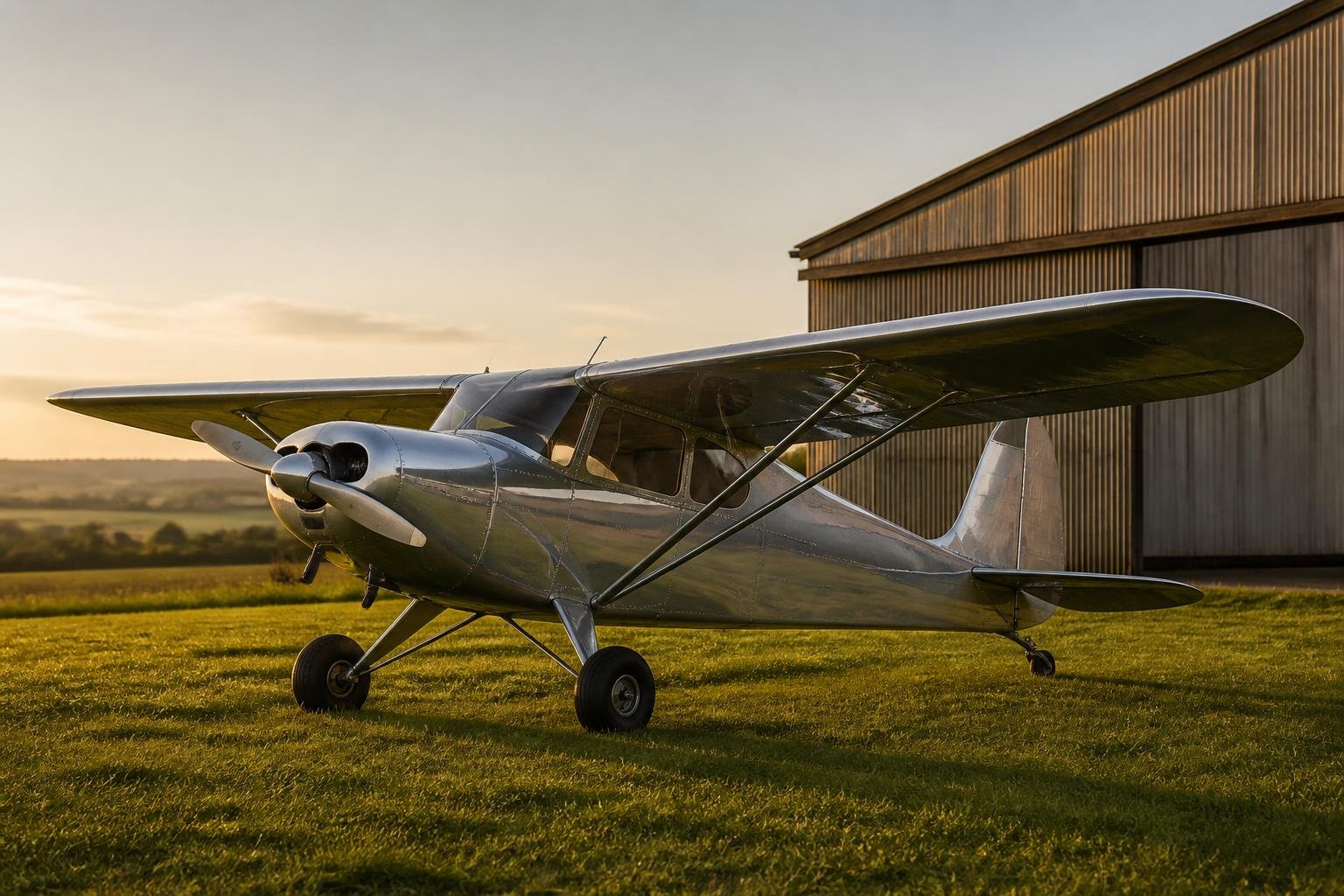
The Stinson 108 family is a post-war, four-seat, high-wing tailwheel utility aircraft with a steel-tube fuselage, fabric-covered wing structure and a reputation for a roomy cabin relative to its era. It was conceived for practical private flying rather than speed, and it remains attractive to owners who value visibility, low-speed capability and the character of a conventional-gear aircraft.
A well-kept 108 can suit local recreational flights, touring with sensible loading, visits to grass airstrips and participation in vintage-aircraft events. Its high wing offers shade on the ground and good downward visibility, while the broad cabin is one reason the type continues to appeal to families and groups of friends. The airplane is not a substitute for a modern four-seat cruiser with contemporary systems, dispatch support and generous payload margins. Its appeal lies in its straightforward vintage design and in the ownership experience that accompanies it.
Prospective owners should be realistic about the trade-offs. Tailwheel operation requires sound directional-control technique, particularly on narrow, uneven or crosswind-affected surfaces. Many aircraft are now several decades removed from their original construction, so wiring, fuel plumbing, seals, glass, interior materials and previous repairs deserve scrutiny even where the aircraft appears cosmetically tidy. Franklin engine support also requires more planning than ownership of a widely supported Lycoming or Continental installation.
The strongest buyer profile is an owner who has access to a capable vintage-aircraft maintenance shop, understands that parts sourcing can take time, and values preventive maintenance. A Stinson 108 is usually less suitable for a buyer whose primary requirement is predictable utility transportation with minimal downtime.
- Good fit: recreational tailwheel flying, grass-strip use, vintage ownership and relaxed touring.
- Less suitable: high-utilization commercial-style missions or buyers unwilling to manage older-aircraft maintenance.
- Core purchase principle: buy records, structure and engine condition first; treat cosmetics as secondary evidence.
Stinson 108 Variants and Configuration Differences
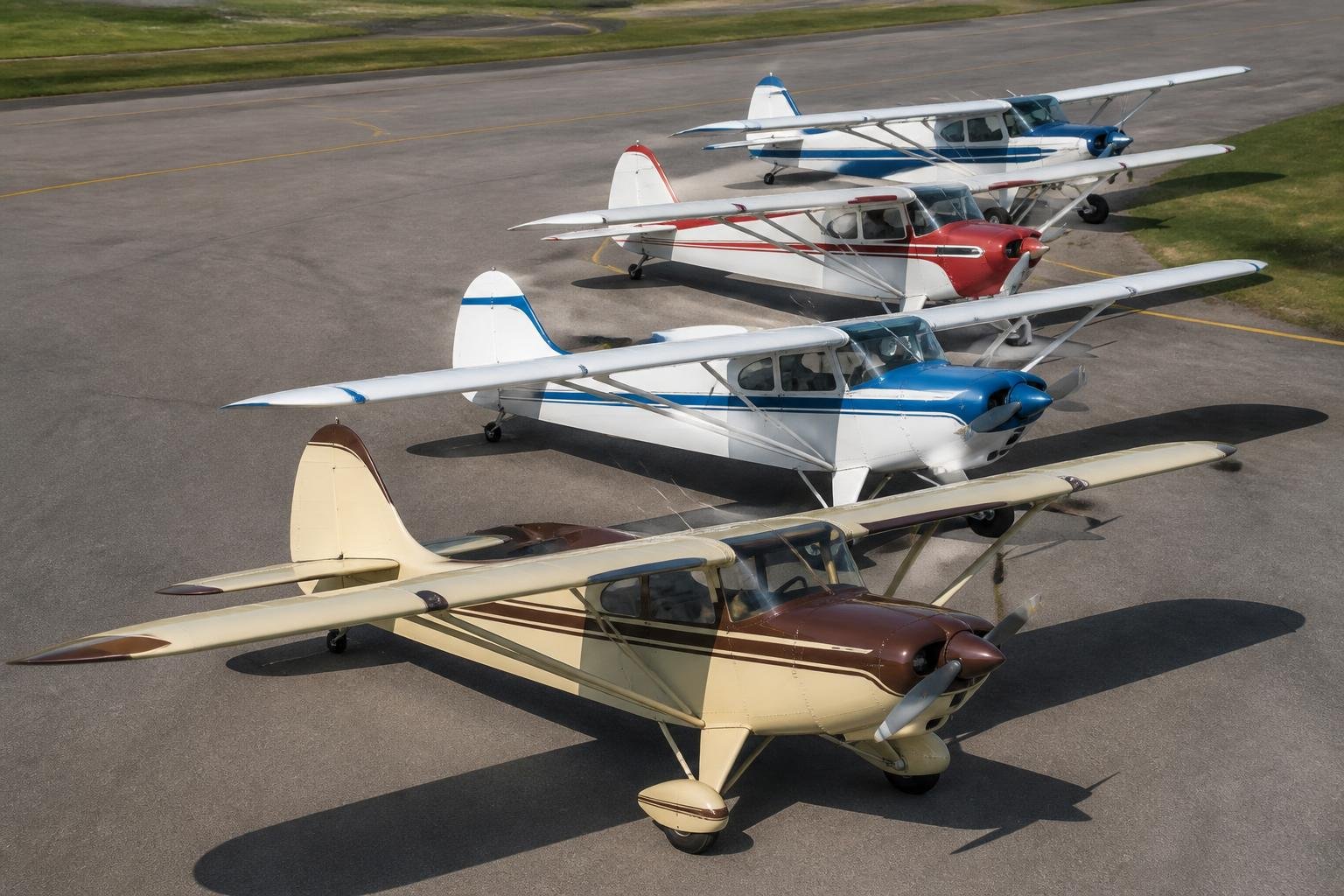
The Stinson 108 designation covers the original 108 and later 108-1, 108-2 and 108-3 variants. A buyer should begin with the aircraft’s serial number, airworthiness certificate, registration data, approved flight manual material and logbooks rather than relying on a seller’s model description. Differences among variants can affect approved gross weight, seating arrangements, installed equipment and the paperwork needed to support a particular configuration.
Many surviving aircraft have changed over their lives. They may have different instruments, radios, interior arrangements, propellers, landing-gear components, fuel-system details or engine-related modifications from those delivered by the factory. Such changes are not automatically undesirable. The critical question is whether each alteration is properly supported by approved data and recorded in the airframe and engine records as applicable.
Original Stinson 108 configurations were Franklin-powered, but the exact engine model and its approved installation must be confirmed on the individual aircraft. Some aircraft may carry modifications or replacement-engine approvals. A buyer should not assume that an engine commonly associated with the type is the one fitted, nor that a familiar engine conversion is approved for every serial number. Review the type certificate data, equipment list, weight-and-balance documentation and alteration records together.
Factory literature can help establish how an aircraft was originally configured, but current conformity matters more in a purchase decision. An aircraft with a less common configuration may be entirely viable if its records are complete, its support path is understood and its inspection findings are satisfactory. Conversely, a standard-looking example with vague paperwork can create expensive uncertainty.
| Buyer question | Why it matters |
|---|---|
| What is the exact serial-numbered model? | It anchors the applicable approved data and equipment history. |
| Which engine and propeller are installed? | Support, maintenance planning and paperwork depend on the actual installation. |
| Are alterations documented? | Unrecorded changes can complicate maintenance, insurance, resale and regulatory compliance. |
| Does the current weight-and-balance report match the aircraft? | Useful load and loading limits must be based on current, not assumed, information. |
Performance, Payload and Real-World Mission Planning

Performance expectations should come from the approved flight manual, type-specific approved data and the condition of the individual aircraft. Published figures are useful planning references, but they are not a guarantee of what a particular Stinson will deliver with its propeller, engine health, rigging, weight, altitude and runway surface. Buyers should be especially cautious when performance claims are based on informal owner reports rather than approved documentation.
The practical limitation for many four-seat vintage aircraft is not the number of seats but useful load. Obtain the current empty weight, moment data, equipment list and weight-and-balance report. Then calculate the intended mission using actual occupant weights, usable fuel, oil, baggage and any installed equipment. Four adults, full fuel and baggage may not be realistic in a particular aircraft, even though it has four seats.
Fuel capacity and baggage limits also require aircraft-specific confirmation. Usable fuel may differ from total tank capacity, and baggage allowances can be constrained by location as well as weight. The safest approach is to prepare several loading cases: two people with fuel for a touring leg, three people with reduced fuel, and a local flight with a fuller cabin. This gives a more useful picture than asking whether the airplane is simply “a four-seater.”
Grass-field capability should likewise be assessed in context. Runway length, surface condition, slope, obstacles, temperature, density altitude, wind and pilot technique materially affect takeoff and landing margins. A Stinson’s low-speed manners do not remove the need to use approved performance data and conservative operational judgment. Transition training with an instructor familiar with conventional-gear aircraft is prudent for pilots without recent tailwheel experience.
- Use the individual aircraft’s current weight-and-balance records for every loading calculation.
- Plan fuel by usable quantity and reserve requirements, not by nominal tank size.
- Evaluate grass strips for surface, obstacle and density-altitude effects rather than reputation alone.
- Arrange type-appropriate transition training before making demanding passenger or strip operations routine.
The Franklin Engine: What Ownership Really Requires
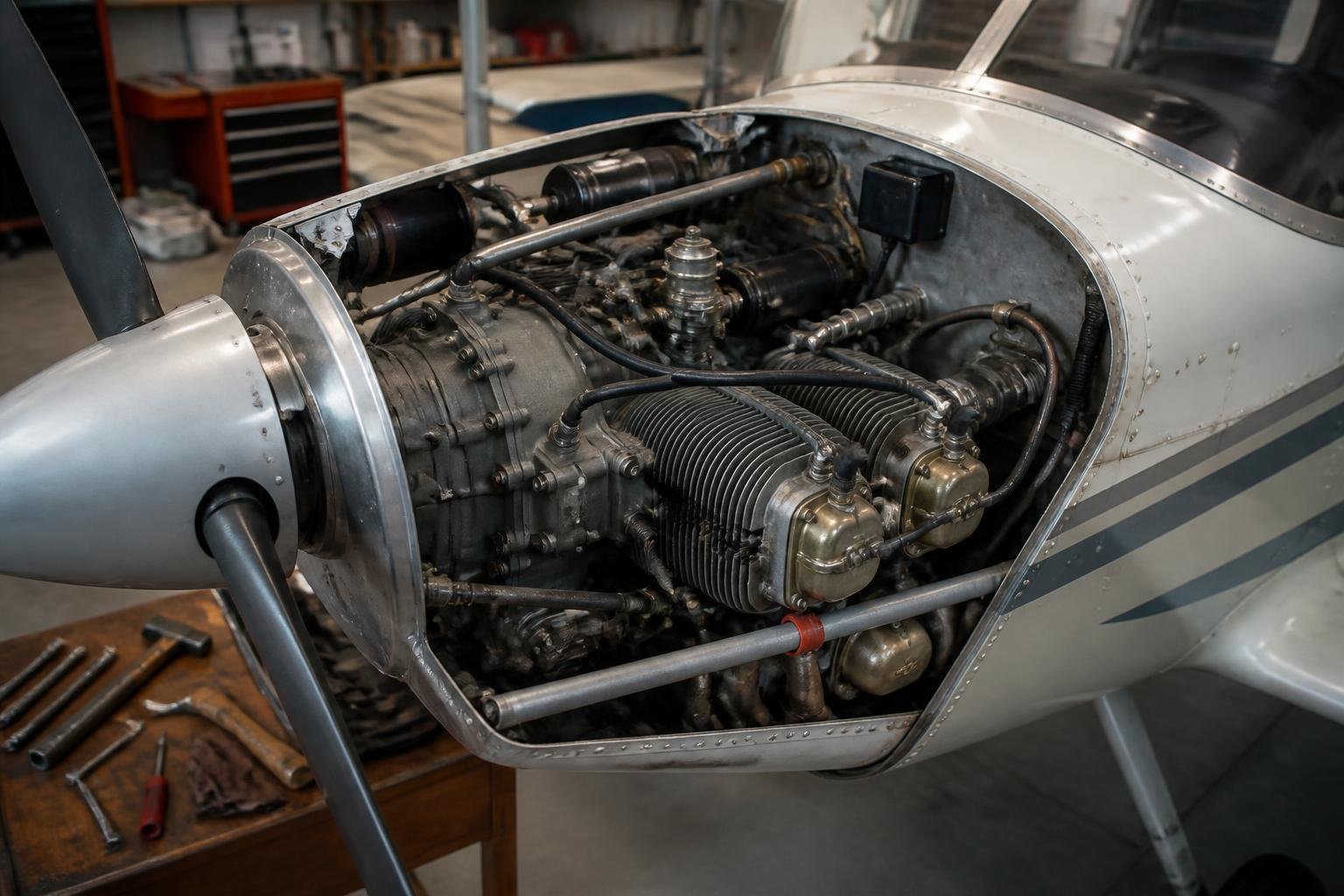
The Franklin engine is central to both the charm and the due-diligence burden of many Stinson 108s. Before discussing parts or overhaul prospects, establish the exact engine designation, serial number, approved installation and modification history. Franklin engines exist in several families and configurations, and component compatibility, maintenance information and specialist knowledge depend on the specific engine rather than the Franklin name alone.
Engine log continuity deserves close attention. Review the date and hours of the most recent major work, the identity of the shop or mechanic, installed components, recurring discrepancies and periods of inactivity. Calendar exposure matters as well as operating time. An engine that has accumulated few hours over many years may still need careful evaluation for internal corrosion, deteriorated seals, fuel-system issues and preservation quality.
A pre-buy inspection should include an informed assessment of cylinder compression in context, oil condition and available oil-analysis history, leakage, baffling, engine mounts, exhaust condition, induction and fuel-system integrity. Compression readings alone do not determine engine health; the inspector should consider where any leakage occurs and whether the broader record supports the findings. The exhaust system, especially, warrants careful inspection because age, vibration and heat exposure can produce cracks or deteriorated joints.
Parts availability is often manageable through specialist suppliers, established owner networks and serviceable stock, but it is rarely as simple as ordering a common part for a current-production engine. Ask the maintenance provider which consumables are routinely accessible, which high-value components could involve lead time, and where their overhaul support would come from. A prudent owner builds schedule and financial contingency into the first years of ownership.
Do not treat a replacement-engine conversion as inherently better or worse than an original Franklin installation. The relevant questions are approval basis, workmanship, weight-and-balance effect, documentation, supportability and the quality of the installed engine. Undocumented substitutions are a reason to pause until an experienced inspector can establish what is fitted and whether the paperwork supports it.
Fabric-Covered Airframe: Condition, Age and Documentation
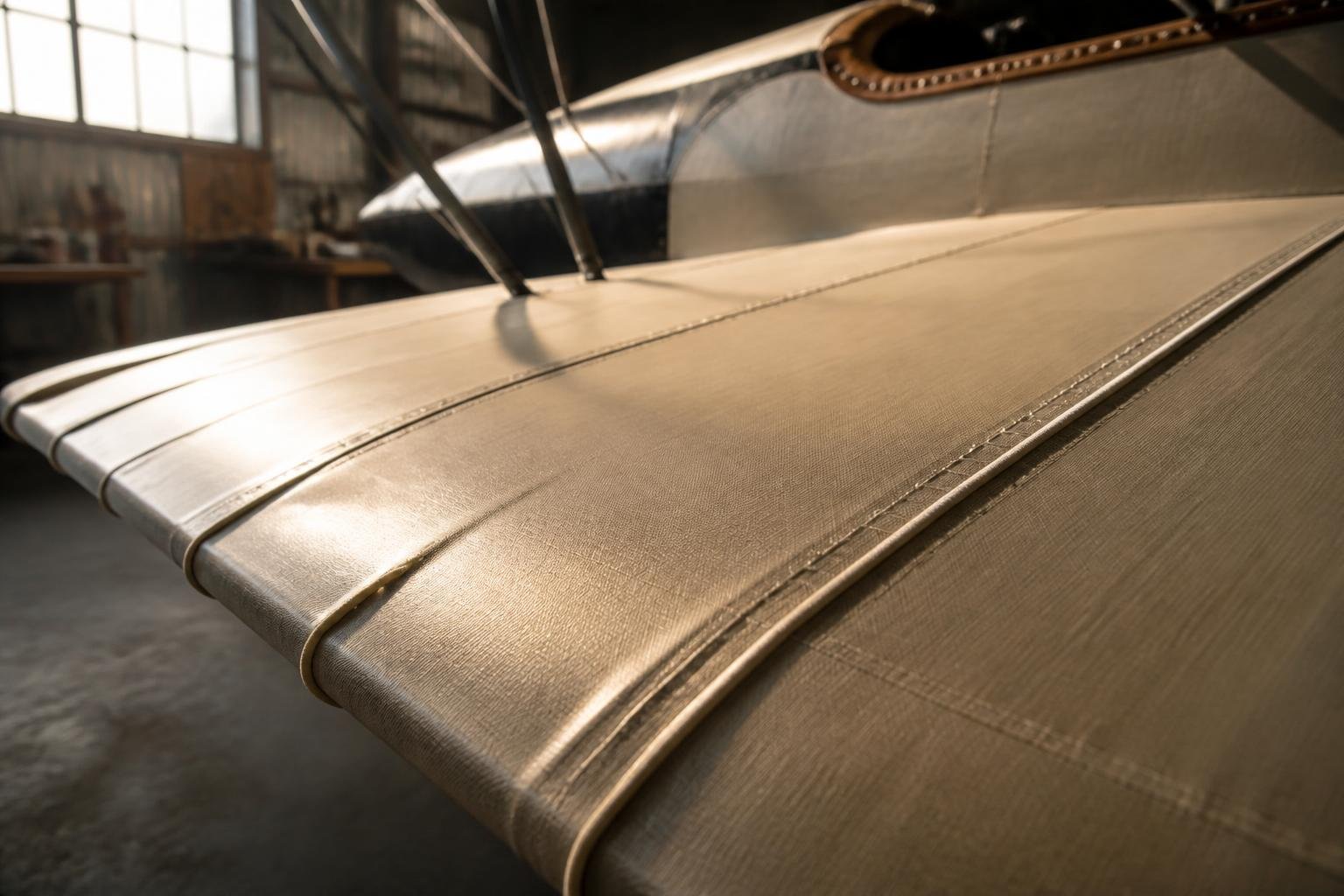
Fabric condition is among the most important considerations in any Stinson 108 purchase. Begin by identifying the covering system, the date of the most recent recover and the documentation supporting that work. A quality recover can provide years of service, but its condition is influenced by materials, preparation, workmanship, paint system, storage, ultraviolet exposure and repairs made afterward. A bright finish does not establish fabric health.
The inspection should look for tears, abrasion, loose areas, staining, moisture evidence, paint cracking, repair patches and damage around access panels, fittings and high-wear points. Staining may point to a fluid leak or water ingress but requires investigation rather than assumption. Areas near the lower fuselage, wing roots, strut attachments and drain paths can be especially revealing because they may experience moisture, vibration or repeated maintenance access.
Fabric punch testing has limitations. It is a controlled inspection technique, not a complete verdict on the condition of every part of a covered airframe. Results can be affected by test location and the state of the material, while the test itself cannot reveal all hidden structural concerns. A qualified fabric-aircraft inspector should assess the complete covering system, prior repairs, attachment details and accessible internal structure.
Paint can offer clues. Fading, chalking, cracking or poor adhesion may suggest age or exposure, but a recent repaint can also conceal the visual signs a buyer expects to see. Ask for photographs and invoices from the recover process, including any structural work carried out while the fabric was removed. The ability to see what was addressed during a recover is often more valuable than an unsupported claim that the work was recent.
A full recover is a major project involving cost, downtime and opportunities for additional findings once the airframe is opened. It can be an excellent restoration step when planned deliberately, but it should not be an unexpected first-year expense. Inspect wood components, fairings and all inspection-access arrangements at the same time; water intrusion and hidden deterioration do not respect cosmetic boundaries.
Corrosion, Structure and Ageing-System Inspection Points
Fabric-covered construction demands attention to both visible condition and what lies beneath. The Stinson’s steel-tube fuselage should be inspected wherever access permits, with particular attention to lower sections, joints, cluster areas and potential moisture traps. Surface corrosion may be manageable; corrosion that has materially affected tube integrity or concealed areas requires a far more consequential assessment. Fabric condition cannot be used as a proxy for tube condition.
Wing attachment areas, struts, fittings, bolts and associated hardware are another inspection priority. The pre-buy inspector should examine evidence of corrosion, wear, repairs, misalignment, hardware substitution and inadequate protection. Control surfaces need evaluation for corrosion, attachment condition, balance concerns where applicable, hinge wear and the quality of any prior repair work.
Ageing systems commonly drive ownership effort. Inspect control cables for corrosion, broken wires, routing and tension; inspect pulleys, fairleads, hinges and the trim system for wear and free movement. Fuel tanks, drains, lines and selectors should be assessed for leaks, deterioration and contamination concerns. Brake condition, electrical wiring quality, battery installation and windshield condition all matter because these items affect reliability, maintenance scope and the first-year budget.
Damage history is not necessarily a reason to reject an aircraft. A properly documented repair performed to acceptable standards may be less concerning than an aircraft with missing records and unexplained discrepancies. Ask what was damaged, how it was repaired, who performed the work, what approved data was used and whether later inspections identified recurring issues. A written pre-buy report should distinguish confirmed findings from questions that remain unresolved.
- Inspect accessible steel-tube structure, especially low points and areas prone to trapped moisture.
- Verify wing, strut and landing-gear fittings for correct hardware, condition and repair history.
- Assess cables, pulleys, fuel plumbing, brakes and wiring as ageing systems rather than minor details.
- Reconcile visible repairs with logbook entries, invoices and approved alteration documentation.
Parts Availability and Maintenance Support
Stinson 108 ownership is easiest when the buyer differentiates between routine consumables and aircraft-specific components. Filters, hoses, tires, brake materials and general hardware may be comparatively straightforward to source, subject to the individual installation. Airframe fittings, interior pieces, trim parts, fairings, original instruments and proprietary engine components can require specialist suppliers, serviceable used stock, owner contacts or patient searching.
New-old-stock components can be valuable, but storage history, identity and applicability matter. Serviceable used parts may also be appropriate when sourced through knowledgeable channels and accompanied by suitable traceability or maintenance documentation. A part that physically fits is not necessarily an acceptable substitute. Unsupported modifications and undocumented replacement parts can create technical, regulatory and resale problems that greatly exceed the short-term convenience of installation.
Type clubs, specialist maintenance shops and owner communities can be practical sources of knowledge about recurring issues, parts interchangeability and maintenance planning. Their experience is useful, but the aircraft’s approved data and the judgment of the certificated maintenance professional responsible for the work remain decisive. For buyers outside the aircraft’s main support region, shipping costs, customs processes, import duties and transit times should be included in contingency planning.
Organized maintenance records are an ownership asset. Keep invoices, photographs, work orders, component tags, inspection findings and correspondence in a structured file alongside the formal logbooks. This improves troubleshooting, helps the next mechanic understand prior work and makes a future sale easier to evaluate. The best support strategy is not merely knowing where a part may be found; it is knowing exactly what part is installed and why.
Pre-Buy Inspection and Records Review Checklist
A recent annual inspection is useful information, but it is not a substitute for an independent pre-buy inspection designed around the buyer’s intended use and risk tolerance. Select an inspector with relevant Stinson, Franklin or fabric-aircraft experience, ideally with enough independence to provide unvarnished findings. Agree the scope in writing before travel, deposit commitments or transport arrangements.
The records review should reconcile airframe, engine and propeller logbooks with the physical aircraft. Look for continuity, major repairs, alteration entries, component times, recurring discrepancies and long gaps. Confirm the current weight-and-balance report, equipment list, required flight-manual material and the paperwork that supports the installed engine, propeller and avionics. Missing paperwork does not always mean an aircraft is unacceptable, but it should affect both risk assessment and price negotiations.
Jurisdiction-specific title, registration, export and lien checks are separate from the mechanical inspection and should be handled appropriately for where the aircraft is registered and where the transaction occurs. Cross-border buyers should also clarify import requirements, taxes, conformity expectations and ferry or disassembly logistics before making an irreversible commitment.
A test flight can be useful only after the documentation and inspection process has reached a satisfactory stage and the responsible pilot has determined it is appropriate. It should not become a substitute for a structure, engine or records assessment. Any observed vibration, control heaviness, temperature anomaly, radio issue or handling concern should be documented and assessed rather than dismissed as normal vintage-aircraft character.
- Use an independent inspector with type-relevant experience.
- Review logs, alterations, component times and current weight-and-balance data.
- Separate title and export checks from the technical pre-buy scope.
- Obtain written findings, deferred items and a realistic rectification estimate.
- Make test-flight decisions only after appropriate documentation and inspection clearance.
Ownership Costs, Insurance and Hangar Planning
The purchase price of a Stinson 108 is only the entry cost. A sound ownership budget separates fixed expenses from variable and contingency expenses. Fixed costs commonly include hangarage, insurance, registration and annual inspection planning. Variable costs include fuel, oil, routine maintenance, engine-reserve thinking, repairs arising from use and the occasional cost of sourcing a hard-to-find part.
Indoor storage is a meaningful preservation measure for a fabric-covered vintage aircraft. Protection from ultraviolet exposure, standing water, wind-driven debris and repeated weather cycles can reduce deterioration risk, although a hangar does not eliminate the need for careful inspection. A dry, ventilated space also makes it easier to monitor leaks, preserve interior materials and address small defects before they become major work.
Insurance availability and premium are influenced by the aircraft’s insured value, location, pilot experience, tailwheel experience, recency and training. An insurer may seek evidence of transition training or impose operating requirements. Obtain insurance indications early in the buying process rather than assuming coverage will be routine. The same applies to hangar availability: an affordable aircraft can become impractical if suitable covered storage is unavailable locally.
Set aside a contingency fund for the first year. This is not an admission that the aircraft is poor; it is sensible planning for an older machine whose true condition may become clearer through regular use and maintenance access. Budget separately for known deferred work, fabric preservation, engine-related findings and potential delays while parts are located. A careful buyer evaluates the total first-year ownership commitment, not just the agreed purchase price.
Evaluating a Stinson 108 for Sale and the Sensible Next Step
When comparing a Stinson 108 for sale, start with supportability and evidence. A complete engine history, documented fabric work, accessible structure, coherent alteration records and a realistic maintenance plan generally matter more than fresh paint, a polished spinner or an attractive interior. Photographs and listing descriptions are useful screening tools, but neither can verify hidden corrosion, engine condition, fabric integrity or paperwork compliance.
Ask sellers direct questions: When was the aircraft recovered, and what system was used? Is there photographic and invoice evidence? What exact Franklin engine is installed, when was it last overhauled or substantially worked on, and who supports it? Are there known corrosion findings, damage repairs, deferred defects or recurring annual-inspection items? Which equipment and modifications are recorded, and is the current weight-and-balance report available?
Value is driven by the quality and traceability of restoration work, engine status, equipment, airframe condition, documentation and provenance. It should not be inferred from an asking price, a current auction bid or a visually impressive listing. For any aircraft under serious consideration, commission an independent pre-buy inspection before final commitments, particularly if cross-border transport, export documents or long-distance recovery are involved.
Review relevant aircraft-auction and marketplace listings as a way to compare equipment, documentation depth and presentation standards, while remembering that each aircraft is its own case. Walk away when records cannot establish what is installed, structural concerns cannot be assessed adequately, fabric or corrosion questions are avoided, or the likely rectification scope exceeds your budget and maintenance tolerance.
A Stinson 108 suits the patient owner-pilot who wants a capable vintage high-wing taildragger, has realistic payload expectations and is prepared to manage specialist maintenance. The sensible next step is to narrow the field to aircraft with credible records and then invest in a type-informed pre-buy inspection. That process is usually the least expensive part of making a well-founded ownership decision.

Comments
No comments yet
Be the first to share your thoughts!