

Introduction to the Hawker 800XP
The Hawker 800XP stands as one of the most successful and enduring midsize business jets ever designed. Known for its robust build, spacious stand-up cabin, and impressive transcontinental range, it has been a favorite of corporate flight departments, charter operators, and private owners for decades. Originally manufactured by Raytheon Aircraft Company (and later Hawker Beechcraft), the "XP" in its name stands for "Extended Performance," a nod to the significant upgrades in climb rate, cruise speed, and range over its predecessor, the Hawker 800.
For buyers looking to enter the midsize jet market, the Hawker 800XP offers an exceptional balance of capability and acquisition cost. Often described as being "built like a tank" due to its British military-derived design heritage, this aircraft prioritizes structural integrity, runway versatility, and passenger comfort over absolute speed. In this comprehensive guide, we will explore the history, technical specifications, cabin experience, operational costs, and key market considerations for this legendary business jet.
A Brief History of the Hawker 800 Series
The lineage of the Hawker 800XP stretches back to the de Havilland DH.125, which first flew in 1962. Over the decades, this rugged design was continuously refined by Hawker Siddeley, British Aerospace (BAe), and eventually Raytheon, which acquired the corporate jet division in 1993. Under Raytheon's stewardship, the airframe underwent a series of modernization efforts that culminated in the introduction of the Hawker 800XP in 1995.
The Hawker 800XP introduced upgraded Honeywell TFE731-5BR engines, which delivered increased thrust and improved fuel efficiency. These powerplants, combined with aerodynamic refinements, allowed the aircraft to climb faster, cruise at higher altitudes, and carry more payload over longer distances. Production of the Hawker 800XP continued until 2005, when it was succeeded by the Hawker 850XP, which added factory-installed winglets. Today, hundreds of Hawker 800XP aircraft remain in active service worldwide, testifying to the durability and timelessness of the design.
Key Specifications and Performance Metrics
The Hawker 800XP was engineered to handle demanding transcontinental missions while retaining the ability to operate out of relatively short runways. Its swept-wing design and powerful turbofans allow it to perform exceptionally well even in high-altitude, hot-temperature environments ("hot and high" conditions).
Below is a summary of the standard performance specifications and physical dimensions of the Hawker 800XP:
| Parameter | Specification |
|---|---|
| Max Range (with 4 Passengers) | 2,540 nm (4,704 km) |
| Maximum Cruise Speed | 447 knots (830 km/h / Mach 0.80) |
| Typical Cruise Speed | 402 knots (745 km/h) |
| Service Ceiling | 41,000 feet |
| Takeoff Distance (MTOW, Sea Level) | 5,620 feet (1,713 m) |
| Engines | 2x Honeywell TFE731-5BR-1H (4,660 lbs thrust each) |
| Maximum Takeoff Weight (MTOW) | 28,000 lbs (12,701 kg) |
While newer midsize jets may boast faster maximum cruise speeds, the Hawker 800XP remains highly competitive because of its load-carrying capability. It can depart with full fuel and a generous payload of passengers and baggage, a feat that many lighter competitors cannot match.
Cabin Comfort and Interior Configuration
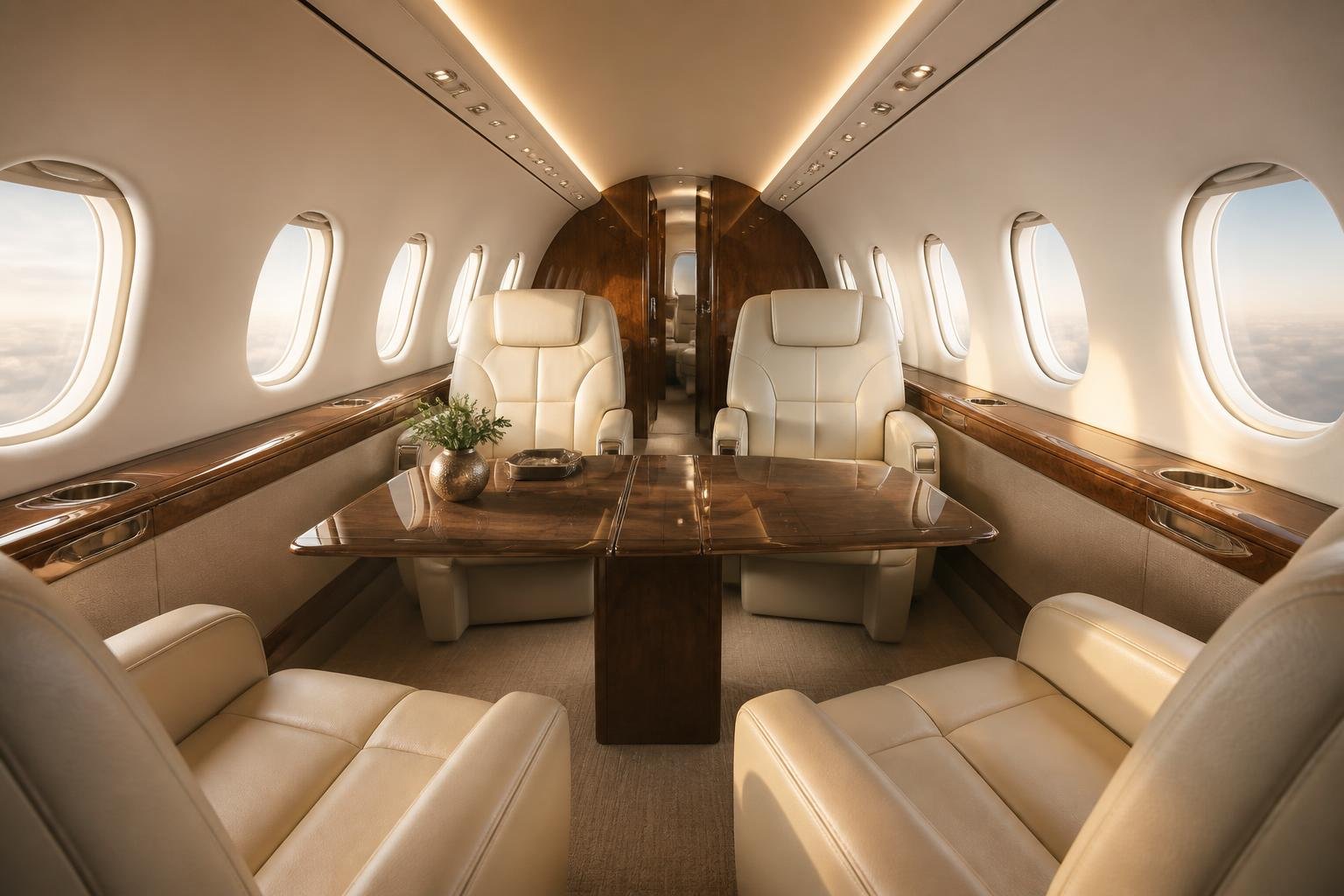
For many corporate flyers, the real magic of the Hawker 800XP is found inside the cabin. Unlike many midsize competitors of its era that feature a contoured, "trench" aisle design, the Hawker offers a flat-floor layout with a generous stand-up cabin height of 5 feet 9 inches. This makes moving about the cabin during flight remarkably easy and comfortable.
The cabin typically accommodates eight passengers in a highly functional layout. A standard configuration features:
- A four-seat forward club arrangement, ideal for business meetings or dining.
- A three-person divan on the right side of the aft cabin.
- A single, forward-facing VIP seat on the left side of the aft cabin.
- An fully enclosed, private lavatory located at the rear of the aircraft.
- A forward galley for hot and cold meal preparation and beverage service.
In-cabin baggage storage is accessible during flight, allowing passengers to retrieve personal items without hassle. Soundproofing enhancements made during the "XP" era also ensure a quiet, peaceful environment, which minimizes fatigue on long-distance transcontinental journeys.
Avionics and Flight Deck Technology
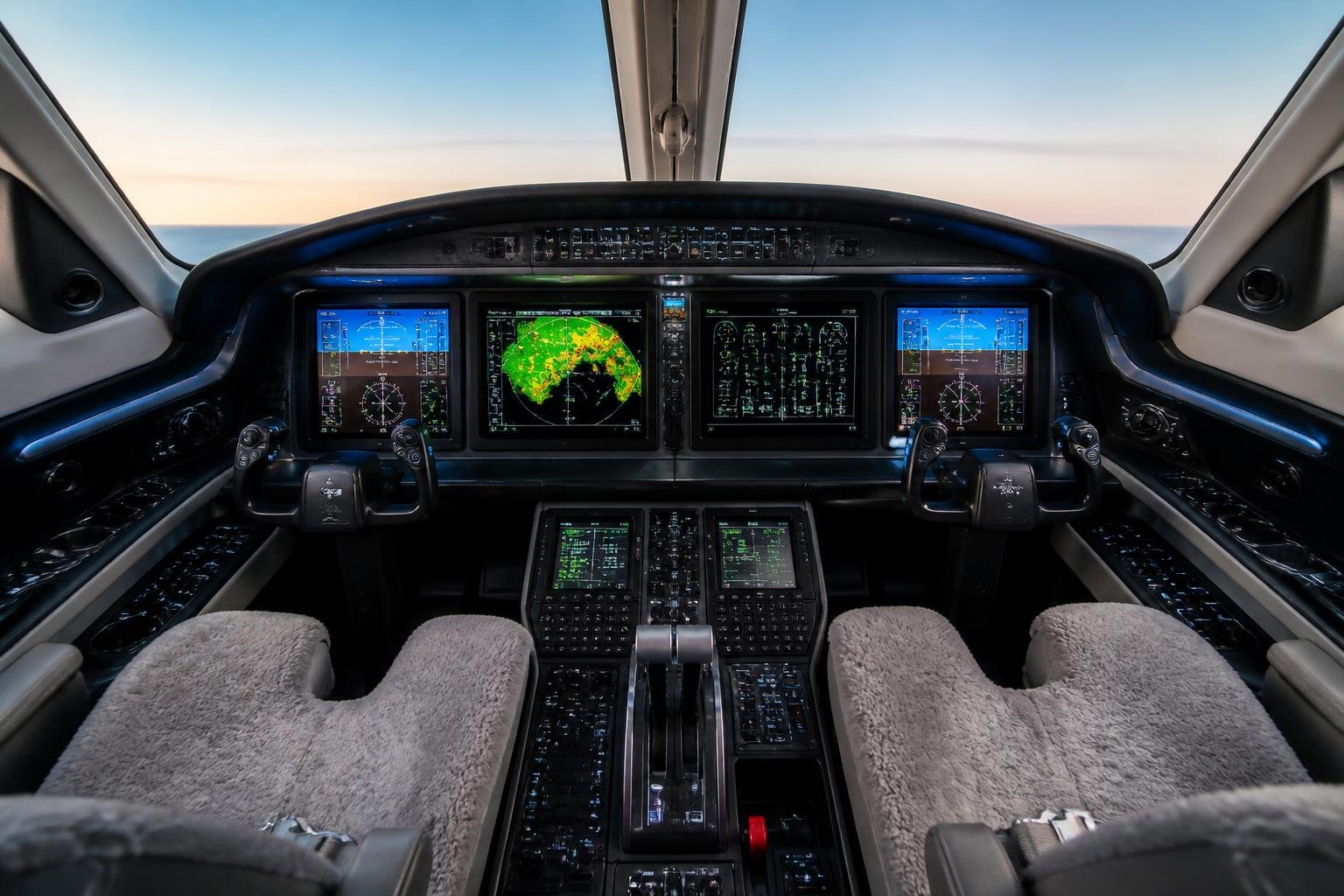
The avionics suite in the Hawker 800XP is another area that saw significant evolution over its production run. Early-to-mid production models were equipped with the Honeywell SPZ-8000 digital flight guidance system, featuring five-tube Electronic Flight Instrument System (EFIS) screens. This system is highly reliable and provides pilots with excellent situational awareness, though it is increasingly viewed as legacy technology.
Starting around 2002, Raytheon transitioned the standard flight deck to the highly regarded Collins Pro Line 21 avionics suite. The Pro Line 21 system features four large, active-matrix liquid crystal displays (LCDs) that integrate weather radar, navigation, terrain awareness, and engine instruments. Many older Hawker 800XP aircraft have been retrofitted with Pro Line 21 or other modern glass cockpits to comply with modern airspace requirements, such as ADS-B Out, WAAS/LPV, and FANS 1/A. When shopping for a pre-owned aircraft, the upgrade status of the flight deck is one of the most critical factors influencing its market value.
Operating Costs and Maintenance Considerations
Operating a midsize business jet requires a clear understanding of fixed and variable costs. The Hawker 800XP, while highly reliable, has a heavy airframe and older engine technology compared to clean-sheet designs of the 2010s, which translates to a slightly higher fuel burn—typically averaging around 250 to 300 gallons per hour depending on flight phase and altitude.
Maintenance is another vital component of the Hawker ownership experience. The aircraft operates on a calendar- and hourly-based inspection schedule, commonly referred to as the E, F, G, and Structural Inspections:
- 12-Month (E-Check): Standard annual airframe and systems check.
- 24-Month (F-Check): A deeper look at major systems and structural components.
- 48-Month (G-Check): A major inspection that can take several weeks and represents a significant financial event.
- Landing Gear Overhaul: Required every 12 years, which is a major capital expense.
Because engine maintenance can be prohibitively expensive if unexpected failures occur, the vast majority of Hawker 800XPs in service are enrolled in engine maintenance programs, such as Honeywell’s Maintenance Service Plan (MSP or MSP Gold). Buyers should exercise extreme caution when considering an aircraft that is not enrolled in an engine program, as a single engine overhaul can easily exceed the value of the airframe itself.
Buying Guide: What to Look for in the Market
The pre-owned market for the Hawker 800XP is highly active, with aircraft appealing to first-time jet buyers, charter management companies, and regional corporations. When evaluating a potential purchase, pay close attention to the following areas:
1. Maintenance Program Status
Always verify the enrollment status of the engines on Honeywell MSP. Additionally, check if the Auxiliary Power Unit (APU) is covered under a program like MSP or JSSI. Buying an enrolled aircraft offers predictable maintenance budgeting and significantly preserves resale value.
2. Upcoming Major Inspections
A Hawker 800XP listed at a seemingly low price may be due for its 48-month G-check, its 96-month inspection, or its 12-year landing gear overhaul. Request a detailed maintenance status sheet to calculate the "near-term capital exposure" before finalizing an offer.
3. Corrosion and Structural Integrity
Because the Hawker 800XP features a wet wing (where fuel is stored directly in the wing structure without rubber bladders), a meticulous pre-purchase inspection (PPI) is required to check for wing corrosion, fuel leaks, and structural fatigue. Ensure the PPI is conducted by an authorized service center with extensive Hawker experience.
4. Avionics Compliance
Ensure the aircraft is fully compliant with the regulatory mandates of the airspace in which you intend to fly. If you plan to operate in Europe or busy North American corridors, modern communication and navigation systems (such as CPDLC, LPV, and ADS-B) are essential.
Conclusion: Is the Hawker 800XP Right for You?
The Hawker 800XP remains a gold standard in the midsize business jet class for a reason. It does not try to be the fastest jet in the sky, nor does it claim to be the most fuel-efficient. Instead, it offers an incredibly spacious, comfortable, and quiet cabin, combined with a rugged design that can handle almost any mission you throw at it—whether that is a short hop to a regional airport or a transcontinental journey across North America.
For buyers who prioritize cabin comfort, runway versatility, and low upfront acquisition costs over state-of-the-art efficiency, the Hawker 800XP represents one of the best value propositions in private aviation today. By working with experienced aviation brokers, maintenance technicians, and legal counsel, you can acquire a Hawker 800XP that will provide reliable, comfortable service for years to come.

Comments
Join the conversation
Share your thoughts about this article
No comments yet
Be the first to share your thoughts!