

 Bad Vöslau
 Kirn
Kirn
 Florida
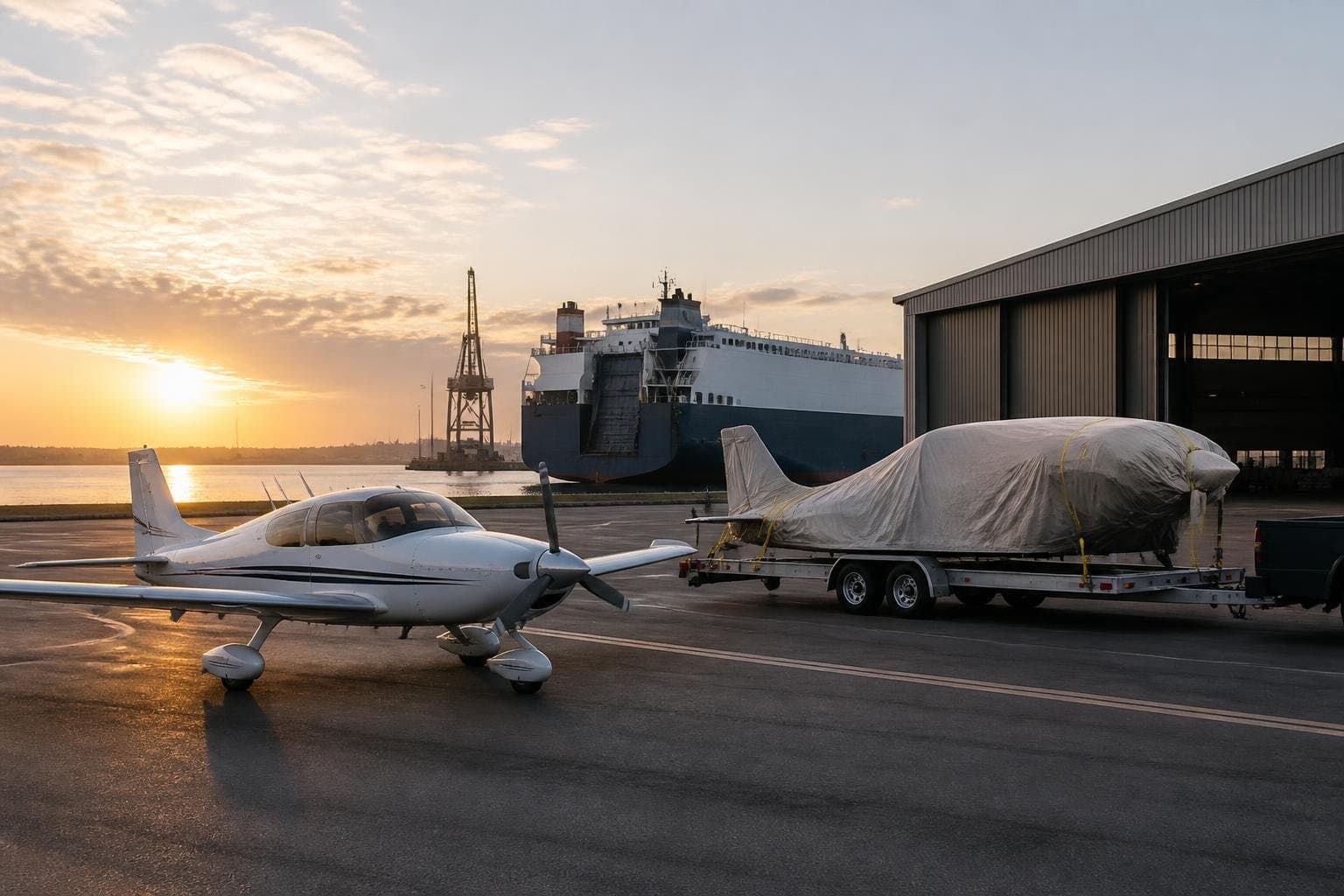
An aircraft ferry after purchase is not simply a matter of choosing the cheapest quote. The correct delivery method depends on the aircraft’s documented condition, route, legal status, physical dimensions, destination access, schedule and the point at which the buyer accepts transport risk. A properly planned ferry flight can preserve the aircraft in assembled, operational form; road haulage can be the more controlled answer for a non-flying aircraft; and sea freight is often the practical option for an overseas transaction. Plan the move before releasing funds, and treat every handover as a documented part of the purchase.
Choosing How to Move an Aircraft After Purchase
Buyers generally have three choices: fly the aircraft with a ferry pilot, move it by road, or arrange sea freight. In some cases, delivery uses a combination of methods, such as road haulage to a port, container shipment, and local road transport at destination. The decision is best made from the aircraft outward, rather than from a preferred transport method backward.
A ferry flight may be efficient for a properly maintained, currently operable aircraft moving between suitable airports. Ground transport may be preferable where the aircraft is inactive, has an unresolved technical issue, is being acquired as a project, or faces a route that would create disproportionate operational risk. Sea freight becomes a leading option when a water crossing, international geography, or the aircraft’s condition makes flying impractical.
Distance matters, but it is only one variable. A short domestic route can still be difficult if the destination has limited runway access, weight restrictions, seasonal weather, or no suitable fuel services. Conversely, a long flown delivery can be sensible if the aircraft, pilot, route, fuel stops, insurance and permissions are well matched. Cross-border and intercontinental movements add customs, registration, export, import, tax and potential transit-permission questions that should be addressed early.
Transport planning should begin before funds are released because it affects the purchase agreement, insurance, closing mechanics and acceptance procedure. The buyer should understand where possession changes hands, who has authority to move the aircraft, what documents travel with it, and whether a failed departure or delayed pickup changes storage responsibility. These are commercial details with direct operational consequences.
When an Aircraft Ferry Flight Makes Sense

A flown delivery is often appropriate when the aircraft has been independently reviewed, its maintenance and operating status support the intended flight, and the route can be completed within the aircraft’s capabilities and the pilot’s qualifications. Typical examples include regional repositioning after a domestic sale, a cross-country delivery between established general aviation airports, or an international transfer with appropriate planning and permissions.
The principal advantage is that the aircraft remains assembled. There is no wing removal, lifting operation, road vibration, container loading or reassembly programme. The buyer receives an aircraft that has completed a real operational journey, which can also reveal practical issues that require attention. That does not make a ferry flight a substitute for a pre-buy inspection or acceptance inspection; it is simply a different transport method with different exposures.
For many piston singles and twins, a route may be built around sensible fuel reserves, daylight considerations, airport operating hours and maintenance support. Turbine aircraft, pressurized aircraft and long-range flights may involve additional planning for high-altitude operations, international handling, crew qualifications and more substantial weather alternatives. Overwater legs require particularly conservative planning around survival equipment, route selection, communications, fuel margins and diversion options.
Weather is often the most visible variable, but range, usable fuel, fuel availability, runway surface and length, airport rescue category where relevant, terrain, border formalities and maintenance support can be equally decisive. A route that looks direct on a map may be unsuitable once these operational details are reviewed.
A ferry flight should not be selected merely because an aircraft starts and taxis. Deferred defects, expired inspections, incomplete records, a lapsed certificate or operating limitations can prevent a lawful or prudent delivery. If the aircraft cannot be safely and legally operated for the proposed mission, road or sea transport may offer the more rational path.
Ferry Flight Readiness: Airworthiness, Records and Insurance
Before committing to a ferry flight, obtain an independent assessment of the aircraft’s operational condition that is proportionate to the journey. This should consider more than a brief engine run. The aircraft’s inspection status, maintenance records, unresolved discrepancies, calendar-limited components, fuel system condition, tires, brakes, lights, avionics required for the route and any known defects should be reviewed by appropriately qualified personnel.
An annual inspection, where applicable, is not a universal certificate of suitability for a particular delivery route, and a recent maintenance entry does not remove the need to understand open items. For aircraft operating under other regulatory systems, equivalent maintenance requirements and release documentation must be assessed in their proper jurisdictional context. The ferry pilot and buyer need a clear, current picture of what has been inspected, what remains deferred, and what limitations apply.
The document package typically merits the same attention as the aircraft itself. Depending on jurisdiction and aircraft category, this can include registration and airworthiness documents, operating limitations, weight-and-balance data, maintenance records, radio documentation, insurance evidence and customs paperwork. A foreign-registered aircraft may require additional care if deregistration, export certification, temporary registration or a change of marks is anticipated.
Insurance should be confirmed in writing before departure. The hull policy needs to respond to the intended pilot, aircraft use, geographic route and any overwater or international exposure. A named-pilot requirement, minimum experience provision, geographic exclusion or requirement for insurer approval can materially change the plan. Liability cover, emergency arrangements and the excess or deductible should also be understood.
Seller statements are useful starting information, not buyer verification. The buyer should preserve the distinction between information supplied by the seller, findings from an inspection, and the ferry operator’s own operational decision. Where a special flight permit, customs clearance, overflight approval or other authorization is needed, do not assume it will be available on the desired date.
Selecting and Briefing a Ferry Pilot

The right ferry pilot is selected for the actual mission, not merely for total flight time. Relevant experience may include time on the aircraft type or a close variant, familiarity with its systems and handling, experience on the intended route, and judgment in the likely operating environment. For a complex piston aircraft, turbine aircraft, high-altitude route, ice-prone region or water crossing, the qualifications and recent experience required can be materially different.
Ask how the pilot will approach route planning, maintenance concerns, weather decisions and diversion planning. A professional ferry pilot should be willing to postpone, divert or stop when conditions call for it. A delivery timetable is important, but it should never create pressure to continue beyond appropriate operational limits.
The scope should be written down. It should identify the planned departure and delivery points, who pays fuel, oil, landing and handling fees, pilot positioning, accommodation, ground transport, communications, unexpected maintenance and storage. It should also address whether a second pilot is needed, who can authorize repairs, any spending limit for unscheduled work, and what happens if the aircraft becomes unserviceable away from its starting point.
Set communication expectations before launch. Useful milestones include collection, pre-departure review, departure, each significant delay or diversion, arrival and handover. The pilot should document the aircraft’s condition at collection and delivery with dated photographs and a concise record of fuel, hours, defects observed and actions taken. This protects both parties and makes subsequent discussions more factual.
The lowest quote can omit contingency planning, positioning costs, insurance requirements or necessary expertise. Compare qualifications, proposed routing, contractual scope and assumptions alongside price. In aircraft delivery, the least expensive proposal can become costly if it is based on unrealistic weather, fuel or maintenance assumptions.
Ground Transport by Road: Crating, Disassembly and Haulage
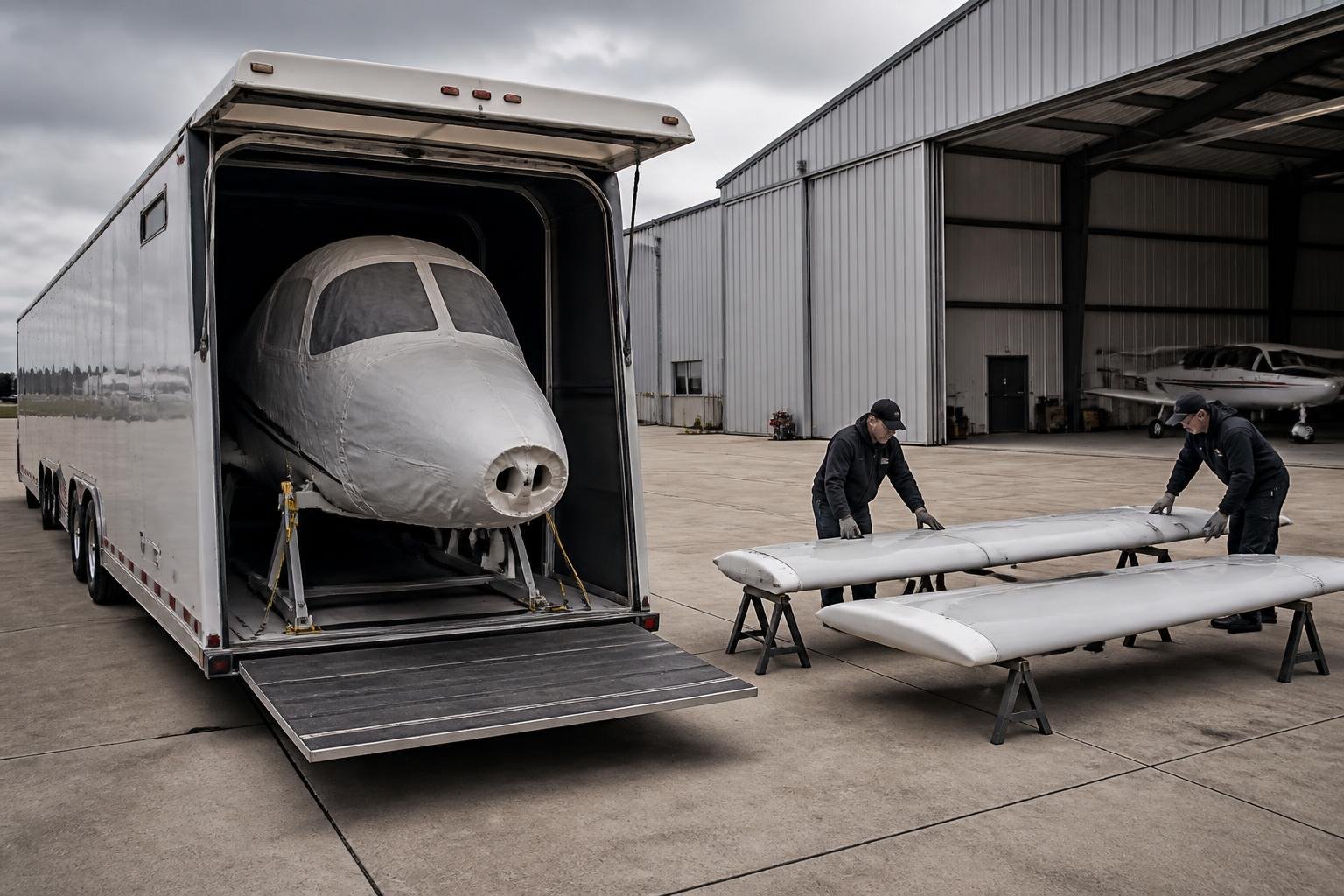
Road transport is often the better choice when the aircraft is non-operational, lacks the documentation needed for flight, is being sold as a restoration project, or must travel a relatively manageable domestic distance. It can also suit an aircraft with a route that is operationally awkward but physically straightforward by road, provided a specialist carrier can handle its dimensions and weight.
Most fixed-wing aircraft need partial disassembly. Wings may be removed, control surfaces protected, landing gear secured and loose equipment separately packed. The method must follow a detailed loading plan rather than an improvised dismantling exercise. Protective packaging should prevent chafing, moisture ingress and movement; vulnerable items such as windshields, antennas, propellers and control surfaces need particular attention.
Specialist aircraft trailers and carriers are preferable to general freight arrangements. The haulier must assess overall height, width, route constraints, permits, bridges, escorts where required and local loading restrictions. A physically short trip can become complicated when the load cannot clear road furniture or the origin and destination cannot accommodate a large trailer.
Disassembly and reassembly create risks of their own. Damage can occur during wing removal, lifting, securing, unloading or storage, while missing hardware, disturbed rigging, electrical connections and control-system adjustments can lengthen the return-to-service process. The buyer should define who is responsible for packing, dismantling, loading, unloading and reassembly, and should retain a photographic record of the aircraft before each stage.
Destination planning is essential. Confirm access to the receiving facility, suitable hardstanding, lifting equipment, personnel, indoor storage and a maintenance organization able to oversee reassembly. A transport quote that ends at the gate is incomplete if the aircraft cannot be safely unloaded or protected after arrival.
Sea Freight for Overseas Aircraft Purchases
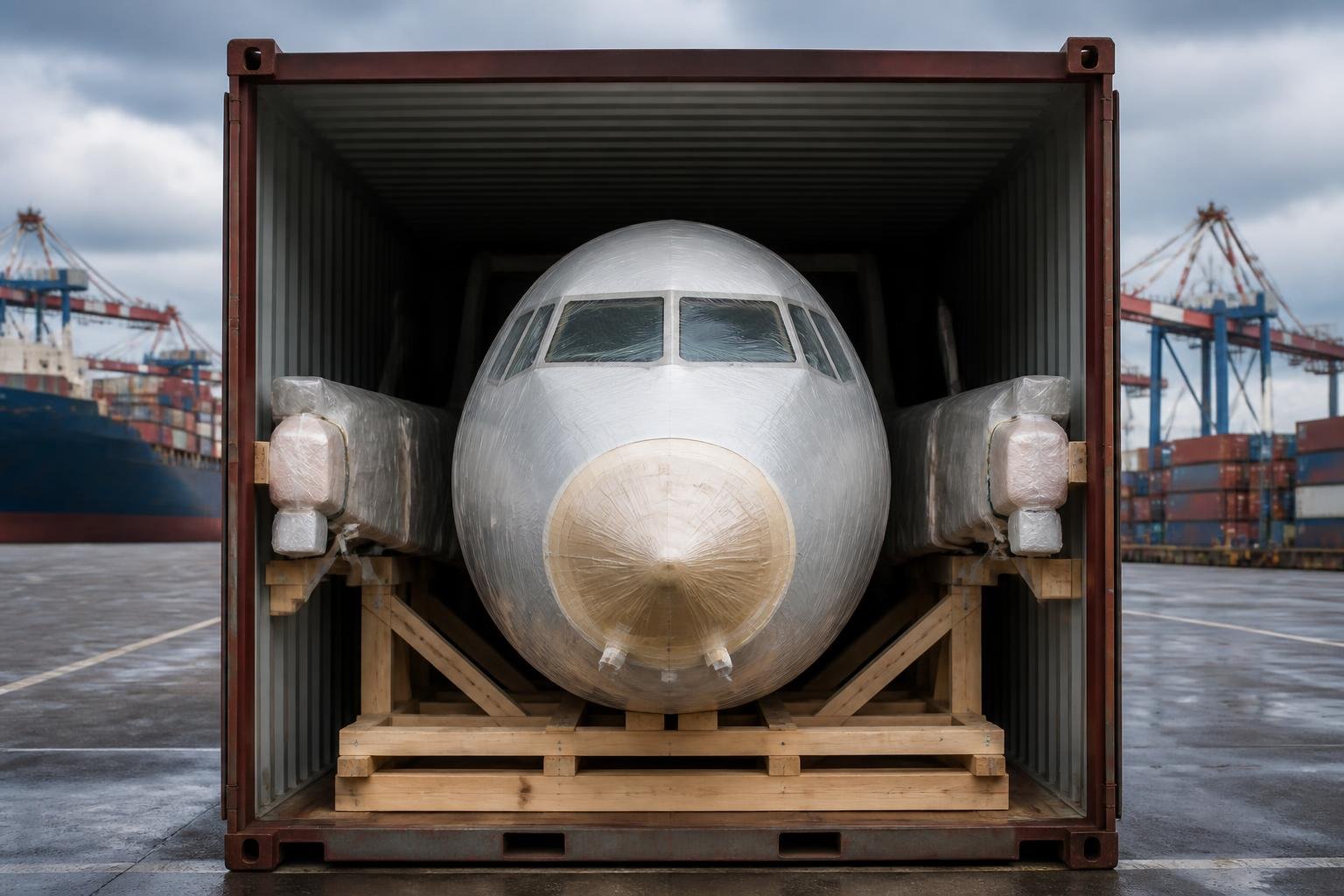
Sea freight is a common solution for overseas aircraft purchases when flying the aircraft would be impractical, uneconomic or inconsistent with its condition and regulatory status. Depending on dimensions and handling needs, the aircraft may travel in a shipping container, on a flat-rack, or through a specialized freight arrangement. The choice affects disassembly, exposure to weather, port handling and security.
Container transport can provide physical enclosure, but an aircraft must fit within the usable dimensions after cradles, padding and securing equipment are considered. Larger or unusually shaped aircraft may require a flat-rack or other non-containerized approach, with different protective and insurance implications. A freight forwarder experienced with aircraft movements should coordinate the packing specification with the disassembly team rather than treating the aircraft as ordinary cargo.
Export-grade packing should address salt-air exposure, condensation, vibration and long periods without inspection. Corrosion prevention, moisture control, protective covers, sealed openings and correctly designed restraints matter. Improperly placed straps or supports can damage structure, skins, control surfaces or landing gear. Every major component should be identified in an inventory and photographed before packing, without relying on labels alone as the record.
Ocean schedules are variable. Port congestion, transshipment, customs intervention, weather and carrier schedule changes can affect arrival timing. A buyer should avoid booking non-refundable reassembly labour, hangar moves or onward flights on an optimistic arrival date. The transport plan should state who monitors the shipment and who has authority to respond if a container is delayed, inspected or damaged.
Marine cargo insurance is separate from assuming that the carrier will make the buyer whole after a loss. Carrier liability may be limited by contract or convention, and claims procedures can be strict. Confirm the insured value, exclusions, deductible, survey requirements and responsibilities at collection, port delivery, loading, discharge, customs release and onward haulage. Import formalities and domestic transport should be planned as part of the same chain.
Comparing Total Cost Rather Than Transport Quotes
A transport quote is only one part of the all-in delivery cost. For a ferry flight, include fuel, oil, landing and handling fees, crew fees, pilot positioning, accommodation, navigation or communications services where applicable, weather delays and contingency maintenance. For road transport, add dismantling, packing, permits, crane or forklift work, storage, unloading and reassembly. Sea freight adds export packing, port handling, freight forwarding, customs brokerage, marine insurance and onward movement.
Taxes and duties can be material in an international transaction, but their applicability depends on the aircraft, transaction structure and importing jurisdiction. They should be assessed with a qualified customs or tax adviser, not estimated from a generic transport quotation. Similarly, insurance deductibles and coverage exclusions can alter the real financial exposure even when the premium appears modest.
Request proposals on a comparable basis. Each should specify collection point, destination, assumed aircraft condition, included services, excluded services, waiting time, storage, cancellation treatment, insurance, taxes, currency and contingency rates. If one provider assumes a flyable aircraft and another assumes wing removal, their headline numbers do not answer the same question.
| Cost area | Ferry flight | Road or sea movement |
|---|---|---|
| Core transport | Pilot, fuel and route expenses | Carrier or freight charge |
| Preparation | Operational review and route readiness | Disassembly, packing and loading plan |
| Contingency | Weather, diversion and unscheduled maintenance | Delays, storage, handling and reassembly |
| International elements | Permissions, handling and customs coordination | Port, brokerage, import and onward transport |
A realistic contingency allowance is not a sign of poor planning. It recognizes that weather, equipment, port operations and documentation can change. Record all assumptions before choosing a method, then compare not only expected cost but also the financial consequence if the plan does not proceed normally.
Risk, Liability and Insurance Through the Handover Chain
Title, possession and risk do not always transfer at the same moment. The purchase agreement should state clearly when the buyer becomes responsible for loss or damage, when the seller releases control, and who may authorize transport. It should also describe the condition in which the aircraft is expected to be handed over and the process for recording exceptions.
For a ferry flight, hull insurance, pilot authorization and deductibles should align with the transfer point. For road and sea movement, distinguish carrier liability from insurance purchased for the shipment. A carrier may accept responsibility only within defined contractual limits, while a cargo policy may have exclusions for inadequate packing, corrosion, delay, pre-existing damage or unattended storage.
Create a pre-departure condition report with detailed photographs of exterior surfaces, cockpit, propeller or rotors where relevant, landing gear, loose components, records and accessories. For dismantled aircraft, photograph each component before wrapping and at loading. At destination, repeat the process before signing an unconditional acceptance or releasing any retained payment.
Everyone in the chain should know the damage-reporting procedure. This includes preserving packaging, obtaining carrier acknowledgements, recording dates and notifying insurers within any applicable time limit. Escrow or staged payment arrangements can be structured around documented milestones such as records acceptance, collection, export release, arrival and final inspection. The correct mechanism depends on the transaction and jurisdiction, but delivery milestones should not be left vague.
International Borders, Customs and Regulatory Planning
International aircraft movements require parallel aviation and customs planning. A ferry flight may need overflight and landing permissions, customs appointments and documentary evidence of registration and insurance. An exported aircraft may need deregistration or an export process before it can be placed on a new register; in other circumstances, temporary arrangements may be available. The correct sequence depends on the relevant authorities and transaction structure.
For sea or road transport, customs entry, import duty, VAT or similar taxes, temporary admission possibilities and broker instructions must be addressed before arrival. A broker can coordinate declarations, but the buyer remains responsible for supplying accurate commercial, ownership and aircraft information. Delays often arise because a document prepared for aviation registration does not meet customs requirements, or vice versa.
Export controls, sanctions and end-use restrictions may apply to particular aircraft, components, destinations or parties. Historic, ex-military and unusual aircraft can require especially careful review. Civilian ownership of an aircraft does not by itself resolve export, import, demilitarization, registration or operating restrictions. Requirements differ between national aviation authorities and can change with route or destination.
Seek specialist advice early when the aircraft is unusual, the route crosses multiple jurisdictions, the transaction involves a change of registration, or the aircraft has military heritage. Early review is less expensive than discovering at a port, border or departure airport that a necessary approval was never obtained.
Planning the Delivery Timeline After an Auction or Private Sale
Start the delivery sequence with the accepted purchase terms, not with a provisional departure date. First complete records review, inspection arrangements and the agreed pre-handover conditions. Then confirm seller access, the aircraft’s location, airport operating constraints, transporter or pilot availability, insurance activation and any registration or customs steps.
A workable timeline includes time for discrepancies found during pre-buy inspection, document corrections, ferry-pilot route planning, weather windows and provider scheduling. Seasonal constraints deserve attention: winter weather, mountain icing, tropical storm seasons, short daylight periods and regional airport limitations can change both ferry and freight schedules.
- Confirm contractual handover, payment and acceptance milestones.
- Verify records, insurance, inspection findings and authority to transport.
- Coordinate collection access, airport or port arrangements and destination readiness.
- Document departure condition and inventory before movement begins.
- Track collection, departure, arrival, inspection and final acceptance.
Avoid irreversible commitments before documents are complete. Non-refundable crew travel, port bookings, hangar reservations and onward flights can create pressure to proceed despite unresolved concerns. The best schedule preserves room for proper verification and a justified delay when conditions demand it.
Acceptance at Destination and Post-Transport Actions
Arrival is not the end of the delivery process. Where the agreement allows, inspect the aircraft before final acceptance. Compare its condition with the departure report, check for visible transit damage, missing components, unsecured items, moisture exposure and any discrepancy recorded during the journey. If there is a concern, document it immediately and follow the agreed notification process.
After road or sea transport, reassembly should be overseen by personnel qualified for the aircraft and work involved. Control continuity, rigging, fasteners, electrical connections, systems operation and preservation removal may all require attention before the aircraft is returned to service. The appropriate maintenance release or sign-off is a separate question from physical reassembly and must follow the requirements applicable to that aircraft and jurisdiction.
Update insurance, registration, hangar arrangements, maintenance tracking and operational contact information once delivery is complete. Retain freight records, bills of handling, condition reports, photographs, customs documents, invoices and maintenance documentation. A complete transport file supports warranty discussions, insurance claims, maintenance continuity and future resale due diligence.
Making the Right Delivery Choice for the Aircraft and Mission
A ferry flight is generally the logical option for a documented, suitably prepared aircraft that can lawfully and prudently complete the intended route with an appropriately qualified pilot. It preserves the aircraft in assembled form and can be efficient, but it demands disciplined assessment of condition, weather, insurance and route capability.
Road transport is often better for non-operational aircraft, restoration projects and practical domestic moves where dismantling risk is understood and destination reassembly support is available. Sea freight is frequently the realistic answer for overseas deliveries, especially for aircraft that will travel dismantled or cannot be flown across the required route.
The sound decision framework is condition, legality, route risk, schedule, total cost and accountability at every handoff. An aircraft ferry after purchase should be treated as a managed delivery project, not an afterthought to the sale. Where technical, regulatory or international complexity is high, use specialists who can assess the aircraft, transport method and documentation together before movement begins.

Comments
No comments yet
Be the first to share your thoughts!