

 Bad Vöslau
 Kirn
Kirn


 Florida

An aircraft pre-buy inspection and an annual inspection can examine many of the same systems, but they answer different questions. A pre-buy is buyer-led due diligence intended to uncover condition, documentation, compliance, reliability and value risks before a purchase. An annual is a regulatory inspection for applicable aircraft, focused on determining whether the aircraft meets the relevant airworthiness requirements at that time. A recent annual may be useful evidence, but it is not automatically a substitute for an independent pre-buy evaluation.
Aircraft Pre-Buy vs Annual Inspection at a Glance

The practical difference is purpose. A pre-buy inspection is a commercial and technical review arranged for the prospective buyer. Its scope should reflect the aircraft, its history, the buyer’s intended mission and the risks the buyer is prepared to accept. The findings help a buyer proceed, renegotiate, seek further investigation or withdraw under the terms of the purchase agreement.
An annual inspection, where that framework applies, is an ongoing regulatory requirement for a certificated aircraft. In the United States, for example, an annual inspection is performed under the applicable maintenance regulations and must be approved for return to service by an appropriately authorized person. It is an airworthiness-focused maintenance event, not a representation that the aircraft is a sound acquisition at the agreed price.
| Question | Pre-buy inspection | Annual inspection |
|---|---|---|
| Primary purpose | Support a purchase decision | Meet applicable recurring inspection requirements |
| Scope | Negotiated and buyer-defined | Driven by the applicable regulatory inspection standard |
| Inspector selection | Normally selected by the buyer | Usually arranged by the owner or operator |
| Typical output | Condition report and discrepancies for the buyer | Maintenance record entry and, if applicable, approval for return to service |
| Value assessment | May identify value-affecting concerns | Does not determine market value or suitability of the transaction |
There can be overlap. Both reviews may involve logbook examination, opening inspection panels, checking maintenance status and identifying discrepancies. However, responsibility, reporting and decision-making are different. A buyer should not assume that a shop’s annual inspection for its existing customer was designed to investigate the buyer’s particular concerns.
What a Pre-Buy Inspection Is Designed to Do

A pre-buy inspection is a transaction-specific condition assessment. It is intended to establish what the buyer is acquiring, what work may be needed, which records support the aircraft’s history and whether the known condition aligns with the purchase terms. It is not a universal, legally prescribed inspection package. Its depth is defined by agreement, which makes careful planning essential.
The buyer should select an independent mechanic, inspection facility or type specialist with relevant experience. Independence does not mean that the inspector must be hostile to the seller; it means the inspector’s professional engagement, report and recommendations are for the buyer rather than influenced by the seller’s maintenance relationship or the closing of the transaction.
A useful scope commonly combines records review, physical examination and appropriate functional checks. Depending on the aircraft, this may include:
- verification of airframe, engine and propeller times against maintenance records;
- review of recurring inspection items, airworthiness directives and mandatory replacement intervals;
- inspection for corrosion, fluid leaks, damage evidence, poor repairs and inaccessible areas where practicable;
- assessment of engine condition using methods agreed in advance;
- review of avionics installations, instrument condition and autopilot operation;
- confirmation that modifications and repairs appear to have supporting approval records; and
- an operational or flight evaluation when it is appropriate, legal, insured and conducted by suitably qualified people.
Findings are decision information, not simply a defect list. A small cosmetic issue may have little consequence, while incomplete records, unapproved alterations, corrosion in a structural area or an approaching engine event can materially alter ownership risk. The report should distinguish observed facts, items needing further investigation and opinions about urgency. A buyer can then use estimates and specialist input before requesting a price adjustment or deciding not to proceed.
What an Annual Inspection Is Designed to Do

An annual inspection is a recurring airworthiness inspection framework applicable to many certificated aircraft, but the precise requirements depend on jurisdiction and aircraft category. In the United States, an annual inspection must be performed and approved for return to service by a person holding the required authorization. The inspection is directed at whether the aircraft conforms to its approved type design where applicable and is in a condition for safe operation at the time of inspection.
Timing, sign-off and maintenance-record treatment matter. An annual is not simply a thorough look at an aircraft; it is a regulated maintenance action with required records. If the inspector identifies discrepancies that prevent approval for return to service, the aircraft may not receive that approval until the required issues are resolved. The owner, operator and maintenance provider need a clear understanding of who is authorizing work and who is responsible for the associated costs.
Buyers should also avoid treating “annual inspection” as a universal label. Experimental amateur-built aircraft in the United States generally require a condition inspection rather than an annual inspection, with who may perform it depending on the aircraft and the person’s qualifications. Light-sport aircraft, special airworthiness categories and aircraft registered outside the United States can be subject to different maintenance, inspection and approval regimes. National rules, operating limitations and the aircraft’s certification basis should be checked before making assumptions.
An annual sign-off is valuable maintenance evidence, but it has defined limits. It does not establish that every historical repair was properly documented, that the aircraft is free from concealed defects, that its engine has predictable remaining life, or that it represents good value for a particular buyer’s mission.
The Practical Differences in Scope, Authority and Outcome
The scope of a pre-buy belongs to the buyer’s inspection plan. A buyer of a simple, recently maintained trainer may commission a focused records-and-condition review. A buyer of an older retractable, turbine aircraft, pressurized aircraft or uncommon type may need a deeper examination involving specialists, component records, corrosion access and systems testing. The buyer should define the work before the aircraft is opened or transported to a facility.
An annual’s scope is instead tied to the applicable inspection requirements and the professional judgment required to perform them. A mechanic conducting an annual may identify important discrepancies, but the inspection is not necessarily designed to answer transaction questions such as whether an aircraft’s paint condition, deferred upgrades, missing historical records or approaching overhaul exposure justify the asking price.
Selection and payment also differ. The existing owner commonly chooses and pays the facility for an annual. For a pre-buy, the prospective buyer normally engages and pays the inspector directly. That arrangement helps establish clear reporting expectations. The seller may reasonably control access to the aircraft and records, but should not control the buyer’s report.
Reports should be kept distinct from maintenance records. A pre-buy report can be a detailed buyer document listing observations, photographs where authorized, questions and recommended follow-up. It does not by itself approve an aircraft for return to service. An annual, by contrast, requires the relevant maintenance-record entry and any necessary documentation associated with work performed. A discrepancy list generated during an annual does not replace a buyer’s broader due-diligence report.
Why a Fresh Annual Is Not a Substitute for a Pre-Buy
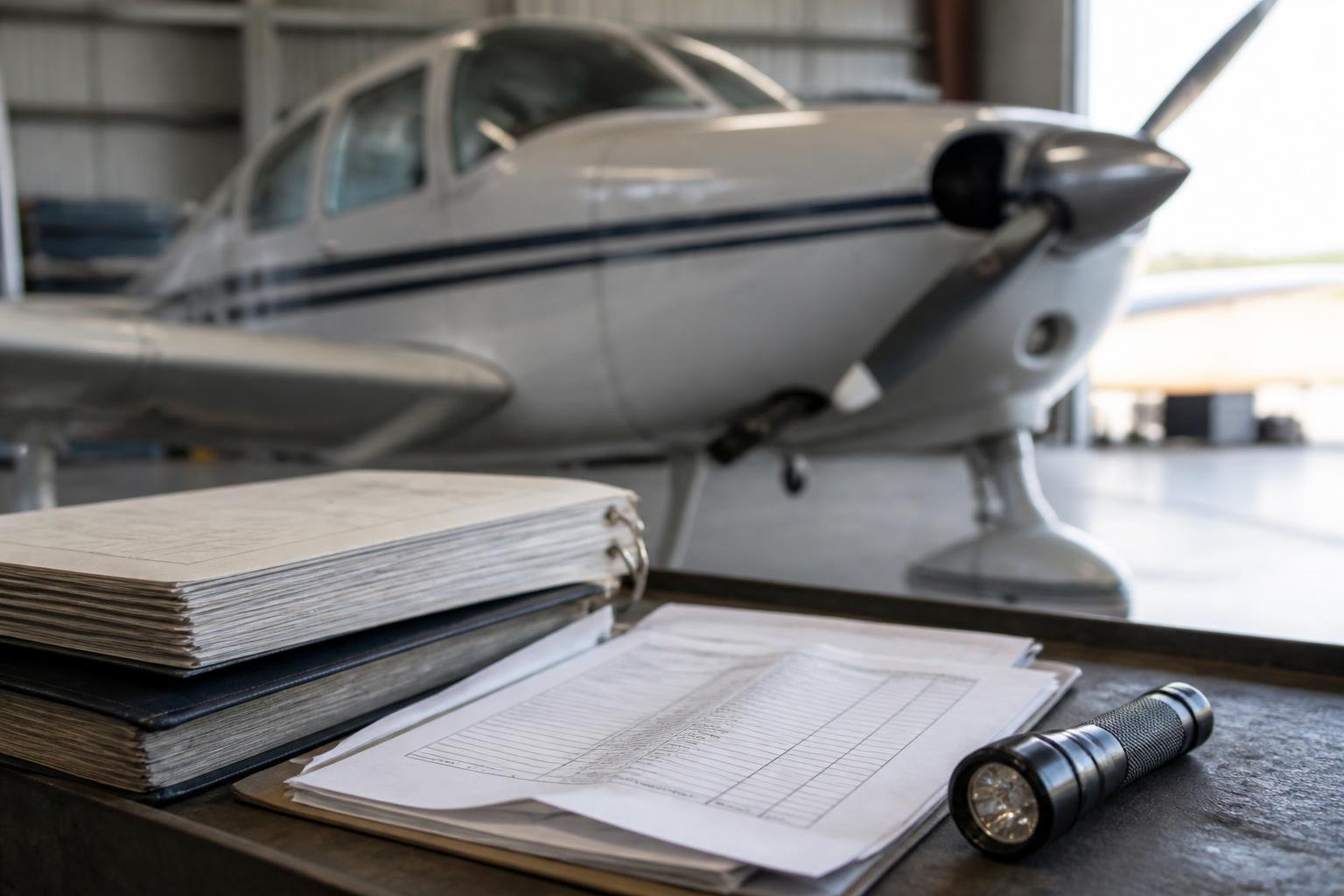
A fresh annual can reduce uncertainty about some current inspection items, but it does not change the fact that an annual and pre-buy have different objectives. The annual may overlap with a proposed pre-buy scope, yet it may not examine the buyer’s highest-risk concerns in the desired depth or present its conclusions in a transaction-focused format.
For example, a buyer may need an independent review of a major repair, a long storage period, unusual engine operating history, incomplete avionics documentation or gaps in the logbooks. Those matters can require targeted records research and specialist judgment beyond the work expected in a standard annual. A recent annual should not be read as confirmation of damage history, legal completeness of every alteration, future reliability or market suitability.
Maintenance records often reveal the most consequential questions. Repeated squawks, chronic oil leaks, recurring corrosion treatment, deferred component replacement, inconsistent hours, periods of inactivity and ambiguous modification entries can alter the buyer’s view of the aircraft. Some concerns may be legitimate and manageable; others may require deeper inquiry. An annual inspection date alone cannot resolve them.
Independence is another reason to retain a buyer-led review. A seller’s long-standing maintenance provider may be competent and conscientious, but the buyer should still have the ability to define priorities and receive an unfiltered assessment. When documentation or observed condition raises questions, a focused pre-buy remains prudent even if an annual was completed recently.
Can a Pre-Buy Inspection Become an Annual Inspection?

It can, but only when the arrangement is planned before work begins. Converting a pre-buy into an annual can prevent duplicate access and disassembly, but it also creates a decision point if significant discrepancies emerge. The facility must have the qualifications and authorization required for the applicable inspection, and the owner must authorize any annual inspection and maintenance actions that affect the seller-owned aircraft.
The parties should use a clear written arrangement covering the initial pre-buy scope, the trigger for beginning annual work, estimated charges, who can authorize repairs, and what happens if the buyer declines the aircraft. The buyer should not casually authorize repairs on an aircraft they do not yet own. Equally, the seller should not assume that a buyer will fund work necessary for the seller to obtain an annual sign-off.
A practical sequence is to complete the records review and a defined first-stage condition assessment, then pause for buyer and seller decisions. If both parties agree, the authorized inspector may proceed under the annual inspection framework. Major discrepancies may lead to renegotiation, seller-funded correction, a revised closing timetable or termination of the transaction.
Separate documentation remains important. The buyer should receive the pre-buy findings in the agreed report format. If an annual is completed, the required maintenance-record entry and approval-for-return-to-service documentation must stand on their own. A pre-buy report is not an annual sign-off, and an annual sign-off is not a complete buyer report.
How to Set the Right Pre-Buy Inspection Scope
The correct scope depends on age, complexity, utilization, location, records quality and intended mission. A basic fixed-gear piston aircraft with comprehensive records calls for a different plan from a complex retractable, a vintage aircraft, a turbine, a helicopter, an experimental aircraft or an imported airframe. Start by identifying the risks that would change your decision.
- Airframe: Assess corrosion exposure, structural repairs, control-system condition, landing gear where applicable, fuel-system condition and evidence of leaks or damage.
- Engine and propeller: Review time since overhaul or replacement, calendar exposure, operating history, preservation after storage, oil-filter findings and component records. Borescope examination, oil analysis, compression testing or other checks should be selected for a stated reason, not treated as automatic guarantees.
- Avionics and systems: Confirm that installed equipment powers up and functions as represented, while recognizing that a ground check cannot prove every in-flight function. Investigate autopilot behavior, electrical-system health and equipment approvals as appropriate.
- Records and alterations: Examine damage repairs, supplemental type certificates, major alterations and recurring compliance requirements. Missing documentation can be a material risk even when the aircraft appears well presented.
A flight evaluation can be useful, particularly for handling, engine indications, system operation and avionics behavior. It should be carefully arranged: the aircraft’s status, insurance conditions, pilot qualifications, weather and seller permission all matter. It is not a substitute for physical inspection, and it should never be used to operate an aircraft whose status does not support legal flight.
For a model with known maintenance patterns, a type-club recommendation or an experienced type specialist can add real value. Expertise is especially relevant when judging corrosion-prone areas, recurring structural issues, unusual systems, legacy autopilots or whether component documentation is complete.
Documents Buyers Should Review Before Authorizing Work
Records screening should happen early, ideally before a buyer incurs substantial travel, inspection or deposit exposure. The objective is not merely to confirm that books exist. It is to identify continuity, reconcile times and understand whether maintenance history supports the aircraft’s presentation.
- Airframe, engine and propeller logbooks, including overhaul, repair and component documentation.
- Current registration, airworthiness and operating documents where applicable to the aircraft and jurisdiction.
- Records supporting supplemental type certificates, major repairs, major alterations and other approved changes.
- Evidence of recurring airworthiness directive compliance and any required repetitive actions.
- Available damage, corrosion, storage, preservation and insurance history.
- Avionics installation records, equipment approvals and documentation relevant to the buyer’s intended operation.
Missing records do not automatically make an aircraft unacceptable, but they should be treated as a pricing, compliance and future-resale issue. The consequences vary with the missing material and aircraft type. A specialist may be able to determine whether alternative records support the history or whether further documentation is needed. Do not rely on verbal assurances where the records should provide the answer.
Managing Findings, Repairs and Purchase Negotiation
Classify findings before negotiating. Safety and compliance concerns may require immediate specialist advice. Reliability concerns may be manageable but important to forecast. Cosmetic, convenience and upgrade items may primarily affect price and future planning. This classification prevents a long list of minor observations from obscuring a smaller number of genuinely material issues.
Obtain informed estimates before proposing a price adjustment. Parts availability, shop capacity, access requirements and the scope of underlying work can change a repair estimate substantially. A visible leak or worn component may be inexpensive to correct, while the disassembly needed to reach it may not be. The buyer should understand the likely range of work rather than treating every discrepancy as a simple deduction.
The purchase agreement should address inspection contingencies, access to records, responsibility for inspection charges, deposit handling and deadlines. If the aircraft is disassembled, define who pays for reassembly and who decides whether repairs proceed. Avoid authorizing work on a seller-owned aircraft without written agreement covering cost, ownership of removed parts and return-to-service responsibility.
Finally, keep the transaction decision separate from an airworthiness determination. An inspector may report a concern that is commercially unacceptable to the buyer even if it does not prevent an approval for return to service. Conversely, a negotiated price reduction does not correct a compliance issue. Both technical status and purchase terms must be resolved before closing.
Costs, Timing and Choosing an Independent Inspector
Pre-buy cost varies with aircraft type, location, condition, records quality and inspection depth. Travel, hangar access, positioning the aircraft, panel removal, borescope work, laboratory analysis, specialist involvement and reassembly can all affect the final invoice. An inexpensive inspection that misses a material issue is poor value; an unfocused investigation can also waste money. The aim is proportionate diligence.
Schedule early enough to allow records review, facility booking, seller access and time for follow-up questions. If an annual due date is near, discuss whether a staged pre-buy and potential annual conversion is practical. Do not let a closing deadline pressure the inspector into a scope that cannot reasonably answer the buyer’s questions.
Before engagement, ask the inspector:
- What experience do you have with this model, engine, propeller and avionics suite?
- What work is included, excluded and charged separately?
- Will you review records before the physical inspection?
- What access or disassembly is needed, and who must authorize it?
- How will findings be reported, and when can I expect the report?
- Can you perform an annual if requested, and what separate authorization is required?
Get the scope, estimated cost basis and report-delivery expectations in writing. The inspector should be able to explain limitations plainly. Independence, relevant experience and a disciplined reporting process are more useful selection criteria than a promise to make a transaction easy.
A Sensible Inspection Strategy Before Closing
A disciplined acquisition process begins with early document screening. Review the available records before committing to travel, arranging a large deposit or incurring non-refundable expenses. Resolve obvious questions about ownership documents, inspection status, logbook continuity and major alterations before moving to a detailed physical review.
Next, arrange the pre-buy before irreversible purchase commitments. Set a scope appropriate to the aircraft and identify the decision points: which findings allow renegotiation, which trigger specialist review, and which would cause the buyer to walk away. If an annual is due and a qualified inspector is available, coordinate the possibility of conversion in advance rather than assuming it can be decided after disassembly.
Before closing, review the final discrepancy list, repair invoices, parts documentation and any required release or approval records. Confirm that promised corrections are supported by paperwork rather than informal statements. Technical due diligence should be followed by the appropriate insurance, financing, registration and operational planning steps for the buyer’s jurisdiction and intended use.
The final decision is rarely just “pass or fail.” Proceed when the aircraft’s documented condition, expected work, price and mission fit are aligned. Renegotiate when identifiable risks can be fairly priced and managed. Walk away when records, condition, compliance exposure or seller cooperation prevent a reliable understanding of what is being purchased.
Conclusion: Use Each Inspection for Its Proper Purpose
Use a pre-buy inspection to make an independent acquisition decision, and use an annual inspection to meet the applicable ongoing inspection requirement. They can overlap, and in some transactions they can be coordinated efficiently, but neither should be casually treated as a replacement for the other.
For buyers, the essentials are a written scope, qualified and independent personnel, access to complete records and clear agreement on what happens when discrepancies are found. Define the inspection plan before committing to the purchase. That approach gives the buyer a sounder basis for proceeding, renegotiating or stepping away.

Comments
No comments yet
Be the first to share your thoughts!