
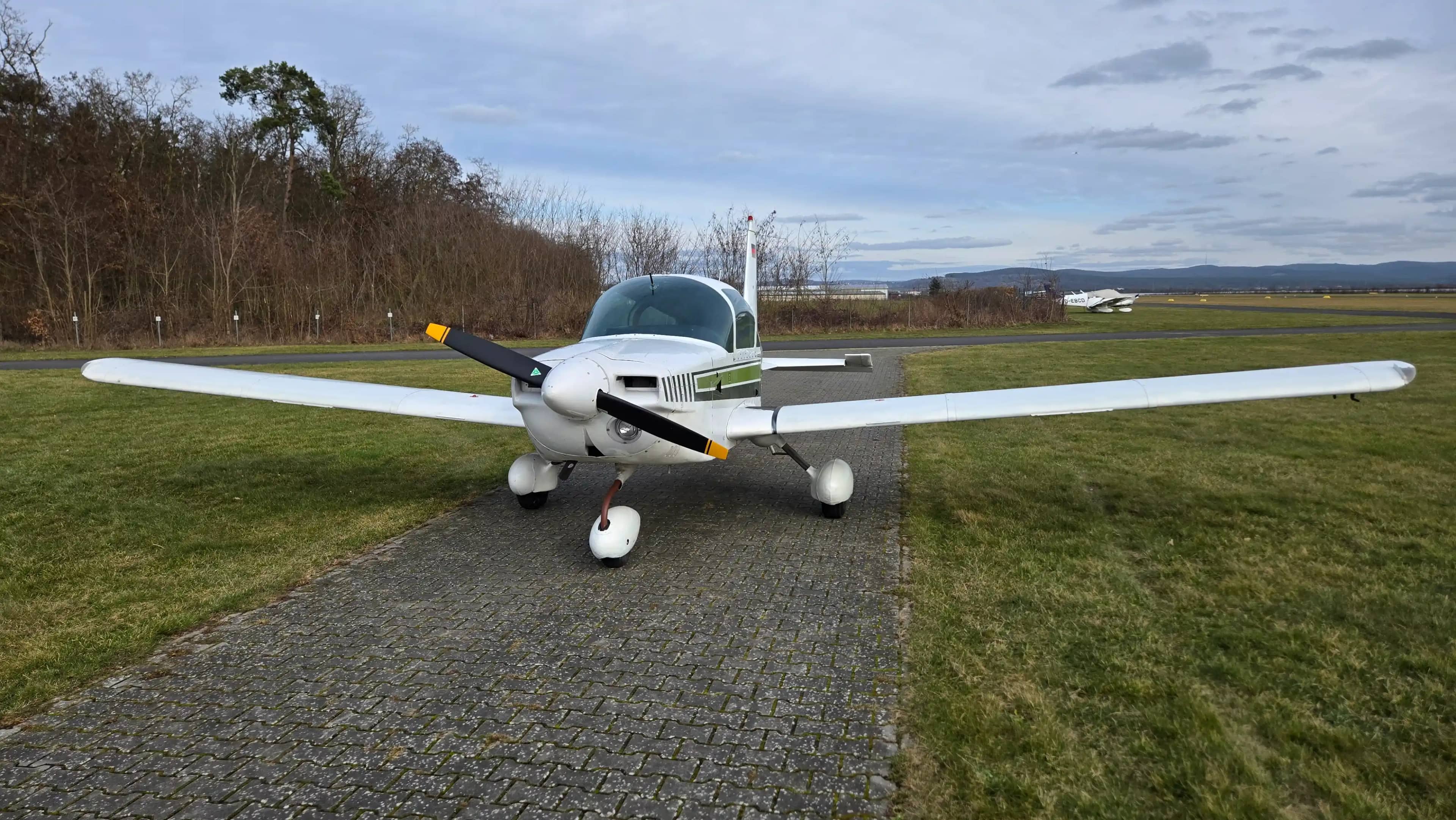
 Aschaffenburg
What Makes an Aircraft Practical to Trailer?
Before buying a trailerable aircraft, verify the aircraft, trailer and towing setup as one package. Wings that fold in a sales demonstration do not establish that the aircraft will clear the trailer ramp, that the loaded trailer is within your vehicle’s limits, or that you can repeat the process on a normal flying day. Check the specific airframe against its documentation, see it loaded and reassembled, and confirm the road weights before committing.
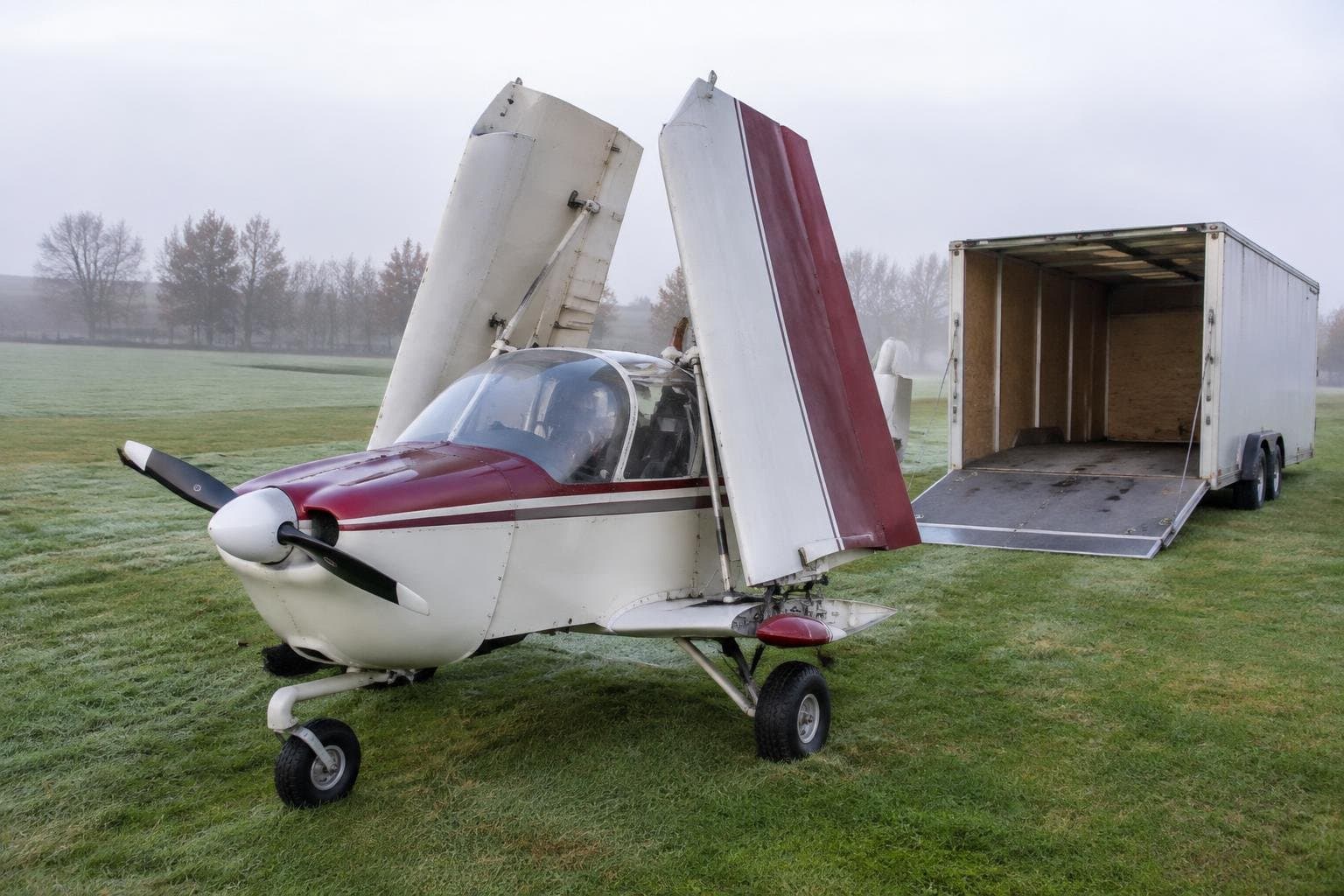
Factory-designed folding wings generally remain attached to the airframe and pivot into a transport position. Removable wings come off and need suitable handling and separate support. An aircraft that can be disassembled for an occasional move is a third proposition: it may require more equipment, more time or maintenance involvement before it can return to service. The distinction is not how compact the aircraft looks once packed, but what must happen between its flight and transport configurations, and whether the applicable instructions support the frequency of use you expect.
Match the model, variant and serial number to the manufacturer’s or builder’s documentation. On an individually built aircraft, establish which drawings and instructions apply to the configuration in front of you. Ask whether the fittings, locks and supports match those instructions and whether any later changes are documented. A brochure for the same model family may describe a different wing arrangement, undercarriage or transport kit.
Use published folded dimensions to shortlist candidates, then measure the actual aircraft with its transport fittings installed. Record the widest, tallest and longest points in the documented loading configuration. Include any protruding fittings or supports that travel with the aircraft. These measurements describe the folded package at rest; they are a starting point, not proof it can pass through the trailer opening and over the ramp.
Will Trailering Fit the Way You Fly?
Start with how often the aircraft will travel by road. For an occasional relocation, it may be reasonable to arrange helpers, set aside several hours and use equipment you do not carry every day. If the aircraft goes home after every flight, the same process must be practical on an ordinary afternoon, when a helper may be unavailable or the wind has picked up. A setup that is satisfactory for one trip can be a poor substitute for a hangar.
Budget time from arriving at the airfield to being ready for normal preflight, then from shutting down to being ready to drive away. Include positioning the trailer, laying out supports and tools, completing the aircraft checks, securing loose equipment and repacking. Ask which stages require a second person, what that person needs to know and which tools must always be present. Identify any wind restrictions in the aircraft instructions and ask what conditions the seller considers unsuitable for ground handling. If the wings cannot be handled within the applicable limits on an exposed apron, what is your fallback?
Visit the airfield you expect to use. Confirm gate access, trailer parking while you fly and where you are permitted to unload and assemble the aircraft. Look for enough level space for the trailer, the ramp and the full wing movement without blocking a taxi route or another tenant’s access. Check whether those arrangements still work when the field is busy or the grass is soft.
Compare that routine with renting a hangar or sharing one. Use the number of flying days you realistically expect, not your best season. If you mainly fly in short weather windows, the time spent towing and assembling may matter more than it would for infrequent, full-day outings.
Ask for a Complete Fold, Load and Reassembly Demonstration
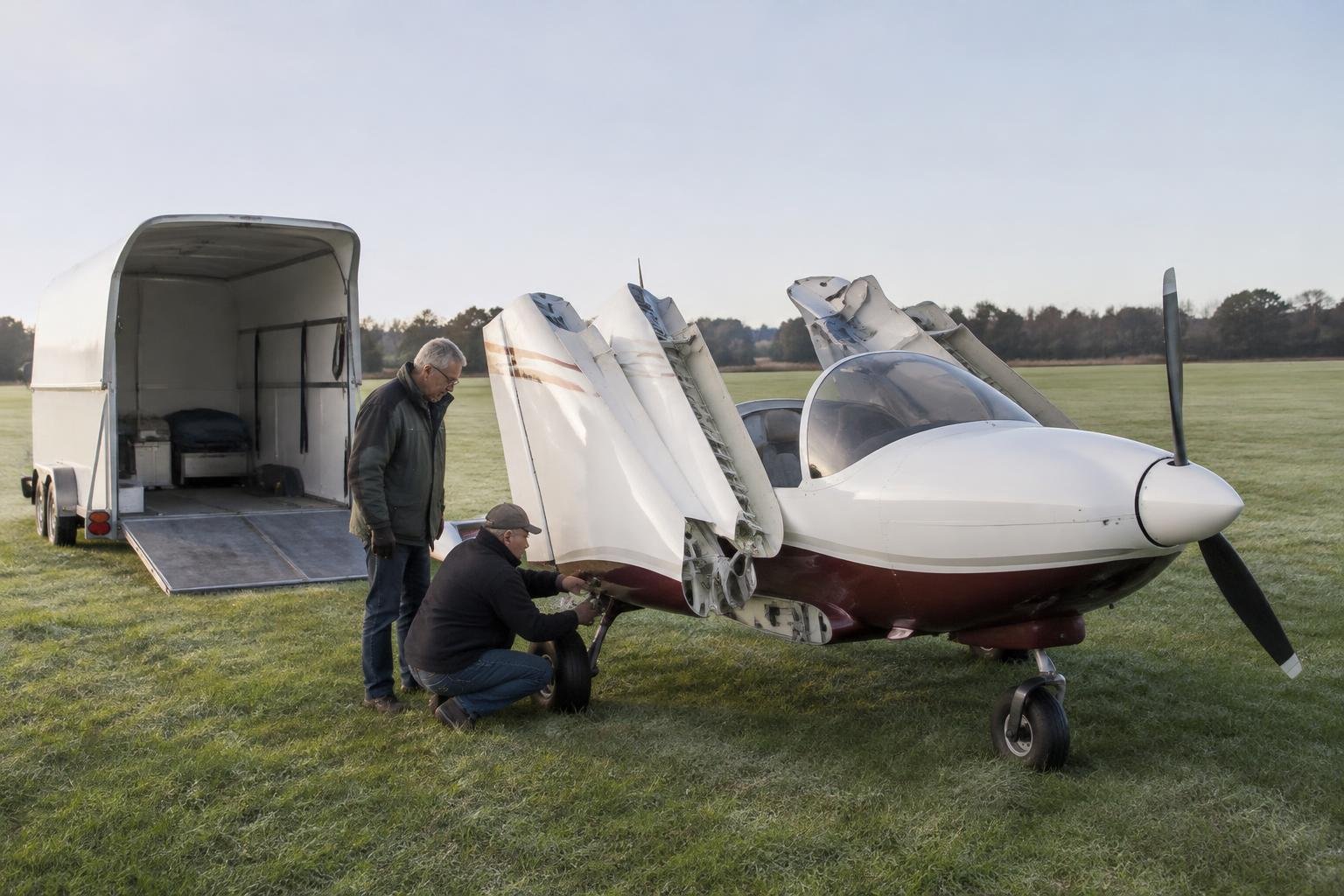
Ask the seller to demonstrate a full cycle using the instructions applicable to the aircraft. Start with it in its normal assembled configuration, watch it go into the trailer and be restrained, then see it unloaded and reassembled. Time the outbound and return stages separately. Note the number of people and the equipment used, including any stands, lifting aids or alignment tools that are not included in the sale. A pre-folded aircraft and a video of a different example are not substitutes for this demonstration.
Follow the sequence in the instructions as the seller works. Establish which supports are needed and when they take the load. Identify any fuel, flight control or electrical connections that have to be handled, and see how the seller protects them while disconnected or checks them if they remain in place. Fuel handling must follow the applicable instructions; do not assume tanks must be drained or may remain filled based on what another aircraft of the same general type does.
Watch ground clearance and the full sweep of each wing or wingtip as it moves. At the ramp, observe the approach, any change in clearance as the aircraft tilts, and whether the people guiding it can see the critical points without putting themselves in pinch zones or in the path of a moving load. Judge the operation against the crew you will actually have, not the seller’s most experienced team.
After reassembly, have the appropriate person show how locking pins and retainers are verified and how full, correct control travel and direction are checked in accordance with the aircraft instructions. A connection that looks engaged is not a substitute for the specified checks. Treat a flight evaluation as a separate decision. It should take place only when the documentation, aircraft condition and applicable operating requirements permit it, with an appropriately qualified pilot and the necessary insurance arrangements.
Commission an Independent Aircraft Pre-Buy Inspection
Choose an inspector who is independent of the sale and familiar with the type, construction method and applicable operating category. A fabric-covered tube structure, a bonded composite structure and a riveted metal airframe call for different inspection experience. Agree on a written scope that covers the usual aircraft pre-buy items as well as the folding or removal system. Arrange access to both configurations where practical, since a fitted cover or closed joint can hide the area you need the inspector to examine.
Ask the inspector to look for hinge and attachment wear, elongated holes, corrosion, cracked fittings and damaged locking hardware. A pin that goes in easily may reflect correct alignment, but ease of insertion is not a measure of acceptable wear. Play, alignment and repairs should be assessed against the relevant technical information. Where a control, fuel or electrical connection is disturbed during each cycle, ask the inspector to check its condition, security and routing, including nearby hoses, wiring and fittings that may be stressed as the wings move.
Look for a relationship between marks on the aircraft and the way it sits in the trailer. Chafed paint, polished contact areas, dents or damage around support and restraint points may show that the aircraft has been moving or bearing against something in transit. Ask the inspector to compare those findings with the cradles and restraints and to distinguish cosmetic marks from damage that needs further investigation. Reconcile visible repairs, modifications and any reported transport damage with the logbooks and supporting records. A seller’s explanation can provide a useful lead, but it does not replace documentation.
Request written findings that distinguish items you can price from unresolved conditions requiring further assessment. A pre-buy inspection informs a purchase decision; it is not a valuation and does not, by itself, satisfy any required airworthiness or periodic inspection. Confirm separately what inspections, records or approvals the aircraft needs for its intended operation.
Check Fit and Restraints in an Enclosed Aircraft Trailer
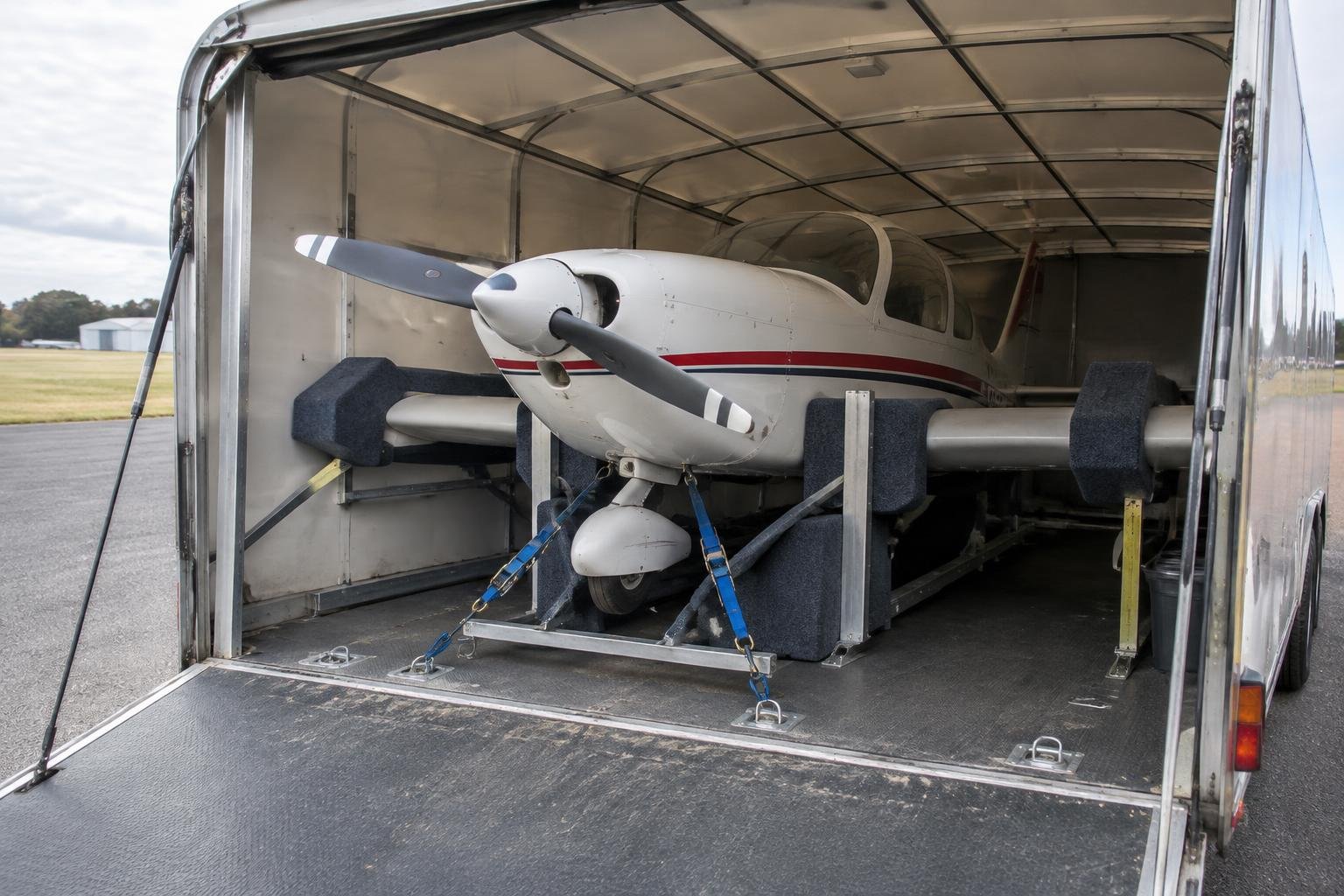
Measure the usable rear door opening and the narrowest parts of the interior, not just the advertised box dimensions. Wheel boxes, hinges, door latches, roof hardware and stored equipment can consume the space you thought you had. Check clearance with the aircraft, its supports and any detached wings or components in their actual travel positions. Also check that a person can reach each restraint and verify it before the doors close.
Observe the entire loading path. An aircraft that fits inside a stationary trailer can still foul the door frame, ramp or roof as it changes angle. Pay particular attention to propeller and tail clearance at the ramp breakover, where the aircraft transitions from the incline to the floor. Check the configuration specified in the aircraft instructions rather than assuming an improvised change to propeller position, ramp angle or support height is acceptable. Note the surface and trailer position used in the demonstration and whether your regular loading site can reproduce them.
Verify the ratings for the ramp, floor, anchors and winch against the actual loads they are expected to carry. Total aircraft weight alone does not tell you what a wheel or cradle applies to one part of the floor, and a winch used for loading is not automatically a rated road restraint. If ratings or anchorage details are missing, obtain supporting information or a qualified assessment rather than relying on the seller’s account of past trips.
Use the aircraft’s documented support and restraint points. Check that the installed arrangement allows for permissible movement in transit without the aircraft or wings contacting the trailer or each other. Inspect padding and attachment hardware, and confirm the condition and availability of any model-specific cradle, wing support or transport lock. A missing fitting is only a straightforward purchase item if you know a suitable replacement exists.
Verify Trailer Condition and Tow Vehicle Limits
Have a trailer specialist carry out an independent roadworthiness check. The scope should include the frame, floor, axles, wheel bearings, tires, brakes, coupler and lighting, plus any required breakaway equipment. Ask the specialist to look closely at the ramp structure and any modifications made when the trailer was fitted out for aircraft use. A clean exterior tells you little about floor damage beneath a cradle, corrosion around mounting points or the condition of brakes after a long period of storage.
Get measured loaded trailer weight, individual axle loads where applicable, and hitch load with the aircraft, supports and normal gear aboard. Load it as you would for the road, with planned equipment and supplies in their intended locations, consistent with the aircraft transport instructions. An empty trailer weight or an estimate from the aircraft’s weight records cannot show how weight is distributed once the trailer is packed. If you make a material change to the load or its placement, recheck the figures before relying on them.
Compare the measurements with the trailer, axle, tire and hitch ratings and the limits for your exact tow vehicle configuration. A headline tow rating is only one limit. Check the tow vehicle’s payload, axle loads and allowable combined weight. For a conventional hitch, the imposed hitch load takes up part of the vehicle’s payload alongside passengers, luggage and equipment. Use the vehicle and trailer manufacturers’ guidance for loading and hitch setup; do not move the aircraft off its documented support positions to make a weight figure work.
Check the intended route for legal and physical constraints: overall width and height, low entrances, narrow gates, turning space and steep approaches. Confirm the licensing, brake and registration rules where you will tow, including any jurisdictions crossed on collection. A trailer may comply with the road limits and still be unable to negotiate the entrance to your storage site.
Plan for Aircraft Trailer Storage Between Flights
Choose the storage site before buying, especially if the aircraft will live in the trailer year-round. Home parking may save a trip but can be subject to driveway limits, local rules or property restrictions. An airfield space saves towing time only if you have reliable access and permission to keep the trailer there. An off-site lot may offer better security, but check its hours, surface and room to hitch up and turn. Visit with the dimensions of the whole combination in hand.
Inspect the trailer and aircraft for evidence of their storage history. Look for water tracks around roof seams and doors, damp flooring, condensation marks and corrosion on hardware. Ask the aircraft inspector to assess any signs of fabric deterioration or moisture-related damage. Check corners, padding, wing supports and sheltered areas for evidence of pests, particularly around wiring and openings. A dry trailer on the day you view it does not establish that it stays dry through a wet season.
Plan ventilation, drainage and moisture monitoring for the local climate. A humidity monitor can help you learn whether conditions stay damp after rain or through repeated temperature swings; it does not correct a leak or trapped moisture. Check that vents and drains are functional and that any covers or added equipment do not interfere with them. Follow the aircraft and engine manufacturers’ storage and preservation guidance for the expected idle period. Confirm the relevant fuel and battery precautions rather than assuming that a routine suitable for a hangar also suits an enclosed trailer.
Ask the insurer which storage sites, locks and security arrangements it accepts and what conditions apply when the trailer is left unattended. Check those requirements against what the actual site allows. Cheap parking is of little value if you cannot secure the trailer as required or gain access when you need it.
Confirm What Is Included When Buying an Aircraft With a Trailer
When buying an aircraft with a trailer, ask for a written inventory tied to the sale agreement. Identify the trailer, ramps, cradles, wing supports, pins, locks, straps, tools and spares. Note their condition and which items the seller used during the demonstration. A stand borrowed from the airfield or a tool the seller plans to keep may be easy to miss, yet without it you may not be able to load the aircraft at collection.
Treat the aircraft and trailer as separate assets for ownership checks. Reconcile the aircraft serial number and applicable registration identifiers with its records, and verify the trailer’s identification number against its paperwork. Check the seller’s authority to transfer each asset, look for liens or other encumbrances through the appropriate channels and establish what documents are needed for transfer and road registration. Procedures vary by jurisdiction; documentation for one asset does not resolve a gap in the other.
Confirm delivery of the aircraft logbooks, applicable operating limitations and the instructions for folding, rigging and transport. Check that the documents apply to the installed equipment and include any relevant revisions or recorded changes. If the seller relies on a handwritten loading sequence, ask how it was derived and reconcile it with the applicable technical instructions before treating it as usable. Obtain written confirmation from your insurer for loading, unloading, road transit and storage, including who and what are covered during collection. Do not assume a vehicle policy and an aircraft policy meet at the trailer ramp.
Agree on inspection access before making a binding commitment. For an auction, read the inspection, payment and collection terms before bidding, including what happens if removal is delayed. Identify who will fold and load the aircraft, where the rig will be weighed if reliable figures are not already available, and who can collect it legally if your own tow vehicle is unsuitable. Settle those arrangements while you can still choose not to proceed.
Compare Total Cost With Hangar-Based Ownership
Assess the aircraft and trailer separately before putting a value on the package. The aircraft’s condition and documentation matter regardless of how it is stored. The trailer’s usable value depends on its condition, verified capacity, fit and whether the included equipment actually suits the aircraft. A trailer that needs extensive work or cannot be towed with your vehicle may be worth much less to you than its standalone asking price suggests.
List immediate costs using quotes where possible. Include aircraft rectification, replacement cradles or supports, trailer servicing and any changes to towing equipment. If repair costs are uncertain because the cause or extent of damage is unresolved, do not treat a rough allowance as a confirmed price. If you would buy a trailer separately, include the cost and time of fitting and verifying the support system, not just the advertised price of a cargo trailer.
Then compare recurring costs: parking, insurance, trailer maintenance and the cost of towing to and from the airfield. Put your measured setup and pack-down times beside those costs. An hour spent on ground handling does not have to be assigned a cash value to matter; it can determine whether a short flight fits into your day. Consider how often you would need to arrange help and what a missed weather window would mean for your expected use.
Compare three options on the same assumptions: the aircraft with its matched trailer, the aircraft with a separately sourced trailer, and the aircraft kept in a rented or shared hangar. Use the same expected flying days and ownership period for each. A verified package can save time and fitting costs, while a hangar can make frequent flying easier. If one option depends on an unconfirmed parking space, trailer modification or favorable insurance terms, flag it as provisional rather than giving it the benefit of the doubt.
Make the Buy, Renegotiate or Walk-Away Decision
Proceed when the process works with the crew and equipment you will have, the aircraft clears the loading path and rests on documented supports, the loaded combination is within its verified limits, and the independent inspection findings are acceptable. Storage needs to work from the day you collect, not after a hoped-for parking arrangement comes through. A package is ready for a purchase decision when there is evidence for each of those conclusions, not simply a history of trips made by the seller.
Renegotiate for problems you can define and price. Trailer service with a written estimate or a missing support with a confirmed, suitable replacement can be addressed in the price or made a condition of sale. Agree on who will do the work and what verifies completion. An undocumented structural change or unresolved rigging issue is different: a discount does not establish what work is needed or whether the aircraft can be returned to an acceptable configuration.
Pause or walk away if ownership cannot be established, structural changes cannot be reconciled with the records, rigging discrepancies remain unexplained, or the load limits and measured weights cannot be verified. If the seller or auction timetable does not allow a material issue to be investigated before you commit, treat it as unresolved rather than assuming it will be simple to sort out afterward.
- Before payment or bidding, complete the timed demonstration for the actual aircraft and trailer, including reassembly.
- Review the independent aircraft and trailer inspection findings, verified fit and measured loads against the applicable limits.
- Confirm the written inventory, ownership paperwork and insurance arrangements for both assets.
- Have a collection plan covering the crew, equipment, route, tow vehicle and confirmed storage destination.
If this aircraft meets your flying needs but the transport package does not, price hangar space or a suitable replacement trailer before making an offer. That separates a potentially sound aircraft purchase from a towing or storage problem you would otherwise inherit.

Comments
No comments yet
Be the first to share your thoughts!