
 Aschaffenburg
Rallye Club vs Super Rallye: The Buyer’s Short Answer
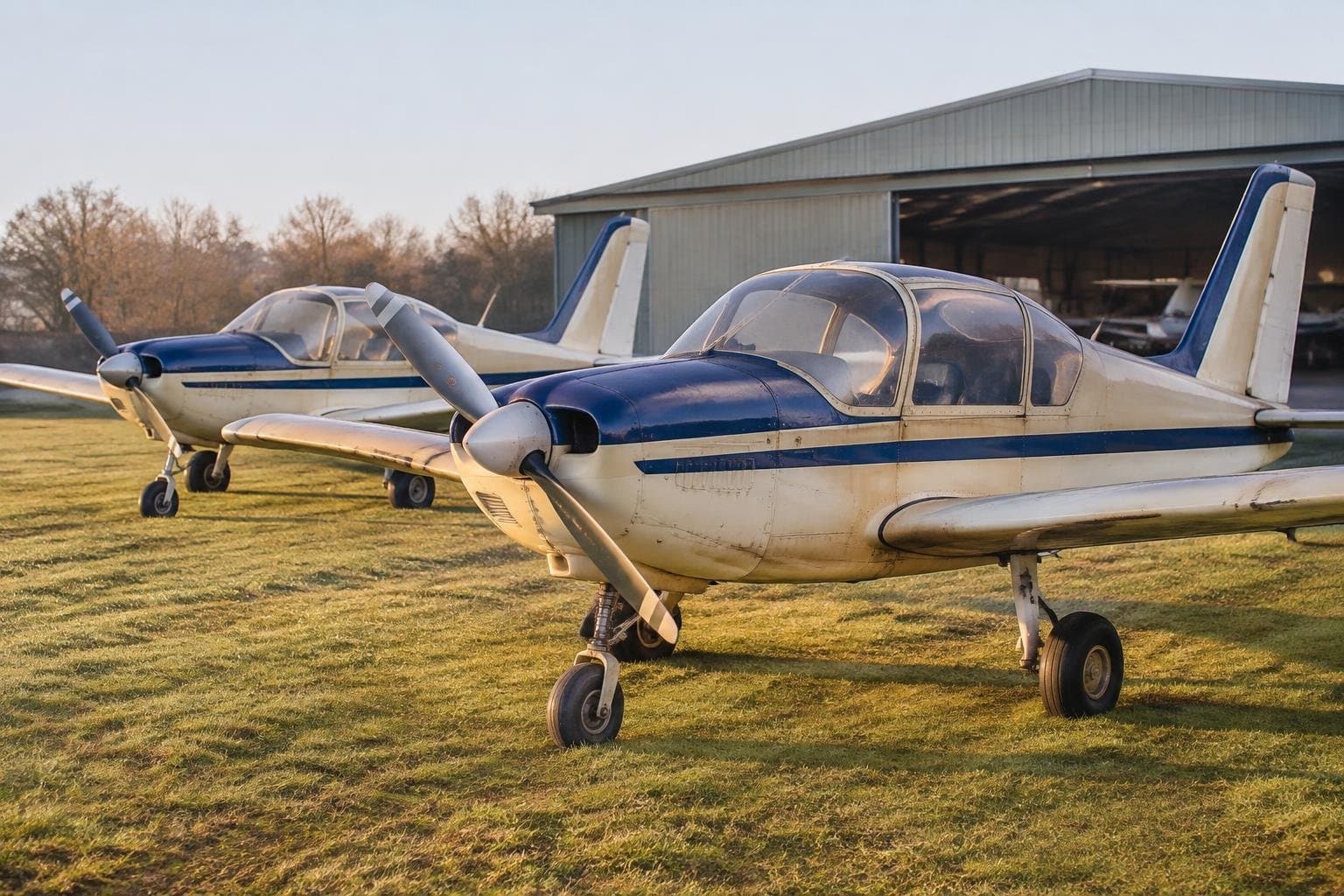
Shortlist the lower-powered MS 880 B Rallye Club for local flying and lighter loads. Shortlist the higher-powered MS 885 Super Rallye if climb performance matters on your regular routes. In either case, buy on documented condition, actual useful load and access to a shop that can support the aircraft. Those three factors matter more than the badge or the horsepower figure in the advertisement.
Start with the flights you expect to make most often. For two people flying locally from a runway with ample room, the MS 880 B may meet the mission without paying for climb capability you rarely use. For departures from higher-elevation fields, or routes where terrain makes climb performance a deciding factor, the MS 885 merits a closer look. Its extra rated power is a reason to run the numbers, not a guarantee that a particular aircraft will meet them at your intended weight.
In a Morane-Saulnier MS 880 vs MS 885 comparison, separate the design from the example for sale. Rated power is a model-level fact; empty weight, maintenance condition and the installed propeller are aircraft-specific. A well-documented Club that carries your usual load and has local maintenance support is a better purchase than a Super Rallye whose advantage depends on figures the seller cannot substantiate.
Morane-Saulnier Rallye Variants: How to Verify the Model
Rallye Club and Super Rallye are names buyers encounter in advertisements, on paint schemes and in older literature. They are not substitutes for the certified model designation. In particular, an aircraft advertised as a Super Rallye is not necessarily an MS 885. Other Rallye variants used similar marketing names, and their engine approvals, weight limits and performance data should not be transferred to an MS 885.
Ask for a legible photograph of the aircraft identification plate and a copy of the registration papers. Match the exact model designation and serial number across both, then check them against the relevant authority’s type certificate data and the applicability statement in the approved flight manual. Pay attention to spaces, suffixes and serial-number ranges. A manual with the right family name on the cover can still be wrong for the aircraft. Check the revision status and look for supplements that apply to the installed equipment or modifications.
Next, identify the engine and propeller on the aircraft, not just the ones named in the advertisement. Obtain the full model designations, including suffixes, and cross-check them against the equipment list, installation records and approved configuration. If either differs from the original approved installation, ask for the approval that covers the change and any associated limitations or manual supplement. A mechanic should reconcile the paperwork with the hardware during the pre-buy.
If the plate, registration papers and flight manual disagree, ask the seller to resolve the discrepancy before treating any quoted limit or performance figure as applicable. A listing typo is easy to correct. An unresolved identity or conformity question can affect registration, maintenance and resale.
MS 880 B vs MS 885 Specs: A Side-by-Side Comparison
The factory engine families and nominal ratings show the basic difference. The blank cells are deliberate: they are not zero values or invitations to use a figure from a neighboring Rallye variant. Fill them from the applicable approved documents before comparing two aircraft.
| Item | MS 880 B Rallye Club | MS 885 Super Rallye |
|---|---|---|
| Original engine and rated power | Continental O-200-A, 100 hp | Continental O-300 series, 145 hp; confirm the approved suffix in the model’s type data |
| Approved seating | ||
| Maximum takeoff weight | ||
| Total and usable fuel capacity | ||
| Representative empty weight | ||
| Actual empty weight and useful load | Calculate from the candidate’s current records and approved limits | Calculate from the candidate’s current records and approved limits |
| Cruise speed, climb rate and takeoff distances | ||
| Documents to consult | Type certificate data entry for MS 880 B and the applicable approved MS 880 B flight manual and supplements | Type certificate data entry for MS 885 and the applicable approved MS 885 flight manual and supplements |
Use the type data to verify the approved configuration and limits, then use the applicable flight manual and supplements for loading and performance. Record the seating and fuel capacity for the approved configuration you are buying, distinguishing total fuel from usable fuel. For useful load, subtract the current recorded empty weight from the applicable maximum takeoff weight, using consistent units and checking the aircraft’s definition of empty weight. A representative empty weight from a brochure cannot tell you what a particular aircraft can legally carry.
Give each performance figure its conditions. For cruise, note the speed basis, altitude, power setting and fuel flow, along with weight where the manual specifies it. For climb, record the weight, pressure altitude, temperature, configuration and specified climb speed or power as applicable. For takeoff, record weight, pressure altitude, temperature, wind assumptions, runway surface and the configuration required by the manual. Where a manual does not provide data for the conditions you expect, identify the gap rather than borrowing numbers from another model.
Keep takeoff ground roll separate from distance over an obstacle. Ground roll stops at liftoff; obstacle distance includes the airborne segment to the specified height. A ground roll on dry pavement does not belong opposite a grass-runway obstacle figure in a comparison table. If the manuals do not offer equivalent conditions, evaluate each aircraft against your runway and obstacle requirements instead of declaring a winner from the shorter published number.
Payload, Runway Performance, and Mission Fit
Build a loading sheet around a trip you actually fly. As an illustration, two occupants of 80 kg each, 45 kg of fuel at departure and 15 kg of baggage require 220 kg of useful load. A third occupant of 70 kg brings the requirement to 290 kg; a fourth of 70 kg would bring it to 360 kg. These are example loads, not claims about either model’s capacity or approved seating. Add passengers only if the specific aircraft has approved seating for them and the resulting load stays within the weight, station and center-of-gravity limits.
Apply the example to each candidate using its current empty weight and moment, approved seating and baggage stations, and fuel-loading information. Check center of gravity at takeoff and again with expected landing fuel, as well as at any other loading points required by the manual. A load can be within maximum weight and still fall outside the approved envelope. If adding a passenger means removing fuel, recalculate endurance with the required reserves rather than treating the reduction as a paperwork exercise. Moving a bag to solve one limit can also create a baggage-station or balance problem.
Then test a demanding but routine departure: a warm afternoon, the usual passengers and baggage, and the runway you intend to use. Use the approved data at a realistic takeoff weight, not the seller’s lightly loaded demonstration weight. Look at available runway, distance over the relevant obstacle and climb beyond it. At high density altitude, or on grass that is soft, wet or longer than usual, a departure that looks comfortable under favorable conditions may no longer have an acceptable margin. Do not assume a generic grass correction makes good a gap in the applicable performance data. If the available information will not support a defensible decision for your field, keep the aircraft off that mission shortlist.
For cross-country flying, compare elapsed trip time rather than the best advertised cruise speed. Start with fuel burn at the cruise power you expect to use, account for wind and the fuel needed outside cruise, and protect the applicable reserves. Work out whether either aircraft would require a fuel stop with your usual payload. An apparent speed advantage can disappear if it comes with an extra stop; a useful climb advantage can still matter even if trip times end up similar.
Budget for transition training with an instructor familiar with the Rallye. Include the behavior of the automatic leading-edge slats and how the aircraft handles near the low-speed end of its envelope. A familiarization flight is useful for judging workload and handling, but it does not replace the manual’s loading limits or performance data.
Engine, Propeller, and Parts Support
The MS 880 B’s factory benchmark is the 100 hp Continental O-200-A; the MS 885 moves to the 145 hp Continental O-300 family. Do not infer the MS 885’s approved engine suffix from the family name. Have the shop match the suffix on the installed engine’s data plate to the exact approval for that aircraft. Do the same for the propeller model and configuration. Approval of the engine alone does not establish approval of the engine and propeller combination, and a documented replacement may bring different limitations or maintenance requirements.
Request hours and calendar time since overhaul for the engine and propeller, with the records behind each claim. Check the dates, the scope of work and the component identities. A top overhaul or cylinder replacement is not the same as a documented engine overhaul. Low hours since overhaul are not automatically reassuring if most of those years were spent in storage. Ask about storage conditions, preservation and return-to-service work, and have the mechanic consider that history alongside inspection findings and the record of recent use.
Find out who will maintain the aircraft before deciding what it is worth. Ask your prospective shop which Continental and propeller work it can do locally, what it sends out, and how it obtains Rallye-specific airframe parts. Slat hardware and landing-gear components are useful items to ask about because an engine shop’s familiarity with Continental products does not establish that it can source or fit those parts. Get realistic lead times for likely work identified in the records. An aircraft that spends a flying season waiting for a component can cost more to own than its fuel bill suggests.
Rallye Pre-Buy Inspection: Where to Look Closely
Commission an independent pre-buy from a mechanic familiar with the Rallye family, or one with access to the applicable data and specialist support. Agree on the scope, what access the seller will permit, and how findings will be reported before anyone travels or removes panels. Ask for findings that separate immediate discrepancies, likely first-year work and items that cannot be assessed without further access. A report that states what was not inspected is more useful than a clean-looking checklist with no indication of its limits.
Have the mechanic use approved maintenance data for the exact model and serial number to select structural and corrosion inspection points. Relate the scope to the aircraft’s history: outdoor storage, long periods of inactivity, or repairs recorded in an area that is difficult to see warrant follow-up. Fresh paint is not evidence that the underlying metal was inspected. If the data call for access the seller will not allow, treat that as an open item rather than assuming the area is sound.
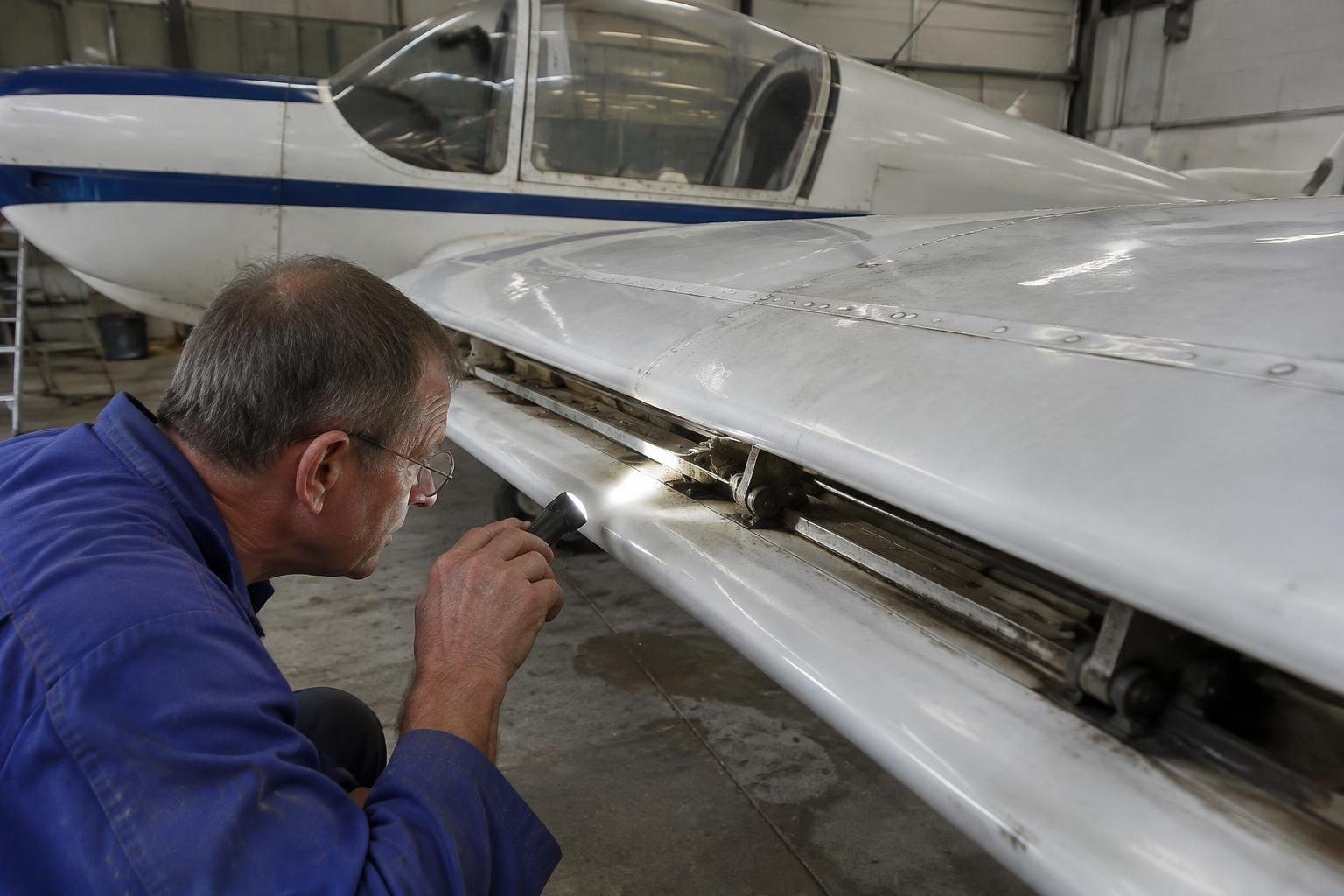
The automatic leading-edge slats deserve particular attention. Ask the mechanic to assess the tracks, rollers, alignment, security and movement against the applicable maintenance criteria, looking for binding, uneven wear and evidence of unapproved work. Have the shop examine the flaps, their attachments and their operation as well. A slat that extends while the aircraft is parked has not, by that fact alone, passed a functional inspection.
Include the landing-gear attachments, nosegear and firewall in the pre-buy scope as appropriate to the approved data and the aircraft’s history. Compare physical findings with log entries for hard landings, nosegear damage and structural repairs. Where a repair is recorded, ask what was repaired, what approval and data were used, and whether recurring inspections apply. Missing records deserve attention too: a gap in the logs does not prove damage, but it does limit what you can verify.
A pre-buy answers a buyer’s questions about condition, risk and likely expenditure within an agreed scope. An annual or equivalent required inspection addresses the applicable regulatory inspection requirements. An appraisal estimates value on a stated basis. None substitutes for the others; a recent annual or favorable appraisal is not a reason to waive an independent pre-buy.
Records, Modifications, and Registration
Review the records as a timeline rather than as a stack of recent invoices. Reconcile airframe and engine times, installed component identities, inspection dates and periods with no entries. Obtain the applicable airworthiness directive status and evidence of compliance, including the method and any next-due time or date for recurring requirements. A general statement that directives are current gives a buyer less to work with than entries tied to identifiable work and records.
Match changes to the aircraft with their approvals. An engine or propeller change, an equipment installation or a structural repair can affect the configuration you are entitled to operate, the maintenance it needs and the weight-and-balance data you should use. Ask for the current equipment list and weight-and-balance report, together with the applicable flight manual supplements. If an item has been installed or removed without a corresponding record, ask the mechanic to establish how the current configuration will be reconciled before relying on the loading figures.
For a cross-border purchase, check registration eligibility and import requirements in the intended jurisdiction before committing. A modification accepted in the exporting country is not necessarily recognized on the destination register. Establish what the destination authority or a qualified local specialist needs to see, who will obtain the export and import documents, and what that means for timing and transport. Make unresolved conformity or paperwork issues explicit conditions of the purchase where the terms permit. If they cannot be resolved before a binding bid, decide whether to pass rather than assuming the registry will sort them out later.
Purchase Price and First-Year Ownership Costs
Start with comparable aircraft of the exact variant where possible. Adjust your judgment for condition, engine and propeller status, documentation and region. A Club with a coherent maintenance history and an MS 885 with an imminent engine decision are not comparable simply because the listings carry similar prices. A sale in another country may also involve different taxes, registration work or delivery costs that change what the aircraft would cost you.
Keep asking prices, verified sale results and appraised values separate. An asking price tells you what a seller wants; a verified sale result tells you what a buyer paid in that transaction; an appraisal is an opinion of value on stated assumptions. Where reliable local transactions are scarce, say so in your own comparison rather than using an advertised range as a market benchmark. A credible shop estimate for known work is more useful in setting a bidding ceiling than a speculative discount from someone else’s asking price.
Build a first-year budget from purchase through routine use. Include the independent inspection, ferry or ground transport, registration, any applicable import costs, insurance, hangarage and catch-up maintenance. Check whether the aircraft can legally and practically be ferried before pricing delivery that way. Get quotes for the known work and leave room for work that cannot be scoped until access is available. Separate items needed before use from upgrades you can defer.
Estimate fuel cost from the expected burn at your normal power setting and your realistic annual flying hours. Set an engine and propeller reserve, but do not let a per-hour reserve obscure a near-term expense driven by calendar time, condition or applicable maintenance requirements. If you fly relatively few hours, fixed costs and calendar-driven work can dominate the comparison. Ask the shop what the overhaul or replacement path looks like now, including parts availability and downtime, before assuming the older overhaul history is reflected adequately in the asking price.
Which Rallye Should You Shortlist?
Keep an MS 880 B on the shortlist if most of your trips are local or lightly loaded and the approved data show adequate runway and climb margins at the weight you will actually fly. Keep an MS 885 on it if the applicable figures show a climb or mission advantage under your conditions and local support makes that advantage affordable to maintain. The meaningful comparison is not 100 hp versus 145 hp in isolation; it is whether either aircraft can carry your typical load from your runway with the margins you need.
Favor the better-documented aircraft when both meet the mission. A coherent set of records, a configuration your mechanic can verify and realistic access to parts are worth more than a brochure advantage you rarely use. Pass on both if neither has sufficient payload or runway margin, if critical structural findings remain unassessed, or if conformity and registration cannot be resolved on acceptable terms. Being the better of two candidates does not make an aircraft suitable.
Before bidding, request the identity and equipment records, the applicable flight manual and supplements, and the current weight-and-balance data. Run the same loading and runway scenarios for both candidates, get local maintenance input, and arrange an independent pre-buy. Set your ceiling using the delivered cost and first-year work, not the purchase price alone.

Comments
No comments yet
Be the first to share your thoughts!