
 Bad Vöslau
 Kirn
Kirn
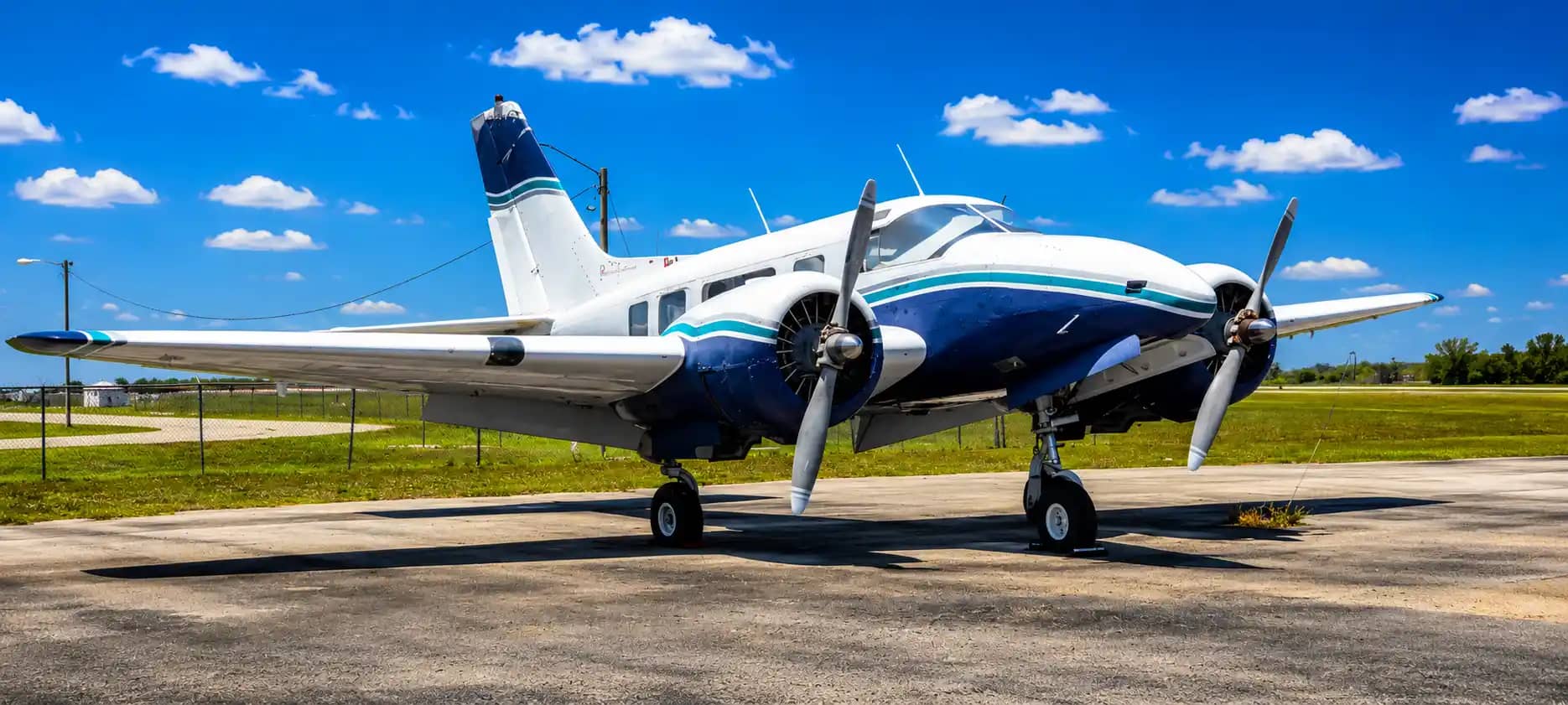
 Florida
 Szeged

Cessna 414 Buyer’s Guide: Price, Specs, Operating Costs & Pre-Buy Checks
A Cessna 414 can be a compelling owner-flown cabin-class twin for travellers who need a pressurized cabin, practical passenger and baggage capacity, and credible cross-country performance. It is also a complex ageing aircraft with two turbocharged engines, retractable landing gear, pressurization and substantial maintenance exposure. A sound purchase depends less on cosmetic presentation than on mission fit, complete records, technical condition and a realistic reserve for corrective work.
This guide covers the original Cessna 414 and the later 414A Chancellor, including model differences, specifications, cruise performance, fuel burn, market pricing, ownership costs and the inspection priorities that matter before purchase. Generic figures are useful for screening aircraft, but the approved documents and actual configuration of the individual serial number should always control operational and purchase decisions.
Cessna 414 at a Glance: Is This Pressurized Twin Right for Your Mission?

The Cessna 414 occupies the pressurized end of Cessna’s piston-twin family. It offers more cabin utility than smaller light twins and can provide a useful combination of speed, altitude capability, passenger comfort and baggage space for regional and cross-country travel.
Pressurization is one of the aircraft’s defining advantages, but it is not a free benefit. Cabin seals, windows, controllers, outflow valves and associated structure require inspection and maintenance. The twin turbocharged Continental engines also reward disciplined operation, temperature management and detailed maintenance records.
- Family transport: useful where passenger comfort, baggage space and weather flexibility matter more than minimum operating cost.
- Business travel: well suited to regional trips when IFR proficiency, dispatch planning and maintenance support are taken seriously.
- Longer cross-country missions: the 414A combines a large fuel capacity with pressurized high-altitude capability, but payload and reserve requirements must still be calculated for every trip.
- Owner profile: best suited to pilots with meaningful multiengine and instrument experience, recurrent training and access to a shop familiar with pressurized Cessna twins.
Insurance requirements, training availability and pilot experience can materially affect both the cost and feasibility of ownership. The right question is not simply whether a buyer can fly a 414, but whether the pilot, maintenance provider and ownership budget can support it consistently.
Cessna 414 Model History and 414A Chancellor Differences
The Cessna 414 was approved in 1969 and entered the market as a pressurized cabin-class piston twin. The later Cessna 414A Chancellor was approved in 1977 and introduced substantial changes, including a redesigned wing and integral fuel system.
One important correction to many generic online summaries is engine power. FAA Type Certificate Data Sheet A7CE specifies two Continental TSIO-520-J or TSIO-520-JB engines on earlier Model 414 serial numbers and TSIO-520-N or -NB engines on later 414 aircraft. The approved engine limit is 310 hp per engine. The 414A likewise uses TSIO-520-N or -NB engines, with later aircraft standardized on the TSIO-520-NB, also rated at 310 hp per engine.
| Item | Cessna 414 | Cessna 414A Chancellor |
|---|---|---|
| Certification approval | 1969 | 1977 |
| Standard engine family | Continental TSIO-520-J/JB or later N/NB | Continental TSIO-520-N/NB |
| Approved standard power | 310 hp per engine | 310 hp per engine |
| Maximum takeoff weight | 6,350 lb | 6,750 lb standard |
| Standard fuel system | Earlier wing-tip/bladder arrangement; modifications vary | Integral wet-wing system |
| Standard fuel capacity | 102 gal total in the basic type-certificate configuration | 213.4 gal total; approximately 204–206 gal usable depending on serial number |
| Approved seating | Typically 6 or 7 depending on serial number/configuration | 6, 7 or 8 depending on configuration |
These figures describe standard approved configurations. Many surviving aircraft have RAM conversions, winglets, gross-weight increases, auxiliary fuel, avionics upgrades and other Supplemental Type Certificates. Buyers should therefore establish the exact serial number, engine models, propellers, STCs and current weight-and-balance configuration before comparing one aircraft with another.
Cessna 414 Specifications and Performance That Matter to Buyers

The most useful specification sheet for a buyer is one that separates certified data from typical operating figures. Maximum weights, engine approvals and fuel capacity can be checked against approved documentation; cruise speed, range and fuel burn depend more heavily on power setting, altitude, modifications, loading and aircraft condition.
| 414A buyer reference | Typical or approved figure | Why it matters |
|---|---|---|
| Engines | 2 × Continental TSIO-520-N/NB | Turbocharged powerplants drive maintenance and reserve requirements. |
| Standard rated power | 310 hp each | Verify any higher-output RAM conversion against its approved supplements. |
| Maximum takeoff weight | 6,750 lb standard | Gross-weight STCs may change the limit on individual aircraft. |
| Fuel capacity | 213.4 gal total; approximately 204–206 gal usable depending on serial number | Large fuel capacity does not mean full fuel and full payload can always be carried together. |
| Seats | 6, 7 or 8 depending on approved configuration | Installed seating and current weight-and-balance data control practical payload. |
| Stock 414A cruise reference | About 208 KTAS at 75% power and 20,000 ft in published RAM comparison data | Useful screening figure; actual performance must be calculated from the aircraft’s approved data. |
| Usable fuel reference | About 206 gal on many 414A aircraft | Confirm by serial number and modification status. |
RAM Aircraft publishes stock 414A comparison data showing approximately 208 KTAS at 75% power and 20,000 ft, 192 KTAS at 65% power and 176 KTAS at 55% power. At 25,000 ft, its comparison data shows approximately 214, 202 and 190 KTAS respectively. Modified RAM aircraft can be faster, so a seller’s 220- or 230-knot claim should be tied to the exact modification and operating conditions rather than applied to every 414A.
Useful load is aircraft-specific. Interiors, air conditioning, de-ice systems, avionics, auxiliary fuel systems and structural modifications can materially change empty weight. Always calculate representative missions from the current weight-and-balance report using real passenger weights, baggage and required fuel reserves.
Cessna 414 Fuel Burn, Range and Mission Planning
Fuel burn is one of the most searched Cessna 414 ownership questions. A practical planning range for standard or commonly configured aircraft is roughly in the mid-30-gallon-per-hour range for both engines in cruise, with higher or lower consumption depending on power setting, mixture technique, altitude and modifications. Published owner references commonly place a 75-percent-power figure near 34 gallons per hour, while current market-data services often use approximately 38 gallons per hour in cost models.
That difference is exactly why a buyer should not build a purchase decision around one generic fuel-burn number. Request recent fuel receipts or uplift records, engine-monitor data and typical cruise settings from the current operator, then compare them with the approved POH or Flight Manual Supplement for the installed configuration.
Fuel cost alone illustrates the economics. At an assumed avgas price of $7 per US gallon, 34 GPH represents approximately $238 per flight hour in fuel, while 38 GPH represents approximately $266 per hour. At 100 flight hours per year, that is roughly $23,800–$26,600 annually for fuel alone before oil, maintenance, insurance, hangarage, training or engine and propeller reserves.
Range should also be treated as a mission calculation rather than a single brochure number. The 414A’s large fuel capacity can support substantial endurance, but full tanks are heavy. Passenger and baggage requirements may force a fuel-versus-payload decision. Model typical routes with actual winds, alternates and reserves rather than assuming that maximum published range applies to every trip.
Cessna 414 Price: Current Market Snapshot and Value Drivers

There is no single reliable Cessna 414 price because the market includes original 414 aircraft, 414A Chancellors, high-time working aircraft, extensively modified RAM examples and aircraft with very different engine, avionics and maintenance positions.
September 2026 market snapshot: current advertised Cessna 414A asking prices on a major aircraft marketplace span approximately $315,000 to $795,000 across multiple listings. A 1976 original Cessna 414 advertised in Germany was listed at approximately $240,000. These are asking prices, not verified sale prices, and they should not be interpreted as an appraisal range for a specific aircraft.
Current examples illustrate how widely pricing can move. Recent 414A advertisements include aircraft around the low-$300,000 range as well as heavily equipped or recently improved examples approaching $700,000–$800,000. Engine status, avionics, RAM modifications, pressurization condition, corrosion history and maintenance pedigree account for much of that spread.
- Engine time and overhaul quality: two engines approaching overhaul can create a major future liability.
- Avionics and autopilot: a modern, well-integrated IFR panel can materially affect utility and value.
- Pressurization condition: leaks, windshield issues, valves and seals can turn into expensive corrective work.
- Structural and AD status: complete inspection records reduce uncertainty and support resale.
- Modifications: RAM engines, winglets and gross-weight increases can add utility, but only when documentation is complete.
- Logs and damage history: missing records or poorly documented repairs should be treated as economic risk.
For a specific aircraft, compare genuinely similar configurations rather than simply averaging all Cessna 414 listings. Owners considering a sale can also use the CollectAirs aircraft valuation service to obtain aircraft-specific market context.
Cessna 414 Operating Costs and Ownership Budget
A Cessna 414 operating-cost estimate should be built around annual utilisation and the actual aircraft rather than a universal hourly figure. Fuel is substantial, but two turbocharged engines, two propellers, retractable landing gear, pressurization, de-icing equipment and ageing systems create additional cost exposure.
| Cost category | What to budget for |
|---|---|
| Fuel | Approximately mid-30s GPH is a useful screening assumption; verify actual aircraft data. |
| Oil and consumables | Radial-style oil consumption is not the issue here, but two high-output turbocharged piston engines still require disciplined oil and consumable planning. |
| Engine reserves | Reserve for two Continental engines, including cylinders, turbochargers, accessories and eventual overhaul. |
| Propeller reserves | Two constant-speed propellers and governors, with calendar and overhaul requirements. |
| Scheduled maintenance | Annual inspection, recurring ADs, pressurization checks and calendar-driven work. |
| Unscheduled maintenance | Exhaust, turbochargers, landing gear, electrical systems, de-ice equipment, pressurization leaks and ageing components. |
| Fixed costs | Insurance, hangarage, recurrent training, databases, administration and financing where applicable. |
As a current third-party planning example, one market-data service models a Cessna 414 at approximately $414 per variable flight hour and about $52,845 per year at 71 annual hours. Another ownership calculator produces substantially higher annual totals when it assumes 200 hours, higher fuel prices and broader fixed-cost categories. The difference is useful: cost calculators are scenarios, not invoices.
For acquisition planning, build your own budget from real local quotations. Obtain insurance terms, hangar cost and maintenance-shop labour rates; choose a realistic annual utilisation; calculate fuel from the power settings you actually expect to use; and add separate engine, propeller and unscheduled-maintenance reserves.
The first year can be more expensive than later years. Even a technically airworthy aircraft may arrive with hoses, seals, tyres, batteries, avionics discrepancies, deferred cosmetic corrosion treatment or calendar-driven items that the previous owner chose not to address.
Engines, Turbochargers and Propellers

Powerplant review is one of the highest-value parts of a Cessna 414 purchase. Confirm both engine serial numbers, approved model, overhaul facility, time since major overhaul, calendar age and logbook continuity. Do not assume that a low hour figure automatically means a low-risk engine.
The FAA type-certificate data distinguishes engine installations by aircraft serial number. Early 414 aircraft can carry TSIO-520-J or -JB engines, later original 414s use N or NB variants, and the 414A uses N/NB engines with later serial numbers standardized on the NB. Approved modifications may change this configuration further.
During the pre-buy, review compression trends, borescope findings, oil-filter inspections, oil-analysis history where available, oil consumption, cylinder work, turbocharger history and engine-monitor downloads. Exhaust components deserve particular attention because of the high temperatures involved in turbocharged operation.
Propellers and governors should receive a similarly disciplined review. Confirm models, serial numbers, overhaul dates, calendar requirements, blade condition, repairs and documentation. On a twin, apparently minor findings are doubled quickly when both sides require work.
Pressurization, Airframe and Corrosion Inspection Priorities
The pressurized fuselage should be evaluated by a facility familiar with cabin-class Cessna twins. Review the history of cabin leak investigations, windshield replacement, door seals, outflow valves, controllers and repairs to pressurized structure.
A functional pressurization test can reveal issues that photographs and ground appearance cannot. Ask whether the cabin reaches and maintains the expected differential pressure without abnormal leakage, and whether previous discrepancies recur in the maintenance history.
Corrosion inspection must consider where and how the aircraft has lived. Coastal operation, long outdoor storage, water intrusion and poor corrosion-prevention practices can materially change the risk profile.
FAA AD 2005-12-13 applies to certain Cessna 402C and 414A aircraft and addresses the forward wing spars. Buyers should not generalise one AD across every serial number, but should obtain a complete current AD compliance report for the specific aircraft and verify the required structural inspections and any recurring obligations.
Physical inspection and paperwork should agree. Complete logbooks do not excuse unacceptable structural findings, while a visually clean aircraft does not compensate for unexplained gaps in major maintenance or repair history.
Fuel System, Landing Gear, De-Ice and Avionics
The original 414 and later 414A have meaningful fuel-system differences. On any aircraft, confirm tank configuration, usable fuel, pumps, selectors, vents, drains and any auxiliary-tank STCs. Evidence of leakage or poorly documented modifications deserves resolution before purchase.
The landing gear should be inspected as a complete system. Review actuators, hydraulics, switches, doors, uplocks, downlocks, emergency-extension procedures, brake condition and recurring discrepancies. A successful extension during one demonstration does not substitute for a maintenance-history review.
De-ice equipment should be evaluated according to what is actually installed and approved. Inspect pneumatic boots, propeller anti-ice or de-ice systems, windshield heat and any related equipment. Do not assume that the presence of boots means the aircraft is approved for flight into known icing; verify the aircraft documentation.
Avionics should be assessed against the intended mission. Navigation approvals, ADS-B compliance, weather capability, communications, engine monitoring and autopilot reliability matter more than the number of screens in the panel. Verify installation approvals and confirm that the electrical system and weight-and-balance documentation reflect all upgrades.
Cessna 414 Pre-Buy Inspection Checklist
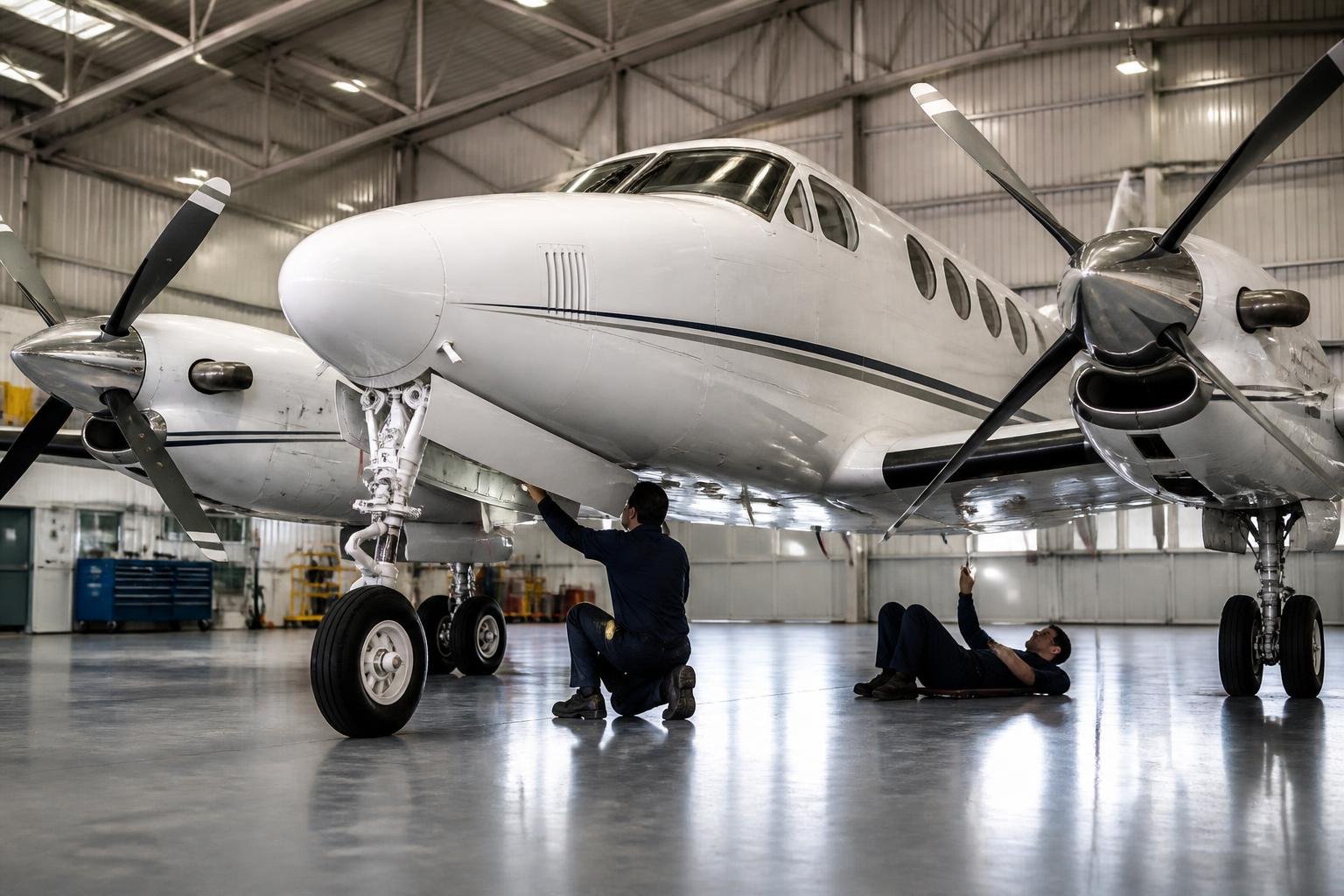
Select an independent maintenance facility with demonstrated experience on pressurized Cessna 400-series twins and the installed Continental engines. Agree the inspection scope in writing before the aircraft arrives.
- Identity and records: verify serial number, registration, airframe logs, both engine logs, propeller logs and major equipment.
- AD compliance: obtain a complete current compliance list and independently verify high-consequence recurring items.
- Pressurization: test system function and cabin leakage; inspect seals, windows, valves, controller and repair history.
- Structure: inspect applicable wing-spar areas, carry-through structure and previous structural repairs.
- Corrosion: inspect wing and nacelle areas, belly, gear wells, battery area, windshield surrounds and moisture-prone zones.
- Engines: review compression, borescope findings, oil filters, oil analysis, cylinder history and engine-monitor data.
- Turbo and exhaust: inspect turbochargers, wastegates, exhaust components, clamps, hoses and heat-related deterioration.
- Propellers: verify models, serial numbers, overhaul history, blade condition and governor status.
- Landing gear: inspect hydraulics, actuators, doors, uplocks, downlocks, brakes and emergency-extension system.
- Fuel system: verify tanks, pumps, selectors, vents, drains, leaks and approved modifications.
- De-ice equipment: function-check all installed equipment and verify the aircraft’s actual approval status.
- Avionics and autopilot: test relevant modes and confirm approved installation documentation.
- Electrical system: evaluate alternators, batteries, wiring, circuit protection and charging performance.
- Weight and balance: ensure the current equipment list matches the physical aircraft and current report.
- Test flight: when legally and operationally appropriate, document performance and system discrepancies rather than explaining them away.
Ask the inspector to separate findings into immediate airworthiness or compliance issues, near-term maintenance, operational improvements and cosmetic items. Obtain cost estimates for major discrepancies before deciding whether to proceed, renegotiate or reject the aircraft.
Documents to Review Before Making an Offer
Document review should begin before a non-refundable commitment or expensive inspection trip. Request complete digital copies where practical so that obvious issues can be identified early.
- Complete airframe, engine and propeller logbooks.
- Current AD compliance report and recurring inspection status.
- Current weight-and-balance report and equipment list.
- POH or approved flight manual and all applicable supplements.
- STCs, major repair and alteration documentation and supporting approvals.
- Recent annual inspection paperwork and significant maintenance invoices.
- Engine overhaul and cylinder-work documentation.
- Pressurization maintenance and windshield history.
- Damage and corrosion history.
- Title, lien and registration checks appropriate to the jurisdiction.
For broader used-aircraft diligence, the CollectAirs used-plane buying guide provides a records-first framework for evaluating aircraft before closing.
Current Cessna 414 Listing and Auction Context
Current listings are useful market examples but should be isolated from the evergreen technical guidance because aircraft availability, bids and asking prices change.
CollectAirs currently maintains a dedicated listing page for a 1974 Cessna 414 Twin. Treat its configuration, records and sale terms as information about that individual aircraft only, not as representative specifications or condition for the wider 414 fleet.
Buyers comparing alternatives can also browse current and upcoming CollectAirs aircraft auctions and apply the same document, inspection and budget framework to each candidate.
Cessna 414 vs 414A and Other Cabin-Class Alternatives
The original 414 and 414A deserve separate consideration. The 414A’s integral wet wing, larger standard fuel capacity, higher standard maximum takeoff weight and later production generally make it attractive to buyers with longer-range missions. A strong original 414, however, can still be preferable to a neglected or poorly documented 414A.
The Cessna 421 offers another cabin-class option with different engines and operating economics. A Piper Navajo may appeal to buyers prioritising cabin and payload utility, while a Beechcraft Baron or Cessna 340 can make sense for missions requiring a smaller aircraft and lower acquisition exposure.
Do not choose between these aircraft from speed alone. Compare real passenger loads, baggage, stage length, airport environment, maintenance support, insurance, training requirements and the ability to absorb an unscheduled five-figure maintenance event.
Is a Cessna 414 the Right Aircraft for You?
A good Cessna 414 purchase brings four things together: the aircraft fits the mission, its technical condition is understood, the records support what the seller claims, and meaningful financial reserves remain after closing.
Pause when pressurization history is unclear, structural or corrosion findings remain unresolved, engine documentation is weak, recurring AD compliance cannot be demonstrated or the purchase consumes the entire available aircraft budget.
The best 414 is not automatically the least expensive aircraft or the example with the newest paint and displays. It is the aircraft whose verified configuration, condition, maintenance history and ownership obligations fit the buyer’s real operating plan.
Cessna 414 Frequently Asked Questions
How much does a Cessna 414 cost?
Prices vary substantially by variant and condition. As a September 2026 asking-price snapshot, original 414 aircraft can appear around the mid-$200,000 level, while currently advertised 414A Chancellors span roughly $315,000 to $795,000. Asking prices are not completed-sale values, so individual aircraft should be compared by engine status, avionics, modifications, records and maintenance condition.
What is the difference between a Cessna 414 and 414A?
The 414A Chancellor introduced major airframe and fuel-system changes, including an integral wet wing and substantially greater standard fuel capacity. Its standard maximum takeoff weight is also higher at 6,750 lb compared with 6,350 lb for the original 414.
How much horsepower does a Cessna 414 have?
The standard FAA-approved Cessna 414 and 414A configurations use two turbocharged Continental engines rated at 310 hp each. Approved aftermarket conversions can increase output, so buyers should verify the actual installed engines and Flight Manual Supplements.
How fast is a Cessna 414A?
Published RAM comparison data for a stock 414A shows approximately 208 KTAS at 75% power at 20,000 ft and approximately 214 KTAS at 75% power at 25,000 ft. Modified aircraft may produce higher figures. Actual cruise depends on altitude, power setting, temperature, loading and configuration.
How much fuel does a Cessna 414 burn?
A mid-30s-gallons-per-hour total fuel burn is a useful screening assumption for cruise, with published owner and market references commonly around 34–38 GPH. Buyers should verify actual fuel flow from the individual aircraft’s approved operating data and recent operational records.
What does a Cessna 414 cost to operate?
There is no universal hourly figure. At $7 per gallon, fuel alone at 34–38 GPH is approximately $238–$266 per flight hour. Total ownership must also include two-engine reserves, propellers, maintenance, pressurization, landing gear, de-ice systems, insurance, hangarage and recurrent training.
What should I check before buying a Cessna 414?
Priorities include complete records and AD compliance, wing and structural inspection status, pressurization integrity, corrosion, both engines and turbo systems, exhaust, propellers, landing gear, fuel systems, installed de-ice equipment, avionics and an accurate current weight-and-balance report.
Sources and Reference Data
- FAA Type Certificate Data Sheet A7CE — Cessna 400 Series: certification basis, approved engine models, engine ratings, weights, fuel capacity, seating and configuration data for the 414 and 414A.
- FAA AD 2005-12-13: forward-wing-spar requirements affecting specified Cessna 402C and 414A aircraft.
- RAM Aircraft 414A performance data: stock and modified 414A engine, fuel, weight and cruise-performance comparison figures.
- Controller market listings, September 2026: current Cessna 414 and 414A asking-price examples used only for the dated market snapshot.
- Cessna Owner Organization: owner-oriented operating context and typical fuel-burn discussion.
Buyer note: General specifications, cost examples and market figures are screening information only. Verify the individual aircraft’s approved documents, current maintenance status, modification history and physical condition before purchase or operation.
Evaluating a Cessna 414? Review the current Cessna 414 opportunity on CollectAirs, inspect its individual records and auction terms, or browse current aircraft auctions to compare alternatives before committing to a purchase.

Comments
No comments yet
Be the first to share your thoughts!