

 Bad Vöslau
 Kirn
Kirn


 Florida

The Flight Design CTLSi and Van’s RV-12iS occupy a similar part of the two-seat light-aircraft market, but they approach the mission differently. The CTLSi is a composite high-wing design with a large cabin, substantial fuel capacity and a clear touring emphasis. The RV-12iS is an all-metal low-wing aircraft built around accessibility, removable wings and an unusually strong kit, owner and training ecosystem.
For a buyer comparing the CTLSi vs RV-12iS, the useful question is not which aircraft is universally better. It is which design better matches the way you actually plan to fly: regional touring, local recreation, training, owner involvement, baggage requirements or ease of maintenance support.
CTLSi vs RV-12iS: Quick Comparison
| Comparison | Flight Design CTLSi | Van’s RV-12iS |
|---|---|---|
| Configuration | High-wing, fixed tricycle gear | Low-wing, fixed tricycle gear |
| Primary structure | Carbon/composite airframe | All-metal semi-monocoque airframe |
| Seats | 2 | 2 |
| Engine option relevant here | 100 hp Rotax 912 iS | 100 hp Rotax 912 iS; manufacturer documentation also covers 912 ULS installations |
| Maximum/gross weight | 600 kg / 1,320 lb in the 600 kg configuration | 1,320 lb / approximately 599 kg |
| Published typical/average empty weight | 326 kg / 717 lb typical for the manufacturer’s 600 kg CTLS configuration | 775 lb / 352 kg average in the RV-12iS POH |
| Fuel capacity | 130 l / approximately 34.3 US gal | 20.2 US gal / approximately 76.5 l |
| Cabin width | Approximately 49 in / 1.24 m | 43 in |
| Published baggage allowance | Up to 50 kg / 110 lb total | Up to 75 lb, subject to CG limits |
| Manufacturer speed reference | 240 km/h published maximum horizontal speed for the CTLS 600 kg configuration | 120 KIAS published top speed in the RV-12iS POH |
| Manufacturer range reference | Up to 1,800 km at 600 kg with a stated 30-minute reserve | 493 nm at 5,500 RPM or 547 nm at 5,000 RPM; RV-12iS POH figures exclude taxi, takeoff, climb, descent and reserve |
| Wing removal | Conventional fixed-wing ownership approach | Wings are designed for relatively quick removal |
| Typical buyer priority | Touring, cabin space, fuel capacity and composite high-wing layout | Recreation, training, owner involvement and strong builder/community support |
Important: manufacturer performance figures above are not all measured under identical conditions and should not be treated as a laboratory-style head-to-head test. Use them to understand the broad design differences, then use the applicable POH, weight-and-balance data and performance tables for the individual aircraft being evaluated.
The Short Answer: Which Aircraft Fits Which Mission?
The CTLSi deserves the first look if your priority is two-person touring. Its large published fuel capacity, wide cabin, generous baggage allowance and high-wing layout make it particularly attractive to pilots who expect to use the aircraft for weekends away and longer regional trips.
The RV-12iS deserves the first look if your priority is recreational flying, training or owner involvement. Its metal structure, removable wings, extensive documentation and large Van’s builder and owner community create a different ownership proposition.
| Your priority | Aircraft to examine first | Why |
|---|---|---|
| Two-person touring | CTLSi | Larger published fuel capacity, wider cabin and higher baggage allowance support a touring-oriented mission. |
| Local recreation | Either | Both can work well; ergonomics, individual aircraft condition and local support may decide the choice. |
| Training | RV-12iS deserves strong consideration | Van’s supports factory-built and training-focused versions and the type has a substantial operating community. |
| High-wing preference | CTLSi | High-wing cabin access, shade and different downward visibility characteristics. |
| Low-wing preference | RV-12iS | Low-wing layout and different upward visibility and ramp ergonomics. |
| Composite-aircraft preference | CTLSi | Carbon/composite construction is fundamental to the design. |
| Metal structure and builder ecosystem | RV-12iS | Conventional metal construction and extensive kit-aircraft documentation. |
| Maximum baggage flexibility | CTLSi on published model figures | Flight Design publishes up to 110 lb of baggage versus 75 lb for the RV-12iS, although actual CG and useful load still control. |
Performance: CTLSi vs RV-12iS
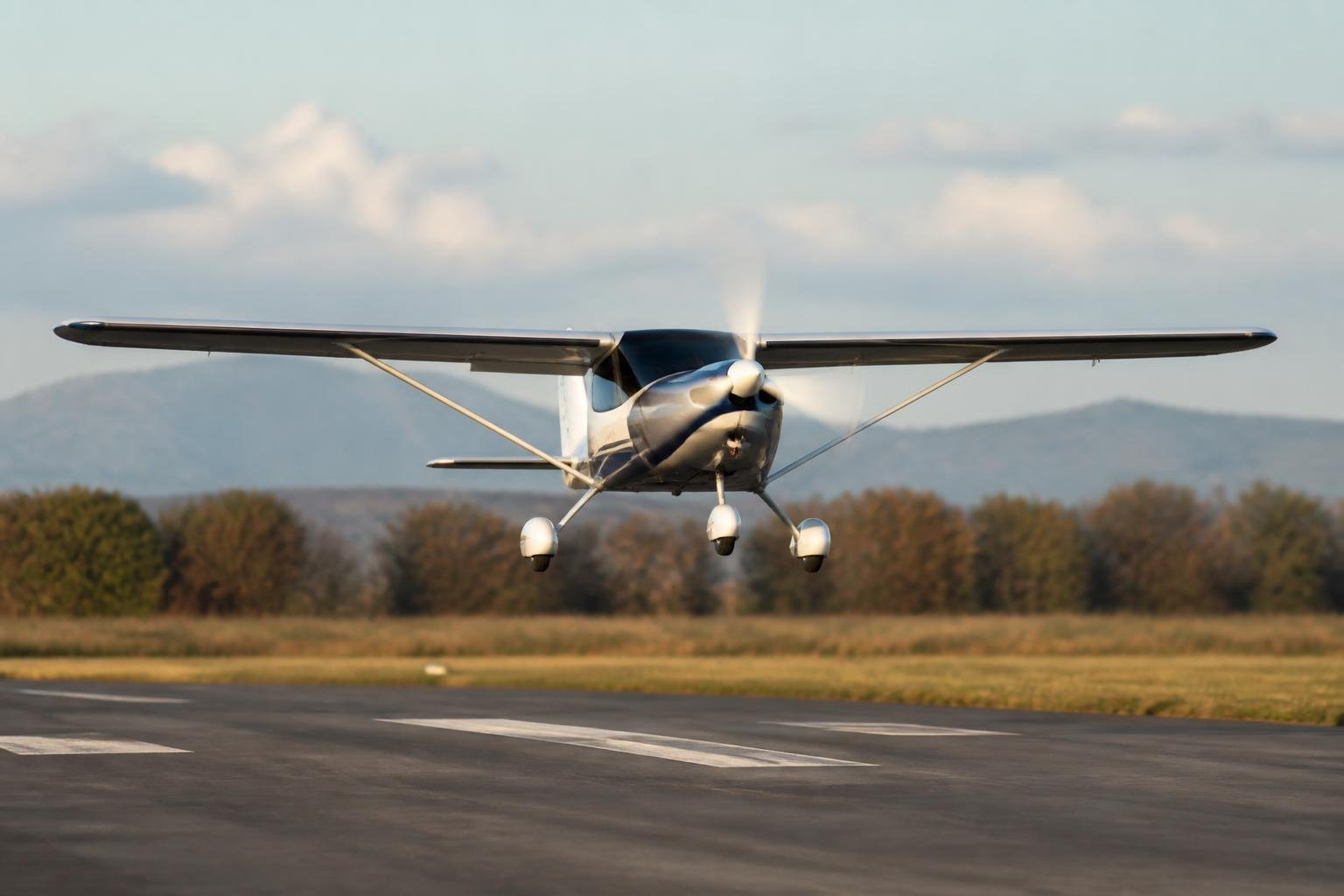
The CTLSi has the stronger touring emphasis on paper. Flight Design publishes a maximum horizontal speed of 240 km/h for the 600 kg CTLS configuration and a maximum range of 1,800 km with a 30-minute reserve. The aircraft also carries up to 130 litres of fuel in the published configuration.
Van’s publishes more detailed POH cruise figures for the RV-12iS. With the Rotax 912 iS at gross weight and with wheel pants, the RV-12iS POH lists 104 KIAS at 7,500 ft and 5,500 RPM, or 92 KIAS at 5,000 RPM. The corresponding published range figures are 493 nm and 547 nm respectively, before allowance for taxi, takeoff, climb, descent or reserve.
Those figures should not be compared without their test conditions. Flight Design’s range figure includes a stated reserve, while Van’s explicitly excludes several phases of flight and reserve from its published POH range figure. A buyer planning real trips should therefore build the same route for both aircraft using the applicable POH data, realistic winds, actual aircraft weight and the same reserve policy.
The more useful conclusion is that the CTLSi combines a relatively large fuel capacity with a highly aerodynamic composite airframe, while the RV-12iS offers useful regional performance from a simpler metal platform. Whether the CTLSi’s potential endurance advantage matters depends on whether the occupants and baggage leave enough useful load to carry the desired fuel.
Payload, Useful Load and Baggage
This is where a brochure comparison can become misleading.
Flight Design publishes a typical empty weight of 326 kg for the current CTLS 600 kg configuration. On paper, that creates a substantial difference between typical empty weight and maximum take-off mass. But optional avionics, autopilot equipment, rescue systems, interior equipment and individual configuration can materially change the actual empty weight.
The 2020 Flight Design CTLSi 600 Grand Touring currently listed on CollectAirs illustrates the point. Its documented empty weight is 368.9 kg and its stated useful load is 231 kg at a 600 kg MTOW. That is the number relevant to that aircraft, not the lower model-level typical empty weight.
Van’s similarly instructs RV-12iS operators to use the licensed empty weight and CG of the specific aircraft. The current POH gives an average empty weight of 775 lb and a gross weight of 1,320 lb, while baggage is limited to 75 lb and remains subject to CG limits.
So do not ask simply, “Which aircraft has more useful load?” Ask:
- What is the current empty weight of this exact aircraft?
- How much do the regular pilot and passenger weigh?
- How much baggage is normally carried?
- How much fuel remains available after loading the people and bags?
- Does the resulting CG remain within limits?
For touring buyers, the CTLSi’s higher published baggage allowance and larger fuel capacity are meaningful advantages only when the individual aircraft’s useful load allows them to be used.
Cabin, Entry, Visibility and Practicality

The cabin difference is substantial enough to evaluate in person.
Flight Design publishes a CTLS cabin width of approximately 49 inches. Large gull-wing doors provide entry on each side, and the high-wing configuration keeps the wing above the cabin rather than requiring occupants to climb over it. Flight Design also provides external baggage access to storage compartments behind the cockpit.
Van’s publishes a 43-inch cabin width for the RV-12iS. The low-wing and canopy arrangement create a different entry process and different sight lines. Some pilots prefer the open upward visibility of a low-wing aircraft; others prefer the downward visibility and ground-level access associated with the CTLSi.
Do not choose based on dimensions alone. Sit in both aircraft with the person who normally flies with you. Check:
- Shoulder room.
- Head clearance.
- Rudder-pedal reach.
- Seat comfort after more than a short demonstration.
- Entry and exit.
- Baggage access.
- Forward and lateral visibility.
- Ventilation and cabin heating.
For frequent touring, a small ergonomic difference becomes much more important after two or three hours in the aircraft.
High Wing vs Low Wing
The wing position affects more than appearance.
The CTLSi’s high wing can provide shade while parked, unobstructed access around the cabin and strong downward visibility. Fuel is carried in the wing structure, and the high-wing configuration contributes to the aircraft’s distinctive touring layout.
The RV-12iS provides the different visual environment of a low-wing aircraft, including greater upward visibility in some manoeuvres and a different perspective during traffic scanning. Its removable-wing system is also unusual in this comparison: Van’s designed the wings so they can be removed relatively quickly by two people, potentially reducing storage requirements for some owners.
Neither layout is inherently superior. Pilots with a strong high-wing or low-wing preference should fly both before deciding.
Composite CTLSi vs Metal RV-12iS

The construction difference changes the pre-buy inspection priorities.
CTLSi
The CTLSi uses a carbon/composite airframe. Inspection should focus on the aircraft’s damage and repair history, high-load attachment areas and any evidence that justifies specialist composite assessment. Surface appearance alone is not enough to establish structural condition.
If a CTLSi has a repair history, the important questions are where the repair is located, what technical data supported it, who performed the work and whether the documentation allows an independent specialist to assess it today.
For more detail, see the CollectAirs Composite Aircraft Pre-Buy Inspection Guide.
RV-12iS
The RV-12iS uses conventional aluminium sheet construction with riveted structure. Inspection emphasis shifts toward corrosion, fastener condition, skin repairs, drainage, landing-gear attachments, control-system condition and workmanship.
On an amateur-built example, construction history becomes particularly important. Review the build log, photographs, original documentation and later modifications. Two RV-12iS aircraft carrying the same model name may have very different build histories.
Rotax Engine and Maintenance
The CTLSi is associated with the fuel-injected 100 hp Rotax 912 iS. Van’s RV-12iS documentation supports the Rotax 912 iS as well as certain 912 ULS installations, so identify the actual engine before comparing two used aircraft.
When both candidates use the 912 iS, the core engine architecture is similar, but installation details, cooling, electrical architecture, propeller, maintenance history and aircraft-specific service information still differ.
For either aircraft, review:
- Engine serial number and total time.
- Calendar age.
- Scheduled Rotax maintenance.
- Applicable service information.
- Gearbox history where relevant.
- Cooling-system condition.
- Fuel-system history.
- Electrical-system and engine-management faults.
- Periods of long-term inactivity.
The condition of the individual installation matters more than the fact that both aircraft may use an engine from the same family.
Certification and Ownership Pathway
This is one of the most important differences, particularly in the United States.
Flight Design markets the CTLS in several regulatory configurations depending on jurisdiction, including EASA CS-LSA, 600 kg ultralight and SLSA variants. The exact registration and approved documentation of the aircraft being purchased determine how it can legally be operated and maintained.
The RV-12iS can appear as a factory-built Special Light-Sport Aircraft or through experimental and kit-origin pathways. Those categories are not interchangeable. Inspection authority, alteration procedures and maintenance privileges can differ.
FAA guidance distinguishes light-sport category aircraft and experimental aircraft and sets separate rules for maintenance and condition inspections. Since the MOSAIC changes have also altered parts of the US light-sport framework, buyers should use current FAA guidance rather than relying on an older summary of LSA rules.
Outside the United States, use the relevant national authority and the aircraft’s actual certificate and operating limitations.
The practical rule is simple: identify the legal status of the exact aircraft before comparing maintenance freedom or ownership cost.
Maintenance Support and Owner Community
The CTLSi offers the more conventional factory-aircraft ownership route. Buyers should check Flight Design parts access, regional service support and local familiarity with both the composite airframe and Rotax installation.
The RV-12iS benefits from the wider Van’s ecosystem. The company has produced extensive construction, operating and service documentation, and the large builder community can be valuable for technical knowledge and ownership experience.
That does not automatically make one cheaper to maintain. Local capability matters.
A CTLSi with a nearby Flight Design and Rotax specialist may be easier to own than an RV-12iS in an area with little experimental-aircraft support. The reverse can also be true.
Pre-Buy Inspection: What Is Different?

| Inspection area | CTLSi priority | RV-12iS priority |
|---|---|---|
| Structure | Composite condition, impact history and documented repairs | Metal condition, corrosion, rivets, skins and repair workmanship |
| Construction history | Factory configuration and documented modifications | Especially important on kit/amateur-built examples |
| Engine | Rotax installation, electrical system, fuel system and service history | Rotax installation, service history and aircraft-specific configuration |
| Weight and balance | Verify actual empty weight because options can materially affect touring payload | Verify licensed empty weight, CG and installed-equipment changes |
| Doors/canopy | Gull-wing door hinges, latches, seals and fit | Canopy condition, fit, latching and associated hardware |
| Documentation | Maintenance continuity, repairs, Flight Design service information | Maintenance records plus build documentation where applicable |
Whichever aircraft you choose, commission an independent, type-aware inspection. The broader CollectAirs Aircraft Pre-Buy Inspection Checklist provides a useful framework for records, physical condition, compliance and acquisition-cost review.
Real-World Buying Comparison
Model-level specifications help create a shortlist. The final purchase decision should compare actual aircraft.
For example, the 2020 Flight Design CTLSi 600 Grand Touring currently available on CollectAirs has an actual documented useful load of 231 kg, a Rotax 912 iS2 Sport, dual-screen Dynon SkyView HDX avionics and autopilot.
Those aircraft-specific details are more useful to a buyer than assuming every CTLSi matches Flight Design’s typical model weight.
Use the same discipline when assessing an RV-12iS. Compare:
- Actual empty weight.
- Engine and propeller configuration.
- Airframe and engine hours.
- Certification category.
- Avionics.
- Build quality where applicable.
- Maintenance records.
- Damage and repair history.
- Local maintenance support.
CTLSi vs RV-12iS Decision Matrix
| If this matters most... | CTLSi | RV-12iS |
|---|---|---|
| High-wing layout | Strong fit | No |
| Low-wing layout | No | Strong fit |
| Cabin width | 49 in published | 43 in published |
| Baggage allowance | Up to 110 lb published | Up to 75 lb published |
| Large fuel capacity | Strong advantage on published figures | Smaller 20.2 US gal system |
| Composite construction | Yes | No |
| Metal construction | No | Yes |
| Removable wings | Not a central design feature | Yes |
| Factory-oriented ownership | Strong fit | Available |
| Kit/build community | Limited compared with Van’s | Major advantage |
| Touring emphasis | Strong fit | Capable, but with less published fuel and baggage capacity |
| Hands-on experimental ownership | Depends on aircraft/jurisdiction | Major part of the model’s ownership ecosystem |
Which One Should You Shortlist?
Shortlist the CTLSi first if your priority is a roomy high-wing two-seater for touring, particularly if cabin width, baggage access and fuel capacity matter to your typical trips.
Shortlist the RV-12iS first if you prefer a low-wing metal aircraft, value removable wings, want access to a broad builder and owner community, or are specifically interested in the ownership possibilities offered by its factory-built and experimental pathways.
For many buyers, however, the final answer will come from useful load rather than brand preference. Put two realistic occupant weights, baggage and the required fuel into the weight-and-balance calculation for the actual aircraft. An aeroplane that cannot comfortably perform your normal mission is the wrong choice regardless of its brochure advantages.
Final Takeaway
The CTLSi and RV-12iS are not simply two versions of the same light-sport idea.
The CTLSi emphasizes composite construction, high-wing practicality, cabin space, baggage capacity and efficient touring.
The RV-12iS emphasizes metal construction, owner accessibility, removable wings and a powerful builder and operating community.
Start with that design-level difference, then compare the individual aircraft’s actual weight, engine, certification, maintenance history and condition before making a purchase decision.
Considering the CTLSi? View the Flight Design CTLSi 600 Grand Touring currently available on CollectAirs and compare its actual useful load, equipment and maintenance documentation with the model-level figures above.
Sources and Further Reading
- Flight Design — CTLS official model specifications and current technical information.
- Van’s Aircraft — RV-12iS Pilot’s Operating Handbook and official RV-12iS model information.
- Federal Aviation Administration — current Light-Sport Category Aircraft and MOSAIC guidance.
- CollectAirs — Aircraft Pre-Buy Inspection Checklist
- CollectAirs — Composite Aircraft Pre-Buy Inspection Guide
- CollectAirs — 2020 Flight Design CTLSi 600 Grand Touring
Specifications in this comparison are model-level manufacturer references. Actual performance, useful load, equipment, certification and maintenance requirements vary by aircraft and jurisdiction. Use the approved documentation and current weight-and-balance data for the individual aircraft being evaluated.

Comments
No comments yet
Be the first to share your thoughts!