
 Aschaffenburg
The First Decision: Can This Aircraft Qualify in Germany?
If you are importing a homebuilt aircraft from Switzerland to Germany, establish a credible German registration and airworthiness route for the individual airframe before making a binding offer or paying a non-refundable deposit. Send the serial number, Swiss documents, build history and current configuration to the appropriate German body for a preliminary review. A Swiss registration or a valid Swiss flight document does not automatically qualify the aircraft for German registration or flight.
Treat the purchase as four separate decisions. The sale transfers ownership if the seller can convey good title and the contract is properly completed. Customs clearance deals with admitting the aircraft into the EU under the declared procedure. German registration places the aircraft on the relevant register. The applicable airworthiness or flight authorisation determines whether, and under what conditions, it may actually fly. Evidence that one step is complete is not evidence that the others are.
Define what you want the aircraft to do before asking whether it can be approved. An approval that supports local recreational flying might still be a poor fit if your purchase depends on cross-border trips, particular flight conditions or carrying a passenger. Put that intended use in your first enquiry so the answer addresses more than whether the aircraft can obtain German marks.
Keep a short list of open items, naming who must resolve each one: the seller for ownership and missing records, the German body for the approval route, and the customs broker for the import procedure and tax estimate. Get those answers before you commit. If essential evidence will only be available after the sale, the contract needs to account for that risk; a lower bid alone does not resolve it.
Swiss Homebuilt Aircraft Registration: What the Papers Prove

Start with the Swiss Federal Office of Civil Aviation (FOCA) register and the aircraft's Swiss registration certificate. Compare the registration marks, aircraft designation and serial number with the actual data plate. Cross-check the recorded builder identity against the construction records and other aircraft documents. For a kit aircraft, distinguish the kit manufacturer from the person or group that built the individual airframe. A seller's reference to the kit brand is not a substitute for identifying who built the aircraft.
The registered holder and the legal owner are not necessarily the same person. Ask for the seller's purchase document and the available chain of title, particularly if the aircraft has changed hands without an obvious corresponding change in the registration records. If a company, estate, co-owner or agent is selling, confirm who has authority to sign. Check for liens, security interests and competing claims through the records or professional advice appropriate to the transaction. If a lender must release an interest, agree how that release will be obtained and documented at closing.
Read the Swiss airworthiness paperwork separately. Record the exact title of the document, its current status, any expiry or review dates and the operating limitations that go with it. Ask for the complete set, including referenced attachments and later amendments. A certificate copy showing a future expiry date does not by itself establish that every condition for flight is currently met.
Check seller copies against official records where available, asking the seller to authorise enquiries if access is restricted. Pay particular attention to conflicting serial numbers, a builder name that differs across documents or a seller who is absent from the ownership chain. A clerical error may be correctable, but have the party responsible for the record resolve it before closing. Do not rely on a promise that it can be sorted out during German registration.
What a Swiss Permit to Fly Does—and Does Not—Allow
“Swiss Permit to Fly” in a listing may be shorthand rather than the document's formal title. Ask for the document itself and any approved flight conditions or operating limitations it incorporates. Identify the authorised purposes and period of validity, then look for restrictions on territory, crew, carriage of other persons and flight conditions. In particular, do not assume that a document issued for a particular purpose covers a delivery flight simply because the proposed route is short.
There are three separate questions. First, does the Swiss document allow the proposed operation under the aircraft's current Swiss status? Second, on what basis may that Swiss-registered aircraft enter and operate in German airspace as a visitor? Third, what approval will apply once the aircraft is imported and on the German register? A German permission for the visiting flight, if required and obtained, does not settle the third question. Likewise, encouraging feedback about German registration is not permission to make the ferry flight.
Give FOCA the proposed handover sequence, including when ownership would transfer, who would be the registered holder and when deregistration is planned. Ask whether sale, export or deregistration affects the existing documents, and at exactly which point they would cease to support flight. Confirm the German side of the proposed operation with the appropriate German authority, and check any other state whose airspace the route uses. Provide the actual permit and its attachments rather than describing the aircraft as simply “Swiss experimental”.
Work from the permissions valid on the proposed departure date, not from the fact that the aircraft was flown recently. If one document expires before delivery or the confirmed handover sequence leaves a gap in authority to fly, revise the schedule or plan road transport. Do not leave that decision until the aircraft has already been deregistered.
Confirming the German Registration and Airworthiness Route
Contact the Luftfahrt-Bundesamt (LBA), Germany's Federal Aviation Office, early. Ask it to confirm jurisdiction for the specific aircraft, identify the responsible body and clarify which technical inspection route that body accepts. The first question is how the airframe is classified under the applicable German national or EASA framework. A kit name, a stated maximum take-off mass or an apparent match to another aircraft on the German register is not enough to determine that classification. The individual aircraft's construction history and configuration can matter as much as its design.
Prepare one coherent submission instead of sending a listing and asking if the model is eligible. Include the serial number and data plate details, Swiss registration and flight documents, a summary of who built the aircraft and how, and an inventory of available build records. Describe the engine, propeller and current configuration, highlighting known departures from the plans or the configuration previously assessed. State the intended use and flag any gaps you already know about. Ask for written preliminary feedback based on that information.
Find out who is eligible to apply, which originals or copies the body will accept, whether translations are needed and how it treats missing build-stage evidence. Ask who can carry out inspections, whether inspection in Switzerland is an option if useful, and whether any work needs to be witnessed before parts are closed up again. Ask about possible approval conditions and whether further testing might be required. If the LBA refers you to another body, obtain clarification from that body rather than assuming the referral itself confirms that the aircraft qualifies.
Record the assumptions in the reply. Preliminary feedback may depend on the documents being accepted, the aircraft conforming to the configuration described and any inspection findings being resolved. It is a basis for pricing the purchase and drafting contingencies, not a registration or airworthiness decision. If the unanswered question is whether essential evidence exists at all, resolve that before bidding.
The Build Records to Request Before You Bid
Request the build file early enough to compare it with the aircraft and the proposed German requirements. A recent maintenance entry can tell you what was checked at that visit; it cannot reconstruct who built the wing or show how a concealed joint was made. Where the German route requires evidence of amateur construction, collect material that demonstrates who did the work and which tasks they performed, rather than relying on the seller's description or a kit invoice alone.
- Builder logs, dated photographs and kit or material invoices. Look for a chronology that connects identifiable parts and build stages to the airframe being sold.
- Build-stage inspection records, drawings and revisions, plus documentation of departures from the plans. Find out how deviations were recorded and whether any required supporting assessment or approval is on file.
- Flight-test records, operating limitations, the applicable flight manual or operating handbook, and a current weight-and-balance report. Verify that these describe the configuration being delivered, not an earlier engine, propeller or equipment fit.
- Airframe, engine and propeller logs. Match component serial numbers to the installed items and reconcile time in service, maintenance work and any relevant time or calendar limits. Time since overhaul is not the same as total time in service.
- Repair and modification records, any required approvals and traceability for relevant components. Check that replacement parts can be tied to the log entries and accompanying paperwork.
Make an index that separates what you have, what the seller can still obtain and what may need substitute evidence. If the original builder's log is missing, identify surviving photographs, dated invoices and inspection reports, then ask the German body whether those records can support the actual application. Confirm acceptable formats and whether translations must cover the full records or selected documents. Price translation and records retrieval before bidding; neither solves a gap if the original evidence cannot be reconstructed to the required standard.
An Independent Pre-Buy Inspection for a One-Off Aircraft
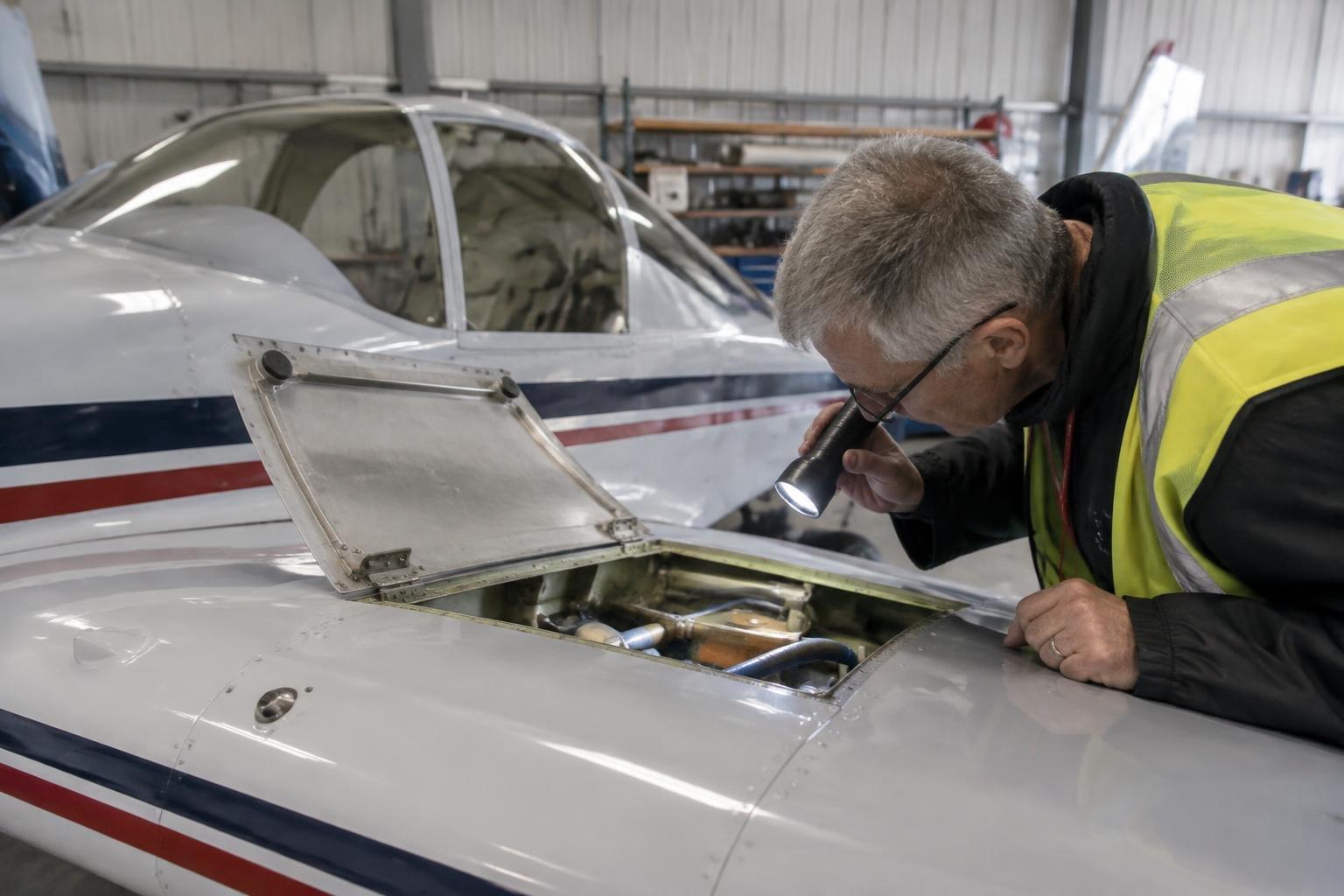
Choose an independent inspector familiar with the aircraft's construction method and the proposed German approval route. Experience with the same kit is useful, but one homebuilt can differ substantially from the next in workmanship and installed equipment. Give the inspector the records in advance, including known repairs and modifications, so the visit can focus on discrepancies as well as condition. Agree which panels, fairings or covers the seller will allow to be removed, who will open and refit them, and what access is out of scope.
Ask the inspector to compare the as-built configuration with the file. Undocumented structural work, an engine or propeller change, or an avionics installation can affect more than the repair budget: it may alter weight and balance, call for supporting records or put the aircraft outside the configuration previously assessed. Have discrepancies described precisely enough that the German body can say what evidence or corrective work it would expect. A verbal assurance that a modification is common on the type is not a disposition for this airframe.
The physical review should cover workmanship, signs of corrosion or concealed repairs, the condition of control systems and the remaining life of components subject to limits. Tailor the scope to the construction and history. For example, an old repair in a covered area deserves a different assessment from a readily visible cosmetic defect. Record what could not be inspected and why; no adverse finding in an inaccessible area is not the same as having examined it.
Ask for a written report separating observed defects, open documentation questions and estimated rectification costs. Distinguish work that must be priced before purchase from items that can wait, provided the eventual approval permits it. A pre-buy report informs your commercial decision. It does not replace a formal conformity or airworthiness finding, even if the inspector is also qualified to perform such work under a separately agreed scope.
Swiss Export, EU Customs and the Real Landed Cost
Switzerland is outside the EU customs territory. Plan the Swiss export formalities and the EU import declaration before the aircraft moves, even if you are buying privately and flying it home yourself. Agree who will act as importer of record, who will make the declarations, and which broker will handle the movement. Identify the point of clearance or arrange an appropriate customs transit procedure if clearance will occur elsewhere. The first EU entry point and the office handling final clearance need not be the same, but the route must match the procedure arranged.
Ask the broker to confirm the tariff classification, how customs value will be determined, what evidence of origin is available and whether any duty applies. Customs value generally starts from the price actually paid or payable when the transaction-value method is accepted, with adjustments as required. The import VAT base can differ from the purchase price: it may include duty and applicable incidental costs. A Swiss registration is not evidence of Swiss preferential origin. If a preferential rate is being assumed in the budget, check that the aircraft qualifies and that acceptable origin documentation can actually be produced.
Resolve Swiss VAT separately. Ask how the seller is treating the transaction and whether the price includes Swiss VAT, if applicable. Where export treatment depends on evidence or on the seller's arrangements, agree who collects the proof and who bears the cost if that treatment is unavailable. Do not assume a Swiss exemption or refund, or that a private sale removes the obligation to account for EU import VAT.
Build the landed-cost worksheet around the purchase price, applicable taxes and duty, brokerage, ferry or road transport, insurance, translations, inspections and rectification. Include an allowance for storage if records, transport or inspections are delayed. Compare the expected total with a road-delivery scenario and a scenario that includes the unresolved work from the pre-buy. Keep declarations, release evidence and tax records separately from the aviation and ownership files; they document a different part of the transaction.
Ferry Flight or Road Transport: Planning the Handover
Plan a ferry flight only once you can show valid registration and flight documents at departure and confirm they remain effective for the intended operation. Check the permissions required by every state on the route, including Germany, and make sure the pilot's qualifications and any required validation fit the aircraft, documents and operation. Obtain confirmation that insurance covers the aircraft, pilot, route and relevant period, including any change of ownership before take-off. Arrange a fallback if aircraft condition, weather or document timing rules out the planned flight.
Coordinate the flight plan and stopping points with the customs arrangements. Confirm where export and import formalities will occur, what advance notices are required and whether the planned arrival point can handle the movement under the chosen procedure. If a broker is arranging transit, give the pilot a clear handover brief with the documents to carry and the reporting instructions. An aerodrome that is convenient for parking is not necessarily suitable for completing the required formalities.
Set the Swiss deregistration date around the confirmed delivery method. If the ferry relies on Swiss registration and associated flight documents, do not cancel them before that operation unless a valid alternative is in place. Coordinate the timing with FOCA, the seller and the responsible German body, and make official evidence of deregistration a delivery item for the German application. Keep the date, transfer point and insurance responsibilities consistent across the contract and transport plan.
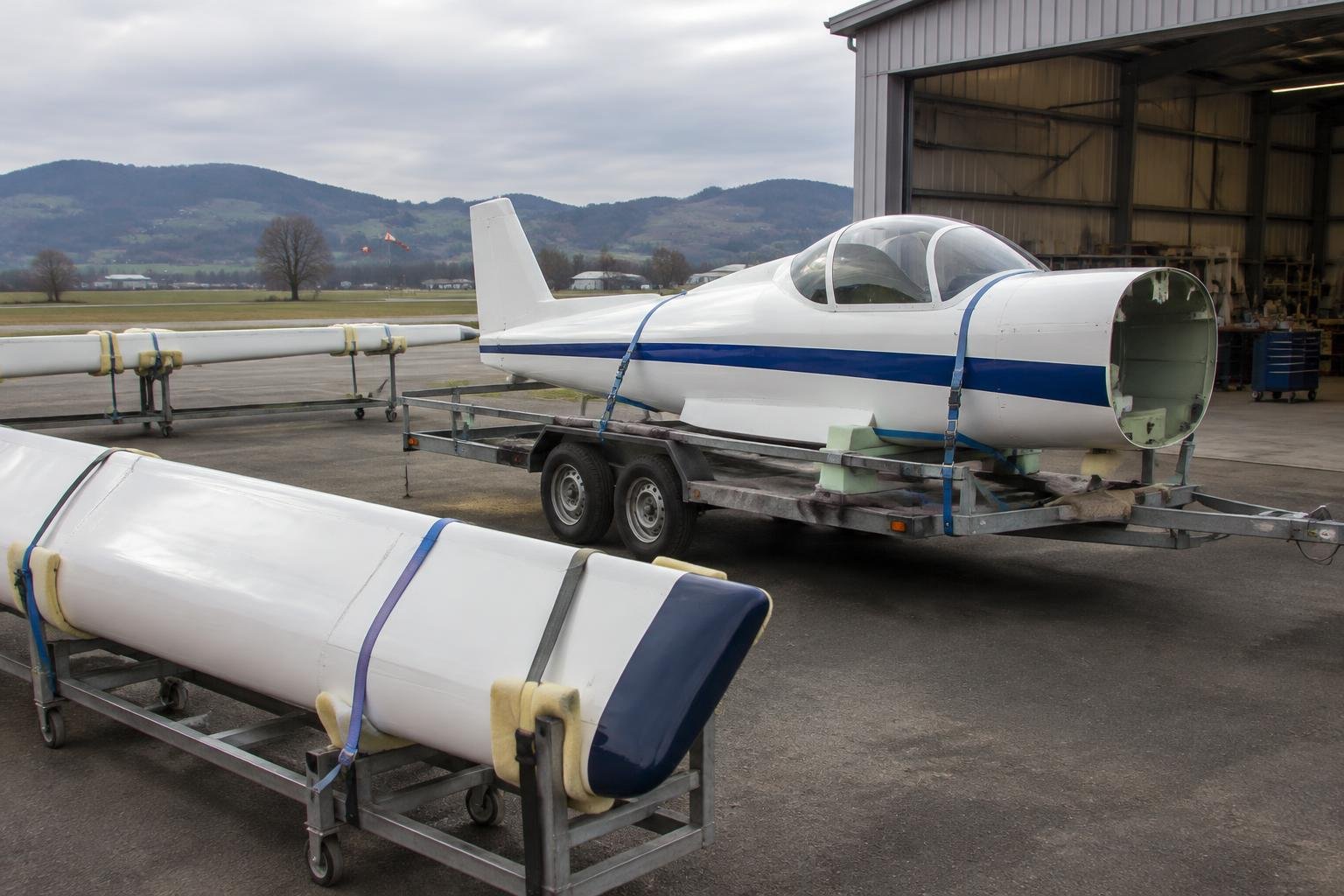
Price road transport if permission, timing or aircraft condition makes a ferry uncertain. Establish who will disassemble and crate the aircraft, how large components will be supported, and what the transit policy covers during loading, carriage and unloading. Document condition at collection and delivery. Budget for reassembly and the checks and sign-offs applicable to the work; securing a truck and a hangar does not mean the aircraft will be ready to fly once it arrives.
From German Application to the First Legal Flight
Confirm the application sequence with the responsible German body. Match the ownership evidence, Swiss deregistration proof and technical records to the same serial number and aircraft identity. Submit the build and configuration evidence in the agreed format, and disclose changes made since the preliminary review, including work during transport or reassembly where relevant. Keep track of outstanding items and avoid assuming that filing one application starts or completes the others.
Allow for any required conformity check, technical inspection and rectification. Conformity means the aircraft matches the configuration described in the supporting records; it is distinct from a check of its present condition. If the process requires proving flights, obtain the separate authorisation and follow the applicable limitations for those flights. An invitation to bring the aircraft for inspection does not authorise a flight to get it there.
Before the first ordinary flight, verify the German registration and marks, insurance and applicable aircraft radio licensing. Then check the airworthiness or flight documents separately: are they effective, do they cover the planned operation, and are the associated operating limitations available and understood? Marks on the fuselage establish neither the aircraft's flight privileges nor the pilot's eligibility to exercise them.
Settle the maintenance arrangements before budgeting for ownership. Ask which tasks you may perform, which you may sign off, who must inspect or release other work, and what records and recurring checks are required under the aircraft's actual approval. Performing a task and signing the applicable release are different privileges. Review the final operating limits against the intended use you gave the authority at the outset. If a restriction rules out an important part of that use, do not assume it will be removed later; ask what a change would require.
Before You Sign: A Go, Renegotiate or Walk-Away Checklist
- Go when title and build history are documented, the German body has identified a credible route for the airframe and your intended use, delivery can be arranged under the applicable rules, and the landed cost fits your budget. If final approval necessarily follows purchase, decide whether the remaining steps and their costs are sufficiently clear to accept that risk.
- Renegotiate when the issue is identifiable and recoverable. A priced repair, missing records the builder can supply or a switch from ferry flight to road transport can justify a different price, delivery date or allocation of costs. Tie any new terms to the specific work or evidence needed, not to a broad promise that the aircraft will be approved.
- Walk away if ownership remains unresolved, material build provenance cannot be substantiated or there is no credible route to approval for your intended use. A discount can cover a known transport bill or repair estimate; it cannot make unacceptable evidence sufficient.
For a private sale, specify the documents and originals the seller must deliver, the scope and timing of the inspection, and any conditions for closing. State who holds any deposit, when it is refundable and what happens if a condition fails or an agreed deadline passes. Set out who arranges and pays for export, transport and storage if delivery slips. If the seller must provide deregistration evidence after a ferry flight, make that timing explicit rather than asking for cancellation as a blanket precondition to movement.
At auction, read the terms before placing a bid. Check when the bid becomes binding and whether the seller or platform permits inspection, document or approval-related contingencies. If those protections are unavailable, use the time before bidding to clear the essential issues. When the unresolved point is the identity, ownership or eligibility of the airframe, the sensible decision is to let the lot pass rather than bid on the assumption that you can resolve it later.

Comments
No comments yet
Be the first to share your thoughts!