

 Bad Vöslau
 Kirn
Kirn

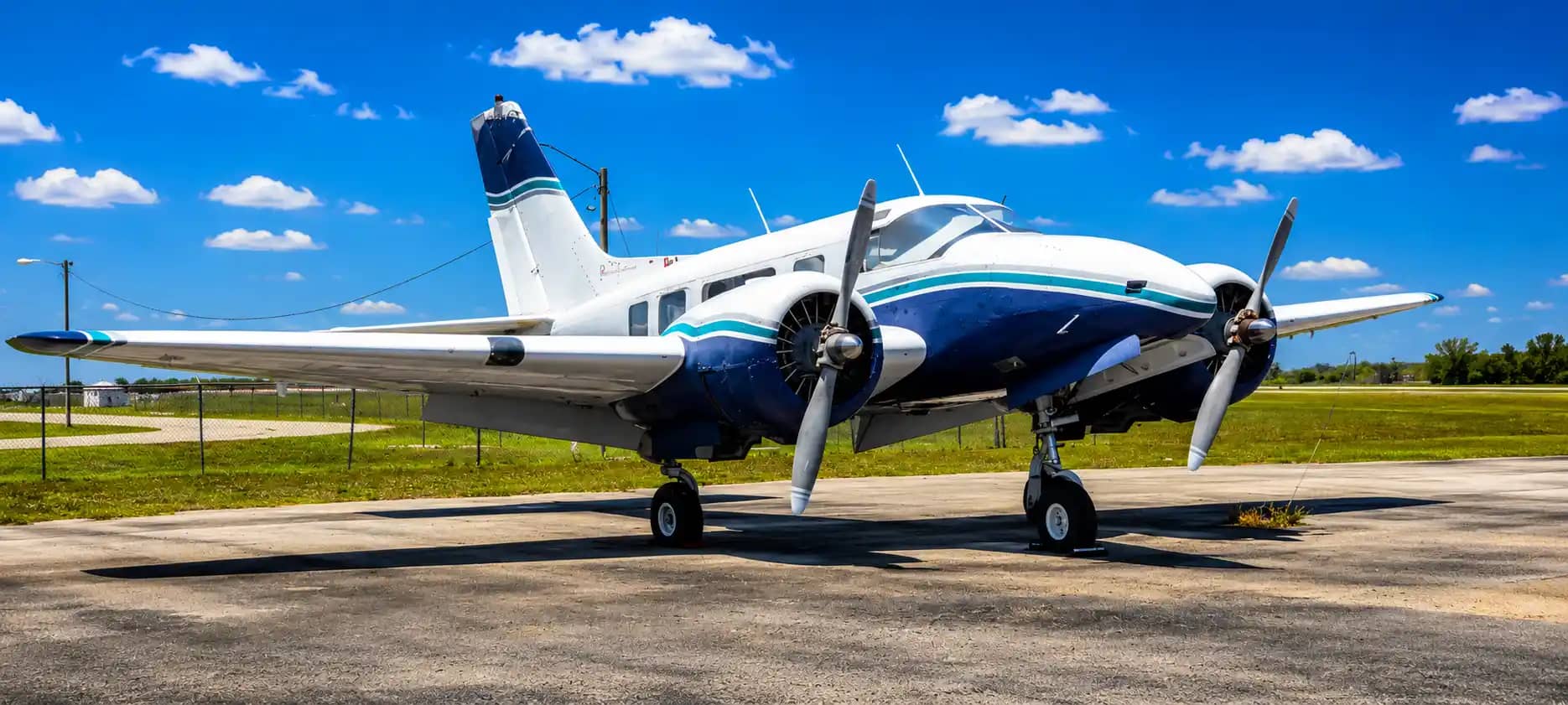
 Florida

Questions before buying aircraft should do more than confirm the listing description: they should expose what is documented, what remains uncertain, and what must be independently verified before you commit funds. A disciplined seller conversation, supported by records and a type-appropriate pre-buy inspection, helps a buyer set a realistic bid limit and avoid treating an attractive aircraft as a fully known aircraft.
Why Seller Questions Matter Before an Aircraft Bid
Prospective buyers ask questions because an aircraft is a technical asset with a history that cannot be understood from photographs, a short equipment list, or a recent inspection date alone. The useful objective is not to catch a seller out. It is to build a clear factual picture of the particular aircraft, identify evidence that can be reviewed, and establish where uncertainty still exists.
A seller’s statement is valuable context, especially from a long-term owner who knows the aircraft’s routines and maintenance history. It is not, however, a substitute for records, title work, or an independent inspection. Treat descriptions such as “no damage,” “always hangared,” “fresh annual,” or “ready to fly” as claims to investigate through logbooks, invoices, inspection findings, and appropriate professional review.
This distinction becomes especially important in an auction. A bid may create a binding commitment under the published terms, and the scope for a post-bid negotiation, inspection contingency, or withdrawal may be limited. Read the auction conditions before bidding, including deposit requirements, buyer fees, payment deadlines, collection obligations, and the point at which risk transfers. Do not assume that a question asked late in the process can be resolved after the auction closes.
Good questions also reveal early warning signs. Missing time records, vague answers about a repair, uncertainty over legal authority to sell, or a refusal to provide reasonable documentation do not automatically prove a serious problem. They do justify deeper review and may justify declining to bid. The appropriate response to incomplete information is not to fill gaps with optimism.
Maintain a written question log when comparing aircraft. Record the question, the date, the seller’s answer, documents received, unresolved points, and the person who must review each issue. A consistent log makes it easier to compare two apparently similar aircraft on evidence rather than recollection.
Start With the Aircraft’s Identity, Ownership and Sale Authority

Begin with the aircraft’s precise identity. Ask for the exact manufacturer, model designation, serial number, year of manufacture, and registration details. Confirm that these details agree across the airframe data plate, registration documents, logbooks, maintenance records, and listing. Variant names can be imprecise in informal conversation; the approved model designation and serial number are what allow a buyer and inspector to match applicable records and technical requirements.
Ask who legally owns the aircraft and who has authority to sell it. The person presenting the aircraft may be the owner, a broker, a partnership representative, an executor, or an attorney-in-fact. Each arrangement can be legitimate, but the documentation and signing authority must be clear. Ask whether there are loans, liens, security interests, leases, or other claims, and arrange an appropriate title and lien search for the jurisdiction involved.
Registration is not always conclusive proof of title. Request the available title chain and ask whether there are any pending registration changes, deregistration requirements, or export restrictions. For an international transaction, establish early whether the aircraft can be exported, what records the destination authority may require, and whether the aircraft’s certification basis, modifications, radio equipment, or documentation will be accepted where it will be operated.
The reason for sale and length of ownership are also worthwhile context questions. A sale after a change of mission, retirement, relocation, or the end of a partnership can be straightforward. Ask how long the seller has owned and operated the aircraft, who maintained it, and whether any other party has operational knowledge. Avoid treating a short ownership period as proof of a defect, but ask enough to understand the timeline.
- Who is the legal owner shown in the relevant title documentation?
- Who will sign the purchase documents and release any recorded interests?
- Does the seller hold the original registration and logbooks, or are they held elsewhere?
- Is the aircraft eligible for export and registration in the intended country?
- Has a broker, estate, partnership, or power of attorney been formally authorized to act?
Ask for a Clear Airframe History

Airframe history begins with total time in service, but the number is only as useful as its supporting record. Ask how total time was established and whether the airframe logbooks form a continuous history. Compare recorded hours with major inspection entries, tachometer or hour-meter changes, maintenance invoices, and the aircraft’s overall documentation. A qualified reviewer may identify inconsistencies that are not obvious to a buyer reading an isolated entry.
Ask directly about damage, repairs, incidents, accidents, hard landings, ground strikes, lightning strikes, hangar events, and insurance claims. Request details of the date, affected area, repair facility, work performed, approvals, photographs if available, and subsequent inspections. “No known damage history” is different from “no damage history,” particularly when a current seller did not own the aircraft throughout its life.
Corrosion deserves specific attention because it can be concealed and its significance varies with design, materials, environment, and prior maintenance. Ask where the aircraft has been based, whether it was hangared or tied down, how long it spent outdoors, and whether it operated in coastal, high-humidity, or winter de-icing environments. Ask about corrosion treatment, replacement of structural or control-system parts, and recurring inspections. An inspector should determine the actual condition rather than relying on a general statement about storage.
Request details of major alterations, supplemental approvals, and modifications. These may include fuel-system changes, aerodynamic modifications, interior changes affecting weight and balance, avionics installations, auxiliary equipment, or engine conversions. Confirm that approvals and revised weight-and-balance information are present where required. A modification can be useful, but undocumented or poorly integrated work can complicate maintenance, insurability, resale, and regulatory compliance.
Finally, ask about known defects, deferred work, repetitive discrepancies, and items that repeatedly fail or require adjustment. Match logbook entries to the airframe serial number and registration history. A seller who identifies an unresolved issue gives the buyer a clear item to evaluate; an issue discovered later without explanation can be more costly in both time and confidence.
What to Ask About the Engine, Propeller and Components
Ask for the engine manufacturer, model, serial number, total time, and time since major overhaul or rebuild, using the terms stated in the records. “Overhaul” can describe work of very different scope, so request the provider’s invoice, work order, parts list where available, and the relevant logbook entry. Establish who performed the work, when it was completed, what was replaced or retained, and how the engine was operated during break-in.
Calendar time matters as well as hours. Some components have mandatory or recommended calendar limits, while seals, hoses, fuel-system components, and accessories may deteriorate during low use. Ask about engine preservation during inactivity, the date of the last regular operation, and upcoming calendar-driven work. The applicable requirements depend on the aircraft, engine, propeller, certification basis, and jurisdiction; a type-aware mechanic should determine what applies.
For a controllable-pitch propeller, ask for make, model, serial number, total time if known, overhaul history, calendar status, and any record of a propeller strike or blade repair. A propeller event can lead to further engine inspection requirements, so ask how any event was assessed and what evidence supports the work completed.
Ask for recent oil analysis reports, borescope images or findings, and compression-test results where available. These are useful indicators, not guarantees of engine condition. Compression values need context: test method, temperature, leakage path, prior readings, cylinder configuration, and the mechanic’s interpretation all matter. Similarly, a clean-looking borescope image does not replace a complete inspection or establish future reliability.
Discuss cylinder replacements, magneto or ignition work, alternator and starter replacements, fuel-system work, exhaust repairs, and recurring operational concerns such as hot starts, oil consumption, rough running, or abnormal temperatures. If engine-monitor data are available, ask for the original downloadable files rather than screenshots alone. A competent reviewer may identify patterns, but recorded data have limits and should be interpreted alongside maintenance history and an inspection.
Clarify Maintenance Status Without Assuming Airworthiness

Ask for the most recent annual inspection, or the applicable equivalent inspection documentation, including date, airframe time, findings, and corrective actions. A signed inspection entry shows that a required inspection was recorded at a particular point in time; it is not a promise that no defect has developed since, nor is it a substitute for a purchase inspection tailored to your intended transaction.
Ask which discrepancies were found, which were corrected, and which remain open or deferred. Request invoices and work orders for substantial maintenance. Find out whether the regular maintenance organization knows the type well, has access to current technical information, and can explain repeated defects. A specialist is not mandatory in every case, but familiarity can matter considerably for uncommon types, complex retractables, turbine aircraft, historic aircraft, and aircraft with non-standard modifications.
Discuss compliance with applicable airworthiness directives and ask for the method used to track them. Ask separately about service bulletins, letters, and recommended inspections. Some manufacturer publications are mandatory only when incorporated into an airworthiness directive or another binding requirement; others may remain voluntary but still be prudent. Do not assume either that every bulletin is legally required or that voluntary work is irrelevant.
Identify foreseeable maintenance: battery replacement, hoses, tires, brakes, ELT battery dates, oxygen-system servicing, pitot-static and transponder checks where applicable, emergency equipment, landing-gear work, and calendar-limited components. These items can materially affect first-year ownership cost even when the aircraft has recently been inspected.
The seller’s maintenance statements should guide the scope of your pre-buy inspection, not replace it. Define the inspection in writing with an independent mechanic and agree access with the seller before your bid becomes irrevocable where the auction terms permit.
Review Avionics, Equipment and Operational Capability
Request a complete installed-avionics and equipment list with manufacturer, model, serial number where relevant, installation paperwork, and operating documentation. Panel photographs can be misleading: equipment may be inoperative, disconnected, removed after the photograph, or limited by the rest of the installation. Ask what functions have been used recently and what faults, intermittent behavior, or repair history are known.
Establish the age and support status of navigation, communication, engine-monitoring, and autopilot equipment. Ask about navigation database subscriptions, software versions, configuration records, and whether updates or repairs are available. A capable display does not by itself establish suitability for a particular operation; certification, installation approval, database currency, pilot qualifications, and local rules all remain relevant.
Ask specifically about autopilot behavior in each installed mode, any prior servo or trim issues, and the last maintenance performed. Confirm transponder, ADS-B, and radio capability against the airspace where you plan to operate, rather than assuming a familiar-looking panel meets every requirement in every country.
Clarify what is included in the sale. Headsets, portable devices, covers, survival equipment, spares, and loose avionics may be shown in photographs but excluded from the transaction. Where feasible, request a ground demonstration and a lawful, seller-approved operational demonstration. Treat it as supporting evidence, not a replacement for formal checks or a pre-buy inspection.
Ask About Logs, Documentation and Missing Records
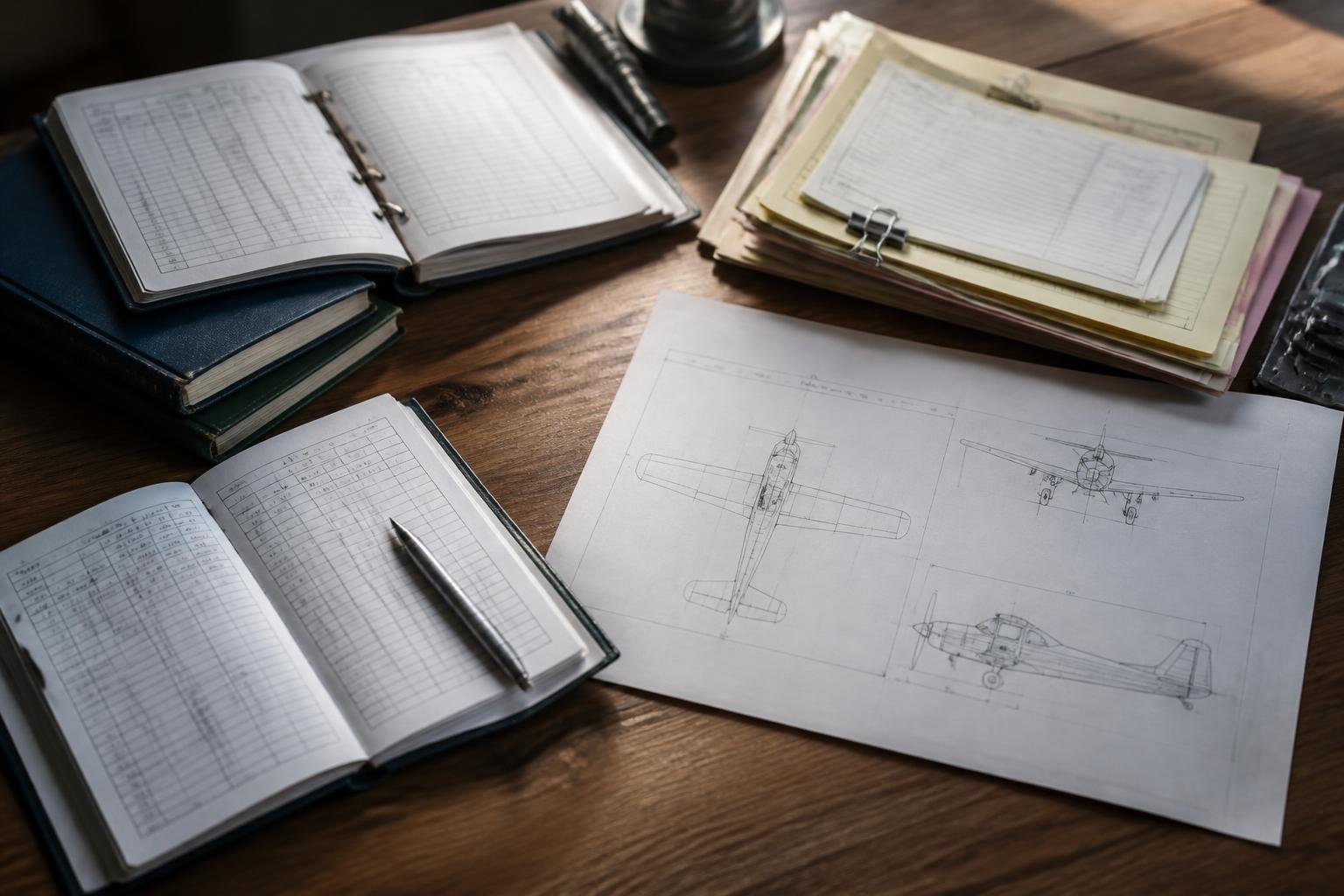
Ask to review airframe, engine, propeller, and avionics records early enough to make use of them. Establish whether originals are available, whether scans are complete and legible, and when originals will be transferred. Scans help an early review, but original records and their continuity can be important for provenance, maintenance verification, and future resale.
Missing logbooks do not automatically make an aircraft unacceptable, but they reduce certainty. Ask exactly which periods are absent, why they are absent, what replacement evidence exists, and how total times were reconstructed. A gap can affect the ability to demonstrate maintenance history, alteration status, damage history, and component times. It may also influence insurance, financing, export, and value; its effect varies with the aircraft and evidence available.
Request the current weight-and-balance report, equipment list, flight manual or approved operating handbook status, inspection records, repair invoices, and alteration approvals. Verify that the documents correspond to the aircraft’s current configuration. An old equipment list may not reflect a panel upgrade, interior change, or removed equipment that changes empty weight or operating limitations.
For cross-border transactions, ask about document language, issuing jurisdiction, and whether certified translations or additional authority records will be needed. Have a qualified mechanic review technical records and a suitable title professional review ownership documents. These are different tasks: technical continuity does not prove clean title, and clear title does not prove technical condition.
Understand How the Aircraft Has Been Flown and Stored
Ask how the aircraft has actually been used: typical trip length, annual utilization, recent flying frequency, and any extended inactivity. Regular use does not guarantee condition, but a long inactive period can create distinct concerns involving seals, fuel, batteries, corrosion, tires, and preservation. Ask what preservation measures were taken and how the aircraft was returned to service.
Request a candid description of the mission profile. Training, rental, commercial work, aerobatics, backcountry operations, banner towing, agricultural activity, glider towing, and other specialized roles can impose different patterns of wear and maintenance demand. Such use is not inherently disqualifying; it helps your inspector focus on the relevant structure, systems, and records.
Storage history matters. Ask whether the aircraft was hangared, on a ramp, or under covers, and in which climates. Coastal salt exposure, persistent humidity, severe cold, windblown dust, and outdoor tie-down use each create different preservation questions. Ask about fuel-management routines, tank care, water contamination events, and long-term storage procedures.
Ask the seller about known handling characteristics, operating limitations, and techniques that are important for the type or its modifications. Their answer can help assess fit with your experience and intended mission. A reasonable request for a supervised ground run or flight demonstration may be appropriate, subject to insurance, regulations, seller consent, weather, and pilot qualifications. Do not pressure a seller or pilot into an operation that is not properly authorized or safe.
Discuss Costs, Upcoming Work and Transaction Terms
Ask the seller to identify known maintenance projects and provide supporting estimates or invoices where available. Treat estimates as planning information, not fixed quotes. Labor rates, parts availability, exchange rates, shipping, shop findings, and regulatory requirements can materially change the final cost.
Discuss life-limited items, overhaul reserves, consumables, and the next likely major work. This can include engine and propeller reserves, landing-gear components, batteries, tires, brakes, hoses, avionics repairs, and refurbishment needs. Also budget for insurance, hangarage or tie-down, ferrying, training, inspection travel, taxes, import costs, and registration work where relevant.
Confirm what transfers with the aircraft: covers, tow bars, spare parts, tools, manuals, equipment, and loose accessories. Obtain an itemized list rather than relying on a hangar photograph or verbal recollection. Confirm any collection deadline, the aircraft’s required condition at handover, responsibility for storage after closing, and the point at which risk of loss passes.
Before bidding, read the auction terms for deposit, buyer fees, reserve treatment, payment timing, taxes, default consequences, and collection arrangements. A current bid, guide figure, or seller estimate is not market value. Your maximum bid should reflect the verified evidence, your own operating plan, all transaction costs, and a prudent contingency for findings that remain possible after purchase.
Arrange Independent Verification Before Placing a Bid

Arrange a type-appropriate pre-buy inspection by a mechanic or inspection team selected by you, not simply the seller’s regular maintainer. The scope should reflect the aircraft’s complexity, age, records, mission, and known concerns. It may include a logbook review, airframe examination, engine assessment, corrosion inspection, systems checks, borescope work, and a review of applicable maintenance status. Agree the scope, access, cost, and reporting format in advance.
Independently verify title, liens, registration, ownership, and sale authority. For a cross-border transaction, obtain jurisdiction-specific legal and regulatory advice on export, import, taxes, registration, and certification. Where appropriate, consider escrow and define acceptance criteria before funds are committed. Auction terms may limit these options, so establish what is possible before placing a bid.
Complete a document review before spending money on travel wherever practicable. Start with identity records, log continuity, major repair history, inspection status, engine and propeller documentation, modification approvals, and title information. This order helps prevent a costly inspection trip when a fundamental documentation issue has not been resolved.
Photographs, videos, video calls, and written seller answers are useful supporting evidence only. Escalate when there are missing logs, unexplained structural damage, conflicting times, unclear authority to sell, or claims that do not match the documents. A decision to pause or withdraw is often sound buyer discipline, not a failed transaction.
A Practical Seller Question Checklist for Auction Buyers
Submit core questions early, ideally before bidding activity becomes distracting. Ask for written answers and supporting records, then retain them with your bid analysis. The priority is safety-relevant condition, legal ownership, and high-cost technical exposure—not minor cosmetic preferences.
| Priority | Question to ask | Evidence to request |
|---|---|---|
| Identity and title | What are the serial number, legal owner, sale authority, and known liens? | Registration, title documents, authority to sign, lien-search process |
| Airframe | What is the documented total time and any damage or corrosion history? | Logbooks, repair records, invoices, photographs where available |
| Powerplant | What are engine and propeller times, overhaul details, and known issues? | Log entries, overhaul invoices, recent inspection evidence, data files if available |
| Maintenance | What was found at the latest inspection and what remains open? | Inspection sign-off, discrepancy list, work orders, AD status |
| Terms | What transfers with the aircraft and when do payment, collection, and risk transfer occur? | Auction terms, inventory list, written handover arrangements |
Use the same checklist for every shortlisted aircraft. It makes differences visible: one seller may provide complete records promptly, while another may offer only broad assurances. Neither response alone determines condition, but the evidence trail affects the time, cost, and risk required to reach an informed decision.
Refer specialist questions before setting a maximum bid. Examples include structural repairs, corrosion, turbine maintenance programs, complex avionics, experimental-aircraft operating limitations, historic aircraft provenance, import rules, and unusual title arrangements. Keep contingency funds beyond the bid amount; ownership begins with the aircraft as delivered, not with the optimistic version imagined during bidding.
Decide Whether the Aircraft Fits Your Mission and Bid Limit
After the seller interview and independent review, compare the verified condition with your actual mission: payload, range, runway environment, weather exposure, regulatory requirements, training needs, maintenance support, and annual budget. An aircraft can be well presented and still be a poor fit for its intended operating environment.
Separate cosmetic appeal from technical evidence. Fresh paint, a tidy cabin, and modern screens may improve enjoyment, but they do not answer questions about structure, records, engine condition, title, or maintenance exposure. Conversely, an older appearance does not establish poor technical condition. Give appropriate weight to documented evidence and qualified inspection findings.
Set a maximum bid only after including auction fees, taxes where applicable, transport or ferry costs, immediate maintenance, known upcoming work, insurance, storage, registration, and a contingency. If a material issue remains unresolved, lower the bid to reflect uncertainty or do not bid. Never rely on competitive pressure to make a risk acceptable.
The sensible next step is to review the auction documentation in full, organize your question log, and obtain independent technical and legal advice appropriate to the transaction. A controlled bid is not merely a number; it is a decision that accounts for what is known, what has been verified, and what you are genuinely prepared to manage after handover.

Comments
No comments yet
Be the first to share your thoughts!