
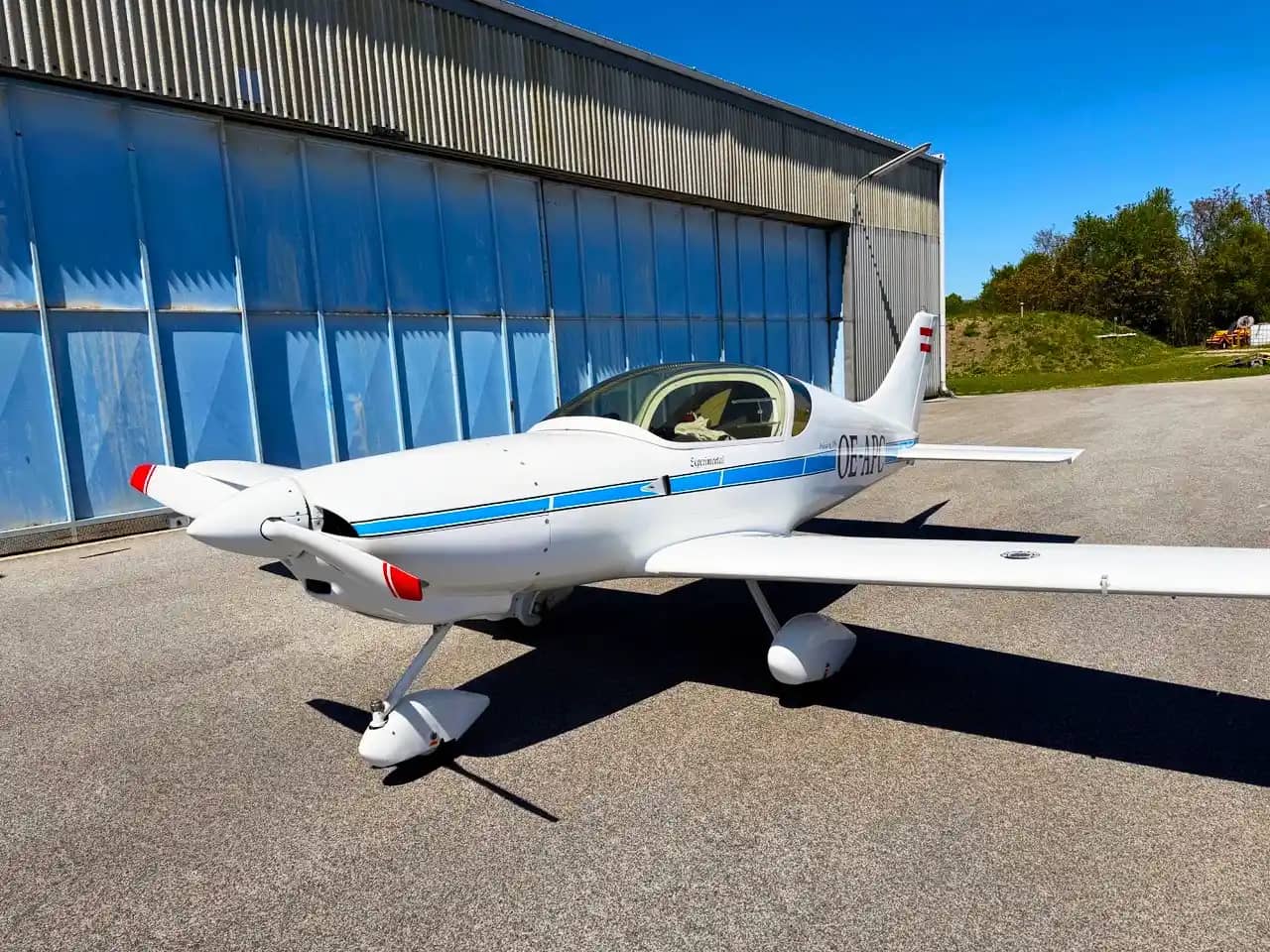
 Bad Vöslau
 Kirn
Kirn
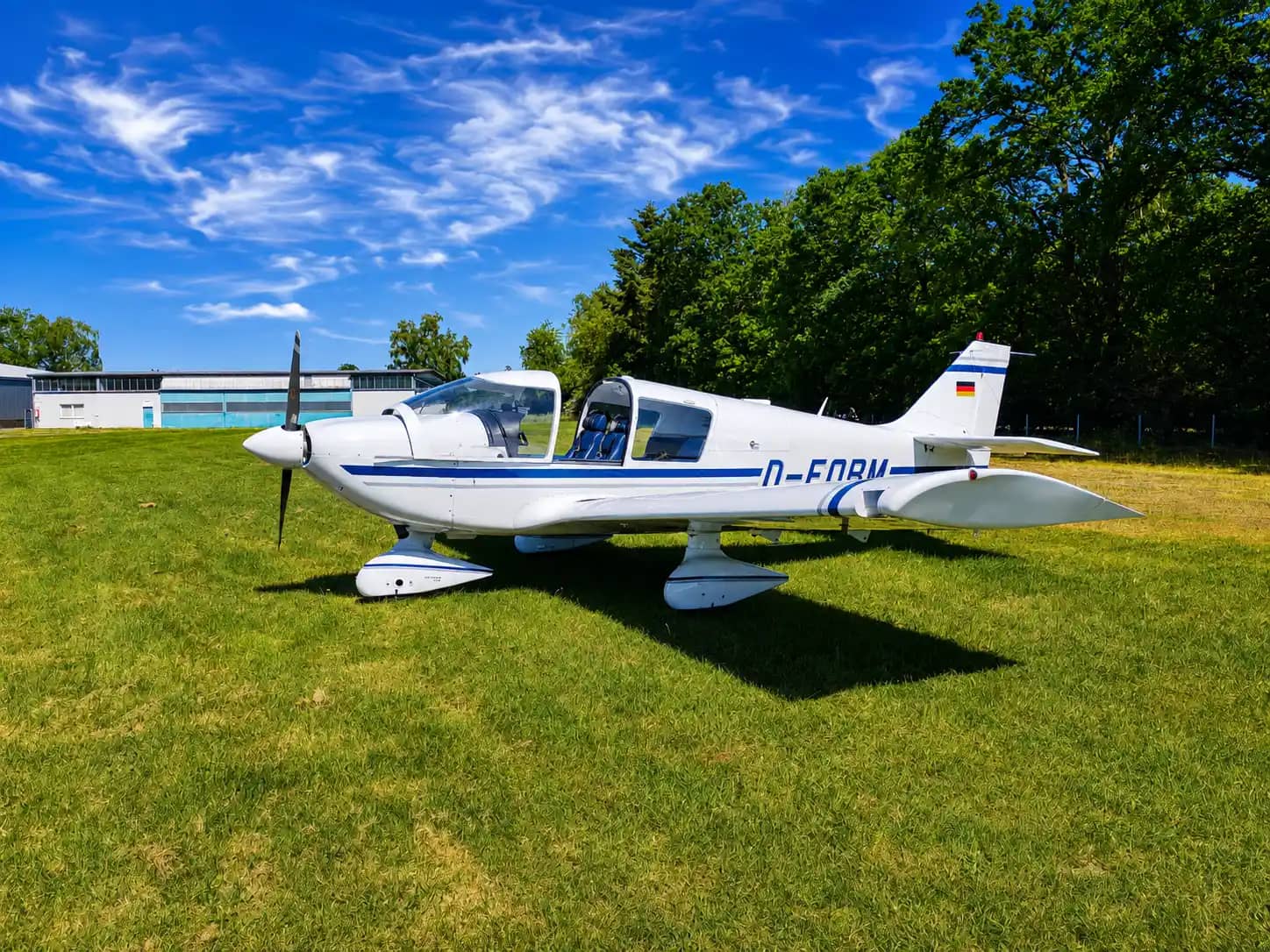

 Florida

The Flight Design CTLSi and Tecnam P2008 are modern two-seat, high-wing aircraft aimed at buyers who want efficient recreational flying, training capability and practical cross-country performance. On the surface they compete for a similar mission, but their construction, loading, fuel capacity and ownership characteristics are meaningfully different.
The CTLSi follows an extensively composite, aerodynamically focused design with a carbon/aramid fuselage, strutless wing and large baggage allowance. The Tecnam P2008 uses a mixed-material structure: a carbon-fibre composite fuselage combined with metal wings, landing gear and stabilator. That distinction matters not only for appearance, but also for inspection and repair planning.
This comparison uses the Flight Design CTLSi 600 kg manufacturer configuration and the current Tecnam P2008 LSA manufacturer reference specifications. Individual used aircraft can differ substantially in engine, propeller, empty weight, avionics and certification, so model-level figures should be used to build a shortlist rather than replace aircraft-specific records.
Flight Design CTLSi vs Tecnam P2008: Quick Comparison
| Specification | Flight Design CTLSi 600 | Tecnam P2008 LSA |
|---|---|---|
| Seats | 2 | 2 |
| Wing layout | High wing, cantilever / strutless | High wing |
| Fuselage construction | Carbon/aramid composite | Carbon-fibre composite |
| Wing construction | Composite design | Metal |
| Published MTOW | 600 kg | 600 kg |
| Published empty weight | 326 kg typical | 388 kg standard |
| Published/model-level useful load | 274 kg theoretical difference from typical empty weight* | 212 kg published useful load |
| Baggage allowance | Up to 50 kg / 110 lb | 20 kg / 44 lb |
| Fuel capacity | 130 L | 123 L |
| Manufacturer speed reference | 240 km/h maximum horizontal speed | 237 km/h / 128 kt maximum cruise |
| Published take-off run | 250 m at 600 kg | 183 m |
| Reference engine | Rotax 912 iS, 100 hp | Published specification table lists Rotax 912 ULS, 100 hp; Tecnam also offers 912 iS Sport and other options |
*Flight Design describes 326 kg as a typical equipped empty weight. The 274 kg figure is therefore a simple model-level calculation, not a guaranteed useful load for an individual CTLSi. Always use the current weighing report for the aircraft being evaluated.
Quick takeaway: the CTLSi has the stronger model-level weight and baggage figures, while the P2008 combines almost the same standard fuel capacity with a mixed composite/metal structure and a shorter published take-off run. Published speed figures are very close, although they are not stated under identical test conditions.
Which Aircraft Fits Which Mission?
| Buyer priority | Aircraft to examine first | Why |
|---|---|---|
| Two-person touring with baggage | CTLSi | Lower typical model weight and substantially higher published baggage allowance. |
| Conventional high-wing touring feel | P2008 | Mixed-material Tecnam design with conventional doors and a more traditional cabin presentation. |
| Composite-focused lightweight design | CTLSi | Extensive carbon/aramid construction and strutless wing. |
| Mixed composite/metal construction | P2008 | Composite fuselage with metal wings and stabilator. |
| Maximum baggage flexibility | CTLSi on published figures | Flight Design publishes up to 50 kg versus 20 kg for the current P2008 reference. |
| Shorter published take-off run | P2008 | Tecnam publishes 183 m versus Flight Design's 250 m at 600 kg. |
| Modern 912 iS installation | CTLSi has a clear factory configuration | P2008 can also be equipped with 912 iS Sport, but verify the exact aircraft. |
Neither aircraft wins every mission. The CTLSi's model-level advantage is strongest when useful load and baggage matter. The P2008 becomes particularly interesting to buyers who prefer Tecnam's mixed construction, cabin concept and support ecosystem.
Construction: Composite CTLSi vs Mixed-Material P2008

This is one of the clearest structural differences between the two aircraft.
Flight Design CTLSi
Flight Design describes the CTLS with a carbon/aramid fuselage and an aerodynamically clean cantilever wing. Composite construction allows smooth external surfaces, relatively low weight and a large internal cabin within a compact airframe.
For a used-aircraft buyer, composite inspection should focus on:
- Impact and damage history.
- Previous structural repairs.
- Bonded areas and attachment points.
- Surface cracking or deformation requiring further investigation.
- Quality and traceability of repair documentation.
- Landing-gear and high-load attachment areas.
For a deeper inspection framework, see the CollectAirs Composite Aircraft Pre-Buy Inspection Guide.
Tecnam P2008
The P2008 is not a metal-fuselage aircraft. Tecnam states that it was the company's first aircraft to combine mixed construction, using a composite fuselage with metal wings, landing gear and stabilator.
That creates two different inspection disciplines within the same airframe.
On the composite fuselage, review:
- Impact history.
- Composite repairs.
- Surface abnormalities.
- Damage around doors, windows and attachment areas.
- Repair documentation and approved methods.
On the metal wings and stabilator, review:
- Corrosion.
- Fasteners and joints.
- Skin damage and previous repairs.
- Drainage and moisture exposure.
- Paint or finish defects that may hide corrosion.
Interfaces between different structural materials should be inspected in accordance with Tecnam maintenance data rather than through generic assumptions about composite or aluminium aircraft.
Construction takeaway: CTLSi ownership requires strong composite expertise throughout much of the airframe. P2008 inspection requires competence in both composite fuselage condition and conventional metal wing/tail inspection.
Weight, Payload and Baggage: Where the Difference Becomes Practical
Both reference configurations have a published MTOW of 600 kg, but their standard or typical empty weights differ considerably.
Flight Design publishes a typical CTLS empty weight of 326 kg. Tecnam currently lists a standard P2008 LSA empty weight of 388 kg.
At model level, that produces very different nominal loading potential:
| Weight comparison | CTLSi 600 | P2008 LSA |
|---|---|---|
| MTOW | 600 kg | 600 kg |
| Published empty weight reference | 326 kg typical | 388 kg standard |
| Difference to MTOW | 274 kg* | 212 kg |
| Published baggage allowance | 50 kg | 20 kg |
*The CTLSi figure is calculated from Flight Design's typical empty weight. It should not be treated as the useful load of every CTLSi.
The distinction becomes obvious when looking at an actual aircraft. The 2020 Flight Design CTLSi 600 Grand Touring currently on CollectAirs has a documented empty weight of 368.9 kg and a useful load of 231 kg. That is materially different from the manufacturer's typical model figure.
This is exactly why buyers should never purchase based on brochure payload.
For both aircraft:
- Request the current signed weighing report.
- Verify the equipment list matches the aircraft.
- Add the actual weight of both occupants.
- Add realistic baggage.
- Add the fuel required for the trip and reserve.
- Confirm the result remains within both MTOW and CG limits.
Loading takeaway: the CTLSi has the stronger published model-level loading and baggage figures, but an equipment-heavy individual CTLSi can narrow that advantage substantially.
Fuel Capacity and Touring Practicality
Fuel capacity is much closer than the empty-weight figures.
Flight Design publishes 130 litres for the CTLS. Tecnam publishes 123 litres for the current P2008 LSA reference specification.
That means both aircraft can carry a substantial quantity of fuel for a two-seat light aircraft, but the practical question is whether full fuel can be combined with the people and baggage required for the mission.
With the CTLSi, the relatively low typical model weight gives it a theoretical advantage in combining fuel with occupants and baggage. The actual benefit depends on equipment and current empty weight.
The P2008's standard published useful load of 212 kg means a touring couple should calculate fuel and baggage carefully rather than assuming full tanks remain practical.
A realistic comparison uses three scenarios:
| Scenario | What to calculate |
|---|---|
| Local flight | Two occupants + modest fuel + no significant baggage |
| Day trip | Two occupants + trip fuel + reserve + light personal bags |
| Weekend touring | Two occupants + baggage + weather equipment + trip fuel + reserve |
Fuel takeaway: tank capacity alone does not separate the aircraft strongly; practical payload while carrying that fuel is more important.
Performance: CTLSi vs P2008

The manufacturer speed references are remarkably close.
Flight Design publishes a 240 km/h maximum horizontal speed for the CTLS at 600 kg. Tecnam lists a 128 kt / 237 km/h maximum cruise speed for the current P2008.
Those figures should not be interpreted as a controlled head-to-head comparison because the manufacturers use different terminology and may use different test conditions. The practical conclusion is simply that both designs occupy a similar high-speed end of the two-seat light-aircraft touring market.
The runway numbers show a larger model-level difference:
| Manufacturer performance reference | CTLSi 600 | P2008 LSA |
|---|---|---|
| Speed reference | 240 km/h max horizontal speed | 237 km/h max cruise |
| Take-off run | 250 m at 600 kg | 183 m |
| Take-off distance over obstacle | 450 m over 15 m obstacle | 363 m published take-off distance |
Again, test conditions are not guaranteed to be identical. A buyer should use the AFM or POH applicable to the individual aircraft for runway planning.
Performance takeaway: published speed is broadly similar, while Tecnam publishes the shorter take-off figures. Neither brochure number should replace aircraft-specific runway calculations.
Cabin Access and Ergonomics
The experience of getting into and operating the aircraft is different enough that specifications alone cannot settle the comparison.
The CTLSi uses distinctive upward-opening doors and a large cabin concept with external access to baggage compartments. Flight Design publishes a baggage allowance of up to 50 kg across the dual storage areas.
The P2008 uses conventional side doors. Tecnam publishes a main-door width of 940 mm and height of 900 mm, alongside a two-seat cabin designed around touring and training use.
Before choosing either aircraft, sit in the actual example with the person most likely to fly with you and check:
- Shoulder and elbow room.
- Head clearance.
- Pedal reach.
- Seat comfort.
- Ease of entry and exit.
- Forward and lateral visibility.
- Baggage access.
- Ventilation.
- Door operation in wind.
A cabin that feels good during a ten-minute viewing may feel very different after a two- or three-hour flight.
Rotax Engines and Maintenance

The CTLSi is specifically associated with the fuel-injected 100 hp Rotax 912 iS. Flight Design currently publishes a 2,000-hour TBO for that installation.
Tecnam's current P2008 page lists several available powerplant choices, including the Rotax 912 ULS, Rotax 912 iS Sport and Rotax 914 Turbo. However, the detailed specification table on the same page uses the 100 hp Rotax 912 ULS as its reference engine.
That distinction matters. Do not assume that every used P2008 has the same engine, fuel system or performance configuration.
When comparing two real aircraft, check:
- Exact engine model and serial number.
- Engine hours and calendar age.
- TBO applicability.
- Scheduled and calendar-driven maintenance.
- Fuel-system configuration.
- Cooling-system condition.
- Gearbox history.
- Propeller model and maintenance history.
- Electrical and diagnostic history on 912 iS installations.
For more detail on fuel-injected Rotax ownership, see the Rotax 912 iS Maintenance Buyer's Guide.
Engine takeaway: CTLSi buyers generally know they are evaluating a 912 iS installation. P2008 buyers need to identify the exact engine before using model-level maintenance or performance assumptions.
Avionics and Equipment
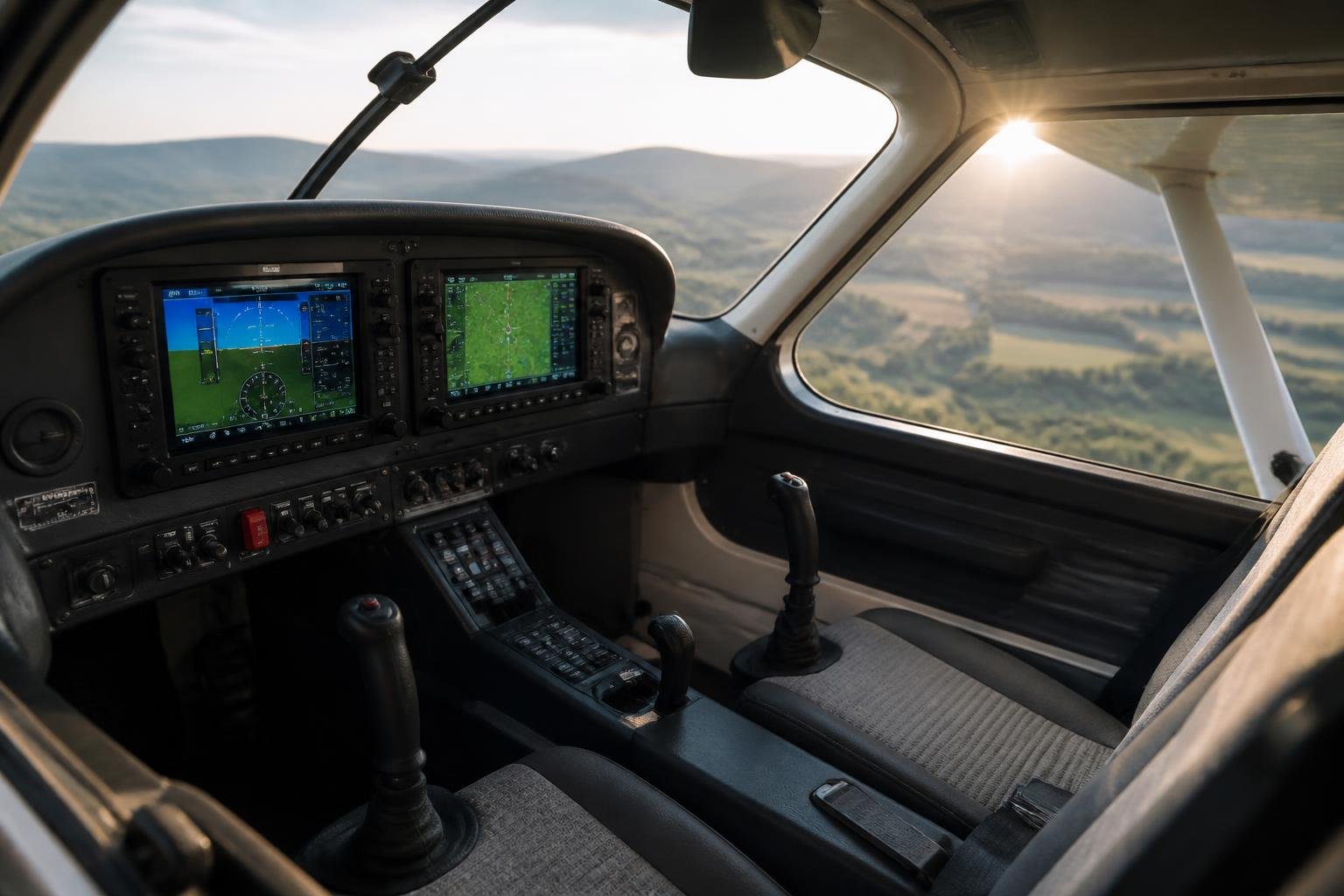
Both aircraft can be found with sophisticated glass cockpits.
Flight Design has offered Garmin G3X and Dynon SkyView HDX configurations on the CTLS family. Tecnam currently lists options including Garmin G3X Touch equipment on the P2008.
A modern display can improve utility, but avionics should be evaluated as a system rather than by screen size.
Verify:
- Exact equipment installed.
- Installation approval.
- Software and database support.
- Autopilot functionality.
- Radio and transponder compliance.
- Electrical-system condition.
- Backup instrumentation.
- Replacement-component availability.
Every equipment upgrade also affects empty weight. A highly equipped aircraft may offer better capability while carrying less useful load.
Certification and Variant Differences
Do not treat CTLSi and P2008 as single regulatory categories.
Flight Design states that the CTLS platform can be operated in configurations including EASA CS-LSA Restricted Type Certified, 600 kg Ultralight and SLSA, depending on the aircraft and jurisdiction.
Tecnam similarly states that P2008 versions can be available in US/LSA and ULM categories where the relevant country recognises those classes and local requirements are satisfied.
The important buyer documents are therefore:
- Registration certificate.
- Airworthiness or national approval documents.
- Applicable AFM or POH.
- Operating limitations.
- Weight-and-balance report.
- Equipment list.
- Modification records.
For an international purchase, use the CollectAirs Cross-Border Aircraft Buyer Checklist before assuming that the aircraft can simply be re-registered in another country.
Pre-Buy Inspection: CTLSi vs P2008

| Inspection area | CTLSi | P2008 |
|---|---|---|
| Fuselage | Composite damage, bonding and previous repairs | Composite damage, bonding and previous repairs |
| Wing | Composite structure and attachment areas | Metal structure, corrosion, skins, fasteners and repairs |
| Tail | Composite/airframe-specific inspection per Flight Design data | Metal stabilator condition, corrosion and repair history |
| Landing gear | Composite main gear, attachments, wheel/brake condition | Metal landing gear, attachments, alignment and corrosion condition |
| Engine | 912 iS maintenance, fuel injection, diagnostics and electrical system | Confirm actual Rotax variant first, then apply the correct maintenance review |
| Weight | Compare current weight with low manufacturer typical figure | Verify actual empty weight against 212 kg standard useful-load reference |
| Documentation | Composite repairs, service information, engine and equipment status | Composite fuselage + metal wing/tail repair records, engine variant and service status |
Use an independent inspector familiar with the aircraft type and construction method. A recent annual inspection does not automatically answer buyer-specific questions about damage history, expensive upcoming maintenance, records gaps or mission suitability.
See the CollectAirs Aircraft Pre-Buy Inspection Checklist for the broader transaction process.
Three Real-World Mission Scenarios
1. Two-Person Weekend Touring
The CTLSi deserves the first look when the regular mission involves two adults and meaningful baggage. Flight Design's model-level empty weight and 50 kg baggage allowance create more theoretical loading flexibility than the current P2008 reference figures.
The qualification is important: an actual CTLSi may weigh considerably more than the manufacturer's typical figure.
Likely advantage: CTLSi, after confirming actual useful load.
2. Training and Frequent Local Flying
Both manufacturers position these designs for training use. In this mission, maximum baggage capacity matters less than dispatch reliability, instructor familiarity, insurance, landing-cycle durability and nearby technical support.
Tecnam specifically promotes the P2008 for flight-school use, while Flight Design also positions CTLS versions for professional schools and clubs.
Likely result: local maintenance and fleet-support conditions matter more than brochure performance.
3. Touring From Shorter Runways
The current manufacturer reference numbers give the P2008 the shorter take-off run: 183 m versus 250 m for the CTLS at 600 kg.
Those numbers are not directly interchangeable operational guarantees. Actual runway performance depends on weight, temperature, altitude, wind, surface and pilot technique.
Aircraft to investigate first: P2008 when published runway performance is a central requirement.
CTLSi vs P2008 Decision Matrix
| If this matters most... | CTLSi | P2008 |
|---|---|---|
| Low model-level empty weight | Advantage | Higher standard empty weight |
| Baggage allowance | 50 kg published | 20 kg published |
| Fuel capacity | 130 L | 123 L |
| Published speed | 240 km/h max horizontal | 237 km/h max cruise |
| Published take-off run | 250 m at 600 kg | 183 m |
| Fully composite-focused structure | Stronger fit | Mixed construction |
| Composite fuselage + metal wings | No | Yes |
| Known 912 iS factory identity | CTLSi specifically denotes 912 iS configuration | Engine options vary; verify aircraft |
| Two-person touring with baggage | Stronger model-level case | Requires careful payload planning |
| Shorter manufacturer take-off figure | No | Advantage |
Which One Should You Shortlist?
Shortlist the Flight Design CTLSi first if your mission prioritises two-person touring, baggage flexibility, low model-level empty weight and a modern fuel-injected Rotax installation.
Shortlist the Tecnam P2008 first if you prefer its mixed composite-and-metal construction, conventional cabin concept, Tecnam support ecosystem or shorter published take-off figures.
The performance gap is smaller than the structural and loading differences suggest. Their published speed figures are close, and fuel capacity is also similar. The more decisive questions are likely to be:
- What does the individual aircraft actually weigh?
- Can it carry your normal passenger, baggage and fuel?
- Which engine and propeller are installed?
- Which certification category applies?
- Is local Flight Design or Tecnam support better?
- What does the pre-buy reveal?
Compare Real Aircraft, Not Only Model Specifications
CollectAirs currently has a 2020 Flight Design CTLSi 600 Grand Touring available as a real-world CTLSi reference. Its documented empty weight of 368.9 kg demonstrates why actual aircraft records can differ materially from factory model-level figures.
A Tecnam P2008 is also currently listed as Coming Soon on CollectAirs. Until its final public aircraft page and documentation are available, use the CollectAirs aircraft inventory to locate it and compare the actual engine, weight, equipment and records with the manufacturer-level guidance above.
Once both aircraft-specific datasets are available, compare them using the same checklist rather than assuming either example matches the standard factory specification.
Final Takeaway
The Flight Design CTLSi and Tecnam P2008 are both credible modern two-seat touring aircraft, but they solve the mission differently.
The CTLSi emphasizes low model-level weight, extensive composite construction, baggage capacity and touring flexibility.
The P2008 combines a composite fuselage with metal wings and stabilator, nearly comparable fuel capacity, conventional Tecnam ergonomics and shorter published take-off figures.
The most important correction to any comparison is structural: the P2008 is not a metal-fuselage aircraft with composite wings. It is the opposite—composite fuselage, metal wings—and the pre-buy inspection should reflect that.
Ready to compare actual aircraft? Review the Flight Design CTLSi 600 Grand Touring and find the Tecnam P2008 currently coming to CollectAirs, then compare their real empty weight, useful load, engine configuration, equipment and maintenance records before arranging an independent pre-buy inspection.
Sources & Further Reading
- Flight Design — CTLS Official Specifications
- Tecnam — P2008 Official Specifications
- CollectAirs — Flight Design CTLSi 600 Buyer's Guide
- CollectAirs — Rotax 912 iS Maintenance Buyer's Guide
- CollectAirs — Composite Aircraft Pre-Buy Inspection Guide
- CollectAirs — Aircraft Pre-Buy Inspection Checklist
- CollectAirs — 2020 Flight Design CTLSi 600 Grand Touring
- CollectAirs — Current Aircraft Inventory
Technical note: manufacturer specifications are model-level reference figures and may use different operating conditions. Used aircraft can differ by year, engine, propeller, equipment, certification and modification history. Always use the approved documents, current weighing report and maintenance records for the individual aircraft being evaluated.

Comments
No comments yet
Be the first to share your thoughts!