
 Florida
 Hildesheim
If you are looking for an Ikarus C42 for sale, the right aircraft can be an economical choice for training, recreational flying and light touring. But value depends on the exact variant, approved configuration, useful load, engine and propeller status, documentation and maintenance history—not advertised hours alone. A serious purchase should therefore combine document review with an independent, type-informed pre-buy inspection.
Is a Used Ikarus C42 Right for Your Mission?
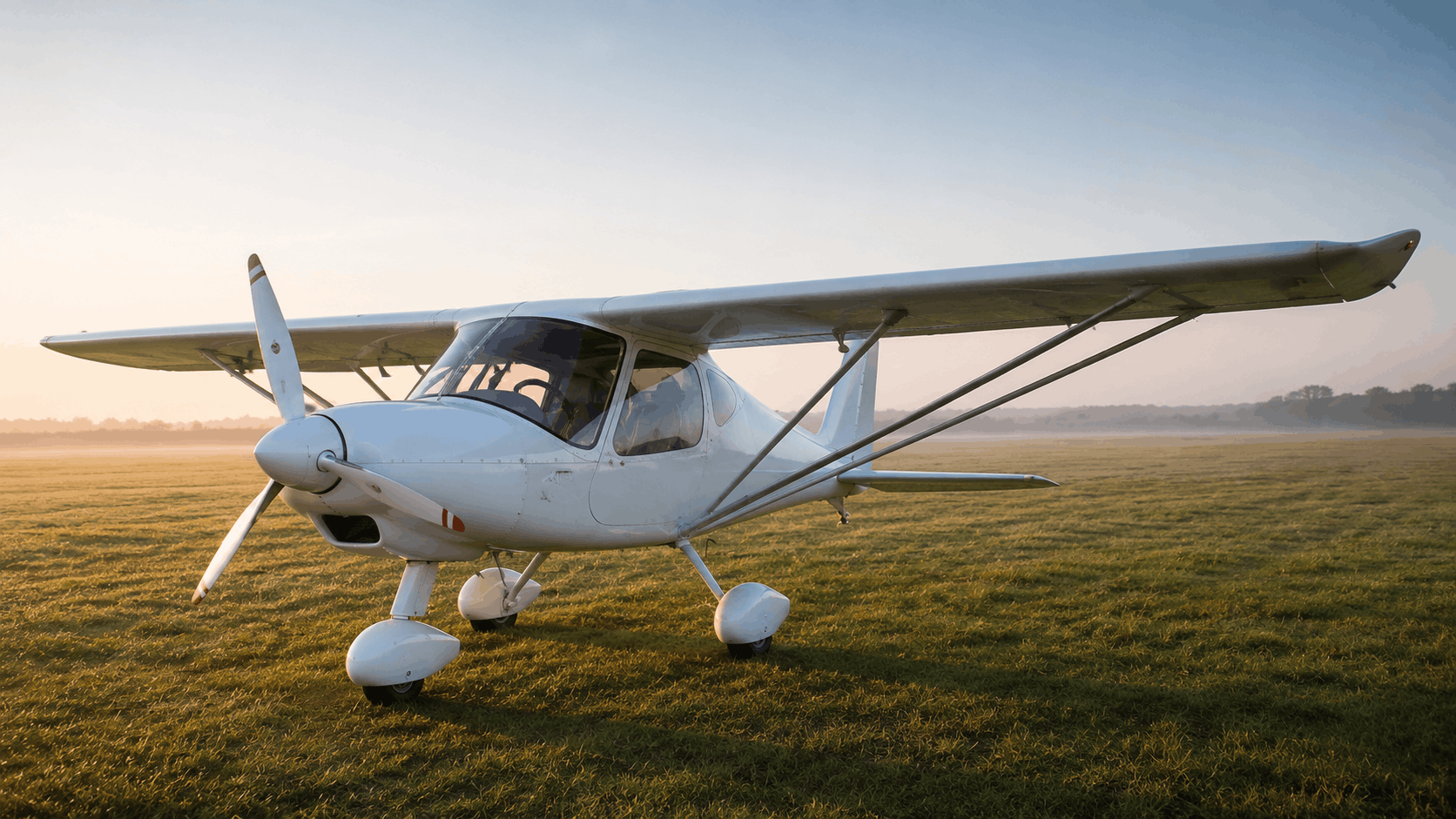
The COMCO IKARUS C42 is a two-seat, high-wing light aircraft widely used in European microlight and ultralight flying. Its side-by-side cabin, outward visibility and low-speed characteristics have made the family popular with flying schools, clubs and private owners.
For the right pilot, a C42 can cover primary training, local recreation and moderate touring. Mission planning should start with the aircraft’s documented useful load: subtract the actual empty weight from the approved maximum take-off mass, then account for occupants, baggage, equipment and usable fuel.
The C42 is less suited to missions that regularly require substantial payload, high cruise speed, all-weather dispatch capability or the ride quality of a heavier touring aircraft. Buyers should therefore judge the aircraft against their real routes, passengers, airfields and weather conditions rather than headline performance figures.
Ikarus C42 Variants and Why the Exact Model Matters
The C42 family includes several generations, including the C42 B, C42 C and C42 CS. A model name alone does not establish an individual aircraft’s legal operating weight, engine installation, equipment or limitations. Production year, national approval, modifications and aircraft-specific documentation all matter.
Current manufacturer data for the C42 C and C42 CS lists Rotax 912 UL, 912 ULS and 912 iS engine options and a maximum take-off weight of 560 kg for those configurations. Earlier aircraft can operate under different approvals, so those figures must never be assumed to apply automatically to an older C42.
Before comparing prices, identify the exact model, installed engine and propeller, approved weight, fuel configuration and equipment standard. Check that the data plate, registration documents, flight manual, weight-and-balance report, equipment list and logbooks describe the same aircraft configuration.
Ikarus C42 Specs Buyers Should Compare
Ikarus C42 specs vary by variant and approval basis. The figures below are manufacturer reference data for later C42 C and C42 CS configurations, not operating data for every aircraft in the C42 family. The approved flight manual and current weight-and-balance report for the individual aircraft always take precedence.
| Item | C42 C | C42 CS |
|---|---|---|
| Seats | 2, side by side | 2, side by side |
| Engine options listed by manufacturer | Rotax 912 UL / ULS / iS | Rotax 912 UL / ULS / iS |
| Maximum take-off weight | 560 kg | 560 kg |
| Fuel tank volume | 65 L | 65 L |
| Published cruise speed depending on engine | Approx. 172–182 km/h | Approx. 184–194 km/h |
| Published stall speed | 71 km/h | 71 km/h |
| Wingspan | 8.71 m | 8.71 m |
These values are useful for understanding the later variants, but they should not be transferred to an earlier C42 without checking its approved documentation. Even aircraft that look nearly identical can differ materially in empty weight, payload, propeller, fuel capacity and operating limitations.
Take-off distance, climb, cruise, range and landing performance are also affected by weight, temperature, altitude, wind, runway surface, engine condition and propeller configuration. Use generic numbers only for initial comparison; use the applicable flight manual for operational decisions.
Real-World Performance and Operating Practicality

Real-world performance should be evaluated using the individual aircraft. Propeller pitch, engine condition, loading, airframe rigging and atmospheric conditions can all affect cruise speed and fuel consumption.
Range should always be considered together with useful load. Establish usable fuel from the approved documentation, calculate the payload remaining with occupants and baggage, and retain the required fuel reserves. A large fuel tank adds little practical touring capability if the aircraft cannot legally carry the desired occupants, baggage and fuel together.
Short-field capability also needs context. Grass condition, slope, obstacles, temperature and density altitude can materially change take-off and landing requirements. Likewise, a lightweight aircraft can be more affected by gusts, turbulence and strong crosswinds than a heavier touring type.
Ikarus C42 Price: What Determines Market Value?
There is no single reliable Ikarus C42 price that applies across every variant and country. Asking prices, opening auction prices and current bids are not the same as market value or a completed sale price.
Important value drivers include the exact variant, approved maximum weight, actual empty weight, engine and propeller status, airframe history, maintenance continuity, equipment and documentation. Low hours alone are not necessarily an advantage: calendar age, periods of inactivity, storage conditions and time-limited components can be equally important.
Avionics add value when they are serviceable, supported, legally installed and useful for the intended mission. Buyers should also account for near-term engine, propeller, rescue-system, hose, rubber-component and inspection requirements rather than comparing purchase prices in isolation.
Cosmetic presentation should remain secondary to technical condition and records. Fresh paint, upholstery or covering cannot compensate for unresolved structural findings, incomplete maintenance documentation or undocumented modifications.
Finding an Ikarus C42 for Sale in Europe
Buyers searching for an Ikarus C42 for sale may find private advertisements, dealer stock and aircraft auctions. German-language searches such as “Ikarus C42 kaufen” can widen the selection, but cross-border purchases introduce additional questions around approval status, VAT, registration, insurance and transfer documentation.
A useful real-world example is the Ikarus Comco C42 currently listed on CollectAirs. The aircraft is a 2000 example whose listing describes a substantial 2023 rebuild, a 540 kg approved MTOW, a 100 hp Rotax installation and a 100-litre long-range tank. These are lot-specific details and should not be treated as specifications for the C42 family as a whole.
That distinction is important when comparing aircraft. A modified or uprated C42 should be evaluated against its own approval documents, weight-and-balance data and maintenance records—not against generic model specifications.
Before travelling to inspect an aircraft, request the registration and operating documents, recent logbook pages, weight-and-balance data, engine and propeller information, maintenance status and documentation for significant modifications. A remote video walk-around can help screen an aircraft, but it does not replace a physical inspection.
Pre-Buy Inspection Priorities
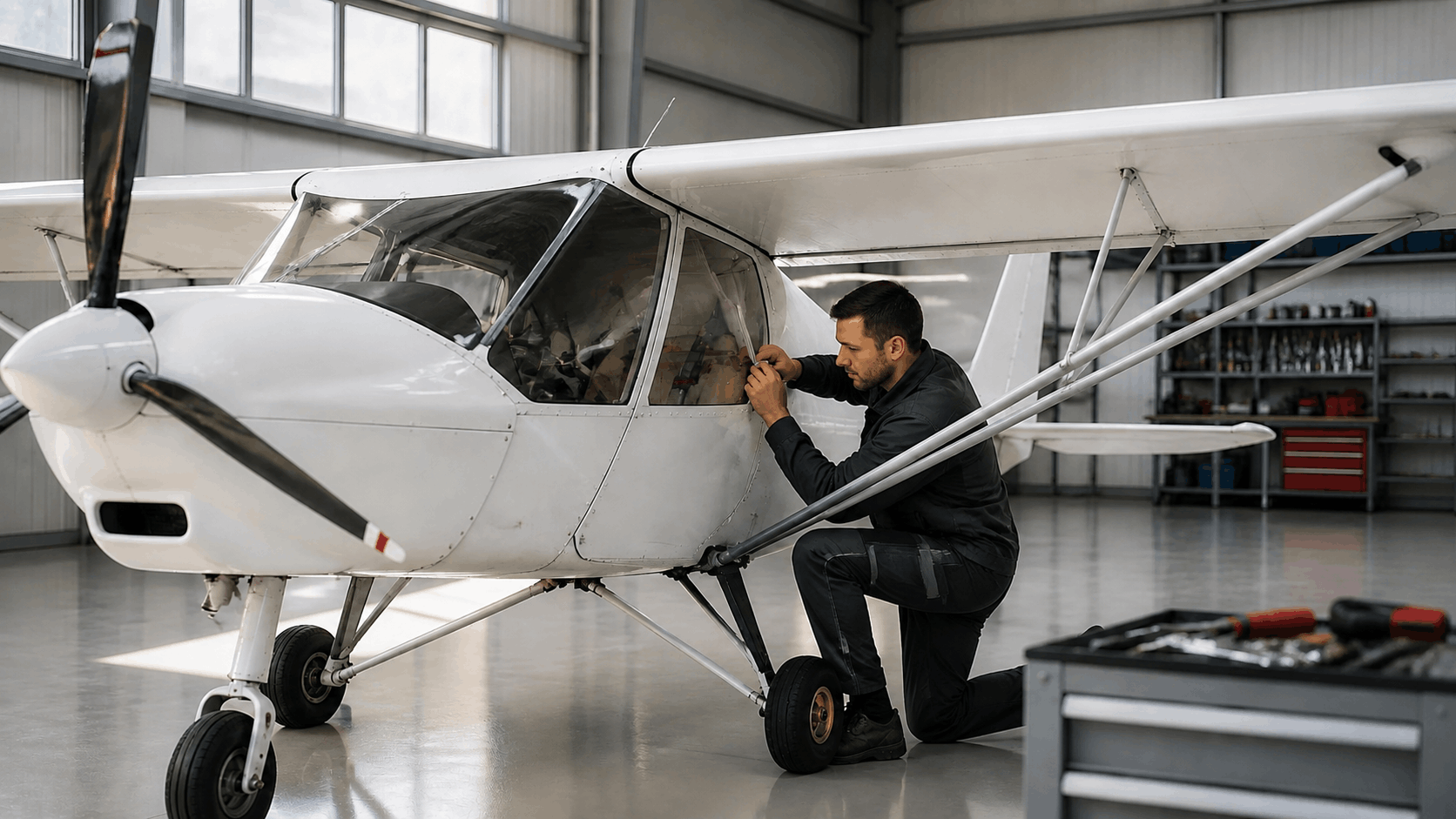
Commission an independent inspection from someone familiar with the C42’s construction, systems and applicable operating regime. A recent annual inspection or permit renewal is useful evidence, but it was not necessarily performed from a buyer’s perspective.
On the airframe, inspect the covering or skin, composite components, wing roots, struts, attachment points, landing gear and accessible structure. Look for cracking, distortion, delamination, chafing, poor repairs or evidence of a hard landing, ground loop or runway excursion. Any visible repair should be reconciled with the aircraft records.
For the engine, verify the exact model, serial number, operating hours and calendar status. Rotax 912-series engines are common in the C42 family, but maintenance requirements depend on the actual installation and applicable technical documentation. Review scheduled maintenance, service information and age-sensitive components rather than relying only on total hours.
Where appropriate, observe a cold start and supervised ground run. Check starting behaviour, oil-pressure response, temperatures, charging, vibration, leaks and unusual noises. The propeller should also be inspected for damage, erosion, cracking, tracking and correct documentation.
In the cockpit, confirm that radios, transponders, engine instruments, flight instruments and electrical equipment function correctly and are appropriate for the intended airspace. Unsupported wiring, unexplained switches or undocumented installations deserve further investigation.
Documents Every Buyer Should Review
Document review should begin before the physical inspection. Confirm the registered owner’s authority to sell and establish that aircraft, engine and propeller identities match the records.
- Aircraft, engine and propeller logbooks.
- Inspection and maintenance records.
- Applicable mandatory instructions and relevant manufacturer service information.
- Current weight-and-balance report and equipment list.
- Documentation for repairs and modifications.
- Applicable operating or airworthiness documents and limitations.
- Approved flight manual and relevant supplements.
Compare dates, hours and serial numbers across the records. Missing periods, unexplained changes in utilisation or inconsistencies between the aircraft and paperwork should be resolved before purchase.
A pre-buy inspection, appraisal and annual or airworthiness inspection serve different purposes. An appraisal addresses value; a pre-buy helps a prospective purchaser understand technical and documentary risk; neither automatically establishes continuing airworthiness.
Ownership Costs Beyond the Purchase Price
The purchase price is only one part of C42 ownership. Build a budget around realistic annual utilisation and local costs rather than relying on a universal hourly figure.
Fixed costs can include insurance, hangarage or tie-down, registration and recurring administrative or inspection costs. Variable costs include fuel, oil and hour-driven maintenance. Add reserves for the engine, propeller and other time-limited equipment plus a contingency for unscheduled repairs.
BRP-Rotax publishes official technical information for the 912 engine family, including the 912 UL, 912 ULS and 912 iS. Maintenance requirements, overhaul limits and service instructions depend on the exact engine version, installation and applicable documentation, so buyers should verify the engine fitted to the individual aircraft rather than applying one generic interval to every C42.
Insurance should also be checked before purchase. Aircraft value, location, intended use, pilot experience and training can affect both price and eligibility. An insurer may require differences training or a checkout before covering a new owner.
Certification, Training and Cross-Border Buying
Terms such as microlight, ultralight and light-sport do not have identical legal meanings across jurisdictions. The aircraft’s approval basis determines its operating and maintenance framework, while the pilot’s licence, medical status and privileges determine who may fly it.

For a cross-border purchase, confirm registration transfer, deregistration, import acceptance, VAT or customs treatment, insurance and any required equipment changes before paying a non-refundable deposit. A higher approved weight or modification accepted in one country should not automatically be assumed transferable to another.
Where the legal or technical status is unclear, obtain guidance from the relevant aviation authority, maintenance organisation or knowledgeable type specialist rather than relying solely on the seller’s interpretation.
Test Flight and Pre-Purchase Decision Checklist
Complete the first document review before arranging a test flight. A test flight should take place only when legally permitted, appropriately insured and conducted by a suitably qualified pilot.
Use it to assess normal operation rather than expand the aircraft’s envelope. Observe engine indications, radio and intercom operation, trim, cockpit ergonomics, take-off behaviour, climb, cruise and landing. Persistent trim offsets, abnormal vibration or inconsistent indications should be investigated rather than casually explained.
After the inspection, convert findings into a written defect list with realistic estimates for parts, labour, approvals and downtime.
- Make the purchase conditional on satisfactory documentation and inspection.
- Define how deposits are handled if significant defects emerge.
- Agree which findings will be corrected or reflected in the price.
- Confirm included equipment and delivery documentation.
- Walk away from unresolved structural, ownership or documentation concerns.
Alternatives to Consider Before Buying
Other European microlight and light-aircraft options include models from manufacturers such as Remos, Tecnam, Evektor and Aeropilot. The most useful alternatives are not necessarily the aircraft with the closest headline performance, but those that can legally serve the intended mission and be maintained locally.
Compare useful load, cabin access, baggage capacity, runway requirements, handling, parts availability, local engineering knowledge, insurance acceptance and resale support. A small performance advantage can be less valuable than strong maintenance and parts support close to home.
Who Should Buy an Ikarus C42?
The Ikarus C42 is a strong candidate for pilots seeking a two-seat aircraft for training, recreation and economical touring. Its high-wing layout, cabin access, visibility and low-speed characteristics are attractive to owners who prioritise practicality over high cruise speed or heavy payload.
The right purchase depends on the individual aircraft: exact variant, approved weight, useful load, engine and propeller status, documentation, equipment and local support. Compare those factors before judging an aircraft by presentation, advertised hours or price.
Looking for an Ikarus C42? Use the criteria above to evaluate the Ikarus Comco C42 available through CollectAirs, review the aircraft-specific documentation and arrange an independent inspection before making a purchase decision. If you are new to aircraft auctions, you can also learn more about the buying process through How CollectAirs Works or browse current aircraft auctions.
Sources & Further Reading
- COMCO IKARUS — C42 C Technical Data
- COMCO IKARUS — C42 CS Technical Data
- COMCO IKARUS — C42 Manuals, Periodic Inspections and Service Documents
- BRP-Rotax — Official Aircraft Engine Portfolio and 912 Series Technical Information
- CollectAirs — Ikarus Comco C42, Lot #177
Manufacturer specifications and auction details can change. Always verify current information against the approved documentation for the individual aircraft before using it for operational, legal or purchasing decisions.
Comments
No comments yet
Be the first to share your thoughts!